
Note: This article contains affiliate links. If you click on these links and make a purchase, we may earn a small commission at no extra cost to you. This helps support our research and content. Read our full affiliate disclosure here.
If you want a dedicated cooler for beverages, choosing the right mini fridge makes a big difference in convenience and performance. A good mini fridge for drinks keeps bottles and cans reliably chilled, fits where you need it, and offers interior organization so you can access beverages quickly. This guide shortlists the top mini fridges for drinks and evaluates each against the practical needs buyers face: cooling consistency, capacity and layout, footprint and portability, and ease of use. Read on to see which setups match your space and beverage habits before the product list.
Top Picks at a Glance
| Best Overall The best all-around choice for most situations | Upstreman BR321 3.2 Cu.Ft Mini Fridge |  |
| Best Quality Built to a higher standard if you want something more solid | Honeywell 116-Can Beverage Cooler |  |
| Best Value The sweet spot between price and what you get | EUHOMY WC-6B Mini Fridge | 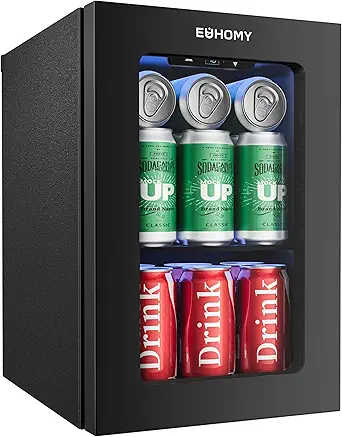 |
| Best Budget The cheapest option that still gets the job done reliably | Frigidaire Retro Mini Personal Fridge EFMIS171 |  |
| Top Rated A top-rated pick with lots of positive feedback | hOmeLabs Beverage Refrigerator HME030065N | 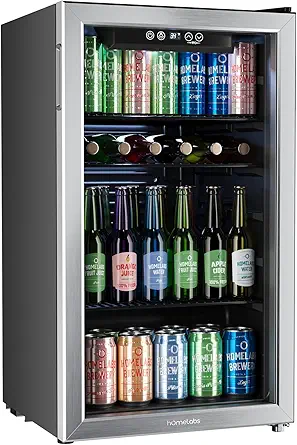 |
| Most Popular A crowd favorite that many people choose with confidence | Cooluli Classic 4L Mini Fridge |  |
| Best Seller A high-volume bestseller chosen again and again | EUHOMY BR013-110 3.2 Cuft Beverage Fridge |  |
Upstreman BR321 3.2 Cu.Ft Mini Fridge

| Capacity | 3.2 cubic feet |
|---|---|
| Freezer Capacity | 0.3 cubic feet |
| Power | 115 volts |
| Cooling Method | Compressor |
| Annual Energy Consumption | 206 kwh |
The Upstreman BR321 is a compact compressor-driven mini fridge that balances usable interior space with a small footprint, making it easy to place in a dorm, office, or bedroom. It offers 3.2 cu.ft total capacity including a 0.3 cu.ft freezer compartment and two adjustable glass shelves for bottles, cans, and taller items, plus a crisper drawer for produce. Temperature is set with a five-step adjustable thermostat (32°F to 50°F) so you can keep drinks chilled or store dairy and snacks, while the manual defrost freezer and tight door seal help retain cold. The unit runs quietly at about 38 dB and uses an efficient rotary scroll compressor with Energy Star level annual consumption listed, so it should be inexpensive to operate. Practical touches include reversible door swing, adjustable leveling feet, and a defrost tool, but it is not suitable for making or storing ice cubes and has manual defrosting rather than automatic frost management. For buyers who want a straightforward, quiet beverage fridge with flexible shelving and a small freezer, this is a sensible, space-conscious choice.
Best for: Buyers who want a quiet, efficient mini fridge that fits drinks and snacks in a small space and values adjustable shelving and a modest freezer for occasional frozen items.
Less Ideal for: Those who need a freezer that makes or stores ice, fully automatic defrosting, or secure/lockable refrigeration for shared public spaces.
- Roomy 3.2 cu.ft interior with a dedicated 0.3 cu.ft freezer for frozen snacks
- Adjustable glass shelves and crisper drawer let you store bottles, cans, and taller items flexibly
- Quiet operation (~38 dB) suitable for bedrooms and offices
- Reversible door and adjustable leveling feet make placement flexible
- Manual defrost freezer requires periodic maintenance
- Not suitable for making or storing ice cubes
- No lock or advanced frost-control features
Verdict: A quiet, energy-efficient mini fridge with flexible shelving and a small freezer that makes an excellent drink-and-snack refrigerator for dorms, bedrooms, and offices.
Honeywell 116-Can Beverage Cooler
| Capacity | 116 Count |
|---|---|
| Cooling Method | Thermoelectric |
| Temperature Range | 34°F–50°F |
| Door Material | Tempered Glass |
| Defrost System Type | Frost Free |
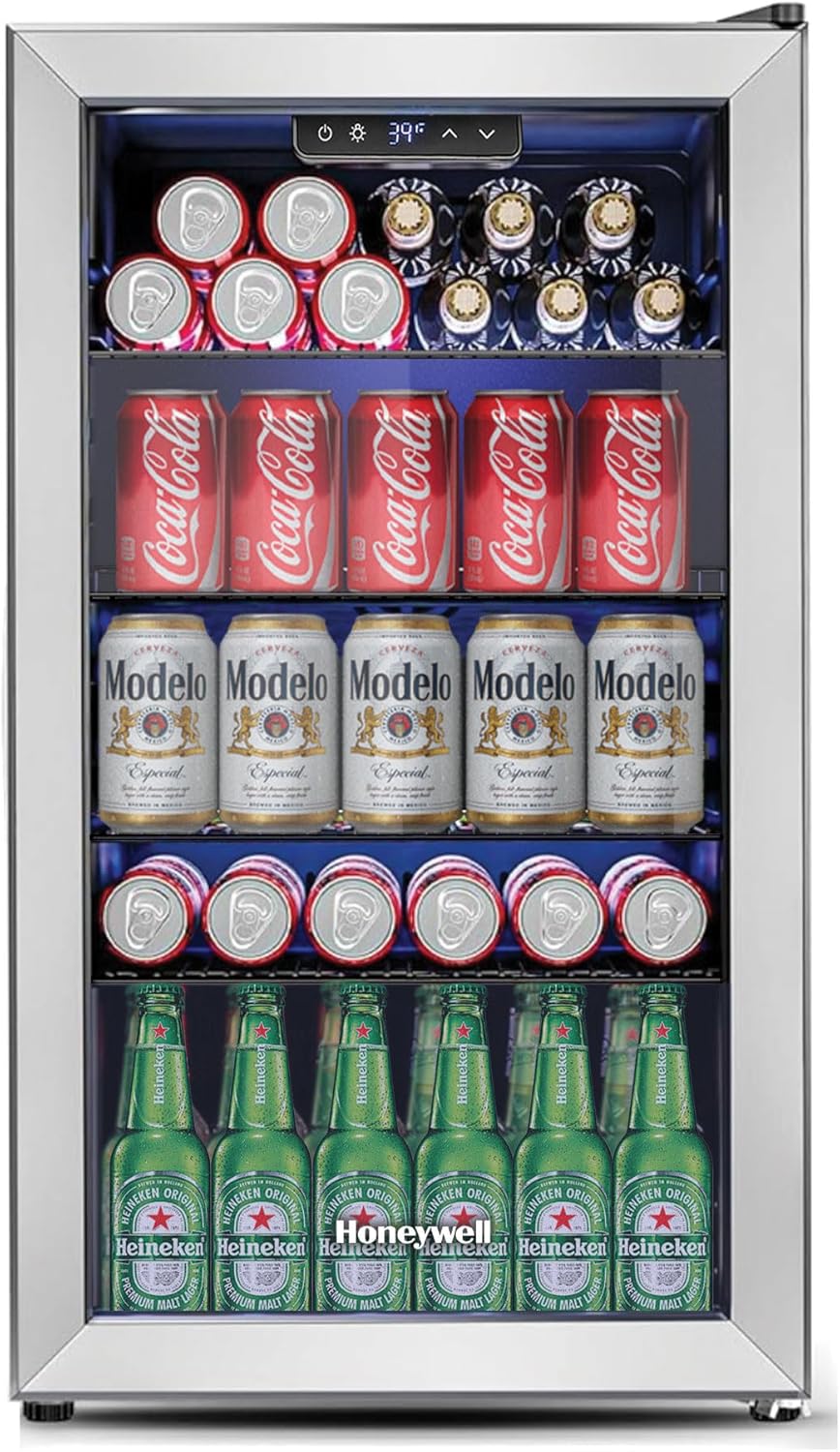
The Honeywell 116-Can Beverage Cooler is a compact thermoelectric display fridge built to keep cans and bottles chilled for office or bar use. It uses an adjustable digital thermostat (34°F–50°F) and a tempered glass door to provide visible, temperature-controlled storage while interior LED lighting makes selection easy. The unit has four shelves including three slide-out, PVC-coated wire shelves that can be repositioned to fit bottles or mixed can sizes, and adjustable legs plus a reversible door for flexible placement. Because it is thermoelectric and frost-free, it runs quietly and avoids compressor vibrations that can rattle glassware. Practical benefits include straightforward temperature control, decent visible capacity for social settings, and a lockable door for retail or shared spaces. Expect limits on extreme cooling speed and very cold setpoints compared with compressor fridges, and annual energy use is moderate due to continuous thermoelectric operation. Installation is simple undercounter or freestanding, but buyers who need rapid recovery after frequent door openings or very low temperatures should consider a compressor model instead.
Best for: Buyers who prioritize reliable, visible drink storage for shared spaces or light commercial settings and want easy temperature control and flexible shelving for cans and bottles.
Less Ideal for: Not the best choice for users needing very rapid cooling, deep cold setpoints, or heavy commercial use with frequent door openings where compressor units perform better.
- Large 116-can visible capacity for a compact footprint
- Adjustable digital thermostat with a 34°F–50°F range for precise drink temps
- Tempered three-pane glass door with interior LED lighting for display and UV protection
- Slide-out PVC-coated wire shelves and reversible door for flexible organization and placement
- Thermoelectric cooling does not cool as quickly or as cold as compressor refrigerators
- Annual energy consumption is relatively high compared with small efficient compressor units
Verdict: Choose this cooler when you want large, visible refrigerated drink storage with precise digital temperature control in a compact undercounter-ready package.
EUHOMY WC-6B Mini Fridge

| Capacity | 18 liters |
|---|---|
| Temperature range | 40°F to 61°F |
| Cooling method | Compressor |
| Voltage | 115 volts |
The EUHOMY WC-6B is a small compressor-powered beverage fridge intended for countertop or freestanding use to keep drinks chilled between 40°F and 61°F. It holds roughly two dozen 330 ml cans and uses a digital control to set and maintain temperature more stably than thermoelectric models, which helps preserve drink flavor. A removable wire shelf and interior LED make loading and locating cans simple, and the unit runs quietly at under 40 dB so it is suitable for bedrooms, offices, or bars. The right-hinged door has UV protection to limit light exposure, and the compact footprint keeps it easy to move or tuck under counters. Expect basic manual defrost and a single-shelf layout, so larger bottles require reconfiguring the shelf or storing standing. Energy consumption is moderate and the unit is backed by a one-year warranty and ETL certification. For buyers prioritizing a small, quiet, compressor-cooled cooler for drinks, this model delivers sensible performance in a tiny package.
Best for: Buyers who need a reliable, space-saving beverage cooler that maintains steady temperatures and fits on a counter or in a small home bar while minimizing noise.
Less Ideal for: People who need to store many bottles, full-size wine collections, or larger beverage containers should choose a larger-capacity refrigerator instead.
- Compressor cooling for stable, consistent temperatures across 40°F–61°F.
- Compact footprint fits countertops and small spaces and is easy to relocate.
- Removable shelf allows flexible storage of cans or a few bottles.
- Quiet operation under 40 dB suitable for bedrooms and offices.
- LED interior light and digital controls make use straightforward.
- Small net capacity limits how many bottles or larger containers you can store.
- Right-hinged door may not suit layouts that require left-side access.
Verdict: A quiet, compressor-cooled mini fridge that reliably chills drinks in a very compact footprint, ideal for small bars, bedrooms, or offices where steady temperature matters.
Frigidaire Retro Mini Personal Fridge EFMIS171
| Cooling Method | Thermoelectric |
|---|---|
| Capacity | 4 Liter (6 cans) |
| Voltage | 110 volts |
| Configuration | Freezerless |
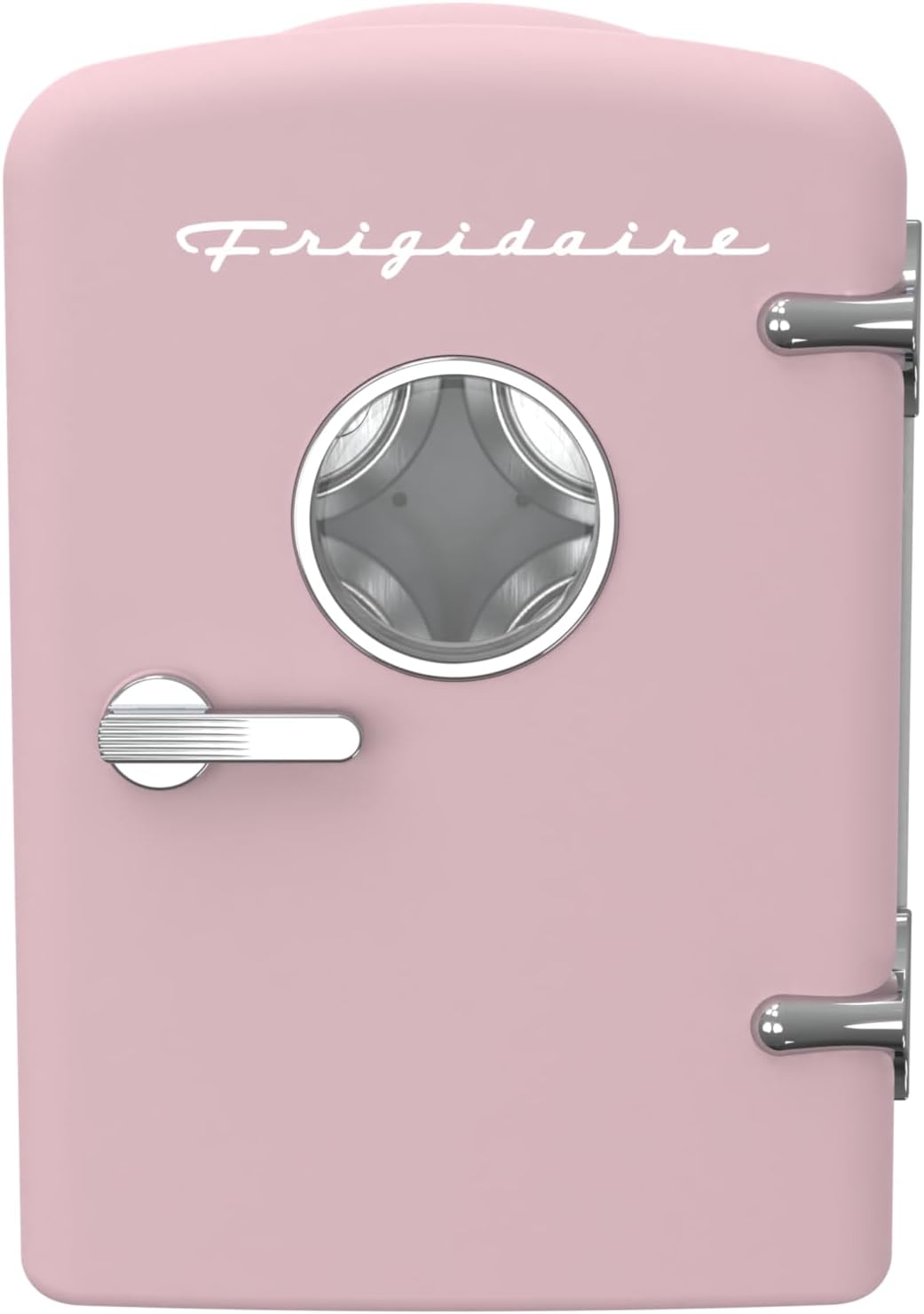
This Frigidaire Retro mini personal fridge is a lightweight, countertop cooler that uses thermoelectric cooling to chill small items without refrigerant. It fits about six 12‑oz cans on a removable shelf and is meant for bedrooms, offices, dorms, cars and short trips thanks to included AC and 12V DC power cords. The unit cools roughly 32°F below ambient and can also warm items up to about 140°F at typical room temperatures, so it doubles as a cooler and small warmer. Its small footprint and reversible door make placement flexible and the plastic interior and single shelf keep cleaning simple. Expect modest cooling performance compared with compressor fridges, and thermoelectric operation is best when ambient temperatures are not high; it also offers limited capacity and no freezer section. For buyers who need a simple, portable beverage fridge or skincare cooler, this model delivers convenience and low weight at a budget level.
Best for: Buyers looking for the cheapest practical way to keep a few drinks or skincare items chilled in a personal space or vehicle and who prioritize portability over storage volume.
Less Ideal for: People who need fast, very low temperatures, large drink capacity, or reliable cooling in hot rooms should choose a compressor mini fridge with larger capacity.
- Small, truly portable design with carry handle and included AC and 12V car cords
- Holds six 12‑oz cans with a removable shelf for flexible storage
- Thermoelectric cooling that is freon free and quieter than small compressors
- Reversible door and compact footprint suit tight spaces
- Limited cooling power compared with compressor mini fridges, especially in hot environments
- Very small capacity not suitable for storing many drinks or large containers
Verdict: A lightweight, budget-friendly personal fridge that reliably chills a handful of drinks or beauty items while being easy to move and power from home or a car.
hOmeLabs Beverage Refrigerator HME030065N

| Capacity | 3.2 cubic feet |
|---|---|
| Storage | 120 cans |
| Temperature range | 34°F-50°F |
| Cooling method | Compressor |
| Defrost system | Automatic |
This hOmeLabs beverage refrigerator is a compact, freestanding cooler intended to keep drinks cold and visible for home bars, offices, dorms, or small kitchens. It uses a compressor cooling system with a whisper-quiet compressor and a digital touch control panel to set temperatures between 34°F and 50°F, while an interior LED makes it easy to see contents without opening the door. Three removable chrome wire shelves let you rearrange storage for cans or taller bottles, and the reversible double-glazed glass door with stainless-steel frame gives a polished display look. Practical benefits include steady cooling performance, straightforward temperature adjustment, and flexible shelf layouts for organizing up to 120 cans. Important limitations are that it is a compact single-zone cooler without a freezer or inverter and it consumes a noticeable amount of energy annually, so expect typical running costs for a compressor mini fridge of this size.
Best for: Buyers who prioritize a reliable, compressor-cooled mini fridge that maintains consistent temperatures for a stocked drink collection and who value a quiet unit suitable for living spaces.
Less Ideal for: If you need ultra-low energy operation, multiple temperature zones, or integrated freezing capability, look for alternative models that specifically target those needs.
- Holds up to 120 slim cans in an organized, visible layout
- Digital touch temperature control with a 34°F–50°F range for consistent cooling
- Reversible glass door and interior LED for display-friendly placement
- Three removable shelves allow flexible storage configurations
- Whisper-quiet compressor suitable for bedroom or office use
- Annual energy consumption is relatively high compared with thermoelectric units of similar size
- No freezer compartment or multi-zone temperature control
Verdict: A dependable compressor mini fridge that reliably chills and displays up to 120 cans, ideal when consistent cooling and quiet operation matter most.
Cooluli Classic 4L Mini Fridge

| Capacity | 4 liters |
|---|---|
| Cooling Method | Thermoelectric |
| Power Source | AC/DC/USB |
| Cools down to | 20°–22°C below ambient temperature |
| Warms up to | 149°F (65°C) |
The Cooluli Classic 4L is a compact thermo-electric cooler/warmer built for single-can or skincare storage and short trips. It cools roughly 20°–22°C (about 35°–40°F) below ambient and can warm up to about 149°F, switching modes with a simple flip; power options include AC, DC, and a USB input so it can run from a wall outlet, a car, or a high-capacity power bank. Its 4-liter interior holds up to six cans or a few skincare bottles, and the molded top handle plus 1.9 kg weight make it easy to move between a dorm, office desk, or vehicle. The thermoelectric design is quiet and freon-free, but it does not reach refrigerator-level cold in very hot environments and has no freezer compartment. Wire shelving and manual defrost keep the interior simple but limit organization for bulkier items. For drink-focused use, it is ideal for keeping a few beverages chilled at a desk, bedside, or in a car, while the warming mode can be handy for warming small snacks.
Best for: Buyers who want a highly portable cooler for a few drinks or skincare items and prioritize quiet operation and flexible power options when using it at a desk, in a car, or in a dorm.
Less Ideal for: Anyone who needs to chill large quantities, freeze items, or maintain consistent refrigerator temperatures in hot environments should look for a larger compressor-based mini fridge.
- Multiple power options: AC, DC, and USB for indoor or on-the-road use.
- Compact 4L capacity fits up to six cans or small skincare items.
- Thermoelectric cooling is quiet and environmentally friendly with no refrigerants.
- Lightweight with a molded handle for easy transport.
- Thermoelectric cooling is less effective in very hot ambient conditions and cannot freeze.
- Very small interior limits storage to a few drinks or small items.
- Simple wire shelf and manual defrost offer limited organization and require occasional maintenance.
Verdict: A tiny, quiet, and portable cooler that keeps a few drinks cold on the go thanks to versatile AC, DC, and USB power options.
EUHOMY BR013-110 3.2 Cuft Beverage Fridge

| Capacity | 3.2 cubic feet |
|---|---|
| Temperature range | 37°F to 61°F |
| Cooling method | Compressor |
| Number of shelves | 5 |
| Defrost system type | Frost Free |
The EUHOMY BR013-110 is a compact compressor beverage refrigerator designed to store cans and bottles in a controlled, visible cabinet. It holds about 130 standard cans across five removable wire shelves that slide into five positions, letting you reconfigure for tall bottles or stacked cans. Temperature is set via a touchscreen digital control and LED display with a 37°F to 61°F range, and an internal fan helps circulate air for even cooling. The double-layer glass door includes UV-blocking properties and a tight seal to help stabilize internal humidity and temperature, while the reversible hinge and adjustable feet make placement flexible. It is frost free and rated for freestanding installation, consumes roughly 0.69 kWh per day, and runs at a quoted noise level around 36 dB. For cautious buyers this unit offers predictable compressor cooling and straightforward controls, but expect basic wire shelving rather than dedicated wine racks and moderate energy use compared with high-efficiency models.
Best for: Buyers who want a reliable, easy-to-use beverage fridge for home, office, or a game-room and prioritize consistent compressor cooling and simple digital controls.
Less Ideal for: People needing an ultra-efficient, low-noise luxury cooler, or those who require specialized wine storage features like vibration reduction or dedicated bottle cradles.
- 3.2 cu ft capacity fits roughly 130 standard cans for parties or personal stock
- Compressor cooling with internal fan provides consistent temperature across shelves
- Digital touchscreen with 37°F–61°F range for precise beverage chilling
- Reversible glass door with UV blocking and tight seal preserves contents and visibility
- Five removable shelves allow flexible shelf placement and cleaning
- Wire shelving rather than specialized wine racks limits delicate bottle storage
- Not a low-energy appliance compared with premium energy-star rated refrigerators
Verdict: A dependable compressor beverage fridge with flexible shelving and precise digital temperature control for buyers who want straightforward, reliable drink storage.
Choosing the Right Mini Fridge for Drinks: Key Factors to Consider
Cooling Performance and Temperature Control
Cooling performance determines whether drinks reach and hold a desirable serving temperature. Look for units with an adjustable thermostat or multiple temperature settings so you can set colder temps for beer and slightly warmer ones for soda or water.
Consistent internal temperatures prevent warm spots that spoil the drinking experience. For beverage use, a reliable cooling system is more important than absolute lowest temperature because frequent door openings and ambient heat load are common.
Usable Capacity and Interior Layout
Capacity ratings tell you overall volume but do not reflect how bottles and cans actually fit. Consider how many standard 12-ounce cans, 16-ounce bottles, or 1-liter bottles you plan to store and whether the shelves are adjustable or removable to accommodate taller containers.
Also check whether door bins can hold cans or smaller bottles, and whether shelves allow for horizontal stacking or specialized can dispensers. A modest increase in internal organization can significantly improve how many drinks you can access quickly.
Physical Footprint and Installation Flexibility
Measure the intended location before you shop. A slim, tall mini fridge may suit a dorm or narrow kitchen alcove, while a squat model might work better under a counter or in an office corner. Pay attention to door swing and whether the door is reversible to accommodate placement.
Also consider ventilation clearance and whether the unit is designed for countertop use or needs floor clearance. Portability features like caster wheels or a lighter chassis are useful if you plan to move the fridge seasonally between rooms.
Energy Use and Operating Cost
Mini fridges run continuously, so energy consumption affects long-term cost and environmental impact. Look for energy-efficient compressors, reliable insulation, and thermostats that avoid overcooling. Some compressor-driven models are more efficient than thermoelectric units, especially in warmer rooms.
Review rated power and any energy certification information. Lower consumption helps in settings where the fridge runs 24/7 and where electrical cost or circuit load may be a concern.
Noise and Vibration
Noise matters when the fridge is in living spaces, bedrooms, or quiet offices. Compressor-driven mini fridges produce intermittent hum and occasional vibration while cooling. Thermoelectric models are often quieter but may not cool as effectively in warm environments.
Consider the acceptable noise floor for the room and whether rubber feet or anti-vibration mounts are included to reduce transmitted noise.
Durability and Maintenance
Durability affects how long the mini fridge will serve your beverage needs without repairs. Check for solid door seals, corrosion-resistant interiors, and robust hinge and handle construction. Simple features like removable shelves and an accessible drain make cleaning easier.
Maintenance considerations include defrosting requirements, ease of cleaning spilled liquids, and whether replacement parts like shelves or door gaskets are widely available. A slightly more robust unit can save time and expense over its lifetime.
Sizing Your Mini Fridge to Match Drink Habits
Match capacity to typical use. If you stock for gatherings, prioritize interior volume and flexible shelving. For individual or couple use, a compact unit with efficient layout and door storage may be sufficient.
Think about the kinds of beverages you drink most. Tall bottles require vertical space while cans can be stacked horizontally. Planning around your most common container sizes reduces wasted space and avoids constant reshuffling.
- Estimate number of cans and bottles you typically keep chilled
- Measure the installation area and account for door swing
- Prefer adjustable shelves if you switch between tall bottles and cans
Thermoelectric Vs Compressor Cooling: Tradeoffs
Thermoelectric units are simple and often quieter, with fewer moving parts. They work well in cool rooms and for mild cooling needs but struggle to maintain low temperatures in warm environments or with heavy door use.
Compressor-driven mini fridges offer stronger, faster cooling and better temperature stability in varied ambient conditions. They tend to be louder and may use more energy, but they are generally better suited for consistent beverage storage.
- Choose thermoelectric for quiet, low-load, indoor uses
- Pick compressor models for robust cooling and warmer locations
Organizing for Quick Access and Visibility
An organized interior saves time and avoids wasted cold air from long door openings. Look for units with clear shelving, door racks sized for cans, and options for removable trays or can dispensers.
Consider external features like interior lighting for visibility and a flat top for additional beverage staging when guests arrive.
- Use adjustable shelves to create rows for cans or vertical slots for bottles
- Door bins are useful for small bottles and single-serve items
- Internal lighting helps find drinks quickly without holding the door open
Placement and Ventilation Considerations
Mini fridges need airflow around the back or sides for efficient cooling. Avoid pushing a unit flush against a wall unless the design allows it. Check manufacturer clearance recommendations when placing in a tight nook.
Avoid direct sunlight or locations near heat sources, such as ovens or heating vents. If you plan to place the fridge in an unconditioned space, prioritize compressor models designed for higher ambient temperatures.
- Leave recommended clearance for ventilation
- Avoid heat sources and direct sunlight
- Consider a power outlet location and cable routing before final placement
Keeping Running Costs and Noise Acceptable
Balance energy efficiency against cooling needs. A slightly larger or more efficient compressor model may use similar power but keep temperatures steadier, reducing compressor cycling and wear. Check rated energy specs where available.
If the fridge will be near sleeping or working areas, prioritize lower decibel ratings and anti-vibration features. Small behavioral changes such as opening the door less often also reduce noise and power draw.
- Compare energy ratings and expected daily consumption
- Place on rubber feet to reduce vibration transfer
- Limit long door openings to conserve energy and reduce compressor activity
How We Chose the Best Mini Fridge for Drinks
We focused on attributes that directly affect how well a mini fridge stores and dispenses drinks. Key evaluation criteria included cooling consistency, usable capacity and layout, footprint and placement flexibility, energy consumption and running cost, and noise level during operation. For cooling we prioritized models that maintain steady internal temperature under typical indoor conditions and that include adjustable thermostat control. Usable capacity and layout were judged by how many standard cans and bottles fit on shelves or in door storage, how adjustable those shelves are, and whether vertical bottle storage is possible. Footprint and placement considered both external dimensions and options for freestanding or countertop use, plus whether a reversible door or recessed handle helps in tight spaces. Energy consumption was estimated from rated power and energy-saving features. Noise levels were considered for settings where the fridge will be near living or sleeping areas. We excluded specialty refrigerators meant for long-term food storage, built-in undercounter units, and units designed solely as freezers. We also excluded models that lack clear temperature control or sufficient capacity information. The result is a set of choices suited to people who need a compact, beverage-focused refrigeration solution.
Our full evaluation process is outlined in our review methodology.
FAQ
What temperature should I set a mini fridge for drinks?
Set the fridge between 36 and 40 degrees Fahrenheit for most beverages. Colder settings are appropriate for beer or very cold drinks, but avoid freezing liquids. Use a separate thermometer if the fridge lacks an accurate thermostat.
How many cans will a typical mini fridge for drinks hold?
Capacity varies, but many compact units hold between 30 and 80 standard 12-ounce cans depending on internal layout. The number depends on shelf configuration and whether you store bottles or cans horizontally.
Are thermoelectric mini fridges good for warm rooms?
Thermoelectric units are less effective in warm rooms and under heavy use. They work best in cool, climate-controlled spaces. For consistently warm environments, a compressor model will maintain lower temperatures more reliably.
Can I use a mini fridge for drinks outdoors or in a garage?
Most mini fridges are rated for indoor use and may not perform well in unconditioned spaces. If you need outdoor or garage use, choose a unit specifically rated for wider ambient temperature ranges or provide a sheltered, temperature-controlled location.
How often do mini fridges need defrosting?
Defrost frequency depends on the model and humidity. Manual-defrost units may need occasional defrosting when frost buildup affects performance. Frost-free compressor models handle this automatically but may use slightly more energy.
Will stacking cans horizontally save more space than vertical bottles?
Horizontal stacking of cans is usually the most space-efficient for maximizing count. However, if your beverage mix includes tall bottles, plan for adjustable shelves or dedicated vertical storage to avoid wasted space.
Final Verdict
A smart mini fridge purchase balances cooling reliability, usable layout, and physical fit. Prioritize consistent temperature control and an interior that matches your beverage mix before focusing on extras like lighting or finishes. Remember tradeoffs: quieter thermoelectric options can struggle in warm rooms, while compressor models offer stronger cooling at the cost of some noise and energy use. Decide first where the unit will live and what kinds of drinks you store most often. Use that information to weigh cooling performance, capacity, and placement features to pick a mini fridge that keeps beverages chilled and accessible for years.