
Note: This article contains affiliate links. If you click on these links and make a purchase, we may earn a small commission at no extra cost to you. This helps support our research and content. Read our full affiliate disclosure here.
If you need extra cold storage without sacrificing floor space, a compact refrigerator designed for home use can be a practical solution. A good mini fridge keeps drinks and snacks at safe temperatures, fits into tight nooks like dorm rooms or home offices, and runs quietly so it does not disturb living spaces. This guide shortlists the top mini fridges for home use, focusing on models that deliver useful interior capacity, reasonable energy use, and quiet daily operation. Below you will find why each unit made the list and the evaluation criteria we used to compare them before the product section.
Top Picks at a Glance
| Best Overall The best all-around choice for most situations | Midea 1.6 Cu Ft Mini Fridge |  |
| Best Quality Built to a higher standard if you want something more solid | hOmeLabs Beverage Refrigerator HME030065N | 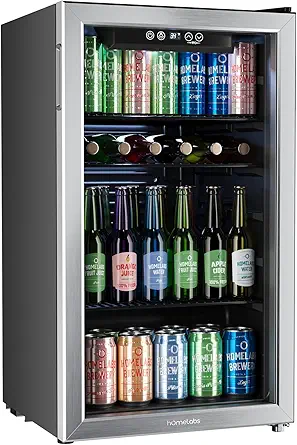 |
| Best Value The sweet spot between price and what you get | Igloo 3.2 Cu. Ft. Mini Fridge |  |
| Best Budget The cheapest option that still gets the job done reliably | Frigidaire Retro Mini Fridge 4L | 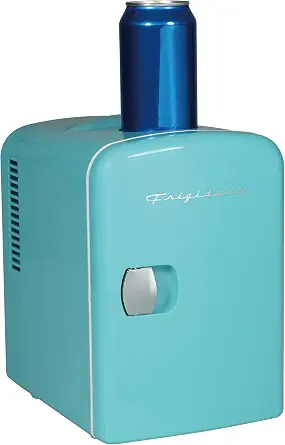 |
| Top Rated A top-rated pick with lots of positive feedback | EUHOMY 3.2 Cu Ft Mini Fridge |  |
| Most Popular A crowd favorite that many people choose with confidence | Upstreman 3.2 Cu.Ft Mini Fridge BR321 |  |
| Best Seller A high-volume bestseller chosen again and again | EUHOMY BR013-110 Beverage Refrigerator |  |
Midea 1.6 Cu Ft Mini Fridge

| Capacity | 1.6 cubic feet |
|---|---|
| Annual Energy Consumption | 207 kilowatt hours per year |
| Defrost System Type | Automatic |
| Voltage | 115 volts |
| Door Orientation | Reversible |
The Midea 1.6 cu ft mini fridge provides basic, energy-efficient cold storage for dorms, bedrooms, offices, or as supplementary kitchen refrigeration. It uses a compressor with R600A refrigerant and is ENERGY STAR certified, so it runs with relatively low annual energy use (about 207 kWh/year) and quieter operation under 42 dB. The interior includes a small chiller compartment for quick cooling, one removable shelf and door racks sized to hold commonly used items including a 2L bottle, and a mechanical thermostat with several settings for temperature control. Practical benefits are its compact footprint, reversible door for flexible placement, and simple controls that make daily use straightforward. Limitations are its tight capacity—best for beverages and small food items rather than weekly grocery storage—and the chiller is only for short-term cooling rather than deep freezing. Buyers should expect basic performance rather than advanced features like digital controls or large freezer space.
Best for: Buyers who want a compact, energy-conscious secondary refrigerator for drinks and small food items and value quiet, straightforward operation in tight spaces.
Less Ideal for: People who need large-capacity refrigeration, reliable long-term freezer storage, or advanced temperature controls should consider larger or feature-rich models.
- Energy Star certified with low annual energy consumption
- Compact footprint that fits dorms, bedrooms, or small kitchens
- Reversible door and removable shelf for placement and storage flexibility
- Quiet compressor operation suitable for living spaces
- Simple mechanical thermostat for easy temperature adjustment
- Very limited internal capacity not suited for full grocery storage
- Internal chiller is for short-term cooling and will not freeze items solid
Verdict: Choose this Midea mini fridge if you want a compact, quiet, and energy-efficient secondary refrigerator for beverages and small amounts of food.
hOmeLabs Beverage Refrigerator HME030065N

| Capacity | 3.2 cubic feet |
|---|---|
| Storage | 120 cans |
| Temperature Range | 34°F–50°F |
| Cooling Method | Compressor |
| Defrost System Type | Automatic |
This hOmeLabs beverage refrigerator is a compressor-cooled mini fridge built for steady, low-noise beverage storage in small spaces. It uses a whisper-quiet compressor and internal fan to circulate cold air, with a digital touch control that sets temperatures from 34°F to 50°F so drinks chill consistently without guesswork. The reinforced glass door and bright interior LED make it easy to find cans without leaving the door open, and three removable chrome wire shelves let you reconfigure the interior for tall bottles or stacked cans. Installation is simple as a freestanding unit and the reversible door helps it fit under counters or against different layouts. Expect reliable cooling performance and clear display of contents, though the unit is focused on beverages rather than frozen storage and energy use is moderate according to the listed annual consumption. For those prioritizing quiet, adjustable cooling and visible presentation in a home bar, office, or dorm, this is a solid compact choice.
Best for: Buyers who need dependable, quiet cooling and high can capacity in a compact footprint for a home bar, office, or dorm where presentation and consistent chilled drinks matter.
Less Ideal for: Not a good fit for users who need freezer capability, ice making, or the lowest possible energy use; choose a different appliance for frozen storage or ultra-efficient models.
- Holds up to 120 slim cans in a 3.2 cu ft interior for high beverage capacity in a small footprint
- Digital touch temperature control with 34°F–50°F range for consistent, adjustable chilling
- Whisper-quiet compressor and internal fan for low-noise operation in living spaces
- Reinforced glass door with bright LED interior light for clear display and easy selection
- Three removable shelves and adjustable feet let you customize storage layout and level the unit
- Annual energy consumption is relatively high at 288 kWh per year compared with some compact refrigerators
- No freezer compartment so it cannot make ice or freeze items
Verdict: Choose this mini fridge when you want quiet, reliable compressor cooling and maximum canned beverage capacity with a clear glass display for home entertaining.
Igloo 3.2 Cu. Ft. Mini Fridge

| Capacity | 3.2 cubic feet |
|---|---|
| Freezer Capacity | 0.2 cubic feet |
| Cooling Method | Compressor |
| Defrost System Type | Automatic |
| Voltage | 120 volts |
This Igloo mini fridge provides straightforward cold storage for small spaces, pairing a 3.2 cu. ft. fresh-food section with a 0.2 cu. ft. freezer compartment. It uses a compressor cooling system and an adjustable mechanical thermostat to hold temperatures between about 32 and 50°F, so you can chill beverages or keep frozen meals on hand without a separate freezer. The interior includes two removable frameless glass shelves with spill guards, vertical can storage and tall-bottle space, plus two door shelves for condiments. Setup is simple since it is freestanding and plugs into standard 120V outlets, and the compressor-style cooling keeps it quieter and more efficient than thermoelectric units. Trade-offs are its modest capacity and higher annual energy consumption compared with some energy-star small models, so it is best where space and convenience matter more than full-sized fridge capacity or the lowest possible running cost.
Best for: Buyers who want a reliable, no-frills fridge to maximize usable storage in a small footprint for dorms, offices, or compact kitchens and prioritize practical layout and ease of use.
Less Ideal for: Large households or anyone needing substantial freezer space or the lowest possible energy draw should consider larger or more efficient models instead.
- Compact 3.2 cu. ft. capacity fits dorms, offices, and small apartments
- Separate top freezer lets you store ice and frozen meals
- Removable glass shelves with spill-prevention guards simplify cleaning and organization
- Adjustable mechanical thermostat for simple temperature control
- Compressor cooling delivers consistent, relatively quiet cooling
- Annual energy consumption listed is relatively high compared with some small, energy-efficient models
- Capacity is limited for households that need to store many frozen items
Verdict: A practical, compressor-cooled mini fridge that maximizes usable storage and convenience in tight spaces.
Frigidaire Retro Mini Fridge 4L
| Capacity | 4 liters |
|---|---|
| Cooling Method | Thermoelectric |
| Voltage | 110 volts |
| Installation Type | Portable,Tabletop |
| Refrigerator Net Capacity | 0.5 cubic feet |
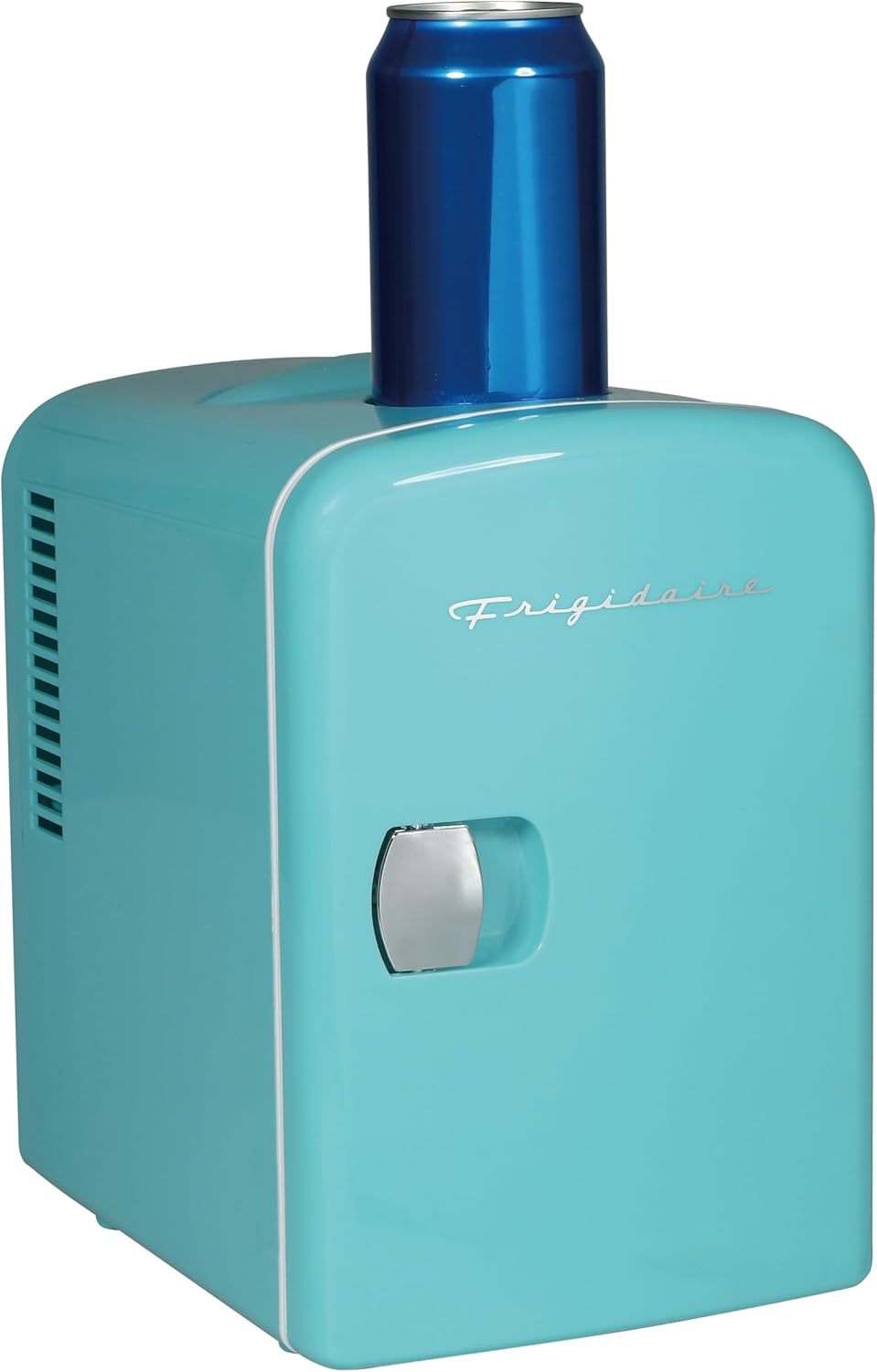
This Frigidaire retro-style mini fridge is a small thermoelectric cooler meant for short-term storage of drinks, snacks, or skincare items. It uses a quiet thermoelectric cooling system and can lower interior temperatures roughly 26–28 degrees Fahrenheit below ambient, making it suitable for chilling up to six 12-ounce cans or keeping beauty products cool. The unit is portable with a carrying handle, a locking latch on the door, and both a 110V home plug and a 12V car adapter for use in vehicles or dorm rooms. Inside there is a removable shelf to organize items and a single door with one shelf pocket. Because it is freezerless and compact, it is best for small loads and quick access rather than long-term food storage or heavy meal prep. Its simple manual controls and low energy draw make it an economical choice, but cooling performance will vary with room temperature and it cannot deep-freeze items.
Best for: Buyers who need an inexpensive, portable cooler for a few drinks, snacks, or beauty items in dorms, offices, or vehicles and prioritize convenience over capacity.
Less Ideal for: Anyone seeking long-term food storage, a true freezer, or to chill large quantities should choose a larger compressor refrigerator instead.
- Very compact and lightweight for easy tabletop or travel use
- Includes both 110V plug and 12V car adapter for flexible power options
- Removable shelf and single-door design provide simple organization for cans or skincare
- Quiet thermoelectric cooling that uses minimal energy
- Small 4 liter capacity limits storage to a few cans or small items
- Thermoelectric cooling cannot reach freezer temperatures or fast chill in hot environments
Verdict: A budget-friendly, portable mini fridge that reliably chills small loads for dorms, offices, and travel.
EUHOMY 3.2 Cu Ft Mini Fridge

| Capacity | 3.2 cubic feet |
|---|---|
| Freezer Capacity | 0.96 cubic feet |
| Refrigerator Net Capacity | 2.24 cubic feet |
| Cooling Method | Compressor |
| Defrost System Type | Manual |
The EUHOMY 3.2 cu ft mini fridge combines a small refrigerator and a top freezer in a compact freestanding cabinet for dorms, bedrooms, or offices. It uses a compressor cooling system and offers three temperature settings so you can store frozen treats in the 0.96 cu ft freezer while keeping drinks and produce in the 2.24 cu ft fridge section. The interior has adjustable glass shelves, a crisper drawer and an LED light for visibility at night, and the reversible door and adjustable feet make siting the unit flexible. Compressor cooling generally gives more consistent temperatures than thermoelectric mini fridges and the unit is rated for UL safety. Expect manual defrosting and modest energy use compared with full-size refrigerators, and the 45 lb cabinet means it is not as portable as countertop models. For buyers prioritizing a reliable small fridge with both a usable freezer and straightforward controls, this model delivers steady cooling and practical storage in a compact footprint.
Best for: Buyers who need a dependable small fridge with a usable freezer and straightforward operation for a bedroom, dorm, or office and who value stable, compressor-driven cooling.
Less Ideal for: People who need a lightweight countertop refrigerator to move frequently or buyers who want a zero-maintenance frost-free mini freezer.
- Two-zone design with a dedicated freezer and refrigerator for flexible storage
- Compressor cooling for more consistent and efficient temperature control
- Adjustable glass shelves and crisper drawer for organized storage
- Reversible door and adjustable feet for flexible placement
- Interior LED light improves visibility at night
- Manual defrost freezer requires occasional maintenance
- Annual energy consumption is moderate compared with some high-efficiency compact models
Verdict: A reliable compressor mini fridge with a usable top freezer and flexible placement options, ideal when consistent cooling is the priority.
Upstreman 3.2 Cu.Ft Mini Fridge BR321

| Capacity | 3.2 cubic feet |
|---|---|
| Freezer Capacity | 0.3 cubic feet |
| Cooling Method | Compressor |
| Voltage | 115 volts |
| Refrigerant | R-600A |
The Upstreman BR321 is a 3.2 cu.ft compact refrigerator designed for dorms, bedrooms, and offices where space is limited. It uses a rotary scroll compressor and offers five adjustable temperature settings (32°F to 50°F) plus a 0.3 cu.ft freezer compartment for small frozen items. Interior storage is flexible with two adjustable glass shelves, a crisper drawer, and three door shelves for bottles and condiments, while the reversible door and adjustable leveling feet help fit it into tight layouts. It is Energy Star certified and rated to run quietly at about 38 dB, which makes it suitable for bedrooms or study spaces. Practical conveniences include a tight door seal, manual defrost, and an included defrost tool, but it is not designed for storing large frozen items or ice cubes. The unit is freestanding and uses R-600A refrigerant; expect manual defrosting and basic mechanical controls rather than digital precision. For buyers focused on a reliable, energy-efficient small fridge with configurable shelving and low noise, this model delivers solid value with straightforward operation.
Best for: Buyers who want a quiet, energy-efficient compact refrigerator for a dorm, bedroom, or small apartment and prefer a straightforward, proven appliance with visible social proof and solid user feedback.
Less Ideal for: People who need substantial freezer capacity, automatic defrost, or precise digital temperature control should look at larger or differently featured refrigerators.
- Compact footprint with 3.2 cu.ft capacity fits tight spaces.
- Adjustable glass shelves and crisper drawer allow flexible organization.
- Reversible door and leveling feet make placement easier in small rooms.
- Energy Star certified and quiet operation (~38 dB) for bedroom or office use.
- Compressor cooling with adjustable thermostat provides consistent chilling across seasons.
- Manual defrost requires occasional maintenance and is less convenient than frost‑free models.
- Freezer space is very small (0.3 cu.ft) and not suitable for large frozen items or ice production.
Verdict: A quiet, energy-efficient 3.2 cu.ft mini fridge that delivers practical, configurable storage and reliable compressor cooling for small rooms.
EUHOMY BR013-110 Beverage Refrigerator

| Capacity | 3.2 cubic feet |
|---|---|
| Temperature Range | 37°F to 61°F |
| Cooling Method | Compressor |
| Number of Shelves | 5 |
| Installation Type | Freestanding |
The EUHOMY BR013-110 is a freestanding 3.2 cubic foot beverage fridge built for storing cans and bottles in a small footprint. It uses a compressor cooling system with an internal fan to keep temperatures consistent across the cabinet, and the touchscreen digital control adjusts the range from 37°F to 61°F so you can chill beer, soda, or white wine to preferred serving temps. Five removable wire shelves let you reorganize for tall bottles or stacks of cans, and the double-layer glass door with UV blocking helps protect contents while showing them off. Practical touches include a reversible door, adjustable feet, and a quiet operating level the brand lists around 36 dB, making this easy to place in a kitchen, office, or bedroom. Expect typical mini-fridge limitations: it is compact so it will not replace a kitchen refrigerator and the compressor design adds weight versus thermoelectric units, but it delivers faster, more reliable cooling. For buyers wanting straightforward performance and visible storage, this model covers the essentials without complicated extras.
Best for: Buyers who prioritize predictable, worry-free cooling and visible beverage storage for a home bar, office, or small kitchen and want a straightforward, well-supported appliance.
Less Ideal for: Anyone needing a primary kitchen refrigerator, very lightweight portable cooling, or extremely large-capacity storage should look at larger or different appliance types.
- Compressor cooling with circulation fan for steady, reliable temperatures
- Digital touchscreen control with 37°F–61°F range for precise chilling
- Five removable shelves for flexible storage of cans and bottles
- Reversible glass door with UV blocking for visibility and protection
- Quiet operation and freestanding design suitable for living spaces
- Compact 3.2 cu ft capacity cannot replace a full-size refrigerator
- Heavier compressor design makes it less portable than thermoelectric mini-fridges
Verdict: A reliable, compact compressor beverage fridge that gives precise temperature control and flexible shelving for home use.
Choosing the Right Mini Fridge for Home: Key Factors to Consider
Interior Capacity and Layout
How much you can store depends on interior cubic feet and how that space is arranged. A higher nominal capacity can be misleading if the layout wastes space with awkward shelving or oversized freezer compartments. Look for adjustable shelves, door bins sized for bottles, and a usable freezer section if you need frozen storage.
Consider what you store most often. Tall bottles and milk cartons need vertical clearance. If you plan to keep meal-prep containers, flat, spacious shelves are more valuable than a slightly larger overall capacity with unusable nooks.
Energy Consumption
Mini fridges run continuously, so energy efficiency directly affects your electricity bill and environmental footprint. Check for energy consumption figures or certification badges that indicate lower wattage use. More efficient compressors or thermoelectric systems will usually cost less to operate over time.
Also consider location. A mini fridge in a warm, sunlit room will work harder and use more energy than the same unit placed in a cool spot. If running costs matter to you, prioritize measured energy consumption and real-world efficiency ratings.
Noise and Cooling Technology
Noise becomes important when the mini fridge lives in a bedroom, home office, or shared living space. Compressors typically provide stronger cooling but can generate noticeable hums or cycles, while thermoelectric models tend to be quieter but offer less aggressive temperature control. Evaluate decibel ratings where available and read real-world accounts of operational sound.
Also consider cooling cycle behavior. Some units run intermittently with quiet but audible starts and stops, while others maintain a steady low-level hum. For light sleepers or people on calls, lower idle noise is often worth a modest tradeoff in rapid cooling speed.
Temperature Control and Stability
Consistent internal temperature matters for food safety and beverage enjoyment. Some mini fridges include adjustable thermostats with clear settings and reliable performance, while others have crude, binary controls that can leave sections too warm or too cold. Look for units that demonstrate even cooling across shelves and a stable freezer compartment if included.
Take into account how quickly the fridge recovers temperature after the door is opened and how well it holds set temperatures during warm ambient conditions. Stability matters if you store perishables or medication that requires steady cooling.
Size, Fit, and Installation
A compact refrigerator must fit physically into the intended space, leaving clearance for ventilation and door swing. Measure width, depth, and height including door handles, and allow extra space for air circulation at the back and top. Note whether the door is reversible and whether the unit requires hard wiring or simply a standard outlet.
Also consider weight and how often you expect to move it. Lightweight units are easier to reposition for cleaning but may feel less solid. If the fridge will sit on carpet or inside cabinetry, verify the manufacturer guidance on ventilation and mounting to avoid overheating.
Maintenance and Ease of Cleaning
Regular cleaning keeps a mini fridge hygienic and operating efficiently. Removable shelves and spill-friendly surfaces simplify cleanup. Units with shallow drain pans or easy-access condenser coils make periodic maintenance less of a chore.
Consider how easy it is to defrost a manual-freeze freezer compartment, whether door seals are replaceable, and how accessible the interior light and thermostat are for adjustment. These small conveniences add up in everyday use.
Choosing the Right Capacity for Your Space
Match the fridge capacity to how you intend to use it. A unit intended for drinks and snacks requires less usable space than one meant for meal prep or extended food storage. Think in terms of what items you open the fridge for most often and set a modest margin for guests or bulk purchases.
Also plan around shelf arrangement rather than raw cubic feet. A fridge with flexible shelves that fold or slide can accommodate tall bottles without needing much extra overall capacity, while fixed shelving can restrict practical storage more than the spec sheet implies.
- Measure the intended spot and allow ventilation clearance.
- Consider door swing direction and whether you need a reversible hinge.
- Account for vertical clearance if you plan to store tall bottles.
Where to Place a Mini Fridge in Your Home
Location affects performance and noise impact. Place the fridge on a firm, level surface away from direct sunlight, radiators, or heat-producing appliances to reduce compressor workload. If the unit will be in a bedroom or office, prioritize quieter models and position them where the sound is least disruptive.
Avoid enclosed cabinetry unless the unit is designed for built-in use with proper ventilation. Insufficient airflow can cause higher operating temperatures and reduce lifespan.
- Avoid placing near ovens or heat sources.
- Allow at least a few inches clearance at the back and top for airflow.
- Use vibration-damping pads on uneven floors to reduce noise.
Setting Up for Low Noise and Better Efficiency
Simple setup choices can minimize noise and energy use. Level the fridge to prevent rattling and ensure the door seals evenly. Keep the interior organized to allow air to circulate freely around stored items. Avoid overfilling the unit, which can obstruct airflow and force longer run cycles.
Regularly dust the condenser coils or air intakes if accessible. Clean coils improve heat exchange and reduce run time, lowering both noise from extended compressor cycles and electricity consumption.
- Level the unit and tighten any loose feet or panels.
- Clean vents and coils every few months.
- Keep vents unobstructed inside and outside the fridge.
Freezer Compartments and Manual Defrosting
Many mini fridges include a small freezer compartment. If you plan to store frozen items, verify whether the freezer is large enough and whether it is a true freezer or an icebox-style shelf. Some freezers are manual-defrosting, which requires occasional thawing to prevent ice buildup and loss of usable space.
Consider how easy it is to defrost and drain the compartment. Units with removable freezer shelves or simple drainage systems reduce the time and mess involved in occasional defrost cycles.
- Expect less freezer stability than full-size refrigerators.
- Look for removable freezer shelves for easier defrosting.
- Plan for occasional manual defrosting if the unit is not frost-free.
Safety and Food Storage Best Practices
Maintain safe food temperatures by keeping the fridge set within recommended ranges and checking intermittently with a thermometer. Avoid storing perishable leftovers past recommended timelines, especially if the unit experiences temperature fluctuations from frequent door openings or warm ambient conditions.
Keep raw proteins sealed and placed below ready-to-eat items to prevent cross-contamination. Regularly clean spills and monitor door seals to prevent warm air ingress that can accelerate spoilage.
- Use a small fridge thermometer to monitor internal temperature.
- Store raw meat on the lowest shelf in sealed containers.
- Wipe spills immediately to avoid odors and bacteria buildup.
How We Chose the Best Mini Fridge for Home
We focused on real-world usability and reliability factors that matter for home mini fridges. Primary evaluation criteria included usable interior capacity and layout, because effective shelf and compartment design determines how much you can actually store. Energy efficiency and estimated operating cost were scored to reflect ongoing electricity use in a home environment. Noise level and compressor or cooling system type were included to ensure units are acceptable for bedrooms, offices, and living rooms. Temperature control and cooling consistency were assessed so that perishables and beverages stay within safe ranges. Finally, build quality and user-facing features such as reversible doors, adjustable shelving, and integrated storage options were considered for daily convenience. We excluded specialty and commercial-grade units or single-purpose devices that do not suit typical home use. We also filtered out models lacking clear capacity or efficiency specifications, and anything designed specifically for outdoor use or vehicle power. The resulting shortlist emphasizes compact fridges that balance interior space, low operating noise, and reasonable energy consumption for home settings.
Our full evaluation process is outlined in our review methodology.
FAQ
How much noise does a typical home mini fridge make?
Noise varies by cooling system and build. Compressors are often audible during cycles and can range from a low hum to a noticeable buzz. Thermoelectric models tend to be quieter but may not cool as aggressively. Check decibel figures when available and consider placement if sound sensitivity is a concern.
Can I put a mini fridge in a cabinet or closet?
Most mini fridges need clearance for ventilation and are not intended for fully enclosed spaces. If you plan to place one in cabinetry, choose a model rated for built-in use or ensure adequate airflow around the unit to prevent overheating and reduced efficiency.
Do mini fridges use a lot of electricity?
They run continuously, so cumulative use matters. Energy-efficient compressors and better insulation reduce consumption. Location and ambient temperature also affect energy draw. Look for published energy use figures and expect lower absolute use than a full-size fridge but meaningful ongoing costs over months and years.
Is a thermoelectric mini fridge a good choice for a bedroom?
Thermoelectric units are generally quieter and can be suitable for bedrooms, but they may struggle to maintain low temperatures in warm rooms or with frequent door openings. If quiet operation is the top priority, thermoelectric models are worth considering with realistic expectations about cooling limits.
How do I prevent odors and mildew in a mini fridge?
Clean spills promptly and routinely remove old food. Wipe interior surfaces with a mild detergent and occasionally air the unit with the door open when empty. Use sealed containers for strong-smelling foods and consider a small charcoal odor absorber if odors persist.
Final Verdict
When choosing a mini fridge for home use, prioritize usable interior space, low operating noise, and energy efficiency based on how and where you will use the unit. Tradeoffs are common: quieter systems may offer less aggressive cooling, while compact designs sometimes sacrifice flexible shelving. Decide which factors matter most for your situation—capacity for meal prep, whisper-quiet operation for a bedroom, or an efficient unit for long-term cost savings—and pick a model that balances those priorities. With the right fit, a mini fridge can provide reliable, convenient cold storage without overwhelming your living space.