
Note: This article contains affiliate links. If you click on these links and make a purchase, we may earn a small commission at no extra cost to you. This helps support our research and content. Read our full affiliate disclosure here.
If you need extra refrigerated storage in a main or secondary kitchen, choosing the right mini fridge matters for usable space, temperature reliability, and ongoing energy cost. The right unit fits where you need it, keeps perishables at safe temperatures, and works quietly around other kitchen activities. This guide shortlists the top mini fridges for kitchen use that balance capacity, layout, and efficiency. Below you will find concise evaluations of each pick and a clear set of factors we used to judge them, so you can pick the best option for your kitchen layout and food-storage needs.
Top Picks at a Glance
| Best Overall The best all-around choice for most situations | Upstreman BR321 3.2 Cu Ft Mini Fridge |  |
| Best Quality Built to a higher standard if you want something more solid | EUHOMY 3.2 cu ft Mini Fridge |  |
| Best Value The sweet spot between price and what you get | Electactic Beverage Refrigerator JC-90 |  |
| Best Budget The cheapest option that still gets the job done reliably | Antarctic Star Mini Fridge 1.7 Cu Ft |  |
| Top Rated A top-rated pick with lots of positive feedback | hOmeLabs Beverage Refrigerator HME030065N | 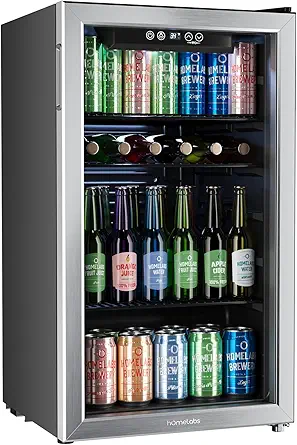 |
| Most Popular A crowd favorite that many people choose with confidence | Frigidaire Retro 3.1 Cu Ft Mini Fridge |  |
| Best Seller A high-volume bestseller chosen again and again | EUHOMY Beverage Refrigerator BR013-110 |  |
Upstreman BR321 3.2 Cu Ft Mini Fridge

| Capacity | 3.2 cubic feet |
|---|---|
| Freezer Capacity | 0.3 cubic feet |
| Cooling Method | Compressor |
| Voltage | 115 volts |
The Upstreman BR321 is a compact 3.2 cubic foot mini fridge built for small kitchens, dorms, or offices where footprint and energy use matter. It uses a rotary scroll compressor to provide reliable cooling and includes a 0.3 cu ft freezer, two adjustable glass shelves, three door bins, a crisper drawer, and a five-position thermostat that ranges around typical fridge temperatures. Practical touches like a reversible door, adjustable leveling feet, and a manual defrost tool make installation and upkeep straightforward. It is ETL listed and designed for quiet operation, with the listing noting low noise and Energy Star level efficiency, which helps keep running costs down in tight spaces. The main limits are the modest freezer size that is not suitable for long-term ice storage and the manual defrost requirement, which means occasional maintenance. For everyday use—drinks, snacks, dairy, and short-term frozen items—the BR321 offers a sensible balance of storage, features, and efficiency for a small kitchen environment.
Best for: Buyers who want a practical, energy-conscious compact refrigerator for a small kitchen, apartment, dorm, or office and value adjustable storage and a quiet running appliance.
Less Ideal for: Anyone needing large freezer capacity or hands-off frost-free operation should consider a larger or frost-free model instead.
- Compact 3.2 cu ft capacity fits tight kitchen or dorm spaces while still holding bottles and snacks
- Adjustable glass shelves and door bins let you rearrange storage for taller items
- Reversible door and leveling feet simplify placement in different kitchen layouts
- Compressor cooling with rotary scroll design for consistent temperatures
- Energy-efficient operation with low noise suitable for bedrooms or offices
- Small 0.3 cu ft freezer is too limited for bulk frozen storage or ice trays
- Manual defrost requires occasional maintenance to prevent frost buildup
Verdict: Choose the BR321 if you need an energy-efficient, quiet mini fridge with flexible storage that fits small kitchen spaces without sacrificing essential cooling performance.
EUHOMY 3.2 cu ft Mini Fridge

| Capacity | 3.2 cubic feet |
|---|---|
| Freezer Capacity | 0.96 cubic feet |
| Cooling Method | Compressor |
| Defrost System Type | Manual |
| Door Orientation | Reversible |
This EUHOMY 3.2 cu ft mini fridge combines a small refrigerator and a 0.96 cu ft top freezer into a compact, freestanding unit intended for kitchens, dorms, or offices. It uses a compressor cooling system and offers three temperature settings that let you tune cooling performance for drinks, produce, or frozen snacks while keeping noise low. The interior has adjustable glass shelves, a crisper drawer and an LED light that make organization straightforward, and the reversible door plus adjustable feet give flexible placement. Practical benefits include stronger cooling compared with thermoelectric mini fridges, distinct fridge and freezer zones for mixed storage, and a manual defrost design that is simple to maintain. Expect higher annual energy use than the smallest models since this operates on a compressor, and manual defrosting requires occasional maintenance to prevent frost buildup in the freezer. For buyers prioritizing reliable cooling and separate freezer capacity in a compact footprint, this model delivers steady, kitchen-ready performance.
Best for: Buyers who want a compact fridge that behaves like a full refrigerator with a usable freezer and consistent compressor cooling for reliable performance in a small kitchen or secondary space.
Less Ideal for: People seeking an ultra-low-energy or maintenance-free plug-and-play countertop cooler should consider alternative thermoelectric or frost-free models instead.
- Compressor cooling provides stronger, more consistent low temperatures than thermoelectric models
- Separate top freezer (0.96 cu ft) plus 2.24 cu ft refrigerator area for mixed storage
- Adjustable glass shelves and crisper drawer improve internal organization
- Reversible door and adjustable feet allow flexible placement in tight kitchen spaces
- Interior LED light and electronic lock add convenience and security
- Manual defrost freezer requires periodic maintenance to remove frost
- Annual energy consumption is relatively high compared with ultra-efficient compact units
Verdict: Choose this mini fridge if you need a compact, kitchen-capable unit with a real compressor freezer and reliable cooling performance.
Electactic Beverage Refrigerator JC-90

| Capacity | 3.2 cubic feet |
|---|---|
| Cooling method | Compressor |
| Temperature range | 32°F to 61°F |
| Shelves | 4 removable wire shelves |
| Annual energy consumption | 180 kilowatt hours per year |
This Electactic 3.2 cu ft beverage refrigerator is built to keep cans, bottles, and a few wine bottles chilled and accessible in a kitchen or bar area. It uses a compressor cooling system with a digital touch control and LED display so you can set temperatures from 32°F to 61°F for drinks that need precise chilling. Four removable wire shelves let you mix cans and bottles and rearrange storage for taller items, and the airtight glass door and rotary scroll compressor help maintain consistent temperatures. The unit is designed to fit under a counter or stand alone and offers low-noise operation suitable for open kitchens. Expect manual defrosting and a basic feature set rather than high-end wine-cellar controls, and note the listed annual energy consumption is 180 kWh. For someone looking to add a practical, compact drink fridge to a kitchen, this model balances capacity and usable features without unnecessary complexity.
Best for: Buyers who want a practical undercounter or freestanding drink fridge to keep a large selection of beverages chilled and easily accessible in a kitchen without paying for advanced wine-cellar features.
Less Ideal for: If you need a true wine cellar, dual-zone temperature control, or a no-maintenance frost-free system, look at specialty wine fridges or larger refrigerators instead.
- 3.2 cu ft capacity holds up to 130 standard cans for good kitchen storage
- Digital touch control with display for precise temperature setting between 32°F and 61°F
- Four removable adjustable wire shelves allow flexible stacking of cans and bottles
- Reversible airtight glass door and compressor cooling provide consistent, even temperatures
- Manual defrost requires occasional maintenance
- No dedicated wine-rack or dual-zone cooling for different beverage types
Verdict: A practical undercounter-capable beverage fridge that maximizes usable storage and precise temperature control for kitchen use.
Antarctic Star Mini Fridge 1.7 Cu Ft

| Capacity | 1.7 cubic feet |
|---|---|
| Freezer Capacity | 0.2 cubic feet |
| Cooling Method | Compressor |
| Defrost System Type | Manual |
| Installation Type | Countertop |
This Antarctic Star mini fridge fits small kitchen nooks while offering usable storage for snacks, drinks, and meal prep. It uses a compressor cooling method with a 0.2 cu ft freezer and a 7-speed adjustable thermostat (32 to 50 F) so you can tune temperatures for beverages or leftovers. The single reversible door and one wire shelf make organizing bottles and containers straightforward, and the electronic lock adds basic security. Manual defrosting is required, which keeps the design simple but means occasional maintenance to remove frost. At countertop orientation it runs quietly and the compact build makes it easy to move, though usable fresh-food capacity is modest. Energy draw is moderate for its class. For a budget-focused kitchen where space is tight and you need a simple, reliable secondary fridge, this model covers the essentials without extra features like automatic defrost or smart controls.
Best for: Buyers wanting an inexpensive, space-efficient secondary refrigerator for a small kitchen, apartment, or office who prioritize straightforward cooling over advanced features.
Less Ideal for: Anyone needing high-capacity food storage, automatic defrosting, or app/smart controls should consider larger or feature-rich models instead.
- Compact footprint fits on counters or in small kitchen spaces
- Includes a small built-in freezer for short-term frozen storage
- Reversible door adapts to different kitchen layouts
- Adjustable 7-speed temperature control for flexible cooling
- Electronic lock provides basic security
- Manual defrost requires periodic maintenance
- Limited fresh-food capacity compared with larger compact models
- Annual energy consumption is relatively high for a mini fridge
Verdict: A budget-friendly, compact countertop fridge that gives dependable cooling and a small freezer for kitchens where space and price are the top priorities.
hOmeLabs Beverage Refrigerator HME030065N

| Capacity | 3.2 cubic feet |
|---|---|
| Temperature range | 34°F – 50°F |
| Number of shelves | 3 removable shelves |
| Cooling method | Compressor |
| Voltage | 120 volts |
This hOmeLabs beverage refrigerator is a compact, freestanding cooler meant to keep drinks visible and consistently cold for kitchen, office, or bar use. It uses a compressor-based cooling system with a whisper-quiet compressor and a touch-button digital temperature control that reaches as low as 34°F, so bottles and cans chill reliably while the interior LED light makes selection easy without long door openings. The unit has three removable chrome wire shelves and adjustable feet, letting you organize slim cans or rearrange space for taller bottles. A reversible double-glazed glass door with a stainless steel frame adds a display look while helping maintain temperature. Practical downsides are the relatively high annual energy consumption listed and the compact capacity that limits storage compared with full-size refrigerators. Installation is simple since it is freestanding and sized for small kitchens, dorms, or under-counter spots.
Best for: Buyers who prioritize a dependable, display-ready beverage cooler for a small kitchen, home bar, or office and want consistent compressor cooling and straightforward controls without advanced smart features.
Less Ideal for: Shoppers needing a general-purpose mini fridge for food storage or a larger-capacity built-in under-counter unit should consider different models.
- Holds up to 120 slim cans for focused beverage storage
- Digital touch temperature control down to 34°F for consistent cooling
- Whisper-quiet compressor suitable for kitchens and shared spaces
- Removable adjustable shelves and leveling feet for flexible interior layout
- Double-glazed glass door with interior LED for clear display and easy access
- Listed annual energy consumption is relatively high compared with some compact models
- 3.2 cu ft capacity may be small for users who need mixed food and beverage storage
Verdict: Choose this hOmeLabs mini beverage refrigerator when you want a reliable, quiet compressor cooler that displays and chills drinks consistently in a small kitchen or bar area.
Frigidaire Retro 3.1 Cu Ft Mini Fridge

| Capacity | 3.1 cubic feet |
|---|---|
| Freezer Capacity | 0.2 cubic feet |
| Cooling Method | Compressor |
| Defrost System Type | Automatic |
| Installation Type | Countertop |
This Frigidaire retro mini fridge brings vintage style to small kitchens while covering basic refrigeration needs. It offers about 3.1 cubic feet of capacity with two glass shelves, a 0.2 cu ft chiller/freezer compartment and a 2L door basket that holds large bottles, so it works well as a secondary unit for drinks, snacks, or overflow groceries. The compressor cooling and automatic defrost keep temperatures steady without manual intervention, and the reversible door plus flush-back design makes placement against walls or under counters easy. Practical touches include an electronic lock option and a built-in side bottle opener that suits social spaces. Expect it to perform like a typical compact refrigerator: good for chilled items and short-term freezing but not a substitute for full-size freezer storage. Buyers should note the modest interior volume and that energy use and noise follow normal compact-fridge patterns, so it is best used where style and convenience matter more than large capacity.
Best for: Buyers who want a stylish secondary refrigerator for a kitchen, dorm, or entertainment area and who prioritize reliable, easy-to-use cooling with visible customer feedback to guide the choice.
Less Ideal for: Households needing substantial frozen storage or primary refrigeration for a full family should choose a larger, full-size refrigerator instead.
- Attractive retro design that suits kitchens and entertainment areas
- Reversible door and flush-back design for flexible placement
- Compressor cooling with automatic defrost for consistent temperature control
- Includes interior glass shelves, 2L door basket, and small freezer compartment for organized storage
- Limited total and freezer capacity not suitable for large frozen storage
- May be louder and less efficient than full-size refrigerators under heavy use
Verdict: A compact, stylish secondary fridge that delivers dependable compressor cooling and flexible placement for kitchens and social spaces.
EUHOMY Beverage Refrigerator BR013-110

| Capacity | 3.2 cubic feet |
|---|---|
| Temperature range | 37°F to 61°F |
| Cooling method | Compressor |
| Number of shelves | 5 |
| Defrost system type | Frost Free |
The EUHOMY BR013-110 is a freestanding 3.2 cu ft beverage refrigerator designed for kitchen or office use where a secondary cooler is needed. It uses a compressor cooling system with an internal circulation fan to keep temperatures consistent across the cabinet, and a digital touchscreen lets you set temperatures between 37°F and 61°F. The unit includes five removable wire shelves that slide into five height positions so you can store cans, bottles, or a few wine bottles in several layouts, and the double-layer glass door adds visibility while helping block UV. Practical touches include a reversible door, adjustable feet for leveling, and an LED display. Energy use is modest at about 0.69 kWh per day and the manufacturer quotes a quiet operating level around 36 dB. Expect reliable cold performance for drinks, but note this is a compact freestanding fridge rather than an undercounter built-in and the internal capacity limits larger containers and long bottles. Setup requires leaving the unit upright before first use and the product comes with one year of support.
Best for: Buyers who prioritize a dependable, easy-to-use secondary fridge for kitchen or home bar use and prefer straightforward digital controls and visible storage.
Less Ideal for: Anyone needing built-in undercounter integration or large-capacity storage for many full-size wine bottles should look at larger or built-in models instead.
- Compressor cooling with internal fan for even, reliable temperatures
- Digital touchscreen temperature control with 37°F–61°F range
- Five removable shelves for flexible organization
- Double-layer glass door provides visibility and UV blocking
- Reversible door and adjustable feet make placement flexible
- 3.2 cu ft interior restricts storage of tall or bulky bottles
- Freestanding design is not intended for built-in/under-counter installation
Verdict: A compact, dependable compressor beverage fridge with digital control and flexible shelving that fits kitchens needing a reliable secondary cooler.
Choosing the Right Mini Fridge for Kitchen: Key Factors to Consider
Usable Capacity and Shelving Layout
Kitchen mini fridges are useful only insofar as their interior space fits the items you need to store. Measured capacity in liters or cubic feet can be misleading if poorly arranged. Fixed shelves, wide door bins, and removable components change how many containers, plates, or produce bags you can actually fit.
Consider not just total volume but shelf spacing, door bin depth, and whether shelves are adjustable or removable. A slightly smaller fridge with a flexible shelving layout can hold more real-world items than a larger unit with fixed, narrow shelves.
Temperature Control and Food Safety
Consistent temperature across the interior is essential in a kitchen setting where perishables, dairy, and leftovers are stored. Look for units with adjustable thermostats and performance ratings that indicate steady operation in normal kitchen ambient temperatures.
Pay attention to whether the fridge has a dedicated freezer compartment and how it affects interior airflow. Some compact freezers degrade overall temperature stability if not well designed, which matters for food-safety and for preventing spoilage.
Energy Use and Long-Term Cost
Even small refrigerators run continuously, so energy consumption adds up. Energy-efficient compressors, good insulation, and smart thermostat control lower ongoing cost. Compare rated annual energy use when available and consider models with eco modes or adaptive cooling.
Lower energy draw also reduces heat output into the kitchen and can improve overall comfort, especially in small or enclosed cooking areas.
Noise and Kitchen Placement
Noise matters more in kitchens that are open to living spaces or used as gathering areas. Compressor cycles and vibration can be disruptive during conversations or when preparing food. Look for measured noise levels or user reports about quiet operation.
Placement affects perceived noise. Cabinets, under-counter locations, or vibration-isolating feet can reduce transmitted sound. If the mini fridge will sit near seating or workspace, prioritize quieter designs.
Size, Footprint, and Installation Options
Kitchen layouts vary, so the fridge footprint must match the intended location. Check external dimensions including door swing clearance and ventilation requirements at the rear and sides. Some mini fridges support built-in under-counter installation with ventilation routing, while others require open-air clearance.
Consider how the door swing aligns with surrounding cabinetry and whether the unit can be recessed or needs to be freestanding. Small differences in height or depth determine if the fridge fits under counters or alongside cabinets.
Interior Materials and Ease of Cleaning
Surfaces that resist stains and odors save time and maintain food safety in a kitchen environment. Look for smooth, durable liners, removable shelves, and door bins that can be washed separately. A layout that avoids hard-to-reach nooks prevents trapped crumbs and spills.
Sealed door gaskets and accessible drain channels for defrosting also reduce maintenance. Easy-clean interiors extend the practical life of a mini fridge in daily kitchen use.
Where a Mini Fridge Fits in the Kitchen
Mini fridges are most useful when you need supplemental refrigeration near a cooking area, beverage station, or in a secondary prep zone. They work well under counters, beside a pantry, or in a breakfast nook when sized and vented properly.
Think about what you will store. If you plan to use the mini fridge for meal prep ingredients, choose one with adjustable shelves and a true-flat interior. For drinks and snacks, models with strong door storage and bottle holders are more convenient.
- Under-counter installation requires specific venting clearances.
- Place noisy units away from seating to minimize disturbance.
- Use removable trays for easy cleaning after spills.
Maximizing Storage Without Sacrificing Function
Use modular organization to make the most of limited space. Small stackable bins, shallow trays, and bottle holders help pack items without blocking airflow. Removing a shelf temporarily can accommodate taller containers or pitchers.
Organize items by frequency of use so commonly accessed foods are easy to grab. This reduces door-open time, which helps maintain stable temperatures and improves efficiency.
- Store raw meats in sealed containers on the lowest shelf.
- Keep dairy and frequently used condiments at eye level.
- Avoid overpacking to maintain proper internal airflow.
Dealing With Heat and Ventilation
Mini fridges need space for heat to dissipate from the compressor. If you plan to install the unit in a tight enclosure, follow the manufacturer's clearance guidelines so the compressor does not overwork and efficiency is not reduced.
In warm kitchens, consider models rated to operate in higher ambient temperatures or that have stronger compressors. Proper ventilation prevents premature wear and preserves temperature stability.
- Leave recommended clearance at the back and sides.
- Avoid placing the fridge near heat sources like ovens or direct sunlight.
- Consider adding a small vent or grill for enclosed installations.
Maintaining Your Mini Fridge in a Kitchen Environment
Regular cleaning and basic maintenance extend a mini fridge's useful life. Wipe interior shelves and door seals, defrost the freezer compartment when ice builds up, and vacuum compressor coils if accessible.
Check door gaskets periodically for an airtight seal and replace them if deformed. Maintaining good seals keeps temperatures steady and reduces energy consumption.
- Defrost manual-freeze compartments every few months.
- Clean door gaskets with mild soap and water.
- Level the fridge to reduce vibration and noise.
Accessory Ideas to Improve Kitchen Use
Accessories and small organizational tools can turn a compact fridge into a highly functional kitchen unit. Consider removable clear bins, lazy susans for condiments, and magnetic organizers for notes or shopping lists.
A small thermometer helps monitor interior temperature more accurately than a built-in dial. Use labels on shelves to keep meal prep ingredients organized and reduce door-open time.
- Use clear bins to group like items together.
- Add a fridge-safe thermometer to monitor temps.
- Magnetic spice or tool holders free up counter space.
How We Chose the Best Mini Fridge for Kitchen
We selected mini fridges that are suitable for kitchen use by applying practical, kitchen-focused filters and measurable performance dimensions. First, we prioritized interior usable capacity and shelf configuration because kitchens often require flexible storage for containers, produce, and beverages. Second, we evaluated temperature control accuracy and consistency since safe food storage depends on stable refrigeration across the cabinet. Energy efficiency and rated power consumption were core filters, given that a kitchen appliance runs frequently and contributes to utility costs. Noise level and compressor type were considered to ensure the unit would not be disruptive in open-plan or small kitchens. Build quality and interior materials were examined for ease of cleaning and long-term durability in a food-prep environment. Finally, we checked installation and footprint constraints to make sure each fridge fits common kitchen counter, under-counter, and free-standing spaces. We excluded units designed primarily for dorm, office, or outdoor use if their design compromised kitchen storage practicality or food-safety features. The resulting list focuses on models that balance usable volume, energy performance, noise control, and layout flexibility.
Our full evaluation process is outlined in our review methodology.
FAQ
Can a mini fridge safely store raw meat and dairy in a kitchen?
Often, yes. A mini fridge can safely store raw meat and dairy if it maintains a steady temperature at or below recommended refrigeration levels and if raw items are sealed and placed on the lowest shelf to avoid cross-contamination.
Is a mini fridge suitable for under-counter installation?
Depends on the model. Some mini fridges are designed for built-in installation with front ventilation, while others need open-air clearance at the back and sides. Check installation specs to ensure proper ventilation and fit.
How much energy does a mini kitchen fridge typically use?
Energy use varies by size and compressor efficiency. Modern compact fridges with efficient compressors and good insulation tend to use less power than older models, but they still run continuously, so rated annual consumption is a useful comparison metric.
What should I do if my mini fridge is too noisy in the kitchen?
First, ensure the fridge is level and placed on vibration-dampening feet or pads. Check that it has adequate clearance for airflow and that nothing inside is touching the back wall. If noise persists, a quieter model with lower decibel ratings may be a better fit for open kitchens.
How often should I defrost or clean a mini fridge used in a kitchen?
Clean spills as they occur and perform a deeper cleaning every few months. Defrost manual-freeze compartments when ice buildup exceeds a quarter inch, and clean condenser coils annually if accessible to maintain efficiency.
Final Verdict
When choosing a mini fridge for kitchen use, prioritize usable interior layout, steady temperature control, and energy efficiency. Noise level and proper ventilation are important tradeoffs depending on where the unit will sit in the room. Smaller differences in shelf configuration or door storage can have an outsized effect on daily usability. Focus on how you plan to use the fridge in the kitchen and match capacity, shelving flexibility, and installation requirements to that role. That approach will help you pick a compact fridge that performs reliably without disrupting your kitchen workflow.