
Note: This article contains affiliate links. If you click on these links and make a purchase, we may earn a small commission at no extra cost to you. This helps support our research and content. Read our full affiliate disclosure here.
A mini fridge with bottom freezer can give you the convenience of a full refrigerator layout in a much smaller footprint. Whether you need extra chilled space for a studio apartment, office, or secondary kitchen, the bottom-freezer layout keeps frozen items accessible without blocking the main chilled compartment. This guide shortlists the top compact models for practical everyday use and evaluates them against the most important ownership concerns. We tested options on criteria that matter for small-space refrigeration: usable interior capacity, energy use, temperature control and stability, noise and placement flexibility, and build quality. Read on to see the top picks and what to look for when choosing the right compact fridge for your space.
Top Picks at a Glance
| Best Overall The best all-around choice for most situations | Hamilton Beach HBFR9004 9.2 cu ft Fridge |  |
| Best Quality Built to a higher standard if you want something more solid | Upstreman BM71 7.1 Cu Ft Refrigerator |  |
| Best Value The sweet spot between price and what you get | Anypro 4.0 Cu.Ft Bottom-Freezer Fridge |  |
| Best Budget The cheapest option that still gets the job done reliably | KRIB BLING 4.0 Cu.Ft Bottom-Freezer Fridge |  |
| Top Rated A top-rated pick with lots of positive feedback | rosmena Dorm Fridge FLS-106W |  |
| Most Popular A crowd favorite that many people choose with confidence | BANGSON 7.1 Cu Ft Refrigerator | 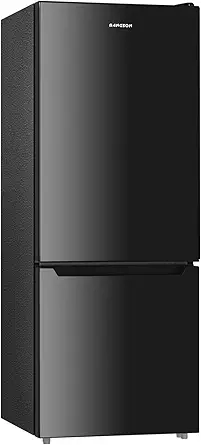 |
Hamilton Beach HBFR9004 9.2 cu ft Fridge

| Capacity | 9.2 cubic feet |
|---|---|
| Freezer Capacity | 2.8 cubic feet |
| Refrigerator Net Capacity | 6.4 cubic feet |
| Defrost System Type | Manual |
| Cooling Method | Compressor |
This Hamilton Beach compact refrigerator pairs a bottom freezer with a 6.4 cu ft fresh-food section to give you useful storage in a slim footprint. It is typically used in small kitchens, dorms, or office pantries where floor space is limited but you still want freezer access without bending into an overdoor freezer. The unit uses a compressor cooling system, manual defrost, reversible door, and three removable glass shelves for straightforward organization and cleaning. The bottom freezer includes multiple baskets for separating frozen items and a keyed lock adds security for shared spaces. Practical benefits include modest energy use for its class and a narrow width that fits tight spots. Important limitations are the manual defrosting requirement and modest freezer volume compared with full-size refrigerators, and the basic controls and non-inverter compressor that mean faster temperature recovery may be limited under heavy loads.
Best for: Buyers who need a space-saving refrigerator with convenient bottom-freezer access and straightforward features for everyday use in small apartments, dorms, or office kitchens.
Less Ideal for: Anyone needing a large-capacity freezer, advanced temperature controls, or fully frost-free operation should consider larger or higher-end models instead.
- Bottom-mount freezer for easier access to fridge contents
- Slim footprint suitable for dorms, offices, or small kitchens
- Removable glass shelves simplify cleaning and reconfiguration
- Includes keyed lock for shared spaces or short-term rentals
- Manual defrost freezer requires occasional maintenance
- Freezer capacity is small compared with full-size units
Verdict: Choose this unit if you want a compact, bottom-freezer refrigerator that maximizes usable fridge space in tight rooms while keeping the overall footprint small.
Upstreman BM71 7.1 Cu Ft Refrigerator
| Capacity | 7.1 cubic feet |
|---|---|
| Freezer Capacity | 1.65 cubic feet |
| Refrigerant | R-600A |
| Defrost System Type | Manual |
| Voltage | 115 volts |
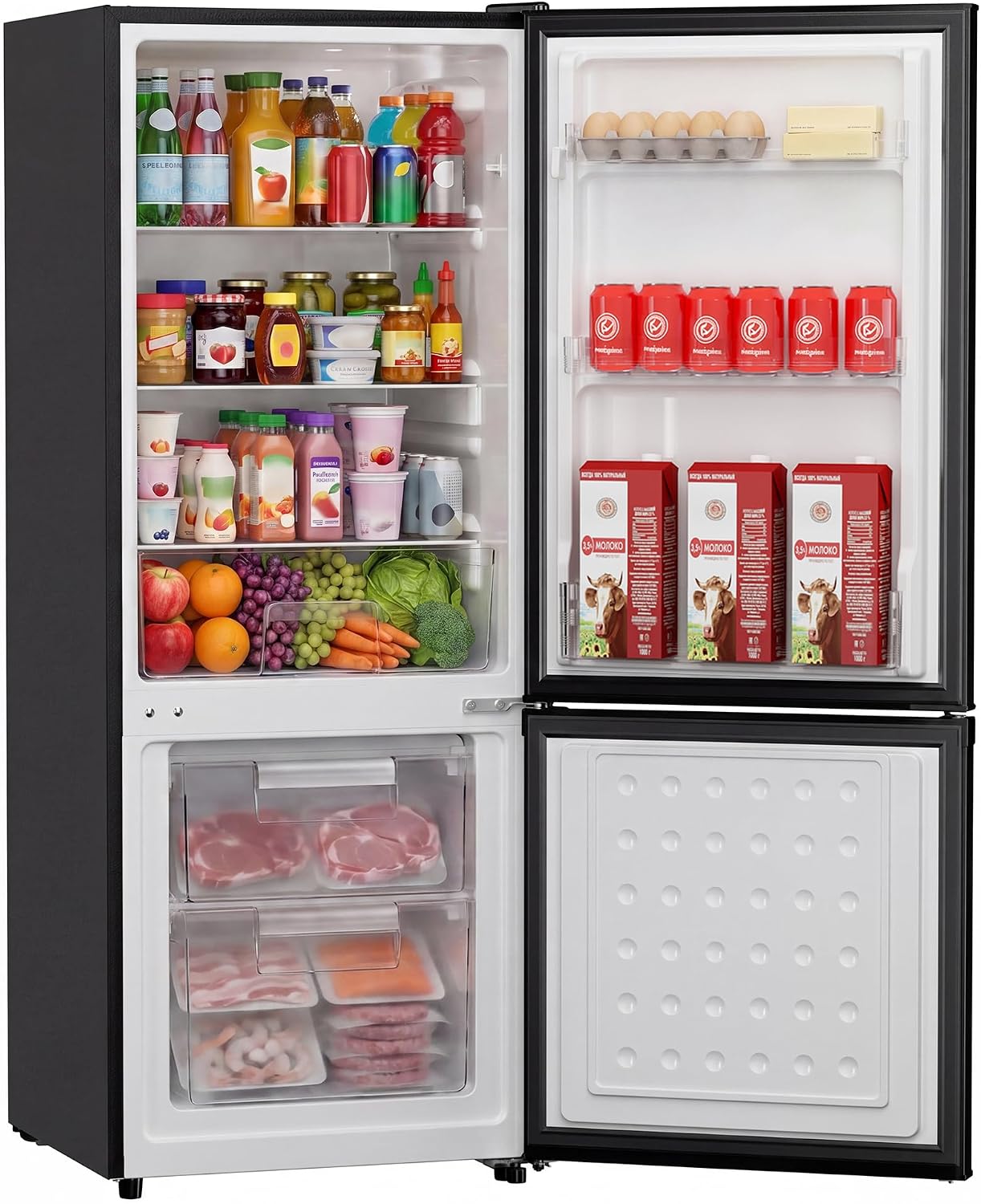
The Upstreman BM71 is a compact full-sized refrigerator with a bottom freezer that targets apartments, dorms, and small kitchens. It places the 5.45 cu ft refrigerator compartment at eye level and a 1.65 cu ft freezer below, which makes daily access to fresh foods easier and heavy frozen items simpler to lift. The unit uses a compressor cooling method with R-600A refrigerant, offers five temperature settings for both fridge and freezer ranges, and includes adjustable shelves, an egg shelf, an ice tray, interior lighting, and a reversible door for flexible placement. It is promoted as energy efficient with an annual consumption figure and relatively quiet operation, which helps in open-plan rooms or bedrooms. Notable limitations are the manual defrost freezer and modest freezer volume, so it will not replace a full-size kitchen freezer for heavy long-term frozen storage. Assembly is simple since it ships freestanding with included accessories, but allow the recommended upright settling time after delivery before use.
Best for: Buyers who prioritize accessible daily refrigeration and energy-conscious performance in a compact footprint, such as apartment or dorm dwellers who want a practical full-featured fridge with a bottom freezer.
Less Ideal for: Those needing large-capacity or long-term freezer storage, or buyers who want fully automatic frost-free freezers and precise digital temperature controls.
- Bottom-freezer layout keeps fresh food at eye level and reduces bending when accessing the fridge compartment
- Adjustable shelves and included accessories let you fit tall bottles and organize platters
- Energy-efficient compressor design with a specified annual energy figure for lower running costs
- Reversible door and adjustable feet allow flexible installation in tight or uneven spaces
- Relatively quiet operation suitable for open kitchens and dorm rooms
- Freezer is small at 1.65 cu ft and uses manual defrost, which requires periodic defrosting
- Temperature control is manual rather than digital so fine tuning requires some trial and error
Verdict: Choose the Upstreman BM71 if you need an energy-conscious, space-saving refrigerator that keeps fresh food at eye level while offering a compact bottom freezer for everyday use.
Anypro 4.0 Cu.Ft Bottom-Freezer Fridge

| Capacity | 4 cubic feet |
|---|---|
| Freezer Capacity | 1.9 cubic feet |
| Defrost System Type | Manual |
| Refrigerant | R-600A |
| Voltage | 110 volts |
This Anypro 4.0 cu ft fridge places the freezer below the fresh-food compartment and is built for dorms, apartments, offices, and other tight spaces where organized cooling matters. It offers separate compartments (2.1 cu ft fridge, 1.9 cu ft freezer), two adjustable glass shelves, a crisper drawer and two freezer drawers to keep items sorted and prevent odor transfer. Seven temperature settings and an R-600A rotary scroll compressor with 360 degree air circulation let you tune cooling for produce, drinks or frozen items while the unit claims sub-40 dB operation for quiet rooms. The matte finish and LED interior light help usability and the adjustable leveling feet make placement easier on uneven floors. Expect manual defrosting and a modest annual energy draw, so it is efficient but requires occasional maintenance and careful loading to get even cooling across shelves. For buyers prioritizing compact capacity and flexible internal storage with quiet operation, this is a practical bottom-freezer mini fridge option.
Best for: Buyers who need a compact, space-conscious refrigerator that maximizes usable storage and quiet operation for small living spaces and shared rooms.
Less Ideal for: People who need large capacity refrigeration for families, frequent meal prepping, or those wanting a frost-free, low-maintenance freezer.
- Bottom-freezer layout with separate fridge and freezer compartments for better organization
- Seven adjustable temperature settings to match different food and drink needs
- Adjustable glass shelves, crisper drawer, and multiple freezer drawers for flexible storage
- Quiet operation below 40 dB suitable for bedrooms and offices
- Manual defrost freezer requires periodic defrosting and maintenance
- Relatively small total capacity limits use for larger households
Verdict: A compact, quietly running bottom-freezer fridge that optimizes internal organization and adjustable cooling for small spaces.
KRIB BLING 4.0 Cu.Ft Bottom-Freezer Fridge
| Capacity | 4 cubic feet |
|---|---|
| Freezer Capacity | 1 cubic feet |
| Defrost System Type | Manual |
| Voltage | 110 volts |
| Refrigerant | R-600A |
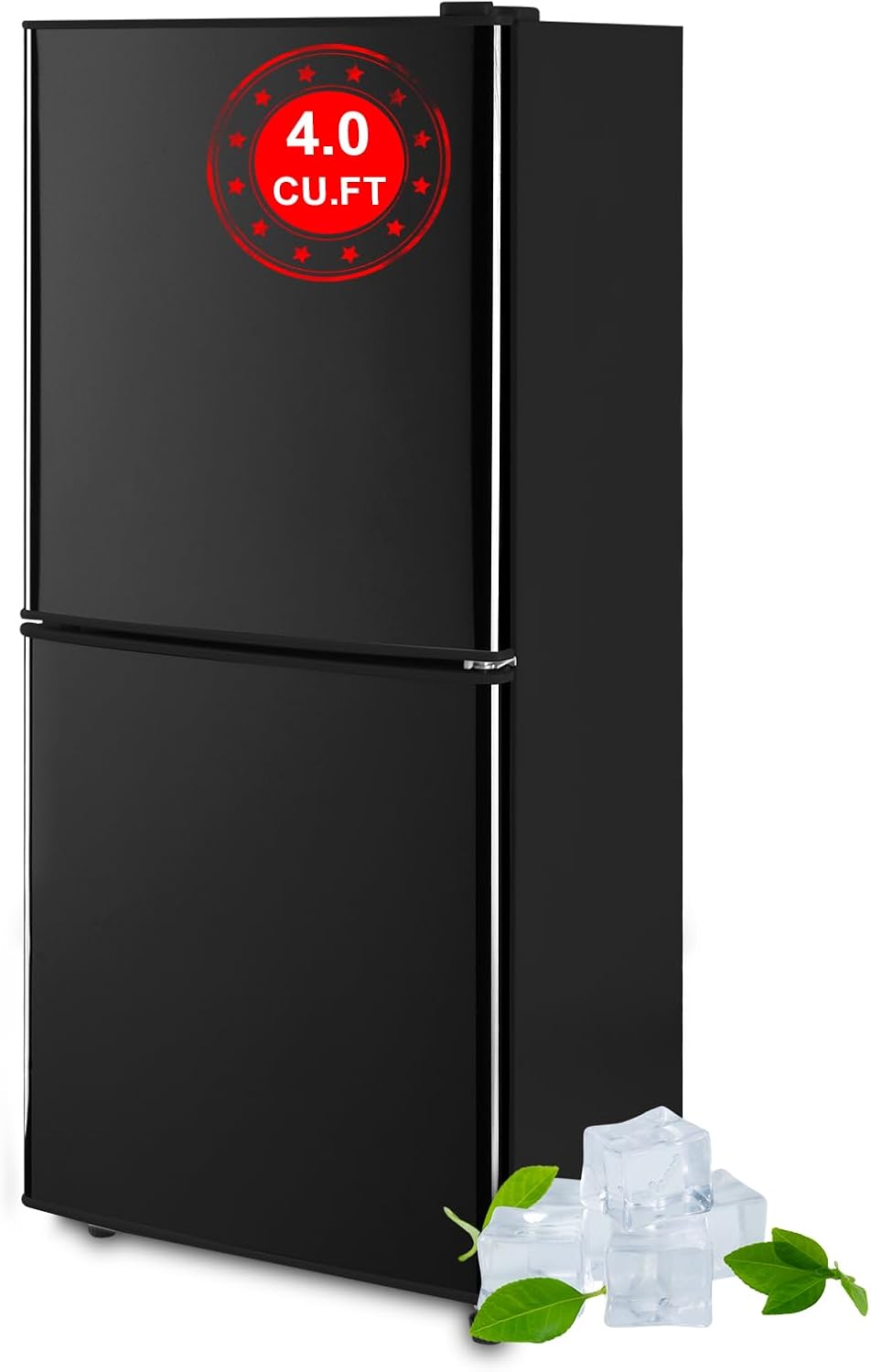
This compact refrigerator pairs a 3 cu ft fresh food compartment with a 1 cu ft bottom freezer to deliver basic cold storage for apartments, dorms, or offices. It uses a compressor cooling system with R-600A refrigerant and a seven-level adjustable thermostat so you can tune temperatures for drinks, snacks, or meal prep. The interior includes two removable glass shelves and door racks for flexible organization, and the unit ships with ice trays and an ice scoop. Installation options include countertop or tabletop placement and the fridge is finished in stainless steel with a right-hinged door. Practical benefits are its small footprint and straightforward controls that make it easy to fit into tight layouts and maintain. Important limitations are the manual defrost freezer, modest overall capacity, and a relatively high listed annual energy consumption that may matter to long-term users who run a unit continuously.
Best for: Buyers who need an inexpensive, space-saving bottom-freezer fridge for a single person or small living area and who prioritize easy placement and simple controls.
Less Ideal for: People who need larger capacity, hands-off frost-free operation, or the most energy-efficient long-term running costs should consider other options.
- Bottom-freezer layout keeps frozen items separate from fresh food and provides easy access to refrigerated shelves
- Seven-level adjustable thermostat gives control over temperature for different food types
- Removable glass shelves and door racks allow flexible storage and easier cleaning
- Compact footprint designed for placement on countertops, tabletops, or in small rooms
- Manual defrost freezer requires periodic maintenance to remove ice buildup
- Modest total capacity limits storage for larger households
- Listed annual energy consumption is relatively high compared with more efficient mini-fridges
Verdict: A budget-friendly compact bottom-freezer fridge that offers simple, adjustable cooling and flexible shelving for small spaces.
rosmena Dorm Fridge FLS-106W

| Capacity | 4.3 cubic feet |
|---|---|
| Freezer Capacity | 1.2 cubic feet |
| Defrost System Type | Manual |
| Cooling Method | Compressor |
| Annual Energy Consumption | 1.04 kwh |
This rosmena dorm-size refrigerator pairs a 3.1 cu ft fridge compartment with a 1.2 cu ft bottom freezer to give sensible, separated storage for an apartment, office, or dorm. It uses a compressor cooling system and a 7-level manual thermostat so you can dial the fridge temperature between roughly 41 and 46°F while the freezer reaches around -0.4°F. Glass shelves and a crisper drawer are removable and adjustable, which helps when storing taller bottles or meal-prep containers. The unit is freestanding, intended to sit with a couple inches of clearance behind it, and the brand recommends letting it rest 24 hours before first use. It is relatively quiet in operation and consumes about 1.04 kWh per day, making it economical to run. Expect basic manual defrosting and fewer advanced controls compared with larger models, and check door orientation and leveling before installation to avoid vibration or clearance issues.
Best for: Buyers who prioritize a dependable, straightforward compact fridge with distinct freezer storage for small spaces and want an economical, quiet daily driver.
Less Ideal for: Shoppers seeking precise digital temperature control, automatic defrost, or smart features should consider other models.
- Separate bottom freezer keeps frozen items isolated from fresh food
- 7-level adjustable thermostat allows simple temperature tuning
- Removable glass shelves and crisper drawer for flexible storage layouts
- Low noise operation suitable for dorms and offices
- Relatively low daily energy consumption (1.04 kWh)
- Manual defrost requires occasional user maintenance
- Temperature control is manual without precise digital readout
Verdict: A simple, reliable bottom-freezer mini fridge that delivers separated storage and quiet, energy-efficient operation for small spaces.
BANGSON 7.1 Cu Ft Refrigerator

| Capacity | 7.1 cubic feet |
|---|---|
| Refrigerator Net Capacity | 5.45 cubic feet |
| Defrost System Type | Manual Defrost |
| Cooling Method | Compressor |
| Number of Doors | 2 |
This compact bottom-freezer refrigerator packs practical features for small kitchens, apartments, and offices. It provides a 5.45 cu ft refrigerated section plus a 1.65 cu ft bottom freezer, adjustable glass shelves, a crisper drawer, door racks for bottles, and two freezer drawers for organized storage. Cooling is driven by a compressor and the unit offers five temperature settings to tailor both fridge and freezer temperatures; the manual defrost requires occasional attention and a supplied defrost tool. The design includes reversible doors, leveling legs, and an automatic interior night light that makes grabbing items after dark easier. It runs quietly at about 39 dB and is meant to be freestanding with 10 inches clearance for ventilation; setup requires waiting upright before plugging in. For buyers focused on real-world performance, the fridge balances usable storage and low noise, but expect manual defrost maintenance and modest freezer space compared with full-size models.
Best for: Buyers who want a compact, appliance-style refrigerator with a true bottom freezer that fits small living spaces and prioritizes quiet, practical everyday performance supported by solid user feedback.
Less Ideal for: Households that need large freezer capacity, fully automatic frost-free maintenance, or commercial-grade cooling performance should consider larger models instead.
- Space-efficient layout with separate bottom freezer for organized storage
- Adjustable removable glass shelves and crisper drawer for flexible interior arrangement
- Quiet operation around 39 dB suitable for apartments and offices
- Reversible doors and leveling legs make installation in tight spaces easier
- Freezer capacity is limited compared with larger refrigerators
- Manual defrost means periodic maintenance to remove frost buildup
Verdict: A quiet, space-saving bottom-freezer refrigerator that delivers usable storage and practical features for apartments and small kitchens.
Choosing the Right Mini Fridge with Bottom Freezer: Key Factors to Consider
Usable Capacity and Internal Layout
Usable capacity matters more than advertised liters or cubic feet because shelving, door bins, and freezer placement determine what you can actually store. For mini fridges with bottom freezers, check how much of the refrigerated compartment is taken up by fixed shelving and whether shelves are removable or adjustable.
A well-designed internal layout makes it easier to fit tall bottles, platters, and meal containers. The bottom freezer should provide enough depth for flat bags and ice trays without compromising fridge shelf height. Consider how door storage is configured for condiments and frequently used items, since door bins free up shelf space inside the main compartment.
Energy Use and Long-Term Operating Cost
Energy consumption is a key ownership cost because these units run continuously. Look for clearly stated annual kWh estimates or energy efficiency labels when available, and compare those numbers relative to the fridge's capacity.
Higher efficiency models often use more modern compressors and better insulation. In small living spaces, reduced heat output to the surroundings and lower electricity draw both improve comfort and lower bills. If you plan to run the unit in a bedroom or office, prioritize low-power operation and features such as auto-defrost cycles that minimize inefficient frost buildup.
Temperature Control and Cooling Performance
Consistent temperatures are essential for food safety and frozen storage. Effective mini fridges with bottom freezers have thermostats that maintain stable fridge temperatures and keep the freezer at or below safe storage ranges. Check whether the unit provides separate controls for the fridge and freezer; independent control can improve performance when you load one compartment more heavily than the other.
Rapid cooling after door openings and recovery to setpoint are useful in busy environments. When possible, choose units with straightforward temperature dials or digital controls that let you fine-tune settings for seasonal use or occasional heavy loads.
Noise, Vibration, and Placement Flexibility
Noise and vibration matter when the mini fridge will sit in a bedroom, home office, or open-plan living area. Compressors and fans create the most sound; look for models with low-decibel operation and rubberized feet or anti-vibration mounts to reduce transmitted noise.
Placement flexibility also depends on ventilation requirements. Units that allow close wall clearance or have top/side ventilation options give you more installation choices. If the fridge will be placed on uneven flooring, adjustable feet or leveling options help reduce rattles and door misalignment.
Durability and Materials
Durable construction extends appliance life and keeps performance consistent. Check build features like reinforced door seals, rust-resistant interiors, and sturdy shelf supports that resist sagging under load.
Thicker insulation and stronger outer panels help reduce vibration and improve efficiency. Consider expected use patterns: dorm and office fridges see frequent openings and small spills, so easy-to-clean interiors and corrosion-resistant finishes are practical advantages.
Defrosting, Maintenance, and Ease of Cleaning
Maintenance requirements affect the convenience of ownership. Automatic or frost-free systems reduce the need for manual defrosting, but they can add to upfront complexity. If the freezer is manual-defrost, ensure you can access and remove ice buildup easily without disassembling shelves.
Removable bins, spill-resistant shelving, and smooth interior surfaces simplify cleaning. Also pay attention to filter access or drain channels if the unit includes features like built-in drains for defrost cycles. Simpler maintenance routines reduce downtime and keep the unit operating efficiently over time.
Where a Bottom-Freezer Mini Fridge Shines
The bottom-freezer layout makes finding frozen items easier because you do not need to reach over chilled groceries to get into the freezer. For frequent freezer access, this orientation reduces bending and keeps frequently accessed refrigerated items at eye level.
In small living spaces a bottom-freezer mini fridge can deliver a more familiar kitchen-style organization without consuming a full-size footprint. The layout also helps airflow within the fridge compartment because cold air naturally sinks toward the freezer area.
- Better ergonomics for accessing frozen goods
- Fridge compartment stays more visible at standing height
- Cleaner separation of frozen and chilled storage
Sizing for Your Space and Use Case
Measure the installation site carefully, accounting for door swing and ventilation clearance. In apartments and dorms, narrow widths and shallow depth models often work best. Also consider countertop height if the unit will be placed under a counter or in a cabinet opening.
Think about how you use refrigerated space. If you meal-prep and store many containers, prioritize interior height and adjustable shelves. If you mostly keep drinks and a few perishables, a model with deeper door bins and wine-capable shelf spacing may be preferable.
- Allow space for ventilation per the manufacturer's guidance
- Account for door swing and clearance in placement
- Choose interior configurations that match your typical items
Installation, Ventilation, and Clearances
Proper ventilation is crucial for reliable cooling and energy efficiency. Many mini fridges need several inches of clearance at the rear or sides for heat dissipation. If ventilation is restricted, the compressor works harder, increasing noise and energy draw.
When installing under counters or in tight alcoves, verify whether the unit accepts top or side ventilation. Some compact models are designed for closer fits and include built-in airflow channels that preserve performance in cramped spaces.
- Check top, rear, and side clearance needs before buying
- Ensure floor is level to prevent door misalignment and noise
- Allow space to unplug and move the unit for periodic cleaning
Energy Use Tips to Lower Running Costs
Keep the fridge away from heat sources such as ovens or direct sunlight to reduce compressor run time. Regularly clear dust from condenser coils when accessible to maintain heat exchange efficiency. Set temperature controls to recommended ranges rather than overcooling; incremental warmer settings can still keep food safe while lowering energy use.
Load the fridge sensibly. A moderately full refrigerator maintains temperature better than an almost empty one because thermal mass stabilizes interior temperatures. Use airtight containers to reduce moisture and frost buildup in the freezer.
- Avoid placing the unit in direct sunlight or near heat-producing appliances
- Clean coils or vents periodically if the design allows
- Keep a moderate load level for thermal stability
Maintenance and Longevity Best Practices
Inspect door seals periodically for cracks or gaps and replace them if they fail to close tightly. A compromised seal increases energy use and leads to inconsistent temperatures. Wipe up spills immediately and clean shelves and bins on a schedule to prevent odors and sticky residues.
If the freezer is manual-defrost, schedule light defrosting when frost reaches a quarter-inch thickness. Tighten leveling feet and recheck door alignment if you notice bangs or rubbing when opening and closing the door.
- Test door gasket integrity periodically
- Defrost manual freezers before heavy buildup occurs
- Keep interior components clean to reduce odor and bacteria growth
How We Chose the Best Mini Fridge with Bottom Freezer
We prioritized practical, quantifiable attributes that directly affect daily use and long-term ownership of mini fridges with bottom freezers. Selection began with models that explicitly offer the bottom-freezer configuration and compact external dimensions suitable for small rooms. From that pool we applied filters for usable interior layout, minimum freezer capacity, and the presence of adjustable shelving and door storage to ensure flexible organization. Energy efficiency ratings and estimated annual power consumption were weighed heavily because compact refrigerators often run continuously in confined spaces. We also assessed temperature control features such as adjustable thermostats, separate fridge/freezer controls, and observed cooling stability under typical loads. Noise levels and placement options were considered for living and work environments, focusing on low vibration and quiet compressors. Durability and build quality factors included door seal construction, material thickness, and shelf hardware. We excluded models that lacked a dedicated bottom freezer or that were oversized for the mini-fridge category. Final candidates represent practical tradeoffs between capacity, efficiency, noise, and usable layout.
Our full evaluation process is outlined in our review methodology.
FAQ
How much clearance does a mini fridge with bottom freezer need?
Clearance needs vary by design, but most units require several inches at the back for ventilation. Some compact models allow tighter side or top clearance when they use front-facing ventilation; always check the manufacturer's clearance recommendations for the specific installation.
Are bottom-freezer mini fridges noisier than top-freezer models?
Noise depends more on compressor quality and insulation than freezer placement. Bottom-freezer models are not inherently louder, but placement, vibration isolation, and compressor design determine actual sound levels. Look for low-decibel ratings or check measured noise figures when possible.
Is a frost-free option important in a small bottom-freezer fridge?
Frost-free systems eliminate manual defrosting, which is convenient for busy users, but they can increase energy use slightly. For infrequent use or light freezer loads, manual-defrost models may be simpler and more efficient. Choose based on how often you will access the freezer and your willingness to perform periodic maintenance.
Can these mini fridges be installed under a standard counter?
Some mini fridges are designed for below-counter installation but require specific top or front ventilation. Verify built-in compatibility and measure the cabinet opening, including clearance for door swing and ventilation, before planning a built-in installation.
How do I maximize storage in a bottom-freezer mini fridge?
Use adjustable shelves and door bins to tailor the interior to your items. Store frequently used chilled items at eye level, and use shallow containers in the freezer to avoid awkward stacking. Removing unnecessary packaging and using stackable containers will also help utilize every inch of space.
Final Verdict
When choosing a mini fridge with bottom freezer, prioritize the internal layout that fits your typical items and the energy efficiency that matches your usage pattern. Expect tradeoffs between capacity, noise, and convenience features such as frost-free operation. Focus on usable interior capacity, reliable temperature control, and quiet operation for living and work spaces. Pick the model whose layout and efficiency match your most common tasks—frequent frozen access, beverage storage, or general food preservation—and make sure it fits the intended location with proper ventilation. That approach will give you a compact refrigerator that performs reliably over time.