
Note: This article contains affiliate links. If you click on these links and make a purchase, we may earn a small commission at no extra cost to you. This helps support our research and content. Read our full affiliate disclosure here.
A properly chosen mini fridge can make late-night feedings and milk storage safer and easier without taking up much space in a nursery. You want a unit that keeps breast milk and formula at consistent temperatures, runs quietly so it does not disturb sleeping infants, and fits the room layout. This guide shortlists the top mini fridges for nurseries that meet those practical needs. We evaluated units on temperature control, noise output, size and layout, energy use, and ease of cleaning to surface options suited to everyday nursery use. Read on for a concise summary of why each shortlisted unit made the cut and what to prioritize when you pick one.
Top Picks at a Glance
| Best Overall The best all-around choice for most situations | Cooluli Mini Fridge 4L |  |
| Best Quality Built to a higher standard if you want something more solid | Upstreman 3.2 Cu.Ft Mini Fridge BR321 |  |
| Best Value The sweet spot between price and what you get | Feelfunn Beverage Refrigerator FWC008-11 | 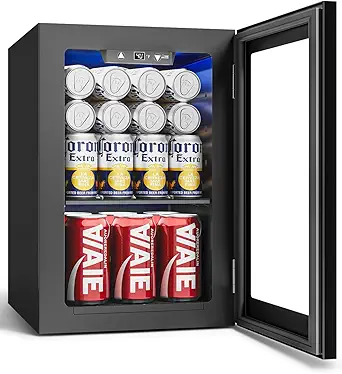 |
| Best Budget The cheapest option that still gets the job done reliably | Antarctic Star Mini Fridge 4L |  |
| Top Rated A top-rated pick with lots of positive feedback | Midea Compact Refrigerator WHS-65LB1 |  |
| Most Popular A crowd favorite that many people choose with confidence | Cooluli Classic 4L Mini Fridge |  |
| Best Seller A high-volume bestseller chosen again and again | EUHOMY BR013-110 Beverage Refrigerator |  |
Cooluli Mini Fridge 4L

| Capacity | 4 liters |
|---|---|
| Cooling Method | Thermoelectric |
| Power Source | AC/DC/USB |
| Warming Capacity | 122–144°F |
| Cooling Capacity | 40–45°F below ambient temperature |
The Cooluli 4L Mini Fridge is a small thermoelectric cooler and warmer that holds up to six 12-ounce cans or baby bottles and is built for countertop or travel use. It runs on AC, DC, or USB power so you can plug it into a wall outlet, a car 12V socket, or a 2A power bank in ECO mode, which makes it convenient for nursery, desk, or road use. The unit cools about 40–45°F below ambient and also warms to roughly 122–144°F, with a simple switch to change modes and a removable wire shelf for flexible storage and easy cleaning. Its thermolectric system is freon free and nearly silent, which is useful next to a baby's crib. Trade-offs include very limited capacity that fits only a few bottles and the slower thermoelectric cooling compared with compressor fridges, so it is best for short-term storage rather than long-term refrigeration. The matte plastic exterior, magnetic latch, and included AC and DC cords make setup straightforward for everyday nursery needs.
Best for: Parents or caregivers who need a quiet, portable fridge for short-term storage and on-the-go feeding tasks and who value flexibility in power sources and placement.
Less Ideal for: People who need long-term cold storage, large-capacity refrigeration, or rapid cooling to refrigerator temperatures should choose a compressor mini fridge instead.
- Portable power options with AC, DC, and USB support for use at home or in a car
- Dual cooling and warming functions for chilled bottles and keeping food warm
- Very quiet thermoelectric operation suitable for bedroom or nursery placement
- Removable shelf and wipe-clean interior for simple maintenance
- Compact footprint that fits on a countertop or nursery dresser
- Very small 4 liter capacity limits the number of bottles or items you can store
- Thermoelectric cooling is slower and less cold than compressor-based mini fridges
Verdict: A nearly silent, power-flexible mini fridge that is ideal for nursery use when you need a small, portable unit for short-term bottle and snack storage.
Upstreman 3.2 Cu.Ft Mini Fridge BR321

| Capacity | 3.2 cubic feet |
|---|---|
| Freezer Capacity | 0.3 cubic feet |
| Defrost System Type | Manual Defrost |
| Voltage | 115 volts |
| Annual Energy Consumption | 206 kwh |
The Upstreman BR321 is a small compressor mini fridge designed for dorms, offices, and small rooms where quiet, efficient cooling matters. It offers a 3.2 cu.ft capacity with a 0.3 cu.ft freezer, two adjustable glass shelves, three door bins and a crisper drawer so you can organize bottles, milk, and baby food jars neatly. The temperature dial provides five settings from about 32°F to 50°F for basic precise cooling, and the unit runs at a low noise level cited around 38 dB, which helps keep nursery sleep undisturbed. Energy Star certified performance and a rotary scroll compressor aim to keep power draw reasonable. Practical touches such as a reversible door, adjustable leveling feet, tight door seal, and a manual defrost tool make upkeep straightforward. Limitations include manual defrosting and a thermostat that is not digital, so temperature control is less exact than higher-end nursery fridges, and the freezer is small and not suitable for ice cream or long-term frozen storage.
Best for: Parents who need a quiet, energy-efficient compact fridge to store bottles, milk, and small food items close to a nursery and value basic, reliable cooling over advanced controls.
Less Ideal for: Families who need precise temperature management for long-term breast milk storage or a larger freezer capacity should consider a purpose-built, digitally controlled medical or larger refrigerator.
- Compact footprint with 3.2 cu.ft capacity fits tight nursery spaces
- Quiet operation (~38 dB) suitable for sleeping areas
- Adjustable glass shelves and door bins let you organize bottles, snacks, and breast milk containers
- Energy Star certified and uses R-600A refrigerant for efficient cooling
- Reversible door and leveling feet for flexible placement
- Manual defrost requires occasional maintenance
- Mechanical dial thermostat lacks precise digital temperature control
Verdict: A quiet, energy-efficient compact mini fridge that keeps nursery essentials chilled in a small footprint.
Feelfunn Beverage Refrigerator FWC008-11
| Capacity | 0.6 cubic feet |
|---|---|
| Temperature Range | 40-61°F (4-16°C) |
| Cooling Method | Compressor |
| Noise Level | ≤38 dB |
| Power Source | Corded Electric |
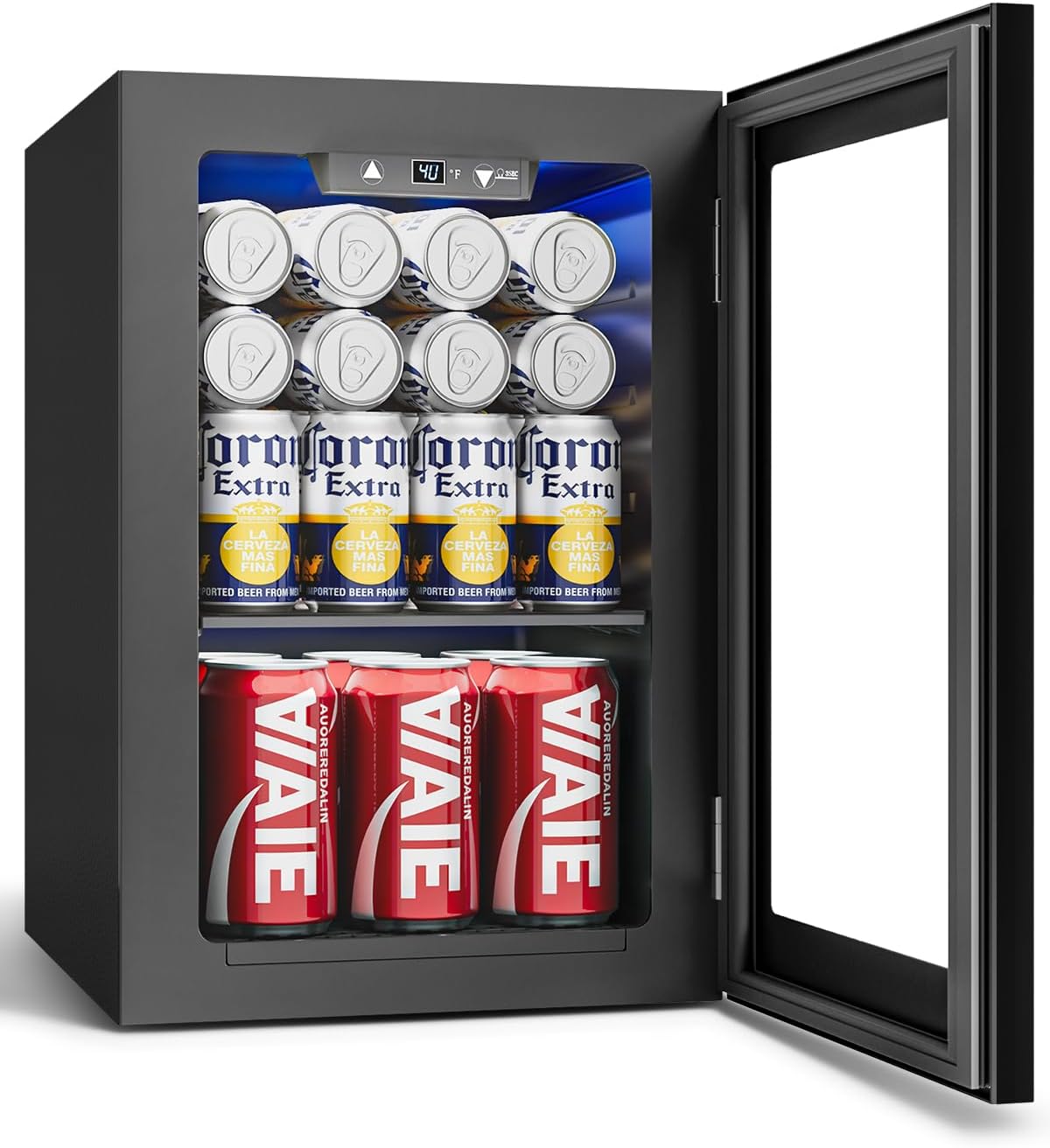
This compact Feelfunn beverage refrigerator is built to hold up to 24 cans or a handful of bottles in a small footprint suitable for a nursery, bedroom, or office. It uses a compressor-based cooling system with a 3D circulating air design and adjustable temperature control from 40 to 61°F, so you can keep formula bottles or drink cans at a consistent serving temperature. The single removable shelf and interior LED light make loading and retrieving bottles simple, and the unit runs quietly at 38 dB or less, which helps it sit near sleeping areas without becoming a nuisance. Practical touches include a UV-protective door, door sealing strip to maintain temperature, and adjustable feet for stability on uneven floors. Expect manual defrosting and limited capacity—this is a dedicated mini beverage cooler rather than a multi-use fridge for large storage. Energy use is modest but not class-leading, and the one-year warranty is basic. For short-term storage and occasional chilled bottles in a nursery, it balances size, quiet operation, and straightforward controls well.
Best for: Buyers who prioritize a very small, quiet cooler to keep a few bottles or cans chilled near a nursery or bedroom and value compact, no-fuss operation.
Less Ideal for: People who need to store many bottles at once, require freezer function, or want a unit with advanced energy-efficiency or long warranty coverage.
- Very compact footprint fits small spaces and under desks
- Adjustable temperature range (40–61°F) for beverages or serving-temperature bottles
- Quiet operation (≤38 dB) suitable for nearby sleeping areas
- Removable shelf and interior LED light simplify loading and access
- Small 0.6 cu ft capacity limits how many bottles or cans can be stored
- Manual defrost requires occasional maintenance
Verdict: A tiny, quiet compressor mini-fridge that is ideal for keeping a few bottles chilled next to a nursery where space and low noise matter.
Antarctic Star Mini Fridge 4L

| Capacity | 4 liters |
|---|---|
| Cooling Method | Thermoelectric |
| Voltage | 115V and 12V DC |
| Defrost System Type | Manual |
This Antarctic Star 4L compact refrigerator is a no-frills countertop cooler suited for short-term storage of bottles, breast milk, skincare, or snacks in small spaces. It uses thermoelectric cooling and a removable shelf to make the interior flexible for tall bottles or stacked cans, and it can run on 115V household power or a 12V car outlet for travel. The unit is marketed as quiet and energy conscious, with a claimed noise level near 25 dB and a cooling delta of roughly 53 to 64 degrees below ambient depending on conditions, which is sufficient for chilled storage though not for deep freezing. Controls are manual and the fridge has a single door and one shelf, so organization options are limited. At this size you should expect limited capacity and modest cooling compared with compressor fridges, but the low weight and portable design make it easy to move between a nursery, office, or car when needed.
Best for: Parents or caregivers who need an inexpensive, very small cooler for occasional chilled storage near a nursery, travel, or bedside and prioritize portability and low noise.
Less Ideal for: Those who need to store larger volumes of breast milk, keep items near freezing, or require faster, stronger cooling should choose a larger compressor refrigerator instead.
- Very compact 4L capacity fits small shelves or nursery changing stations
- AC and 12V DC power options for home or car use
- Removable shelf adds flexibility for bottles or taller items
- Quiet operation suitable for a sleeping environment
- Thermoelectric cooling is less effective than compressor units for keeping very cold temperatures
- Single small shelf and 4L capacity limit storage for frequent long-term use
Verdict: A super-compact, quiet, and budget-friendly mini fridge that works well for occasional chilled storage in a nursery or on the go.
Midea Compact Refrigerator WHS-65LB1

| Capacity | 1.6 cubic feet |
|---|---|
| Annual Energy Consumption | 207 kilowatt hours per year |
| Defrost System Type | Automatic |
| Cooling Method | Compressor |
| Door Orientation | Reversible |
The Midea 1.6 cu.ft. compact refrigerator is a simple, energy-efficient mini fridge designed for small spaces like nurseries, dorms, or offices. It uses a reciprocating compressor with R600A refrigerant and is ENERGY STAR certified, so it consumes relatively low power (about 207 kWh/year) and runs quietly under 42 dB. Inside you get a small chiller compartment for quick cooling, one removable shelf and door shelving sized to hold bottles including a 2L rack, and a mechanical thermostat with several settings down to the mid-30s F. The reversible door and removable shelf make placement and loading flexible in tight spaces. Limitations include the very small 1.6 cu.ft. capacity and the chiller is only for short-term cooling, not freezing, so it is not suited for long-term storage of frozen items. The design is basic with wire shelving and a single door, but for anyone needing a reliable, low-noise fridge for bottles, expressed milk, and baby food in a nursery, it covers the essentials without unnecessary complexity.
Best for: Someone who prioritizes a quiet, energy-efficient, no-frills refrigerator for keeping bottles, baby food, and short-term chilled items close at hand in a nursery or small room.
Less Ideal for: People who need substantial refrigerated storage, freezing capability, or advanced features like adjustable humidity or multiple compartments should look at larger or feature-rich models.
- ENERGY STAR certified with low annual energy consumption (207 kWh/year)
- Quiet operation under 42 dB suitable for sensitive rooms
- Reversible door and removable shelf for flexible placement and storage
- Mechanical thermostat with multiple settings for easy temperature adjustment
- Very small 1.6 cu.ft. capacity limits how much can be stored
- Internal chiller is for short-term cooling only and does not freeze items
Verdict: A quiet, energy-efficient mini fridge that reliably stores bottles and chilled baby food in a nursery without drawing attention.
Cooluli Classic 4L Mini Fridge

| Capacity | 4 liters |
|---|---|
| Cooling Method | Thermoelectric |
| Power Source | AC/DC/USB |
| Defrost System Type | Manual Defrost |
| Specification Met | ETL |
The Cooluli Classic 4L is a lightweight thermo-electric mini fridge that both cools and warms small items and is intended for countertop, car, dorm, or nursery use. It runs on AC, DC, or USB power, includes cords for each, and flips between cooling and warming modes with a simple switch, making it convenient for storing breast milk, medications, or skincare. Its EcoMax semiconductor system is quiet, refrigerant-free, and claims to reach roughly 35–40°F below ambient when cooling or about 149°F when warming, so it handles small-volume temperature needs without a compressor. Practical benefits include very low noise, easy portability with a molded handle, and the ability to run from a 2A power bank for outings. Limitations are obvious: 4 liters is only enough for a few bottles or jars at a time, manual defrost means occasional maintenance, and thermoelectric cooling is less effective in hot ambient conditions than compressor models. For nursery use it excels as a compact, quiet auxiliary fridge but should not replace a full-size refrigerator for larger storage or long-term cold-chain needs.
Best for: Buyers who want a quiet, portable auxiliary fridge to keep a few bottles, medicines, or skincare items chilled or warm near a nursery or changing station and who prioritize convenience over large capacity.
Less Ideal for: Parents who need to store larger volumes of breast milk or long-term refrigerated supplies should choose a larger compressor fridge or dedicated storage solution instead.
- Dual cooling and warming modes for storing both chilled and warm items
- Multiple power options (AC, DC and USB) including ability to run from a power bank
- Very small, lightweight and easy to move or carry with built-in handle
- Thermoelectric system is quiet and refrigerant-free
- Very limited 4 liter capacity suitable only for a few bottles or small containers
- Thermoelectric cooling performs worse in high ambient temperatures compared with compressor mini fridges
- Manual defrost requires periodic emptying and cleaning
Verdict: A compact, whisper‑quiet portable fridge ideal for keeping a few nursery essentials chilled or warmed on demand.
EUHOMY BR013-110 Beverage Refrigerator

| Capacity | 3.2 cubic feet |
|---|---|
| Temperature range | 37°F to 61°F |
| Cooling method | Compressor |
| Number of shelves | 5 removable shelves |
| Defrost system type | Frost Free |
This EUHOMY 3.2 cu ft beverage refrigerator is a compact, freestanding cooler that holds up to about 130 standard cans and uses a compressor with an internal fan to keep temperatures stable between 37°F and 61°F. It is controlled through a front digital touchscreen and shows set temperature on an LED display, which makes dialing in a steady cold zone straightforward. The reversible, double-layer glass door and high-density insulation help maintain an even interior climate, while five removable wire shelves give flexible storage for bottles, small containers, or pumped-milk bottles laid flat. The unit is frost-free and rated to run quietly at about 36 dB, and EUHOMY specifies roughly 0.69 kWh per day energy use. For everyday nursery use this fridge offers predictable cooling, visible inventory through the glass door, and easy shelf rearrangement, though it lacks a dedicated milk bottle rack or a true medical-grade temperature alarm. Expect standard compressor startup vibration and routine cleaning of shelves and door seals for long-term reliability.
Best for: Parents or caregivers who prioritize a reliable, low-noise fridge for storing breastmilk, formula, and drinks in a nursery and who want easy temperature control and flexible shelving without medical-grade monitoring.
Less Ideal for: Families that require certified medical refrigeration, remote temperature alerts, or purpose-built bottle organizers should look for a unit designed specifically for clinical or professional baby-milk storage.
- Digital touchscreen and LED display for precise temperature setting
- Compressor cooling with internal fan provides even, stable temperatures
- Five removable shelves let you customize storage layout
- Reversible double-layer glass door and tight seals help maintain climate
- Quiet operation suitable for low-noise environments
- No dedicated bottle racks or temperature alarm for medical-grade monitoring
- Glass door offers visibility but can admit light that may affect light-sensitive contents
- Not specified as having specialized nursery or hospital certifications
Verdict: A dependable, quiet 3.2 cu ft compressor mini fridge with precise digital control and flexible shelving that fits nursery use when you want reliable everyday cooling without clinical monitoring features.
Choosing the Right Mini Fridge for Nurseries: Key Factors to Consider
Temperature Stability and Range
Consistent internal temperature is essential when storing expressed breast milk or ready-to-use formula. Small fridges can be more sensitive to ambient room changes, so look for units with a narrow operating range and reliable controls.
A thermostat with clear settings or a digital readout helps you verify the internal temperature without opening the door frequently. Consider a model that allows you to maintain a fridge temperature between 34 and 40 degrees Fahrenheit, and be aware that settings marked only as low/medium/high can be harder to dial in precisely.
Noise Output
Nurseries need exceptionally quiet appliances because infants are easily disturbed by continuous humming or intermittent compressor noises. Check measured or reported decibel ratings and prefer units marketed for bedroom or office use when quiet operation is a priority.
Also evaluate the type of cooling: thermoelectric units can be quieter at steady state than small compressors, but they may struggle in warmer rooms. If you are sensitive to sound, place the fridge on a vibration-damping pad and test it in the nursery before long-term use.
Interior Size and Organization
Mini fridges vary widely in usable interior volume despite similar exterior footprints. Think about the items you will store, such as narrow breast milk bottles, small milk storage bags, or ready-to-serve snacks. Adjustable shelves, door bins sized for bottles, and a flat interior floor make organizing easier.
Measure the tallest bottle or container you need to store and compare that to shelf heights. Removable shelves and convertible layouts let you adapt the space as your storage needs change over time.
Energy Use and Continuous Operation
A nursery fridge often runs around the clock, so energy efficiency matters for household electricity consumption and long-term reliability. Look for units with low wattage and efficient compressors or thermoelectric systems designed for 24/7 use.
Lower energy draw also reduces internal heat generation and cycling frequency, which can improve long-term temperature stability. If possible, check estimated annual energy use or labeled efficiency data and favor fridges built for steady, low-power operation.
Maintenance and Cleanability
Hygiene is critical in any appliance that stores infant food. Interiors with removable shelves, rounded corners, and nonporous surfaces are easier to wipe down and sanitize. A drip tray or accessible condenser area simplifies routine upkeep.
Consider how easy it is to remove door seals and clean them, and whether the shelf materials tolerate mild disinfectants. Frequent cleaning should be straightforward without special tools or disassembly to reduce the risk of contamination.
Placement, Ventilation, and Safety
Where you place the mini fridge in the nursery affects its performance. Allow for manufacturer-recommended clearance for ventilation to prevent overheating and cycling that can raise noise and reduce lifespan.
Ensure power cords are routed safely away from reach, and avoid placing the unit near direct sunlight or heat sources that can force the compressor to work harder. A stable, level surface minimizes vibration, and securing small appliances from tipping reduces risks in active rooms.
Quiet Cooling Options for Nighttime Use
When a nursery fridge runs near a sleeping infant, continuous hum or intermittent buzzing can be disruptive. Look for units that specify low operational noise or that are designed for bedroom or office placement. Thermoelectric models often offer lower steady-state noise but may have tradeoffs in cooling power at higher ambient temperatures.
Test a candidate in the nursery during typical nighttime conditions if possible. Small placement changes, such as adding a rubber isolation pad or shifting the unit a few inches from a wall, can reduce vibration noise considerably.
- Assess both continuous noise and occasional compressor kick-in sounds
- Place fridge on a soft pad to reduce vibration transfer
- Avoid tight cabinetry without ventilation that can increase fan or compressor strain
Monitoring Temperature Without Disturbing Sleep
You want to check internal temps without opening the door repeatedly. A fridge with a front-mounted digital display or an interior thermometer that can be monitored externally helps you confirm safe storage conditions. Alternatively, a small wireless temperature probe can report readings to a phone or base unit without door openings.
Avoid relying solely on vague temperature settings. When storing perishable infant foods, aim for a steady temperature in the recommended safe range and verify stability over several hours.
- Use an exterior-readable digital thermometer where available
- Consider a probe thermometer for logging overnight variations
- Note that frequent door openings will raise internal temperature and shorten safe storage times
Space Planning: Where to Put a Nursery Mini Fridge
Measure the available footprint and plan door swing and access. A counter-top orientation or a compact freestanding unit may be best depending on nursery layout. Think through how caregivers will access bottles during night feedings and whether they need the fridge on a low table, shelf, or dedicated stand.
Ventilation is often overlooked. Many small fridges require a few inches of clearance at the back and sides for airflow. Built-in enclosures or closets can trap heat and reduce cooling performance, so prefer open placement or approved cabinet installations.
- Allow for door clearance and caregiver reach
- Keep vents unobstructed for efficient cooling
- Place on a steady, level surface away from direct heat or sun
Cleaning Routines and Long-Term Hygiene
Routine cleaning prevents buildup and reduces the risk of contamination. Regularly remove spills, sanitize removable shelves, and wipe seals and door interiors. Choose interiors with simple surfaces and removable parts to make these tasks faster and more reliable.
Plan a cleaning schedule that fits your usage pattern. For heavy use or frequent spills, a weekly wipe-down may be necessary. For lighter use, monthly deep cleaning of shelves and seals may suffice.
- Wipe spills immediately to avoid odors and bacterial growth
- Remove and clean door gaskets periodically
- Use mild cleaners safe for food-contact surfaces
Energy and Environmental Considerations
Because a nursery fridge often runs continuously, energy consumption adds up. Favor models with efficient compressors or low-draw thermoelectric systems to keep electricity use modest. Lower energy use also tends to correlate with less heat output into the nursery.
Consider the fridge's lifecycle impacts: durable construction and easily replaceable parts lengthen service life and reduce waste. Check simple repairability features like removable shelves and accessible condensers.
- Compare estimated wattage or run-time energy notes when available
- Look for durable interiors that resist staining and wear
- Plan for periodic maintenance to extend service life
How We Chose the Best Mini Fridge for Nurseries
We focused on features that matter for storing breast milk, formula, and infant snacks in a nursery environment. Temperature stability was weighted heavily because small temperature swings can affect milk safety. Noise performance was another key filter; we excluded any units with reported continuous noise above typical bedroom levels. Size and interior layout were assessed to ensure bottles and small containers fit comfortably. Energy efficiency and low standby power were considered because the fridge may run continuously in a nursery. Ease of cleaning and simple controls were required so caregivers can maintain hygiene without complex procedures. We excluded oversized compact refrigerators intended for garages, units with unreliable temperature regulation, models lacking a true refrigeration cycle, and any appliance designed primarily for outdoor use. Our final picks prioritize consistent cooling, quiet operation, practical interior organization, and safe materials. The evaluation dimensions we used map directly to measurable specs and everyday use: temperature range and consistency, measured or reported noise in decibels, usable interior volume and shelf flexibility, energy consumption, and cleaning/accessibility features.
Our full evaluation process is outlined in our review methodology.
FAQ
Is a mini fridge safe for storing breast milk in a nursery?
Yes, a properly functioning mini fridge that maintains consistent refrigeration temperatures is safe for storing breast milk. Confirm the internal temperature remains within recommended ranges and avoid frequent door openings that cause temperature spikes.
How quiet should a nursery mini fridge be?
Aim for a unit with low continuous noise, ideally similar to bedroom or office-rated appliances. Exact tolerances vary, but quieter thermoelectric designs or compressors rated for low dB are preferable to avoid disturbing sleep.
Can thermoelectric mini fridges be used in a nursery?
Therolectric units can be a good choice for quiet operation and small loads, but their cooling ability decreases in warm rooms. If your nursery runs warm or you need lower temperatures, verify the unit's performance under expected room conditions.
How often should I clean a nursery mini fridge?
Wipe spills immediately and perform a deeper clean of shelves and door seals at least monthly for routine use. Increase frequency if you store many bottles or if spills are common.
Where is the best place to put a mini fridge in a nursery?
Place the fridge where it is easy to reach during nighttime feedings, on a stable surface with clearance for ventilation. Avoid enclosed cabinets without airflow and keep it away from direct sunlight or heat sources.
Will running a mini fridge in the nursery raise the room temperature?
Well-functioning mini fridges release some heat but typically have minimal impact on room temperature if placed with proper clearance. Poorly ventilated installations can cause more heat buildup and reduce efficiency.
Final Verdict
When choosing a mini fridge for a nursery, prioritize steady temperature control and low operational noise above all else. Interior layout, ease of cleaning, and energy efficiency are important secondary considerations that affect everyday convenience and long-term running costs. Balance those factors against the nursery layout and how you plan to access the fridge during night feedings. With attention to temperature stability, quiet operation, and simple maintenance, you can pick a compact unit that keeps infant feeds safe and the nursery peaceful.