
Note: This article contains affiliate links. If you click on these links and make a purchase, we may earn a small commission at no extra cost to you. This helps support our research and content. Read our full affiliate disclosure here.
If you need compact cold storage that survives the harsher conditions of a garage, choosing the right mini fridge with freezer for garage use matters. Garages see wider temperature swings, dust, and occasional humidity spikes, so a fridge designed or specified for that environment will keep frozen items solid and perishables safe. This guide shortlists the top mini fridges with freezer compartments suited for garage placement, focusing on cooling stability, insulation, and overall durability. Below you'll find our top picks and the criteria we used to evaluate them, plus practical advice on placement, maintenance, and capacity planning to help you pick the best fit for your space.
Top Picks at a Glance
| Best Overall The best all-around choice for most situations | Whynter CUF-301SS 3.0 cu ft Upright Freezer |  |
| Best Quality Built to a higher standard if you want something more solid | Frigidaire Retro Refrigerator EFR751 |  |
| Best Value The sweet spot between price and what you get | Igloo 3.2 Cu. Ft. Mini Fridge |  |
| Best Budget The cheapest option that still gets the job done reliably | Frestec Mini Fridge FTC31RE |  |
| Top Rated A top-rated pick with lots of positive feedback | Midea 3.1 Cu.ft Mini Fridge WHD-113FSL |  |
| Most Popular A crowd favorite that many people choose with confidence | Upstreman BR321 3.2 Cu.Ft Mini Fridge |  |
| Best Seller A high-volume bestseller chosen again and again | EUHOMY Beverage Wine Cooler BRF-27H | 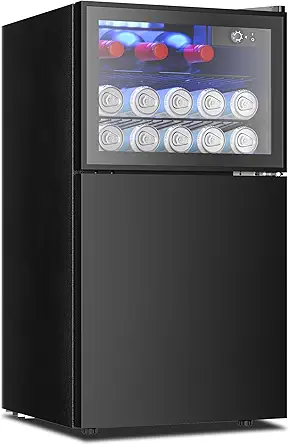 |
Whynter CUF-301SS 3.0 cu ft Upright Freezer

| Capacity | 3 cubic feet |
|---|---|
| Temperature range | -14° to 50° F |
| Wattage | 100 |
| Door orientation | Reversible |
| Number of shelves | 3 |
The Whynter CUF-301SS is a small upright freezer designed for tight spaces such as garages, offices, dorms, or kitchens and can be switched to refrigerator mode when you need chilled storage. It uses a compressor-based cooling system with a mechanical dial that sets refrigerator temperatures from 32 to 50°F or freezer temperatures from -14 to -11°F, and includes two wire shelves plus a removable slide-out basket for basic organization. The reversible-swing stainless steel door and recessed handle make placement flexible while the included cylinder lock and keys let you secure contents in shared spaces. Rated to use relatively little energy, this unit is quiet enough for nearby rooms and runs on standard 115V household power. Limitations for garage use include modest capacity—only 3 cubic feet—and basic mechanical controls rather than precise digital settings, so it is best for regular food and beverage storage rather than long-term bulk freezing or temperature-critical items.
Best for: Practical buyers who need a compact, energy-conscious cold storage unit for a garage, office, or small household space and value flexibility between fridge and freezer modes.
Less Ideal for: Users who need large capacity or precise temperature control for long-term freezing, or those who store large frozen loads regularly.
- Convertible freezer/refrigerator mode for flexible cold storage needs
- Reversible stainless steel door and recessed handle for flexible placement
- Integrated lock with two keys for secure shared-space storage
- Quiet compressor operation suitable for near-room placement
- Includes removable shelf and slide-out basket for basic organization
- Only 3.0 cu ft capacity, limiting bulk storage
- Mechanical thermostat lacks precise digital control
- Not designed for heavy-duty or large-volume freezing tasks
Verdict: A compact, energy-conscious convertible freezer that fits garages and small spaces when you need a reliable, secure solution for everyday frozen or chilled storage.
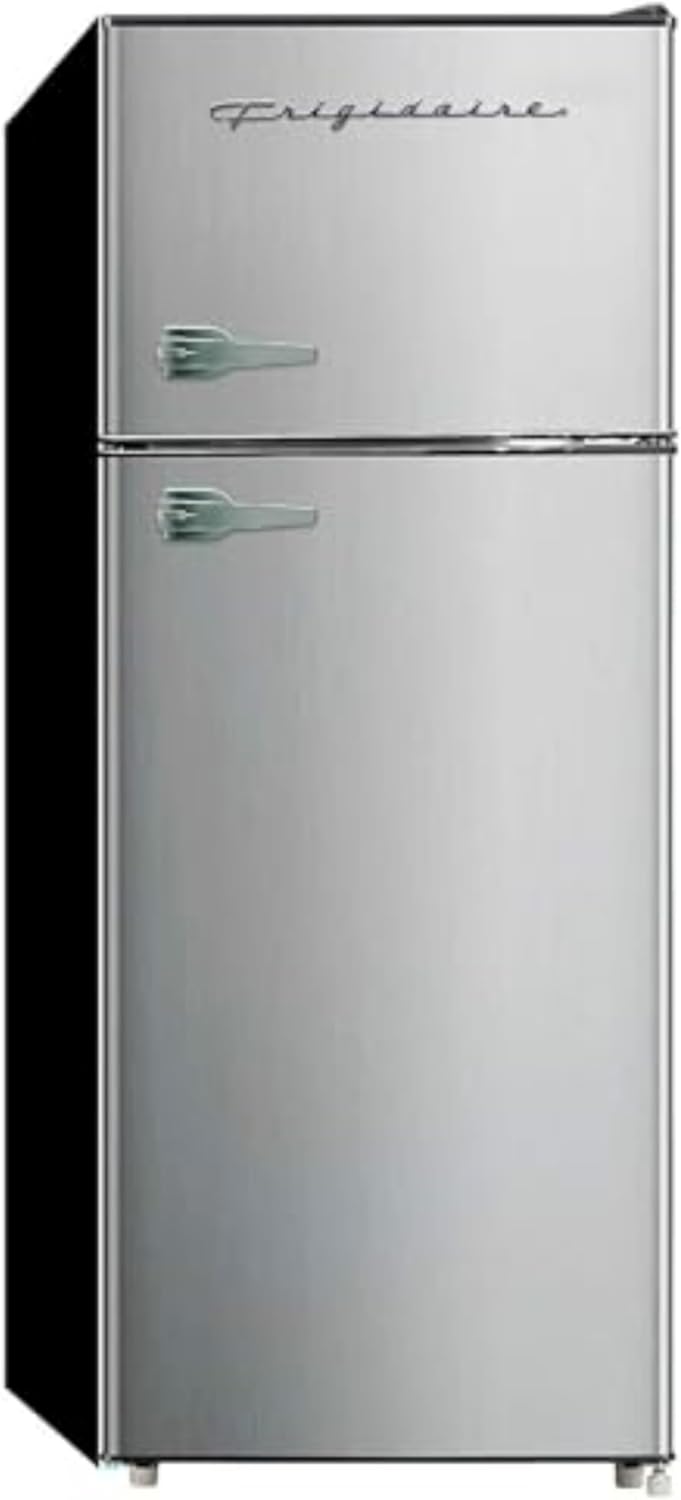
Frigidaire Retro Refrigerator EFR751
| Capacity | 7.5 cubic feet |
|---|---|
| Freezer Capacity | 2 cubic feet |
| Defrost System Type | Manual |
| Power Source | Corded Electric |
| Cooling Method | Compressor |
This Frigidaire Retro Refrigerator is a compact upright unit that combines a 7.5 cubic foot fridge with a 2 cu ft top freezer, aimed at smaller spaces such as garages, dorms, and studios. It uses a compressor cooling system with mechanical controls and offers three adjustable glass shelves, a transparent crisper, and clear door bins to keep items organized. The reversible door and two rear castors plus front leveling legs make placement and maneuvering straightforward in tight spots. Practical touches include interior lighting, an adjustable thermostat, and a removable freezer shelf for flexible storage. On the downside it uses manual defrost for the freezer and the annual energy consumption is relatively high at 378 kWh, so it is not the most energy-efficient option for continuous heavy-duty garage use. Noise and cooling performance are typical of a small compressor fridge, so it will handle daily beverage and food storage but will not match full-size refrigerators for long-term bulk storage. Overall it is a well-organized, space-saving refrigerator that prioritizes usable interior layout and simple, reliable operation.
Best for: Buyers who need a reliable, space-saving upright fridge with a separate freezer for a garage, workshop, or small living area and value interior organization and easy placement.
Less Ideal for: People who need the most energy-efficient continuous-use solution for an always-on garage fridge or those who want a frost-free freezer without manual defrosting.
- Compact 7.5 cu ft capacity with separate top freezer for frozen goods
- Adjustable glass shelves and clear door bins for organized, flexible storage
- Reversible door and built-in castors for easy placement and maneuvering
- Compressor cooling with mechanical controls for straightforward, reliable operation
- Uses manual defrost in the freezer rather than automatic defrosting
- Higher annual energy consumption (378 kWh) compared with more efficient compact models
Verdict: Choose this compact Frigidaire when you want a dependable, well-organized garage-ready fridge with a separate freezer and easy placement features.
Igloo 3.2 Cu. Ft. Mini Fridge

| Capacity | 3.2 cubic feet |
|---|---|
| Freezer Capacity | 0.2 cubic feet |
| Cooling Method | Compressor |
| Defrost System Type | Automatic |
| Voltage | 120 volts |
The Igloo 3.2 Cu. Ft. Mini Fridge is a small freestanding refrigerator with a separate top freezer section designed for personal or light-duty use. It uses a compressor cooling system with an adjustable mechanical thermostat (32–50°F) and two removable frameless glass shelves with spill guards for straightforward organization. Practical features include vertical can storage, tall-bottle racks, two door shelves, and included ice trays and a drip tray in the freezer. The fridge runs quietly and is described as energy-efficient, though annual energy consumption is listed, so expect continuous power draw when in use. The compact footprint makes it easy to place in garages, dorms, or offices, but its capacity and single-door layout limit it to drinks, snacks, and small frozen items rather than full grocery loads. Temperature control is manual rather than digital, and there is no fan-forced cooling, so recovery after heavy door openings will be slower than full-size refrigerators. For a garage where occasional access and space savings matter, this model delivers usable chilled and frozen storage without extra complexity.
Best for: Buyers who want a simple, space-saving fridge with a dedicated freezer for occasional chilled and frozen storage in a garage, workshop, or small living space and who prioritize straightforward, low-maintenance operation.
Less Ideal for: People who need large-capacity refrigeration, fast temperature recovery after frequent door openings, or precise digital temperature control should consider larger or more advanced models.
- Separate top freezer for ice and small frozen items
- Compressor cooling for reliable temperature control in varied environments
- Removable glass shelves with spill-prevention guards for easy cleaning
- Adjustable mechanical thermostat allowing simple temperature changes
- Compact freestanding design that fits tight spaces
- Manual thermostat and no fan-forced cooling means slower temperature recovery
- Not intended for large grocery loads or frequent heavy use
Verdict: A compact, compressor-cooled mini fridge with a top freezer that gives garages and small spaces reliable chilled and frozen storage without extra complexity.
Frestec Mini Fridge FTC31RE

| Capacity | 3.2 cubic feet |
|---|---|
| Freezer Capacity | 0.2 cubic feet |
| Cooling Method | Compressor |
| Defrost System Type | Frost Free |
| Refrigerant | R-600A |
This compact refrigerator pairs a 3.2 cu ft fresh-food compartment with a small 0.2 cu ft top freezer and a compressor cooling system, making it suitable for basic chilled storage in tight spaces. Typical uses include stashing beverages, snacks, and small food items in a garage, dorm, or office where floor space is limited. Notable features include two glass shelves, a crisp drawer, LED interior lighting, a reversible left-hinged door, adjustable thermostat with a one-touch defrost control, and a quiet compressor rated under 37 dB. The unit is energy conscious with an annual consumption figure provided and uses R-600A refrigerant. Practical benefits include simple setup as a freestanding unit, modest energy use, and adjustable shelving for different storage layouts. Important limitations are the small freezer capacity that will only handle ice trays or very small frozen items and the compact overall volume that cannot replace a full-size refrigerator for long-term food storage. For garage use expect adequate cooling for drinks and short-term perishables but avoid prolonged exposure to extreme ambient temperatures.
Best for: Buyers who need an affordable, space-saving fridge to keep drinks and short-term perishables cool in a secondary space and who prioritize low running noise and simple controls.
Less Ideal for: Those who need substantial freezer capacity or reliable cooling in very hot or unconditioned garage environments should choose a larger or garage-rated refrigerator instead.
- Compact 3.2 cu ft capacity fits tight spaces
- Compressor cooling with low noise under 37 dB
- Reversible door and adjustable glass shelves for flexible placement
- Energy efficient operation with published annual consumption
- One-touch defrost and LED interior light for convenience
- Very small 0.2 cu ft freezer only suitable for ice or tiny frozen items
- Not rated for harsh temperature extremes common in unconditioned garages
Verdict: A budget-friendly compact compressor fridge that delivers quiet, energy-conscious cooling for drinks and short-term food storage in small secondary spaces.
Midea 3.1 Cu.ft Mini Fridge WHD-113FSL

| Capacity | 3.1 cubic feet |
|---|---|
| Freezer Capacity | 0.92 cubic feet |
| Annual Energy Consumption | 270 kwh |
| Cooling Method | Compressor |
| Defrost System Type | Manual |
The Midea 3.1 cu.ft. mini fridge pairs a small-footprint chilled compartment with a 0.92 cu.ft. top freezer for basic garage or secondary refrigeration needs. It uses an R600A compressor and a multi-air flow system to keep temperatures steady while consuming about 270 kWh per year, which helps lower operating cost compared with older compact units. Inside you get two removable glass shelves, a crisper area, a 2L bottle rack and an interior light; the mechanical thermostat covers typical fridge and freezer ranges and the reversible door makes placement flexible in tight garage corners. Setup is simple since it is freestanding and the manual defrost freezer is straightforward to maintain, though the compressor noise is rated around 45 dB which can be noticeable in very quiet spaces. The unit is not designed for extreme ambient temperatures, so performance can decline in unconditioned garages during very hot or cold months. For someone who wants dependable, energy-efficient secondary refrigeration without advanced features, this is a practical, no-frills choice.
Best for: Buyers who prioritize a dependable, energy-efficient secondary fridge for a garage or workshop and value simple, low-maintenance operation over advanced features.
Less Ideal for: People who need a unit built for extreme ambient temperatures, heavy-duty commercial use, or precise temperature control for sensitive items should consider purpose-built garage or commercial refrigeration instead.
- ENERGY STAR certified with R600A compressor for lower annual energy use
- Top freezer plus fridge layout provides separate frozen storage
- Removable glass shelves and 2L bottle rack allow flexible organization
- Reversible door and compact freestanding design fit tight spaces
- Interior LED light and simple mechanical thermostat for easy use
- Manual defrost freezer requires occasional thawing
- May struggle to maintain set temperatures in unconditioned garages during extreme heat or cold
Verdict: A reliable, energy-efficient compact fridge with a usable top freezer that suits garage or workshop use when you want simple, low-cost cooling rather than climate-controlled performance.
Upstreman BR321 3.2 Cu.Ft Mini Fridge

| Capacity | 3.2 cubic feet |
|---|---|
| Freezer Capacity | 0.3 cubic feet |
| Cooling Method | Compressor |
| Defrost System Type | Manual Defrost |
| Voltage | 115 volts |
The Upstreman BR321 is a small compressor-cooled refrigerator designed for bedrooms, dorms, offices, and other compact spaces where a modest freezer is useful. It offers a 3.2 cu.ft interior with a 0.3 cu.ft top freezer, two adjustable glass shelves, three door shelves, a crisper drawer, and five temperature settings to tailor chilling between 32°F and 50°F. The unit runs on a rotary scroll compressor and is rated for low noise (about 38 dB) and low annual energy consumption, making it suitable for continuous use without high electricity costs. Practical touches include a reversible door, adjustable leveling feet, and a manual defrost system with a provided defrost tool. Limitations to note are the small freezer capacity that will not hold ice cream or large frozen items and the manual defrost requirement, which means occasional maintenance to avoid frost buildup. For buyers who value quiet, efficient cooling and flexible shelf layout in a compact footprint, this model covers the basics well.
Best for: Buyers who prioritize a quiet, energy-efficient compact fridge with a small freezer and flexible shelving for garages, dorms, or secondary spaces and who rely on peer reviews to validate reliability.
Less Ideal for: Anyone who needs substantial frozen storage, frequent long-term freezing, or a frost-free, low-maintenance freezer solution.
- Compact footprint with 3.2 cu.ft total capacity and a 0.3 cu.ft freezer for basic frozen storage
- Adjustable glass shelves and door bins allow flexible organization for bottles and taller items
- Reversible door and leveling feet make installation adaptable to tight spaces
- Quiet operation and relatively low annual energy consumption for continuous use
- Simple manual controls and five temperature settings for straightforward adjustment
- Freezer is small and not suitable for storing ice cream or large frozen foods
- Defrost system is manual, requiring periodic maintenance to remove frost
Verdict: If you need a quiet, energy-efficient compact fridge with a small freezer and flexible shelving for a garage or secondary space, the Upstreman BR321 is a practical, reliable choice backed by solid user feedback.
EUHOMY Beverage Wine Cooler BRF-27H

| Capacity | 3 cubic feet |
|---|---|
| Freezer Capacity | 1.7 cubic feet |
| Cooling Method | Compressor |
| Defrost System Type | Manual |
| Installation Type | Freestanding |
This EUHOMY unit combines a glass-doored beverage cooler above a deeper bottom freezer in a compact freestanding cabinet, making it useful where space is limited. Typical use is storing chilled drinks and a small amount of frozen items for quick access; the top compartment is designed for wine, champagne, and beer with two adjustable shelves and an internal LED, while the bottom freezer reaches temperatures down to about -13°F for ice cream and ready meals. Temperature is controlled with a seven-position knob and the reversible door plus adjustable feet help placement on uneven floors. The compressor cooling and high-density foam door aim to keep temperatures stable, but the system is manual-defrost and not optimized for heavy-duty or continuous garage extremes. Practical benefits include separate zones for drinks and frozen goods, visual monitoring through the glass door, and a key lock for security. Expect modest energy use for a compact compressor fridge and limited internal volume for larger frozen loads.
Best for: Buyers who prioritize a reliable compact cooler with separate freezer space for chilled drinks and occasional frozen items and who prefer straightforward mechanical controls over smart features.
Less Ideal for: People who need large freezer capacity, continuous heavy-duty freezing, or a fully frost-free unit for demanding garage conditions should consider larger or commercial-grade models instead.
- Two-zone layout with a dedicated beverage cooler and a deep freezer for flexible storage
- Adjustable shelves and reversible door for easier placement and bottle arrangement
- Compressor cooling and high-density foam door for steadier temperatures than thermoelectric units
- Built-in LED light and glass door for quick visual access to contents
- Manual defrost requires periodic maintenance to remove frost buildup
- Limited total capacity and freezer volume restricts large frozen-food storage
Verdict: A compact compressor mini fridge with separate beverage and freezer zones that provides dependable chilled storage and a usable deep freezer for casual garage or secondary use.
Choosing the Right Mini Fridge with Freezer for Garage: Key Factors to Consider
Ambient Temperature Range
Garages can swing from cold to very warm depending on season and insulation. A mini fridge with freezer for garage use needs a cooling system and thermostat calibrated to maintain safe internal temperatures across that range. If the unit cannot function reliably at higher ambient temperatures, the compressor will run continuously or the freezer will fail to hold, risking food spoilage.
Check manufacturer ambient operating specs and prefer models rated for higher-temperature environments. Consider whether you need additional climate control in the garage to protect the appliance and its contents.
Insulation and Freezer Compartment Design
Thicker, higher-quality insulation reduces heat transfer and helps the freezer maintain temperature during warm spells or power interruptions. The design of the freezer compartment itself matters: an enclosed or drawer-style freezer retains cold better than a small open shelf or icebox cavity.
Look for tight door gaskets, a well-sealed freezer door or flap, and interior layouts that avoid cold loss when the main door opens. Good insulation also reduces compressor runtime, improving longevity in tough environments.
Compressor Type and Durability
The cooling mechanism determines how hard the unit works in a garage. Traditional compressors generally offer stronger cooling at higher ambient temperatures compared with thermoelectric systems, which can struggle in warm garages. Evaluate build quality around the compressor, mounting, and vibration dampening to avoid premature failure.
Durable compressors, protected condensers, and serviceable components increase the likelihood the fridge will survive tougher garage conditions and still provide reliable cold storage over years of use.
Capacity and Interior Flexibility
Consider how much frozen and refrigerated storage you actually need. Mini fridges with small freezer compartments are fine for ice packs or a few frozen items, but not for bulk storage. Interior shelf placement, door bins, and removable shelves affect how efficiently you can store irregular items like tall bottles or bulky containers.
Choose a unit with a usable freezer layout rather than relying on nominal liter or quart numbers. Flexible shelving and removable bins make it easier to balance fridge and freezer space for changing needs.
Energy Use and Running Costs
Garages often run hotter than living spaces, causing fridges to cycle more frequently and draw more power. Energy-efficient models or those with better insulation will reduce operating costs and lessen stress on the cooling system. Look for clear energy consumption specs and realistic estimates of watts or amps under higher ambient temperatures.
Consider whether the expected runtime will affect your electrical setup, such as circuit capacity and the presence of other heavy loads in the same garage circuit.
Noise, Vibration, and Placement
Some garages double as workshops or are adjacent to living areas where noise matters. Vibrations from the compressor can also rattle shelves or tools. Evaluate measured noise levels where available and consider build features that reduce vibration transmission, like rubber feet or isolated compressor mounts.
Placement matters: set the unit on a level, stable surface away from direct sunlight and excessive dust. Elevating the fridge slightly can protect it from occasional damp floors and improve airflow around the condenser.
Where to Place a Mini Fridge in the Garage
Placement affects performance and longevity. Choose a sheltered spot away from direct sun, heaters, and large dust sources. Avoid corners with poor airflow; the compressor and condenser need clearance on the sides and back to reject heat efficiently.
If your garage floors are prone to moisture or occasional water exposure, raise the mini fridge a few inches on a solid platform to prevent corrosion and electrical hazards. Also plan for access to a grounded outlet on a dedicated circuit if possible.
- Keep at least 2 to 4 inches clearance around ventilation areas.
- Avoid placing near sources of heat such as furnaces, hot pipes, or windows with strong sun exposure.
- Elevate the unit in damp garages and ensure the surface is level to prevent compressor strain.
Maintaining a Mini Fridge in a Garage Environment
Regular maintenance reduces failures. Clean dust and debris from condenser coils at least twice a year to preserve cooling efficiency. Inspect door gaskets for wear and replace them if they compress or crack, since leaks drastically reduce performance.
Monitor interior temperatures with a small fridge thermometer to catch warm-up trends early. During extreme temperatures, avoid overloading the fridge. Periodic checks of the drain pan and leveling can prevent moisture and vibration issues that commonly develop in garages.
- Vacuum or brush condenser coils to remove dust.
- Check and clean door seals for a tight fit.
- Use a thermometer to verify refrigerator and freezer temps regularly.
Power Considerations and Electrical Safety
Garages may have older wiring or shared circuits. Verify the outlet you plan to use is on a circuit that can handle continuous appliance load. If other heavy-draw equipment shares the circuit, consider relocating the fridge or upgrading the circuit to prevent tripped breakers.
Use only grounded outlets and avoid extension cords for long-term connection. If you must use a cord temporarily, choose one rated for appliance use and keep connections dry and elevated above the floor.
- Prefer a dedicated 15A or 20A circuit for continuous fridge operation.
- Avoid long-distance power runs that rely on undersized extension cords.
- Label the circuit in your panel so household members do not accidentally overload it.
Managing Temperature Swings and Seasonal Use
If your garage experiences drastic seasonal shifts, consider seasonal strategies. In cold months, very low ambient temperatures can cause thermostats to behave unpredictably; some fridges may not run enough to keep the freezer at the correct temperature. Conversely, hot summers push compressors harder and may shorten service life.
For intermittent use, such as storing overflow drinks only in summer, emptying and unplugging during extreme cold winters may be acceptable. If you need year-round reliability, prioritize units rated for wider ambient ranges or add simple insulating enclosures and passive ventilation to stabilize the micro-environment around the appliance.
- In winter, monitor for undercooling of the freezer if the ambient drops very low.
- In summer, ensure good ventilation to prevent overheating and compressor stress.
- Consider seasonal removal of perishable items during extreme temperatures.
Sizing the Freezer Compartment for Your Needs
Freezer size in mini fridges varies widely and often represents a small portion of total volume. Decide if you need space for packaged frozen meals and bulk items or only ice trays and a few frozen goods. A slightly larger freezer compartment with better seals provides more flexible use.
Think about access patterns. If you will frequently open the main door to reach drinks while the freezer must stay cold, a compact separate freezer door or drawer reduces cold loss versus a single-compartment design with an internal cube freezer.
- Estimate weekly frozen-item needs before choosing capacity.
- Prefer separate freezer access if you expect frequent fridge door openings.
- Remember that shelving flexibility can expand usable freezer space when needed.
How We Chose the Best Mini Fridge with Freezer for Garage
We evaluated units based on performance and robustness for garage conditions rather than typical indoor kitchen use. Key criteria included cooling consistency at wide ambient temperatures, insulation and freezer hold time, compressor or cooling system resilience, and cabinet and seal durability. Energy efficiency and operating cost under higher ambient loads were considered, as garages often force systems to work harder. Capacity and interior layout were assessed for real storage needs, with attention to shelf flexibility and freezer compartment usability. Noise and vibration were included because garages are sometimes adjacent to living or work areas. We excluded units explicitly rated only for indoor, climate-controlled rooms or consumer models lacking manufacturer guidance for elevated ambient temperatures. Our selection prioritized units with documented performance characteristics and construction features that reduce the risk of failure or food spoilage in garage environments.
Our full evaluation process is outlined in our review methodology.
FAQ
Can a standard mini fridge run reliably in an uninsulated garage?
It depends on the unit. Many standard models are designed for climate-controlled indoor use and may struggle in uninsulated garages, especially during hot periods. Choose models rated for wider ambient ranges or provide additional shelter and ventilation to improve reliability.
How cold should the freezer be to keep food safe in a garage fridge?
The freezer compartment should maintain temperatures at or below 0°F (-18°C) for long-term food safety. Short-term storage may tolerate slightly higher temperatures, but repeated warm cycles reduce food quality and increase spoilage risk.
Do thermoelectric mini fridges work for garage freezer needs?
Thermoelectric systems typically perform poorly as freezers in warm ambient conditions because they rely on ambient heat differences and have limited cooling capacity. For consistent freezer performance in a garage, compressor-based systems are generally more reliable.
How often should I defrost a mini fridge freezer in a garage?
Defrosting frequency depends on frost buildup, which can be accelerated by temperature swings and door opening. Check the freezer monthly and defrost when frost exceeds a quarter inch. Regular defrosting maintains capacity and cooling efficiency.
Will placing the fridge on a concrete floor cause problems?
A concrete floor is fine, but if the garage floor gets damp or cold, elevate the unit slightly to prevent moisture damage and improve airflow. Ensure the fridge sits level to avoid stress on the compressor and to keep doors aligned for proper sealing.
Final Verdict
For garage use, prioritize models that demonstrate cooling stability across a wide ambient range, solid insulation and gasket performance, and a durable compressor and cabinet. Balance freezer size and internal layout against the typical items you plan to store to avoid choosing a unit that cannot meet daily needs. Accept that tradeoffs exist: more rugged cooling systems and better insulation often mean higher energy draw and slightly larger footprints. Focus on the factors discussed here to choose a mini fridge with freezer for garage use that reliably protects frozen and refrigerated items in your specific environment.