
Note: This article contains affiliate links. If you click on these links and make a purchase, we may earn a small commission at no extra cost to you. This helps support our research and content. Read our full affiliate disclosure here.
A compact refrigerator can make a big difference in small spaces, dorm rooms, offices, or secondary kitchens. Choosing the right mini fridge matters because size, energy use, and internal layout affect how much you can store, how long food stays safe, and how much it costs to run. This guide shortlists seven top mini fridges for the money, selected for practical everyday use and balanced performance. Below we evaluate each option on energy efficiency, usable capacity, and reliability so you can match a fridge to your space and habits. Read on to find the best compact cooler for your needs.
Top Picks at a Glance
| Best Overall The best all-around choice for most situations | BLACK+DECKER 2.5 Cu. Ft. Compact Refrigerator |  |
| Best Quality Built to a higher standard if you want something more solid | Frigidaire Retro Mini Fridge EFR840 |  |
| Best Value The sweet spot between price and what you get | EUHOMY Mini Fridge WC-6B | 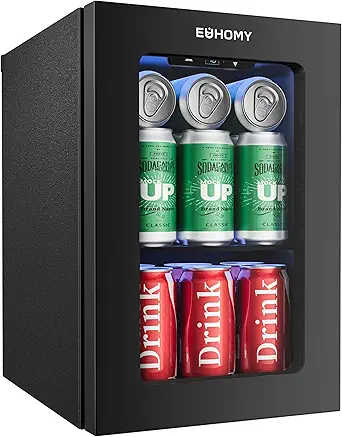 |
| Best Budget The cheapest option that still gets the job done reliably | DUMOS Mini Fridge 4L |  |
| Top Rated A top-rated pick with lots of positive feedback | Midea 3.1 Cu Ft Mini Fridge |  |
| Most Popular A crowd favorite that many people choose with confidence | Cooluli Classic 4L Mini Fridge |  |
| Best Seller A high-volume bestseller chosen again and again | Upstreman BR321 3.2 Cu.Ft Mini Fridge |  |
BLACK+DECKER 2.5 Cu. Ft. Compact Refrigerator

| Capacity | 2.5 cubic feet |
|---|---|
| Freezer Capacity | 0.2 cubic feet |
| Cooling Method | Compressor |
| Refrigerant | R-600A |
| Energy | ENERGY STAR certified |
This BLACK+DECKER compact refrigerator is a straightforward small‑space fridge built around a 2.5 cubic foot refrigerated compartment and a shallow chiller area for ice trays and very light chilling. It uses a compressor cooling method and a mechanical dial thermostat with seven settings, so you can fine tune temperature by feel rather than through presets. Storage is practical: two slide‑out glass shelves and door bins that hold a 2‑liter bottle or multiple cans make everyday organization simple, and the shelves are removable to fit taller items. The unit is freestanding, has a reversible door and leveling legs to suit different placements, and is ENERGY STAR certified using R600a refrigerant for better efficiency. Tradeoffs are typical for this class: the chiller is not a full freezer and the 2.5 cu ft capacity limits bulk storage, and the manual defrost and mechanical controls lack the convenience of frost‑free or digital models. For buyers who want an efficient, no‑frills mini fridge that fits under counters or in dorms, it delivers sensible performance and storage.
Best for: Buyers seeking a balanced, efficient mini fridge for dorms, offices, or small apartments who prioritize sensible storage, reliability, and lower energy use over advanced features.
Less Ideal for: Those who need a true freezer for long‑term frozen storage or users who want digital controls, auto defrost, or larger capacity for bulk food storage.
- ENERGY STAR certified for lower annual energy consumption
- Two removable glass shelves and door bins offer flexible, easy-to-configure storage
- Reversible door and adjustable leveling legs allow flexible placement
- Compressor cooling with R600a refrigerant provides consistent cooling performance
- Chiller compartment is not a true freezer and cannot reliably freeze food
- Manual defrost and mechanical thermostat lack modern digital conveniences
Verdict: A reliable, energy‑efficient 2.5 cu ft mini fridge that balances practical interior storage and efficient compressor cooling for everyday small‑space use.
Frigidaire Retro Mini Fridge EFR840

| Capacity | 3.2 cubic feet |
|---|---|
| Freezer Capacity | 0.2 cubic feet |
| Defrost System Type | Manual |
| Cooling Method | Compressor |
| Door Orientation | Reversible |
The Frigidaire Retro Mini Fridge EFR840 is a small freestanding refrigerator with a top freezer that balances vintage styling with practical daily use. It provides 3.2 cubic feet of total capacity with a 0.2 cu ft freezer for ice and frozen snacks, three glass shelves in the fridge section, a crisper drawer, and a removable ice tray in the freezer. The compressor-based cooling and manual defrost system keep temperatures steady for core refrigeration tasks while the flush-back design and reversible door help position the unit in tight spaces. Notable touches include a built-in side bottle opener and electronic lock for basic security. Expect straightforward temperature control and easy cleaning thanks to slide-out glass shelves, but also expect manual defrosting of the small freezer and limited cold storage compared with full-size fridges. For buyers prioritizing reliable cooling in a compact, style-forward package, this model delivers usable capacity and useful features, though it is not suited to heavy long-term frozen storage or zero-maintenance operation.
Best for: Buyers who need dependable, fridge-focused cooling in a compact, style-conscious unit for dorms, offices, or a home bar and who value steady compressor performance over advanced electronics.
Less Ideal for: People who need substantial freezer space, long-term frozen storage, or automatic defrosting should consider larger refrigerators instead.
- Compact 3.2 cu ft capacity with usable fridge and small freezer for snacks
- Compressor cooling provides steady temperatures compared with thermoelectric units
- Removable glass shelves and crisper drawer simplify organization and cleaning
- Flush-back design and reversible door make placement flexible in small spaces
- Built-in side bottle opener and electronic lock add convenience and security
- Freezer is very small and requires manual defrosting
- No advanced temperature presets or smart features
Verdict: Choose this Frigidaire if you want reliable compressor cooling and retro styling in a compact fridge that fits tight spaces and handles everyday chilled storage.
EUHOMY Mini Fridge WC-6B

| Capacity | 18 liters |
|---|---|
| Temperature range | 40°F to 61°F |
| Cooling method | Compressor |
| Voltage | 115 volts |
The EUHOMY WC-6B is a small compressor mini fridge designed to chill drinks on a counter, in a dorm, or at a home bar. It holds about 24 cans in its 18 L capacity and uses a compressor cooling system with a digital control that lets you set temperatures between 40°F and 61°F. The unit includes a removable shelf for flexible storage, an LED interior light, and a UV-protective door to reduce sunlight exposure. It is freestanding, plugs into standard 115V, and the brand claims quiet operation under 40 dB, which makes it suitable for bedrooms or offices. Trade-offs are its very small internal capacity and manual defrosting, so it is not suitable for larger food storage or heavy usage, and the single door with right-hand orientation limits placement options. For buyers focused on an affordable, reliable chilled-drink solution, it offers stable compressor cooling and simple controls without extra frills.
Best for: Buyers who want an inexpensive, space-saving fridge to keep drinks cold on a countertop or in a small room and prioritize steady compressor cooling and simple controls.
Less Ideal for: Not a good choice for storing family groceries, large bottles, or for anyone needing a freezer compartment or high capacity cooling for parties.
- Compressor cooling provides more stable, colder temperatures than thermoelectric units.
- Compact 18 L design fits on countertops and in small spaces.
- Removable shelf allows flexible arrangement for cans or bottles.
- Digital temperature control with 40°F–61°F range for consistent chilling.
- Quiet operation under 40 dB suitable for bedrooms and offices.
- Very small internal capacity limits storage to a few cans or bottles.
- Manual defrost requires occasional maintenance and care.
Verdict: A budget-friendly compact compressor mini fridge that delivers stable, quiet cooling for drinks in tight spaces.
DUMOS Mini Fridge 4L

| Capacity | 4 liters |
|---|---|
| Cooling Method | Thermoelectric |
| Power Source | AC/DC (110V AC / 12V DC) |
| Noise Level | 31 dB |
| Number Of Shelves | 1 |
The DUMOS 4L mini fridge is a very small, lightweight cooler aimed at keeping a few drinks, snacks, or skincare items chilled on a desk, in a dorm room, or in a car using its AC/DC cord. It uses thermoelectric cooling rather than a compressor, so it runs quietly and without chemical refrigerants, and the adjustable thermostat lets you dial in cooler temperatures up to about 30°F below ambient conditions. The interior holds roughly six 12-ounce cans on a single plastic shelf and includes a small door shelf for slim items. Practical benefits include a built-in handle for carrying, dual AC/DC power for home or vehicle use, and very low noise operation near 31 dB. Limitations are its tiny 4-liter capacity and freezerless design, which restricts it to short-term chilling rather than long-term food storage or rapid refrigeration; thermoelectric systems also cool more slowly in hot environments. For buyers seeking an inexpensive, portable option to keep a few items cool, this model delivers solid value, but it is not a replacement for a full-size or compressor-based mini fridge.
Best for: Shoppers who want the cheapest, most portable way to keep a handful of drinks or skincare products cool around a desk, dorm, or vehicle and prioritize low noise and plug-and-play convenience.
Less Ideal for: Anyone who needs substantial cold storage, rapid chilling, or true freezing capability should choose a larger compressor mini fridge instead.
- Very compact and lightweight for easy placement and transport
- Runs quietly with thermoelectric cooling and low power draw
- Includes both AC and 12V DC power cords for home and car use
- Adjustable thermostat lets you control cooling level
- Built-in handle and simple single-shelf interior maximize portability and convenience
- Very small 4-liter capacity limits number and size of items stored
- Thermoelectric cooling is slower and less effective in hot ambient temperatures
- No compressor or freezer compartment, so it cannot freeze or rapidly chill large loads
Verdict: An ultra-affordable, ultra-portable mini fridge that delivers quiet, plug-and-play cooling for a few cans or skincare items—perfect for budget-minded buyers who need small-scale cooling.
Midea 3.1 Cu Ft Mini Fridge

| Capacity | 3.1 cubic feet |
|---|---|
| Configuration | Compact Freezer-on-Top |
| Defrost System Type | Manual |
| Cooling Method | Compressor |
| Specification Met | Energy Star |
The Midea 3.1 Cu. Ft. mini fridge pairs a small footprint with a usable fridge and separate freezer compartment, making it a practical choice for dorms, apartments, or office corners. It uses a compressor with R600a refrigerant and is ENERGY STAR certified, so it runs relatively efficiently and claims low annual energy use. The unit has adjustable mechanical thermostats for both compartments, removable shelves, a crisper drawer and an internal LED light that make organizing and accessing food straightforward. The reversible door and adjustable legs help fit the fridge into a variety of tight layouts. Expect manual defrosting for the freezer and basic wire/ glass shelving rather than advanced temperature management or inverter-driven quiet operation. Build and finishes are utilitarian but the separate freezer and simple electronic lock add usefulness. For buyers prioritizing dependable, no-frills cooling and low operating cost, this model offers sensible features without extra smart functions.
Best for: Buyers who want a straightforward, dependable compact refrigerator that keeps running efficiently and fits into small spaces without extra smart features.
Less Ideal for: People who need whisper-quiet operation, precise temperature control for sensitive items, or built-in smart connectivity should look elsewhere.
- ENERGY STAR certified for lower annual energy consumption
- Separate freezer compartment with manual temperature control
- Reversible door and adjustable legs for flexible placement
- Removable shelves, crisper drawer, and internal LED light for practical organization
- Manual defrost freezer requires occasional maintenance
- Compressor-based cooling can be louder than inverter models
Verdict: A reliable, energy-efficient compact fridge with a separate freezer and practical storage that delivers solid everyday cooling without frills.
Cooluli Classic 4L Mini Fridge

| Capacity | 4 liters |
|---|---|
| Cooling Method | Thermoelectric |
| Power Source | AC/DC/USB |
| Configuration | Freezerless |
| Specification Met | ETL |
The Cooluli Classic 4L is a compact thermo-electric cooler/warmer built for personal use on a countertop, desk, dorm room, or in a car. It cools roughly 20°–22°C (35°–40°F) below ambient and switches to a warming mode that reaches about 65°C (149°F) via a simple mechanical switch, making it useful for drinks, skincare products, medications, or snacks. Its small footprint and molded handle make it easy to carry and the included AC, DC, and USB cords add flexibility for travel or vehicle use. The unit operates quietly thanks to its semiconductor EcoMax system and uses no refrigerants, which keeps operation low-maintenance and eco-friendly. Expect to fit only a few cans or small jars because capacity is just 4 liters, and manual defrost plus limited temperature control mean it is not a replacement for a full refrigerator for long-term food storage. Energy use is modest and the ETL listing covers basic safety expectations, but buyers should note the manufacturer warranty is one year and the unit is designed for North American 110V use only.
Best for: Buyers who want a compact, low-noise personal cooler/warmer for skincare, medications, or a few drinks and who prioritize proven performance and quiet operation.
Less Ideal for: Anyone needing full-size refrigeration, precise temperature control for long-term food storage, or large-capacity cooling for gatherings should consider larger appliances.
- Portable 4-liter capacity with molded handle for easy carrying
- Cools about 20°–22°C below ambient and also warms up to about 65°C
- Multiple power options: AC, DC and USB for home, car, or travel
- Thermoelectric EcoMax system runs quietly and uses no refrigerants
- Very small capacity suitable for only a handful of cans or small items
- Limited temperature precision and manual defrost require occasional upkeep
Verdict: A highly portable, quiet mini fridge that cools and warms small personal items and works anywhere thanks to AC, DC, and USB power options.
Upstreman BR321 3.2 Cu.Ft Mini Fridge

| Capacity | 3.2 cubic feet |
|---|---|
| Freezer Capacity | 0.3 cubic feet |
| Cooling Method | Compressor |
| Defrost System Type | Manual Defrost |
| Voltage | 115 volts |
The Upstreman BR321 is a straightforward compact refrigerator aimed at dorms, bedrooms, and small offices. It offers a 3.2 cubic foot interior with a small 0.3 cu.ft freezer, two adjustable glass shelves, three door bins, and a crisper drawer so you can store bottles, snacks, and fresh produce in a neat layout. Cooling is handled by a rotary scroll compressor and a five-position thermostat that spans roughly 32°F to 50°F for basic temperature control. The unit is Energy Star rated with modest annual consumption and runs quietly around 38 dB, which makes it suitable for sleeping or working areas. Practical extras include a reversible door, adjustable leveling feet, and a manual defrost design that keeps the electronics simple. Trade-offs are the limited freezer space that cannot hold ice cream or large frozen items and the manual defrost requirement, but for buyers prioritizing reliable, efficient cooling in a small footprint this model covers the essentials without unnecessary complexity.
Best for: Buyers who want a dependable, energy-efficient mini fridge for a dorm, bedroom, or small office and prefer a simple appliance with quiet operation and easy placement.
Less Ideal for: People who need substantial freezer space, frequent long-term frozen storage, or a no-maintenance frost-free freezer should look at larger or frost-free models instead.
- Compact but usable 3.2 cu.ft capacity with dedicated 0.3 cu.ft freezer space
- Energy Star rated compressor design for lower electricity use
- Quiet operation (~38 dB) suitable for bedrooms and offices
- Adjustable glass shelves, crisper drawer, and reversible door for flexible placement
- Freezer is very small and not suitable for ice cream or large frozen items
- Manual defrost requires occasional maintenance
Verdict: A quiet, energy-efficient 3.2 cu.ft mini fridge that delivers reliable everyday cooling for cost-conscious, risk-averse buyers.
Choosing the Right Mini Fridge for the Money: Key Factors to Consider
Capacity and Internal Layout
Capacity numbers are useful, but internal layout determines what actually fits. Look for units with adjustable shelves, removable door bins, and clear definitions for beverage versus perishables space. A fridge with a shallow, well-organized interior can be more useful than a slightly larger unit with a fixed shelf that prevents common items from fitting.
Consider the height of shelf openings for taller bottles and whether the freezer compartment (if present) reduces usable refrigerated space. Also check how space is measured; manufacturers sometimes quote gross volume rather than usable volume, so mentally deduct space taken by the compressor, insulation, and fixed freezer areas.
Energy Use and Running Cost
A mini fridge's initial cost is only part of ownership expense. Energy consumption determines monthly operating cost and suitability for long-term placement in spaces like offices or bedrooms. Units with better insulation and efficient compressors will draw less power and keep utility bills lower.
Pay attention to energy ratings when available and to typical daily wattage in product specs. Consider the placement environment too: a fridge in a warm room will work harder and use more energy. If electricity use matters, pick models built for efficiency rather than purely for compact size.
Noise and Location Fit
Noise level matters when the fridge sits in a bedroom, study, or open-plan apartment. Compressor cycles and fan operation create variable sound that can be disruptive. Look for units with low-decibel operating claims or user feedback noting quiet operation.
Placement can mitigate perceived noise: a mini fridge on a sturdy, level surface reduces vibration and rattles. If you need a fridge for a sleeping area, prioritize low-noise designs and avoid high-cycle compressors when possible.
Temperature Control and Cooling Reliability
Stable temperature keeps food safe and beverages enjoyable. Reliable cooling depends on the thermostat design, compressor quality, and airflow inside the cabinet. A good mini fridge should reach and maintain typical refrigeration temperatures across a reasonable range of ambient room temperatures.
Manual dials are common and fine when they are graduated and responsive. Some units have more precise electronic controls. Consider how quickly the fridge recovers temperature after the door opens and whether the freezer section cycles on and off in a way that affects the main compartment.
Build Quality and Finish
Durable construction affects both longevity and daily convenience. Robust shelving, a spill-resistant surface, and a well-sealed door help prevent problems. Check for solid door hinges, a magnetic or tight gasket seal, and corrosion-resistant interior surfaces.
A higher-quality finish also reduces long-term maintenance. Easy-to-clean surfaces and removable components matter if you plan to store open food or beverages.
Features and Usability
Extra features can add convenience but may increase cost or complexity. Useful features include reversible doors for flexible placement, interior lighting for visibility, and quick-chill modes for fast cooling. However, look for features that address real needs rather than novelty functions.
Assess the value of extras against potential reliability impacts. Simpler control layouts often mean fewer things that can fail, while practical additions like removable shelves or a clear crisper drawer usually improve everyday usability.
Sizing the Mini Fridge to Your Space
Measure the intended spot carefully, accounting for clearance requirements on all sides. Most mini fridges need a few inches of breathing room around the back and sides for proper airflow and heat dissipation. Also consider door swing and whether a reversible hinge is needed to fit into tight spaces or align with traffic flow.
Think about how you plan to use the fridge each day. If it will mainly hold drinks, a model with dedicated bottle storage and a lower shelf layout may be best. If you expect to store leftovers or perishables, prioritize adjustable shelving and a usable flat shelf area.
- Measure width, depth, and height including clearance.
- Check door swing direction and reversible hinge options.
- Verify shelf adjustability for taller items.
Placement and Ventilation
Proper placement affects both cooling performance and efficiency. Avoid tucking a unit into an enclosed cabinet or directly against heat sources such as ovens or sunny windows. Good ventilation around the back and sides helps the compressor run less frequently and reduces wear.
If floor space is limited, consider a raised platform to prevent moisture damage from spills and to reduce strain on the compressor from blocking airflow. Keep the unit level to prevent noise and sealing issues.
- Leave manufacturer-recommended clearance for airflow.
- Avoid direct sunlight and heat sources.
- Use a level surface to minimize vibration and noise.
Cleaning and Ongoing Maintenance
Routine maintenance keeps a mini fridge working well and reduces odors. Wipe interior surfaces regularly and clean up spills immediately to prevent staining and bacterial growth. Removable shelves and door bins make cleaning faster and more thorough.
Defrost manual-freezer compartments as needed to maintain cooling efficiency. For units with a built-in freezer, monitor frost buildup and defrost before it significantly reduces usable volume. Periodically check door seals for cracks or gaps and replace or repair them to maintain temperature stability.
- Clean spills promptly and empty drip trays when present.
- Defrost manual freezer sections periodically.
- Inspect and clean door seals to maintain a tight gasket.
Power Considerations and Where to Plug In
Mini fridges are typically rated for standard household voltage, but intended use affects how you plan power. For continuous operation in a bedroom or office, plug directly into a wall outlet rather than an extension cord to avoid heat buildup and ensure steady power delivery. If you need to use a power strip, choose one rated for appliances and avoid shared circuits with heavy loads.
If energy use is a concern, look for models with lower daily wattage and consider placing the unit in a cooler room to reduce compressor cycles. For backup or intermittent use, test the unit's startup draw and ensure your circuit can handle the initial surge without tripping breakers.
- Prefer wall outlets over extension cords for continuous duty.
- Avoid sharing circuits with high-load appliances.
- Note startup current if using small or older electrical circuits.
Making the Most of Small Capacity
Organizing a mini fridge efficiently helps maximize usable space. Use stackable containers and slim bottles to avoid wasted vertical gaps. Reserve the door bins for frequently used items and lighter bottles rather than heavy jars, which can stress the hinges.
Rotate contents regularly to prevent forgotten items from taking up space. If you rely on the freezer, use small, flat packages to keep the freezer compartment accessible without blocking airflow to the main compartment.
- Use narrow containers and stackable boxes to save space.
- Store heavy items low and in the main compartment.
- Keep frequently used items in door bins for quick access.
How We Chose the Best Mini Fridge for the Money
We focused on practical performance and ownership cost to identify mini fridges that deliver solid value. Our selection filtered for compact refrigerators that offer usable interior layout, reliable cooling across common ambient conditions, and manageable power draw for long-term running costs. We prioritized models with straightforward temperature control, durable construction, and recognizable safety features. Concrete criteria included energy consumption measured as approximate running wattage or efficiency ratings, usable storage and shelf flexibility, temperature consistency, noise level in typical room settings, and build quality for everyday handling. We excluded specialty units not intended for typical household or dorm use, units with unconfirmed durability information, and refrigerators lacking adjustable shelving or clear temperature control. The list leans toward units that balance low operating cost with useful capacity and dependable cooling. Each shortlisted mini fridge met minimum expectations across those dimensions and showed no major tradeoffs that would undermine day-to-day use.
Our full evaluation process is outlined in our review methodology.
FAQ
How much space do I really get inside a mini fridge?
Advertised capacity is often gross volume. Usable space is reduced by the compressor, insulation, and any fixed freezer area. Expect less usable room than the spec suggests and focus on internal layout and shelf adjustability for a better estimate.
Can I run a mini fridge in a bedroom without disturbing sleep?
Many modern mini fridges run quietly, but noise levels vary. Choose a model rated for low-decibel operation and place it on a stable surface to reduce vibration. If noise is a major concern, look for user feedback that specifically mentions quiet performance.
Do mini fridges consume a lot of electricity?
They use less power than full-size fridges but can still add to monthly bills if run continuously. Energy-efficient compressors and good insulation lower running cost. Placement in a cooler room also reduces energy use because the unit cycles less frequently.
Should I get a mini fridge with a freezer compartment?
A small freezer adds flexibility for ice and frozen meals but reduces refrigerated volume. If you need frozen storage often, a model with a freezer can be useful, but expect some compromise in usable fridge space and possibly higher energy use.
How do I prevent odors and mildew inside a mini fridge?
Clean spills quickly, use airtight containers for strong-smelling foods, and leave a small open box of baking soda inside to absorb odors. Periodic deep cleaning and allowing the unit to dry before restocking also helps prevent mildew.
Final Verdict
Prioritize the factors that matter most for how you will use the mini fridge. If lower operating cost is the goal, choose a unit with strong energy credentials and good insulation. If daily convenience and storage are most important, focus on usable interior capacity, adjustable shelving, and a reliable door seal. Balancing energy use, temperature stability, and a layout that fits your items will yield the best long-term outcome. Use the evaluation criteria here to weigh tradeoffs and pick the compact refrigerator that fits your space and routine with confidence.