
Note: This article contains affiliate links. If you click on these links and make a purchase, we may earn a small commission at no extra cost to you. This helps support our research and content. Read our full affiliate disclosure here.
Buying a mini fridge on a strict budget means balancing size, efficiency, and reliability so the unit actually serves everyday needs. A poorly chosen low-cost mini fridge can waste electricity, take up valuable space, or fail to keep items cold enough. This guide presents the top shortlisted mini fridges under $50 that meet basic performance and safety expectations. We focus on usable interior capacity, energy draw, noise, and build quality to help you pick a compact unit that fits a small room, office, or dorm. Read on for the criteria we used and practical buying guidance before the product list.
Top Picks at a Glance
| Best Overall The best all-around choice for most situations | Frigidaire Retro Mini Personal Fridge EFMIS171 |  |
| Best Quality Built to a higher standard if you want something more solid | Erivess Beverage Refrigerator YLG-HA209B |  |
| Best Value The sweet spot between price and what you get | Antarctic Star Compact Mini Fridge |  |
| Best Budget The cheapest option that still gets the job done reliably | DUMOS Mini Fridge 4L |  |
| Top Rated A top-rated pick with lots of positive feedback | Cooluli Classic 4L Mini Fridge |  |
| Most Popular A crowd favorite that many people choose with confidence | CROWNFUL Mini Fridge CF-PC4 |  |
| Best Seller A high-volume bestseller chosen again and again | Antarctic Star Mini Fridge LY2504A |  |
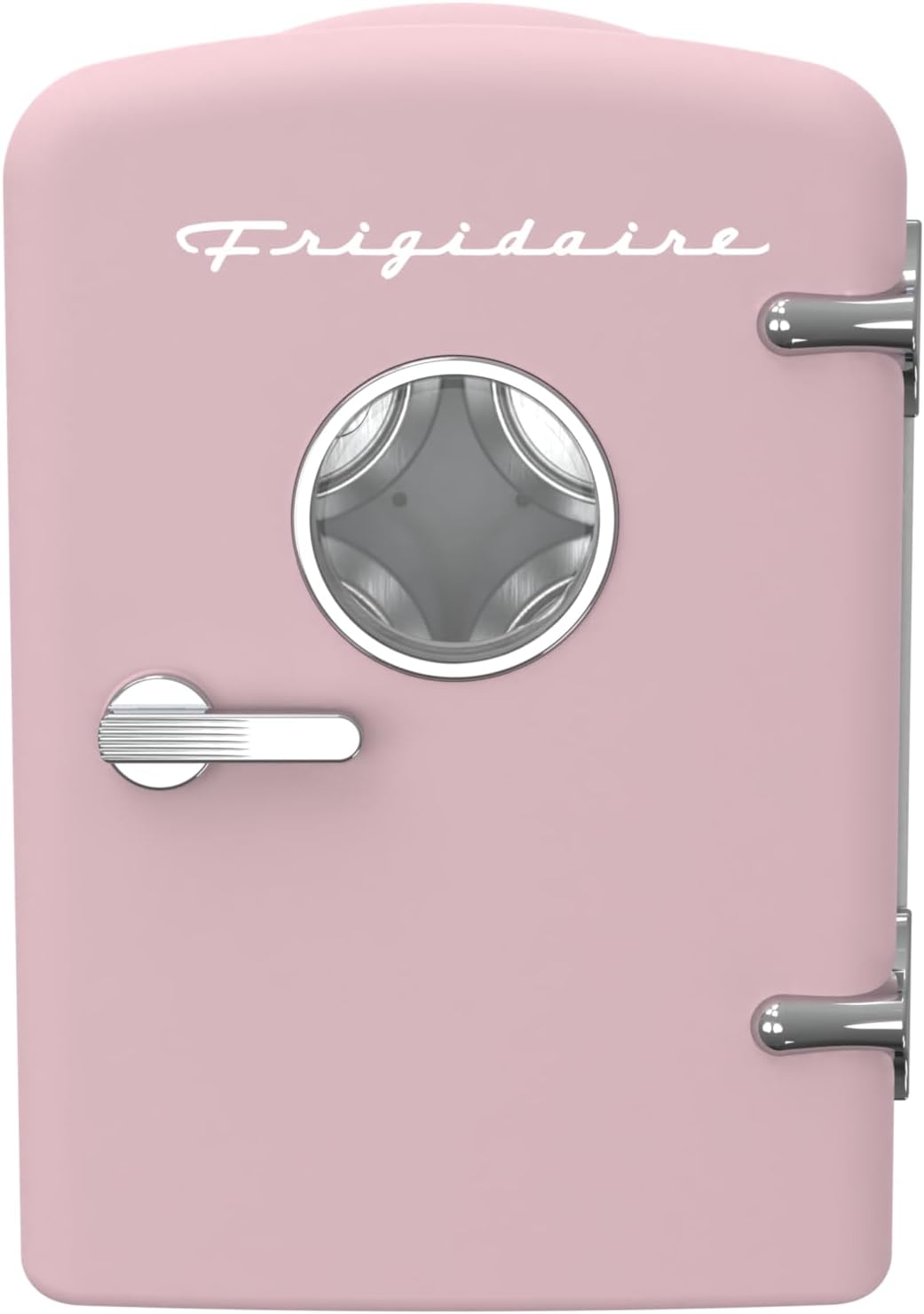
Frigidaire Retro Mini Personal Fridge EFMIS171
| Cooling Method | Thermoelectric |
|---|---|
| Capacity | 4 liters |
| Size | 6-can |
| Voltage | 110 volts |
The Frigidaire Retro Mini Personal Fridge is a lightweight thermoelectric cooler aimed at keeping a few drinks or small food items chilled close at hand. It cools to about 32°F below ambient and can also warm up to 140°F, which makes it useful for both beverages and items that need mild warming. The compact 4 liter interior holds six 12 oz cans and includes a removable shelf for stacking or storing small containers like yogurt, skincare, or bottles. It runs on standard 110V AC and includes a 12V car adapter for portability, and the reversible door and flush-back design help fit it into tight spots. Because it uses thermoelectric cooling it is freon-free, quiet, and energy efficient for short-term personal storage, but it will not reach the low temperatures or consistent performance of compressor fridges and is best for small loads. For buyers wanting a simple, highly portable personal cooler under $50, this model delivers basic cooling and flexible placement with minimal fuss.
Best for: Buyers who want an inexpensive, highly portable personal cooler for a desk, dorm, or car and prioritize convenience and compactness over large capacity or deep cooling.
Less Ideal for: People needing reliable long-term food storage, large-capacity refrigeration, or fast, consistent cooling for perishable items should choose a compressor refrigerator instead.
- Very compact and lightweight for easy placement and transport
- Cools about 32°F below ambient and can also warm up to 140°F for versatility
- Includes both AC power cord and 12V car adapter for use at home or on the road
- Removable interior shelf and reversible door improve storage flexibility
- Thermoelectric cooling is less powerful than compressor units, so it is suited to small loads and moderate ambient temperatures
- Very small usable capacity limited to about six cans or a few small containers
Verdict: A tiny, portable personal fridge that gives affordable, convenient cooling for a few drinks or skincare items when you need compact, on-the-go chill storage.
Erivess Beverage Refrigerator YLG-HA209B

| Capacity | 0.6 cubic feet |
|---|---|
| Can Capacity | 24 Count |
| Cooling Method | Compressor |
| Temperature Range | 40-61℉ |
| Installation Type | Freestanding/Countertop/Built-in |
This Erivess mini beverage refrigerator is a small, compressor-cooled unit built to keep drinks cold without taking much counter space. It holds about 24 standard cans on a single removable shelf and offers manual temperature control that reaches as low as around 40°F, plus a memory function that restores the set temperature after power interruptions. The left-hinged acrylic front door lets you see inventory at a glance and the quiet compressor with a small convection fan provides relatively fast, even cooling for a unit this size. Installation is flexible — freestanding, countertop, or built-in — so it works under a small counter or in a dorm room. Expect modest energy use for a compact fridge and limited capacity that restricts it to beverages only rather than general food storage. There is no freezer compartment and the single shelf limits organization compared with larger models, so this is best where cooling performance and footprint matter more than storage volume.
Best for: Buyers who prioritize cooling performance and a small footprint and need a compact, freestanding cooler dedicated to beverages.
Less Ideal for: Anyone needing a general-purpose mini fridge for fresh food, frozen items, or larger storage capacity should look at larger or multi-zone models.
- Compact compressor cooling delivers quicker, more consistent cooling than thermoelectric units
- See-through acrylic door makes it easy to check contents without opening
- Memory function restores preset temperature after power loss
- Flexible installation: freestanding, countertop, or built-in
- Quiet operation aided by a small convection fan
- Very limited internal capacity suitable only for beverages and small bottles
- Single removable shelf reduces storage flexibility
- Temperature range is single-zone and not cold enough for frozen items
Verdict: Choose this Erivess mini fridge when you want a small, compressor-cooled beverage cooler that prioritizes reliable chilling and a minimal footprint.
Antarctic Star Compact Mini Fridge

| Capacity | 4 liters |
|---|---|
| Cooling Method | Thermoelectric |
| Power Supply | 115V AC / 12V DC |
| Defrost System Type | Manual |
| Noise Level | 25 dB |
This Antarctic Star compact mini fridge is a pocket‑sized thermoelectric cooler that holds about six 12‑oz cans or small skincare and food items. It runs on 115V household power or 12V car power, making it convenient for dorms, bedrooms, offices, and travel. The removable shelf gives flexible storage for taller items, and the unit claims quiet operation around 25 dB while cooling roughly 32°F–59°F or about 53°F–64°F below ambient in one to two hours. Because it uses thermoelectric cooling rather than a compressor, it is lightweight and vibration free but less effective in very hot ambient conditions and cannot reach deep-freeze temperatures. Controls are simple and there is an electronic lock feature for security. Expect straightforward countertop use, occasional manual defrosting, and modest energy draw suitable for occasional beverage or cosmetics storage rather than full meal preservation.
Best for: Buyers seeking a very small, inexpensive countertop or travel cooler who prioritize portability, low noise, and the ability to run from both household and car outlets.
Less Ideal for: People who need reliable cooling in hot rooms, deep freezing, or storage for full meals and large quantities should choose a larger compressor fridge instead.
- Compact 4 L capacity fits about six 12‑oz cans or small skincare items
- AC 115V and 12V car power support for use at home or on the road
- Removable shelf allows flexible internal storage
- Quiet thermoelectric operation advertised around 25 dB
- Thermoelectric cooling is less effective in hot environments and cannot freeze
- Small capacity limits use to snacks, drinks, or cosmetics rather than full meals
Verdict: A tiny, quiet, and portable mini fridge that delivers basic cooling for drinks and cosmetics with both home and car power options.
DUMOS Mini Fridge 4L

| Capacity | 4 liters |
|---|---|
| Cooling Method | Thermoelectric |
| Power Source | AC/DC (110V AC / 12V DC) |
| Number Of Shelves | 1 |
The DUMOS 4L mini fridge is a lightweight, portable cooler that holds about six 12‑ounce cans and runs on either 110V AC or 12V DC, making it usable on a countertop or in a car. It uses thermoelectric semiconductor cooling rather than a compressor, so it operates quietly and without chemical refrigerants; an adjustable thermostat lets you aim for temperatures up to roughly 30°F below ambient. The unit includes a removable shelf, a carry handle, and both AC and DC power cords so you can move it between a bedroom, dorm, office, or vehicle. Practical benefits are its compact footprint and very low noise, which keep chilled drinks or skincare products within easy reach. The limits are its tiny 4‑liter capacity and reliance on ambient temperature for ultimate coldness, so it will not match a full-size fridge for rapid or deep cooling and is best for short-term storage rather than bulk chilling.
Best for: Buyers on a tight budget who need an ultra‑small, portable cooler for a few drinks or skincare items in a dorm, bedroom, office, or car and value simplicity and low noise.
Less Ideal for: People who need to store many items, maintain freezing temperatures, or expect fast deep cooling should consider larger compressor refrigerators instead.
- Very compact 4L capacity fits small spaces and backpacks
- Runs on AC or 12V DC so it works at home or in a car
- Thermoelectric cooling produces low noise and no refrigerants
- Adjustable thermostat and removable shelf for flexible use
- Small capacity only suitable for a handful of cans or small items
- Thermoelectric cooling cools relative to ambient temperature and cannot freeze or deep chill quickly
Verdict: A no‑frills, ultra‑compact mini fridge that delivers quiet, portable cooling for a few cans or skincare items at a very affordable price.
Cooluli Classic 4L Mini Fridge

| Capacity | 4 liters |
|---|---|
| Cooling Method | Thermoelectric |
| Power Plug Type | AC, DC and USB (Type A cord included) |
| Number Of Shelves | 2 |
The Cooluli Classic 4L is a tiny thermoelectric cooler and warmer built for portability and quiet daily use. It holds up to six 12-ounce cans or small skincare and medication items and runs on included AC, DC and USB cords so you can use it at a desk, in a car, or beside a bed. The unit uses a semiconductor cooling system that produces very little noise and requires no compressor, and the removable shelf and wipe-clean interior make maintenance simple. Switching between cooling and warming is handled by an easy display and a physical switch, and the compact footprint fits on countertops or in tight spaces. Limitations include the very small 4-liter capacity that only suits single-person storage needs and thermoelectric cooling that will not reach refrigerator-level lows or perform as efficiently in hot ambient conditions.
Best for: Buyers who prioritize a dependable, low-noise little cooler for single-person use and want flexible power options to move it between home, car, and work.
Less Ideal for: Anyone needing true refrigeration for large volumes, long-term food storage, or consistently cold temperatures in hot rooms should choose a larger compressor fridge.
- Includes AC, DC and USB power cords for versatile placement
- Very quiet thermoelectric operation suitable for bedrooms and offices
- Removable shelf and smooth interior for easy cleaning
- Compact footprint fits on desks, counters, and in cars
- Only 4 liters of usable capacity limits storage to a few items
- Thermoelectric cooling cannot match compressor fridges in low-temperature performance
Verdict: Choose this tiny, ultra-quiet cooler if you need a reliable, portable unit that can run from AC, DC or USB for single-person storage and on-the-go use.
CROWNFUL Mini Fridge CF-PC4

| Capacity | 4 liters |
|---|---|
| Cooling Method | Thermoelectric |
| Power | AC and 12V DC |
| Certification | ETL |
| Recommended ambient | Below 77°F |
The CROWNFUL CF-PC4 is an ultra-compact 4‑liter countertop fridge designed for personal use, holding up to six 12‑oz cans or small skincare items. It uses a thermoelectric cooling module with a manual thermostat and a switchable cooling/warming mode, so you can chill products a few degrees below ambient or heat up to about 149°F when needed. The unit is lightweight and portable, with a carry handle, detachable shelf, and both AC and 12V car power options for use at home or on the road. It runs quietly thanks to a brushless fan and is ETL listed for safety. Expect limited cooling capacity in hot environments since its delta T is modest and performance depends on ambient temperature; it also lacks a compressor-style cold cycle, so it will not reach deep refrigeration temperatures in warm rooms. For the price it delivers simple, versatile storage for cosmetics, beverages, snacks, or breast milk, but buyers who need stronger cooling or larger capacity should step up to a bigger model.
Best for: Buyers who want an inexpensive, portable fridge for single-person use or to keep skincare, drinks, or snacks chilled close at hand and who prioritize compact footprint and travel flexibility.
Less Ideal for: People who need true refrigerator temperatures, larger capacity, or consistent cooling in hot rooms should consider larger compressor models instead.
- Very compact 4‑liter capacity fits six 12‑oz cans or skincare items
- Switchable cool and warm modes for both chilling and heating small items
- Runs on AC or 12V car power for countertop or travel use
- Quiet brushless fan operation and ETL safety listing
- Detachable shelf and carry handle improve portability and organization
- Thermoelectric cooling provides only modest temperature drop and is affected by ambient heat
- Small capacity unsuitable for storing larger quantities or full-size bottles
Verdict: A tiny, budget-friendly portable fridge that reliably stores skincare and a few beverages for personal use and light travel.
Antarctic Star Mini Fridge LY2504A

| Capacity | 4 liters |
|---|---|
| Cooling Method | Thermoelectric |
| Voltage | 115 (AC) and 12V (DC) |
| Defrost System Type | Manual |
This compact Antarctic Star mini fridge is a lightweight 4L cooler aimed at small storage needs like six 12‑oz cans, skincare items, or a single breast‑milk bottle. It uses thermoelectric cooling and runs on both 115V AC and 12V DC, so it works at home or from a car, and a removable shelf lets you rearrange the interior for taller items. The unit is marketed as quiet (about 25 dB) and claims to cool roughly 53°F to 64°F below ambient within one to two hours, which is adequate for keeping beverages chilled or cosmetics cool but not for deep freezing. Controls are simple and defrosting is manual, so it is low‑complexity and easy to maintain. At this size the fridge cannot replace a full refrigerator: capacity and cooling speed are limited, and the thermoelectric system is less cold than compressor units. Still, for dorm rooms, offices, travel, or car use where portability, dual‑power convenience, and minimal noise matter, it is a practical budget choice.
Best for: Buyers seeking a simple, low‑risk personal cooler for occasional use who prioritize portability, quiet operation, and straightforward setup over high cooling power.
Less Ideal for: People needing substantial cold storage, fast chilling, or freezer capability for regular food preservation should choose a larger compressor fridge.
- Portable and lightweight for easy moving and travel
- AC and 12V DC power options for home and car use
- Removable shelf increases storage flexibility
- Quiet operation suitable for bedrooms or offices
- Thermoelectric cooling is less cold and slower than compressor refrigerators
- Very small 4L capacity limits what and how much you can store
Verdict: A tiny, quiet, dual‑power mini fridge that delivers portable, hassle‑free cooling for small personal items at a budget price.
Choosing the Right Mini Fridge: Key Factors to Consider
Usable Interior Capacity
Capacity determines what you can realistically store. Look past headline volume numbers and check shelf layout, door storage, and how many beverage cans or food containers actually fit. Vertical shelves and adjustable trays increase usable space even when the rated liters or cubic feet are low.
Consider how you plan to use the mini fridge. If you need to cold-store tall bottles, measure internal height. For meal prep or baby formula, flat shelf depth and removable inserts make access easier. A slightly smaller but well-configured interior is often more practical than a larger, poorly organized compartment.
Energy Consumption
Lower purchase price can be offset by higher running costs. Check rated power draw, wattage, or estimated annual kWh when available. Energy-efficient compressors or thermoelectric elements reduce monthly electricity bills and are preferable for continuous use in bedrooms or offices.
Also factor in duty cycle. Compact fridges cycle on and off; units that maintain temperature with fewer compressor cycles typically use less energy. For units without detailed specs, favor models advertised for low power draw or designed for continual light-duty use.
Temperature Consistency
A fridge that cannot hold a steady temperature will not keep food safe or beverages properly chilled. Look for models with simple but effective temperature controls and clear temperature ranges. Even budget units should be able to maintain a consistent cold zone for several hours.
Check how quickly the fridge returns to set temperature after the door opens and whether cold is concentrated near the back or evenly distributed. For storing perishables, prioritize units that show stable internal temperatures rather than those that only get cold intermittently.
Noise Level
Noise matters when the fridge will sit near sleeping or working areas. Thermoelectric models are usually quieter but may be less effective in hot rooms. Compressors can be louder but deliver better cooling performance.
Assess decibel ratings if provided and consider user contexts. A faint hum is normal, but persistent rattles or vibration indicate build issues. Units with rubber feet and secure internal components typically run quieter and produce fewer vibrations transmitted to surfaces.
Build Durability and Materials
At this price point build quality varies widely. Inspect door seals, hinge construction, and internal shelving materials. Thicker insulation and a well-sealed door improve efficiency and longevity. Plastic interiors with reinforced edges tend to resist cracking better than very thin shells.
Pay attention to how components are attached and whether shelves are removable for cleaning. Corrosion-resistant coatings on metal parts and reinforced handles help a fridge survive frequent handling in shared spaces.
Safety Features and Certifications
Even inexpensive appliances should meet basic electrical and safety standards. Look for units that specify grounding, overcurrent protection, and compliant wiring. Certifications from recognized testing bodies indicate the manufacturer followed safety protocols.
Also consider refrigerant type for compressor-driven units and whether service information or simple troubleshooting steps are available. A unit without any safety labeling increases risk and may be best avoided even if it seems to meet your immediate needs.
Thermoelectric Vs Compressor Mini Fridges
Budget mini fridges typically use one of two cooling technologies: thermoelectric elements or small compressors. Thermoelectric models are quieter and lighter but have limited cooling in hot ambient conditions and may not reach as low temperatures as compressors.
Compressor-driven units deliver stronger cooling and maintain set temperatures more reliably, which is important if you plan to store perishable food. However, compressors can be louder and slightly heavier. Choose based on where the fridge will be located and how cold you need it to get.
- Thermoelectric: quiet, lightweight, best for cooler rooms and beverage chilling
- Compressor: stronger cooling, better temperature control, suitable for food storage
Placement and Ventilation
Proper placement affects both cooling performance and energy use. Mini fridges need clearance for ventilation, typically several inches at the back and sides. Crowding the unit against walls or inside enclosed cabinetry reduces airflow and increases compressor run time.
Avoid direct sunlight and sources of heat. Placing a small fridge on soft or unstable surfaces can amplify vibration and noise. Use a stable, level surface and leave recommended clearances to maintain efficiency and extend service life.
- Leave space behind the unit for airflow
- Keep out of direct sunlight and away from heat sources
- Place on a level, stable surface to reduce vibration
Cleaning, Maintenance, and Winter Use
Regular cleaning preserves performance. Wipe interior shelves and door seals to prevent mold and odors. Periodically defrost units without auto-defrost features to maintain efficiency and create more usable space.
If you plan to use the mini fridge in a cold garage or unheated space, be aware that some cooling systems struggle at low ambient temperatures and may not operate correctly. Check the recommended operating temperature range to avoid compressor damage in extreme cold.
- Defrost manual models every few months
- Clean door seals and vents to prevent airflow restriction
- Confirm operating temperature range for unheated locations
Common Warranty and Repair Considerations
Budget appliances often come with limited warranties. Understand what is covered, particularly for sealed system and compressor failures, and whether parts are available locally. Warranties that cover motor or compressor issues provide extra peace of mind.
Simple repairs like replacing door seals or shelves are often straightforward, but sealed refrigeration repairs can be costly. Prioritize models with accessible customer support documentation and easily sourced replacement parts when possible.
- Check warranty length and coverage details
- Confirm availability of basic replacement parts
- Keep documentation for troubleshooting and service
How We Chose the Best Mini Fridge
We prioritized practical, measurable attributes that matter for ultra-budget mini fridges. Each candidate was evaluated on usable interior capacity to ensure you can fit common items like beverage cans and small food containers. Energy consumption and efficiency were key because low upfront cost can be offset by high running expenses. We assessed thermal performance and consistent temperature control to confirm items stay safely chilled at common settings. Durability and build quality were considered through material descriptions and user-reported longevity patterns. Noise level was included since these fridges sit in bedrooms and offices where quiet operation matters. We excluded any units missing clear spec sheets or safety certifications, and we filtered out models with documented refrigerant or electrical concerns. Units that only functioned as coolers without active refrigeration were not considered. Final selections balanced capacity, energy use, quiet operation, and construction so readers get realistic, usable mini fridges within the under $50 constraint.
Our full evaluation process is outlined in our review methodology.
FAQ
Will a mini fridge under $50 keep food safe for extended periods?
Often these ultra-budget units can keep beverages and some prepared foods chilled, but their ability to hold safe temperatures for perishable items varies. For long-term food storage or raw meats, choose a unit with proven temperature consistency and sufficient cold range.
How much electricity does a small mini fridge use?
Usage varies by technology and insulation, but many compact fridges run at low wattage. Energy draw depends on duty cycle, ambient temperature, and how often the door is opened. Look for explicit wattage or estimated annual kWh when available to compare running costs.
Can I put a mini fridge in a bedroom or office?
Yes, but consider noise and ventilation. Thermoelectric models tend to be quieter, while compressor models may produce more sound and vibration. Place the unit on a stable surface with adequate clearance to minimize disturbance.
Do mini fridges under $50 require special installation?
No special installation is required for most compact fridges. They usually plug into a standard outlet. Ensure the outlet is on a dedicated circuit without heavy nearby loads and that the unit has proper ventilation and stable placement.
How often should I defrost a budget mini fridge?
Manual-defrost units benefit from defrosting every few months or when ice buildup exceeds a quarter inch. Regular defrosting improves cooling efficiency and restores usable interior space.
Are there safety concerns with very cheap mini fridges?
Sometimes. Check for basic electrical safety markings and avoid units lacking any certification or clear wiring information. Poorly constructed seals or flimsy electrical components increase risk and may lead to early failure or hazards.
Final Verdict
When shopping for a mini fridge under $50, prioritize usable interior layout and energy consumption over headline volume. Reliable temperature control and low noise are important tradeoffs for units that will sit in small living or working areas. Durable construction and basic safety features reduce the chance of early failure. Accept that ultra-budget fridges will have limits; pick the unit whose strengths match your primary use, whether quiet beverage chilling, occasional food storage, or compact convenience. Focus on capacity, energy draw, and thermal consistency to choose confidently.