
Note: This article contains affiliate links. If you click on these links and make a purchase, we may earn a small commission at no extra cost to you. This helps support our research and content. Read our full affiliate disclosure here.
Living in a tiny house changes how you think about every appliance, and the right mini fridge can make a big difference in daily comfort. You need compact cooling that fits limited square footage, uses minimal power, and still holds the staples you rely on. This guide focuses on the top shortlisted mini fridges suited for tiny-house living, each evaluated for usable capacity, energy efficiency, and practical layout. Below you will find the models that performed best against those priorities, plus straightforward buying guidance to help you pick the right compact refrigerator for your space and habits.
Top Picks at a Glance
| Best Overall The best all-around choice for most situations | Midea Compact Refrigerator WHS-65LB1 |  |
| Best Quality Built to a higher standard if you want something more solid | Frigidaire Retro Mini Fridge EFR840 |  |
| Best Value The sweet spot between price and what you get | EUHOMY WC-6B Mini Fridge | 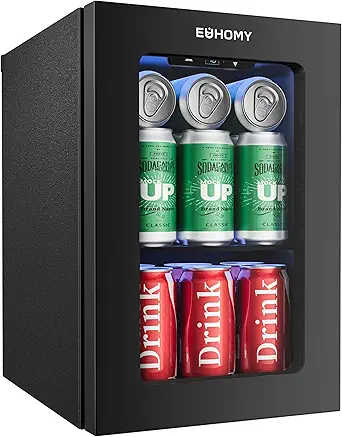 |
| Best Budget The cheapest option that still gets the job done reliably | DUMOS Mini Fridge DM-CBX-WT |  |
| Top Rated A top-rated pick with lots of positive feedback | EUHOMY 3.2 Cu.Ft Mini Fridge |  |
| Most Popular A crowd favorite that many people choose with confidence | Cooluli Classic 4L Mini Fridge |  |
| Best Seller A high-volume bestseller chosen again and again | Upstreman 3.2 Cu.Ft Mini Fridge BR321 |  |
Midea Compact Refrigerator WHS-65LB1

| Capacity | 1.6 cubic feet |
|---|---|
| Annual Energy Consumption | 207 kilowatt hours per year |
| Defrost System Type | Automatic |
| Cooling Method | Compressor |
| Installation Type | Freestanding |
This Midea 1.6 cu ft compact refrigerator provides basic, energy-efficient cooling for dorms, tiny houses, or offices. It uses an R600A compressor with an annual consumption of 207 kWh, which helps keep running costs low, and it runs quietly at under 42 dB so it is suitable for bedrooms or close quarters. The unit includes a small internal chiller compartment for quick cooling, one removable shelf to accommodate odd-shaped items, door shelving sized for a 2-liter bottle, and a reversible door hinge for flexible placement. Temperature is controlled by an adjustable mechanical thermostat with a low setting near freezing for short-term chilling but the chiller is not intended for deep freezing. Practical limitations are its modest 1.6 cu ft capacity and single shelf, which restrict storage to beverages, small food items, and light meal prep; it is not a full replacement for a kitchen refrigerator. Assembly and daily use are straightforward, and Energy Star certification makes it a sensible choice when efficiency matters in a tiny-house setup.
Best for: Buyers seeking an efficient, quiet fridge for a tiny house, dorm, or office who prioritize low energy use and a small footprint over large capacity.
Less Ideal for: Households that need full-size refrigeration, regular frozen storage, or significant internal shelving for meal prep should choose a larger model.
- Energy Star certified with 207 kWh/year consumption for lower operating costs
- Reversible door and compact footprint fit tight spaces and flexible layouts
- Quiet operation under 42 dB suitable for bedrooms and tiny houses
- Removable shelf and door rack accommodate taller bottles and irregular items
- Only 1.6 cubic feet of usable space limits food storage to small items
- Chiller compartment is for short-term cooling and cannot freeze foods
Verdict: A compact, energy-efficient mini fridge that fits tiny-house needs when quiet, low-cost operation and flexible placement matter more than interior capacity.
Frigidaire Retro Mini Fridge EFR840

| Capacity | 3.2 cubic feet |
|---|---|
| Freezer Capacity | 0.2 cubic feet |
| Defrost System Type | Manual |
| Cooling Method | Compressor |
| Door Orientation | Reversible |
The Frigidaire EFR840 is a compact 3.2 cu ft two-door refrigerator with a 0.2 cu ft top freezer that pairs retro styling with practical features for small spaces. It uses a compressor cooling system and manual defrost, and the flush-back design helps when placing it in tight areas like tiny house kitchens or dorm corners. Inside you get three removable glass shelves, a crisper drawer, door storage, and a small freezer with an ice tray, while external touches include a built-in bottle opener and reversible door. Temperature controls are accessible and straightforward, and the compressor provides consistent cooling compared with thermoelectric mini fridges. Important limitations are the manual defrost freezer and modest freezer capacity, so it is better for daily chill and short-term frozen storage rather than bulk freezing. The unit is freestanding and designed for easy cleaning, and its compact footprint and retro look make it a functional, stylish choice where space and dependable refrigeration performance matter most.
Best for: Buyers who prioritize reliable compressor cooling and a compact, space-saving fridge that still offers organized shelving and a tiny freezer for everyday use in a tiny house.
Less Ideal for: Those needing significant frozen storage, frequent deep-freezing, or a frost-free freezer should consider larger or frost-free models instead.
- Compressor cooling for consistent, reliable refrigeration performance
- Compact 3.2 cu ft capacity with flush-back design suited to tight spaces
- Removable spill-proof glass shelves and crisper drawer for easy cleaning
- Accessible temperature controls and reversible door for flexible placement
- Built-in external bottle opener adds practical convenience
- Small 0.2 cu ft freezer is suitable only for light frozen storage
- Freezer requires manual defrost rather than automatic defrost
Verdict: A compact, compressor-cooled mini fridge that delivers dependable refrigeration and space-saving fit for tiny house kitchens where everyday performance matters.
EUHOMY WC-6B Mini Fridge

| Capacity | 18 liters |
|---|---|
| Temperature range | 40°F to 61°F |
| Cooling method | Compressor |
| Voltage | 115 volts |
| Defrost system type | Manual |
The EUHOMY WC-6B is a countertop beverage cooler sized for very small spaces that stores cans or a few bottles and keeps temperatures between 40°F and 61°F using a compressor system. Typical use is in a tiny house, dorm, or office where you want steady cooling without a freezer compartment; its digital temperature control and LED light make it easy to set and check the internal temperature. The single removable shelf lets you fit taller bottles when needed, and the documented noise level under 40 dB means it runs quietly enough for sleeping areas. Practical extras include a UV-protected door and ETL certification for safety. Trade-offs are inherent to its size: capacity is limited to roughly 18 liters so it is only suitable for short-term storage or small households, and the manual defrost means occasional maintenance. The unit is lightweight and freestanding, which simplifies placement but may feel less substantial than built-in options.
Best for: Buyers who need a practical, space-saving beverage cooler for a tiny house or similarly small living area and prioritize steady cooling, low noise, and easy placement.
Less Ideal for: Those who need to store large quantities, freeze items, or want a built-in undercounter fridge should consider larger-capacity or different-format refrigerators.
- Compressor cooling provides stable, consistent temperatures compared with thermoelectric models
- Compact footprint fits tight countertops or small kitchen nooks
- Removable shelf allows flexible storage for cans or taller bottles
- Runs quietly at under 40 dB, suitable for bedrooms or tiny-house living
- Digital temperature control and LED light make monitoring and adjusting simple
- Very limited internal capacity suitable only for a few drinks or short-term storage
- Manual defrost requires periodic maintenance rather than automatic defrost
Verdict: A compact, quiet compressor mini fridge that delivers reliable cooling for tiny-house kitchens where space efficiency and steady temperature matter.
DUMOS Mini Fridge DM-CBX-WT

| Capacity | 4 liters |
|---|---|
| Cooling Method | Thermoelectric |
| Power Source | AC/DC (110V AC / 12V DC) |
| Noise Level | 31 decibels |
This DUMOS 4L mini fridge is a lightweight, compact cooler aimed at keeping a few drinks, snacks, or skincare items chilled in very small spaces. It uses thermoelectric (semiconductor) cooling, runs quietly and without a compressor, and can be powered from standard AC or 12V DC outlets so it works on countertops or in cars. The interior holds about six 12‑ounce cans across one shelf and includes an adjustable thermostat that can cool roughly 30°F below ambient depending on conditions. Practical benefits include low noise, easy portability thanks to the built‑in handle, and very small footprint for tiny houses or dorm nooks. Important limitations are the very small 4L capacity and the thermoelectric cooling method, which is less effective than compressor fridges in hot environments and cannot freeze items reliably. For buyers prioritizing compactness and portability over bulk cooling power, this model delivers simple, low‑power cold storage.
Best for: Buyers who need an inexpensive, ultra-compact cooler to keep a few drinks or skincare items chilled in very small living spaces or on the go and who prioritize portability and low noise.
Less Ideal for: Households that need regular refrigerated storage for multiple people, long-term food preservation, or strong cooling in hot environments should choose a larger compressor fridge instead.
- Very compact 4L capacity fits on countertops or tiny house shelves
- AC and 12V DC power cords allow use at home or in a vehicle
- Thermoelectric cooling runs quietly and uses no chemical refrigerants
- Lightweight with a built‑in handle for easy portability
- Thermoelectric system cools only a limited amount below ambient, so performance drops in hot conditions
- Holds only a handful of cans, so not suitable for storing large amounts of food or beverages
Verdict: A very affordable, ultra‑compact portable fridge that keeps a few drinks or skincare items cool in tiny houses or travel situations.
EUHOMY 3.2 Cu.Ft Mini Fridge

| Capacity | 3.2 cubic feet |
|---|---|
| Freezer Capacity | 0.96 cubic feet |
| Cooling Method | Compressor |
| Defrost System Type | Manual |
| Door Orientation | Reversible |
This EUHOMY 3.2 cu ft mini fridge pairs a small top freezer with a fridge compartment to give you both chilled and frozen storage in a compact footprint, which makes it easy to fit in tight spaces like tiny houses. It uses a compressor cooling system and offers three temperature settings and adjustable glass shelves so you can organize drinks, produce, and frozen items like ice cream. The reversible door and adjustable feet let you position it where you need, and the internal LED light and crisper drawer improve day-to-day convenience. Expect manual defrosting for the freezer and a straightforward mechanical control rather than digital precision. The unit is billed as low-noise and UL listed for safety, but its annual energy consumption is listed, so utility-conscious buyers should check how that compares with alternatives. For a small living space this fridge delivers practical, reliable cooling with familiar features, though it lacks advanced connectivity or frost-free convenience.
Best for: Buyers who prioritize a compact, dependable refrigerator that delivers separate fridge and freezer zones for everyday use in very small homes or cottages.
Less Ideal for: People who need a frost-free freezer, smart controls, or the largest possible capacity for bulk storage should consider larger or feature-rich models instead.
- Two-zone design with a dedicated 0.96 cu ft freezer and 2.24 cu ft fridge for versatile storage
- Compressor cooling provides consistent temperatures and better performance in warm conditions
- Reversible door and adjustable feet allow flexible placement in small layouts
- Interior LED light, adjustable glass shelves, and a crisper drawer add usable organization
- Freezer requires manual defrosting rather than being frost-free
- Uses modest power with listed annual consumption, which may be higher than some energy-optimized models
Verdict: A compact, no-frills mini fridge with a real freezer compartment and compressor cooling that suits tiny houses needing reliable dual-zone refrigeration.
Cooluli Classic 4L Mini Fridge

| Capacity | 4 liters |
|---|---|
| Cooling Method | Thermoelectric |
| Power Source | AC/DC/USB |
| Cools to | 20°–22°C below ambient temperature |
| Warms to | 149°F (65°C) |
The Cooluli Classic 4L is a tiny thermo-electric mini fridge that cools or warms small items using a simple mode switch and multiple power options. It holds about 4 liters — roughly six cans or a few skincare jars — and is most often used on a countertop, dorm desk, in a car, or carried on short trips thanks to its molded top handle and lightweight build. Notable features include AC, DC and USB power cords for flexible placement, EcoMax semiconductor cooling for quiet, refrigerant-free operation, and the ability to warm up to about 149°F for creams or snacks. Practical benefits are its compact footprint, low noise, and multi-location power that make it easy to keep skincare, medications, or beverages cool or warm wherever space is tight. Important limitations are the very small capacity and limited cooling delta (about 20°F below ambient), so it will not match a full refrigerator for long-term food storage or for cooling on very hot days. The unit is ETL listed and simple to operate but is best treated as a personal cooler/warmer rather than a replacement for standard refrigeration.
Best for: Buyers who need a reliable, portable cooler/warmer for skincare, medications, a few drinks, or snacks in a tiny house, dorm, car, or office and who prioritize quiet, flexible power and proven user experience.
Less Ideal for: People who need substantial food storage, long-term refrigeration, or strong cooling in very hot rooms should choose a larger powered refrigerator instead.
- Very compact and lightweight for easy placement and transport
- AC, DC and USB power options allow use at home, in vehicles, or with power banks
- Thermoelectric EcoMax cooling is quiet and refrigerant-free
- Simple switch between cooling and warming modes
- Molded handle and included cords make it travel-ready out of the box
- Only 4-liter capacity limits what you can store at once
- Cooling is modest — about 20°F below ambient, so performance drops in hot environments
Verdict: Choose this if you want a proven, ultra-compact personal cooler/warmer that runs quietly and can be used almost anywhere thanks to AC, DC, and USB power options.
Upstreman 3.2 Cu.Ft Mini Fridge BR321

| Capacity | 3.2 cubic feet |
|---|---|
| Freezer Capacity | 0.3 cubic feet |
| Cooling Method | Compressor |
| Defrost System Type | Manual Defrost |
| Annual Energy Consumption | 206 kwh |
The Upstreman BR321 is a compact 3.2 cubic foot refrigerator with a 0.3 cu ft freezer that targets small spaces like tiny houses, dorms, or offices. It uses a rotary scroll compressor and a manual defrost system to provide steady cooling while claiming Energy Star efficiency and about 206 kWh annual consumption. Inside you get two adjustable glass shelves, a crisper drawer, and three door bins that make organizing drinks and snacks straightforward; the thermostat offers five temperature settings roughly between 32 and 50°F so you can tune coldness for produce or beverages. Practical touches include a reversible door, adjustable leveling feet, and a tight gasket for better cold retention. At about 38 dB reported noise it is quiet enough for sleeping areas, though it is not designed for long-term ice or ice-cream storage and requires periodic manual defrosting. For buyers focused on predictable, straightforward refrigeration in a very small footprint, this model delivers useful features without complex controls.
Best for: Buyers who want a reliable, no-frills mini fridge for a tiny house, dorm, or office and prioritize energy efficiency, quiet operation, and easy placement over advanced features.
Less Ideal for: People who need substantial freezer space, deep-freeze capability, or automatic defrosting for frequent frozen-food storage should consider a larger or different-style refrigerator.
- Compact 3.2 cu ft capacity fits tight spaces while still offering a small freezer compartment
- Adjustable glass shelves and door bins allow flexible organization for bottles and food
- Reversible door and leveling feet make placement adaptable to varied tiny-house layouts
- Energy Star rated with modest annual energy consumption for lower running cost
- Quiet operation around 38 dB suitable for bedrooms and small living areas
- Manual defrost freezer requires occasional maintenance and cannot store ice cubes long-term
- Limited freezer volume and temperature range not suitable for heavy freezing needs
Verdict: A compact, energy-efficient mini fridge that delivers quiet, dependable cooling and flexible placement for tiny-house living.
Choosing the Right Mini Fridge for Tiny House: Key Factors to Consider
Usable Capacity and Internal Layout
Measure the actual internal storage rather than relying on nominal liters or cubic feet. Tiny-house spaces demand efficient use of every inch, so pay attention to shelf adjustability, door bin depth, and whether a small freezer compartment is practical for your meal planning.
A model with well-spaced shelves and removable bins can store tall bottles, meal prep containers, and leftovers more effectively than an equally rated unit with fixed shelves. Consider the kinds of items you refrigerate most and prioritize a layout that minimizes wasted vertical or corner space.
Energy Consumption and Power Source
Energy use is critical in tiny houses, especially if you run on a limited grid connection, solar, or battery backup. Look for low-wattage compressors, efficient insulation, and models with good energy consumption tests or ratings. Thermoelectric units can be quieter and lighter but often use more continuous power for the same cooling level; modern small compressors typically give better efficiency for food storage.
Also check start-up current and average draw. High start-up spikes can trip small inverters or breakers. If you plan to run the fridge off solar or an inverter, confirm the continuous draw and whether the unit has a low-start current design or soft-start capability.
Noise, Vibration, and Nearby Sleeping Areas
Tiny houses compress living zones, so refrigerator noise and vibration matter more than in larger homes. Compressor-based mini fridges produce periodic sounds and slight vibration when cycling. Consider manufacturer-specified noise levels and look for features such as variable-speed compressors or improved damping.
Placement relative to beds and workspaces affects comfort. A quieter unit or a thermoelectric model placed under a counter might be preferable if you are sensitive to hums or rattles. Also factor in how the fridge sits on its mounting surface; rubber feet or anti-vibration pads reduce transmission.
Temperature Control and Reliability
Reliable temperature performance keeps food safe and reduces waste. Check whether the unit offers precise thermostat settings or a simple high/low control, and whether it maintains consistent internal temperatures under varying ambient conditions common in tiny houses, such as direct sun or limited ventilation.
Reliable defrosting behavior and the presence of a small freezer with good cold retention are useful for occasional frozen goods. Units that cool unevenly or that require frequent manual defrosting increase maintenance in a small space.
Installation Options and Footprint
Tiny houses may have unique installation constraints: shallow cabinets, narrow hallways, or lofted sleeping areas. Confirm the unit's external dimensions and door swing clearance for your planned location. Reversible doors, counter-depth models, or units designed for built-in installation can increase flexibility.
Also check weight and ventilation needs. Some refrigerators require space around the back or top for airflow. If you plan to secure the fridge for mobile tiny-house life, look for models with mounting points or a design that can be fastened safely.
Maintenance Needs and Ease of Cleaning
In a small home, ease of maintenance is important. Choose a mini fridge with accessible drip trays, removable shelves, and straightforward access to the condenser if periodic cleaning is needed. Models that require infrequent manual defrosting or that have easy-to-remove door seals reduce routine upkeep.
Also consider availability of replacement parts like door gaskets. A fridge that is easier to clean and service will stay hygienic and reliable in a tiny-house environment where space for tools and spares is limited.
Sizing the Right Mini Fridge for Your Tiny House Layout
Start by mapping the intended fridge location and noting maximum height, width, and depth including clearance for door swing and ventilation. Pay particular attention to vertical space if you plan to put the fridge under a counter or within a shallow cabinet.
Think in terms of usable shelving rather than gross capacity. A slightly smaller unit with a flexible internal layout can outperform a larger but poorly organized fridge when it comes to storing weekly groceries.
- Measure doorway and hallway widths to ensure delivery and installation.
- Allow minimal clearance for ventilation unless the model is specifically designed for built-in use.
- Check whether the unit's door swing can be reversed for tight placements.
Power Options: Grid, Solar, and Inverter Considerations
If you rely on solar or an inverter, calculate average daily energy draw for the fridge and compare that with your energy budget. Some small fridges draw very little while idling but have high compressor start currents that can stress smaller inverters.
Consider models with energy-saving features like adaptive defrost, good insulation, and efficient compressors. Also plan to place the fridge in a cooler spot to reduce workload and energy consumption.
- Check both running watts and peak start-up current.
- Position the fridge away from heat sources and direct sunlight to improve efficiency.
- If off-grid, test how the fridge performs overnight in your specific power setup.
Placement and Ventilation Best Practices
Proper airflow is essential for continuous, efficient operation. Many mini fridges need several inches of clearance at the back or sides. If you must install the unit inside cabinetry, choose models rated for built-in use or add ventilation grills and ensure a pathway for heat to escape.
Also think about humidity and condensate management. In tightly sealed tiny homes, excess moisture can cause more frequent frost buildup on some units, increasing defrost needs.
- Leave recommended clearance around the appliance for heat dissipation.
- Avoid placing the fridge next to stoves, heaters, or sunny windows.
- Use anti-vibration pads if the unit sits on a lightweight or resonant surface.
Organizing Food in a Compact Refrigerator
Adopt storage strategies to maximize space: use shallow containers, collapseable bins, and standardized bottle heights. Store flat items like deli packs vertically when possible and keep frequently used items in easy-to-reach door bins to reduce repeated opening time.
Plan meal prep to match the fridge capacity. A small freezer is useful for staples and ice but avoid overfilling; overcrowding restricts airflow and reduces cooling efficiency.
- Use clear, stackable containers to make the most of shelf space.
- Keep heavier items on lower shelves and lighter items on top to maintain airflow.
- Label leftovers with dates to prevent unnecessary clutter.
Noise Mitigation and Vibration Control
If your bed or workspace is close to the fridge, test noise levels before finalizing placement when possible. Small compressor cycles are normal, but excessive rattles or hums can become disruptive in tiny-house living.
Anti-vibration pads, tight shelving, and ensuring the fridge is level will cut down transmitted noise. For highly noise-sensitive layouts, consider models with quieter compressor technologies or locate the fridge in a cabinet with sound-damping lining.
- Check that the fridge sits level to reduce compressor strain.
- Use rubber or cork pads under the feet to absorb vibration.
- Ensure internal items are secured so they do not rattle during compressor cycles.
How We Chose the Best Mini Fridge for Tiny House
We prioritized real-world fit and efficiency for tiny-house living rather than headline features that matter only in larger homes. Selection started by filtering compact refrigerators with external dimensions and storage layouts appropriate for constrained floor plans, then narrowing to units with proven low standby power and efficient compressor or thermoelectric systems. Usable internal capacity was verified against typical tiny-house needs for refrigerated items and small freezer space when present. We also checked temperature control range, noise output, and available installation options such as recessed or countertop placement. Excluded from consideration were full-size refrigerators, specialty beverage-only coolers with no food storage flexibility, and units requiring complex built-in cabinetry beyond common tiny-house setups. Final picks balanced four to six key performance dimensions: usable capacity and shelving flexibility, energy consumption, noise and vibration, installation versatility, and temperature control consistency. This process ensured each shortlisted mini fridge is practical for the constraints and daily patterns of tiny-house occupants.
Our full evaluation process is outlined in our review methodology.
FAQ
Can I run a mini fridge for a tiny house on solar power?
Often yes, but it depends on your solar capacity and the fridge's running and start-up power. Check both average daily draw and peak start current, and size your battery and inverter to handle compressor spikes and overnight operation.
How much clearance does a mini fridge need in a built-in cabinet?
Most units require a few inches of clearance at the back and top for ventilation unless they are specifically rated for built-in installation. Always follow manufacturer ventilation guidelines to avoid overheating and reduced efficiency.
Is a thermoelectric mini fridge a good choice for a tiny house?
Thermoelectric units are lightweight and quiet but tend to be less efficient for keeping food safely cold in warmer ambient temperatures. They can work for supplemental cooling or beverage storage but compressor models are generally better for regular food storage.
How do I prevent my mini fridge from making my tiny house feel humid?
Preventative steps include avoiding placing the fridge in direct sunlight, ensuring door seals are intact, minimizing door openings, and managing indoor humidity with ventilation. Regular defrosting where required also prevents excess condensate buildup.
Can I secure a mini fridge for travel or a mobile tiny house?
Yes, many small fridges can be secured with straps, brackets, or built-in mounting points. Choose a model with a robust case and consider fastening solutions that prevent movement while allowing ventilation.
Final Verdict
Choosing a mini fridge for a tiny house means balancing usable storage, consistent cooling, and low energy draw within very tight space constraints. Prioritize models with flexible internal layouts, efficient compressors, and installation options that fit your planned location. Be realistic about what you store and how often you open the door, because usage habits will affect energy needs and temperature stability. Focus on the factors that matter most to your setup—energy source, noise sensitivity, and physical footprint—and accept tradeoffs such as smaller freezer capacity for lower power consumption. With attention to those priorities, you can select a compact refrigerator that supports comfortable, efficient tiny-house living.