
Note: This article contains affiliate links. If you click on these links and make a purchase, we may earn a small commission at no extra cost to you. This helps support our research and content. Read our full affiliate disclosure here.
If you want chilled water on demand without dedicating a full-size refrigerator, a mini fridge designed for bottles and jugs is a practical solution. The right mini fridge for water makes it easy to store multiple bottles upright, maintain steady temperatures for drinking water, and fit into tight spaces such as dorm rooms, offices, or bedside nooks. This guide shortlists seven mini fridges that suit water storage needs and evaluates them on layout, temperature control, and efficiency. Read on to find compact options optimized for bottles, clear shelving, and the controls you need to keep water cold and convenient.
Top Picks at a Glance
| Best Overall The best all-around choice for most situations | Electactic Beverage Refrigerator JC-90 |  |
| Best Quality Built to a higher standard if you want something more solid | Honeywell H115BCS Beverage Cooler |  |
| Best Value The sweet spot between price and what you get | EUHOMY WC-6B Mini Fridge | 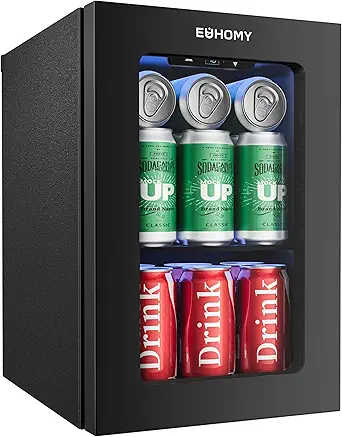 |
| Best Budget The cheapest option that still gets the job done reliably | Antarctic Star Compact Mini Fridge |  |
| Top Rated A top-rated pick with lots of positive feedback | hOmeLabs Beverage Refrigerator HME030065N | 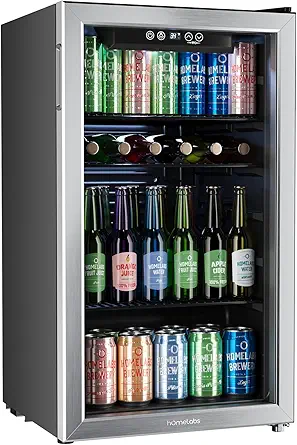 |
| Most Popular A crowd favorite that many people choose with confidence | Cooluli Classic 4‑Liter Mini Fridge |  |
| Best Seller A high-volume bestseller chosen again and again | EUHOMY BR013-110 3.2 Cu Ft Mini Fridge |  |
Electactic Beverage Refrigerator JC-90

| Capacity | 3.2 cubic feet |
|---|---|
| Temperature Range | 32°F to 61°F |
| Cooling Method | Compressor |
| Shelves | 4 removable wire shelves |
| Annual Energy Consumption | 180 kilowatt hours per year |
The Electactic 3.2 cu ft beverage refrigerator is a compact undercounter or freestanding cooler built for drinks rather than frozen food. It uses a rotary scroll compressor to deliver consistent cooling across a 32°F to 61°F range, and a digital touch control with LED display makes setting and monitoring temperature straightforward. Four removable wire shelves and an airtight glass door help organize cans, bottles, and a few wine bottles while keeping cold air sealed in. The reversible door and quiet operation make it flexible for kitchens, home bars, or game rooms, and ETL certification indicates basic safety standards. Practical limits include its manual defrost system and modest 3.2 cu ft capacity, which means it is best for households that need accessible chilled beverages rather than large-volume storage. Energy use is listed at about 180 kWh per year, so it is not the lowest-consuming model in its class. For someone wanting a simple, reliable drink fridge with temperature precision and an eye toward style, this covers the essentials without complicated features.
Best for: Buyers who want a reliable, countertop or undercounter drink fridge that keeps water, soda, beer, and a few wine bottles at precise temperatures and fits into a small home bar or kitchen space.
Less Ideal for: People who need freezer storage, large-capacity cold storage for parties, or a no-maintenance frost-free model should look elsewhere.
- Compact 3.2 cu ft capacity fits undercounter or freestanding setups
- Digital touch controls and display for precise temperature selection
- Rotary scroll compressor provides steady, even cooling
- Four removable wire shelves and reversible door for flexible storage layout
- Manual defrost requires occasional maintenance
- Capacity limits bulk storage for large parties
Verdict: A compact, compressor-driven beverage fridge that delivers precise, consistent cooling for chilled water and drinks in small kitchens or home bars.
Honeywell H115BCS Beverage Cooler
| Capacity | 116 Can |
|---|---|
| Cooling Method | Thermoelectric |
| Thermostat | Adjustable digital, 34°F–50°F |
| Door Material | Tempered Glass |
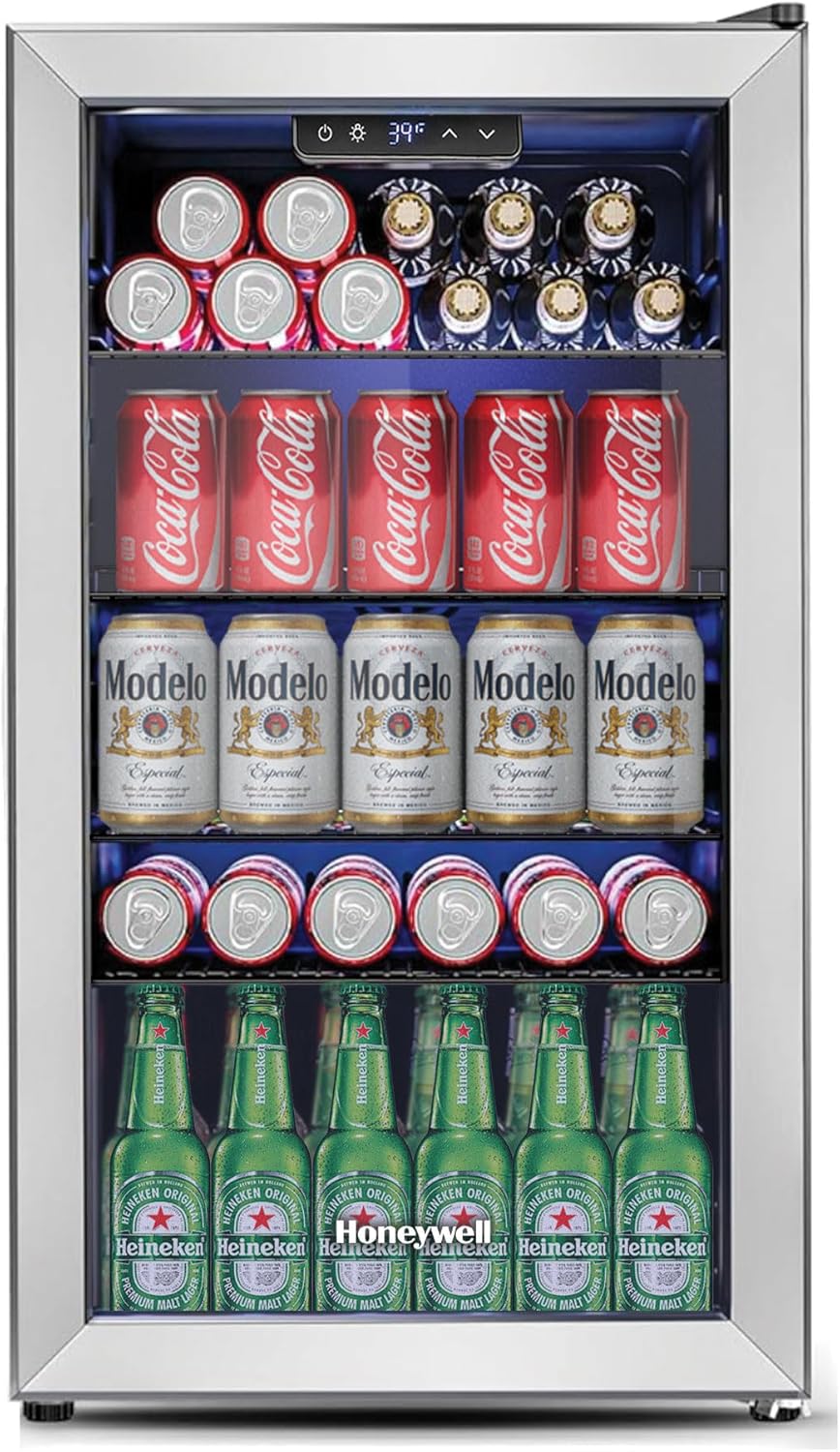
The Honeywell H115BCS is a compact beverage cooler built to store cans and bottles at controlled temperatures for office, bar, or small-kitchen use. It uses thermoelectric cooling and an electronic digital thermostat adjustable between 34°F and 50°F, so you can set colder temps for water and soda or slightly warmer for certain beers and wines. The unit has a tempered glass door to help insulate and protect contents from UV light, four removable wire shelves that slide out for reconfiguring, soft interior LED lighting, and adjustable feet for leveling. Installation can be undercounter and the reversible door gives placement flexibility. Because it is thermoelectric rather than compressor-based, it runs quietly and avoids vibration that can disturb still water, but it may be less effective at maintaining very low temperatures in hot ambient rooms and is not suited for heavy-duty commercial refrigeration. Practical benefits include visible storage, easy shelf reconfiguration, and precise user-set temperature control, while limitations are cooling method constraints and modest capacity for larger households or extended heavy use.
Best for: Buyers who prioritize quiet, vibration-free cooling and clear visible storage for bottled or canned water in offices, small kitchens, or bars.
Less Ideal for: People who need heavy-duty refrigeration, rapid chill performance, or very large capacity for frequent high-volume use should consider compressor models instead.
- Adjustable digital thermostat (34°F–50°F) for precise temperature control
- Tempered glass door with interior LED lighting for easy visibility
- Removable, slide-out wire shelves for flexible storage layouts
- Quiet thermoelectric cooling with reversible door and adjustable leveling feet
- Thermoelectric cooling is less powerful than compressor systems in hot environments
- Capacity is modest for large households or frequent entertaining
Verdict: Choose this cooler if you want a quiet, visible, temperature-adjustable mini fridge optimized for storing water and beverages in small spaces.
EUHOMY WC-6B Mini Fridge

| Capacity | 18 liters |
|---|---|
| Temperature range | 40°F to 61°F |
| Cooling method | Compressor |
| Voltage | 115 volts |
The EUHOMY WC-6B is a small compressor-driven beverage fridge meant for tight spaces where you need steady, reliable cooling. It holds about 24 standard 330ml cans and offers a digital temperature range from 40°F to 61°F, so you can set cooler temperatures for water or slightly warmer settings for other drinks. The compressor cooling gives more stable temperatures than thermoelectric units and the unit includes a removable shelf to accommodate taller bottles when needed. Controls are simple and the interior LED helps you see bottles without opening the door frequently. Noise is advertised under 40 dB, which makes it suitable for bedrooms, offices, or near a countertop without being intrusive. Trade-offs are its very small capacity and single-door right-hand orientation, so it is strictly a personal or small household solution rather than a shared kitchen fridge; it also uses a plastic door and requires manual defrosting. For buyers prioritizing a compact, quiet fridge that keeps water consistently chilled, this model covers the basics well.
Best for: Someone who needs a space-saving, quiet fridge to keep drinking water and a few beverages consistently chilled on a countertop or in a small room and who prioritizes stable cooling over large capacity.
Less Ideal for: Households that need to store many bottles or family-sized quantities, or buyers who want a reversible-door or frost-free larger refrigerator.
- Compressor cooling for stable, consistent temperatures
- Digital temperature control with 40°F–61°F range
- Compact footprint fits on countertops or in small rooms
- Removable shelf allows storage flexibility
- Quiet operation under 40 dB suitable for bedrooms or offices
- Very small 18L capacity limits number and size of bottles
- Manual defrost required
- Door opens to the right only, reducing placement flexibility
Verdict: If you want a compact, quiet countertop fridge that keeps water reliably cold, the EUHOMY WC-6B delivers steady compressor cooling in a very small footprint.
Antarctic Star Compact Mini Fridge

| Capacity | 4 liters |
|---|---|
| Cooling Method | Thermoelectric |
| Voltage | 115 |
| Power Plug Type | Type A – 2 pin (North American) |
This Antarctic Star compact mini fridge is a tiny, portable cooler meant for holding a few cans, skincare, breast milk, or small food items in places with limited space. It uses thermoelectric cooling with a removable shelf and a single door, and can run from a standard 100–120V outlet or a 12V car supply, which makes it convenient for dorms, offices, road trips, or camping. Brand materials claim it cools roughly 32°F–59°F and can reach about 53°F–64°F below ambient in one to two hours, and the quiet 25 dB operation keeps it unobtrusive on a countertop or bedside table. Practical benefits include the compact footprint, a small removable shelf for flexible storage, and a stainless door finish that looks tidy in most rooms. Limitations are the very small 4 L capacity and thermoelectric system, which will not hold large quantities or match compressor refrigerators for sustained low temperatures in hot environments; it is best for short-term chilling and small loads rather than bulk beverage storage.
Best for: Buyers who need an inexpensive, ultra-compact fridge for a few drinks or personal items and who prioritize portability and quiet, simple cooling over large capacity.
Less Ideal for: People who want to store many beverages, large containers, or require consistent low-temperature cooling in hot rooms should choose a larger compressor model instead.
- Very small footprint for tight spaces or travel
- AC and 12V DC power options for use at home or in a vehicle
- Removable shelf allows basic organization of cans and small items
- Quiet operation around 25 dB suitable for bedrooms or offices
- Stainless door and matte finish give a clean, durable look
- Only 4 liters of usable capacity so it fits about six 12 oz cans at most
- Thermoelectric cooling is less effective than compressors in very hot ambient conditions
Verdict: If you want a cheap, quietly portable mini fridge for a handful of bottles or personal items and need AC and 12V DC flexibility, this compact 4 L model delivers that basic function effectively.
hOmeLabs Beverage Refrigerator HME030065N

| Capacity | 3.2 cubic feet |
|---|---|
| Storage | Up to 120 slim cans |
| Temperature Range | 34°F–50°F |
| Cooling Method | Compressor |
| Defrost System | Automatic |
This hOmeLabs beverage refrigerator is a compact, freestanding cooler built for steady, everyday beverage storage. It cools to as low as 34°F using a compressor and digital touch controls, and the interior LED light plus glass door make it easy to find drinks without leaving the door open. Three removable chrome wire shelves let you arrange cans, bottles, or a few taller items, and the reversible stainless-framed glass door offers placement flexibility. The unit emphasizes quiet operation with a whisper-quiet compressor, which suits bedrooms, offices, or small home bars. Expect typical mini-fridge limitations: it is compact so you must plan shelf placement for bottles, and annual energy use is relatively high compared with ultra-efficient models. The simple controls and automatic defrost reduce maintenance, and the reinforced glass door feels sturdy, but this is a single-zone fridge intended for chilled drinks rather than long-term food storage or freezing.
Best for: Buyers who prioritize steady, reliable cooling for chilled beverages and want a compact, low-noise fridge that fits small spaces and keeps drinks ready to serve.
Less Ideal for: If you need a freezer, large-capacity storage for bottles, or an ultra-energy-efficient unit for continuous operation, look at other appliance types.
- Holds up to 120 slim cans in a 3.2 cu ft interior for concentrated beverage storage
- Digital touch temperature control with range down to 34°F for consistent chilling
- Reinforced glass door and interior LED provide clear visibility without prolonged door openings
- Three removable shelves and adjustable feet allow flexible interior organization and leveling
- Whisper-quiet compressor suitable for bedrooms, offices, and entertainment spaces
- Compact footprint limits how many full-size bottles or mixed food items you can store
- Annual energy consumption listed is relatively high compared with more efficient mini-fridges
Verdict: A dependable, quiet 3.2 cu ft beverage fridge that reliably chills large quantities of drinks in small spaces.
Cooluli Classic 4‑Liter Mini Fridge

| Capacity | 4 liters |
|---|---|
| Cooling Method | Thermoelectric |
| Power Source | AC/DC/USB |
| Cooling Range | 20–22°C below ambient |
| Warming Temp | Up to 65°C |
The Cooluli Classic is a tiny thermo-electric mini fridge that cools or warms small items using a simple mode switch and runs on AC, DC, or USB power. It holds about 4 liters (roughly six cans) and is aimed at desks, dorms, cars, and vanity counters where you need quick access to drinks, medications, or skincare. Its thermoelectric EcoMax system is quiet and refrigerant-free, so it is energy-efficient and suitable for sensitive environments. The unit includes AC and DC cords plus a USB cable for powering from a 2A power bank, and it features two internal shelves and a molded top handle for carrying. Expect modest cooling—about 20–22°C below ambient—and internal warming up to about 65°C, so it is good for chilled beverages and beauty products but not for deep freezing. Because it is very small, placement and internal organization matter, and cooling performance depends on surrounding room temperature and not heavy-duty food storage. The Classic is best when you need a portable, low-noise cooler/warmer for personal items rather than a full-size refrigerator.
Best for: Buyers who prioritize a compact, quiet, and portable cooler/warmer for personal beverages, skincare, or medications and want a proven, widely reviewed product with practical power flexibility.
Less Ideal for: People who need freezer capability, substantial cold storage for groceries, or a unit for shared household use should choose a larger compressor refrigerator instead.
- Very compact 4‑liter capacity fits on desks and countertops
- Thermoelectric cooling and warming with a one‑switch mode makes operation simple
- Multiple power options: AC, DC and USB (works with 2A power banks)
- Quiet, refrigerant‑free EcoMax system suitable for bedrooms and beauty use
- Includes AC and DC cords plus USB cable and a molded carry handle for portability
- Limited cooling depth compared with compressor fridges, performance tied to ambient temperature
- Very small interior restricts storage to a few cans or skincare items
- Not suitable for freezing or long‑term food storage
Verdict: A tiny, quiet, and highly portable cooler/warmer ideal for keeping drinks, skincare, or meds chilled on a desk, vanity, or in a car.
EUHOMY BR013-110 3.2 Cu Ft Mini Fridge

| Capacity | 3.2 cubic feet |
|---|---|
| Temperature range | 37°F to 61°F |
| Cooling method | Compressor |
| Shelves | 5 removable wire shelves |
| Installation type | Freestanding |
The EUHOMY BR013-110 is a compact compressor mini fridge designed for storing drinks and bottled water in small spaces. It holds about 130 standard cans across five removable wire shelves that can be rearranged to fit bottles or taller containers, and the reversible glass door makes placement flexible. Temperature is set with a digital touchscreen and ranges from 37°F to 61°F, so it can chill water and beverages to drinking temperatures or slightly colder for long-term storage. The compressor cooling plus an internal circulation fan helps keep temperatures even, while the double-layer UV-blocking glass and tight door seal aim to protect contents from light and temperature swings. It runs quietly at about 36 dB and is energy efficient at roughly 0.69 kWh per day, which is useful for continuous operation in a bedroom, office, or small kitchen. Expect a short break-in period and to let the unit sit upright before use; the unit comes with one year of support. This is a practical, no-frills cooler that prioritizes reliable cooling and flexible interior layout over advanced features like smart connectivity or a freezer compartment.
Best for: Buyers who want a dependable, easy-to-use beverage fridge to keep bottled water and drinks consistently chilled with minimal fuss and predictable performance.
Less Ideal for: If you need a freezer, remote monitoring, or a built-in water dispenser, choose a different model that includes those capabilities.
- Compressor cooling with circulation fan for steady, even temperatures
- Digital touchscreen allows precise temperature control from 37°F to 61°F
- Five removable shelves provide flexible storage for cans and bottles
- Reversible double-layer glass door with tight seal helps protect contents and shows inventory
- Quiet operation and modest daily energy use suitable for continuous household use
- No freezer compartment or dedicated water dispenser
- No smart features or app control for remote monitoring
Verdict: Choose the EUHOMY BR013-110 when you want a compact, reliable compressor mini fridge that keeps water and beverages evenly chilled with simple digital controls.
Choosing the Right Mini Fridge for Water: Key Factors to Consider
Interior Layout and Bottle Orientation
How the shelves, door pockets, and overall height are arranged determines how many full-size water bottles you can store upright. A fridge with removable shelves or a dedicated tall bottle zone allows efficient stacking and prevents tipping. Consider whether the door has deep bins for smaller bottles and whether the main compartment height fits gallon jugs if you plan to store larger containers.
Interior layout also affects access and cooling uniformity. Narrow shelves or awkward protrusions can force bottles to lie on their sides, wasting space and making retrieval clumsy. Look for versatile shelf configurations that let you prioritize tall bottles or multiple smaller bottles depending on daily needs.
Temperature Controls and Stability
Reliable temperature control ensures water stays consistently cold without freezing or warming during warm days. Mechanical dials are simple and durable, while digital thermostats offer finer granularity and often display set temperatures. Check the range and whether the unit holds target temps under typical ambient conditions rather than only under ideal test settings.
Stability matters more than absolute low temperatures for drinking water. A fridge that fluctuates widely will produce lukewarm water and may encourage bacterial growth if set too warm. Consider models with good insulation and accurate thermostats for steady performance.
Energy Use and Continuous Operation
Because a mini fridge for water is often left running 24/7, energy consumption becomes a practical operating cost consideration. Look for units with efficient compressors, good insulation, and energy-saving modes. Lower wattage models save electricity but should still maintain desired temperatures reliably.
Also consider how placement affects energy use. A fridge tucked into a warm corner or near heat sources will work harder and use more power. Selecting an energy-efficient model reduces both environmental impact and monthly operating cost.
Noise Level and Compressor Type
If the fridge will sit in a bedroom, office, or media room, noise is a meaningful factor. Compressor-based units typically cool faster and hold temperature better but can produce steady background noise or periodic cycling sounds. Thermoelectric models are quieter but may struggle to maintain low temperatures in warm rooms.
Review the expected noise profile for intended placement. A slightly louder compressor model may be acceptable in a kitchen or garage, while a quiet thermoelectric option is preferable beside a bed or desk. Consider whether fan noise, clicking, or vibration might be disruptive.
Door Seal and Build Quality
A tight door seal prevents warm air from entering and cold air from escaping, which directly affects temperature stability and energy use. Inspect gasket design, hinge robustness, and whether the door closes reliably under common loads. A weak seal leads to frost buildup, longer run times, and inconsistent cooling.
Durable interior finishes and sturdy shelving reduce the chance of sagging or damage when storing heavy water bottles. Quality construction also supports long-term reliability when operating continuously.
Size, Footprint, and Placement
Mini fridges come in a range of heights and depths, and the physical size affects both capacity and where you can place the unit. Measure the intended location and leave space for ventilation as specified by the manufacturer. A taller, narrower fridge can store upright bottles without taking much floor space, while a wider unit may fit more bottles but require more clearance.
Think about door swing direction, whether the fridge will fit under counters, and how easy it will be to move for cleaning or servicing. A unit that fits comfortably in its planned spot encourages regular use and upkeep.
How to Measure Bottle Capacity
Counting shelf rows and measuring interior height gives the most accurate estimate of how many bottles a fridge will hold upright. Standard water bottles and jugs vary in height, so measure the tallest bottle you plan to store and compare that to the internal clearance when shelves are in place.
Also account for door bins when estimating total capacity. Some fridges provide deep door pockets that free up shelf space by holding slimmer bottles. When possible, look for specifications that list interior volume in liters plus exact shelf dimensions.
- Measure the tallest bottle and the internal compartment height with shelves in their standard position.
- Check whether shelves are removable or adjustable to create a tall-bottle zone.
- Include door bin capacity in your total bottle count when planning storage.
Placement Tips to Improve Performance
For consistent cooling, place the mini fridge away from direct sunlight, heat sources, and appliances that radiate warmth. Allow the recommended clearance around the unit to ensure adequate airflow for the condenser.
Keep the fridge on a level surface to prevent vibration and ensure the door seals evenly. Avoid placing the unit too close to walls or inside cabinets without proper ventilation, as restricted airflow can degrade cooling and increase power draw.
- Leave manufacturer-recommended clearance for ventilation.
- Avoid hot surfaces and direct sunlight.
- Set the fridge on a firm, level surface to protect the compressor and seal.
Keeping Water Fresh and Sanitary
Clean the interior periodically with a mild detergent and water to prevent odors and microbial buildup. Remove any spilled liquids promptly and dry shelves before restocking bottles.
If you use the fridge for open pitchers or dispensers, rotate and replace water regularly and consider keeping a covered pitcher to minimize contamination. Good ventilation and a steady cold temperature also slow microbial growth.
- Wipe spills immediately and perform a monthly interior cleaning.
- Use covered containers for stored water when possible.
- Check and replace door gaskets if they show signs of wear to maintain sanitation and temperature.
Thermostat Settings for Drinking Water
Set the thermostat to a moderate cold setting rather than the lowest setting, which risks freezing small volumes near the coldest points. Aim for a temperature range that keeps water pleasantly chilled but not icy.
If your unit has a digital display, verify the internal temperature with a thermometer after several hours and adjust as needed. Digital controls can be more predictable for maintaining a narrow temperature window.
- Avoid the coldest settings if you store small bottles that might freeze at the back.
- Verify with an internal thermometer before relying on the built-in gauge.
- Allow several hours for temperature stabilization after changing settings or loading new bottles.
Quiet Operation Strategies
To minimize perceived noise, place the fridge on vibration-dampening pads and ensure it is level. If the unit cycles loudly, allow for a small gap between the fridge and adjacent furniture to reduce transmitted vibration.
If noise remains an issue, consider relocating the fridge to a less sensitive area such as a hallway closet with ventilation or a kitchen corner. Thermoelectric units usually run quieter but check whether their cooling capability meets your needs before choosing them solely for low noise.
- Use rubber pads or a mat to absorb vibration.
- Keep a small gap between the unit and walls or cabinets to avoid resonance.
- Balance noise tolerance with cooling performance when selecting a unit.
How We Chose the Best Mini Fridge for Water
We focused on attributes that directly affect how well a mini fridge stores and dispenses water. Core evaluation criteria included internal shelving and bottle orientation to maximize usable upright storage, thermostat accuracy and range for keeping water pleasantly cold, and temperature stability under typical room conditions. We also weighed energy efficiency and daily operating cost because owners often run a water fridge continuously. Noise level and compressor type were considered to ensure a unit can sit in sleeping or working areas without causing distractions. Finally, build quality and door seal effectiveness were assessed to prevent warm-air infiltration that undermines cold storage. Excluded from consideration were units designed exclusively for cosmetics, single-can coolers, or those lacking usable upright space for standard water bottles. We avoided novelty boxes with unpredictable temps. The remaining models were filtered for reliable control layouts, sensible interior dimensions, and real-world suitability for holding multiple bottles or jugs.
Our full evaluation process is outlined in our review methodology.
FAQ
Can a mini fridge keep large water jugs cold?
Some mini fridges can accommodate tall jugs if they have adjustable or removable shelves and sufficient interior height. Check the internal clearance with shelves removed to be sure a specific jug height will fit upright.
Is a compressor or thermoelectric mini fridge better for water?
Compressors generally provide stronger, more consistent cooling and are better for maintaining low temperatures over time. Thermoelectric units are quieter and more energy-efficient in moderate climates but may struggle in hot rooms.
How often should I clean a mini fridge used for water?
A monthly wipe-down is a good routine, with immediate cleaning for spills. Regular cleaning prevents odors and microbial buildup, especially if you store open pitchers or dispensers.
Will storing water in a mini fridge increase my electricity bill a lot?
Running a mini fridge continuously does add to electricity use, but modern efficient models minimize that impact. Energy use depends on insulation, compressor efficiency, and placement; keeping the unit in a cool, ventilated spot reduces power draw.
Can I put carbonated water in a mini fridge door bin?
You can store carbonated bottles in door bins if they fit securely, but door storage may be warmer and experience more temperature fluctuation than interior shelves. For best carbonation retention, keep bottles upright and in the main compartment where temperatures are steadier.
Final Verdict
When choosing a mini fridge for water, prioritize interior layout, temperature stability, and energy efficiency. Decide whether upright bottle capacity or overall volume matters more for your typical containers, and match thermostat accuracy and insulation to the ambient environment where the unit will operate. Balance noise tolerance with cooling strength based on placement. By focusing on shelving flexibility, a reliable thermostat, and a tight door seal, you can pick a compact fridge that keeps water cold, sanitary, and convenient for daily use.