
Note: This article contains affiliate links. If you click on these links and make a purchase, we may earn a small commission at no extra cost to you. This helps support our research and content. Read our full affiliate disclosure here.
A glass-door mini fridge mixes function and presentation, giving you chilled storage that also showcases drinks, snacks, or ingredients. Whether you want a compact unit for a dorm, office, bar cart, or undercounter nook, the right fridge keeps items at consistent temperatures while making them easy to see and grab. This guide shortlists the top options in the glass-door mini fridge category and explains the practical tradeoffs that matter for everyday use. We evaluated units for temperature stability, internal organization, noise, energy use, and build quality. Read on for the picks, then use the evaluation notes and buying factors to match a unit to your space and routine.
Top Picks at a Glance
| Best Overall The best all-around choice for most situations | Whynter BR-130SB Beverage Refrigerator | 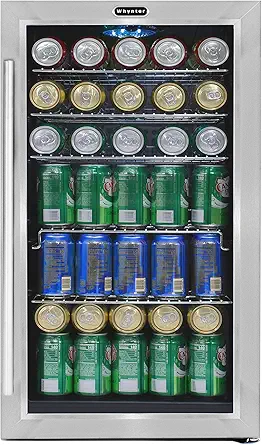 |
| Best Quality Built to a higher standard if you want something more solid | ORYMUSE 24" Beverage Refrigerator HXYC150A |  |
| Best Value The sweet spot between price and what you get | Manastin 3.2 Cu.Ft Beverage Refrigerator |  |
| Best Budget The cheapest option that still gets the job done reliably | KRIB BLING KB02 Beverage Refrigerator |  |
| Top Rated A top-rated pick with lots of positive feedback | hOmeLabs Beverage Refrigerator | 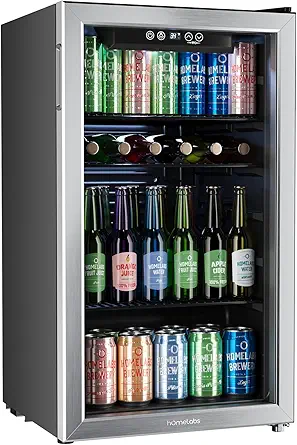 |
| Most Popular A crowd favorite that many people choose with confidence | Antarctic Star Beverage Refrigerator JC-48UEL-F | 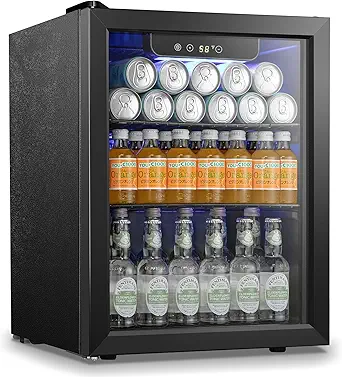 |
| Best Seller A high-volume bestseller chosen again and again | EUHOMY BR001-55 Mini Fridge |  |
Whynter BR-130SB Beverage Refrigerator

| Capacity | 3.1 cubic feet |
|---|---|
| Can Capacity | 127 cans |
| Cooling Method | Compressor |
| Temperature Range | High 30°F to mid 60°F |
| Shelves | 5 slide-out wire shelves |
The Whynter BR-130SB is a compact freestanding beverage fridge designed to showcase and chill drinks in small spaces. It uses a hermetic scroll compressor and fan-forced circulation to keep temperatures even across the cabinet, while a mechanical control lets you set the interior from the high 30s to the mid 60s Fahrenheit for cans or taller bottles. The unit includes five slide-out wire shelves that can be repositioned to fit different bottle heights and a recessed handle with a reversible double-layer glass door that offers viewable display and added insulation. Soft LED lighting makes contents easy to see and a keyed lock secures stored items. Practical benefits include a relatively large 3.1 cubic-foot capacity for its footprint and a flush-back design that helps it fit against a wall. Expect typical mini-fridge trade-offs: manual defrosting, a louder compressor than thermoelectric models at peak runtime, and no Energy Star rating, so energy use may be higher than ultra-efficient alternatives.
Best for: Buyers who want a stylish, display-ready mini fridge with real compressor cooling for reliable, even temperatures in a dorm, office, or home bar setting.
Less Ideal for: People seeking the quietest, most energy-efficient mini fridge or a completely maintenance-free, frost-free unit should consider other options.
- Large 3.1 cu. ft. capacity fits up to 127 standard 12-oz cans
- Compressor with fan-forced circulation delivers even cooling throughout the cabinet
- Adjustable slide-out shelves accommodate cans and taller bottles
- Double-layer glass door with LED lighting provides a clear, secure display
- Reversible door and recessed handle allow flexible placement
- Manual defrost requires occasional maintenance
- Not Energy Star rated, so it may consume more electricity than high-efficiency models
Verdict: A roomy, glass-door mini fridge with compressor cooling and adjustable shelving that balances display-ready styling with dependable chilling performance.
ORYMUSE 24" Beverage Refrigerator HXYC150A

| Capacity | 4.9 cubic feet |
|---|---|
| Unit Count | 180 Count |
| Temperature Range | 37-64°F |
| Refrigerant | R-600A |
| Installation Type | Built-In or Freestanding |
The ORYMUSE 24" beverage refrigerator is a compressor-cooled, glass-door mini fridge designed to store a large drinks collection while fitting under a counter. It offers a 4.9 cu ft capacity rated to hold about 180 12-oz cans and supports a 37 to 64°F temperature range so you can chill beer, soda, or keep wine at serving temps. The unit uses a reciprocating compressor and front ventilation for built-in installs, plus wire shelves and soft-close double-tempered glass doors that combine visibility with protection. Controls are via a touch panel and blue LED interior lighting helps you see contents without opening the door. Practical benefits include fast, stable cooling below 40 dB for quiet operation and a keyed door lock for added security. Important limitations are that the fridge is a single-zone design so you cannot set independent temperatures for multiple beverage types, and it uses a standard compressor rather than inverter technology which can impact long-term energy efficiency. The fridge meets DOE and ETL specs and is straightforward to use in kitchens, home bars, or garage setups where robust, quiet cooling and high capacity matter.
Best for: Buyers who prioritize strong, reliable cooling and high on-shelf capacity for a home bar, kitchen, or entertainment area and want a quiet, built-in-capable glass-door fridge that showcases their collection.
Less Ideal for: Those who need dual-zone temperature control for simultaneous wine and beer storage or buyers focused on the highest possible long-term energy efficiency should consider other options.
- Large 4.9 cu ft capacity fits about 180 standard cans or larger bottles
- Compressor cooling with front ventilation enables built-in or freestanding placement
- Soft-close double-tempered glass door with LED lighting makes contents easy to see and protects bottles
- Quiet operation under 40 dB suitable for living areas or home bars
- Keyed lock and sturdy wire shelves add security and organization
- Single temperature zone only, so you cannot separately chill different drink types
- Uses a reciprocating compressor rather than inverter tech which may use more energy over time
Verdict: Choose this ORYMUSE 24-inch fridge when you need a high-capacity, quiet compressor beverage cooler with a glass door that fits under a counter and reliably chills large drink collections.
Manastin 3.2 Cu.Ft Beverage Refrigerator

| Capacity | 3.2 cubic feet |
|---|---|
| Temperature Range | 35-65°F |
| Cooling Method | Compressor |
| Defrost System Type | Frost Free |
| Number Of Shelves | 3 |
This Manastin 3.2 Cu.Ft beverage refrigerator is a compact glass-door cooler meant to store and display drinks in small spaces. It uses a compressor and internal fan circulation to cool evenly across a digital temperature range of 35 to 65°F, with a touch control panel that can show Fahrenheit or Celsius. The interior has three removable wire shelves and multiple height slots so you can fit cans or bottles upright or laid flat, and a soft blue LED highlights contents for nighttime use. The unit is frost free, operates quietly, and includes a keyed lock for security. Practical buyers will appreciate the tempered dual low-E glass door that helps stabilize internal conditions and the freestanding design with adjustable feet for uneven floors. Important limits are its modest 3.2 cu ft capacity and single-door layout, so it is best suited to supplemental storage rather than replacing a full refrigerator, and the depth may require planning in tight spaces.
Best for: Buyers who want a compact, display-friendly mini fridge that keeps beers, sodas, and a few wine bottles at precise temperatures while fitting into a home bar, office, or dorm.
Less Ideal for: Those needing large-scale refrigeration for family meal prep or integrated built-in installation should look for larger capacity or built-in models.
- Digital thermostat with 35–65°F range for precise drink temperature control
- Removable adjustable wire shelves accommodate cans and bottles in multiple orientations
- Dual low-E glass door with soft blue LED improves display and helps retain temperature
- Compressor plus fan circulation for even, quiet cooling and frost-free operation
- Small 3.2 cu ft capacity limits total storage for larger households or parties
- Single-door, freestanding design may not fit flush into built-in cabinetry
Verdict: A compact, glass-door beverage fridge that delivers precise, quiet cooling and flexible shelving for buyers wanting a display-ready mini fridge.
KRIB BLING KB02 Beverage Refrigerator

| Capacity | 3.5 cubic feet |
|---|---|
| Cooling Method | Compressor |
| Compressor Type | Inverter Compressor |
| Defrost System Type | Manual Defrost |
| Temperature Range | 39.2F to 60.8F |
The KRIB BLING KB02 is a freestanding glass-door mini fridge built for storing drinks and small chilled items in a compact footprint. It uses a compressor cooling system with an inverter compressor and manual defrost, and the interior holds roughly 3.2 cubic feet (claimed 120 cans) across three wire shelves and door racks. A digital control panel lets you set temperatures between about 39.2F and 60.8F and offers an internal LED light and memory for power interruptions. The glass door and matte trim make it useful as a display unit in a rec room, office, or bar area, while adjustable feet and removable shelving let you fit bottles or bulky cans. Expect basic, practical performance rather than premium temperature uniformity or advanced cooling modes; it requires manual defrosting and should be plugged directly into a dedicated outlet. Noise is marketed as low, and the inverter compressor will be more efficient and quieter than older compressors, but long-term reliability and factory service details are limited.
Best for: Buyers who need an affordable, space-saving display fridge for cans, bottles, or snacks and prioritize visible storage and simple digital controls over premium features.
Less Ideal for: Those seeking a high-precision wine cooler, multi-zone temperature control, or a fully maintenance-free unit should consider specialized models instead.
- Large visible glass door for displaying contents
- Digital temperature control with internal readout and LED light
- Inverter compressor for quieter, more efficient cooling
- Adjustable shelving and door racks to fit cans and bottles
- Manual defrost requires occasional user maintenance
- No advanced temperature zones or precise wine-temperature presets
Verdict: A budget-friendly glass-door mini fridge that gives large visible capacity and simple digital temperature control for buyers who want an affordable display cooler.
hOmeLabs Beverage Refrigerator

| Capacity | 3.2 cubic feet |
|---|---|
| Storage | 120 cans |
| Temperature Range | 34°F-50°F |
| Cooling Method | Compressor |
| Defrost System Type | Automatic |
This hOmeLabs beverage refrigerator is a compact glass-door cooler built for steady, everyday drink storage. It uses a compressor-based cooling system with a whisper-quiet compressor and a touch-button digital control that lets you set temperatures between 34°F and 50°F, while an interior LED light and reinforced glass door make contents easy to see without opening the unit. Three removable chrome wire shelves and adjustable feet let you organize cans, bottles, or a few wine bottles and fit the unit under counters or in small rooms. In practice it keeps beverages consistently cold and runs quietly, which is useful in home bars, offices, and dorms, but the unit is a freestanding mini fridge so it needs a dedicated spot and clearance for ventilation. The fridge reports modest annual energy use and does not include a freezer compartment, so it is focused solely on chilled drink storage rather than general food freezing or long-term cold storage.
Best for: Buyers who want a dependable small glass-front cooler to keep a steady supply of cold drinks for a home bar, office, or dorm and prioritize quiet, consistent performance.
Less Ideal for: People needing multi-purpose refrigeration with a freezer or those who must maximize cold storage in very tight built-in cabinetry without additional ventilation space.
- Compressor cooling with whisper-quiet compressor for reliable, steady cooling
- Digital touch temperature control down to 34°F for consistent beverage chilling
- Reinforced glass door with interior LED light for clear product visibility
- Three removable chrome wire shelves and adjustable feet for flexible organization
- Freestanding design requires dedicated floor or counter space and ventilation
- No freezer compartment so it cannot freeze or long-term store frozen items
Verdict: Choose this glass-door mini fridge when you need a quiet, reliable cooler that keeps a large stash of drinks consistently cold and easy to see.
Antarctic Star Beverage Refrigerator JC-48UEL-F

| Capacity | 1.7 cubic feet |
|---|---|
| Temperature range | 40°F–61°F |
| Cooling method | Compressor |
| Door | Double-pane tempered glass |
| Installation type | Freestanding |
This Antarctic Star beverage refrigerator is a compact glass-door cooler designed to hold beverages at controlled temperatures in small spaces. It fits about 70 cans across two adjustable glass shelves and uses a compressor cooling system with a digital thermostat that lets you set temperatures between 40°F and 61°F, which keeps drinks consistently chilled. The tinted double-pane tempered glass door and airtight seal improve insulation while the built-in blue LED makes contents easy to find at night. The unit is freestanding, has a reversible door, a keyed lock, and is described as quiet in operation, so it works well beside a desk, in a dorm, or under a counter in a home bar. Trade-offs are its limited 1.7 cu ft capacity, manual defrost design, and the manufacturer notes it is for beverages only rather than fresh food. Energy consumption is listed and buyers should factor that into ongoing operating cost. For buyers who prioritize a compact glass-front cooler with stable temps and modest capacity, this model is a practical choice.
Best for: Buyers who want a proven, compact glass-front cooler for a personal space or small home bar and who value consistent temperature control and quiet operation backed by customer feedback.
Less Ideal for: Anyone who needs larger cold storage for food, a frost-free freezer compartment, or a unit intended to store perishable fresh items.
- Tempered double-pane glass door with airtight seal for improved insulation and visibility
- Digital thermostat with temperature range 40°F–61°F for consistent beverage chilling
- Compact 1.7 cu ft capacity that holds roughly 70 cans while saving floor or counter space
- Quiet compressor cooling and built-in blue LED for low-noise, usable nighttime visibility
- Manual defrost system requires occasional maintenance
- Not designed for storing fresh food, only beverages
- Limited internal capacity may not suit larger households or frequent entertaining
Verdict: A compact, quiet glass-door cooler that reliably chills beverages in a small footprint, ideal for personal spaces and home bars.
EUHOMY BR001-55 Mini Fridge

| Capacity | 1.3 cubic feet |
|---|---|
| Temperature Range | 40°F to 61°F |
| Cooling Method | Compressor (R-600A) |
| Noise Level | 38 dB (approx.) |
| Annual Energy Consumption | 165 kwh |
The EUHOMY BR001-55 is a countertop beverage fridge designed to store drinks and small food items in a visible, glass-front cabinet. It uses an R600a scroll compressor to maintain temperatures from about 40 to 61°F and includes a digital control panel and interior LED lighting for easy monitoring. The unit holds roughly 48 cans on a removable chrome-plated shelf and has a reversible glass door that shows contents without opening. Practical benefits include steady compressor cooling for even temperatures, a compact footprint that fits on counters or in small offices, and low noise performance quoted around 38 dB for undisturbed rooms. Limitations are the modest 1.3 cu ft capacity, which means it is not suitable for large stockpiles, and it runs on 220 volts which may require checking household compatibility. Energy use is moderate at the listed 165 kWh per year, so plan placement and electrical access accordingly. For buyers who want a reliable, visible mini fridge for drinks or a small beverage collection, this model delivers simple, dependable refrigeration without complicated features.
Best for: Buyers who prioritize a simple, low‑noise glass‑front fridge for chilled beverages or a small entertaining bar and want predictable, steady cooling without complex features.
Less Ideal for: Those who need large-capacity refrigeration, multi-zone temperature control, or a fridge that runs on standard 110–120V outlets should consider other options.
- Compressor cooling with R600a for consistent temperatures
- Digital temperature control with adjustable range (40–61°F)
- Glass door and interior LED light make contents easy to see
- Removable chrome shelf lets you fit bottles or cans flexibly
- Reversible door and compact countertop form factor for placement flexibility
- Relatively small 1.3 cu ft capacity limits total storage
- Specified voltage is 220 volts which may not match all household outlets
Verdict: A compact, glass‑front mini fridge that delivers steady compressor cooling and clear visibility, ideal for buyers who want a reliable countertop beverage refrigerator.
Choosing the Right Glass-Door Mini Fridge: Key Factors to Consider
Temperature Control and Range
Consistent, accurate cooling keeps drinks at the expected chill and protects perishables. Pay attention to the stated temperature range and whether the thermostat is digital or mechanical. Digital controls usually allow finer adjustments and maintain setpoints with less swing, which matters if you store items that need a narrow range.
Also consider how long the unit holds temperature during frequent door openings. Glass doors can let in more radiant heat than opaque doors, so good cooling capacity and a tight seal reduce warming when the door is opened multiple times.
Storage Layout and Capacity
How shelves are arranged determines what you can store and how accessible items are. Look for adjustable shelving or removable wine racks if you want to mix bottles, cans, and small containers. Shelves that slide or tilt slightly improve access in tight spaces.
Pay attention to usable interior height and depth versus the advertised gross capacity. Deep shelves may limit visibility; shallow, tiered shelves keep labels visible behind the glass, which is often a primary reason for choosing a glass-door unit.
Noise Level and Vibration
Glass-door mini fridges are frequently placed in living and working areas, so low noise and minimal vibration are important. Check measured decibel ratings when available, and consider compressors with vibration-damping mounts or thermoelectric cooling for near-silent operation.
Vibration can rattle shelves and increase wear on seals. If the unit will sit on a countertop near a workspace or a TV area, prioritize quieter models and look for features that isolate the compressor from the cabinet.
Energy Use and Running Cost
Smaller fridges still consume continuous power, so efficiency affects monthly energy use and overall environmental impact. Look for units with good insulation and efficient compressors, or thermoelectric systems where appropriate. Consider whether the fridge will run on a dedicated circuit or share power with other appliances.
Energy-efficient models can be slightly more expensive up front but reduce operating cost over time. Also consider modes such as ECO or adjustable low-power settings if the fridge will be used in a space with variable demand.
Glass Door Quality and UV Protection
The glass door is the focal point of these fridges, so door quality and protection matter for both aesthetics and preservation. Tempered glass resists impact better than plain glass and helps with long-term durability. Some doors include UV or tinted coatings to shield contents from light exposure that can affect certain beverages or food items.
Also inspect the door frame and hinge design for wobble and the presence of a full gasket seal. A well-sealed door minimizes air exchange and condensation on the glass, preserving cooling performance and visual clarity.
Installation Footprint and Venting
Where you place the mini fridge determines what size and venting style you should choose. Some units require front venting and cannot be fully enclosed, while others permit undercounter installation with rear or bottom vents. Measure clearance requirements including door swing and airflow gaps before buying.
Also consider leveling feet and the ability to secure the unit in a mobile setting. If the fridge will be moved or placed on carpet, check for adjustable feet or caster options to keep it stable and maintain proper airflow.
Ideal Uses for a Glass-Door Mini Fridge
Glass-door mini fridges shine where visibility and presentation matter. They are well suited to home bars, media rooms, office break areas, and compact kitchenettes where you want to display drinks or keep snack selection visible without opening a door.
Beyond presentation, these units work well as secondary refrigeration for party overflow, dedicated beverage stations, or short-term cold storage for items you access often. For each use case, think about whether you need adjustable shelving, a lock for public settings, or a quieter compressor for shared spaces.
- Home bar: prioritize shelving for bottled beverages and low noise.
- Office or studio: choose lockable models with low vibration.
- Under-counter spot: verify venting requirements and clearances.
Thermoelectric Vs Compressor Cooling
Glass-door mini fridges use either thermoelectric modules or small compressors. Thermoelectric systems are quieter and have no moving refrigerant parts, but they are less effective at achieving very low temperatures, especially in warm ambient conditions. They can be a good choice when noise is the top priority and you need mild cooling for drinks.
Compressor-based systems deliver stronger, more reliable cooling across a wider temperature range and handle frequent door openings better. They are the standard for food-safe refrigeration but typically run louder and may produce more vibration. Choose based on the balance you need between performance and acoustics.
- Thermoelectric: quieter, lower cooling capacity, better for ambient-controlled rooms.
- Compressor: stronger cooling, better for perishables, may be noisier.
Maintaining Clarity and Reducing Condensation
Glass doors can fog or collect condensation if humid air gets inside. Regularly check door gaskets and keep shelving arranged to allow air circulation. Avoid overloading the interior, since poor airflow increases frost and condensation risk on the glass.
Wiping the inside of the glass and keeping the door frame clean extends the life of the seal. If you plan to use the unit in a humid environment, look for models with anti-fog coatings or a slight positive pressure design that minimizes moisture ingress.
- Inspect gaskets every few months and replace if cracked.
- Avoid packing items directly against the glass to maintain airflow.
Placement and Ventilation Best Practices
Allow adequate clearance around the fridge for airflow, particularly near the compressor or condenser. Poor ventilation reduces efficiency, increases noise, and shortens compressor life. If the unit is rated for built-in or undercounter use, follow the manufacturer guidance for minimum gap dimensions.
Level the cabinet to prevent door misalignment that can strain hinges and gaskets. In tight spaces, front-venting models are preferable because they do not rely on rear clearance.
- Check if the model requires rear, bottom, or front ventilation.
- Keep the fridge away from direct sunlight or heat sources to reduce workload.
Customizing Interior Storage
Many glass-door mini fridges offer optional shelving accessories or removable racks so you can switch between cans, bottles, and small food containers. Magnetic shelf liners or tempered glass shelves increase durability and make cleanup easier. Consider whether the shelves are adjustable in small increments or only in fixed positions.
For beverage-focused setups, look for slotted shelving that nests bottles securely. If you need mixed use, prioritize flat, sturdy shelves that can accept bins or small storage boxes for organized, accessible interior layouts.
- Look for accessories like wine cradles or can racks.
- Removable shelves simplify deep cleaning and reconfiguration.
How We Chose the Best Glass-Door Mini Fridge
We focused on criteria that predict real-world performance and day-to-day convenience for glass-door mini fridges. Key evaluation points included temperature control and consistency, because proper cooling determines how well beverages and perishables store over time. We assessed storage layout and shelving versatility to judge how easily a unit adapts to bottles, cans, and small food containers. Noise level and vibration were measured because these fridges are often used in living areas where disturbance matters. Energy efficiency and rated power draw were considered to estimate running cost and compatibility with small circuits. Finally, build quality and door sealing were checked to evaluate long-term durability and visual presentation. Products that lacked stable temperature control, had very limited shelving options, or used visibly poor materials were excluded. We also filtered out units with unclear cooling specs or unreliable customer support histories. The resulting shortlist balances usable interior space, quiet operation, consistent cooling, and a presentable glass door for display use.
Our full evaluation process is outlined in our review methodology.
FAQ
Are glass-door mini fridges safe for storing perishables?
They can be safe if they maintain a consistent, food-safe temperature and have sufficient cooling capacity. Verify the temperature range and consider compressor models if you plan to store perishables frequently.
Will a glass door cause items to spoil faster from light exposure?
Direct and prolonged sunlight can affect some beverages and foods. Many glass-door units include tinted or treated glass to reduce light exposure. Position the fridge away from windows or strong artificial light for best preservation.
How noisy are glass-door mini fridges typically?
Noise varies by cooling method and build. Thermoelectric units are generally quieter, while compressor models produce more noise and occasional vibration. Look for decibel ratings or quiet-mode features when noise is a concern.
Can I install a glass-door mini fridge under a counter?
Some models are designed for undercounter installation and have front ventilation, but others need rear clearance. Check the venting requirements and minimum clearances before planning an undercounter placement.
How often should I defrost or clean the interior?
Frequency depends on use and humidity, but a general rule is to inspect monthly and defrost when frost buildup exceeds a quarter inch. Clean shelves and gaskets every few months to prevent odors and maintain seal integrity.
Final Verdict
Glass-door mini fridges combine visual appeal with functional cooling, but the right unit depends on how you plan to use it. Prioritize temperature stability and shelving flexibility if you want mixed storage for bottles and food, or favor low-noise thermoelectric models for quiet living spaces. Pay attention to venting requirements and door quality to avoid performance issues and condensation. Balance the tradeoffs—cooling strength versus noise, and visibility versus light exposure—based on where the fridge will live and what you store most. With the evaluation factors above, you can choose a glass-door mini fridge that fits your space and keeps contents both chilled and presentable.