
Note: This article contains affiliate links. If you click on these links and make a purchase, we may earn a small commission at no extra cost to you. This helps support our research and content. Read our full affiliate disclosure here.
A mini fridge can transform a dorm room, home office, or secondary living area by putting reliable cold storage within easy reach. Choosing the right mini fridge matters because size, cooling method, and energy draw directly affect how usable and cost-effective the unit will be in everyday life. This guide shortlists seven top mini fridges under $1,000 that balance usable interior space, power efficiency, and placement flexibility. Below we evaluate each option on the features that matter most for small-space refrigeration, including capacity, noise, and operating cost, so you can pick the model that fits your routine and space. Read on for the full breakdown and buying guidance.
Top Picks at a Glance
| Best Overall The best all-around choice for most situations | EUHOMY BR013-110 Beverage Refrigerator |  |
| Best Quality Built to a higher standard if you want something more solid | GE Double-Door Mini Fridge | 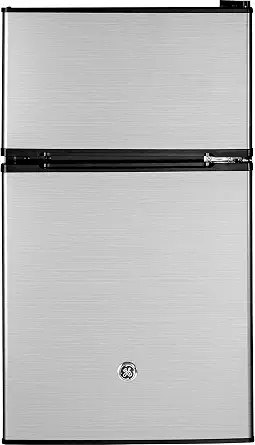 |
| Best Value The sweet spot between price and what you get | Midea 3.3 Cu.ft Compact Refrigerator |  |
| Best Budget The cheapest option that still gets the job done reliably | Frigidaire Retro Mini Personal Fridge EFMIS171 |  |
| Top Rated A top-rated pick with lots of positive feedback | Midea Compact Refrigerator WHS-65LB1 |  |
| Most Popular A crowd favorite that many people choose with confidence | Upstreman BR321 3.2 Cu.Ft Mini Fridge |  |
| Best Seller A high-volume bestseller chosen again and again | hOmeLabs Beverage Refrigerator HME030065N | 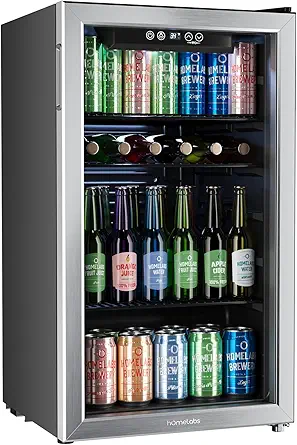 |
EUHOMY BR013-110 Beverage Refrigerator

| Capacity | 3.2 cubic feet |
|---|---|
| Temperature range | 37°F to 61°F |
| Cooling method | Compressor |
| Number of shelves | 5 removable shelves |
| Installation type | Freestanding |
This EUHOMY beverage refrigerator is a compact, compressor-cooled mini fridge designed to store cans and bottles in a visible, organized way. It offers 3.2 cubic feet of capacity with five removable shelves that can be repositioned to hold cans, bottles, or a few wine bottles, and a reversible glass door that shows the contents while providing UV-blocking protection. Temperature is set on a touchscreen digital control and ranges from 37°F to 61°F, which covers typical cold drink and wine-fridge needs, and an internal fan helps keep temperatures even. The unit is freestanding, energy efficient at about 0.69 kWh per day, and is rated to run quietly around 36 dB, so it fits well in kitchens, home bars, offices, or bedrooms. Trade-offs include the absence of a freezer compartment and a midline annual energy consumption figure compared with the quiet operation and cooling performance; larger collections will quickly outgrow the 3.2 cu.ft. space. For buyers wanting a visible, adjustable, and reasonably quiet cooler under $1,000, this model is a solid balanced choice.
Best for: Buyers who want a visible, configurable mini fridge that balances cooling performance, quiet operation, and flexible shelving for everyday beverage storage in small spaces.
Less Ideal for: Those who need a freezer, large-capacity storage for parties, or a dedicated wine cellar solution should look for larger or specialty models.
- Adjustable removable shelves let you customize storage for cans, bottles, or small wine bottles
- Digital touchscreen control with a 37°F to 61°F range for precise temperature settings
- Compressor cooling with internal fan provides consistent, even temperatures
- Reversible double-layer UV-blocking glass door offers visibility and protects contents
- Quiet operation (~36 dB) suitable for kitchens, home bars, offices, or bedrooms
- No freezer compartment or dedicated wine racks for long-term wine storage
- 3.2 cu.ft. capacity is limited for larger collections or parties
Verdict: A quiet, compressor-cooled 3.2 cu.ft. beverage fridge with digital control and flexible shelving that fits well for everyday drink storage in small spaces.
GE Double-Door Mini Fridge
| Capacity | 3.1 cubic feet |
|---|---|
| Freezer Capacity | 0.93 cubic feet |
| Configuration | Compact Freezer-on-Top |
| Defrost System Type | Partial Automatic Defrost |
| Energy Star | Yes |
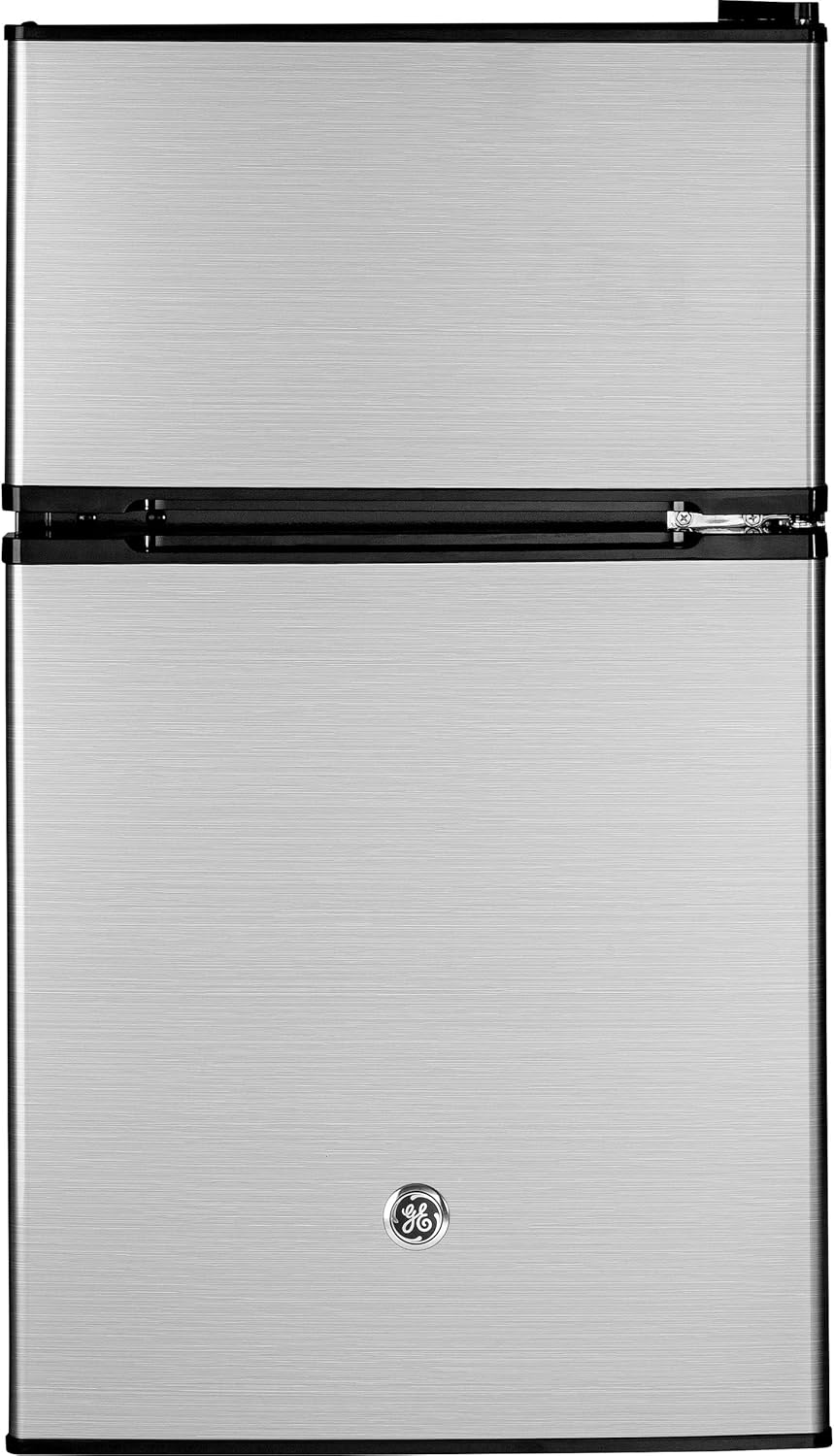
The GE Double-Door Mini Fridge is a compact freestanding refrigerator built for steady everyday use in small spaces. It provides a separate top freezer and a fresh food section with two glass shelves, a clear crisper, door storage including a can rack and tall-bottle space, and bright interior lighting. The compressor is durability-tested and the unit includes an inverter type for efficient cooling and partial automatic defrost to keep the fridge section frost-free while the freezer is manually defrosted. Practical benefits include sturdy, easy-to-clean glass shelving, recessed handles that save clearance in tight rooms, and Energy Star qualification for lower energy use. Limitations are its modest total capacity and a freezer that requires occasional manual defrosting, which may be noticeable if you store a lot of frozen goods or need completely hands-off operation. For buyers prioritizing reliable, energy-efficient cooling in a dorm, office, or garage, this model balances performance with compact convenience.
Best for: Buyers who need a reliable, energy-efficient compact fridge that delivers steady cooling and practical storage for drinks, produce, and frozen basics in small spaces.
Less Ideal for: Anyone who needs large frozen storage, fully automatic freezer defrost, or a high-capacity fridge for family meal prep should consider a larger model instead.
- Separate freezer compartment for true frozen storage
- ENERGY STAR qualified for lower annual energy use
- Recessed handles save space and improve placement flexibility
- Sturdy glass shelves and clear crisper make organization and cleaning simple
- Freezer requires manual defrost maintenance
- Total capacity is limited compared with larger compact refrigerators
Verdict: A compact, energy-efficient mini fridge that delivers dependable cooling and sensible storage for small-space performance needs.
Midea 3.3 Cu.ft Compact Refrigerator

| Capacity | 3.3 cubic feet |
|---|---|
| Annual Energy Consumption | 260 kilowatt hours per year |
| Temperature Range | 33.8°F to 50.0°F |
| Defrost System Type | Manual |
| Door Orientation | Reversible |
The Midea 3.3 cu.ft compact refrigerator is a small, freestanding fridge intended for dorms, offices, or tight kitchens where space matters. It uses a rotary compressor with R-600A refrigerant and is Energy Star certified, so it runs with relatively low annual energy consumption (260 kWh) and claims a noise level under 42 dB suitable for bedrooms or offices. Interior LED lighting, two removable glass shelves plus a bottle rack and can organizer make daily organization straightforward, and the reversible door gives flexible placement. Temperature is adjustable between about 34°F and 50°F for general chilled storage, but this model is freezerless so it will not keep items frozen. Setup and controls are mechanical and simple, which keeps operation intuitive but limits advanced temperature precision. For buyers prioritizing efficiency, quiet operation, and a compact footprint, this fridge delivers practical value; buyers needing freezer space, commercial-grade cooling, or exact temperature control should look elsewhere.
Best for: Buyers who want a reliable, energy-efficient compact fridge to save space and lower running costs while keeping everyday food and drinks chilled.
Less Ideal for: People who need a built-in freezer, precise temperature control for specialty foods, or heavy-duty cooling for frequent bulk use.
- Energy Star certified with relatively low annual energy use
- Quiet operation rated under 42 dB suitable for bedrooms or offices
- Reversible door and removable shelves for flexible placement and storage
- Interior LED light and bottle/can racks improve day-to-day usability
- No freezer compartment so it cannot freeze items
- Manual defrost and mechanical controls limit fine temperature tuning
Verdict: A compact, energy-efficient mini fridge that balances quiet, practical daily use and low operating cost for space-conscious buyers.
Frigidaire Retro Mini Personal Fridge EFMIS171
| Cooling Method | Thermoelectric |
|---|---|
| Capacity | 4 liters |
| Power | 110 volts and 12V DC |
| Configuration | Freezerless |
| Number Of Shelves | 1 |
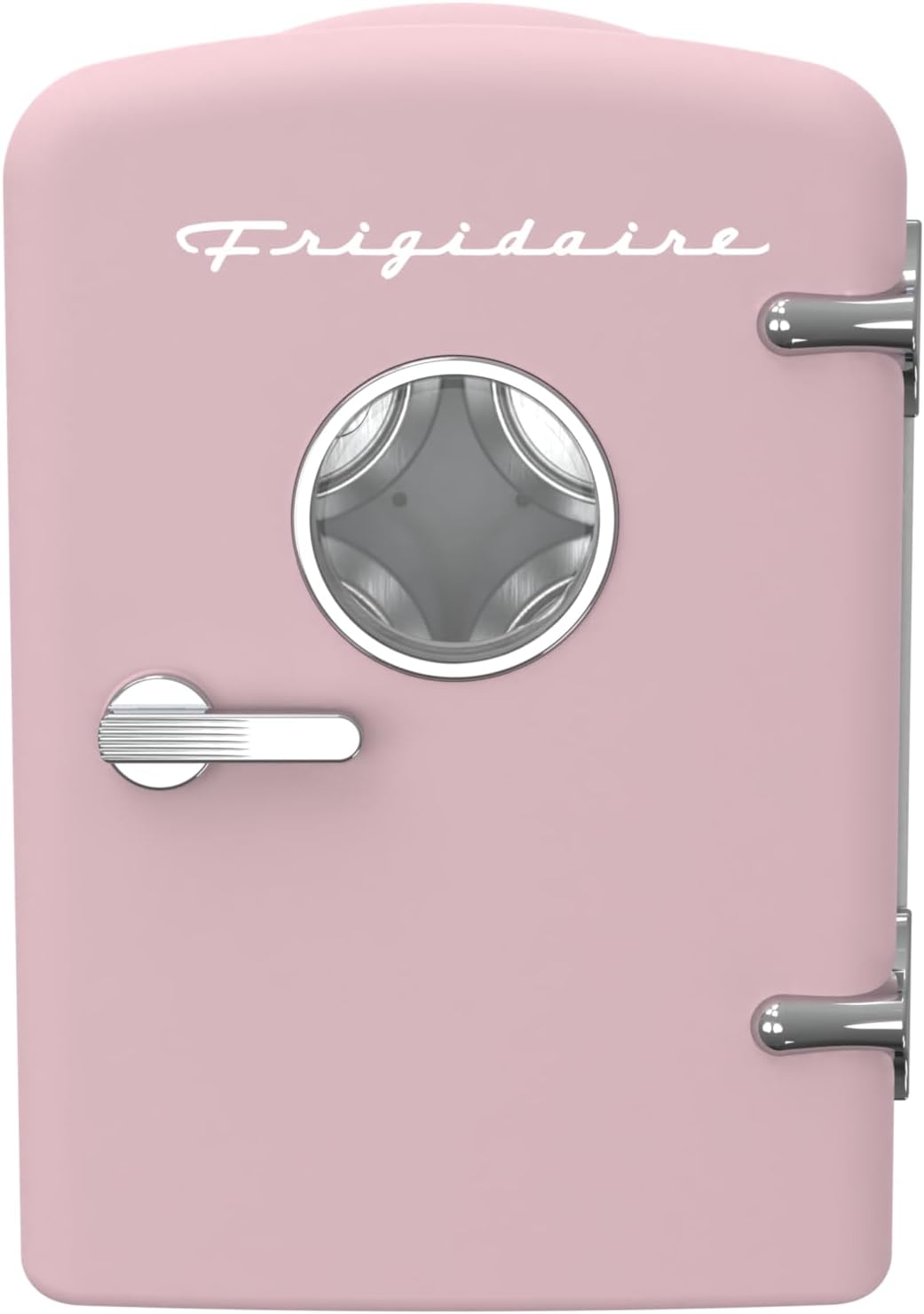
The Frigidaire Retro Mini Personal Fridge is a lightweight, countertop cooler that chills up to six 12 oz cans and keeps skincare, snacks, or small beverages cool while on the move. It uses thermoelectric cooling (freon-free) to reach about 32°F below ambient and also offers a warming mode up to 140°F, making it useful for transporting warm food in some conditions. The unit includes a removable shelf, a reversible right-hinged door, and both AC and 12V DC power cords for home and car use, so you can use it in dorms, offices, or vehicles. Its very small footprint and 4 liter capacity mean it is best for single-person use or for stashing a few items close at hand rather than bulk storage. Because it is thermoelectric rather than compressor-based, it is quieter and more portable but will cool less aggressively in hot ambient environments and is not suitable as a primary refrigerator. For buyers on a tight budget who need a simple, portable cooler for drinks, skincare, or small snacks, this model is a practical pick.
Best for: Buyers looking for an inexpensive, portable personal fridge to keep drinks, snacks, or skincare items handy in a dorm, office, car, or small bedroom.
Less Ideal for: Anyone who needs significant cold storage, long-term food preservation, or reliable cooling in very warm environments should choose a larger compressor refrigerator.
- Very compact and lightweight for easy relocation and travel
- Includes AC and 12V DC cords for use at home or in a car
- Removable shelf and reversible door offer flexible interior arrangement and placement
- Thermoelectric cooling is freon-free and runs quietly
- Small 4 liter capacity limits storage to a few cans or small containers
- Thermoelectric system cools less effectively in hot ambient conditions compared with compressor fridges
Verdict: A low-cost, ultra-portable personal fridge that delivers basic cooling and car-compatible power for single-person use.
Midea Compact Refrigerator WHS-65LB1

| Capacity | 1.6 cubic feet |
|---|---|
| Annual Energy Consumption | 207 kilowatt hours per year |
| Defrost System Type | Automatic |
| Cooling Method | Compressor |
| Door Orientation | Reversible |
The Midea WHS-65LB1 is a small, straightforward mini fridge that provides basic refrigeration for dorms, offices, and small apartments. It uses an R600a compressor and is ENERGY STAR certified, so it runs efficiently and lists annual energy use at about 207 kWh. The unit includes a small internal chiller compartment for short-term rapid cooling, a removable shelf to accommodate taller items, and a reversible door for flexible placement. Controls are mechanical and simple to set across a range of colder temperatures, and the manufacturer claims noise under 42 dB, so it stays unobtrusive in quiet rooms. Important limitations are its modest 1.6 cubic foot capacity and the chiller cannot fully freeze or handle long-term freezer tasks, so this is best for drinks, snacks, and short-term chilling rather than full meal storage. Build and features are utilitarian rather than premium, but the fridge delivers reliable, energy-efficient cooling where space and electricity use matter most.
Best for: Buyers who prioritize a compact, energy-efficient, low-noise refrigerator for a dorm, office, or small apartment and want simple, reliable cooling without extra features.
Less Ideal for: People who need freezer performance, large-capacity refrigeration, or premium finishes and advanced controls should consider larger or feature-rich models instead.
- ENERGY STAR certified with R600a compressor for lower annual energy use
- Compact 1.6 cu ft footprint fits tight spaces and includes a reversible door
- Removable shelf and door racks allow flexible storage arrangements
- Mechanical thermostat with several settings for straightforward temperature control
- Advertised low noise level suitable for bedrooms and dorms
- Very small overall capacity limits meal storage and large containers
- Internal chiller is only for short-term cooling and cannot freeze items
Verdict: Choose this Midea if you want a compact, energy‑efficient mini fridge that quietly delivers reliable daily cooling for small spaces.
Upstreman BR321 3.2 Cu.Ft Mini Fridge

| Capacity | 3.2 cubic feet |
|---|---|
| Freezer Capacity | 0.3 cubic feet |
| Defrost System Type | Manual Defrost |
| Cooling Method | Compressor |
| Annual Energy Consumption | 206 kwh |
The Upstreman BR321 is a compact compressor mini fridge that delivers straightforward chilled storage for dorm rooms, offices, and small apartments. It offers 3.2 cubic feet of usable space with a 0.3 cu.ft freezer, two adjustable glass shelves, a crisper drawer, and three door bins so you can store cans, bottles, produce, and basic meal items. Temperature is controlled with a five-step adjustable thermostat rated from about 32°F to 50°F, and the reversible door plus leveling feet make placement flexible in tight spaces. The unit is ETL-listed, uses R-600A refrigerant, and claims quiet operation around 38 dB while meeting energy-conscious needs with a 206 kWh annual consumption figure. Practical details such as a tight door seal and a manual defrost tool keep maintenance simple, but this is not designed for long-term storage of ice cream or large frozen items and the manual defrost means occasional upkeep. For buyers who want a compact, efficient secondary fridge with sensible storage layout and low noise, the BR321 is a solid, no-surprises option.
Best for: Buyers who prioritize a compact, quiet secondary refrigerator backed by many verified users and want a reliable, energy-conscious option for dorms, bedrooms, or offices.
Less Ideal for: Anyone needing a large-capacity freezer, frost-free operation, or heavy-duty primary refrigerator performance should consider a different model.
- Compact 3.2 cu.ft capacity with a 0.3 cu.ft freezer for beverages and small frozen items
- Adjustable thermostat with five temperature levels for basic temperature control
- Two adjustable glass shelves and multiple door bins for flexible storage layouts
- Reversible door and leveling feet for flexible placement in small spaces
- Energy-efficient operation with an annual consumption rating and quiet 38 dB noise level
- Manual defrost requires occasional maintenance and is less convenient than frost-free models
- Freezer is small and not suitable for storing ice cream or large frozen items
Verdict: A practical, quiet, and energy-conscious 3.2 cu.ft mini fridge that works well as a reliable secondary refrigerator for small rooms and offices.
hOmeLabs Beverage Refrigerator HME030065N

| Capacity | 3.2 cubic feet |
|---|---|
| Can Capacity | 120 cans |
| Temperature Range | 34°F–50°F |
| Cooling Method | Compressor |
| Shelves | 3 removable chrome wire shelves |
This hOmeLabs beverage refrigerator is a freestanding, compact cooler aimed at keeping cans and bottles chilled and visible. It holds about 3.2 cubic feet or roughly 120 slim cans across three removable chrome wire shelves, letting you rearrange storage for bottles or taller containers. A touch-button digital temperature control ranges down to 34°F and a bright white LED interior light makes finding drinks easy without opening the door frequently. The reinforced double-glazed glass door with a stainless-steel frame is reversible to fit different layouts, and the unit uses a quiet compressor for steady cooling in living rooms, dorms, or home bars. Practical trade-offs are its single-zone cooling and lack of inverter technology, so it is focused on beverage storage rather than long-term food preservation or ultra-efficient variable-speed operation. The appliance is freestanding and designed for indoor use, so installation is simple but it is not built for built-in flush-mount installation or commercial heavy-duty cycles.
Best for: Buyers who want a reliable, easy-to-use freestanding beverage fridge for home, office, or dorm use and prioritize visible, consistent cooling over advanced efficiency features.
Less Ideal for: People who need a built-in undercounter unit, commercial heavy-duty refrigeration, or separate temperature zones for different beverages should look elsewhere.
- Holds up to 120 slim cans with three removable shelves for flexible organization
- Digital touch temperature control down to 34°F for consistent beverage chilling
- Reinforced double-glazed glass door and interior LED light for clear visibility
- Whisper-quiet compressor suitable for living spaces and offices
- Reversible door and adjustable feet to fit varied room layouts
- Single cooling zone limits separate temperature control for different drink types
- Not designed as a built-in unit, so may protrude if placed under counter
Verdict: A dependable, quiet freestanding beverage fridge that stores up to 120 cans and delivers consistent, visible cooling for home and small-office use.
Choosing the Right Mini Fridge: Key Factors to Consider
Interior Capacity and Layout
Capacity matters but usable space matters more. Look at shelf spacing, removable shelves, and door-bin design to confirm the unit can handle bottles, meal containers, and produce you plan to store. A nominal liter or cubic-foot number does not reveal how easy it will be to organize groceries or tall items.
Adjustable shelving and a clear measurement of usable shelf height let you tailor the interior to your needs and avoid surprises after delivery.
Cooling Method and Temperature Control
Mini fridges use different cooling systems that affect temperature consistency and maintenance. Compressor-based units usually cool faster and maintain stable temperatures in varied ambient conditions, while thermoelectric models are quieter but often less effective in warm rooms.
Reliable temperature controls, clear-set thermostats, and a visible temperature readout help you keep perishables safe. Consider how quickly the unit can recover temperature after the door opens and whether it offers a dedicated freezer compartment if you need frozen storage.
Energy Consumption
Because a mini fridge runs continuously, energy draw determines long-term operating cost. Look for models with low wattage and clear annual kWh estimates. Energy-efficient compressors and improved insulation reduce runtime and monthly electricity expense.
Also consider usage patterns. A unit in a bedroom or office that cycles frequently will present a different cost profile than one used a few hours a day. Calculating likely annual kWh based on stated energy use gives a realistic expectation of running cost over time.
Noise and Vibration
Noise is a prime concern when a mini fridge sits near where you sleep or work. Compressor units produce variable sound and occasional vibration, while thermoelectric types produce a steadier, low-level hum. Check for reported decibel levels when available.
Vibration can cause rattling on delicate surfaces. Look for units with stabilizing feet, rubberized bases, or low-vibration compressors to reduce disturbance in quiet environments.
Size, Footprint, and Placement Options
Measure the intended space before shopping. Mini fridges come in different forms: tall and narrow, short and wide, or cube-like designs. Consider door swing and clearance, ventilation space for compressors, and whether the unit can be recessed or needs open airflow behind it.
Some units allow reversible doors or have trim kits for built-in appearance. Verify installation requirements so the unit fits your planned location without blocking walkways or vents.
Durability and Serviceability
Long-term reliability matters for an appliance that runs continuously. Look for units with metal interiors or reinforced shelving, corrosion-resistant finishes, and straightforward access to the compressor and condenser for cleaning.
A clear warranty and accessible customer support indicate fewer headaches if repairs are needed. Consider how easy it is to replace common parts like door seals and shelves to extend the unit's usable life.
Where Mini Fridges Work Best
Mini fridges are ideal when you need supplemental cold storage without committing to a full-size refrigerator. They excel in small living spaces, home offices, dorm rooms, garages used as break areas, and entertainment zones where drinks and snacks should be close at hand.
Think about whether the appliance will be used for short-term chilled items like drinks, or for longer-term perishables. The intended use helps determine whether you need a model with a dedicated small freezer, stronger temperature control, or a configuration designed for upright bottles.
- Dorm rooms: prioritize quiet operation and compact footprint
- Home office: focus on low vibration and minimal noise
- Secondary kitchen or bar area: look for larger capacity and adjustable shelving
Thermoelectric Vs Compressor Units
Understanding the cooling technology helps match performance to the environment. Thermoelectric units are mechanically simple and typically quieter but struggle to cool below ambient temperature in warm rooms. They are best for moderate climates and occasional use.
Compressor-based mini fridges behave like full-size refrigerators, offering faster cooling and better temperature stability in hot environments. They are better for daily use or when storing perishable food for several days, but they tend to be louder and may need extra clearance for ventilation.
- Thermoelectric: quieter, lighter, less effective in heat
- Compressor: more powerful, better temperature control, can be louder
Managing Running Costs
To estimate operating cost, check the unit's annual kWh rating when available and multiply by your local electricity rate. Lower-wattage compressors and improved insulation reduce runtime and electricity expense over months and years.
Placement affects efficiency. Avoid installing a mini fridge near heat sources or in direct sunlight, and leave the recommended clearance for airflow. Regularly cleaning condenser coils and door seals also helps maintain efficient operation.
- Look for explicit annual energy use numbers
- Keep the unit in a cool, ventilated spot away from direct heat
Noise Control and Quiet Operation Strategies
If the unit will live in a bedroom or workspace, choose models rated for low decibel output and designed to minimize vibration. Rubber feet, anti-vibration mounts, and steady compressor cycles help reduce audible and tactile disturbance.
Small placement changes can make a big difference. Set the fridge on a solid, level surface, add vibration-absorbing pads if needed, and maintain clearance for airflow so the compressor does not overwork and generate more noise.
- Check reported noise levels when possible
- Use vibration pads on delicate shelving or desks
Care and Maintenance Basics
Routine maintenance keeps a mini fridge running efficiently. Clean the interior and door seals periodically, defrost manual-freezer sections to prevent ice buildup, and vacuum or brush condenser coils if accessible.
Addressing small issues early, such as replacing a brittle door gasket or re-leveling the unit, prevents larger problems. Proper maintenance both improves reliability and reduces energy use over the life of the appliance.
- Defrost manual freezer compartments regularly
- Clean condenser coils and door gaskets for better efficiency
How We Chose the Best Mini Fridge
We prioritized features that determine how well a mini fridge performs in small-space, budget-aware setups. Key evaluation criteria included usable interior capacity and shelf flexibility to ensure items actually fit; cooling technology and temperature stability because uneven cold zones reduce food life; noise level for use in bedrooms and offices; and energy efficiency to keep long-term running costs low. We also weighed build quality and door configuration for installation options, plus warranty and service access as indicators of expected durability. We excluded any units with capacities or footprints outside typical mini fridge use or those that relied on unproven cooling methods. Models lacking clear specification for energy use or noise rating were not considered. The final list balances real-world user needs: practical interior layout, reliable temperature control, quiet operation, and reasonable energy consumption. These filters reflect what buyers value most when selecting a mini fridge under $1,000.
Our full evaluation process is outlined in our review methodology.
FAQ
How much space should I leave around a mini fridge for ventilation?
Leave the manufacturer-recommended clearance, typically at least a few inches at the back and top. Adequate airflow prevents the compressor from overheating and keeps the unit running efficiently.
Can a mini fridge be used in a warm garage?
It depends on the cooling method. Compressor units handle warmer ambient temperatures better than thermoelectric models. In a garage that reaches high heat, choose a compressor design rated for warmer environments.
Are mini fridges noisy to run in a bedroom?
Noise varies by model. Thermoelectric units are generally quieter, while compressor models can be louder during cooling cycles. Look for decibel ratings or user reports if low noise is important.
Do mini fridges with freezers need manual defrosting?
Some smaller units include icebox-style freezers that require occasional manual defrosting. Look for frost-free features if you want to avoid regular defrosting tasks.
How do I figure out the running cost of a mini fridge?
Check the annual kWh rating and multiply by your local electricity rate. If only wattage is listed, estimate hours of operation per day to calculate yearly consumption for a realistic cost estimate.
Final Verdict
When choosing a mini fridge under $1,000, prioritize the combination of usable interior layout, reliable temperature control, and low energy consumption for your intended placement. Expect tradeoffs between quiet operation and cooling power: thermoelectric models are often quieter but less effective in hot spaces, while compressor units offer stronger cooling at the cost of some noise and higher energy draw. Decide which factors matter most for your routine and space, then pick a model that balances capacity, stability, and serviceability. That approach will help you get a dependable mini fridge that fits both your physical space and daily needs.