
Note: This article contains affiliate links. If you click on these links and make a purchase, we may earn a small commission at no extra cost to you. This helps support our research and content. Read our full affiliate disclosure here.
If you need extra cooling without a big appliance footprint, a budget mini fridge can be a practical solution. The right small refrigerator gives you usable capacity, stable temperatures, and modest power draw for dorm rooms, home offices, garages, or bedroom setups. This guide shortlists seven mini fridges under $150 that balance usable interior space, energy efficiency, and basic features that matter day to day. Below you will find top picks selected for common real-world needs, plus the decision factors we used to evaluate them and practical advice on installation, maintenance, and troubleshooting. Use the evaluation criteria to match a model to your space and power priorities.
Top Picks at a Glance
| Best Overall The best all-around choice for most situations | Frigidaire 2.5 cu ft Compact Refrigerator | 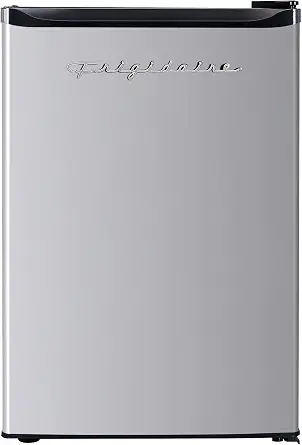 |
| Best Quality Built to a higher standard if you want something more solid | Midea 3.3 Cu.ft Compact Refrigerator |  |
| Best Value The sweet spot between price and what you get | Frestec 1.7 Cu Ft Mini Fridge |  |
| Best Budget The cheapest option that still gets the job done reliably | DUMOS Mini Fridge 4L |  |
| Top Rated A top-rated pick with lots of positive feedback | Midea Compact Refrigerator WHS-65LB1 |  |
| Most Popular A crowd favorite that many people choose with confidence | Frigidaire 10L Mini Fridge |  |
| Best Seller A high-volume bestseller chosen again and again | Upstreman BR321 3.2 Cu.Ft Mini Fridge |  |
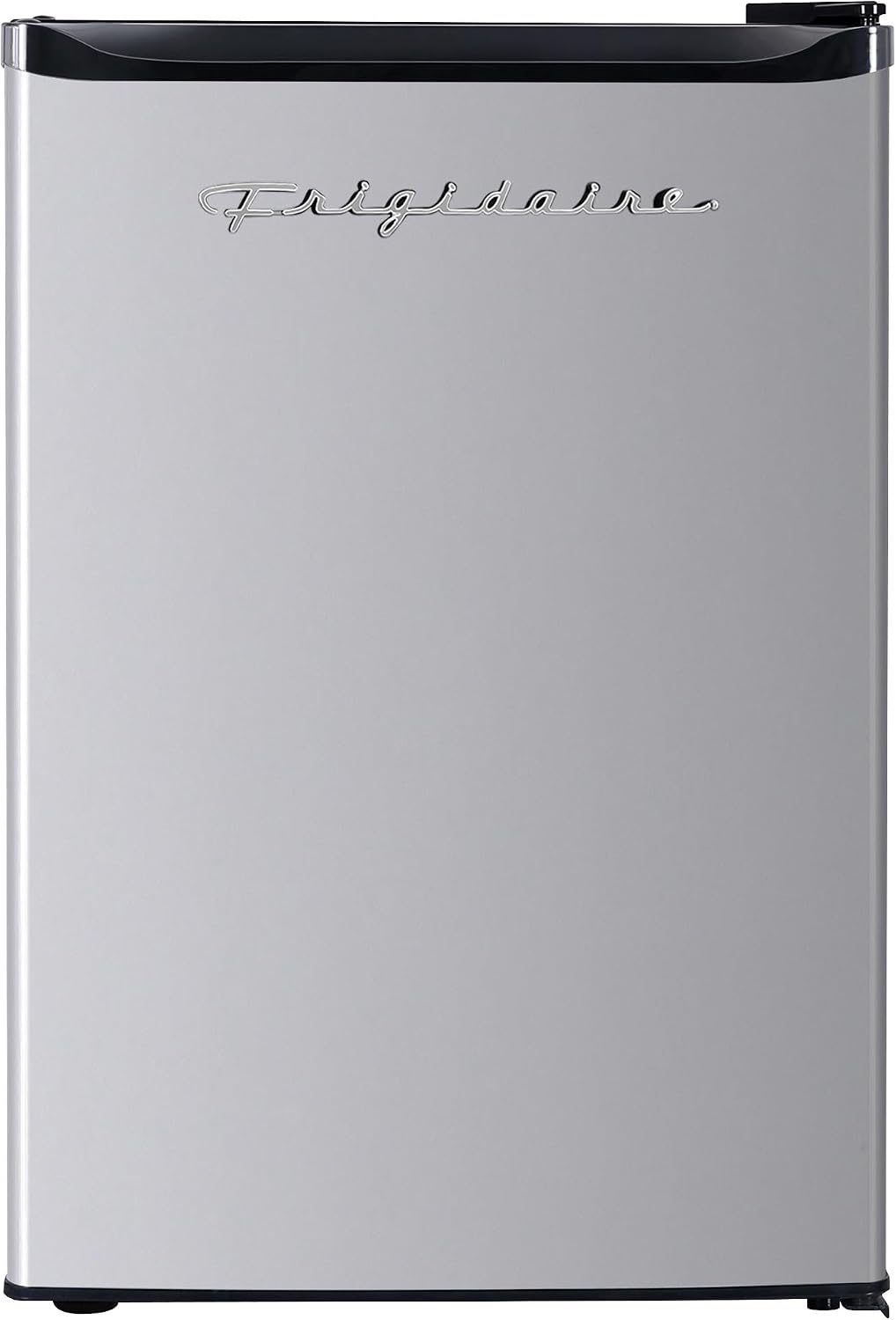
Frigidaire 2.5 cu ft Compact Refrigerator
| Capacity | 2.5 cubic feet |
|---|---|
| Freezer Capacity | 0.2 cubic feet |
| Defrost System Type | Manual Defrost |
| Cooling Method | Compressor |
| Installation Type | Freestanding |
This Frigidaire 2.5 cu ft compact refrigerator is a straightforward small fridge meant for dorms, offices, or secondary beverage storage. It includes an internal freezer with an ice tray and drip tray, three removable shelves and door racks for bottles and dairy, and a temperature-control knob for basic cooling adjustments. The reversible stainless-steel door and adjustable legs make placement flexible in tight layouts, while the flush-back design helps it tuck against walls. It runs on a compressor cooling system and is described as quiet with low energy consumption, which is useful for bedroom or office use. Expect manual defrosting for the freezer and simple mechanical controls rather than digital features, so it is easy to use but lacks advanced temperature precision or smart functions. For buyers who need compact, reliable chilled storage without extras, this model provides practical shelving and a modest freezer at an affordable size, though it is not intended for large-volume food storage or heavy-duty freezing tasks.
Best for: Buyers who want an affordable, no-frills secondary refrigerator for a dorm, office, bar area, or small apartment and value simple reliability and flexible placement.
Less Ideal for: People who need large-capacity refrigeration, heavy freezer use, precise temperature control, or smart connectivity should consider larger or more feature-rich models.
- Compact 2.5 cu ft capacity fits small rooms, dorms, and offices
- Internal freezer with ice tray for occasional frozen storage
- Reversible stainless-steel door and adjustable legs for flexible placement
- Removable glass shelves and door racks organize bottles and groceries
- Quiet compressor operation with low energy consumption
- Freezer requires manual defrosting and offers limited capacity
- Basic mechanical controls lack precise temperature regulation or smart features
Verdict: A practical, energy-efficient compact fridge that delivers simple, reliable chilled and light frozen storage for small spaces at a budget-friendly level.
Midea 3.3 Cu.ft Compact Refrigerator

| Capacity | 3.3 cubic feet |
|---|---|
| Annual Energy Consumption | 260 kilowatt hours per year |
| Temperature Range | 33.8 F to 50.0 F |
| Defrost System Type | Manual |
| Door Orientation | Reversible |
The Midea 3.3 cu ft compact refrigerator is a small, freestanding fridge aimed at dorms, offices, or tight kitchens where space and energy use matter. It cools via a rotary compressor and offers a mechanical thermostat that ranges roughly from 33.8°F to 50°F, so you can tune temperatures for beverages, produce, and leftovers. The interior includes three shelves with a 2L bottle rack and an LED light for visibility, and the reversible door makes placement flexible. Energy Star certification and an estimated 260 kWh/year consumption mean lower operating costs compared with less efficient mini fridges, and the manufacturer cites noise under 42 dB for quiet operation. Practical limitations are its freezerless design and manual defrost, so it will not keep frozen foods and requires occasional maintenance to manage moisture. The unit is compact but not ultra-small, so measure your space before buying and expect modest cooling power compared with full-size refrigerators.
Best for: Buyers prioritizing steady cooling performance and low operating costs who need a reliable compact fridge for a dorm, office, or small apartment and want configurable shelf space and quiet operation.
Less Ideal for: Anyone who needs a built-in freezer, rapid deep-freezing, or frequent frozen-food storage should look at models with a freezer compartment instead.
- Energy Star certified with low annual energy consumption for lower operating cost
- Reversible door and compact footprint for flexible placement in small spaces
- Adjustable thermostat and removable shelves let you tailor interior layout and temperature
- Interior LED light and dedicated bottle/can racks improve everyday usability
- Quiet operation claimed under 42 dB suitable for bedrooms or offices
- No freezer compartment, so it cannot store frozen items
- Manual defrost requires occasional user maintenance
Verdict: Choose this compact Midea fridge if you want quiet, energy-efficient cooling and flexible placement for a dorm or small space without needing a freezer.
Frestec 1.7 Cu Ft Mini Fridge

| Capacity | 1.7 cubic feet |
|---|---|
| Freezer Capacity | 0.2 cubic feet |
| Cooling Method | Compressor |
| Defrost System Type | Manual |
| Voltage | 115 volts |
This 1.7 cu ft Frestec mini fridge provides basic cold storage in a very small footprint, making it easy to tuck under a desk or fit into a dorm room or office. It uses a compressor cooling system with a 0.2 cu ft freezer compartment, a removable glass shelf, reversible door and adjustable feet so you can adapt the interior and door swing to your space. Temperature is set with a simple dial offering six levels and a one-touch defrost function for the small freezer. The unit is quiet in operation and marketed as energy efficient, which helps keep running costs low. Expect straightforward performance for drinks, snacks and small meal items rather than deep cold storage or heavy loads, and note defrosting is manual rather than automatic. For buyers focused on compact, low-noise refrigeration at an affordable level, this is a sensible, no-frills choice.
Best for: Buyers who prioritize maximizing usable space and a quiet, energy-conscious mini fridge for dorms, offices, or small apartments and want simple, reliable cold storage without extra features.
Less Ideal for: People who need larger-capacity refrigeration, precise temperature control for perishables, or a frost-free automatic defrost fridge.
- Very compact footprint fits under desks and in small rooms
- Includes a small internal freezer and removable glass shelf for flexible storage
- Reversible door and adjustable feet adapt to different room layouts
- Low operating noise suitable for bedrooms or offices
- Manual defrost system requires occasional user maintenance
- Limited total capacity not suited for storing large quantities or full-size groceries
Verdict: A quiet, space-saving mini fridge that delivers straightforward, energy-conscious cold storage for small rooms and light everyday use.
DUMOS Mini Fridge 4L

| Capacity | 4 liters |
|---|---|
| Cooling Method | Thermoelectric |
| Power Source | AC/DC (110V AC / 12V DC) |
| Number Of Shelves | 1 |
This DUMOS 4L mini fridge is a tiny, lightweight cooler intended for bedside, desk, dorm, or car use where space is tight. It uses thermoelectric semiconductor cooling rather than a compressor, so it runs quietly and can lower contents about 30°F below ambient temperature; an adjustable thermostat lets you tune the temperature for beverages or skincare. The unit accepts both AC and 12V DC power, comes with one internal shelf, and fits roughly six 12-ounce cans. Its portable form, built-in handle, and low weight make it easy to move and place on counters or in vehicles. Expect modest cooling capacity and no true freezing performance because it is a freezerless compact; refrigeration speed and absolute low temperature depend heavily on room temperature. Practical benefits are quiet operation, low power draw, and simple controls, but buyers should not expect full-size fridge performance or large capacity from this product.
Best for: Buyers looking for an inexpensive, highly portable mini fridge to keep a few drinks or skincare items cool in tight spaces like dorms, bedrooms, or cars.
Less Ideal for: People who need large-capacity refrigeration, rapid chill performance, or reliable freezer temperatures should choose a larger compressor fridge instead.
- Very compact 4L capacity fits small spaces and holds about six 12‑oz cans.
- Thermoelectric cooling provides quiet operation suitable for bedrooms and offices.
- Includes AC and 12V DC power options for use at home or in vehicles.
- Adjustable thermostat and removable shelf let you organize small items.
- Limited cooling depth and no compressor mean it cannot reach refrigerator-level cold in hot environments.
- Very small capacity only suitable for a few drinks or skincare items.
Verdict: A budget-friendly, ultra-compact mini fridge that delivers quiet, portable cooling for a few drinks or skincare items.
Midea Compact Refrigerator WHS-65LB1

| Capacity | 1.6 cubic feet |
|---|---|
| Annual Energy Consumption | 207 kilowatt hours per year |
| Defrost System Type | Automatic |
| Voltage | 115 volts |
| Door Orientation | Reversible |
The Midea WHS-65LB1 is a compact 1.6 cubic foot refrigerator intended for dorms, offices, or small apartments where space and energy use matter. It uses an R600A compressor and is ENERGY STAR certified, so it runs efficiently and lists an annual consumption of 207 kWh. The unit has a single door with a reversible hinge, an adjustable/removable shelf and door racks that fit frequently used items and a 2L bottle, plus a small chiller compartment for quick cooling but not for full freezing. Controls are mechanical and simple to set, and the compressor-style cooling keeps temperatures steady; noise is advertised under 42 dB, suitable for bedrooms. Limitations include minimal usable shelf space—only one main shelf—and the chiller cannot freeze or handle long-term frozen storage, so it best serves beverages and light food storage rather than bulk groceries or frozen meals. The build is straightforward and functional, prioritizing reliability and low running costs over features and interior capacity.
Best for: Buyers who put long-term reliability and low operating cost ahead of maximum capacity and need a compact, no-frills fridge for beverages or light food storage.
Less Ideal for: Anyone who needs to store large volumes, regularly freeze food, or keep multiple meals chilled for extended periods should choose a larger-capacity fridge instead.
- ENERGY STAR certified with R600A compressor for lower annual energy use
- Reversible door and removable shelf for flexible placement and storage arrangements
- Simple mechanical thermostat that is easy to set and maintain
- Quiet operation suitable for bedroom or office use
- Very limited interior capacity with only one main shelf
- Chiller compartment is for short-term cooling and cannot freeze items
Verdict: A reliable, energy-efficient mini fridge that keeps running costs low and delivers dependable cooling in very small spaces.
Frigidaire 10L Mini Fridge

| Capacity | 10 liters |
|---|---|
| Cooling method | Thermoelectric |
| Power source | Corded Electric (110V and 12V) |
| Defrost system type | Automatic |
| Annual energy consumption | 50 kwh |
This Frigidaire mini fridge is a portable, freezerless cooler that uses thermoelectric cooling to chill items roughly 26–32°F below ambient and can also warm up to about 140°F in certain conditions. It fits on countertops or in a car using the included 110V and 12V cords, and the 10 liter interior with a removable shelf holds roughly 15 cans or small containers like skincare, milk, and snacks. The unit is lightweight and easy to carry, includes an electronic lock-style latch and right-hinged door, and runs quietly thanks to the thermoelectric system. Practical benefits are its portability, simple plug-and-play operation, and versatile applications from dorm rooms to cars and offices. Limitations are the modest 10L capacity and limited cooling power compared with compressor fridges, and performance can vary with ambient temperature since it is not a true compressor system. Buyers looking for a small, convenient cooler that is freon-free and easy to move will find it useful, while those who need stronger refrigeration or larger capacity should consider larger compressor-based models.
Best for: Buyers who want an easy-to-use, highly portable personal cooler for dorms, offices, cars, or skincare storage and who prioritize convenience and quiet operation over maximum cooling power.
Less Ideal for: People who need fast, low-temperature refrigeration, large capacity storage, or steady performance in hot environments should look at compressor-based compact refrigerators instead.
- Portable design with carrying handle and both 110V and 12V power cords for home and car use
- Quiet thermoelectric cooling that is freon-free and suitable for personal items like drinks and skincare
- Removable shelf and modest 10L capacity that fits about 15 12 oz cans
- Lightweight construction and ETL specification for easy placement and basic safety
- Thermoelectric cooling is less powerful than compressor refrigerators and performance drops in hot ambient conditions
- Only 10 liters of usable space, so it is not suitable for storing large or many items
Verdict: A lightweight, plug-and-play 10L personal cooler that is ideal for portable, low-noise chilling when you need a compact option under $150.
Upstreman BR321 3.2 Cu.Ft Mini Fridge

| Capacity | 3.2 cubic feet |
|---|---|
| Cooling Method | Compressor |
| Defrost System Type | Manual Defrost |
| Voltage | 115 volts of alternating current |
| Annual Energy Consumption | 206 kwh |
The Upstreman BR321 is a compact single-door fridge that packs 3.2 cu.ft of usable space into a small footprint and includes a top freezer compartment. It cools with a compressor and offers a manual adjustable thermostat with five settings so you can tune temperatures for drinks, produce, or ready-to-eat meals; the freezer is cold but not designed for long-term ice cream storage. Interior features include two removable glass shelves and a crisper drawer for produce, and the reversible door plus adjustable legs make siting flexible in small rooms. It is relatively quiet in operation and rated for modest annual energy use, so it is suitable for continuous use in bedrooms or offices. Limitations are the manual defrost system and basic mechanical controls, which mean more hands-on maintenance and less precise digital temperature control compared with higher-end models. For buyers focused on a straightforward, efficient small refrigerator, it delivers solid value in a compact package.
Best for: Buyers who want a dependable, no-frills compact refrigerator for a dorm, bedroom, or small office and prioritize proven functionality and low operating noise.
Less Ideal for: Those who need precise digital temperature control, automatic defrost, or a freezer suitable for long-term frozen desserts should consider larger or more feature-rich models.
- Generous 3.2 cu.ft capacity for a single-door mini fridge
- Adjustable thermostat with five settings for simple temperature control
- Removable glass shelves and crisper drawer for flexible storage
- Reversible door and adjustable legs for flexible placement
- Compressor cooling with relatively low reported noise and modest energy use
- Manual defrost requires periodic maintenance
- Thermostat is mechanical rather than precise digital control
Verdict: A practical, energy-efficient 3.2 cu.ft mini fridge that delivers reliable cooling and simple controls for risk-averse buyers seeking a straightforward compact refrigerator.
Choosing the Right Mini Fridge: Key Factors to Consider
Usable Interior Capacity
Capacity determines how many items you can store and how you arrange them. For mini fridges, the published volume in liters or cubic feet often includes irregular spaces and a small freezer compartment that may not be usable for bulky items. Measure the items you plan to store—bottles, meal containers, or tall cans—and compare against adjustable shelf spacing.
Shelving flexibility matters because a model with removable or adjustable shelves lets you adapt for taller bottles or more stacked food containers. Also check door bin capacity for slim items. In a tight budget segment, capacity efficiency—how much usable volume you get for the fridge's footprint—is often more important than headline volume numbers.
Energy Efficiency and Running Cost
A low purchase price can be offset by higher electricity use over time, so consider rated power consumption and any energy certification information. Mini fridges used continuously will add to a household energy bill, so models with efficient compressors or well-insulated walls are preferable.
Look at the fridge's wattage and estimated daily kWh use when available. Also consider where you will place the unit: a warm room or near heat sources increases compressor cycle time and energy use. Small improvements in insulation and compressor efficiency can make a noticeable difference over months of constant use.
Temperature Stability and Cooling Performance
Consistent cooling is critical whether you store drinks, snacks, or perishable items. Temperature stability depends on compressor quality, thermostat accuracy, and insulation. For inexpensive mini fridges, thermostats can be coarse, so verify that the model maintains safe temperatures for the items you plan to keep inside.
If you require colder temperatures for dairy or meat, check whether there is a functional freezer compartment or if the unit can reliably reach lower settings without significant temperature swing. Models with uneven cooling or warm spots may still be fine for drinks but not for perishable food.
Noise, Vibration, and Location
Noise level is an important comfort factor because many mini fridges operate in bedrooms, study spaces, or living rooms. Compressors and fans create hums and occasional clicks. Vibration can rattle shelving or items, creating additional disturbance. Choose a model with low reported noise if it will sit near living areas.
Also consider how the unit is supported. Adjustable feet and stable placement reduce vibration transfer to shelving and flooring. If silence is a priority, a quieter compressor-based model or a thermoelectric design (though sometimes less capable at cooling) may be preferable, depending on your temperature needs.
Build Quality, Door Seal, and Maintenance
Durability matters for long-term satisfaction, especially on budget models. A sturdy door hinge, a tight magnetic seal, and durable interior surfaces reduce the chance of air leaks, condensation, and accelerated wear. A flimsy door or poor seal will force the compressor to run more often and increase energy use.
Maintenance considerations include ease of cleaning, accessibility of drip trays or defrost compartments, and whether shelves are removable. Also check that the unit has basic safety certifications and straightforward user controls for temperature settings and power.
Placement and Ventilation Tips
Mini fridges need clearance on the sides and rear to dissipate heat. Install with at least a few inches of free space around the back and top to prevent the compressor from working harder than necessary. Avoid enclosing the unit in a tight cabinet unless the cabinet has active ventilation.
Placement affects energy use and longevity. Do not put the fridge in direct sunlight, next to a heat-producing appliance, or in an uninsulated garage where temperatures swing widely. A stable, level surface reduces vibration and helps door seals close properly.
- Leave 2 to 4 inches of clearance at the rear and top.
- Avoid direct sunlight and heat sources.
- Use adjustable feet or a level base to reduce vibration.
Installing and Reversing the Door
Many mini fridges include a reversible door to suit left- or right-hand openings. If you need the door to swing the other way, follow the manufacturer instructions carefully and keep track of small screws and hinge covers. Ensure the door gasket seats fully after reversal.
Check alignment after installation. A misaligned door reduces seal effectiveness and increases runtime. If a manual adjustment is available at the hinge, use it to ensure an even gap around the door.
- Test the door swing before mounting any permanent hardware nearby.
- Verify the gasket seals by placing a thin paper between the door and frame and closing it; the paper should have even resistance when pulled out.
Cleaning, Defrosting, and Odor Control
Routine cleaning keeps a mini fridge hygienic and prevents odors. Remove shelves and wash interior surfaces with mild detergent, rinsing and drying thoroughly. Wipe door gaskets to remove crumbs and spills that can degrade the seal.
Budget mini fridges sometimes require manual defrosting if they lack an auto-defrost feature. Follow manufacturer guidance for safe defrosting and ensure water drains or collects where it can be removed. For persistent smells, an open box of baking soda on a shelf or a washable odor absorber helps keep the interior fresh.
- Unplug the unit before deep cleaning or defrosting.
- Clean gaskets and door edges monthly in high-use scenarios.
- Use removable shelf liners to catch spills and simplify cleanup.
Maximizing Usable Space
Smart organization makes a small fridge feel larger. Use stackable containers, slim bottle holders, and vertical storage for cans to maximize the interior. Remove nonessential packaging to free up room.
If the fridge has a small freezer, reserve it for ice packs or compact frozen goods. Consider which items you need quick access to and place them near the door, keeping more temperature-sensitive items toward the back where it is usually coldest.
- Store tall items on side shelves or door bins if available.
- Group similar items together for faster access and fewer open-door cycles.
- Use shallow bins or baskets to create micro-zones for snacks and condiments.
When to Replace or Service a Mini Fridge
Signs that service or replacement is needed include persistent warm spots, excessive frost buildup, frequent cycling of the compressor, or unusual noises. These symptoms can indicate failing components, a compromised seal, or degraded insulation.
Minor issues such as a loose hinge or a damaged gasket may be repairable. However, if the unit repeatedly fails to maintain temperature despite proper placement and cleaning, replacement is often the safer choice because repairs on budget units can be impractical.
- Watch for steady increases in energy use or compressor runtime.
- Address gasket failures promptly to avoid higher running costs.
- Consider replacement if the unit cannot hold safe refrigeration temperatures reliably.
How We Chose the Best Mini Fridge
We focused on features and metrics that directly affect everyday usefulness and operating cost for budget mini fridges. Key evaluation criteria included interior usable capacity and shelving flexibility to determine how much you can store and how easily you can organize it. Energy efficiency and rated power draw were assessed because lower consumption matters in tight budgets and for continuous operation in small spaces. We also reviewed temperature stability and cooling system design, which influence how reliably the fridge keeps food and beverages chilled. Build quality and materials, including door seals and interior finishes, were considered for durability and ease of cleaning. Noise level and vibration were evaluated since many mini fridges run in bedrooms or offices. Finally, simple features such as reversible doors, small freezer compartments, and adjustable feet were factored in for convenience. Products that lacked essential safety certifications, had repeatedly poor reported temperature control, or used unrepairable sealed components were excluded. We prioritized models that struck a practical balance between capacity, energy use, and everyday convenience for under $150 purchase scenarios.
Our full evaluation process is outlined in our review methodology.
FAQ
How much space do I need around a mini fridge for proper ventilation?
Leave at least a few inches of clearance at the back and top—typically 2 to 4 inches—so the compressor can dissipate heat. Tight enclosures increase runtime and reduce lifespan.
Can a mini fridge run on a standard household outlet?
Yes. Most mini fridges are designed for standard household outlets. Check the rated wattage on the unit and avoid using extension cords long-term. Ensure the circuit is not heavily loaded with other appliances.
Is a mini fridge suitable for storing perishable food?
It depends. Many mini fridges can maintain safe temperatures for short-term storage, but they often have limited freezer capacity and less precise thermostats. For long-term perishable storage, use a full-size refrigerator when possible.
How often should I defrost a mini fridge without auto-defrost?
Defrost when frost buildup reaches about a quarter inch or when cooling performance drops. Frequency varies with use and humidity but typically ranges from every few months to seasonally.
Will a mini fridge work in a garage or outdoor shed?
Garages and sheds can expose the unit to wide temperature swings that force the compressor to work harder, reducing efficiency and risking damage. If you must place a mini fridge there, pick a model rated for wider ambient temperatures and monitor performance closely.
Final Verdict
When choosing a mini fridge under $150, prioritize usable interior capacity, reliable temperature control, and energy efficiency. Be realistic about what you will store and where the unit will operate because placement and ventilation affect both performance and running cost. Expect tradeoffs: the most compact models save space but offer less flexibility, while slightly larger designs usually provide better organization and cooler interior zones. Focus on the evaluation criteria in this guide—capacity, energy use, temperature stability, build quality, and noise—to find a model that meets your daily needs without surprises. With attention to placement and basic maintenance, a well-chosen budget mini fridge can deliver years of useful, low-cost cooling.