
Note: This article contains affiliate links. If you click on these links and make a purchase, we may earn a small commission at no extra cost to you. This helps support our research and content. Read our full affiliate disclosure here.
Picking the right small refrigerator matters when you need both chilled storage and a usable freezer but have limited space. A mini fridge with a freezer compartment gives you the flexibility to keep frozen meals, ice, or long-term staples without a full-size appliance. You want dependable cooling, efficient energy use, and a size that fits dorm rooms, offices, or studio apartments. This guide highlights seven shortlisted mini fridges with freezer price that balance usable capacity, energy efficiency, and practical features. We evaluated the options against the most important buyer concerns so you can quickly find the best compact solution for your setup.
Top Picks at a Glance
| Best Overall The best all-around choice for most situations | Midea 3.1 cu ft Mini Fridge |  |
| Best Quality Built to a higher standard if you want something more solid | GE Double-Door Mini Fridge | 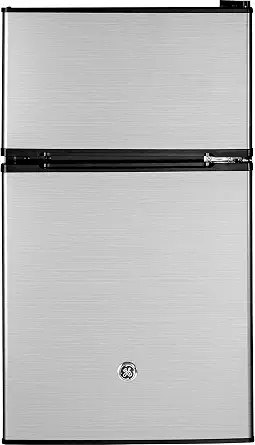 |
| Best Value The sweet spot between price and what you get | Igloo 3.2 Cu. Ft. Mini Fridge |  |
| Best Budget The cheapest option that still gets the job done reliably | Frestec 1.7 Cu Ft Mini Fridge |  |
| Top Rated A top-rated pick with lots of positive feedback | EUHOMY 3.2 Cu Ft Mini Fridge |  |
| Most Popular A crowd favorite that many people choose with confidence | Upstreman 3.2 Cu.Ft Mini Fridge BR321 |  |
| Best Seller A high-volume bestseller chosen again and again | EUHOMY Beverage Wine Cooler BRF-27H | 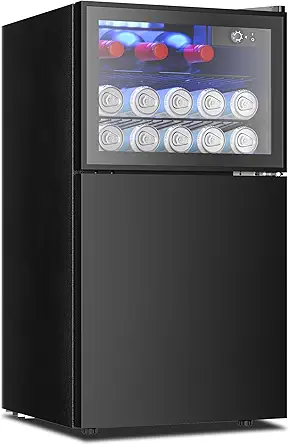 |
Midea 3.1 cu ft Mini Fridge

| Capacity | 3.1 cubic feet |
|---|---|
| Annual Energy Consumption | 270 kilowatt hours per year |
| Cooling Method | Compressor |
| Defrost System Type | Manual Defrost |
| Voltage | 120 volts |
The Midea 3.1 cu ft mini fridge pairs a small footprint with a usable freezer compartment, making it a practical secondary refrigerator for a dorm, office, or small apartment. It uses an R600A compressor with inverter technology and is Energy Star certified, which helps keep annual energy consumption to about 270 kWh and reduces running costs. Inside are removable glass shelves, a crisper drawer, a 2L bottle rack on the door, and an internal LED light for visibility. Temperature is set with simple mechanical thermostats that cover typical fridge and freezer ranges, and the door is reversible to fit different layouts. Expect manual defrosting for the freezer and a moderate noise level around typical compressor operation. The unit is freestanding and fairly heavy for its size, so plan placement accordingly. For buyers seeking a compact, energy-efficient fridge with a usable freezer and straightforward controls, this model delivers reliable daily performance without complex features.
Best for: Buyers who want an energy-conscious, no-frills compact refrigerator with a real freezer for daily use in tight spaces like dorms, studios, or offices.
Less Ideal for: People who need precise digital temperature control, automatic defrosting, or integrated smart features should look at larger or more feature-rich models.
- Energy Star certified compressor for lower annual energy use
- Top freezer plus fridge gives true frozen storage in a compact unit
- Removable shelves and door bottle rack make interior organization flexible
- Reversible door and LED interior light improve placement and usability
- Freezer uses manual defrost so occasional defrosting is required
- No advanced temperature controls or smart features
Verdict: A practical, energy-efficient compact fridge with a usable top freezer that balances low operating cost and straightforward reliability.
GE Double-Door Mini Fridge
| Capacity | 3.1 cubic feet |
|---|---|
| Freezer Capacity | 0.93 cubic feet |
| Energy Star qualified | Yes |
| Defrost Type | Partial Automatic Defrost |
| Voltage | 120 volts |
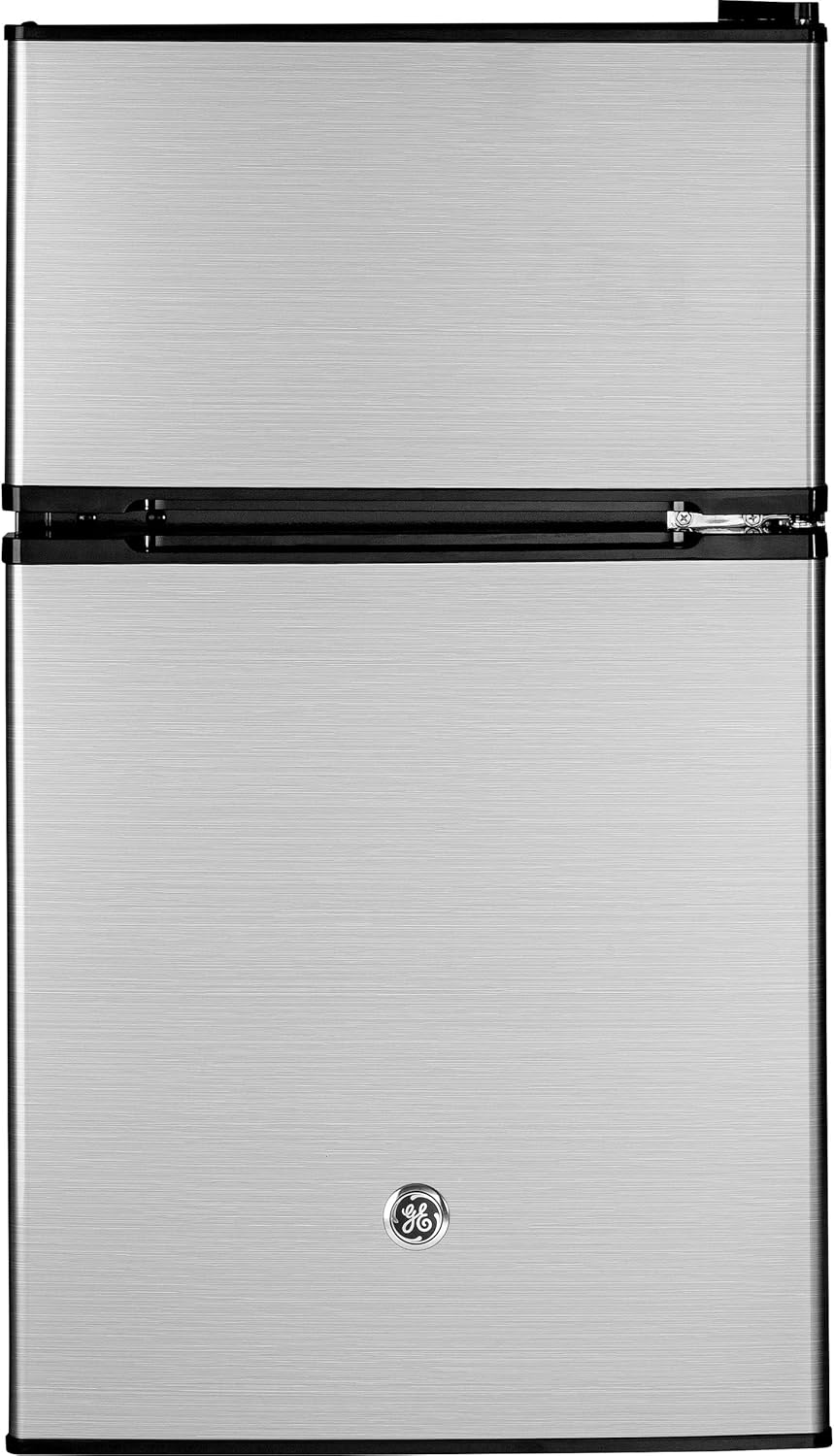
The GE Double-Door Mini Fridge is a small freestanding refrigerator built for everyday use in dorms, offices, garages, or secondary kitchens. It gives a true freezer compartment separate from the fresh food section, plus two sturdy glass shelves, a clear crisper for produce, and in-door tall bottle and can storage to help organize limited space. Practical touches include interior lighting, recessed handles that save clearance, and a compressor tested for durability; the unit also meets Energy Star standards and uses R-600A refrigerant. The fresh food section uses partial automatic defrost while the freezer requires manual defrosting, so you get less maintenance in daily use but will need occasional freezer care. At 3.1 cu ft the capacity is generous for a compact model, but those needing large frozen storage or precise temperature controls may find it limiting. Its solid construction and straightforward controls make it a dependable small refrigerator for routine, performance-focused needs.
Best for: Buyers who prioritize reliable day-to-day cooling performance and durable components in a compact appliance for small spaces.
Less Ideal for: Users who need large freezer capacity, advanced temperature control for long-term food storage, or a frost-free freezer should consider larger or more feature-rich models.
- Separate true freezer compartment for frozen goods
- Sturdy, easy-clean glass shelves and a clear crisper for organized storage
- Recessed handles save space and create a cleaner profile
- Energy Star qualified with a compressor tested for durability
- Interior lighting and in-door tall bottle and can storage improve usability
- Freezer requires manual defrosting rather than fully automatic defrost
- Limited to basic temperature control features expected in compact models
Verdict: A durable, energy-efficient compact fridge with a true freezer for buyers who want dependable everyday cooling in tight spaces.
Igloo 3.2 Cu. Ft. Mini Fridge

| Capacity | 3.2 cubic feet |
|---|---|
| Freezer Capacity | 0.2 cubic feet |
| Defrost System Type | Automatic |
| Voltage | 120 volts |
| Cooling Method | Compressor |
This Igloo mini fridge combines a small footprint with useful organization for dorms, offices, or apartments. It provides 3.2 cu. ft. total capacity with a separate 0.2 cu. ft. freezer, two removable frameless glass shelves with spill guards, vertical can and tall bottle storage, and a mechanical thermostat that adjusts cooling between about 32 and 50°F. The compressor-based cooling runs quietly and the freezer includes ice trays and a drip tray for basic frozen storage. Installation is simple since it is freestanding and plugs into standard 120V outlets. Practical benefits include easy shelf removal for larger items and a compact layout that still fits bottles upright. Important limitations are modest freezer space that only holds a few items and annual energy consumption listed at 304 kWh, which is higher than some energy-focused compact models. The unit is best when you need reliable, straightforward refrigeration in tight spaces rather than large-volume or ultra-efficient operation.
Best for: Buyers who want a practical, space-saving refrigerator that organizes drinks and snacks efficiently in a dorm, office, or small apartment and prioritize easy use and reliable cooling.
Less Ideal for: Those who need substantial frozen storage, the lowest possible energy use, or full-size refrigerator capacity should consider larger or more efficient models.
- Separate top freezer for ice and small frozen items
- Two removable glass shelves with spill guards for easy cleaning and flexible storage
- Adjustable mechanical thermostat lets you set fridge temperature between chilled and near-freezing
- Compressor cooling provides quieter, steady performance compared with simple thermoelectric units
- Freezer capacity is very small and only suitable for ice and a few frozen items
- Listed annual energy consumption (304 kWh) is relatively high for a compact fridge
Verdict: A dependable, compact mini fridge with a small top freezer that maximizes usable interior organization for tight spaces.
Frestec 1.7 Cu Ft Mini Fridge

| Capacity | 1.7 cubic feet |
|---|---|
| Freezer Capacity | 0.2 cubic feet |
| Cooling Method | Compressor |
| Defrost System Type | Manual |
| Voltage | 115 volts |
This Frestec mini fridge is a straightforward, space-saving fridge with a 0.2 cu ft internal freezer that fits under desks or in dorm rooms. It uses a compressor cooling system with manual defrost and a simple thermostat knob offering six temperature settings, so you can tune it for drinks, snacks, or light food storage. The unit includes one removable glass shelf, a reversible door and adjustable feet to adapt to placement, and it runs quietly at about 37 dB. Energy use is modest and the refrigerant is R-600A. Trade-offs are its small usable capacity and basic feature set—there is no automatic defrost, no advanced temperature control, and storage for tall items is limited unless you remove the shelf. For buyers prioritizing a low-cost, compact secondary fridge, it delivers reliable basic cooling in a small footprint; buyers needing larger capacity or precise temperature zones will want a larger model.
Best for: Buyers on a tight budget who need a reliable, no-frills secondary fridge for dorms, offices, or small apartments and value compact size and quiet operation.
Less Ideal for: People who need substantial refrigerated storage, precise temperature control for perishables, or frequent freezer use should choose a larger or more advanced refrigerator.
- Very compact footprint fits under desks or in small rooms
- Quiet operation around 37 dB suitable for bedrooms or offices
- Reversible door and adjustable feet increase placement flexibility
- Removable glass shelf allows some customization of interior space
- Compressor cooling with R-600A refrigerant for effective cooling
- Manual defrost requires occasional user maintenance
- Limited usable capacity for storing larger containers or many groceries
Verdict: A compact, budget-friendly mini fridge that delivers quiet, dependable cooling and a small internal freezer for tight spaces.
EUHOMY 3.2 Cu Ft Mini Fridge

| Capacity | 3.2 cubic feet |
|---|---|
| Freezer Capacity | 0.96 cubic feet |
| Cooling Method | Compressor |
| Defrost System Type | Manual |
| Door Orientation | Reversible |
This EUHOMY 3.2 cu ft mini fridge pairs a small freezer compartment with a fridge section to give dorms, bedrooms, and offices a compact, usable cooling solution. It uses a compressor cooling system and offers three temperature settings so you can tailor cooling for drinks, produce, or frozen treats while keeping noise low for shared spaces. The interior includes adjustable glass shelves, a crisper drawer, and an LED light that makes it easy to organize and find items at night. Practical touches like a reversible door and adjustable feet help with fitment in tight spots, and the unit is freestanding with a manual defrost freezer. Expect modest energy use for its class and a one-year manufacturer support period. Limitations are the small freezer capacity and manual defrost, which require occasional maintenance and reduce long-term frozen storage compared with larger freezers, but for buyers prioritizing steady, simple refrigeration in limited spaces this model covers the essentials reliably.
Best for: Buyers who need a dependable, compact refrigerator-plus-freezer for a dorm, bedroom, or small office and value quiet compressor cooling and simple, reliable operation.
Less Ideal for: Anyone who wants large or long-term frozen storage, automatic defrosting, or a full-size kitchen replacement should look at larger upright freezers or refrigerators instead.
- Two-zone design with a dedicated top freezer and fridge for flexible storage
- Compressor cooling with adjustable temperature settings for stable cooling and relatively low noise
- Adjustable glass shelves and crisper drawer let you organize different food sizes efficiently
- Reversible door and adjustable feet improve placement options in small rooms
- Interior LED light improves visibility at night
- Freezer is small (0.96 cu ft) and the unit uses manual defrost which needs periodic attention
- Annual energy consumption is moderate compared with ultra-efficient models
Verdict: A compact, reliable compressor mini fridge with a top freezer that delivers straightforward cooling and flexible placement for dorms and small rooms.
Upstreman 3.2 Cu.Ft Mini Fridge BR321

| Capacity | 3.2 cubic feet |
|---|---|
| Freezer Capacity | 0.3 cubic feet |
| Defrost System Type | Manual Defrost |
| Cooling Method | Compressor |
| Annual Energy Consumption | 206 kwh |
The Upstreman BR321 is a compact compressor mini fridge intended for dorms, bedrooms, offices, or apartments where space is limited but you still want a tiny freezer. It provides 3.2 cu.ft total capacity with a 0.3 cu.ft top freezer, two adjustable glass shelves, three door shelves, a crisper drawer, and an adjustable thermostat with five settings to tailor cooling between roughly 32°F and 50°F. The reversible door and leveling feet make placement flexible and the unit uses an R-600A refrigerant with a rotary scroll compressor for efficient, relatively quiet operation; the listed sound level is about 38 dB and the annual energy use is 206 kWh. Practical benefits include easy manual defrosting, a tight door seal for temperature retention, and a compact footprint that still fits bottles upright. Limitations are the small freezer not suitable for long-term ice storage or large frozen items and manual defrost means occasional maintenance. For buyers relying on peer feedback, the model has substantial positive reviews and the features align with typical dorm and office needs.
Best for: Buyers who prioritize a well-reviewed, space-saving refrigerator that balances quiet, efficient cooling with flexible placement for dorm rooms, offices, or small apartments.
Less Ideal for: Users who need large freezer capacity, long-term frozen food storage, or a frost-free automatic defrost system should consider larger or different-style refrigerators.
- Compact 3.2 cu.ft capacity fits small spaces while still holding bottles and snacks
- Adjustable thermostat with five settings for easier temperature control
- Reversible door and adjustable leveling feet for flexible placement
- Quiet compressor operation around 38 dB suitable for bedrooms and offices
- Two adjustable glass shelves plus door storage and a crisper drawer for organization
- Freezer is small (0.3 cu.ft) and not suitable for storing large frozen items or long-term ice
- Manual defrost requires periodic maintenance rather than automatic defrost
Verdict: A compact, quiet, and energy-efficient mini fridge with a small freezer that suits dorms and offices where proven reliability and space savings matter.
EUHOMY Beverage Wine Cooler BRF-27H

| Capacity | 3 cubic feet |
|---|---|
| Freezer Capacity | 1.7 cubic feet |
| Refrigerator Net Capacity | 1.5 cubic feet |
| Cooling Method | Compressor |
| Voltage | 115 volts |
This EUHOMY compact refrigerator combines a small wine/beverage cooler with a bottom freezer into a single freestanding unit meant for kitchens, dorms, or offices. The top section serves as a visual beverage cooler with glass door, two adjustable shelves and a seven-speed temperature knob that ranges from about 26°F to 46°F for drinks and wine, while the lower freezer reaches as low as -13°F to store ice cream and frozen meals. It uses a compressor cooling method, offers reversible doors and a keyed lock, and includes LED interior lighting and adjustable leveling feet for uneven floors. Practical benefits include flexible storage for both chilled drinks and frozen items, modest energy use for its class, and easy access thanks to the split configuration. Limitations are the small overall capacity if you need full-size refrigeration, manual defrost maintenance for the freezer, and a matte finish glass door that requires occasional cleaning to avoid visible smudges.
Best for: Buyers who want a compact, low-risk replacement that stores both chilled drinks and frozen items in one unit and prefer a straightforward, no-frills appliance that is simple to operate and maintain.
Less Ideal for: Families or households that need full-size refrigerator capacity or long-term bulk food storage should consider larger refrigerators instead.
- Two-zone layout with separate beverage cooler and deep freezer for mixed storage needs
- Adjustable shelves allow horizontal or vertical placement of bottles and cans
- Compressor cooling provides stronger cold performance compared with thermoelectric mini-fridges
- Reversible door and adjustable feet ease placement in small spaces
- Freezer uses manual defrost which requires periodic maintenance
- 3 cu ft total capacity is limited for users needing larger food storage
Verdict: A dependable compact two-zone fridge with a genuine compressor and a usable deep freezer, ideal when you want both chilled drinks and frozen storage in a small, easy-to-place unit.
Choosing the Right Mini Fridge with Freezer Price: Key Factors to Consider
Actual Usable Capacity
Look past the nominal liters or cubic feet figure and consider how much usable space is available after accounting for the freezer compartment and internal shelving. A model with a slightly lower total capacity can be more useful if its shelves and door bins are arranged intelligently.
Think about the types of items you plan to store. Tall bottles, frozen dinners, and bulk ingredients need different shelf heights and door storage. Pay attention to whether shelves are removable or adjustable because flexible layouts extend the practical use of a small interior.
Freezer Compartment Size and Access
Mini fridges with freezers vary from small ice-tray ledges to pull-out mini-freezers. The effective size of the freezer determines what you can keep frozen and how often you need to defrost or reorganize. A slightly larger freezer that is well insulated will maintain safe frozen temperatures more consistently than a cramped, thin-walled cubby.
Access matters too. A freezer behind a small flap or in the fridge door can be awkward for frequent use. Consider how you will retrieve frozen items and whether the freezer layout forces you to empty the fridge to get at items in back.
Energy Efficiency and Thermostat Type
Mini fridge energy use affects your monthly electricity cost and the heat output in small rooms. Look for models with clear energy consumption ratings and, if available, energy-saving modes. The thermostat type and whether the compressor cycles frequently influence both energy use and temperature stability.
Electronic thermostats generally allow finer temperature control than basic mechanical dials, which can be important for keeping the freezer at safe temperatures without overcooling the fridge section. Consider the long-term operational cost alongside purchase considerations.
Noise and Vibration
Noise is a major factor when a mini fridge operates in a bedroom, dorm, or office. Compressor-driven models are common and typically louder than thermoelectric units, but modern compressors can be surprisingly quiet. Check documented decibel levels or user feedback about hums and rattles.
Vibration can shorten the life of stored items and annoy occupants. Look for models with rubberized feet or vibration-damping mounts, and consider where the unit will sit relative to seating or sleeping areas.
Size, Placement, and Ventilation
Measure the available space carefully. Mini fridges need clearance for air circulation, usually several inches at the back and top. Poor ventilation reduces efficiency and can cause the compressor to run constantly. If the unit will go under a counter or inside a cabinet, confirm required clearances and whether the unit is rated for built-in or enclosed installation.
Also consider door swing direction and whether the location allows the door to open fully without obstruction. Some models offer reversible doors to suit tight placements.
Defrosting and Maintenance
Some mini fridges require manual defrosting, which adds maintenance time and can temporarily reduce usable freezer space. Automatic or frost-free designs eliminate this chore but may consume a bit more energy. Consider how often you are willing to defrost and whether removable shelves and easy-access drain channels are present for cleaning.
Durability of seals and ease of replacing parts such as door gaskets also affect long-term ownership. Inspect how seals are attached and whether they appear serviceable to avoid premature air leaks.
Choosing Between Compressor and Thermoelectric Models
Compressor mini fridges are the most common and provide reliable cooling and freezing performance across a wide range of ambient temperatures. They generally achieve lower freezer temperatures and handle heavy use better, making them the go-to choice when consistent freezing is required.
Thermoelectric units are quieter and lighter but struggle to reach low freezing temperatures in warm rooms and are less energy efficient for freezer use. If you prioritize near-silent operation and only need occasional cooling, thermoelectric options can work, but for dependable frozen storage choose compressor-driven designs.
- Compressor: better low-temperature performance and efficiency under load
- Thermoelectric: quieter, lighter, but limited freezer capability
- Consider the room temperature where the fridge will operate
Measuring and Planning for Footprint and Ventilation
Before selecting a unit, measure the installation area including clearance for ventilation and door swing. Many mini fridges require several inches of space at the back and top to reject heat effectively. Failing to provide ventilation can cause higher energy use and reduce the unit's lifespan.
If you need the fridge under a counter or inside a nook, verify whether the manufacturer specifies built-in or enclosed installation. In many cases an inset location will require additional venting or a front-venting design to work safely.
- Allow space for airflow: back and top clearance
- Check door swing and reversal options
- Verify built-in or enclosed use ratings if applicable
Practical Interior Features That Improve Everyday Use
Adjustable shelves, clear bins, and door pockets greatly increase a mini fridge's usefulness. Look for models with at least one removable shelf and door bin options sized for bottles and condiments. A small crisper drawer or a dedicated can dispenser can be useful extras depending on your typical contents.
Interior lighting, though minor, helps you see contents in low-light locations. Magnetic or gasket-sealed doors improve cold retention and reduce the chance of temperature fluctuations. These small design choices affect how often you rearrange the fridge and how much food you can store without wasting space.
- Removable, adjustable shelving increases flexibility
- Door bins sized for bottles and small items improve organization
- Good door seals and interior lighting are practical conveniences
Maintenance Tips to Keep the Freezer Performing
Regular cleaning and timely defrosting maintain cooling efficiency and prevent odor build-up. If the model requires manual defrosting, do it before ice buildup exceeds a thin layer to preserve usable space and avoid stressing the compressor.
Check door gaskets periodically for cracks or gaps and clean condenser coils if they are accessible. Keeping the coils dust-free improves heat rejection and lowers energy use. Also, allow the unit to settle upright for a few hours after moving it before powering on to protect the compressor.
- Defrost before heavy ice build-up
- Clean accessible condenser coils regularly
- Inspect and clean door gaskets to maintain seals
Estimating Long-Term Running Cost
Energy consumption varies considerably among compact refrigerators. Look at the rated power use and estimate monthly cost based on your local electricity rate. Consider models with energy-saving features if the fridge will run continuously in a small living space.
Also consider how full you typically keep the fridge. A fuller fridge often runs more efficiently because the stored items help stabilize internal temperatures, reducing the compressor duty cycle. Balancing initial cost and anticipated running cost will give a clearer picture of lifetime expense.
- Compare rated energy use and estimate monthly costs
- Keep the fridge reasonably stocked for thermal stability
- Energy-saving modes can reduce long-term running cost
How We Chose the Best Mini Fridge with Freezer Price
We focused on features and performance that matter for compact refrigerators with integrated freezer compartments. Primary evaluation criteria included usable cooling and freezer capacity, measured against the external footprint to reflect real-world space constraints. Energy efficiency and operating cost were central because mini fridges often run continuously in small living spaces. Temperature control and stability were tested conceptually through specification checks and documented thermostat types to judge how well each unit can protect frozen goods. Build quality and layout were assessed by looking at shelf flexibility, door storage, and the durability of materials. Noise level and vibration were considered for room-sharing environments where low disturbance is important. We excluded units that lack a separate freezer compartment or that require external adapters not typical for home use. Large compact refrigerators that exceed typical mini-fridge footprints were also omitted. Our selection favored models that deliver practical freezer space, reasonable energy consumption, and user-friendly controls. The scoring emphasized capacity versus footprint, efficiency, temperature control, and everyday usability as the deciding factors.
Our full evaluation process is outlined in our review methodology.
FAQ
How much freezer space should I expect in a mini fridge with a freezer?
Expect a small compartment intended for ice trays, frozen snacks, or single-serving meals rather than large items. Freezer volume varies, so check usable dimensions rather than only total capacity to ensure your needs are met.
Are mini fridges with freezers noisy?
Noise depends on whether the unit uses a compressor or a thermoelectric system. Compressors are typically louder but modern units can be quiet enough for bedrooms. Look for documented noise levels or user reports if quiet operation is important.
Do mini fridges with freezers need regular defrosting?
Some models are manual-defrost and will require periodic thawing to remove frost. Others offer automatic defrosting for the fridge compartment, though small freezer pockets may still accumulate ice. How often defrosting is needed depends on use and humidity.
Can a mini fridge with a freezer run in a hot room?
Performance declines as room temperature rises. Compressor models handle warmer ambient temperatures better than thermoelectric units, but you should still leave adequate ventilation and avoid placing the fridge in direct sunlight or next to heat sources.
Will a mini fridge with a freezer fit under a counter?
Some mini fridges are designed for built-in or under-counter use with front ventilation. Confirm the unit's installation requirements and provide the recommended clearances to ensure proper airflow and reliable operation.
Final Verdict
When choosing a mini fridge with a freezer, prioritize usable freezer volume and how that space fits your routine. Balance the external footprint against internal layout so the unit stores the items you actually use, and choose a thermostat type and efficiency level that suit your environment. Tradeoffs include noise versus freezing power and manual defrosting versus slight energy penalties for frost-free systems. Focus on capacity, temperature stability, ventilation needs, and real-world maintenance to pick a compact refrigerator that reliably keeps both chilled and frozen foods in small spaces.