
Note: This article contains affiliate links. If you click on these links and make a purchase, we may earn a small commission at no extra cost to you. This helps support our research and content. Read our full affiliate disclosure here.
If you need cold drinks and a steady supply of ice without a full-size refrigerator, a mini fridge with an ice compartment can be a practical solution. These compact units bring freezer-style cooling to dorms, offices, guest rooms, and small apartments where space and energy use matter. Choosing the right model affects how well it holds temperature, how much usable storage you get, and whether the ice section actually produces or simply stores ice. This guide looks at the top shortlisted mini fridges with ice compartments and explains the features that matter most for everyday use. We evaluate cooling consistency, interior layout, energy draw, and ease of maintenance to help you pick a compact cooler that fits your space and habits.
Top Picks at a Glance
| Best Overall The best all-around choice for most situations | Midea WHD-113FB1 3.1 Cu Ft Mini Fridge |  |
| Best Quality Built to a higher standard if you want something more solid | EUHOMY 3.2 cu ft Mini Fridge |  |
| Best Value The sweet spot between price and what you get | Upstreman FR17 1.7 Cu.ft Mini Fridge |  |
| Best Budget The cheapest option that still gets the job done reliably | KRIB BLING 3.5 Cu.Ft Mini Fridge |  |
| Top Rated A top-rated pick with lots of positive feedback | Frigidaire Retro Compact Fridge |  |
| Most Popular A crowd favorite that many people choose with confidence | Upstreman 3.2 Cu.Ft Mini Fridge BR321 |  |
| Best Seller A high-volume bestseller chosen again and again | Frostorm Mini Fridge BC-90 |  |
Midea WHD-113FB1 3.1 Cu Ft Mini Fridge

| Capacity | 3.1 cubic feet |
|---|---|
| Freezer Capacity | 0.92 cubic feet |
| Annual Energy Consumption | 270 kilowatt hours per year |
| Defrost System Type | Manual Defrost |
| Voltage | 120 volts |
The Midea WHD-113FB1 is a small double-door fridge built for dorms, offices, and tight kitchens that need a dedicated freezer compartment. It provides a 0.92 cu ft top freezer and a 2.18 cu ft refrigerator section with removable glass shelves, a crisper drawer, and a 2L bottle rack so you can organize bottles and odd-shaped items. The unit uses an inverter-style R600A compressor and a multi-airflow system to keep temperatures steady while consuming about 270 kWh per year, and LED interior lighting makes it easy to see contents. Controls are mechanical and straightforward, and the reversible door adds installation flexibility. Expect manual defrost in the freezer and typical mini-fridge noise around 45 dB, which is acceptable for bedrooms and small living spaces but not completely silent. Build quality is practical rather than premium and the 1-year parts warranty with a 2-year compressor warranty reflects that positioning. If you want a compact fridge with a true freezer compartment and sensible energy use, this model covers those bases reliably.
Best for: Buyers who want a compact refrigerator with a real freezer section and efficient operation for dorms, small apartments, or offices and value practical features and easy organization.
Less Ideal for: People seeking a luxury finish, ultra-quiet operation for bedrooms where silence is critical, or those who need a large freezer capacity for long-term frozen storage.
- Separate top freezer compartment for frozen storage and ice
- ENERGY STAR certified with an efficient R600A compressor
- Removable glass shelves and crisper drawer for flexible organization
- Reversible door and built-in LED light for installation and visibility
- Freezer uses manual defrost which requires occasional maintenance
- Not a premium-feel finish; materials are utilitarian
Verdict: Choose this Midea if you want a compact, energy-efficient mini fridge with a usable top freezer compartment and practical storage features.
EUHOMY 3.2 cu ft Mini Fridge
| Capacity | 3.2 cubic feet |
|---|---|
| Freezer Capacity | 0.96 cubic feet |
| Cooling Method | Compressor |
| Defrost System Type | Automatic |
| Voltage | 115 volts |
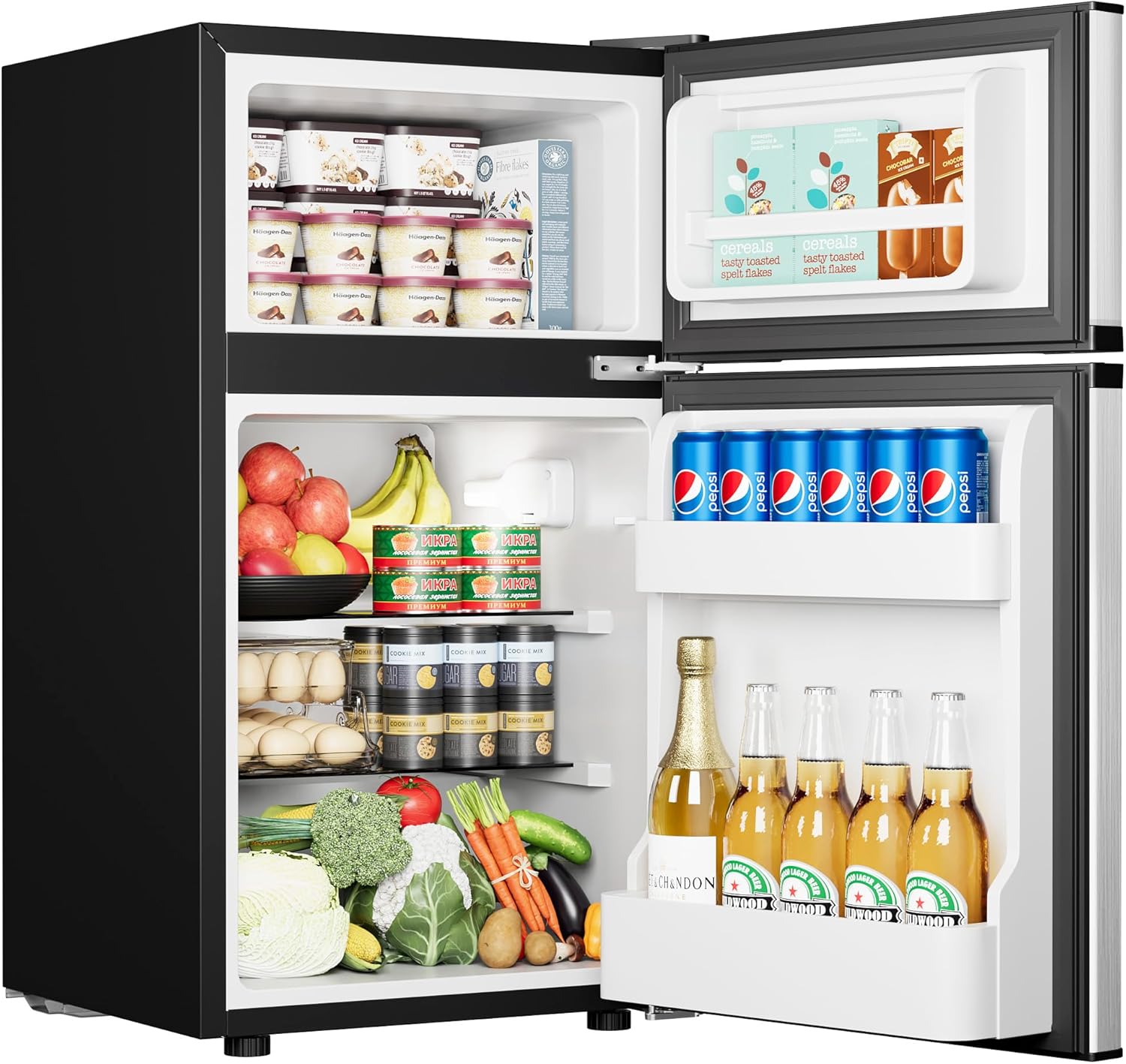
The EUHOMY 3.2 cu ft mini fridge pairs a small refrigerator compartment with a 0.96 cu ft top freezer so you get both chilled storage and a usable ice/soft-freeze section in one compact unit. It uses a rotary scroll compressor with inverter support for reliable, compressor-style cooling rather than less-powerful thermoelectric systems, and three temperature settings let you tune conditions for drinks, fruit, or frozen snacks. Inside you get adjustable glass shelves, a crisper drawer and door bins for bottles, plus internal LED lighting for visibility at night. The reversible door and adjustable feet make placement flexible in dorms, bedrooms, or offices. Expect typical mini-fridge trade-offs: the freezer space is modest so it is best for ice cream or small frozen packs rather than long-term bulk freezing, and the unit has measurable annual energy use compared with higher-efficiency full-size fridges. Noise is low in normal operation thanks to the compressor design, but compressor fridges do cycle and are not silent like absorption units.
Best for: Buyers who prioritize actual cooling performance and want a compact unit that provides both a usable freezer and reliable compressor cooling for dorms, offices, or small apartments.
Less Ideal for: Those needing significant frozen storage or long-term freezing for bulk items should choose a larger upright or chest freezer instead.
- Combined fridge and top freezer for both chilled and frozen storage in one compact footprint
- Compressor cooling with inverter support for consistent, faster temperature control than thermoelectric designs
- Adjustable glass shelves, crisper drawer, and door bins for organized storage
- Reversible door and adjustable feet improve placement flexibility
- Internal LED light for easy access in low light
- Freezer capacity is under 1 cu ft so it cannot replace a full freezer for bulk frozen storage
- Annual energy consumption is relatively high compared with the most efficient compact models
Verdict: Choose this model when you want a small refrigerator that delivers true compressor cooling plus a usable top freezer for ice and short-term frozen storage.
Upstreman FR17 1.7 Cu.ft Mini Fridge
| Capacity | 1.7 cubic feet |
|---|---|
| Freezer Capacity | 0.2 cubic feet |
| Defrost System Type | Manual Defrost |
| Cooling Method | Compressor |
| Voltage | 115 volts |
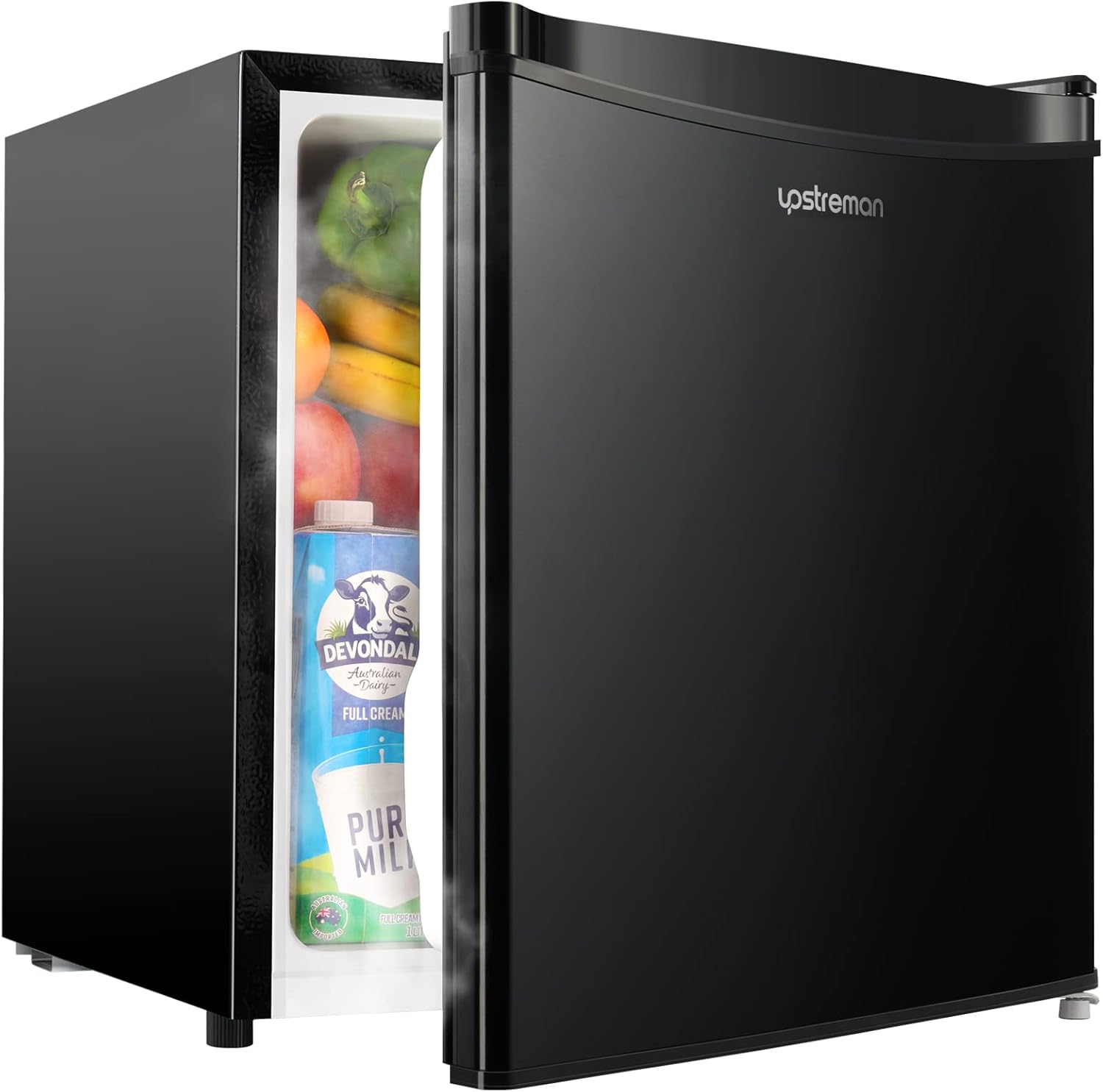
The Upstreman FR17 is a small freestanding refrigerator built for dorms, offices, and bedrooms where space is tight but a freezer compartment is still needed. It uses a compressor cooling system and offers a 0.2 cu ft freezer on top for ice trays or a few frozen items while the 1.5 cu ft fresh-food area holds bottles, snacks, and small containers. Temperature is adjustable across five settings so you can tune cooling for drinks or perishables, and the reversible door plus a single shelf and two door bins make internal organization straightforward. Practical touches include a manual defrost freezer, a low reported noise level around 38 dB, and Energy Star rated efficiency using R-600A refrigerant. Expect modest annual energy use and basic cooling performance suitable for everyday chilled storage, but not for long-term freezing or storing large frozen goods since the freezer is very small and manual defrost is required.
Best for: Buyers who need a space-saving fridge with a usable ice compartment and prioritize low energy use and quiet operation for dorms, offices, or bedrooms.
Less Ideal for: People who need significant freezer capacity, long-term frozen storage, or a fully automatic defrosting freezer should consider larger or different models.
- Compact footprint fits counters, under desks, or tight dorm spaces
- Includes a top freezer compartment for ice trays and small frozen items
- Adjustable 5‑setting thermostat for simple temperature control
- Energy Star rated with R-600A refrigerant for lower energy use
- Reversible door and basic shelving allow flexible placement and organization
- Freezer is very small and uses manual defrost so it is not suited for extended frozen storage
- Single shelf limits storage layout options for taller items
Verdict: A compact, energy‑efficient mini fridge with a small top freezer that is ideal when you need a quiet, space-saving unit with basic ice and frozen storage.
KRIB BLING 3.5 Cu.Ft Mini Fridge

| Capacity | 3.5 cubic feet |
|---|---|
| Freezer Capacity | 1.2 cubic feet |
| Defrost System Type | Manual |
| Cooling Method | Compressor |
| Voltage | 120 volts |
This KRIB BLING mini fridge pairs a small top freezer with a 3.5 cu ft refrigerator compartment for basic chilled storage in compact spaces. It uses a compressor cooling system with a manual defrost freezer and a seven-level adjustable thermostat so you can tune temperatures for drinks, snacks, or meal prep. Two removable glass shelves plus door shelves make organizing bottles and containers simple, and the included ice trays let you make small batches of ice in the 1.2 cu ft freezer. The stainless steel finish and right-hand door suit kitchens, dorm rooms, or offices where footprint and noise matter. Expect straightforward operation and low power draw compared with full-size units, but note the manual defrost and modest interior volume limit long-term frozen storage and bulk items. For buyers needing an affordable, compact fridge with a usable ice compartment and adjustable shelving, this model delivers practical performance without extras like automatic defrost or smart controls.
Best for: Buyers who need an inexpensive, space-saving refrigerator with a small freezer and adjustable shelving for a dorm, office, or secondary kitchen and who prioritize straightforward, low-complexity operation.
Less Ideal for: Households that need large-capacity refrigeration or automatic defrosting, or buyers who require substantial long-term frozen storage.
- Compact top-freezer design includes a dedicated 1.2 cu ft freezer for ice and small frozen items
- Seven-level adjustable thermostat for more precise temperature control
- Removable glass shelves and door shelves for flexible organization and easy cleaning
- Compressor cooling with R-600A refrigerant provides efficient cooling in a small footprint
- Stainless steel finish and durable handle for a neat appearance in visible spaces
- Manual defrost freezer requires periodic maintenance to prevent ice buildup
- Limited freezer space makes long-term frozen storage or large items impractical
Verdict: A budget-friendly, compact refrigerator with a usable top freezer and adjustable shelving that suits small spaces needing basic chilled storage and ice production.
Frigidaire Retro Compact Fridge

| Capacity | 3.2 cubic feet |
|---|---|
| Cooling Method | Compressor |
| Defrost System Type | Automatic |
| Installation Type | Freestanding |
| Specification Met | Energy Star |
The Frigidaire Retro Compact Fridge is a 3.2 cubic foot freestanding mini refrigerator that pairs vintage styling with practical cooling for small spaces. It uses a compressor cooling system and includes a dedicated chiller/freezer compartment with an ice tray, two glass shelves, and a 2L door basket that holds tall bottles while a built-in can dispenser helps organize drinks. The flush-back design and reversible door make placement flexible in dorms, offices, or bedrooms, and the automatic defrost system reduces maintenance. Notable convenience touches include a built-in side bottle opener and an electronic lock. Expect reliable day-to-day performance from the compressor-based cooling and ENERGY STAR qualification for reasonable energy use, but the interior capacity is limited to short-term food and beverage storage rather than full meal prep or large groceries. The unit is best where style and steady, compact cooling are priorities rather than maximum storage volume.
Best for: Buyers who prioritize a dependable, compressor-cooled mini fridge with a usable ice/chill compartment and retro styling for offices, dorms, or small apartments.
Less Ideal for: People needing large freezer capacity, multi-person household meal storage, or a full-size refrigerator replacement should look at larger units.
- Compressor cooling with a dedicated chiller/freezer and ice tray for ready ice and frozen items
- ENERGY STAR rated for lower ongoing energy use
- Two glass shelves and a 2L door basket provide organized storage for bottles and cans
- Flush-back design and reversible door for flexible placement in small spaces
- Automatic defrost reduces manual maintenance
- 3.2 cu ft capacity limits long-term food storage and larger grocery loads
- Not designed for heavy-duty freezer storage or long-term freezing
Verdict: Choose this compact Frigidaire when you want a reliable compressor mini fridge with a usable chiller/ice compartment and retro design for small-space everyday cooling.
Upstreman 3.2 Cu.Ft Mini Fridge BR321

| Capacity | 3.2 cubic feet |
|---|---|
| Freezer Capacity | 0.3 cubic feet |
| Defrost System Type | Manual Defrost |
| Voltage | 115 volts |
| Annual Energy Consumption | 206 kwh |
The Upstreman BR321 is a small freestanding refrigerator built around a 3.2 cubic foot refrigerated compartment plus a 0.3 cu ft freezer. It uses a rotary scroll compressor with manual defrost and a five-level adjustable thermostat that lets you dial temperatures roughly between chilled drinks and colder food storage, though it is not designed to hold ice cubes or long-term ice cream storage. Interior layout is practical: two adjustable glass shelves, a crisper drawer, and three door shelves give flexible space for bottles, snacks, and small frozen items. The unit runs quietly at about 38 dB and is Energy Star rated, which helps keep electricity use modest for continuous operation in a bedroom or office. Installation is simple—freestanding with adjustable leveling feet—and the reversible door adds placement flexibility. Expect basic, reliable cooling rather than commercial-grade performance; manual defrost means some maintenance, and the tiny freezer limits frozen storage. For buyers seeking a compact, quiet, energy-efficient mini fridge with a modest ice compartment, this model balances usable interior organization with low noise and efficiency.
Best for: Buyers who prioritize a quiet, energy-efficient mini fridge with an actual small freezer compartment and clear social proof of reliability will appreciate this unit for dorms, bedrooms, or offices.
Less Ideal for: If you need substantial frozen storage, frequent ice making, or a frost-free freezer, choose a larger refrigerator with a full freezer instead.
- Generous usable layout for its size with adjustable glass shelves and door storage
- Includes a small 0.3 cu ft freezer compartment for frozen essentials
- Quiet operation (~38 dB) suitable for bedrooms and offices
- Energy Star rated for lower annual energy consumption
- Reversible door and adjustable leveling feet for flexible placement
- Freezer is very small and not suitable for making or storing ice cubes long term
- Manual defrost requires occasional user maintenance
Verdict: Choose the Upstreman BR321 when you want a quiet, energy-efficient mini fridge that actually includes a small freezer compartment for basic frozen storage.
Frostorm Mini Fridge BC-90

| Capacity | 3.2 cubic feet |
|---|---|
| Freezer Capacity | 0.35 cubic feet |
| Defrost System Type | Automatic |
| Voltage | 115 |
| Annual Energy Consumption | 210 kilowatt hours per year |
The Frostorm BC-90 is a compact upright mini fridge that pairs a 3.2 cubic foot fresh-food area with a 0.35 cu ft upright freezer suitable for ice and short-term frozen items. It is designed for simple, everyday cooling with an easy-to-read mechanical thermostat (settings 1 to 5), two adjustable glass shelves, door bins, and a small internal freezer compartment that reaches typical ice-making temperatures. The unit is freestanding, ETL certified, runs on standard 115V power, and consumes modest energy — about 0.6 kWh per day — which keeps running costs low. Practical benefits include a reversible door for placement flexibility, automatic defrosting in the fridge section, and a compact footprint that fits dorm rooms or offices. Trade-offs are the limited freezer capacity that restricts long-term frozen storage and the manual temperature dial that lacks digital precision, but for buyers wanting a reliable, straightforward mini fridge with a usable ice compartment, the BC-90 delivers dependable performance without extras you do not need.
Best for: Buyers who prioritize a reliable, low-complexity compact fridge with a usable ice compartment and low running costs for dorms, offices, or bedrooms.
Less Ideal for: People who need substantial freezer space or precise temperature control for long-term frozen storage or specialty items.
- Dedicated upright freezer compartment suitable for ice and short-term frozen items
- Reversible door gives flexible placement in tight spaces
- Adjustable glass shelves and door bins allow practical organization
- Energy-efficient operation at about 0.6 kWh per day with ETL safety certification
- Freezer capacity is small and not suitable for long-term frozen storage
- Mechanical thermostat lacks the precision of digital controls
Verdict: Choose the Frostorm BC-90 if you want a straightforward, energy-efficient mini fridge that includes a small internal freezer for ice and short-term frozen storage.
Choosing the Right Mini Fridge with Ice Compartment: Key Factors to Consider
Cooling Consistency and Temperature Control
How steadily the unit holds target temperatures affects both food safety and whether the ice compartment freezes reliably. Look for models with adjustable thermostats and clear temperature ranges so you can set colder settings for ice without overfreezing perishables.
Inconsistent cooling can mean slushy ice or drinks that are not cold enough. For small compressors, pay attention to user guidance about optimal ambient room temperature and how often the compressor cycles. Good insulation and a capable thermostat help small units maintain steady cold in everyday conditions.
Size, Layout, and Usable Storage
Mini fridges vary widely in how interior space is arranged. Some dedicate a small rigid freezer box for ice, while others use a removable ice tray area that reduces shelf space. Consider what you need to store: tall bottles, multiple cans, or small frozen items will benefit from flexible shelving and door bins.
Measure the footprint and interior dimensions against where you plan to place the unit. Also check shelf adjustability and whether the ice compartment blocks useful height. A shallow but well-organized interior can outperform a larger but awkward layout.
Ice Compartment Design and Accessibility
Ice compartments differ in design. Some are true sealed freezer boxes that maintain subfreezing temperatures; others are small trays or removable bins that rely on the main compartment's cold setting. A sealed compartment typically produces and stores ice more reliably, while removable trays offer easier access and cleaning.
Consider how you want to access ice: frequent scooping versus occasional use. Also evaluate whether the ice compartment has a cover or door that helps keep cold in and prevents odors from transferring between compartments.
Energy Use and Insulation
Because mini fridges run continuously, energy consumption matters for operating cost and heat output in small rooms. Units with better insulation and efficient compressors use less power to maintain temperatures, which can also reduce compressor runtime and noise.
Check for energy ratings or manufacturer efficiency specs when available, and consider compressor-based models over purely thermoelectric units if you need colder temperatures or a reliable ice compartment. Insulation thickness and door seals also influence overall efficiency.
Noise and Compressor Type
Noise can be a deciding factor when the fridge lives in a bedroom, office, or studio. Compressor-based mini fridges typically cool more effectively but can produce noticeable hums or clicks during cycles. Thermoelectric coolers are often quieter but less capable of reaching freezer temperatures for ice production.
Look for user guidance on typical operating noise and whether the compressor cycles frequently. Vibration isolation and solid mounting help reduce perceived noise and rattling in everyday use.
Maintenance, Cleaning, and Longevity
Mini fridges with ice compartments need periodic cleaning and sometimes manual defrosting. Removable shelves, accessible drain channels, and detachable ice trays simplify upkeep and reduce the chance of odors or frost buildup. A unit that is easy to service will last longer and perform more reliably.
Consider warranty coverage and how straightforward it is to replace common wear items like door gaskets. Also think about how easy it is to move the fridge for cleaning or access to a power outlet.
Comparing Freezer-Style Compartments Vs. Ice Trays
Mini fridges with ice compartments usually fall into two design families. One uses a small sealed freezer box that can reach subfreezing temperatures and store ice. The other uses an open tray or removable bin that depends on the main compartment temperature and may only produce slushy ice in warm conditions.
Sealed freezer-style compartments are better when you need reliable ice production and frozen items. Tray-style solutions are lighter on space and simpler to access but may require colder overall settings or more frequent cycling to make solid ice.
- Freezer-style: more reliable ice, better for occasional frozen snacks.
- Tray-style: easier access and cleaning, saves interior shelf height.
- Consider how often you will use the ice compartment and whether frozen storage beyond ice is needed.
Placement, Ventilation, and Ambient Temperature
Proper placement affects cooling performance. Mini fridges need ventilation clearance around the back and sides for heat exchange. Tucking a unit into a tight cabinet or directly against a wall can raise compressor workload and reduce ice-making ability.
Ambient room temperature also plays a role. In hotter spaces the compressor works harder and interior temperatures can be higher than expected, making it harder for the ice compartment to freeze. Position the fridge away from direct sunlight and other heat sources for best results.
- Leave recommended clearance as specified by the manufacturer for ventilation.
- Avoid hot rooms or direct heat sources to maintain ice-making performance.
- Level the unit to prevent door misalignment and ensure proper seal function.
How to Maintain Ice Quality and Prevent Odors
Ice can quickly pick up odors from stored food if compartments are not sealed or cleaned. Regularly wash removable trays and wipe interior surfaces with a mild detergent. If the unit has a door or cover for the ice compartment, use it to isolate odors and prevent freezer burn on small frozen items.
Replacing or cleaning door gaskets and ensuring a tight seal reduces warm air ingress, which prolongs ice life and keeps the refrigerator running more efficiently. Periodic defrosting for models that accumulate frost will also preserve capacity and cooling performance.
- Wash ice trays weekly if used frequently.
- Use airtight containers for food stored near the ice compartment.
- Inspect and clean door seals to maintain airtight closure.
When to Choose Compressor Vs. Thermoelectric Units
Compressor-based mini fridges provide stronger cooling and can reach temperatures needed for a true ice compartment. They are the preferred choice when you plan to make and store regular ice or freeze small items. However, they can be noisier and draw more power during compressor cycles.
Thermoelectric units are quieter and lighter but typically cannot reach subfreezing temperatures in warm environments. Choose a thermoelectric model only if you prioritize silence and expect minimal need for solid ice or frozen storage.
- Compressor: better for solid ice and frozen storage.
- Thermoelectric: quieter but limited freezing capability.
- Match compressor choice to your need for regular ice production.
Space-Saving Tips for Small Rooms
Maximize utility in tight spaces by selecting units with adjustable shelves and door bins. Use vertical stacking of items like slim beverage cans to preserve shelf height. If the ice compartment is removable, consider placing frequently used snacks in accessible zones so you do not need to open the door often.
Consider the fridge door swing direction and whether a reversible hinge is necessary for the intended location. Small layout choices like this improve daily usability without increasing the unit footprint.
- Use bins and organizers to keep items accessible.
- Choose reversible doors if space or clearance is tight.
- Place frequently used items at eye level to reduce door openings and maintain temperature.
How We Chose the Best Mini Fridge with Ice Compartment
We shortlisted models that balance compact footprint with a usable ice compartment and consistent cold performance. Selection focused on units that provide a distinct refrigerated section plus a freezer-style ice area rather than only an ice tray niche. We filtered out designs that sacrifice usable storage for novelty features or that lack clear temperature control. Key evaluation criteria included cooling consistency across the fridge and ice compartment, usable interior layout and door storage, energy consumption and insulation, noise levels during normal operation, and long-term maintenance factors like defrosting and cleaning access. We also considered build quality and temperature control precision because these determine whether the ice area actually freezes reliably. Excluded items were single-purpose coolers without a dedicated ice section, novelty chillers that cannot maintain safe temperatures, and units with unclear temperature controls. Our process prioritized practical, everyday performance and ease of ownership over extras that do not improve core cooling or ice production.
Our full evaluation process is outlined in our review methodology.
FAQ
Can a mini fridge with an ice compartment actually make ice or just store it?
It depends on the design. Sealed freezer-style compartments can reach subfreezing temperatures and make solid ice, while tray-style compartments often rely on the main fridge temperature and may only create slushy ice in warm conditions.
How often should I defrost a mini fridge with an ice compartment?
Defrost frequency depends on frost buildup. Many users defrost once or twice a year for moderate use, more often in humid environments. Regularly check for frost and follow the manufacturer's guidance to avoid reduced capacity.
Will a mini fridge with an ice compartment be noisy in a bedroom?
Compressor-based models can produce noticeable humming or cycling sounds. If minimal noise is critical, look for quieter compressor designs or consider thermoelectric units, keeping in mind the tradeoff in freezing capability.
Do ice compartments reduce usable refrigerator space significantly?
They can, particularly if the compartment is a fixed sealed box. Removable trays and adjustable shelving mitigate this impact. Evaluate interior layout and measure usable shelf height to ensure the unit meets your storage needs.
What maintenance keeps the ice tasting fresh?
Regularly washing trays and interior surfaces, using a covered ice bin when possible, and storing strong-smelling foods in sealed containers all help keep ice flavor neutral. Replacing door gaskets that no longer seal well also reduces odor transfer.
Final Verdict
Prioritize cooling consistency, ice compartment design, and interior usability when choosing a mini fridge with an ice compartment. If you need reliable solid ice, select a unit with a sealed freezer-style compartment and robust temperature control. If space and quiet operation matter more than frequent ice production, consider tray-style designs or quieter cooling technologies. Weigh the tradeoffs between freezer performance and usable refrigerated space, check ventilation and placement needs, and favor models that are easy to maintain. Focusing on these factors will help you pick a compact fridge that delivers cold drinks and usable ice without surprises.