
Note: This article contains affiliate links. If you click on these links and make a purchase, we may earn a small commission at no extra cost to you. This helps support our research and content. Read our full affiliate disclosure here.
If you need extra chilled storage in a dorm, office, or small apartment, choosing the right mini fridge with a small freezer makes daily life easier. Space, interior layout, and energy use have an outsized impact on how useful a compact refrigerator will be in cramped areas. This guide shortlists the top compact refrigerators with integrated small freezers so you can match capacity and features to the space you have. Below we evaluate models on capacity, energy efficiency, noise, and usable freezer space so you can pick a unit that balances chilled storage and a tiny freezer compartment. Read on for practical buying factors and answers to common owner questions.
Top Picks at a Glance
| Best Overall The best all-around choice for most situations | Frostorm Mini Fridge BC-90 |  |
| Best Quality Built to a higher standard if you want something more solid | Frigidaire Retro 3.2 cu ft Fridge |  |
| Best Value The sweet spot between price and what you get | Midea Compact Refrigerator WHS-65LB1 |  |
| Best Budget The cheapest option that still gets the job done reliably | KRIB BLING 3.5 cu.ft Mini Fridge |  |
| Top Rated A top-rated pick with lots of positive feedback | Saeoola Mini Fridge 3.1 Cu Ft |  |
| Most Popular A crowd favorite that many people choose with confidence | Upstreman FR17 1.7 Cu.ft Mini Fridge |  |
| Best Seller A high-volume bestseller chosen again and again | Upstreman BR321 3.2 Cu.Ft Mini Fridge |  |
Frostorm Mini Fridge BC-90

| Capacity | 3.2 cubic feet |
|---|---|
| Freezer Capacity | 0.3 cubic feet |
| Defrost System Type | Automatic |
| Door Orientation | Reversible |
| Voltage | 115 |
The Frostorm BC-90 is a compact, freestanding mini refrigerator with a 3.2 cu ft capacity and a 0.35 cu ft upright freezer compartment that can reach typical freezing temperatures for ice and short-term frozen storage. It is designed for bedrooms, dorms, and offices where space is limited but you still need usable chilled and frozen sections. The unit uses a simple 1–5 mechanical thermostat and automatic defrost for the fridge section, while adjustable glass shelves and door bins let you customize storage for bottles, food containers, and meal prep. A reversible door increases placement flexibility and ETL certification covers basic safety. Energy use is modest at about 0.6 kWh per day, making it inexpensive to run. Expect the freezer to handle ice and small frozen items rather than bulk long-term storage, and the manual-style controls mean you will dial in temperatures rather than rely on digital precision. For buyers wanting a straightforward, room-friendly fridge with a usable mini-freezer, the BC-90 delivers practical features without complexity.
Best for: Buyers who want a straightforward, energy-conscious mini fridge with a usable small freezer for a bedroom, dorm, or office and who value simple controls and flexible placement.
Less Ideal for: People who need large or long-term frozen storage, precise digital temperature control, or high-end refrigeration features.
- 3.2 cu ft total capacity with a dedicated upright freezer compartment for ice and small frozen items
- Reversible door allows flexible placement in tight spaces
- Adjustable glass shelves and door bins for customizable organization
- Low daily energy use (about 0.6 kWh/day) keeps operating costs down
- ETL certified for basic safety and reliability
- Freezer is small and intended for short-term storage rather than bulk freezing
- Mechanical thermostat lacks digital precision and advanced temperature features
Verdict: A practical, energy-efficient mini fridge with a small upright freezer that fits dorms and small rooms when you need simple, reliable chilled and frozen storage.
Frigidaire Retro 3.2 cu ft Fridge

| Capacity | 3.2 cubic feet |
|---|---|
| Cooling Method | Compressor |
| Defrost System Type | Automatic |
| Energy | Energy Star |
| Freezer Configuration | Internal Freezer |
The Frigidaire Retro 3.2 cu ft compact fridge packs a small freezer/chiller compartment into a style-forward cabinet that works well for dorms, offices, or a secondary kitchen. It uses a compressor cooling system and offers two glass shelves, a 2L door basket for large bottles, a built-in can dispenser, and an internal freezer with an ice tray so you can keep a few frozen items on hand. The flush-back design and reversible door help with placement in tight spots, while the automatic defrost and electronic lock add convenience. Energy Star certification and a modest annual energy use make it reasonably efficient for continuous use. Expect typical mini-fridge limits: storage is enough for drinks and light meal prep but not full grocery loads, and the small freezer is suitable for ice and short-term frozen storage rather than bulk freezing. For buyers who prioritize everyday cooling performance in a compact, attractive package, this model delivers a solid balance of features and retro aesthetics.
Best for: Buyers who want a compact, reliable fridge with a working freezer for drinks and light meal prep and who prioritize steady cooling performance in a stylish package.
Less Ideal for: People needing large-capacity refrigeration or substantial long-term freezer storage should look at full-size or larger-capacity units instead.
- Compressor cooling provides consistent cold temperatures compared with thermoelectric mini-fridges
- Internal freezer/chiller with ice tray for basic frozen storage and ice
- Two glass shelves and a 2L door basket enable organized storage for bottles and snacks
- Reversible door and flush-back design make placement flexible in small spaces
- Energy Star certified for relatively low annual energy consumption
- 3.2 cu ft capacity limits storage to drinks and small food items rather than full grocery loads
- Small freezer space is only suitable for short-term or small-quantity frozen storage
Verdict: A performance-minded compact fridge that delivers steady compressor cooling and a usable internal freezer in a retro, space-saving package.
Midea Compact Refrigerator WHS-65LB1

| Capacity | 1.6 cubic feet |
|---|---|
| Annual Energy Consumption | 207 kilowatt hours per year |
| Cooling Method | Compressor |
| Defrost System Type | Automatic |
| Installation Type | Freestanding |
This Midea 1.6 cu ft compact refrigerator is aimed at adding straightforward, energy-efficient cooling in tight spaces like dorms, offices, or bedside areas. It uses an R600A compressor and is ENERGY STAR certified, which keeps annual energy use low while delivering reliable compressor cooling rather than thermoelectric performance. The unit includes a small internal chiller compartment for short-term cooling, one removable shelf and door racks sized to hold bottles, and a reversible door hinge that helps placement flexibility. Temperature is adjustable with a simple mechanical thermostat and the fridge is designed to run quietly, which matters for bedroom or office use. Practical buyers will appreciate the modest footprint and low running cost, though the tiny freezer is only suitable for quick chilling and not for long-term freezing of large items. Build and finish are basic but functional, with a stainless-steel door option and automatic defrost for the refrigerator section.
Best for: Buyers who prioritize low operating cost and a compact, no-frills fridge for a dorm, office, or bedroom where quiet, efficient daily refrigeration and occasional quick chilling are needed.
Less Ideal for: People who need a full-size freezer or plan to store large frozen items or lots of groceries should choose a larger model with a proper freezer compartment.
- ENERGY STAR certified with R600A compressor for lower annual energy consumption
- Reversible door and compact footprint make placement flexible in small rooms
- Removable shelf and door racks accommodate bottles and odd-shaped items
- Simple mechanical thermostat and quiet operation suitable for bedrooms or offices
- Internal chiller box is small and not designed for long-term freezing
- Only one main shelf limits organized storage for larger quantities
Verdict: A compact, energy-efficient mini fridge that delivers quiet, reliable compressor cooling and flexible placement for small spaces with light freezer needs.
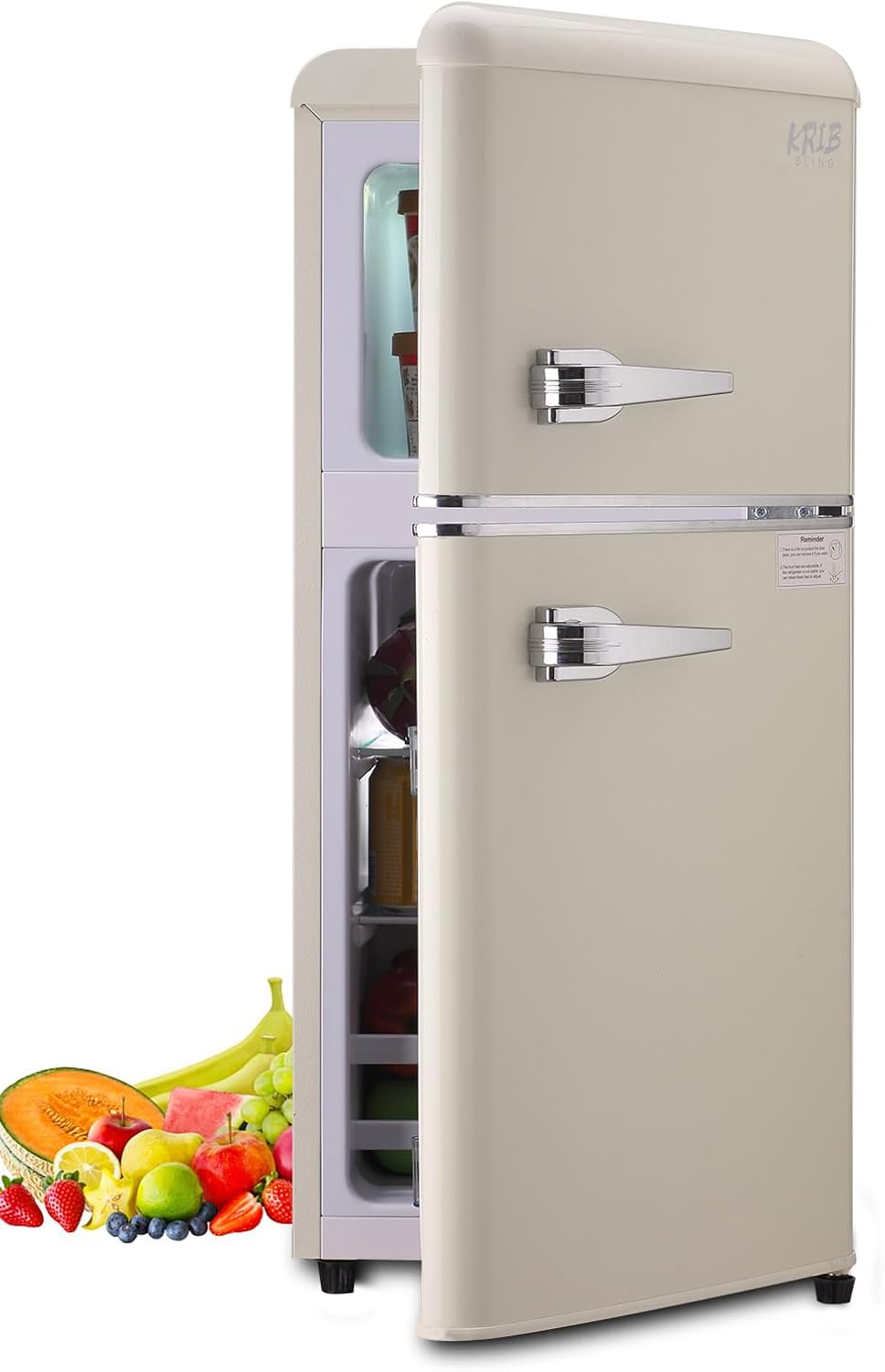
KRIB BLING 3.5 cu.ft Mini Fridge
| Capacity | 3.5 cubic feet |
|---|---|
| Freezer Capacity | 1.2 cubic feet |
| Defrost System Type | Manual Defrost |
| Cooling Method | Compressor |
| Voltage | 120 volts |
This KRIB BLING mini fridge combines a small freezer compartment with a refrigerated section in a freestanding 3.5 cubic foot cabinet, aimed at dorms, offices, and tiny kitchens. It uses a compressor cooling system with a rotary scroll compressor and a seven-level adjustable thermostat so you can tune temperatures for drinks, leftovers, or frozen snacks; the manual-defrost freezer reportedly holds ice cream and makes ice with minimal frosting. The interior has two removable glass shelves and door shelves for flexible storage, and the unit includes LED lighting and electronic lock control. It runs on standard 120V corded power and requires standing upright for 24 hours after delivery before first use. Expect typical compressor noise and continuous cycling as it maintains set temperatures, and this model does not use inverter technology. Energy Star and a listed annual consumption are provided, but buyers should note the modest freezer space if you need large frozen storage.
Best for: Buyers looking for the most affordable compact fridge with a usable freezer for dorm rooms, offices, or small apartments who prioritize tight footprint and basic reliable cooling over large frozen storage.
Less Ideal for: Those who need extensive frozen storage, ultra-quiet operation, or advanced inverter efficiency should consider larger or inverter-equipped models instead.
- Combined refrigerator and 1.2 cu.ft top freezer provides both chilled and frozen storage in a compact footprint
- Seven-level adjustable thermostat for finer temperature control
- Removable glass shelves allow flexible organization and easy cleaning
- Compressor cooling with rotary scroll compressor offers reliable cooling performance
- LED interior light and electronic lock add convenience and security
- Manual defrost freezer requires occasional thawing and maintenance
- No inverter technology, so it may run louder and cycle more than inverter models
- Freezer capacity is limited for heavy frozen-food users
Verdict: A budget-friendly, space-saving mini fridge that adds a functional top freezer and adjustable temperature control for small living spaces.
Saeoola Mini Fridge 3.1 Cu Ft

| Capacity | 3.1 cubic feet |
|---|---|
| Freezer Capacity | 1.2 cubic feet |
| Cooling Method | Compressor |
| Defrost System Type | Manual Defrost |
| Annual Energy Consumption | 221 kwh |
This Saeoola mini fridge is a small freestanding refrigerator designed for dorms, offices, or bedrooms where a modest freezer is required. It uses a rotary_scroll compressor and R-600A refrigerant to cool a 3.1 cubic foot compartment while keeping noise below 38 dB, and the manual defrost freezer provides basic frozen storage. The interior includes three tempered glass shelves and a crisper drawer, and the five-level adjustable thermostat (32°F to 51°F) makes it straightforward to dial in temperatures for drinks, produce, and frozen items. Removable glass shelves simplify cleaning and rearranging, and adjustable feet help level the unit on uneven floors. Energy use is modest at about 221 kWh annually. Expect manual defrosting and limited freezer capacity that will handle ice packs and a few frozen meals but not large items. For buyers prioritizing a quiet, compact fridge with simple controls and reliable compressor cooling, this is a practical option; those needing a frost-free freezer or larger frozen storage should look elsewhere.
Best for: Buyers who want a quiet, straightforward compact refrigerator with reliable compressor cooling and easy temperature control for dorm rooms, offices, or small apartments.
Less Ideal for: People who need a frost-free freezer or substantial frozen storage for bulk food or long-term freezing.
- Compressor cooling with R-600A refrigerant for consistent temperatures
- Five-level adjustable thermostat for easy temperature control
- Tempered removable glass shelves and crisper drawer for flexible storage and easy cleaning
- Low noise operation under 38 dB suitable for bedrooms and offices
- Adjustable feet to level the unit on uneven floors
- Manual defrost freezer requires occasional defrosting and maintenance
- Freezer capacity is limited and best for small items and meals only
Verdict: A quiet, compressor-cooled 3.1 cu ft mini fridge that delivers reliable, easy-to-control cooling with a small freezer well suited to dorms and small spaces.
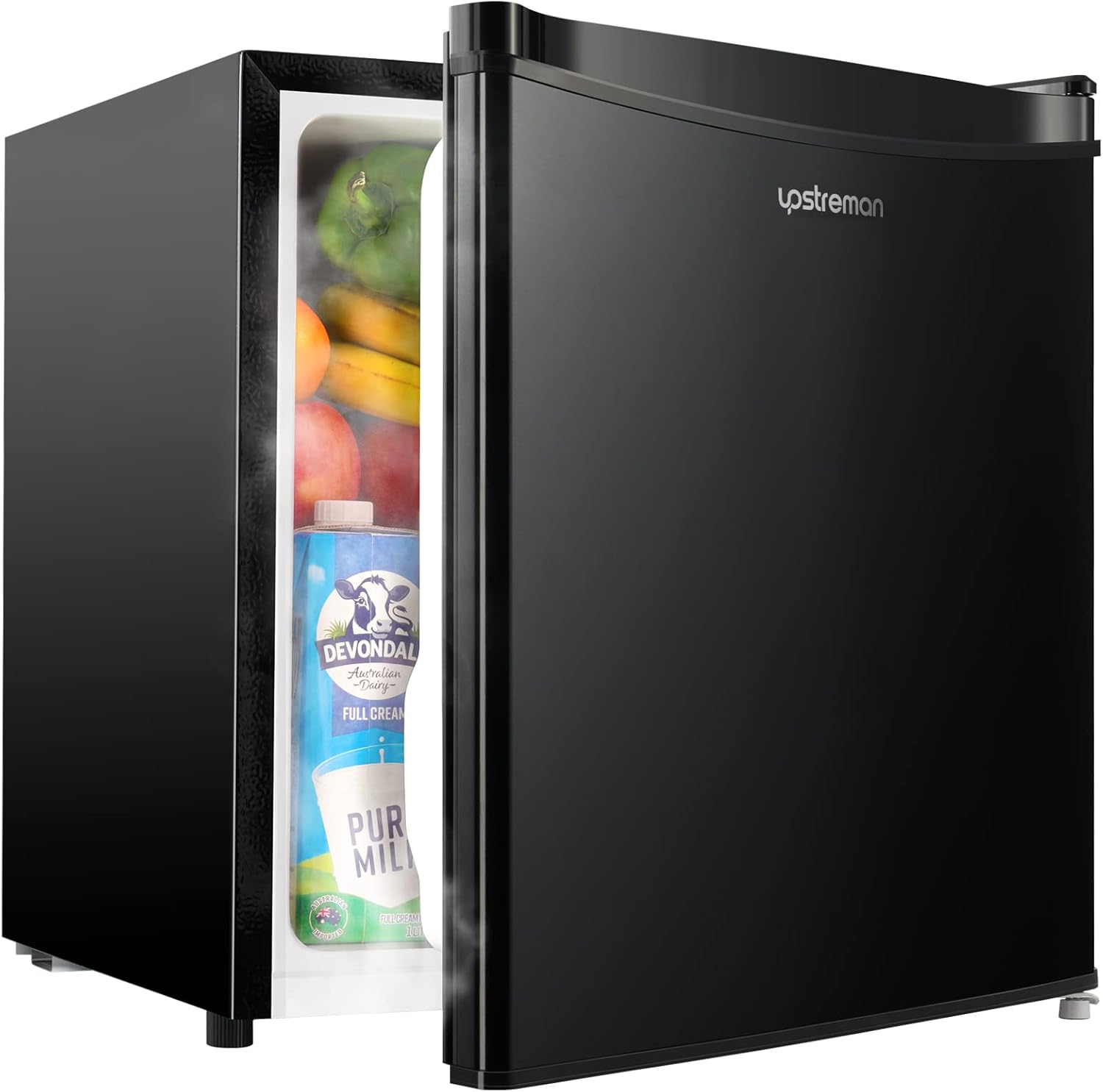
Upstreman FR17 1.7 Cu.ft Mini Fridge
| Capacity | 1.7 cubic feet |
|---|---|
| Freezer Capacity | 0.2 cubic feet |
| Defrost System Type | Manual Defrost |
| Cooling Method | Compressor |
| Voltage | 115 volts |
The Upstreman FR17 is a small freestanding mini fridge built for tight spaces that need a basic refrigerator plus a tiny freezer. It uses a compressor cooling system and a manual-defrost 0.2 cu.ft freezer to store ice trays and frozen snacks while the 1.5 cu.ft fresh-food section handles drinks, leftovers, and small containers. The adjustable five‑setting thermostat lets you tune temperatures between roughly 33.8 and 46.4°F for everyday chilling, and the reversible door and single interior shelf provide flexible placement and basic organization. It is marketed as quiet (about 38 dB) and energy-efficient with R‑600A refrigerant and an annual use estimate, which makes it inexpensive to run in dorms, offices, or bedrooms. Expect simple, utilitarian performance rather than precision cooling for long‑term frozen storage, and plan to defrost the freezer manually. Included accessories are an ice tray and a defrost tool, and Upstreman provides a one‑year warranty.
Best for: Buyers who prioritize compact, energy-conscious fridges with a usable mini-freezer for dorms, offices, or small apartments and who look for a dependable, straightforward appliance backed by user feedback.
Less Ideal for: Those who need long-term frozen storage, precise temperature control for perishables, or larger capacity for family use should consider a bigger refrigerator with an automatic-defrost freezer.
- Compact footprint fits counters, under desks, or small corners
- Top freezer lets you make ice and keep a few frozen items
- Adjustable 5‑position thermostat for simple temperature control
- Reversible door and single shelf allow flexible placement and basic organization
- Energy-efficient compressor with R-600A refrigerant lowers running cost
- Freezer is very small and requires manual defrosting
- Only one interior shelf limits storage organization
Verdict: Choose the Upstreman FR17 when you want a compact, energy-efficient mini fridge with a functioning top freezer for dorms or small spaces backed by a straightforward one-year service plan.
Upstreman BR321 3.2 Cu.Ft Mini Fridge

| Capacity | 3.2 cubic feet |
|---|---|
| Freezer Capacity | 0.3 cubic feet |
| Cooling Method | Compressor |
| Voltage | 115 volts |
| Defrost System Type | Manual Defrost |
The Upstreman BR321 is a compact 3.2 cu.ft refrigerator with a small top freezer that fits dorms, bedrooms, and offices. It uses a compressor cooling system and offers five adjustable temperature levels (32°F to 50°F) so you can chill drinks, store dairy, and keep produce fresh while the 0.3 cu.ft freezer handles frozen items that do not require heavy-duty freezing. The unit includes two adjustable glass shelves, three door bins, a crisper drawer, adjustable leveling feet, and a reversible door for flexible placement. It is designed for quiet operation at roughly 38 dB and is ETL certified, with an annual energy consumption figure provided. Practical downsides are the manual defrosting and the limited freezer capacity which is not suitable for making or storing ice cubes or large frozen items. For buyers who want a straightforward, energy-conscious small fridge with flexible shelving and minimal noise, this model covers the basics without complicated controls.
Best for: Buyers who prioritize a conservative, reliable small refrigerator for dorms, bedrooms, or offices and want quiet, energy-conscious performance with simple controls.
Less Ideal for: People who need substantial frozen storage, ice making, or precise digital temperature control should consider larger or dedicated freezer-capable models instead.
- Compact footprint with 3.2 cu.ft total capacity and a dedicated 0.3 cu.ft freezer for small frozen items
- Five-step adjustable thermostat for tailoring cooling to different foods and seasons
- Two adjustable glass shelves and three door bins for flexible organization
- Quiet operation (~38 dB) suitable for bedrooms and offices
- Reversible door and adjustable leveling feet for flexible placement
- Freezer is very small and cannot accommodate ice trays or large frozen items
- Manual defrost requires occasional maintenance
- No lock or advanced temperature display controls
Verdict: A quiet, energy-conscious 3.2 cu.ft mini fridge with a small freezer that delivers reliable, no-frills cooling for dorms and small spaces.
Choosing the Right Mini Fridge with Small Freezer: Key Factors to Consider
Usable Capacity and Layout
Total capacity in liters or cubic feet tells part of the story, but usable capacity depends on shelf arrangement, door bins, and how the freezer is integrated. A fridge that advertises a certain volume can feel much smaller if shelves are fixed or if a large portion of the interior is taken up by mechanical components.
Look for adjustable shelves and split layouts that let you prioritize taller bottles or stackable containers. Consider whether the freezer has its own small door or is a top flap. The more flexible the interior, the more scenarios the unit will handle in everyday use.
Freezer Size and Accessibility
A small freezer should be able to store ice trays, frozen meals, or a few bags of frozen vegetables without constant reorganization. Check how the freezer compartment is accessed and whether it limits usable fridge height when open.
Freezer location matters. Top-mounted small freezers are common and often provide better insulation, but some under-shelf or integrated compartments offer easier access to fridge items. Think about what you intend to freeze and how often you will need to access it.
Energy Use and Running Costs
Compact refrigerators run continuously, so energy consumption directly affects utility bills. Look for low-wattage compressors or efficient thermoelectric systems and check labeled energy use metrics when available.
A better-sealed cabinet and thicker insulation also reduce compressor runtime. In small living spaces, lower energy draw translates to less heat rejection into the room and more predictable electricity costs.
Cooling Performance and Temperature Stability
How well a mini fridge holds set temperatures affects food safety and storage flexibility. Some small units struggle to keep both the fridge and tiny freezer at stable set points when the door is opened frequently or when the unit is placed in a warm room.
Good temperature control means a consistent cold zone for perishables and a reliably frozen compartment for emergency frozen storage. Look for models with adjustable thermostats and design features that separate cold airflows between compartments.
Noise, Vibration, and Location
Noise and vibration are more noticeable in bedrooms and offices. Compressors vary in loudness, and thermoelectric units often run quieter but may perform worse in hotter ambient temperatures.
Consider where the fridge will sit and whether noise will be disruptive. Check mounting and damping of mechanical parts and whether the unit requires a flat, rigid surface to minimize vibration transfer and noise amplification.
Maintenance and Defrosting
Mini fridges can use manual defrost or auto-defrost systems. Manual defrost freezers may accumulate ice that reduces usable space and performance unless you defrost periodically. Auto-defrost adds convenience but can raise running complexity and may slightly increase energy use.
Also evaluate how easy it is to clean shelves and door bins and whether replacement parts or common service procedures are straightforward for long-term ownership.
Sizing Your Space and Measuring for Fit
Before choosing a mini fridge with a small freezer, measure the intended location and allow clearance for ventilation and door swing. Most compact refrigerators need a few inches of clearance on the sides and top for proper airflow, and doors require room to open fully without obstruction.
When assessing fit, consider the route the unit will take into the room. Tight hallways, stair turns, and elevator limits can rule out otherwise perfect models. Also factor in the location of power outlets and whether you will need an extension cord or a surge protector.
- Measure height, width, and depth including hinge and handle projections
- Allow 2 to 4 inches of clearance for ventilation unless manufacturer specifies otherwise
- Confirm door swing direction and reversibility if placement constraints exist
- Plan for power access and avoid running cords under rugs or through doorways
Compressor Vs Thermoelectric Cooling
Mini fridges typically use either a compressor or a thermoelectric cooling system. Compressors deliver stronger cooling and better freezer performance, especially in warmer ambient conditions, while thermoelectric units run quieter and have fewer moving parts.
If you need reliable frozen storage or will place the unit in a warm kitchen or sunlit room, a compressor-based mini fridge is usually the safer choice. For low-noise locations or infrequent cooling needs, a thermoelectric model can be acceptable but expect reduced freezer capability.
- Compressor: better cooling, usable small freezer, more noise and vibration potential
- Thermoelectric: quieter, less effective freezer performance, works best in cool ambient temperatures
Organizing the Interior for Maximum Use
Plan how you will use the fridge contents to choose the best interior arrangement. If you store tall bottles, prioritize adjustable or removable shelves. For many small freezers, keeping frozen items in stackable, uniform containers helps maintain access.
Door bins are valuable real estate in mini fridges. Use them for condiments and small items to free up shelf space for larger perishables. Consider small organizers or bins that help keep items visible and reduce door-open time.
- Use clear, stackable containers to make the most of small freezer volume
- Reserve door bins for non-perishables and frequently used items
- Label containers in the freezer to reduce time spent searching
Placement Effects on Performance
Ambient temperature and direct sunlight affect how hard a mini fridge must work. Placing the unit in a cool, shaded area improves efficiency and helps the freezer stay colder. Avoid placing the fridge inside cabinetry without proper ventilation as heat buildup will reduce performance.
Also consider proximity to heat sources such as ovens or radiators. Even a small increase in surrounding temperature can force the compressor to run more often, increasing noise and energy use.
- Keep the unit out of direct sunlight and away from heat-producing appliances
- Ensure floor is level to prevent compressor strain and excess vibration
- Leave recommended clearance for air circulation as specified by the appliance
Simple Upgrades and Accessories
Small accessories can make a compact fridge far more usable. A small plastic organizer tray helps separate fruits and snacks, while a magnetic thermometer gives a quick read on internal temperatures. Door-mounted racks or adhesive hooks can add storage without modification.
If vibration is an issue, anti-vibration pads or a small rubber mat under the unit can dampen sound. For travel or temporary setups, consider removable shelving options that allow quick reconfiguration.
- Add a small fridge thermometer for accurate temperature checks
- Use non-slip mats or anti-vibration pads to reduce noise
- Choose stackable containers sized to interior shelf heights
How We Chose the Best Mini Fridge with Small Freezer
We screened mini fridges with small freezers using four to six concrete, appliance-focused filters that reflect real-world use. Capacity and usable layout were primary: we looked for units that maximize shelf and door storage while still including a genuinely usable small freezer compartment for ice packs, a few frozen meals, or ice trays. Energy efficiency was another key criterion, prioritizing models with low annual energy use and sensible insulation to limit running costs in continuous operation. Temperature control and stability mattered because compact compressors or thermoelectric systems vary in how well they maintain freezer and fridge temperatures under load. Noise and vibration were assessed for typical living spaces where quiet operation matters. Build quality and interior features such as adjustable shelves, reversible doors, and defrost method were considered to judge day-to-day convenience. Finally, we excluded units that lack a discrete freezer space or that only offer a tiny ice tray cavity, plus any products intended exclusively for transport or automotive use. The result is a list of practical, stay-at-home mini fridges that balance fridge space with a helpful small freezer.
Our full evaluation process is outlined in our review methodology.
FAQ
Can a mini fridge with a small freezer keep frozen meals safe long-term?
A mini freezer can keep frozen meals safe for short- to medium-term storage, but capacity and temperature stability limit long-term storage. For multiple frozen meals or extended storage, a larger freezer is better. Frequent door openings and warm ambient temperatures can reduce freezer effectiveness.
How much clearance does a mini fridge need around it?
Most mini fridges require a few inches of clearance on the sides and top for proper airflow. Specific clearance recommendations vary, so check the unit's guidance, but plan on roughly 2 to 4 inches to ensure adequate ventilation and cooling efficiency.
Are thermoelectric mini fridges reliable for the freezer compartment?
Thermoelectric units are typically quieter and simpler but generally provide weaker freezer performance than compressor models. They may be acceptable for light use in cool rooms, but they often cannot maintain solid frozen conditions under heavy use or in warm environments.
How often do mini fridges with freezers need defrosting?
Defrosting frequency depends on the unit and usage. Manual-defrost freezers may need attention several times a year if ice builds up, while auto-defrost models require less manual intervention. Heavy freezer use or high humidity can increase frost buildup and the need for defrosting.
Will a mini fridge raise the temperature in a small room?
All refrigerators expel heat as they cool their interior, so a unit running in a small, poorly ventilated room can slightly raise ambient temperature. Efficient models and proper placement reduce this effect. In most cases the temperature change is modest but worth considering in tight living spaces.
Final Verdict
Prioritize the combination of usable interior layout and reliable freezer capacity when choosing a mini fridge with a small freezer. Energy efficiency and temperature stability are the next most important tradeoffs, especially for units that will run continuously in small living areas. Noise and location constraints can tip the decision toward quieter thermoelectric models or more powerful compressors depending on your needs. Decide first where the unit will sit and what you need to freeze on a regular basis. Then choose a layout and cooling style that match those priorities so you get the most useful chilled and frozen storage from a compact footprint.