
Note: This article contains affiliate links. If you click on these links and make a purchase, we may earn a small commission at no extra cost to you. This helps support our research and content. Read our full affiliate disclosure here.
A Portable Mini Fridge can change how you store drinks, snacks, and medications when you do not have access to a full-size refrigerator. Whether you need a compact cooler for a dorm room, a mobile unit for road trips, or a small fridge for an office, the right choice improves convenience and keeps perishables safe. This guide shortlists the top picks across common use cases and power setups. We evaluate each option for cooling ability, portability, and energy needs so you can pick the model that fits your space and daily routine. Read on for clear criteria and practical pros and cons to help you decide.
Top Picks at a Glance
| Best Overall The best all-around choice for most situations | Frigidaire Portable 21QT Fridge Freezer |  |
| Best Quality Built to a higher standard if you want something more solid | EUHOMY J23 24QT Portable Refrigerator |  |
| Best Value The sweet spot between price and what you get | CROWNFUL Mini Fridge CF-PC4 |  |
| Best Budget The cheapest option that still gets the job done reliably | Antarctic Star Compact Mini Fridge 4L |  |
| Top Rated A top-rated pick with lots of positive feedback | BougeRV CR22 23-Quart Portable Fridge |  |
| Most Popular A crowd favorite that many people choose with confidence | Midea Compact Refrigerator WHS-65LB1 |  |
| Best Seller A high-volume bestseller chosen again and again | EUHOMY WC-6B Mini Fridge | 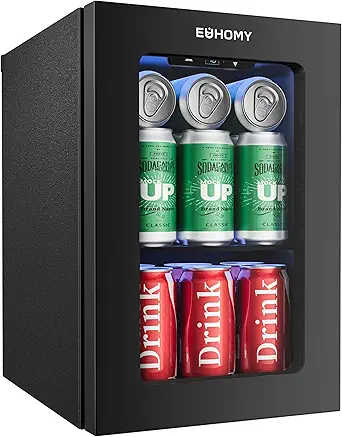 |
Frigidaire Portable 21QT Fridge Freezer

| Capacity | 0.74 cubic feet (20 L) |
|---|---|
| Voltage | AC 100–240V, DC 12/24V |
| Temperature range | -4°F to 68°F |
| Noise level | 45 dB |
| Refrigerant | R-600A |
This Frigidaire 2‑in‑1 portable fridge/freezer is a compact compressor unit intended for travel, camping, car use, or extra cooling at home. It accepts AC 100–240V or DC 12/24V input and includes a cigarette lighter cable for in‑vehicle power, while digital temperature controls let you set a range from freezing to refrigerator temperatures. The 21 qt (20 L) interior holds drinks, snacks, or small perishables and includes an internal wire shelf, interior light, and reversible door for flexible loading. Practical benefits are its quiet 45 dB operation, energy‑efficient R600a refrigerant, and manual defrost simplicity, all of which make it usable overnight in tents or cabins without much noise. Expect typical compressor power draw and the need to manage limited volume for longer trips; manual defrosting and a single small shelf limit bulk storage and organization. For users who need a small, reliable cooling box that runs from a car or household outlet, this unit is an easy-to-use solution, but it is not a replacement for a full‑size fridge when space and capacity matter.
Best for: Buyers who want a compact, reliable portable fridge for road trips, camping, or as a small secondary refrigerator and prioritize quiet operation and dual‑voltage flexibility.
Less Ideal for: Those needing large capacity, full kitchen replacement cooling, or frequent long‑term food storage should consider larger built‑in or full‑size units instead.
- Runs on both AC (100–240V) and DC (12/24V) with included cigarette lighter cable for car use
- Convertible fridge/freezer with a wide temperature range for cooling or freezing
- Quiet compressor operation (~45 dB) suitable for indoor or outdoor overnight use
- Compact 21 qt capacity with interior light and wire shelf for basic organization
- Uses R600a refrigerant and is designed to be energy efficient
- Small internal volume limits how much you can store and organize
- Manual defrost requires periodic thawing and maintenance
- Single shelf and single door restrict bulk or tall items placement
Verdict: A compact, dual‑voltage compressor fridge/freezer that excels as a quiet, energy‑efficient travel or secondary cooler for short trips and small loads.
EUHOMY J23 24QT Portable Refrigerator

| Capacity | 24 quarts |
|---|---|
| Voltage | 12 volts |
| Cooling Method | Compressor |
| Power Source | Corded Electric, Battery Powered |
| Temperature Range | -4℉ to 68℉ |
The EUHOMY J23 is a 24‑quart compressor portable fridge built to keep food and drinks cold on the road or at camp. It runs on 12/24V DC or 100–240V AC and can also operate from a separate battery pack with three‑level battery protection to avoid vehicle drain, making it practical for long drives or tailgates. The compressor cooling system reaches low temperatures quickly and includes an independent compartment, removable shelf, LED interior light, touch controls and app/Bluetooth control for remote monitoring. The unit is designed with recessed handles and anti‑shake construction for transport and includes both AC and DC power cords. Expect solid cooling performance and energy efficiency for a compact chest form factor, but at about 22.7 pounds it is not the lightest option for backpacking and the chest layout takes more horizontal space than a vertical mini fridge. The freezer capacity is limited relative to full‑size units so very large loads will need careful organization. For buyers prioritizing dependable compressor cooling and battery‑safe car use, this model delivers usable, car‑focused performance.
Best for: Buyers who need reliable compressor cooling for road trips, camping, or vehicle use and who prioritize performance and battery safety over ultralight portability.
Less Ideal for: People who need a very lightweight or backpack‑friendly fridge, or those who prefer a slim vertical mini fridge for tight indoor spaces.
- Compressor cooling delivers faster, lower temperatures than thermoelectric alternatives.
- Dual AC/DC power plus battery operation offers flexible on‑the‑road use.
- Three‑level battery protection reduces risk of draining vehicle battery.
- App and Bluetooth control allow remote temperature monitoring and adjustment.
- Built for transport with recessed handles and anti‑shake design.
- Chest form factor occupies horizontal space and is less convenient for single‑hand access.
- Heavier than small thermoelectric coolers, limiting long‑distance portability.
Verdict: If you want a compact portable fridge that delivers true compressor performance and safe battery operation for car and camping use, the EUHOMY J23 is a strong choice.
CROWNFUL Mini Fridge CF-PC4

| Capacity | 4 liters |
|---|---|
| Cooling Method | Thermoelectric |
| Voltage | 120 volts (AC) and 12V DC |
| Certification | ETL |
This Crownful mini fridge is a compact, countertop unit designed for personal storage of drinks, skincare, breast milk, and small snacks. It uses a thermoelectric cooling system with a reversible cool/heat switch so you can chill items roughly 10–20°C below ambient or warm up to about 149°F, and it accepts both household AC and 12V car power for on-the-go use. The unit is very small (4-liter capacity), includes a detachable shelf and carry handle, and is ETL listed for safety. Noise is low thanks to a brushless fan, which makes it suitable for bedrooms and offices. Expect performance to depend on room temperature: cooling is less effective in hot environments and it is not a replacement for a full-size refrigerator. The fridge is best for single-person use and short-term storage rather than bulk food preservation, and the simple manual controls limit fine-grain temperature tuning. For buyers seeking a reliable, portable personal cooler with optional warming, this model is a practical, low-power choice.
Best for: Buyers who want a compact, low-power personal fridge for skincare, beverages, or short-term food storage and value portability between home and car.
Less Ideal for: People who need to store large amounts, maintain strict refrigeration temperatures, or replace a regular refrigerator.
- Very compact 4-liter capacity fits up to six 12-oz cans and saves countertop space
- Dual-mode cooling and warming with a simple switch for versatile uses
- Operates on AC and 12V DC for home and car portability
- Quiet brushless fan suitable for bedrooms and offices
- ETL certified for basic safety and low power draw
- Thermoelectric cooling only lowers temperature relative to ambient, so performance drops in hot environments
- Small capacity is unsuitable for storing larger quantities or full-size food items
- No precise digital temperature control for exact temperature settings
Verdict: A practical, portable 4-liter cooler/warmer that is ideal for single-person use, travel, and bedroom or office storage.
Antarctic Star Compact Mini Fridge 4L

| Capacity | 4 liters |
|---|---|
| Cooling Method | Thermoelectric |
| Voltage | 115 / 12V DC |
| Defrost System Type | Manual |
This Antarctic Star compact mini fridge is a very small, portable cooler that runs on both 115V AC and 12V DC power, making it useful at home, in a car, or for short trips. It uses thermoelectric cooling to lower internal temperatures roughly 53°F–64°F below ambient and comes with a removable shelf that helps fit cans, skincare products, or small food items. The unit is lightweight and intended for tabletop or dorm use, and the brand claims quiet operation around 25 dB. Setup is simple: plug into a wall or car outlet and allow 1–2 hours to reach cooler temperatures. Expect limited capacity and modest cooling compared with compressor fridges, so it is best for keeping a few drinks or cosmetics cool rather than long-term food storage. The manual defrost and single-shelf layout keep the design straightforward but mean you should plan shelf arrangement and defrosting as part of routine care. For buyers wanting an affordable, portable option this model delivers basic cooling with flexible power choices but not the deep chill or capacity of larger compact refrigerators.
Best for: Buyers on a tight budget who need a tiny, portable cooler for a bedroom, office, dorm, or car and prioritize portability and flexible power over capacity.
Less Ideal for: People who need to store larger quantities, freeze items, or require fast, very low-temperature cooling should choose a larger compressor refrigerator instead.
- Dual power options (115V AC and 12V DC) for home and car use
- Very compact and lightweight for easy portability and placement
- Removable shelf increases storage flexibility for cans, skincare, or small items
- Quiet operation suitable for bedrooms or offices
- Small 4L capacity limits storage to a few cans or small items
- Thermoelectric cooling is less powerful than compressor-based fridges
Verdict: A very affordable, ultra‑portable mini fridge ideal for keeping a few drinks or skincare items cool at home or in a vehicle.
BougeRV CR22 23-Quart Portable Fridge

| Capacity | 23 quarts |
|---|---|
| Temp Range | -8℉~50℉ (-22℃~10℃) |
| Power Source | 12/24V DC and 100-240V AC |
| Cooling Method | Compressor |
| Noise Level | 45 dB |
The BougeRV CR22 is a compact 23‑quart compressor fridge meant for camping, road trips, and vehicle use where you need refrigeration without ice. It runs from 12/24V DC or standard AC and promises fast cooling—about 15 minutes from room temperature to roughly 32°F—and can reach subfreezer temperatures for short-term freezing. The compressor design gives reliable cooling performance even when tilted up to 30 degrees, and a 3‑level battery protection system prevents your vehicle battery from being drained. Practical touches include an electronic lock, manual defrost, and low operating noise around 45 dB so it is suitable for overnight use in a vehicle or tent. Trade-offs are its limited 23‑quart capacity, which fits a few meals and drinks but not larger loads, and the unit adds about 22 pounds to your gear list. Energy use is modest with an ECO mode under 45W typical draw, but buyers who need true dual-zone storage or app control will want larger or higher-end models. For dependable, vehicle-ready cooling in a compact package, the CR22 does the job well.
Best for: Buyers who prioritize reliable, vehicle-ready refrigeration for short trips and need fast, compressor-based cooling that can operate from car power without draining the battery.
Less Ideal for: People who need large-capacity fridge space, separate dual-zone cooling, or remote/app control features should consider larger or more feature-rich units.
- Compressor cooling reaches ~32°F in about 15 minutes and can go below freezing for short periods
- Runs on 12/24V DC or 100–240V AC for flexible vehicle and home use
- Built‑in 3‑level battery protection to avoid draining vehicle battery
- Relatively quiet operation around 45 dB and able to operate tilted up to 30 degrees
- 23‑quart capacity is small for longer trips or larger groups
- No true dual‑zone compartment or smartphone app control
Verdict: Choose the CR22 when you want a compact, compressor-driven portable fridge that reliably cools from car or wall power without risking your vehicle battery.
Midea Compact Refrigerator WHS-65LB1

| Capacity | 1.6 cubic feet |
|---|---|
| Annual Energy Consumption | 207 kilowatt hours per year |
| Defrost System Type | Automatic |
| Door Orientation | Reversible |
| Cooling Method | Compressor |
The Midea 1.6 cu ft compact refrigerator is a straightforward mini fridge designed for dorms, offices, or bedrooms where space is limited. It uses an R600A compressor and is ENERGY STAR certified, so it runs more efficiently than many basic models and lists annual consumption at 207 kWh. The unit includes a small chiller compartment for quick cooling, a removable shelf to accommodate taller items, door racks sized for frequent-use bottles and a reversible door for flexible placement. Controls are simple mechanical thermostat settings that let you dial in cooler temperatures without fuss. Practical benefits include low noise operation under 42 dB and a compact footprint that fits tight spots while still holding 2-liter bottles on the door. Limitations are the very small net capacity and a chiller that only handles short-term cooling rather than full freezing, so it is not suitable as a primary refrigerator for a household or for long-term frozen storage. For buyers focused on efficiency and quiet daily use in small spaces, this model performs reliably, but those needing larger capacity or a full freezer should consider a bigger unit.
Best for: Buyers seeking a quiet, energy-efficient mini fridge to keep drinks and small amounts of food chilled in tight spaces who value proven customer satisfaction and conservative energy use.
Less Ideal for: Anyone who needs substantial refrigerated storage, frequent frozen storage, or a primary household refrigerator should choose a larger-capacity model instead.
- ENERGY STAR certified with R600A compressor for lower annual energy use
- Compact footprint fits dorms, offices, and small rooms
- Reversible door and removable shelf increase placement and storage flexibility
- Quiet operation rated under 42 dB suitable for bedrooms
- Very limited 1.6 cu ft capacity restricts how much food and drink can be stored
- Internal chiller is for short-term cooling only and cannot freeze items
Verdict: Choose this mini fridge if you want a quiet, ENERGY STAR certified compact refrigerator that reliably cools drinks and small groceries in tight living spaces.
EUHOMY WC-6B Mini Fridge

| Capacity | 18 liters |
|---|---|
| Temperature Range | 40°F to 61°F |
| Cooling Method | Compressor |
| Voltage | 115 volts |
| Defrost System Type | Manual |
The EUHOMY WC-6B is a small compressor-driven mini fridge intended for keeping drinks chilled on a countertop or in a dorm, office, or home bar. It holds about 24 standard 330 ml cans and offers a digital temperature range from 40°F to 61°F so you can set a cooler level for sodas or slightly warmer service for wine. The compressor cooling delivers more stable temperatures than thermoelectric units, and the cabinet includes a removable shelf for arranging cans or a few small bottles. The unit runs quietly at under 40 dB and has an LED interior light and a UV-protective door to limit light exposure. Installation is freestanding and operation is manual defrost. Expect modest energy use for its class and a one-year warranty; because it is very small, it is best for short-term chilled storage rather than replacing a kitchen refrigerator. Buyers should note the single-door right-hand orientation and that the interior capacity is limited to a few bottles or two dozen cans.
Best for: Buyers who want a reliable, low-noise countertop cooler for drinks in a dorm, office, or small apartment and prioritize stable compressor cooling and simple controls.
Less Ideal for: Anyone needing substantial cold storage, full-size refrigeration, or multi-person household beverage capacity should choose a larger undercounter or standard refrigerator instead.
- Compressor cooling for steady temperatures compared with thermoelectric designs
- Compact footprint that fits on counters, desks, or in small apartments
- Digital temperature control with a 40°F–61°F range for easy setpoint adjustments
- Removable shelf and LED interior light for flexible storage and visibility
- Relatively quiet operation under 40 dB suitable for bedrooms or offices
- Very limited interior capacity suitable only for a few bottles or roughly 24 cans
- Manual defrost means occasional maintenance to remove frost buildup
Verdict: A quiet, compressor-based countertop mini fridge that delivers stable cooling in a very compact package ideal for single-user or small-space beverage storage.
Choosing the Right Portable Mini Fridge: Key Factors to Consider
Cooling Performance and Temperature Range
A portable mini fridge must reliably reach and hold temperatures appropriate for your items. Cooling power affects how quickly the unit chills warm contents and how well it maintains a set temperature under ambient heat. For perishables, look for models that can get near typical refrigerator temperatures rather than just a slight coolness.
Temperature range also determines suitability for medications or certain foods. A wider, controllable range gives you flexibility to switch between beverage-cooling and light food storage without risking spoilage.
Power Options and Energy Use
Portable units are used in varied settings, so multiple power inputs are valuable. Units that accept AC wall power, DC 12V car power, and USB or battery attachments cover the most use cases. Check the rated power draw and whether the compressor or thermoelectric system is efficient; compressor-driven units typically cool faster but can draw more power.
If you plan to run the fridge from a vehicle or portable battery, estimate run-time based on the wattage draw and your power source capacity. Energy efficiency impacts how often you need to recharge external batteries and whether the unit is practical for long trips.
Size, Weight, and Carrying Convenience
One of the main reasons to choose a portable mini fridge is mobility, so weight and dimensions matter. Smaller units fit better in tight spaces like under desks or in car trunks, while larger portable models increase capacity at the cost of bulk. Consider how often you will move the fridge and whether a handle, shoulder strap, or suitcase-style design is important.
Also think about placement: a footprint that fits your intended spot and a design that allows proper airflow around the unit will prolong life and performance.
Interior Layout and Storage Flexibility
A compact exterior can hide usable interior features. Adjustable shelves, removable racks, and door pockets let you organize bottles, cans, and small food items efficiently. Fixed interiors may restrict what fits; measure the items you plan to store to ensure they will fit upright or stacked as needed.
Easy-to-clean interior surfaces and simple shelf removal make maintenance quicker. Clear access to the storage area reduces spillage risk and improves daily usability.
Noise Levels and Operational Comfort
Noise matters when the fridge lives in a bedroom, office, or small living area. Compressors generally deliver stronger cooling but can emit noticeable humming or cycling noise. Thermoelectric models are often quieter but may struggle in hot ambient conditions. Check user-oriented noise specifications or independent measurements when possible.
Vibration and fan noise can also affect placement. Quieter units are better for sleeping areas, while moderate noise may be acceptable in garages or cars.
Durability, Seal Quality, and Maintenance
Durability affects how long the unit stays useful in mobile environments. Robust exterior construction, quality door seals, and corrosion-resistant interiors help the fridge survive frequent moves. Poor seals allow warm air ingress and reduce efficiency.
Routine maintenance such as defrosting, gasket cleaning, and filter checks should be simple. Ease of servicing extends usable life and reduces the likelihood of unexpected failures during travel.
Compressor Vs Thermoelectric: Which Fits Your Use
Portable mini fridges use different cooling technologies with tradeoffs that determine real-world suitability. Compressor-based units cool faster and maintain lower temperatures in hot environments, making them a better fit for storing perishables or for use in hot climates. However, they tend to be heavier, draw more power, and can produce more noise during operation.
Thermoelectric models are lighter, quieter, and often more affordable. They are best for keeping drinks and snacks cool relative to ambient temperature rather than achieving fridge-like cold. Thermoelectric units perform well when ambient temperatures are moderate and when energy draw must stay low.
- Choose compressors for stronger cooling and stable temperature control.
- Choose thermoelectric units for lighter weight and quieter operation in mild conditions.
Using a Portable Mini Fridge in a Car or On the Road
When running a mini fridge from a vehicle, confirm the unit supports 12V DC input and verify the current draw. Hard draws can drain a car battery quickly if the engine is off. Use a direct connection to the vehicle power outlet cautiously and consider a dedicated battery or inverter for extended stops.
Secure the fridge to prevent tipping and protect vents from blockage. Placement affects cooling: avoid direct sun and allow airflow around the compressor or heat sink. For travel, choose models with durable latches and a stable lid to minimize spills.
- Verify DC compatibility and current draw for safe car use.
- Secure the unit and keep it shaded; maintain airflow for best cooling.
Placement and Ventilation Best Practices
Portable fridges need clearance for heat dissipation. Place the unit on a level surface with several inches of space behind and above it when possible. Crowding vents with walls or soft materials reduces efficiency and increases run-time and noise.
Avoid placing the unit in direct sunlight or near other heat sources. In tight spaces, choose a model with side or top venting that suits your intended location.
- Leave adequate clearance for vents to improve efficiency.
- Avoid heat sources and direct sunlight to prevent overworking the compressor or thermoelectric elements.
Maintaining Cleanliness and Preventing Odors
Regular cleaning prevents smells and keeps seals functioning. Wipe interior surfaces with a mild detergent and water, and remove shelves to clean crevices. Dry the interior thoroughly before running the unit to avoid mildew.
For longer storage or transport, empty the fridge, leave the door slightly ajar, and store in a dry place. Replace worn gaskets to maintain sealing performance and reduce energy waste.
- Clean regularly and dry thoroughly to avoid odor buildup.
- Leave door ajar during storage and check gaskets periodically.
Accessories and Add-ons That Improve Use
Consider accessories that increase versatility, such as removable divider racks, travel straps, and insulating covers. A dedicated power adapter or an inline fuse for car installations adds safety. For long trips, a portable battery pack rated for fridge loads expands run-time without engine reliance.
Thermometers and small internal LED lights can help you monitor temperatures and access contents in dim environments. These small additions often make daily use smoother without changing the unit itself.
- Use straps and latches to stabilize the unit during transport.
- A portable battery or inverter can enable off-grid operation for longer periods.
How We Chose the Best Portable Mini Fridge
We prioritized factors that directly affect day-to-day usability for portable refrigeration. Cooling performance and temperature consistency were primary filters, because ULTIMATE cold capacity and stable temperatures determine whether a unit safely stores beverages, snacks, or sensitive items. Power flexibility and run-time were equally important. We selected units that offer multiple power options such as AC, DC, and USB or battery compatibility so they work in dorms, cars, and off-grid situations. Portability features like weight, handle design, and footprint came next, since easy transport and placement matter for frequent moves. We checked interior layout and storage flexibility, favoring designs with shelves or compartments that make the small interior practical. Reliability and basic build quality were considered to avoid units with fragile components or poor seals. Noise level and ease of cleaning were additional filters because quiet operation and simple maintenance improve everyday satisfaction. We excluded single-purpose coolers that do not maintain set temperatures or units that rely solely on ice packs. Models with unclear power specs or inconsistent temperature control were not considered. The final selection balances cooling capability, power options, portability, storage usability, and everyday convenience.
Our full evaluation process is outlined in our review methodology.
FAQ
How long can a portable mini fridge run on a car battery?
Runtime depends on the fridge's wattage draw and the battery capacity. Lower-draw thermoelectric units will run longer from the same battery than compressor units. For safety, avoid draining a vehicle battery completely and consider using a dedicated battery or running the engine during extended use.
Can I store medications in a portable mini fridge?
Often yes, but it depends on the fridge's temperature control and consistency. Medications that require strict temperature ranges need a unit capable of holding the required setpoint reliably. Monitor temperatures with an accurate thermometer and avoid units with wide fluctuations.
Is it okay to lay a portable mini fridge on its side during transport?
Laying some refrigerators on their side can be risky because compressor oil can migrate into lines. If you must transport one on its side, follow the manufacturer's guidance and allow several hours upright before powering on. When in doubt, transport it upright to minimize risk.
How do I reduce noise from a portable mini fridge in a bedroom or office?
Place the unit on a vibration-damping mat and ensure it is level to reduce rattles. Choose a location away from sleeping or work areas, and avoid contact with walls that can amplify sound. If noise persists, consider a quieter thermoelectric model designed for low-noise operation.
Do portable mini fridges need regular defrosting?
Some units develop frost if they are not frost-free. Manual defrosting is straightforward: power down, empty contents, melt and wipe away ice, then dry before restarting. Check the unit's specifications to see if a frost-free system is included.
Final Verdict
Prioritize the features that match your primary use case. If you need low temperatures and frequent cooling under warm conditions, favor units with stronger cooling systems and robust power options. If weight, quiet operation, and occasional chilling are more important, lean toward lighter thermoelectric models. Balance cooling ability, power flexibility, and portability against noise and interior usability. With those tradeoffs clear, you can confidently choose a portable mini fridge that fits the spaces and routines where you intend to use it.