
Note: This article contains affiliate links. If you click on these links and make a purchase, we may earn a small commission at no extra cost to you. This helps support our research and content. Read our full affiliate disclosure here.
If your kitchen cannot accommodate ducting or you want a simpler installation, a non ducted range hood can still control grease, odors, and airborne particles. Choosing the right recirculating hood matters because capture efficiency, filtration quality, and noise determine real-world comfort while you cook. This guide highlights the top shortlisted non ducted range hoods, explaining strengths and tradeoffs for small-duct or ductless installations. We evaluate airflow effectiveness, filtration, installation flexibility, and noise so you can pick the hood that best matches your kitchen layout and cooking habits. Read on for quick buying guidance and practical tips before the product list.
Top Picks at a Glance
| Best Overall The best all-around choice for most situations | Broan-NuTone 4130SF 30-Inch Range Hood | 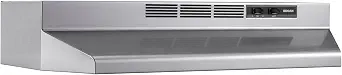 |
| Best Value The sweet spot between price and what you get | FIREGAS 30-Inch Under Cabinet Range Hood |  |
| Best Budget The cheapest option that still gets the job done reliably | SNDOAS 30-inch Under Cabinet Range Hood |  |
| Most Popular A crowd favorite that many people choose with confidence | Broan-NuTone 30-Inch Ductless Hood 413001 |  |
| Best Seller A high-volume bestseller chosen again and again | COMFEE' 30-Inch Range Hood |  |
Broan-NuTone 4130SF 30-Inch Range Hood
| Mounting Type | Under Cabinet Mount |
|---|---|
| Ventilation Type | recirculation |
| Number of Speeds | 2 |
| Filter Type | Baffle |
| Voltage | 120 volts |
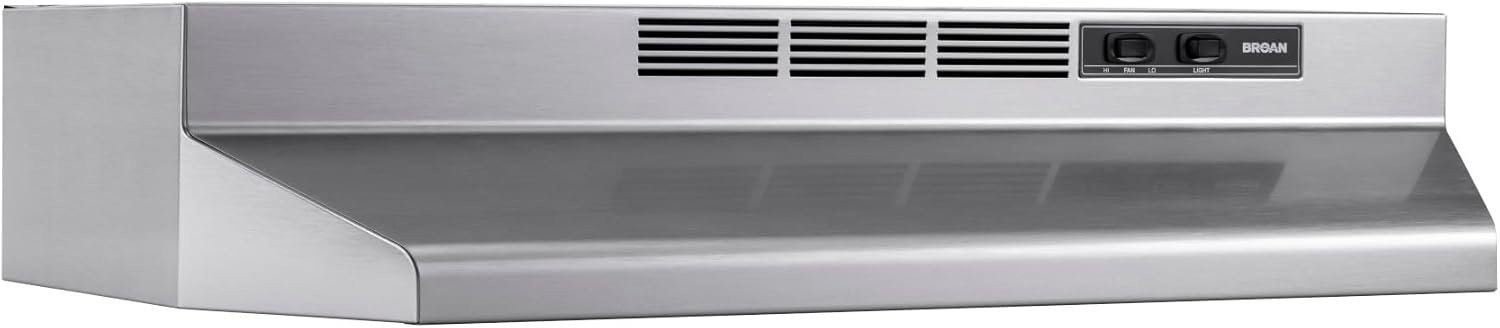
The Broan-NuTone 4130SF is a straightforward non-ducted under-cabinet range hood designed to clear smoke and odors where ducting is not an option. It recirculates air through a charcoal filter and offers two fan speeds controlled by rocker switches, plus a single incandescent light (bulb sold separately) to illuminate the cooktop. PrintGuard fingerprint-resistant stainless finish and scratch-resistant alloy steel construction make it easy to wipe clean and keep looking orderly in a busy kitchen. The removable charcoal filter is dishwasher-safe for simpler maintenance, and the permanently lubricated motor reduces the need for regular servicing. Expect practical, no-frills performance rather than high CFM extraction; this hood is best for everyday cooking tasks, light frying, and odor control in apartments or retrofit installs. Installation is typical for under-cabinet units and the included hardware and instructions simplify that process, but buyers should note the light is not LED and the two-speed blower limits fine-grain control compared with higher-end, ducted models.
Best for: Buyers seeking a reliable, low-maintenance non-ducted under-cabinet hood that blends with stainless appliances and improves kitchen air without complex installation.
Less Ideal for: Those who need high extraction power for heavy-duty cooking, precision fan speed control, or integrated LED lighting should consider more powerful ducted or premium convertible models.
- Fingerprint-resistant PrintGuard finish that wipes clean and resists scratches
- Ductless recirculation with charcoal filter for homes where venting is impossible
- Removable, dishwasher-safe filter and replaceable parts for easier maintenance
- Permanently lubricated motor for smoother long-term operation
- Simple two-speed rocker controls and under-cabinet fit for straightforward installation
- Uses an incandescent bulb rather than integrated LED lighting
- Only two fan speeds provide limited airflow control compared with higher-end hoods
Verdict: A practical, easy-to-clean ductless under-cabinet hood that delivers dependable odor and smoke recirculation for everyday home cooking.
FIREGAS 30-Inch Under Cabinet Range Hood

| Air Flow Capacity | 300 cfm |
|---|---|
| Noise | 45 db |
| Mounting Type | Under Cabinet Mount |
| Number of Speeds | 3 |
| Light Source | LED |
The FIREGAS 30-inch under-cabinet range hood delivers strong 300 CFM suction from a brushless DC motor while keeping noise low (around 45 dB) and using less power than traditional motors. It installs under a cabinet with top or rear venting and can be converted to ductless recirculation using the included carbon filter, which makes it a practical choice for kitchens that cannot run new ductwork. Controls are simple push buttons and the unit includes two bright LED lights plus removable aluminum mesh filters that are machine-washable for straightforward maintenance. The stainless steel body wipes clean and the slimmer profile fits tight spaces, but buyers should plan for standard electrical and vent cutouts and remember the charcoal filter must be replaced periodically when used ductless. The hood is a sensible, energy-conscious option for everyday cooking ventilation when a balance of performance, quiet operation, and easy upkeep is the priority.
Best for: A practical buyer who needs effective, energy-conscious ventilation without installing new ductwork and values quiet everyday performance and easy maintenance.
Less Ideal for: Those seeking a premium feature set like touch controls, automatic sensors, or very high CFM for heavy commercial-style cooking should look at higher-end or specialist models.
- Brushless DC motor provides 300 CFM suction with lower power draw than typical AC motors
- Convertible ducted or ductless installation lets you use it without external venting
- Quiet operation around 45 dB makes it unobtrusive during cooking
- Removable aluminum mesh filters are machine-washable for easy cleaning
- Built-in LED lighting brightens the cooktop while using little power
- Charcoal filter required for ductless use must be replaced over time
- Push-button controls offer basic functionality without advanced fan timers or auto modes
Verdict: Choose this hood if you want a quiet, energy-efficient 30-inch under-cabinet unit that can run ductless and is simple to maintain.
SNDOAS 30-inch Under Cabinet Range Hood

| Air Flow Capacity | 230 cfm |
|---|---|
| Noise | 56 db |
| Number of Speeds | 2 |
| Light Source | LED |
| Filter Type | Baffle |
This SNDOAS 30-inch under-cabinet hood is a budget-friendly option for kitchens that need basic ventilation without a lot of extra features. It delivers up to 230 CFM suction through either top or rear venting, and it can be installed as a recirculating (non-ducted) system using the included carbon cotton composite filter. Operation is straightforward with two rocker switches that control fan speed and the built-in 2W LED light, and the slim brushed stainless steel housing fits tight spaces common in apartments and small kitchens. The hood uses a three-layer aluminum mesh/baffle filter that is washable, which helps keep replacement costs down, but a full ductless conversion kit is sold separately if you want the factory-recommended kit. Noise is modest at about 56 dB on higher speed, so it is noticeable but not overpowering. Installation requires planning because the mounting is under-cabinet and the hood is hard-wired, and the top vent option needs an exhaust pipe (not included). For a simple, low-cost non-ducted hood, it covers the essentials without extras like variable speeds or a plug-in power option.
Best for: Buyers wanting an inexpensive, no-frills under-cabinet hood for apartments or small kitchens who prioritize compact design and basic recirculating ventilation.
Less Ideal for: Those seeking quiet, high-performance ventilation for heavy cooking, multiple speed settings, or a plug-in, tool-free installation should look elsewhere.
- Max 230 CFM airflow suitable for typical home cooking fumes
- Ducted or ductless recirculation option with included carbon filter
- Slim brushed stainless steel design fits small kitchens and under cabinets
- Washable multi-layer aluminum mesh filter reduces ongoing filter costs
- Simple rocker-switch controls and built-in LED light for straightforward use
- Only two fan speeds and a single low-wattage LED light limit fine control and brightness
- Hard-wired power requires electrical work or an adapter kit for plug-in convenience
- Ductless conversion kit and exhaust pipe required parts are sold separately
Verdict: A compact, budget-friendly range hood that gives straightforward ductless recirculation and decent 230 CFM airflow for small kitchens.
Broan-NuTone 30-Inch Ductless Hood 413001

| Mounting Type | Under Cabinet Mount |
|---|---|
| Number of Speeds | 2 |
| Light Source | Incandescent |
| Filter Type | Charcoal |
| Ventilation Type | recirculation |
The Broan-NuTone 413001 is a basic ductless under-cabinet range hood designed to improve kitchen air when external venting is not an option. It mounts under cabinetry, uses a replaceable charcoal filter to trap grease and neutralize odors, and offers independent rocker switches for the two-speed fan and integrated light. The hood accepts up to a 75W bulb (LED recommended) behind a protective lens to brighten the cooktop while keeping a low profile that preserves overhead storage. Installation can be hardwired or done with an optional power cord kit, and the hemmed bottom edges make cleaning safer. Practical benefits include straightforward operation, a compact 30-inch fit for standard ranges, and economical filtration for recirculating setups. Limitations are inherent to non-ducted designs: it cannot move air outside so it will not remove humidity as effectively as a vented hood and charcoal filters require periodic replacement to remain effective. Noise and airflow ratings are modest, reflecting its budget-focused, recirculating role rather than high-powered extraction.
Best for: Buyers who need a practical, low-profile recirculating hood for kitchens without ducting and who prioritize simple, proven ventilation and easy maintenance backed by broad user feedback.
Less Ideal for: Homes that require strong moisture or smoke removal or cooks who need high extraction power should choose a vented or higher-capacity hood instead.
- Compact 30-inch under-cabinet footprint fits standard ranges and preserves overhead storage.
- Replaceable charcoal filter enables non-ducted installation where external venting is impossible.
- Simple two-speed fan and independent light controls make operation intuitive.
- Accepts a 75W bulb for bright cooktop lighting and has a protective lamp lens for even illumination.
- Recirculating design cannot remove moisture and heat as effectively as ducted hoods.
- Charcoal filter performance degrades over time and requires replacement about every six months.
Verdict: Choose the Broan-NuTone 413001 when you need a straightforward, reliable ductless under-cabinet hood that delivers basic filtration and lighting where external venting is not possible.
COMFEE' 30-Inch Range Hood

| Air Flow Capacity | 200 cfm |
|---|---|
| Noise | 71 db |
| Number of Speeds | 2 |
| Light Source | LED |
| Voltage | 120 volts |
This COMFEE' 30-inch slim range hood is a compact under-cabinet vent designed to reduce cooking smoke and odors in small kitchens. It offers a convertible installation so you can use ducted venting or switch to ductless mode with the included aluminum mesh and activated carbon composite filters. Two exhaust speeds let you choose quieter, low-speed operation for light simmering or a stronger high setting for frying and broiling, and the LED lamp provides basic task lighting. The stainless steel body and removable mesh filter make surface cleaning straightforward, and the unit includes common mounting accessories for a typical retrofit. Noise at higher speeds is noticeable, and its 200 CFM capacity is geared to modest cooktops rather than heavy-duty commercial-style ranges. Replacement activated-carbon filters are recommended periodically for ductless use and are sold separately. For buyers who prioritize a space-saving, easy-to-install hood that handles everyday cooking, this model is a practical choice.
Best for: Buyers who want a straightforward, space-saving hood for condos or smaller kitchens and who prefer a low-risk, easy-install appliance with both ducted and ductless options.
Less Ideal for: Homes with large, high-output cooktops or users who need near-commercial extraction power should consider higher-CFM, professional-grade hoods instead.
- Convertible ducted or ductless installation for flexible ventilation setups
- Compact slim design fits typical 30-inch under-cabinet spaces and saves room
- Two fan speeds let you balance extraction power and noise
- Removable aluminum mesh filter and stainless steel finish are easy to clean
- Includes both mesh and activated-carbon composite filters for immediate ductless use
- Maximum airflow (200 CFM) and top-end noise level make it better suited to light to medium home cooking rather than heavy, high-BTU ranges
- Activated-carbon replacement filters need periodic replacement and are an extra cost
Verdict: A compact, flexible under-cabinet hood that gives risk-averse buyers a simple, convertible ducted-or-ductless solution for everyday cooking.
Choosing the Right Non Ducted Range Hood: Key Factors to Consider
Capture Efficiency and Placement
How well a non ducted range hood captures smoke and steam depends on capture efficiency and correct placement. A hood with higher capture efficiency will pull contaminants into the filters before they spread across the kitchen. Mounting height, hood width relative to the cooktop, and fan design all influence capture. In practical terms, choose a hood recommended for your cooktop width and follow mounting-height guidance to avoid drafts that reduce effectiveness.
Filtration Type and Replaceable Filters
Non ducted systems rely on filters to remove grease and odors rather than sending air outside. Look for models that offer a combination of grease-capturing filters and active odor control media. Grease filters should be easy to remove and either dishwasher-safe or cheap to replace. Charcoal or carbon odor filters vary widely in lifespan; some are replaceable cartridges while others are integrated and require periodic replacement. Pay attention to filter availability and cost because long-term performance depends on timely filter changes.
Noise and Fan Speed Controls
Because the fan cannot vent outdoors, non ducted hoods may need to run at higher speeds to maintain capture, which affects noise. Check how many fan speeds are available and whether the highest useful speed is excessively loud. Some hoods offer variable-speed motors or soft-start features that reduce noise at mid speeds. Consider noise ratings if your kitchen is open plan or if you frequently cook at times when quiet operation matters.
Installation Constraints and Venting Options
Non ducted hoods are often chosen for retrofit or compact kitchens, so installation flexibility matters. Confirm the electrical requirements, whether the hood supports top or rear recirculation kits, and the clearance needed above the cooking surface. Some designs allow reversible airflow or come with duct-free conversion kits included. If you plan to mount the hood over an island or in an alcove, verify recommended clearances and mounting hardware to avoid unexpected modification work.
Maintenance, Access, and Long-term Cost
Routine maintenance affects both performance and ownership cost. Hoods with tool-free filter access and washable components reduce upkeep time. Consider how often charcoal filters must be replaced and whether those parts are commonly stocked. Also think about lighting maintenance, such as bulb type and accessibility. A design that simplifies cleaning and filter replacement will keep capture efficiency high and extend the useful life of the unit.
Lighting and User Controls
Good task lighting and intuitive controls improve the day-to-day experience with a range hood. LED lights offer better energy efficiency and longer life than incandescent or halogen options. Controls should be easy to reach and simple to operate while cooking, with clear indicators for fan speed and filter service reminders if available. Consider whether the hood has features like delay-off timers, boost modes, or smart controls if those align with your cooking habits.
How Non Ducted Range Hoods Work
Non ducted range hoods recirculate kitchen air through grease and odor filters before returning it to the room. Unlike ducted hoods, which expel air outside, these units must rely on filtration and internal airflow patterns to reduce smoke and smells.
Understanding the limitations helps set realistic expectations. They are effective at controlling grease splash and light to moderate odors, but heavy smoke or high-volume frying may overwhelm recirculation systems without adequate filter maintenance and proper mounting height.
- Air is drawn in, passed through grease capture filters, then through charcoal or carbon media for odor control.
- Filter surface area and the fan's ability to move air across that surface determine practical filtration performance.
- Regular replacement or cleaning of filters is essential to maintain airflow and capture efficiency.
Sizing and Mounting Guidelines
Select a hood width that equals or slightly exceeds your cooktop width for best capture. Narrower hoods will lose capture near the edges when cooking on outer burners.
Follow the manufacturer's recommended mounting height above the cooktop. Too high reduces capture; too low can create heat and clearance issues. For non ducted units, slightly lower mounting within the recommended range often improves capture because the fan does not rely on a duct to pull air away.
- Measure cooktop width and compare to hood width recommendations.
- Check vertical clearance for island mounts versus wall-mounted units.
- Account for cabinet or shelf obstructions that can create recirculation dead zones.
Filter Maintenance Best Practices
Establish a cleaning schedule based on your cooking frequency and the type of food you prepare. Grease filters may need cleaning every 1 to 3 months for moderate cooking and more often for heavy frying. Charcoal filters have finite lifespans and often require replacement every 6 to 12 months depending on use.
When replacing filters, use OEM-equivalent parts sized to the unit to preserve airflow and fit. Keep a spare charcoal filter on hand if your cooking produces strong odors regularly.
- Wash metal grease filters in hot, soapy water or run through the dishwasher if rated safe.
- Replace carbon filters according to the recommended interval or sooner if odors persist.
- Record filter changes to keep maintenance on schedule.
Noise Management Tips
To reduce perceived noise, run the hood at lower speeds for longer periods rather than boosting to maximum only when smoke is already dispersed. Use timed boost modes after heavy cooking to clear lingering odors without sustained high-volume noise.
If noise is a primary concern, prioritize hoods with larger, lower-RPM fans which move the same air volume more quietly. Also check for vibration isolation in mounting hardware and tight seals around duct-free outlets to avoid rattles.
- Use intermediate fan speeds during routine cooking.
- Ensure the hood is mounted securely to eliminate vibration noise.
- Replace worn fan mounts or loose panels that cause additional noise.
When a Non Ducted Hood Is the Right Choice
Choose a non ducted range hood when ductwork installation is impractical or prohibited. They are well suited for apartments, retrofits, and kitchens where exterior venting would be costly or destructive.
Keep in mind that for intensive cooking that produces heavy smoke, a non ducted hood will require vigilant filter upkeep and may still be less effective than a properly sized ducted system. Match expectations to your cooking style and maintenance willingness.
- Ideal for light to moderate everyday cooking and situations where ducting is impossible.
- Not optimal for commercial-level frying or prolonged high-heat searing.
- Consider supplemental portable air cleaning or improved kitchen ventilation if heavy cooking is routine.
How We Chose the Best Non Ducted Range Hood
We focused on practical performance attributes that matter for non ducted operation. Primary evaluation criteria included capture efficiency at typical cooking heights, the quality and type of filtration provided, measured noise output at normal fan speeds, installation flexibility for tight or retrofit spaces, and long-term maintenance cost and ease. For capture efficiency we looked at documented airflow patterns and recommended mounting heights. Filtration assessment emphasized filter surface area, replaceable versus washable elements, and whether the system uses baffle, mesh, or charcoal filters for odor control. Noise measurements were considered at cooking speeds rather than maximum blower output. Installation filters favored units that support easy electrical hookups, reversible airflow, and compact mounting hardware. We excluded products that require permanent ducting or that lack recirculation-mode filters, because they do not serve the non ducted use case. The final list balances real-world kitchen usability with serviceability and verified venting behavior for recirculating setups.
Our full evaluation process is outlined in our review methodology.
FAQ
How often should I replace charcoal filters in a non ducted range hood?
Charcoal filter life depends on cooking frequency and odor intensity. Typical replacement intervals are six to twelve months for moderate home use. If you cook strong-smelling foods often, replace filters more frequently or keep spares on hand.
Can a non ducted range hood be as effective as a ducted one?
For light to moderate cooking, a properly sized and maintained non ducted hood can manage grease and odors effectively. However, for heavy smoke or high-volume frying, ducted systems generally outperform recirculation units because they remove air from the kitchen entirely.
Will running the hood on low speed still improve air quality?
Yes. Running the hood on a lower speed continuously can capture steady emissions and prevent odors from spreading. It is often quieter and more energy efficient than frequently using high speeds for short bursts.
Are metal grease filters dishwasher-safe?
Many metal mesh or baffle grease filters are dishwasher-safe, but you should verify the manufacturer's recommendations. Regular washing keeps grease from building up and maintains airflow. Avoid harsh detergents or high-heat cycles if the filter manufacturer advises against them.
Do non ducted hoods require special clearance from cabinets?
Yes. Even without ducting, recommended clearances matter for safety and capture efficiency. Follow the unit's specified mounting height above the cooktop and ensure surrounding cabinetry does not block airflow or trap heat.
Final Verdict
Non ducted range hoods are a practical solution when exterior venting is not feasible, but success depends on matching hood size, filter type, and mounting to your cooking habits. Prioritize capture efficiency and filter accessibility if you cook frequently, and weigh noise characteristics if your kitchen is part of an open floor plan. With proper installation and routine filter care, a ductless hood can keep kitchen air significantly cleaner and more comfortable.