
Note: This article contains affiliate links. If you click on these links and make a purchase, we may earn a small commission at no extra cost to you. This helps support our research and content. Read our full affiliate disclosure here.
If you cook with a gas range, the right range hood makes a big difference in kitchen air quality, safety, and comfort. A properly sized and powered hood removes combustion byproducts, grease, and odors before they spread through your home, and quieter units keep conversations and timers audible while you cook. This guide shortlists the top range hoods for gas range installation, focusing on models that balance extraction power, sensible noise levels, and practical maintenance features. Below you will find the top picks and the evaluation criteria used to select them, so you can match a hood to your cooktop layout and ventilation needs.
Top Picks at a Glance
| Best Overall The best all-around choice for most situations | Broan-NuTone Glacier BCSQ130SS |  |
| Best Quality Built to a higher standard if you want something more solid | Hauslane UC-PS18 Range Hood |  |
| Best Value The sweet spot between price and what you get | COMFEE' 30" Under Cabinet Range Hood |  |
| Best Budget The cheapest option that still gets the job done reliably | SNDOAS 30 Inch Under Cabinet Range Hood | 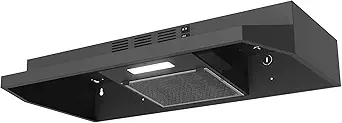 |
| Top Rated A top-rated pick with lots of positive feedback | Broan-NuTone 413001 30-Inch Range Hood |  |
| Most Popular A crowd favorite that many people choose with confidence | COMFEE' 30 Inch Range Hood |  |
| Best Seller A high-volume bestseller chosen again and again | SNDOAS 30" Under Cabinet Range Hood |  |
Broan-NuTone Glacier BCSQ130SS

| Air Flow Capacity | 375 cfm |
|---|---|
| Noise | 1.5 sones |
| Number of Speeds | 3 |
| Light Source | LED |
| Ventilation Type | recirculation |
The Broan-NuTone Glacier BCSQ130SS is an under-cabinet range hood insert designed to clear smoke and cooking odors from a typical home kitchen. It offers a convertible installation for ducted or recirculating setups and a three-speed push-button blower that can deliver up to 375 CFM for heavier cooking on a gas range while keeping noise low at around 1.5 sones on lower settings. The integrated LED module provides even overhead illumination, and two one-piece open mesh grease filters are dishwasher-safe for straightforward cleaning. Practical touches include hidden louvers to route exhaust away from cabinetry and mitered sides with a hemmed bottom for a finished look. Limitations include the basic push-button controls with no fan memory or variable speed increments, and the recirculation option requires additional filters sold separately, which is an extra ongoing cost. For most home kitchens the Glacier balances power, low noise, and easy maintenance without extra smart features.
Best for: A practical homeowner seeking a reliable, mid-power under-cabinet hood that balances performance, quiet operation, and easy maintenance for everyday gas-range cooking.
Less Ideal for: Users who want smart controls, multi-stage variable blower speeds, or the highest-end commercial-grade extraction for very heavy-duty cooking.
- Up to 375 CFM capacity suitable for typical gas-range ventilation needs
- Three-speed push-button control for quick fan adjustments
- Integrated LED light module that illuminates the cooktop
- Two dishwasher-safe open mesh grease filters for easy cleaning
- Basic push-button controls lack variable speeds or advanced features
- Recirculation requires separate replacement filter purchase
Verdict: A balanced under-cabinet hood that delivers solid extraction, quiet operation, and easy upkeep for everyday gas-range kitchens.
Hauslane UC-PS18 Range Hood

| Air Flow Capacity | 860 cfm |
|---|---|
| Number of Speeds | 6 |
| Noise | 7 sones |
| Ventilation Type | Ducted |
| Filter Type | Baffle |
The Hauslane UC-PS18 is a heavy-duty under-cabinet range hood built for high-output cooking on gas ranges. It delivers up to 860 CFM through ducted venting and offers six fan speeds plus a delay shutoff so you can dial suction and noise to match searing or simmering. The dual-motor design and baffle filters are aimed at capturing grease and smoke from intense cooking, and the stainless steel filters are dishwasher-safe for easier maintenance. Controls are a straightforward touch panel and the hood includes GU10-compatible LED lights so you can match kitchen color temperature. Installation is flexible thanks to three-way venting adapters (6" round and rectangular options) to fit typical ductwork. Expect perceptible noise at higher speeds—the listing notes about 7 sones—so while performance is strong, the loudest settings are best for short, heavy cooking bursts rather than extended quiet use. The unit comes with a lifetime motor warranty and basic accessories to simplify setup. For a gas range where powerful extraction matters, this hood focuses on moving air and managing grease effectively.
Best for: Buyers who prioritize strong extraction for gas-range cooking and want a robust under-cabinet hood that handles heavy frying, searing, and high-heat cooking reliably.
Less Ideal for: Those seeking whisper-quiet continuous ventilation or a ductless/recirculating solution should consider other models; small cooktops with minimal smoke needs may be overpowered by this unit.
- High maximum airflow rated at 860 CFM for effective smoke and odor removal
- Six fan speeds and delay shutoff let you balance suction and noise for different cooking tasks
- Stainless steel baffle filters are dishwasher-safe and good at trapping grease
- Three-way venting (6" round and rectangular adapters) simplifies installation into existing ductwork
- Includes GU10 LED lights and touch controls for convenient operation
- Noise can be noticeable on high settings (listed at about 7 sones)
- Requires ducted venting; not a recirculating/ductless option
Verdict: If you need strong, reliable extraction for a gas range, the UC-PS18 delivers powerful airflow and grease-handling in an under-cabinet package.
COMFEE' 30" Under Cabinet Range Hood

| Air Flow Capacity | 200 cfm |
|---|---|
| Noise | 71 db |
| Number of Speeds | 2 |
| Light Source | LED |
| Ventilation Type | both |
This COMFEE' 30-inch under-cabinet range hood is a compact vent solution for kitchens that need straightforward smoke and odor control. It delivers up to 200 CFM through two-speed push-button controls, so you can run a low setting for light simmering or a high setting for heavier frying on a gas range. The unit supports both ducted and ductless operation and ships with an aluminum mesh filter plus an activated carbon composite filter for recirculation setups. The slim powder-coated metal housing saves cabinet space and includes an LED light for cooktop illumination. Noise is noticeable at the high setting but in line with basic range hoods; the mesh filter is dishwasher-safe which simplifies maintenance. Installation requires standard under-cabinet mounting and either a duct connection or setting up the recirculation filter, and the hood uses an E26 bulb (sold separately). It is a practical, no-frills choice for renters or homeowners who need competent ventilation without complex features.
Best for: Buyers who want a compact, effective ventilation upgrade for a gas range and prioritize simple installation, basic controls, and easy filter maintenance.
Less Ideal for: Those seeking very quiet operation, advanced multi-speed or smart controls, or professional-grade high-CFM ventilation for heavy commercial-style cooking.
- 200 CFM airflow suitable for most home gas range tasks
- Supports both ducted and ductless installation for flexible placement
- Slim under-cabinet profile saves space and fits standard 30-inch openings
- Includes aluminum mesh and activated carbon composite filters for odor capture
- Dishwasher-safe aluminum mesh filter makes cleaning easier
- Limited two-speed control offers less fine-tuning than variable-speed models
- Noise level reaches 71 dB at high fan speed which can be loud during heavy cooking
- Requires separate E26 bulb purchase as lamp is not included
Verdict: A space-saving, practical under‑cabinet hood that gives reliable 200 CFM ventilation and easy maintenance for typical home gas-range cooking.
SNDOAS 30 Inch Under Cabinet Range Hood

| Air Flow Capacity | 230 cfm |
|---|---|
| Number of Speeds | 2 |
| Mounting Type | Under Cabinet Mount |
| Light Source | LED |
| Ventilation Type | convertible |
The SNDOAS 30-inch under-cabinet range hood is a budget-friendly ventilator designed for smaller kitchens and gas ranges that need basic smoke and odor control. It installs under a cabinet and can be configured for ducted top or rear exhaust or set up as ductless using the included carbon cotton composite filter. The unit uses a two-speed rocker switch to switch between low and high ventilation and provides a 230 CFM airflow that handles routine stovetop cooking without being overly loud or complex. An integrated LED light improves cooktop visibility while using less energy than halogen bulbs, and a three-layer aluminum mesh combined with carbon filter captures grease and reduces smells in recirculation mode. Practical limits are its moderate 230 CFM suction, which may struggle with heavy, continuous high-BTU gas cooking, and the hardwired electrical connection requires either professional wiring or an additional optional cord kit. For straightforward installations that need a slim, affordable hood, this model covers the essentials without extra features.
Best for: Buyers looking for a low-cost, space-saving under-cabinet hood to control everyday smoke and odors in small kitchens with a gas range and who prioritize value over high-end extraction.
Less Ideal for: Homes with very powerful gas ranges or frequent heavy frying where stronger, higher-CFM ventilation and advanced noise control are required.
- Convertible ducted or ductless installation with included carbon composite filter for flexibility
- Energy-efficient integrated LED light for better cooktop visibility
- Slim under-cabinet profile that saves space and fits tight kitchens
- Three-layer aluminum mesh plus carbon layer helps trap grease and odors
- 230 CFM airflow is moderate and may be underpowered for heavy, high-BTU gas cooking
- Hardwired power requires electrician or buying an optional power cord kit
Verdict: A slim, affordable under-cabinet hood that gives small kitchens flexible ducted or ductless ventilation and basic, energy-efficient lighting for everyday gas-range use.
Broan-NuTone 413001 30-Inch Range Hood

| Mounting Type | Under Cabinet Mount |
|---|---|
| Number of Speeds | 2 |
| Ventilation Type | recirculation |
| Filter Type | Charcoal |
| Voltage | 120 volts |
The Broan-NuTone 413001 is a simple, reliable ductless under-cabinet range hood built for kitchens that cannot use external venting. It provides two fan speeds controlled by push-button rockers and an integrated light fixture that accepts up to a 75 W bulb, letting you adjust airflow and task lighting independently while cooking. The hood uses a replaceable charcoal filter for grease and odor capture, so routine maintenance is limited to swapping the filter every few months. Its compact rectangular design keeps overhead storage usable and the hemmed bottom edges make cleaning safer. Because it is non-vented, it is best at reducing smells and particulates in smaller kitchens rather than removing large volumes of combustion byproducts from a high-output gas range. Installation can be hardwired or routed through an optional power cord kit, which adds flexibility for different kitchen setups. For buyers seeking straightforward, long-lasting ventilation without ductwork, this model delivers dependable performance with minimal fuss.
Best for: Home cooks who need a dependable, no-frills ventilation solution where ducting is not possible and who prioritize straightforward maintenance and long-term reliability.
Less Ideal for: Homes with high-BTU gas ranges or large open kitchens that require powerful ducted exhaust to remove combustion byproducts and large smoke loads.
- Two-speed fan with independent light control for simple, usable ventilation and task lighting
- Replaceable charcoal filter for odor and grease capture in non-ducted installations
- Compact under-cabinet design preserves overhead storage and is easy to clean
- Can be hardwired or used with an optional power cord kit for installation flexibility
- Ductless design cannot expel combustion gases outdoors, limiting effectiveness on high-output gas ranges
- Light uses up to 75 W bulb (bulb not included) so preferred LED must be purchased separately
Verdict: Choose this Broan-NuTone 30-inch ductless hood if you want a no-nonsense, reliable recirculation vent that is easy to install and maintain where ducting is not an option.
COMFEE' 30 Inch Range Hood

| Air Flow Capacity | 200 cfm |
|---|---|
| Noise | 71 db |
| Number of Speeds | 2 |
| Light Source | LED |
| Voltage | 120 volts |
This COMFEE' 30-inch under-cabinet range hood is a slim stainless steel unit designed to clear cooking smoke and odors from a typical home kitchen. It delivers up to 200 CFM through two fan speeds, making it suitable for light to moderate cooking like simmering, broiling, and stir-frying. The hood is convertible between ducted and ductless setups and ships with both a reusable aluminum mesh filter and an aluminum-plus-activated-carbon composite filter for odor control. Controls are touch-based and the unit includes an LED light and a dishwasher-safe mesh filter for easier cleaning. At higher suction the reported noise level reaches around 71 dB, so it is louder under load than quieter premium models. Installation is wall-mount under-cabinet style and the slim profile fits tight spaces common in condos and smaller kitchens. For gas-range users cooking at moderate levels this hood helps reduce visible smoke and smells, but serious heavy-duty frying or large professional cooktops may need a higher-capacity, quieter model.
Best for: Home cooks with a gas range who want an affordable, space-saving under-cabinet hood that removes smoke and odors in condos or smaller kitchens and values easy cleaning and simple controls.
Less Ideal for: Those who frequently do heavy-duty frying, run large burners at high output, or need whisper-quiet operation should choose a higher-capacity, lower-noise professional-style hood instead.
- Convertible ducted or ductless installation with included filters
- 200 CFM airflow suitable for typical home cooking
- Slim stainless steel body that fits under cabinets and is easy to clean
- Touch controls and integrated LED lighting for everyday convenience
- Noise rises to about 71 dB on high, which is noticeable during use
- Two-speed fan offers limited fine control compared with multi-speed or variable models
Verdict: A compact, convertible 30-inch hood that gives gas-range cooks practical 200 CFM ventilation and easy maintenance for everyday home cooking.
SNDOAS 30" Under Cabinet Range Hood

| Air Flow Capacity | 230 cfm |
|---|---|
| Noise | 56 db |
| Number of Speeds | 2 |
| Light Source | LED |
| Ventilation Type | Recirculation |
This SNDOAS 30-inch under-cabinet hood is a compact, budget-friendly ventilation option for small kitchens and gas ranges that need basic exhaust performance. It delivers up to 230 CFM airflow through a two-speed fan and can be installed as ducted (top or rear) or ductless recirculation using the included carbon composite filter for situations where an outside vent is not available. The slim stainless steel housing and built-in 2W LED light keep the cooking area illuminated while the three-layer aluminum mesh filter traps grease before it reaches the blower. Controls are simple rocker switches, which are easy to use but lack finer speed control. Noise is listed at 56 dB, so it is reasonably quiet on low but more noticeable on high. Installation requires hard-wiring and, for top venting, a separately purchased exhaust pipe, so plan for basic electrical and ductwork or the ductless kit if needed. For buyers who want straightforward ventilation with an unobtrusive profile, this hood covers the essentials without extras.
Best for: Buyers who prioritize reliable, no-frills ventilation for a small kitchen or condo and want a simple, factory-quality under-cabinet hood that can run ductless when outside venting is not available.
Less Ideal for: Those who need high-end performance for heavy commercial-style cooking, variable fan speed control, or a plug-in/hard-plug convenience without electrical work should look elsewhere.
- Max 230 CFM airflow suitable for everyday cooking and gas ranges in small kitchens
- Ducted or ductless installation options allow flexible placement where an exterior vent may not exist
- Slim stainless steel design fits under cabinets and provides a built-in LED light for the cooktop
- Three-layer aluminum mesh plus included carbon cotton composite filter helps trap grease and odors
- Only two fan speeds with rocker switches limit fine control over ventilation power
- Requires hard-wiring and additional exhaust pipe for top venting, which may need professional installation
Verdict: A compact, straightforward under-cabinet hood that provides adequate 230 CFM ventilation and flexible ducted or ductless installation for risk-averse buyers seeking dependable performance.
Choosing the Right Range Hood for Gas Range: Key Factors to Consider
Airflow Capacity
Airflow capacity, typically measured in cubic feet per minute, dictates how quickly a hood can remove smoke, steam, and combustion byproducts from a kitchen. For gas ranges, higher CFM is often necessary, especially with powerful burners or frequent high-heat cooking. Selecting a hood with adequate airflow reduces lingering smells and lowers the chance of smoke triggers and backflow.
Keep in mind that duct length, bends, and grille size reduce effective airflow. A hood rated for high CFM will not perform to spec if installed on long or restrictive duct runs, so factor in your ventilation run when choosing capacity.
Capture Area and Hood Size
The hood must cover the cooking surface sufficiently to capture rising gases and grease-laden vapors. Wider or deeper hoods are better at intercepting plume spread from multiple burners and when using griddles or large pots. For gas ranges, even small offsets in capture area can let combustion byproducts escape into the room.
Consider the hood mounting height and whether the design concentrates airflow across the cooktop. Wall-mounted, island, and under-cabinet configurations each have different capture dynamics, so match size and shape to your range layout.
Noise Level During Operation
Noise affects how comfortable your kitchen environment is during cooking. Range hoods can be loud at higher extraction rates, which may discourage consistent use. Look for measured noise ratings at typical and boost speeds so you can compare real-world performance.
Also consider whether the blower is internal or remote. Remote blowers mounted outside or in a mechanical room reduce in-kitchen noise but add installation complexity and potential extra cost. For frequent cooking, a quieter hood encourages use at appropriate speeds, improving air quality.
Filtration and Ease of Cleaning
Gas cooking produces grease that collects in filters and ductwork. Effective grease capture extends duct life and keeps exhaust paths clear. Metal baffle or mesh filters are common; baffle filters typically shed grease better and are dishwasher-safe, making maintenance easier. Some designs include charcoal or carbon inserts for recirculating setups.
Consider filter accessibility and replacement cost. Filters that are easy to remove and clean will increase the likelihood of regular maintenance, which preserves both performance and indoor air quality.
Venting Options and Installation
How a hood vents—ducted straight out, through the roof, or recirculated—affects performance and compatibility with your kitchen. Ducted installations remove contaminants entirely but require proper duct sizing and routing. Recirculating hoods can work where ducting is impossible, but they rely on filters and typically deliver lower overall removal efficiency.
Installation complexity, available wall or ceiling structure, and clearance requirements determine which models are viable. Measure available space and plan for electrical and ductwork needs before choosing to avoid costly modifications.
Control Layout and Useability
Controls that are easy to use encourage proper hood operation at the right speeds. Look for intuitive switches, multiple fan speeds, and a high boost or purge mode for heavy cooking. Lighting quality and placement also matter for task visibility over the cooktop.
Durable, easy-to-clean control elements resist grease buildup and keep the hood functioning reliably over time. Consider whether you want manual buttons, push controls, or more advanced options like variable speed sliders.
Sizing the Hood to Your Range
Match the hood width to your cooktop width to ensure full coverage. For most ranges, a hood the same width or slightly wider provides the best capture area and helps prevent plume escape during heavy simmering or frying.
Height above the burners affects both capture efficiency and safety. Follow recommended mounting heights for your type of hood so the unit can intercept heat and vapors without being too close to open flames.
- Typical guideline: hood width = cooktop width or wider
- Adjust CFM requirement upward for frequent high-heat cooking
- Maintain recommended clearance between burners and hood face
Ducting Basics and Performance
Duct size and routing significantly influence a hood's effective performance. Short, straight runs with large-diameter ducting preserve airflow and reduce blower strain. Each 90-degree turn and restrictive grille reduces static pressure and lowers delivered CFM.
Use smooth-walled ducting where possible and avoid flexible duct segments for long runs. If installation requires long or complex ducts, consider a hood with higher rated CFM or a remote blower to maintain adequate exhaust.
- Prefer 6-inch or larger round duct runs for higher airflow
- Minimize bends and long horizontal sections
- Consider external or inline blowers for complex duct runs
Recirculation Vs Ducted Exhaust
Ducted exhaust removes contaminants from the building envelope and is the preferred method for gas cooking when feasible. It prevents reintroducing combustion byproducts into living areas and tends to provide better long-term odor control.
Recirculating hoods can be useful where ducting is impossible. They rely on filters to trap grease and carbon inserts to reduce odors, but they will not remove moisture and combustion gases. Use recirculation as a compromise rather than a first choice for gas ranges.
- Ducted = best overall removal performance
- Recirculating = easier installation but lower removal efficiency
- If recirculating, prioritize models with effective grease and carbon filters
Maintaining Performance Over Time
Routine maintenance keeps a hood operating near its rated performance. Clean or replace filters on a schedule based on cooking frequency and grease load. Inspect ductwork periodically for grease buildup if accessible.
Replacing light bulbs, cleaning control surfaces, and checking fasteners preserve functionality. A well-maintained unit will keep extraction high, lower noise from clogged filters, and reduce the chance of grease-related fire hazards.
- Clean dishwasher-safe filters every 1 to 3 months depending on use
- Inspect duct connections annually
- Wipe internal surfaces to prevent grease accumulation
Lighting and Task Visibility
Good hood lighting improves safety and cooking precision. Choose a hood with bright, evenly distributed illumination across the cooktop and adjustable intensity if available. LED lamps offer long life and lower heat output compared with older lamp types.
Consider the color temperature and placement so that pans and surfaces are clearly visible without harsh glare. Integrated dimmable options increase flexibility for cooking and entertaining.
- Prefer LED lighting for longevity and low heat
- Multiple lights across the hood reduce shadows
- Dimmable lights add flexibility for different cooking tasks
How We Chose the Best Range Hood for Gas Range
We prioritized criteria that directly affect performance and real-world usability on gas ranges. Airflow capacity and capture efficiency were primary filters because gas burners produce combustion byproducts and heat that must be removed quickly. Noise level at cooking speeds was evaluated so units would be tolerable during extended use. Grease management and filter design were examined to reduce maintenance time and prevent buildup that reduces efficiency. Venting flexibility and installation considerations were factored in to reflect typical kitchen configurations and retrofit constraints. Durability and control ergonomics rounded out the selection factors to ensure daily reliability and ease of use. Excluded from our shortlist were underpowered hoods that cannot meet minimum extraction rates for gas cooking and units lacking adequate grease filtration. We also filtered out designs unsuitable for common installation types. The final picks represent a balance of measured airflow, manageable noise, effective grease capture, installation versatility, and durable construction.
Our full evaluation process is outlined in our review methodology.
FAQ
How powerful should a range hood be for a gas range?
Power needs depend on burner output and cooking habits. Generally, higher CFM is better for frequent high-heat cooking. Account for duct length and bends because these reduce effective airflow and may require a higher-rated unit.
Can I use a recirculating hood with a gas range?
Yes, but it is a compromise. Recirculating hoods trap grease and reduce odors with filters, but they do not remove combustion gases or moisture from the home. Ducted exhaust is preferable when possible for gas cooking.
What filter type is best for grease from gas cooking?
Baffle-style metal filters are effective at capturing grease and are usually dishwasher-safe, making them easy to maintain. Mesh filters work but can clog faster and may require more frequent cleaning.
Will a louder hood always be more effective?
Not necessarily. Louder operation can indicate higher fan speed, but efficiency depends on ducting, capture design, and how well the hood matches the range. A well-designed hood with proper ducting can be effective at moderate noise levels.
How high should I mount the hood above a gas range?
Recommended mounting height varies by hood design but typically falls within a specified range to balance capture and safety. Follow the manufacturer's recommended clearance for the specific hood type to ensure both effective ventilation and safe operation.
Final Verdict
Choosing the right range hood for a gas range means balancing extraction capacity, capture geometry, and acceptable noise. Prioritize a hood with adequate CFM for your burners, good capture area, and grease management that fits your installation constraints. If ducting is possible, favor vented exhaust for the best removal of combustion byproducts; if not, pick a recirculating unit with strong filtration and easy maintenance. Focus on installation compatibility and maintenance needs when making the final decision. That approach will keep your kitchen safer, reduce lingering odors, and make everyday cooking more comfortable.