
Note: This article contains affiliate links. If you click on these links and make a purchase, we may earn a small commission at no extra cost to you. This helps support our research and content. Read our full affiliate disclosure here.
Picking the right oscillating fan for bedrooms matters because bedroom fans affect sleep quality, thermal comfort, and nightly noise. A poorly chosen fan can be too loud, fail to move air evenly, or create bothersome drafts that disturb sleep. This guide narrows the field to the top shortlisted oscillating fans for bedrooms, focusing on units that deliver steady airflow, low noise, and user-friendly controls. We evaluated options across noise output, airflow coverage, oscillation range, and ease of placement so you can quickly find a model that fits your room layout and sleep preferences. Read on for the top picks and the criteria we used to select them.
Top Picks at a Glance
| Best Overall The best all-around choice for most situations | Levoit Classic 36-inch Tower Fan |  |
| Best Quality Built to a higher standard if you want something more solid | Vornado 6803 OSC Pedestal Circulator |  |
| Best Value The sweet spot between price and what you get | Amazon Basics 16" Pedestal Fan |  |
| Best Budget The cheapest option that still gets the job done reliably | Lasko 2520 Oscillating Pedestal Fan | 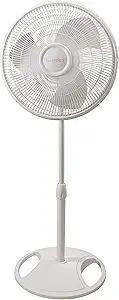 |
| Top Rated A top-rated pick with lots of positive feedback | DREO TurboPoly Fan 512 |  |
| Most Popular A crowd favorite that many people choose with confidence | Honeywell TurboForce HT-900 |  |
| Best Seller A high-volume bestseller chosen again and again | DREO Tower Fan 307 |  |
Levoit Classic 36-inch Tower Fan

| Number of Speeds | 5 |
|---|---|
| Noise Level | 28 db |
| Wattage | 39 watts |
| Air Flow Capacity | 1044 cfm |
| Control Method | Remote |
The Levoit Classic 36-inch tower fan is a bedroom-oriented oscillating fan that delivers a wide range of airflow from a gentle breeze up to a strong 28 ft/s stream. It is typically used as a standing floor fan for sleeping areas, living rooms, or home offices where low noise and whole-room circulation matter. Key features include five speed levels, four operating modes (Normal, Turbo, Sleep, Auto), a 90 degree oscillation sweep, a built-in temperature sensor that adjusts fan speed in Auto mode, a 12-hour timer and a small remote for convenient control from bed. The fan runs quietly on low (listed 28 dB) and the Advanced Sleep mode dims the display and mutes sound after a few seconds, which helps for light sleepers. Practical benefits are easy cleaning via a removable back grille, a slim footprint that fits narrow spaces, and an AC motor that moves a strong 1044 cfm of air. Important limitations are the plastic construction and reliance on a standard wall outlet, and while it offers robust airflow it does not cool air like an air conditioner so placement and oscillation matter for best coverage.
Best for: Buyers who want a quiet, adjustable, whole-room oscillating fan for bedrooms and shared living spaces prioritizing low noise and simple automated control.
Less Ideal for: People who need true cooling or humidity control should choose an air conditioner or dehumidifier instead, and buyers seeking a heavy-duty metal fan for industrial use should look elsewhere.
- Five speed levels and four modes provide flexible airflow for sleeping, cooling, or quick circulation.
- Built-in temperature sensor with Auto mode adjusts speeds to room temperature for hands-off operation.
- Very quiet on low settings and an Advanced Sleep mode reduces display and sound for bedroom use.
- 90° oscillation and 1044 cfm airflow move air across a wide area for whole-room circulation.
- Slim tower design and removable back grille make placement and cleaning straightforward.
- Plastic construction may feel less durable than metal alternatives.
- No active cooling or dehumidification — it only moves ambient air.
Verdict: A quiet, easy-to-use bedroom tower fan that balances strong whole-room airflow with sleep-friendly features and automated temperature-based speed control.
Vornado 6803 OSC Pedestal Circulator

| Number of Speeds | 4 |
|---|---|
| Wattage | 60 watts |
| Air Flow Capacity | 992 cfm |
| Control Method | Touch |
| Motor Type | Brushless |
The Vornado 6803 OSC is a pedestal circulator built to move a lot of air across a bedroom or similar-sized room while giving flexible control options. It uses Vornado's vortex-style airflow and a brushless motor to produce high volume circulation (listed at 992 cfm) and offers four speeds plus an auto mode that adjusts speed based on conditions. The head tilts and the stand height adjusts so you can direct airflow vertically or horizontally, and 90º oscillation helps distribute air across a sleeping area. Controls are available on the front touch panel or the included remote, and the unit adds a convenient aromatherapy pad and an energy-saving timer for scheduled shutoff. Practical benefits include strong whole-room air movement, quiet-efficient brushless motor operation, and simple remote/touch control for bedside use. Trade-offs are typical for a high-volume pedestal fan: it is a large floor unit that takes more footprint than a table fan and is plastic-bodied rather than metal, and aromatherapy is basic rather than integrated into airflow controls.
Best for: Buyers who prioritize strong, performance-focused airflow for a bedroom and want straightforward controls plus oscillation for even circulation.
Less Ideal for: If you need a compact tabletop fan or a premium metal design for decor, this full-size pedestal circulator is not the best choice.
- Very high airflow capacity for whole-room circulation (992 cfm)
- Adjustable tilt and height plus 90º oscillation for targeted or sweeping coverage
- Included remote and front touch controls make bedside adjustments easy
- Auto mode and timer help save energy and reduce manual changes
- Large footprint requires floor space and may not suit small bedside tables
- Plastic construction is lighter-feeling than metal alternatives
Verdict: Choose the 6803 OSC when you want a high-volume, adjustable pedestal circulator that delivers strong whole-room airflow and easy bedside control.
Amazon Basics 16" Pedestal Fan

| Power Source | Corded Electric |
|---|---|
| Number of Speeds | 3 |
| Wattage | 60 watts |
| Motor Type | AC |
| Controller Type | Remote Control |
This 16-inch Amazon Basics pedestal fan is a straightforward option for bedroom airflow and general room circulation. It uses an efficient AC motor that delivers usable breeze on three speed settings and three preset modes (normal, nature, sleep), and the oscillation plus adjustable height and tilt let you aim airflow across a bed or seating area. The included remote and timer make it easy to change settings from across the room without climbing out of bed, and the six-blade, dual-layered design pushes a steady stream of air while remaining relatively quiet for sleeping environments. Assembly is typical of floor fans and its plastic/metal construction feels functional rather than premium. Limitations are basic: only three speeds, no smart-home connectivity, and a corded power source, so there is no battery backup or app control. For someone seeking simple, reliable air circulation in a bedroom, it covers the essentials without complexity.
Best for: Buyers who prioritize a practical, no-frills bedroom fan that provides reliable airflow, easy remote operation, and adjustable positioning without extra smart features.
Less Ideal for: Anyone wanting app control, multiple fan speeds beyond basic settings, or a premium metal-only construction should consider other options.
- Quiet, energy-efficient 60W AC motor suitable for bedrooms
- Remote control and timer for convenient bedside adjustments
- Adjustable height, tilt, and oscillation to direct airflow where needed
- Three modes and three speeds provide simple customization
- No smart-home or app connectivity
- Only three speed settings may limit fine-grained control
Verdict: A practical, quiet pedestal fan with remote and adjustable airflow that delivers reliable bedroom cooling without unnecessary extras.
Lasko 2520 Oscillating Pedestal Fan

| Blade Diameter | 16 inches |
|---|---|
| Number of Speeds | 3 |
| Wattage | 91 watts |
| Power Source | Corded Electric |
| Motor Type | AC |
The Lasko 2520 is a straightforward pedestal fan built to move air across a bedroom or living area without fuss. It offers three quiet speed settings and widespread oscillation so you can pick a gentle nighttime breeze or stronger airflow for hotter hours, while the tilt-back head and adjustable height (up to 47 inches) let you aim air where you need it. The unit uses an AC motor and four plastic blades, and assembles without tools for quick setup and easy portability. Safety features include Blue Plug fault protection and ETL listing. Practical benefits are reliable, no-frills cooling, simple rotary controls, and a low weight that makes repositioning easy. Limitations are the basic manual controls with no remote or timer, a modest number of speed options compared with higher-end models, and plastic construction that is functional but less premium-feeling. For bedroom use the fan is effective at improving circulation and sleep comfort, but buyers wanting advanced controls or especially high airflow may prefer more feature-rich or high-velocity models.
Best for: Buyers who need an affordable, easy-to-use bedroom fan that provides reliable circulation and simple controls for everyday cooling.
Less Ideal for: People who want remote control, programmable features, or the highest possible airflow for large open rooms should consider more advanced models.
- Adjustable height and tilt-back head for directed airflow
- Three quiet speed settings suitable for nighttime use
- Widespread oscillation covers a larger area of the room
- Tool-free assembly and lightweight for easy setup and moving
- No remote, timer, or advanced controls
- Plastic construction and basic finish feel budget-oriented
Verdict: A budget-friendly, no-frills pedestal fan that delivers dependable bedroom cooling with simple controls and adjustable airflow.
DREO TurboPoly Fan 512

| Power Source | dc |
|---|---|
| Number of Speeds | 9 |
| Noise Level | 28.2 db |
| Air Flow Capacity | 1150 cfm |
| Wattage | 24 watts |
The DREO TurboPoly Fan 512 is a 42-inch pedestal air circulator that combines a DC motor, wide oscillation, and multiple speed and mode options to move air across a bedroom or living space. It is typically used as a whole-room fan or bedside circulator: you can set the 120° horizontal sweep and manually adjust the 120° vertical tilt to direct airflow, pick one of four modes and nine speeds, and control settings via the touchpad or included remote. The brushless DC motor and turbine-style blades produce high airflow (listed at 1150 cfm) while running quietly at low speeds, making it suitable for night use. Practical features include an LED display, an 8-hour timer, adjustable height, and easy disassembly for cleaning. Trade-offs are that vertical tilt is manual rather than motorized and the fan is plastic-bodied, which keeps weight down but feels less premium than metal alternatives. For bedroom use it balances strong room circulation with low noise and energy-efficient DC operation, though users wanting fully motorized vertical adjustment or a heavier-duty build may prefer different models.
Best for: Buyers who prioritize a reliable, energy-efficient bedroom fan that runs quietly while delivering strong room circulation and simple remote control.
Less Ideal for: People who need motorized vertical aiming or a heavier metal-bodied fan for workshop or outdoor use should consider other options.
- Brushless DC motor for quieter operation and better energy efficiency than comparable AC fans
- Wide 120° horizontal oscillation and manual 120° vertical tilt for broad coverage
- Nine speeds and four modes plus remote and touchpad controls for flexible use
- High reported airflow (1150 cfm) suitable for whole-room circulation
- LED display, adjustable height, and easy disassembly for cleaning
- Vertical tilt must be adjusted by hand rather than by remote or motorized control
- Plastic construction may feel less durable or premium compared with metal fans
Verdict: Choose this fan if you want a quiet, energy-efficient pedestal fan that reliably circulates air across a bedroom with flexible speed and remote control.
Honeywell TurboForce HT-900
| Number of Speeds | 3 |
|---|---|
| Wattage | 35 watts |
| Air Flow Capacity | 185 cfm |
| Motor Type | brushless |
| Power Source | Corded Electric |
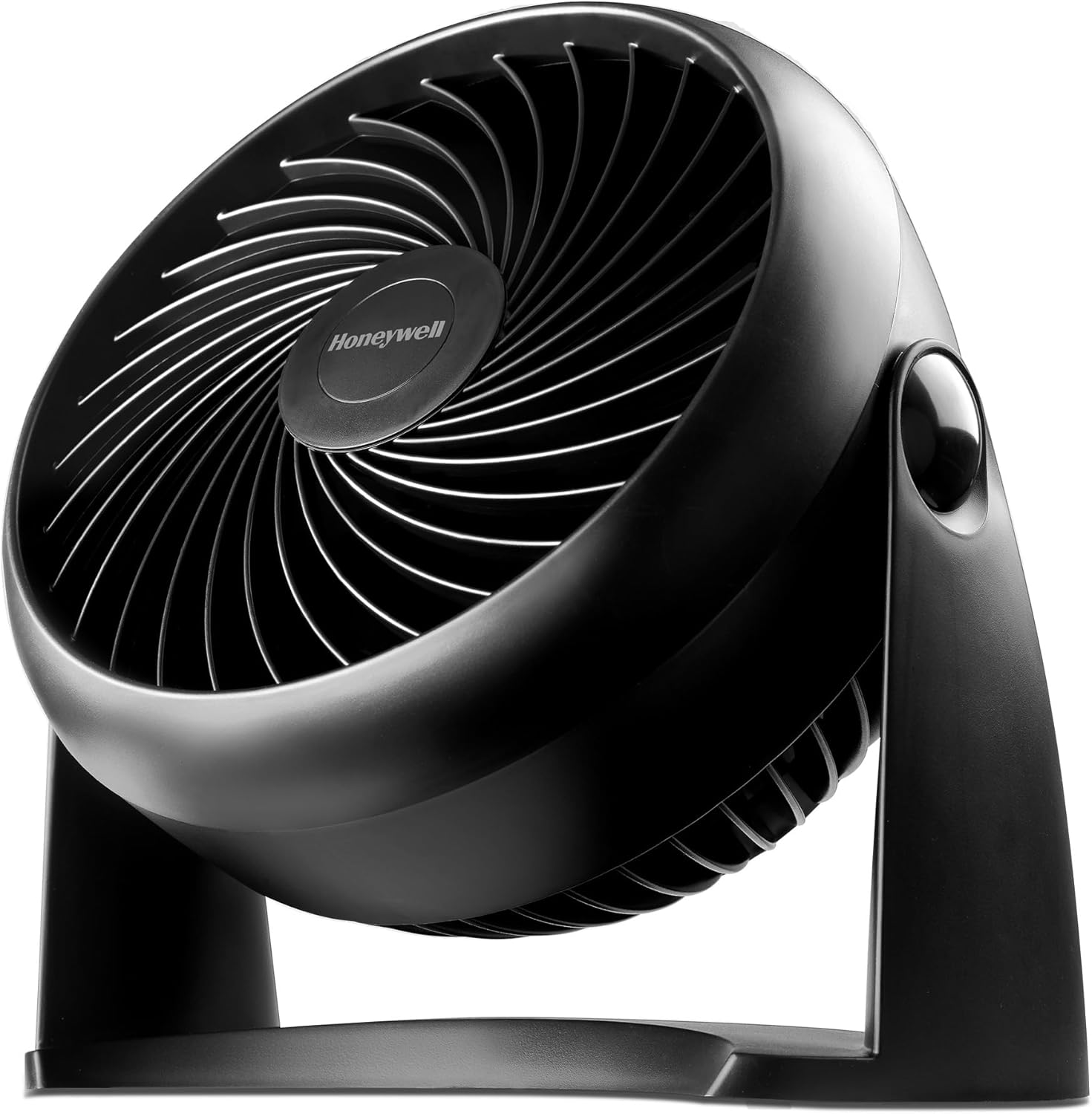
The Honeywell TurboForce HT-900 is a compact tabletop air circulator designed to move a surprising amount of air for its size. It runs from a corded electric plug and offers three push-button speed settings and a 90-degree pivoting head so you can direct airflow to a bed, desk, or seating area; Honeywell's turbo-shaped housing concentrates airflow and the listing claims noticeable reach. Typical use cases are bedside cooling, desk comfort in a home office, or mounting on a wall to provide targeted circulation in a small to medium bedroom. The fan is lightweight and made of plastic with three blades and a brushless motor, which helps keep noise low while staying energy efficient at 35 watts. Practical benefits include simple controls, easy repositioning, and the ability to improve room airflow without running an air conditioner. Limitations are its small footprint and non-oscillating design, so it is best for directional spot cooling rather than whole-room circulation, and its basic mechanical controls mean no timer or advanced quiet modes.
Best for: Buyers who prioritize quiet, proven performance and want a simple, highly reviewed fan to provide focused cooling at a bedside or desk in a bedroom.
Less Ideal for: People who need wide-area circulation, programmable features, or a premium metal build should consider larger oscillating fans or models with timers and remotes instead.
- Compact, portable tabletop or wall-mountable design for flexible placement
- Aerodynamic TurboForce housing provides strong, focused airflow for spot cooling
- Three simple speed settings with a 90-degree pivoting head for directed comfort
- Brushless motor and low reported noise for quiet bedroom use
- Low power draw (35 watts) for energy-efficient operation
- No oscillation function, so it does not distribute air broadly across a room
- Basic push-button controls with no timer or remote control
- Plastic construction may feel less durable than heavier metal fans
Verdict: A quiet, well-reviewed compact tabletop fan that delivers strong directional airflow for bedside or desk cooling in bedrooms.
DREO Tower Fan 307

| Number of Speeds | 8 |
|---|---|
| Modes | Normal, Natural, Sleep, Auto |
| Oscillation | 90° |
| Wattage | 36 watts |
| Motor Type | brushless DC motor |
The DREO Tower Fan 307 is a compact 36-inch oscillating floor fan built around an upgraded brushless DC motor that pushes strong airflow while keeping noise low. It offers eight speed settings and four modes including Normal, Natural, Sleep, and Auto, so you can dial in anything from a gentle bedroom breeze to a higher-velocity boost; the unit supports remote and touchpad control for easy adjustments. With 90 degree oscillation and a claimed airflow capacity for broad room coverage, it pairs well with an air conditioner to circulate cool air more effectively. Practical touches include a timer, removable rear grille and impeller for easier cleaning, and ETL safety certification. On the downside the fan runs on standard corded power and lists voltage at 240 volts which may matter for some regions, and the plastic construction means it is lightweight but less premium-feeling than metal alternatives. For buyers focused on quiet, adjustable oscillating cooling in bedrooms or living rooms, this model balances airflow and low noise in a small footprint.
Best for: Buyers who want a quiet, adjustable tower fan that delivers wide oscillating coverage and easy remote control for bedrooms and living spaces backed by strong customer feedback.
Less Ideal for: People seeking a heavy-duty, industrial-strength fan or a premium metal build should consider sturdier floor or bladeless alternatives.
- Brushless DC motor for efficient, high-velocity airflow with lower noise
- Eight speed levels and four modes for flexible comfort settings
- 90° oscillation spreads air across a wide area for better room coverage
- Includes remote and touch controls plus a timer for convenient operation
- Removable rear grille and impeller simplify cleaning and maintenance
- Plastic construction feels less durable compared with metal fans
- Corded operation and listed voltage may limit regional compatibility
Verdict: A feature-rich, quiet oscillating tower fan that gives flexible speeds and modes for effective bedroom and living-room cooling.
Choosing the Right Oscillating Fan for Bedrooms: Key Factors to Consider
Noise Level and Sound Profile
Noise performance is arguably the most important factor for a bedroom fan because even low-level hums or motor whine can interrupt deep sleep cycles. Look for fans that advertise quiet modes or provide measured decibel figures for different speeds. Consider the sound profile as well: a steady white-noise-like airflow is less distracting than intermittent rattles, clicks, or irregular motor sounds.
If you are a light sleeper, prioritize models with multiple low-speed settings and a reputation for smooth, quiet operation. Fans with brushless motors or well-damped housings often run quieter and are less likely to develop new noises over time.
Airflow Strength and Coverage
Airflow strength determines how effectively the fan moves cool air through your bedroom and affects how far from the unit you can place it. A fan with good airflow coverage and an effective oscillation pattern will distribute air evenly across a bed, rather than concentrating a draft on one spot.
Match the fan's airflow capability to your room size and layout. Higher airflow is useful for larger rooms or for clearing stagnation quickly, while moderate airflow with broad oscillation can be more comfortable for sleeping when positioned near the bed.
Oscillation Width and Angle
Oscillation width and adjustable angle let you direct moving air across a broader plane without manually repositioning the fan. Fans with adjustable oscillation ranges let you fine-tune how much of the room is swept, which is useful for directing airflow toward the bed at night and increasing coverage during the day.
Consider whether the unit offers vertical tilt plus horizontal oscillation. Vertical control helps direct airflow up or down to avoid a constant draft directly on your face while you sleep.
Control Options and Convenience
Convenient controls are important for bedroom use because you will frequently change fan speed, set timers, or toggle oscillation from bed. Look for intuitive front-mounted dials, backlit panels, remote control, or app connectivity if you want to adjust settings without getting up.
Timer functions and memory settings can be especially useful for sleep routines. A quiet physical remote or an easy-to-reach control panel reduces disturbance when altering settings at night.
Size, Placement, and Aesthetics
The fan's footprint and design affect where you can place it and how it fits into bedroom decor. Tower and pedestal styles typically have smaller footprints and can be tucked into corners, while floor or box designs may require more space. Consider the aesthetic if the fan will be visible in the room, but prioritize placement options that let you optimize airflow to the bed.
Also assess cord length and whether the unit can be elevated safely on a nightstand or dresser without compromising stability or creating a fall hazard.
Build Quality, Stability, and Safety
A stable base and well-built housing reduce vibration and the risk of tipping, both of which are critical in a bedroom environment. Check for sturdy stands, low center-of-gravity designs, and quality fasteners. Safety features such as grille spacing, automatic shutoff if tipped, and thermal overload protection are important for long-term peace of mind.
Durable motors and well-sealed bearings tend to last longer and maintain quieter operation. A fan that remains stable and quiet over months of nightly use is worth prioritizing over a cheaper, louder alternative.
Tower Vs Pedestal Vs Floor Fans: Which Works Best in a Bedroom
Different form factors suit different bedroom layouts. Tower fans offer a slim profile and wide vertical airflow, which is useful in tight spaces. Pedestal fans provide more height adjustment and directional control, which helps target airflow toward a bed. Floor or box fans deliver strong straight-line airflow but may be bulkier and louder, making them less ideal for night use unless specifically designed for quiet operation.
- Tower: compact footprint, broad vertical dispersion, often quieter.
- Pedestal: adjustable height and tilt, good directional control.
- Floor/Box: high airflow, best for rapid cooling, typically louder.
Placement Tips for Better Sleep
Position the fan so it circulates air across the room rather than blowing straight on your face all night. Aim for a location that allows the oscillation to sweep across the bed for even cooling. If you prefer a gentle breeze, place the fan slightly farther away and use a lower speed setting.
Elevating a pedestal fan to head height can improve perceived cooling without increasing speed. Avoid placing the fan too close to curtains or loose bedding to prevent noise and airflow disruption.
- Place fans near windows at night to draw cooler air in or near doorways to promote cross-ventilation.
- Use lower speeds and wider oscillation for sleep comfort rather than direct high-speed airflow.
Using Timers, Sleep Modes, and Smart Controls
Timers let you run the fan during the initial cooling period and then switch it off after you fall asleep to conserve energy. Sleep or night modes typically reduce motor speed and soften the fan's audio profile. If you want remote adjustments, look for units with reliable remotes or app controls; these features help you tweak settings without disturbing your sleep.
Some fans include gradual speed-down schedules that lower airflow automatically over hours. This can maintain comfort as room temperature changes overnight without a sudden cutoff.
Smart controls that integrate with voice assistants or smartphone apps are convenient, but prioritize reliability and simplicity for bedroom use so you do not add complexity at night.
- Use timers to limit runtime and lower energy use overnight.
- Prefer simple, tactile controls if you find remotes or apps distracting in the dark.
Maintenance and Cleaning for Quiet, Long-Lasting Operation
Dust buildup on blades or grilles increases noise and reduces airflow efficiency. Regular cleaning maintains performance and keeps sound levels down. Many tower and pedestal fans have tool-free grille removal or quick-clean designs that simplify maintenance.
Lubrication and periodic inspection of mounts and fasteners can prevent rattles. Replace or repair worn parts promptly to avoid escalating noise issues.
- Clean blades and grilles every few weeks in dusty environments.
- Check screws and mounting points if you notice new noises during operation.
Energy Use and Running Costs
Fans are generally much more energy-efficient than whole-room air conditioning, but runtime still affects electricity use. Consider motor efficiency and speed options when estimating nightly running costs. Lower speeds consume less power and are often sufficient for maintaining comfort when paired with proper placement and oscillation.
If you plan to run a fan every night, choose a model with efficient motor technology and reliable components to reduce long-term running costs and maintenance needs.
- Favor fans with variable speed control to balance comfort and energy use.
- Use timers or smart scheduling to minimize unnecessary overnight runtime.
How We Chose the Best Oscillating Fan for Bedrooms
We prioritized features and performance that matter most when using an oscillating fan in a bedroom. Noise level was a primary filter because continuous low-volume sound can either help or harm sleep; we favored fans with measured low operating noise or multiple quiet modes. Airflow coverage and oscillation range were evaluated to ensure a single fan can evenly cool a typical bedroom without excessive repositioning. Ease of control and speed variation mattered for night-time adjustments, so units with intuitive or remote controls scored higher. Build quality and stability were considered to reduce vibration and rattle that can amplify perceived noise. Energy efficiency and motor durability were included to reflect long-term running costs and lifespan. We excluded industrial, outdoor, or high-velocity utility fans that are designed for workshops or garages because their noise and airflow profiles are unsuitable for bedrooms. We also filtered out specialty fans lacking basic safety features or stable oscillation mechanisms. The resulting shortlist emphasizes quiet, reliable bedroom performance, straightforward controls, and consistent airflow patterns.
Our full evaluation process is outlined in our review methodology.
FAQ
How loud is too loud for a bedroom fan?
Generally, continuous noise above about 45 decibels can be noticeable and disruptive for many sleepers. Aim for fans with quiet or sleep modes under that level, and avoid models that produce intermittent mechanical sounds even if average decibel numbers look acceptable.
Can an oscillating fan help with allergies?
An oscillating fan moves air but does not filter it unless equipped with a filter. Fans can stir dust if placed near dusty surfaces. For allergy concerns, pair a fan with regular cleaning or a separate air purifier rather than relying on the fan alone.
Is it better to have the fan oscillate or point directly at the bed?
Oscillation generally provides more even cooling and reduces the sensation of a constant draft on one spot. Direct pointing can be useful for targeted cooling but may cause discomfort for some sleepers if used at high speed.
How often should I clean my bedroom fan?
Clean the blades and grilles every two to four weeks in normal household conditions, or more frequently if you have pets or live in a dusty area. Regular cleaning keeps airflow strong and reduces noise caused by dust buildup.
Are tower fans quieter than pedestal fans?
Tower fans are often engineered for lower noise through aerodynamic blade designs and enclosed motors, but quietness varies by model. Pedestal fans can be quiet too if they have well-balanced blades and solid construction. Evaluate actual noise specs and real-world reviews when choosing.
Final Verdict
For bedroom use, prioritize low noise, broad airflow coverage, and stable oscillation over raw airflow power. Think about how the fan will be placed relative to your bed, whether you need remote or timer controls, and how often you are willing to perform maintenance. Tradeoffs are common: very quiet units may provide gentler airflow, while higher-output fans cool faster but can be louder. Choose the fan that matches your sleep preferences and room layout, favoring models with proven quiet operation and flexible oscillation so you can get consistent, comfortable airflow without nightly disruption.