
Note: This article contains affiliate links. If you click on these links and make a purchase, we may earn a small commission at no extra cost to you. This helps support our research and content. Read our full affiliate disclosure here.
If you need perimeter monitoring but do not want or cannot use wireless internet, an outdoor security camera without Wi-Fi lets you record locally and keep feeds off the cloud. These cameras are useful where network access is limited, where privacy is a priority, or when you prefer simpler, self-contained systems. This guide shortlists the top options for outdoor, non-Wi-Fi security cameras and explains the features that matter most, including local storage methods, power requirements, motion detection quality, and weatherproofing. Use the quick evaluations that follow to find a camera that fits your installation and surveillance goals.
Top Picks at a Glance
| Best Overall The best all-around choice for most situations | Xega RBX-S20 4G LTE Solar Camera |  |
| Best Quality Built to a higher standard if you want something more solid | TACTACAM Defend 360 | 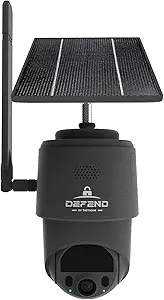 |
| Best Value The sweet spot between price and what you get | SEHMUA S40 Solar 4G Camera |  |
| Top Rated A top-rated pick with lots of positive feedback | GLEEMALL RBX-B60 Solar 4G Camera |  |
| Most Popular A crowd favorite that many people choose with confidence | IHOXTX DF220 Bullet Camera |  |
| Best Seller A high-volume bestseller chosen again and again | SPYPOINT FLEX-M Twin Pack |  |
Xega RBX-S20 4G LTE Solar Camera

| Connectivity Protocol | Cellular |
|---|---|
| Video Capture Resolution | 1296p |
| Power Source | Solar Powered |
| Night Vision Range | 25 meters |
| Memory Storage Capacity | 128 GB |
The Xega RBX-S20 is a self-contained outdoor security camera built for sites without Wi-Fi by using built-in 4G LTE connectivity and an internal SIM with an optional paid data plan. It combines a solar panel and a large internal battery so the camera can run without a wired power feed, and the PTZ head (355° pan, 95° tilt) plus 4x zoom lets you remotely scan wide areas from the Ubox app. Video is recorded in up to 2K/1296p with color night vision and motion-triggered clips saved to a local TF card or optional cloud storage. Practical features include a PIR motion sensor to cut false alerts, instant push notifications, and two-way audio to speak with visitors. Important limitations are that it only supports the built-in SIM (no user SIM slot), it cannot record 24/7 on solar power reliably, and it relies on the Ubox app ecosystem rather than open standards like RTSP or direct NVR integration.
Best for: Buyers who need a fully wireless outdoor camera for remote sites or properties without reliable Wi-Fi and prefer a solar-powered, app-controlled system that minimizes cabling and local infrastructure.
Less Ideal for: Users who need continuous 24/7 recording, standard NVR/RTSP integration, or who want to use their own cellular SIM and carrier plan should look elsewhere.
- 4G LTE connectivity with built-in SIM lets the camera work where there is no Wi-Fi
- Solar power plus large internal battery enables installation without mains wiring
- Pan-tilt 355°/95° and 4x zoom provide broad controllable coverage
- Color night vision and 2K-capable video improve nighttime detail
- Two-way audio and PIR motion detection with app alerts support active monitoring
- Only supports the factory-installed SIM and requires a paid monthly data plan
- Not designed for reliable 24/7 continuous recording on solar power
- Does not support RTSP/NVR or PC access, limited to the Ubox app ecosystem
Verdict: Choose this camera when you need a solar-powered, 4G-connected outdoor security solution that delivers remote PTZ control and color night vision without any Wi-Fi infrastructure.
TACTACAM Defend 360

| Connectivity Technology | Wireless (LTE cellular) |
|---|---|
| Battery Power | 10000 milliamp_hours |
| Indoor Outdoor Usage | Outdoor |
| Other Special Features of the Product | 360° remote pan/tilt/zoom; solar + battery power; 4K photo, 1080p video; weatherproof |
The TACTACAM Defend 360 is a weatherproof, LTE cellular security camera designed for remote outdoor locations where Wi‑Fi and mains power are unavailable. It provides 360 degree pan, tilt and zoom control from the mobile app so you can inspect wide areas on demand instead of installing multiple fixed cameras. Solar charging paired with a built-in rechargeable battery supports off-grid continuous operation, and motion alerts deliver immediate notifications with 4K stills and 1080p video for verification. Setup is aimed at simple placement and cellular activation rather than network configuration, and the camera's rugged housing is built for outdoor exposure. Limitations to note are dependence on cellular coverage and a data plan for live view and alerts, and some advanced features such as AI object tracking appear tied to a subscription. For buyers who need a single, mobile-capable PTZ camera that runs off solar power and does not require home Wi‑Fi, the Defend 360 is a practical option.
Best for: Buyers who need a high‑coverage, off‑grid outdoor security camera for remote properties or locations without reliable Wi‑Fi and prioritize live PTZ control and robust imaging.
Less Ideal for: People who have strong, reliable home Wi‑Fi and prefer cameras that work solely over local networks or those who want entirely subscription‑free advanced analytics.
- LTE cellular connection lets the camera operate without any local Wi‑Fi network
- 360° remote pan, tilt and zoom from the app reduces need for multiple fixed units
- Solar panel plus 10000 mAh battery enables off‑grid continuous operation
- 4K photo capture and 1080p video with instant motion alerts for timely verification
- Weather‑resistant design built for outdoor installations
- Requires a cellular data plan and adequate signal at the installation site
- Some advanced features such as AI object tracking may need a paid subscription
Verdict: Choose the Defend 360 when you need a weatherproof, solar‑powered PTZ camera that delivers remote live control and image alerts anywhere with cellular signal and no Wi‑Fi.
SEHMUA S40 Solar 4G Camera

| Connectivity Technology | 4G LTE Cellular |
|---|---|
| Video Capture Resolution | 2k |
| Waterproof Rating | IP65 |
| Power Source | Solar Powered |
| Battery Power | 10400 |
The SEHMUA S40 is a cordless outdoor bullet camera designed for locations without Wi‑Fi or wired power, using a built-in SIM and cellular 4G connectivity to stream and send alerts. It charges from a 6W solar panel and a large internal battery so it can operate long term in sunny spots after an initial full wired charge. The camera records at 2K (1440p) with digital zoom, offers full-color night vision with a spotlight you enable in the app, and supports horizontal and vertical rotation for wide coverage. Motion-triggered PIR detection sends real-time push alerts and the two-way audio lets you speak through the unit. Setup and control are handled in the Ubox app and the camera includes a short trial of cellular and cloud service, but continued use requires a paid subscription once the trial ends. Also the device only works on cellular networks and is limited to U.S. carriers, so placement must have reliable 4G coverage and ongoing data service costs should be expected.
Best for: Buyers who need a practical, low-maintenance outdoor camera for remote sites without Wi‑Fi or power and who prioritize continuous, wireless operation over avoiding ongoing service costs.
Less Ideal for: Users who want a purely free, long-term solution without recurring data fees or who lack reliable 4G coverage at the installation site.
- True wireless operation via built-in SIM and solar charging for sites without Wi‑Fi or mains power
- 2K effective resolution with 4x digital zoom and wide-angle pan/tilt for flexible monitoring
- PIR motion detection with real-time push alerts to the smartphone app
- Full-color night vision and manual spotlight for clearer nighttime footage
- Two-way audio for remote communication through the camera
- Requires ongoing cellular data subscription after the trial for continued remote service
- Only supports use within U.S. cellular networks and compatible carriers
Verdict: Choose the S40 when you need a truly wireless outdoor camera that runs off solar power and cellular data to protect remote or off-grid locations.
GLEEMALL RBX-B60 Solar 4G Camera

| Connectivity Protocol | Cellular |
|---|---|
| Video Capture Resolution | 2k |
| Power Source | Solar & Battery Powered |
| Battery Power | 8000 milliamp_hours |
| Waterproof Rating | IP65 |
This 4G LTE solar security camera pair is built for off-grid and remote surveillance where Wi‑Fi is unavailable. Each camera includes a preinstalled SIM with a 7‑day trial and requires its own subscription for continuous remote access, and the 6W solar panel plus the 8000 mAh battery aims to keep the system running year‑round. You control pan (355°) and tilt (100°) from the UBox app, use two‑way audio to interact, and choose storage either via paid cloud subscription or local TF card up to 128GB. The unit records 2K video and delivers color night vision to about 65 feet, and the PIR motion sensor with customizable zones helps reduce false alerts. Practical limits include recurring cellular and cloud fees per camera and a non-replaceable SIM, and it does not connect to Wi‑Fi or support shared data across devices. For sites where grid power and internet are unreliable, this camera provides an independent, weatherproof monitoring solution with wide coverage and simple app controls.
Best for: Buyers who need a dependable outdoor camera for locations without reliable power or Wi‑Fi, and who prioritize uninterrupted, self-powered monitoring over avoiding recurring data costs.
Less Ideal for: Users who want a one‑time purchase with no ongoing service fees or those who require integration with an existing home Wi‑Fi system and shared data plans.
- Operates fully without Wi‑Fi using built‑in 4G LTE and preinstalled SIM for remote access
- Solar panel plus 8000 mAh battery designed for continuous, year‑round operation
- 2K resolution with color night vision up to 65 feet for clearer nighttime footage
- Wide coverage with 355° pan, 100° tilt and 4x zoom to minimize blind spots
- Supports local TF storage up to 128GB plus optional cloud backup and multi‑user sharing
- Each camera requires its own paid cellular data subscription and the SIM is non-replaceable
- Cloud storage and continuous remote access require additional subscription fees
Verdict: Choose this solar 4G camera when you need reliable, off‑grid outdoor surveillance that runs independently of Wi‑Fi and mains power.
IHOXTX DF220 Bullet Camera

| Connectivity Technology | Wireless Cellular 4G |
|---|---|
| Power Source | Battery Powered |
| Video Capture Resolution | 1080p |
| Viewing Angle | 110 degrees |
The IHOXTX DF220 is a battery-operated bullet camera designed for locations without Wi‑Fi where a 4G SIM provides connectivity. It records 1080p H.264 video with a 110 degree field of view and uses upgraded PIR detection to reduce false alerts by focusing on human movement. The camera includes two-way audio for remote communication and an audible plus flashing light alarm to deter intruders when motion is detected. A built-in 5200mAh battery aims to extend runtime for outdoor or off-grid installs and the unit ships with basic mounting hardware and a charging cable. Management and live view are handled via the companion smartphone app rather than a local TV or PC, and local recording requires a formatted TF card. Important limits are the exclusive reliance on 4G cellular (no Wi‑Fi support) and app-only access, so you must ensure good cellular coverage and be comfortable managing video and settings through your phone.
Best for: Buyers who need a straightforward outdoor camera for locations without reliable Wi‑Fi and who prioritize visible deterrence and human-focused motion alerts while trusting peer-reviewed products.
Less Ideal for: People who need continuous wired power, local PC/TV monitoring, or who have poor cellular coverage at the installation site should look elsewhere.
- Works without Wi‑Fi via 4G SIM for installations with no internet
- Battery-powered with a 5200mAh cell for longer off-grid operation
- PIR human detection that reduces false alarms from animals and environment
- 1080p video with H.264 encoding and a 110° viewing angle for clear coverage
- Two-way audio plus audio/visual alarm to communicate and deter intruders
- Requires a stable 4G cellular signal and a compatible SIM plan for remote access
- All configuration and viewing must be done through the smartphone app; no PC/TV connection
- Night vision range and exact low-light performance are limited compared with some wired models
Verdict: Choose this camera when you need a battery-powered outdoor security camera that reliably runs off a 4G SIM and focuses alerts on human activity.
SPYPOINT FLEX-M Twin Pack

| Photo resolution | 28 MP |
|---|---|
| Video resolution | 720p |
| Flash & detection range | 90' |
| Trigger speed | 0.4s |
| Waterproof rating | IP65 |
The SPYPOINT FLEX-M Twin Pack bundles two cellular trail cameras intended for hunters, ranchers, and remote-property owners who need off-grid monitoring. Each camera captures 28MP stills and 720p video with sound, and uses dual-SIM LTE so it selects the best cellular network automatically. Setup is app-driven and includes on-camera buttons for formatting an SD card and taking a test photo, and the cameras support photo, video, timelapse, and a Constant Capture mode that records locally while sending images to your phone. The low-glow flash and 90 foot detection/flash range let you monitor day and night, and the IP65 rating gives basic water resistance for year-round outdoor use. The pack includes preactivated SIMs and straps, but you must supply a microSD card and a power source such as AA batteries or an optional LIT-22 battery/solar panel for extended deployments. Buyers should note video is limited to 720p and battery life depends heavily on signal and capture frequency, so frequent transmissions can increase maintenance trips or require add-on power solutions.
Best for: Buyers who prioritize reliable, low-friction remote monitoring over Wi‑Fi—those who want cameras that arrive with cellular service ready and work in variable coverage areas with minimal setup.
Less Ideal for: People who need higher-resolution video or who prefer purely local, non-cellular camera systems for privacy or zero ongoing data plans.
- Cellular connectivity with dual preactivated SIMs for out-of-range monitoring without Wi‑Fi
- High-resolution 28MP stills for clear photos and 720p video with sound for context
- Multi-mode capture including photo, timelapse, timelapse+, and Constant Capture for flexible monitoring
- Long detection and flash range (90 ft) plus low-glow night illumination for discrete night imaging
- IP65 water resistance and included mounting straps make field installation straightforward
- MicroSD card and primary power source not included, adding ongoing cost and planning
- Video resolution limited to 720p, not full HD 1080p
- Battery life varies with cellular signal and sending frequency, so may need rechargeable battery pack or solar accessory
Verdict: Choose the FLEX-M Twin Pack when you want ready-to-go cellular trail cameras that reliably send high-resolution photos from remote outdoor locations without Wi‑Fi.
Choosing the Right Outdoor Security Camera Without Wi-Fi: Key Factors to Consider
Local Storage Type and Capacity
Where footage is saved matters most for a camera that does not use Wi-Fi. Cameras may store video on removable microSD cards, integrated hard drives, or via a wired recorder on site. Understand the maximum supported capacity and whether the device supports continuous recording or only event-triggered clips.
Larger capacity and flexible overwrite policies reduce the chance of losing important footage, but you should plan for regular retrieval or automated export if you need long-term archives. Verify how easily you can access files directly from the camera or storage device without an online account.
Power Source and Cabling
Power method determines where you can place the camera. Options include battery power, wired low-voltage or mains power, and Power over Ethernet when supported. Battery models offer easy installation and placement freedom but need regular recharging or battery swaps. Wired models provide continuous operation but require planning for cable routing and possibly professional installation.
Consider run lengths for power cables, the availability of nearby outlets, and whether the camera supports external solar panels or power-saving modes. In cold climates, battery performance can degrade, so choose accordingly.
Motion Detection and Recording Modes
Good motion detection reduces wasted storage and false alerts. Look for adjustable sensitivity, configurable detection zones, and the ability to trigger recordings only for human shapes or large moving objects when available. Some cameras include basic analytics to ignore pets or foliage movement, which matters outdoors.
Recording modes should match how you want to archive events: continuous, scheduled, or event-triggered. Event-triggered recording saves space but may miss slow-moving incidents if thresholds are set incorrectly, so ensure the camera's detection can be tuned to your site.
Image Quality and Low-Light Performance
Resolution, lens field of view, and night-vision performance determine whether recorded footage is useful for identification and incident review. Higher resolution yields more detail but consumes more storage. Pay attention to the camera's stated low-light sensitivity and whether it uses infrared illumination or a low-glow LED for night capture.
Also consider lens angle: wide lenses cover larger areas but make subjects smaller in frame. For areas where faces or license plates are important, a narrower field with higher optical detail is preferable.
Durability and Weatherproofing
Outdoor cameras must resist water, dust, temperature swings, and UV exposure. Check ingress protection ratings and construction materials. Metal housings and well-sealed joints last longer in harsh environments than lightweight plastics.
Fastening points and mount quality also affect long-term stability. If the camera will be exposed to direct sun or heavy storms, plan for protective positioning and ensure warranty or support covers outdoor failure modes.
Local Access and Retrieval Workflow
Since there is no cloud portal, consider how you will retrieve and review footage. Some cameras offer USB access, on-device playback, or a direct-wired connection to a local recorder. Others provide a local network interface that works without Internet but requires a wired router or direct Ethernet connection.
Think about how often you will need to export clips and whether on-site access is practical. Simpler export methods minimize maintenance and reduce the risk of accidentally losing footage when cards loop over.
Common Installation Scenarios
Non-Wi-Fi outdoor cameras are used in a few predictable setups: battery-powered standalone units for remote or temporary monitoring; wired cameras connected to a nearby recorder for continuous surveillance; and PoE installations that combine power and video over a single cable when a local network switch or recorder is present. Choose the scenario that fits your site constraints and maintenance preferences.
When planning placement, map desired coverage, sight lines, and likely light conditions at different times of day. Factor in how you will access the storage medium for retrieval and whether you need tamper-resistant mounts or protective housings.
- Temporary monitoring: battery units or quick-mount wired cameras
- Permanent surveillance: hardwired power or PoE with local recorder
- Remote sites: solar-assisted battery systems or long-run low-voltage wiring
Physical Security and Anti-Tamper Considerations
Outdoor cameras without a network connection can be safer from remote hacking, but physical tampering becomes the main risk. Use tamper-resistant screws, armored housings, and elevated mounting to discourage theft or vandalism. Conceal cabling where possible or use conduit to protect runs.
Consider backup capture strategies if an attacker disables a camera. Overlapping coverage, additional motion-triggered lights, and periodic human checks of storage status help preserve continuity of monitoring.
- Use metal housings or protective cages for high-risk locations
- Route cables in conduit and secure connector junctions
- Place cameras out of easy reach and use angled mounts to protect lenses
Managing Storage Rotation and Archiving
Without cloud backup, establishing a storage rotation plan prevents accidental data loss. Decide how long you need to retain footage and configure overwrite behavior or swap removable media on a schedule. For critical sites, keep a rotating set of backup drives or cards stored separately.
Exporting important clips promptly to external drives or a local server reduces the chance they are overwritten. Label media with dates and maintain a simple catalog to speed searches when an incident occurs.
- Set realistic retention windows based on storage capacity and event frequency
- Automate exports when possible using USB or local network transfer
- Keep at least one offsite backup for high-value evidence
Power-Saving Tips for Battery Models
If you choose a battery-powered camera, optimize settings to extend uptime. Use event-only recording, reduce frame rate or resolution when appropriate, and schedule downtime during expected inactivity. Some cameras provide power-saving modes that lower sensor polling or disable nonessential LEDs.
If sunlight is available, consider adding a compatible solar panel to maintain charge between maintenance visits. Remember that extreme temperatures affect battery chemistry and may reduce effective runtime.
- Lower resolution or frame rate for longer recording intervals
- Use motion-triggered recording rather than continuous capture
- Add solar charging in sunny locations to reduce maintenance trips
Legal and Privacy Considerations
Even without cloud storage, outdoor surveillance is subject to local rules about what you can record and where cameras can be aimed. Avoid pointing cameras at private indoor spaces or neighbors' windows. Clearly mark cameras where required by local law.
Maintain records of footage handling and who has access, particularly if recordings may be used in legal contexts. Secure physical storage media to prevent unauthorized viewing or tampering.
- Check local laws regarding audio recording and signage
- Limit recordings to your property and public areas where permitted
- Secure and document chain of custody for any evidentiary footage
How We Chose the Best Outdoor Security Camera Without Wi-Fi
We prioritized cameras that function independently of a home Wi-Fi network and that provide reliable, usable footage for outdoor surveillance. Core evaluation criteria included local storage options and capacity, because footage retention without cloud backup is critical; power method and installation flexibility, since available power sources determine placement; motion detection accuracy and configurability, to reduce false alarms while catching relevant events; image quality for day and night, ensuring evidence-grade captures under varied lighting; and weather resistance and build quality, to withstand outdoor conditions long term. We excluded any camera that requires constant cloud connectivity or a mandatory online account for basic recording and playback. We also filtered out models with ambiguous or locked-down local storage, and those with poor low-light performance. The resulting picks emphasize straightforward setup, clear local access to recorded files, robust detection features, and durable outdoor construction.
Our full evaluation process is outlined in our review methodology.
FAQ
Can an outdoor security camera without Wi-Fi still alert me to motion events?
Often the camera can trigger local alerts such as lights or sirens, and it can save event clips to local storage. Some models offer short-range direct connections or optional base stations that forward alerts to a phone when you are on site, but remote push notifications generally require a network link.
How do I access recorded footage from a non-Wi-Fi camera?
Access methods vary: remove and read the microSD card, connect directly via USB, use a local network connection if the device supports offline LAN access, or retrieve files from a connected recorder. Choose a camera with an access method that matches how often you will want to review footage.
Is video quality for non-Wi-Fi cameras comparable to networked models?
Yes. Many non-Wi-Fi cameras offer similar sensors and optics as networked units. However, higher resolution increases local storage needs, so balance image detail with how much footage you can retain locally.
Will a battery-powered outdoor camera without Wi-Fi work year-round?
It depends on battery capacity, power-saving settings, and local climate. Cold temperatures reduce battery life, and frequent motion events increase drain. For year-round use, consider larger batteries, solar charging, or a wired power alternative.
Can I combine multiple non-Wi-Fi cameras into a single recording system?
Yes, by using a local recorder or a network video recorder that accepts wired inputs. This provides centralized storage and easier review without relying on cloud services, but it requires planning for cabling, power, and recorder placement.
Final Verdict
Choosing an outdoor security camera without Wi-Fi means prioritizing reliable local storage, appropriate power arrangements, and robust detection to ensure useful footage when you need it. Balance resolution and retention against the practicalities of accessing and archiving files. Focus on a camera whose storage and power approach match your maintenance capacity and coverage needs. With the right combination of local recording, weatherproofing, and sensible placement, you can achieve dependable outdoor surveillance without a wireless network.