
Note: This article contains affiliate links. If you click on these links and make a purchase, we may earn a small commission at no extra cost to you. This helps support our research and content. Read our full affiliate disclosure here.
If you need dependable hot water outside the home, the right outdoor water heater makes a big difference in comfort and convenience. Whether you are serving an outdoor shower, garage workspace, or remote building, outdoor-rated units must balance fast recovery, freeze protection, and long-term corrosion resistance to perform reliably. This guide shortlists the top outdoor water heaters we've evaluated for exterior installations. We tested candidates against key practical criteria like heating speed, weatherproofing, and installation flexibility so you can match the right unit to your site and water demands. Read on for what matters and how to choose the best fit for your setup.
Top Picks at a Glance
| Best Overall The best all-around choice for most situations | CAMPLUX BW422 16L Tankless Heater |  |
| Best Quality Built to a higher standard if you want something more solid | MIZUDO Propane Tankless Water Heater |  |
| Best Value The sweet spot between price and what you get | forimo 12L Portable Propane Heater |  |
| Best Budget The cheapest option that still gets the job done reliably | Kohree Tankless Propane Water Heater 6L |  |
| Top Rated A top-rated pick with lots of positive feedback | Rheem RTG-84XLN-3 Tankless Water Heater |  |
| Most Popular A crowd favorite that many people choose with confidence | CAMPLUX AY132 Portable Tankless Heater |  |
| Best Seller A high-volume bestseller chosen again and again | GASLAND BS264 10L Propane Heater |  |
CAMPLUX BW422 16L Tankless Heater

| Power Source | Liquid Propane |
|---|---|
| Flow Rate | 4.22 gpm |
| Maximum Temperature | 167 °F |
| Heat Output | 110,000 BTU |
| Water Flow Range | 1.7-4.22 GPM |
The CAMPLUX BW422 is an outdoor propane tankless water heater designed for camping, remote cabins, tiny homes and outdoor showers. It produces up to 4.22 gpm and 110,000 BTU, so it can supply continuous hot water for a single shower or light campsite use; the LED display and ECO/FULL control knob let you dial user-friendly temperature and output settings. Built-in safety features include flame-failure shutoff, dry-combustion protection, low-flow and overheat protection, and an anti-freeze drain plug for winter storage. The package includes common connectors, a gas regulator and a shower head, which simplifies installation for temporary setups, though the unit requires proper vertical wall mounting and 2 D-cell batteries for ignition. Expect attention to installation details: it is for outdoor mounting only, needs correct gas hookup and drainage to prevent freeze damage, and may be overkill if you only need occasional low-volume hot water for more than one simultaneous use. For buyers who want a portable but robust propane heater with solid safety features, this is a practical choice for outdoor hot water needs.
Best for: Buyers who need a reliable outdoor hot-water source for showers or remote installations and value continuous output plus built-in safety features.
Less Ideal for: Those needing indoor installation, multi-fixture household hot water, or a unit that runs without a propane hookup and battery ignition should look elsewhere.
- High heat output (110,000 BTU) for continuous hot water at up to 4.22 gpm
- Multiple safety protections including flame-failure, low-flow, overheat and anti-freeze drain
- Includes common fittings, gas regulator and shower head for quicker setup
- User-friendly LED display with ECO/FULL control for easy temperature and flow adjustment
- Intended for outdoor upright wall mounting only, so indoor or sideways installation is not supported
- Requires correct propane supply, batteries for ignition and careful winter draining to avoid freeze damage
Verdict: Choose the CAMPLUX BW422 when you want a high-output, safety-minded propane tankless heater for outdoor showers and remote hot-water use.
MIZUDO Propane Tankless Water Heater

| Power Source | gas_powered |
|---|---|
| Flow Rate | 5.1 gpm |
| Maximum Temperature | 149 °F |
| Voltage | 120 volts |
| Wi-Fi Enabled | ✔ |
The MIZUDO propane tankless water heater is built to deliver strong continuous hot water for small- to mid‑size homes, offering 120,000 BTU of heating power and a rated flow up to 5.1 gallons per minute. It is meant to be wall‑mounted and can be converted for indoor or outdoor use with the appropriate venting or conversion kit, which adds installation flexibility. Wi‑Fi and app control let you change temperatures and monitor the unit remotely, while the product claims advanced flow monitoring and gas modulation to hold output within about 1°F during simultaneous fixture use. Safety features include freeze protection, flame failure detection, dry burn prevention, and CSA certification. The unit uses a copper heat exchanger and stainless steel combustion chamber for durability, and it carries a 2‑year unit warranty with 5‑year heat exchanger coverage. Expect a solid performer for households that need reliable hot water at multiple points, but plan for proper venting, potential accessory purchases for outdoor conversion, and professional installation to meet code and ensure peak performance.
Best for: Buyers seeking a performance‑focused tankless solution that supplies steady hot water to multiple fixtures and values remote control and safety features.
Less Ideal for: Homes with very high simultaneous hot water demand that need greater than 5.1 GPM or buyers wanting a plug‑and‑play unit without venting or installation work.
- High heat output (120,000 BTU) suitable for multiple simultaneous fixtures
- Maintains stable temperature control (claimed ±1°F) with flow and gas modulation
- Wi‑Fi and app control for remote monitoring and temperature adjustment
- CSA certification and multiple safety protections including freeze and flame failure prevention
- Durable components: copper heat exchanger and stainless steel combustion chamber
- Outdoor conversion requires separate vent cap kit and accessories not included
- Flow rate (5.1 GPM) may be marginal for very large households or heavy simultaneous demand
- Requires correct venting and professional installation to meet codes
Verdict: A performance‑oriented propane tankless heater that delivers strong, stable hot water output and modern Wi‑Fi control for homes needing reliable multi‑fixture service.
forimo 12L Portable Propane Heater
| Capacity | 12 liters |
|---|---|
| Maximum Temperature | 167 °F |
| Heat Output | 68000 british thermal units |
| Power Source | dc |
| Mount Type | portable |
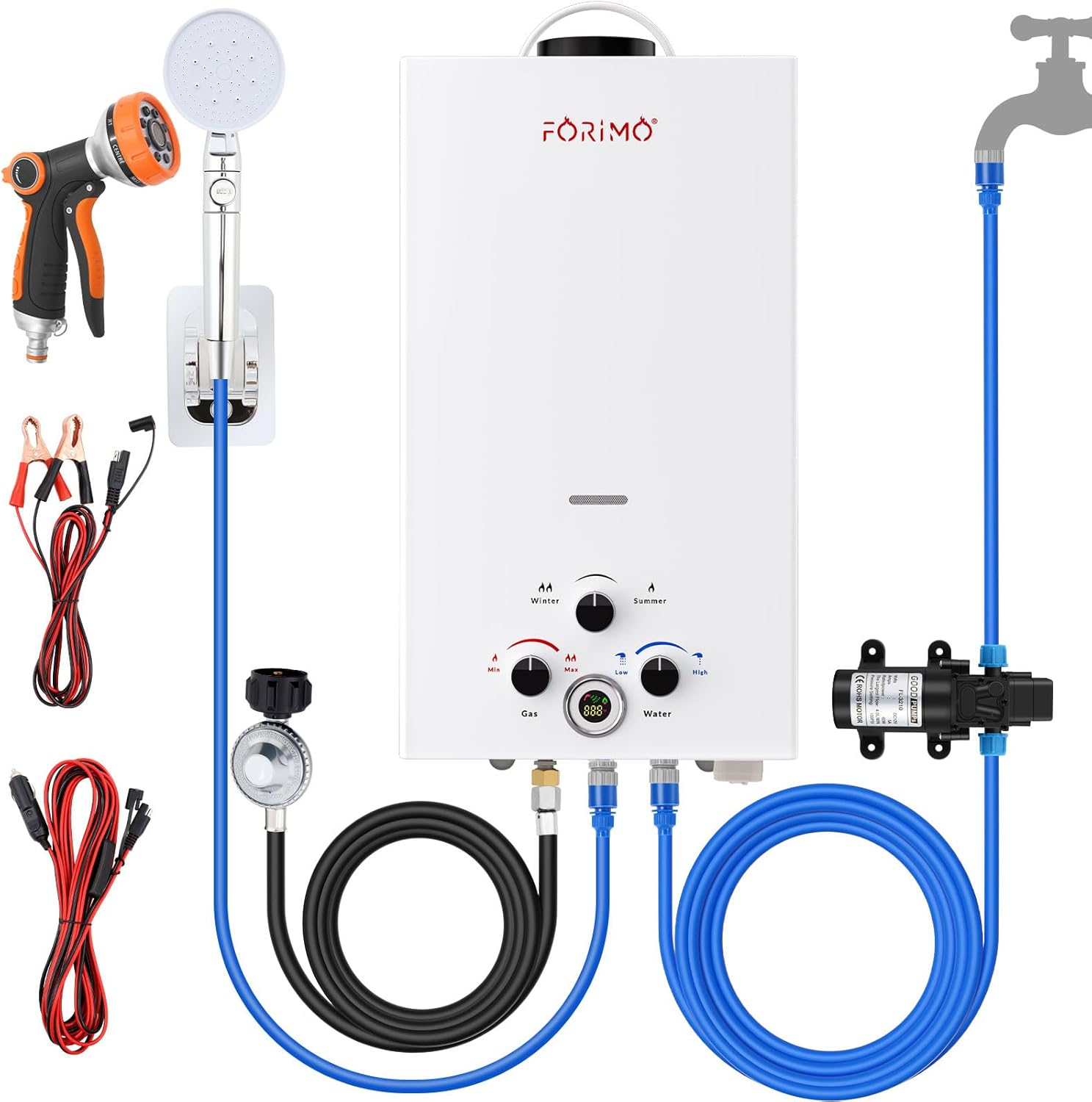
This compact propane tankless water heater delivers instant hot water for outdoor uses like camping, RVs, cabins, and pet washing. It pairs with a 12V 2 GPM water pump (included) and produces up to about 3.18 gallons per minute with a maximum temperature rise up to 167°F, which is enough for showers or cleaning tasks on the go. The unit emphasizes safety with flame-failure, anti-freeze, and overheating protections and ships with a CSA-approved regulator, hoses, a multi-mode showerhead and a pet showerhead for immediate setup. Its advanced combustion design and 68,000 BTU output aim to reduce gas use and noise compared with older portable heaters, and folding handles make it easier to move and store. Expect real-world limits: hot water flow depends on incoming water temperature and pump performance, battery power is required for the pump and the heater runs on propane only, so you need a compatible LPG supply and basic gas-safety checks before each use. For practical outdoor hot water, this package includes most of what you need to get started quickly.
Best for: Buyers who want a ready-to-run outdoor hot-water solution for camping, RVing, cabins, or washing pets and value included accessories and safety features.
Less Ideal for: People who need indoor or hardwired water heating, continuous high-flow household use, or those who cannot reliably supply propane and battery/vehicle power.
- Complete kit with CSA-approved regulator, hoses, pump, showerheads and fittings for quick setup
- Safety features including flame failure, anti-freeze and overheating protection
- High heat output (68,000 BTU) and up to 3.18 GPM for usable on-demand hot water
- Portable form factor with folding handles for easier transport and storage
- Requires a propane (LPG) supply and battery or vehicle power for the pump, limiting use where those are unavailable
- Performance depends on inlet water temperature and the supplied 2 GPM pump, so hot flow and temperature can vary
Verdict: A fully equipped portable propane tankless heater that gives practical on-demand hot water for outdoor trips without needing extra accessories.
Kohree Tankless Propane Water Heater 6L

| Power Source | Liquid Propane |
|---|---|
| Flow Rate | 1.58 gpm |
| Heat Output | 41000 BTU/HR |
| Capacity | 6 liters |
| Maximum Pressure | 110 psi |
This compact Kohree tankless propane heater is made for portable outdoor use, supplying up to 1.58 gallons per minute of on-demand hot water without a storage tank. It runs on liquid propane and uses two D batteries for ignition, so it works where mains power is unavailable and starts at low water pressure (3 PSI). Notable features include a 41,000 BTU heat output, windproof design, and six safety protections such as overheat, dry combustion, flame failure, and anti-freezing. The unit ships with a shower head, gas regulator, brass fittings, and Teflon tape for basic setup. In real use it is best for quick outdoor showers, pet washing, or cabin and RV tasks where flow demands are modest; expect steady warm water but limited flow compared with larger models. The heater requires careful installation of gas connections and benefit from the included brass fittings, and the 120°F overheat cutoff means it will shut down if pushed to extremes. For its size it is easy to carry and mount using the handle or bracket.
Best for: Buyer looking for an affordable, portable solution to get on-demand hot water outdoors or at an RV who prioritizes easy transport and basic safety features.
Less Ideal for: People who need high-flow indoor hot water or simultaneous use across multiple fixtures should choose a larger, higher-capacity unit instead.
- Portable, lightweight design with a carry handle and mount bracket for outdoor use
- Low water-pressure startup (3 PSI) and battery ignition enable use off-grid
- Multiple built-in safety protections including overheat, dry combustion, and flame failure devices
- Includes useful accessories: shower head, gas regulator, brass hose fittings, and Teflon tape
- Maximum flow is modest at 1.58 GPM so not suited for simultaneous high-demand fixtures
- Temperature cutoff at about 120°F can trigger shutdown under extreme conditions
Verdict: A budget-friendly portable propane tankless heater that reliably delivers on-demand hot water for outdoor, RV, and small off-grid needs.
Rheem RTG-84XLN-3 Tankless Water Heater

| Power Source | Natural Gas |
|---|---|
| Flow Rate | 8.4 gpm |
| Maximum Temperature | 140 °F |
| Heat Output | 180000 BTU/hr |
| Wattage | 132 watts |
The Rheem RTG-84XLN-3 is an outdoor, non-condensing natural gas tankless water heater built to supply continuous hot water for whole-house use. It produces up to 8.4 gallons per minute at a 35°F rise and 180,000 BTU/hr output, which is typically enough for two to three simultaneous showers and other household demand. Designed for outdoor installation, it eliminates the need for venting and mounts on a wall to save floor space. Notable features include Hot Start Programming to reduce cold-water bursts, Overheat Film Wrap for heat exchanger protection, a digital LED temperature control with precise adjustments, and built-in freeze and flame-failure protections. The unit emphasizes efficiency with a 0.82 UEF and a water-saving setting that reduces wasted water while waiting for hot. Trade-offs are the non-condensing design, which is less efficient than condensing models in some climates, and the requirement for professional gas installation and outdoor clearances. For buyers prioritizing dependable continuous hot water and a long-lived heat exchanger, this model is a practical outdoor option.
Best for: Buyers who want a dependable outdoor tankless heater that reliably supplies continuous hot water for families or multi-bath homes and who prioritize long-term durability and consistent temperature control.
Less Ideal for: People seeking the highest possible energy efficiency via condensing technology or those who need an indoor, vented solution are better served by other models.
- Continuous on-demand hot water capacity suitable for multi-bath homes
- Hot Start Programming reduces cold-water bursts during back-to-back use
- Built-in safety features including freeze protection and flame-failure protection
- Compact wall-mount design saves floor space and allows tighter installation clearances
- Long heat exchanger warranty (15 years) indicating durability and reliability
- Non-condensing design is less efficient than condensing alternatives in colder climates or where maximum efficiency is needed
- Requires professional gas hookup and outdoor-rated installation, limiting DIY fitment
Verdict: Choose the Rheem RTG-84XLN-3 if you need a rugged, outdoor tankless heater that reliably delivers continuous hot water and a long-lasting heat exchanger.
CAMPLUX AY132 Portable Tankless Heater

| Flow Rate | 1.32 gpm |
|---|---|
| Power Source | Battery Powered (2 D batteries) |
| Heat Output | 34,000 BTU/hr |
| Maximum Pressure | 110 psi |
| Capacity | 5 liters |
The CAMPLUX AY132 is a compact, battery-ignited tankless propane heater intended for outdoor use like camping, RVs, cabins, and pet washing. It runs on a 20 lb propane tank and two D batteries for ignition, producing up to 1.32 gallons per minute and a rated 34,000 BTU output for quick temperature rise. The unit includes a folding carry handle, a CSA-certified regulator, showerhead and hose, and multiple built-in safety features such as overheat, flame-failure, dry-combustion, and anti-freeze protection. It starts at low water pressure (around 3 PSI) so it works with gravity-fed bags or small 12V pumps, and the straightforward hookups make setup in the field fast. Practical limits are its modest flow rate, which is suitable for single-person showers or washing but not for multiple fixtures, and the battery ignition and propane reliance mean ongoing fuel maintenance. The AY132 is a good fit when you need reliable, on-demand hot water outdoors with simple installation and strong safety protections.
Best for: Buyers who want a dependable, easy-to-install outdoor hot water source for camping, RV trips, or remote cabins and who prioritize safety and real-world user feedback.
Less Ideal for: People needing high-flow indoor-style showers, to supply multiple outlets, or those who prefer electric hookups and never want to manage fuel or batteries.
- Portable and lightweight with a folding handle for easy transport and mounting.
- Battery-powered ignition and propane operation require no mains electricity.
- Low-pressure startup works with gravity bags or small 12V pumps.
- CSA certified with multiple safety protections including overheat and flame failure.
- Includes regulator, shower head, hose, and basic mounting hardware for quick setup.
- Maximum flow rate of 1.32 GPM limits it to single-person showers and light washing tasks.
- Requires propane refills and periodic battery replacement for ignition.
Verdict: Choose the CAMPLUX AY132 when you need a compact, CSA-certified propane tankless heater that delivers instant hot water off-grid with simple setup and strong safety features.
GASLAND BS264 10L Propane Heater

| Power Source | Liquid Propane |
|---|---|
| Capacity | 10 liters |
| Flow Rate | 2.64 GPM |
| Maximum Temperature | 109.4 °F |
| Special Features | Flame failure, overheat, low-flow, dry combustion, anti-freeze protection |
The GASLAND BS264 is a wall-mountable, outdoor propane tankless heater designed to provide instant hot water where mains power is limited. It runs from a standard LP tank and uses two D-cell batteries for electronic ignition and the LED monitor, so no electrical hookup is required. With a 10L (2.64 GPM) flow rate and a maximum temperature rise to about 109.4°F, it is useful for camping, RV showers, pet or horse washing, and small cabin installations. Built-in safety features include flame failure protection, overheat protection, dry-combustion protection, anti-freeze features, and low-flow/low- and high-pressure protections, and it ships with a regulator, hose, and an on/off shower head. Practical limits are its outdoor-focused design — it is splash-resistant but not meant for prolonged exposure to rain — and it is not rated for high-altitude use above about 3300 feet or very windy sites. Expect modest fuel use for the 68,000 BTU maximum output and occasional battery replacements for ignition.
Best for: Buyers who prioritize dependable, off-grid hot water and conservative safety features for outdoor use, such as campers, RV users, tiny-home or cabin owners who want a simple propane solution.
Less Ideal for: Those who need indoor, permanently installed household-level hot water, high-altitude installations, or multi-bathroom homes that require higher continuous flow and temperature control.
- Runs on standard liquid propane so it works off-grid without electric power
- Electronic ignition powered by two D-cell batteries eliminates need for outlet
- Comprehensive safety features including flame failure, overheat, low-flow and anti-freeze protections
- Includes regulator, hose, on/off shower head and mounting hardware for ready setup
- Higher flow rate (2.64 GPM) suitable for single-person showers and general outdoor cleaning tasks
- Not designed for continuous exposure to rain or long-term outdoor exposure without shelter
- Not suitable for high-altitude locations above about 3300 feet
- Maximum temperature rise and flow are limited compared with larger, household tankless units
Verdict: Choose the GASLAND BS264 when you want a ready-to-install, safety-minded propane tankless heater that delivers reliable off-grid hot water for outdoor and small-cabin needs.
Choosing the Right Outdoor Water Heater: Key Factors to Consider
Heating Capacity and Recovery Rate
Heating capacity determines how much hot water the unit can supply at once, usually expressed in gallons per minute for tankless units or first-hour rating for tank models. For outdoor use, peak demand can be unpredictable, so matching capacity to how the water will be used prevents shortfalls during showers, wash-downs, or multiple simultaneous taps.
Recovery rate matters if you choose a tank-style outdoor water heater. A faster recovery means the tank can refill with hot water sooner after heavy use. When sizing a unit, account for the cold incoming water temperature in your region since colder source water reduces effective output and increases recovery time.
Weatherproofing and Freeze Protection
Outdoor water heaters must withstand temperature swings, moisture, and wind-driven rain. Look for units with IP-rated enclosures, sealed access panels, and protective coatings that keep electronics and combustion parts dry. Frost-protection features such as internal heaters, freeze-resistant drainbacks, or automatic recirculation prevent damage during cold snaps.
If you live in an area with occasional freezing, prioritize models with verified freeze protection rather than relying on after-market enclosures. The effectiveness of these features directly affects service life and the risk of burst components when temperatures drop.
Corrosion Resistance and Materials
Exposure to moisture, salt air, and airborne contaminants accelerates corrosion. Choose units constructed from corrosion-resistant materials such as stainless steel heat exchangers, protected burners, and powder-coated steel cabinets. Sacrificial anodes, if present, can extend tank life but require periodic inspection and replacement.
Consider how close the unit will be to landscaping or sprinklers that can spray water on the cabinet. Durable finishes and elevated mounting locations reduce the chance of premature rust and leaks, which are common failure modes for outdoor-installed water heaters.
Installation Requirements and Flexibility
Outdoor installations have specific venting, clearance, and mounting considerations. Some units are direct-vented or sealed-combustion to allow safer outdoor placement, while others require particular clearances from windows, doors, and combustible materials. Electrical and fuel supply routing, plus local code requirements, influence where the unit can be placed.
Ease of access for piping and service connections is important. Look for models that offer flexible mounting orientations, standard connection locations, and clear installation documentation. If your site has limited venting options or restricted access, installation flexibility often dictates which units are viable.
Maintenance Needs and Serviceability
Outdoor units endure harsher conditions and therefore need practical service access. Removable panels, accessible anodes, and easy-to-reach controls reduce service time and cost. Consider how often filters need cleaning, whether burners and heat exchangers are designed for field cleaning, and the availability of replaceable wear items.
Routine maintenance prevents minor issues from becoming failures, so choose units with reasonable maintenance intervals and straightforward tasks. A design that facilitates onsite servicing can greatly reduce downtime for exterior installations.
Sizing an Outdoor Unit for Your Application
Determine expected simultaneous demand before selecting capacity. Estimate the peak number of fixtures and tasks that will run at once, such as an outdoor shower plus a hose for washing. For tankless-style units, use gallons per minute estimates for each fixture and add them; for tank-style units, consider first-hour ratings and tank volume.
Also account for inlet water temperature. If source water is very cold, effective output drops and you may need a larger unit or supplementary preheat. When in doubt, upsize slightly to avoid running out of hot water during peak use.
- Calculate peak flow: add gpm of all expected simultaneous fixtures
- Check first-hour rating for tank units for short-duration high demand
- Adjust sizing for local groundwater temperature to avoid undersizing
Mounting, Venting, and Clearance Considerations
Plan mounting so the unit is protected from direct spray and receives good airflow. Many outdoor-rated models offer wall-mount brackets that keep the cabinet off the ground to reduce splash corrosion. Maintain manufacturer-specified clearances from openings and combustible materials.
Venting can be simpler for outdoor-rated sealed units, but confirm that exhaust paths do not direct hot gases or condensate toward living areas, doors, or windows. When routing fuel or electrical supply, use weather-rated conduits and protect connections against rodents and moisture ingress.
- Elevate unit to avoid sprinkler spray and standing water
- Follow clearance specs for combustion air and exhaust
- Use weatherproof conduits and fittings for power and fuel lines
Winterizing and Off-Season Protection
Even with built-in freeze protection, plan for off-season care if the unit will be idle for long periods. Drain and flush tank-style units if they will be shut down for months. For gas or electric outdoor units, follow recommended winterization steps to prevent freeze damage to piping and valves.
Consider adding a simple insulated enclosure that still allows ventilation if your climate has intermittent freezes. Proper winterizing reduces the chance of costly freeze-related repairs and extends the useful life of the unit.
- Drain tanks and isolate water supply if shutting down long term
- Use heat tape or internal heaters where recommended
- Inspect seals and gaskets before cold weather to ensure integrity
Energy Use and Operating Costs
Outdoor units face heat loss from colder ambient air, especially for tank models. Look for well-insulated tanks and efficient burners or heating elements to limit standby losses. Energy efficiency ratings and insulation levels help estimate ongoing operating costs for your expected usage pattern.
If you expect heavy seasonal use, a more efficient unit can save significant operating expense over time. Also account for local fuel pricing and availability when choosing between electric, propane, or gas-powered outdoor systems.
- Insulation reduces standby loss on tank models
- Higher-efficiency burners/elements lower fuel or electric consumption
- Estimate annual runtime based on local climate and usage patterns
Permits, Codes, and Local Installation Rules
Outdoor water heater installations are often subject to local building and plumbing codes. Confirm required permits, setback rules, and venting clearances before purchase. Some jurisdictions require licensed professionals for gas or electrical connections to outdoor units.
Documentation on installation guidelines and compliance with local codes can prevent delays and additional costs. Plan for inspection timelines and any required site preparations prior to installation.
- Check local codes for venting and combustion air requirements
- Verify permit requirements for gas, propane, or electrical work
- Hire licensed installers when required by local regulations
How We Chose the Best Outdoor Water Heater
We selected outdoor water heaters based on the factors that matter most for exterior installations and intermittent outdoor use. Primary evaluation criteria included heating capacity and recovery rate to judge how quickly the unit delivers usable hot water; weather and freeze protection features because outdoor exposures accelerate wear and can cause costly damage; and materials and corrosion resistance since outdoor units face moisture and airborne contaminants. We also weighed installation flexibility and fuel options, including venting and clearance requirements, because some sites limit venting or power choices. User-serviceability and maintenance access were considered to estimate lifetime upkeep needs and ease of repairs. Energy efficiency and insulation were included to account for operating cost and heat loss in colder conditions. We excluded units that lacked explicit outdoor ratings, minimal weatherproofing, or inadequate frost protection. Products with unclear technical documentation or missing key specs for outdoor installation were not included. The resulting shortlist favors units with clear performance data, robust weatherproof design, and practical installation options aligned with real-world exterior use.
Our full evaluation process is outlined in our review methodology.
FAQ
Can an outdoor water heater be used year-round in cold climates?
Often, yes, if the unit includes verified freeze protection and is installed according to guidelines. In very cold regions, additional measures such as insulated mountings, heat tape, or an enclosed but ventilated cabinet may be necessary to prevent freezing.
How do I protect an outdoor unit from corrosion?
Choose models with corrosion-resistant materials, elevated mounting to avoid spray, and durable powder-coated finishes. Regular inspections and replacing sacrificial anodes or protective parts as recommended also reduce long-term corrosion risk.
Are tankless units better for outdoor installation than tank models?
It depends on demand. Tankless units offer continuous hot water and smaller footprints, which can be advantageous outdoors, but they require adequate fuel and venting capacity. Tank models provide stored hot water that handles short bursts of high demand but can have higher standby losses in cold climates.
What maintenance should I plan for outdoor water heaters?
Plan periodic inspections of seals, burners or heating elements, and anode rods if present. Flush tanks to remove sediment for tank models, and clean intake filters or screens on tankless units. Regular maintenance reduces failures caused by exposure to the elements.
Do outdoor water heaters need special mounting or clearance?
Yes. Follow the installation instructions for clearances from windows, doors, and combustible materials. Mounting above ground level protects against splash and debris, and proper clearance ensures safe combustion air and exhaust routing.
Final Verdict
Choosing the right outdoor water heater comes down to matching capacity to expected demand, ensuring reliable freeze protection, and prioritizing corrosion-resistant construction. Installation flexibility and ease of service are important tradeoffs when sites have limited venting or difficult access. Prioritize units with clear outdoor ratings, robust weatherproofing, and the appropriate heating capacity for your peak needs. That approach minimizes downtime and maintenance while delivering dependable hot water for exterior applications.