
Note: This article contains affiliate links. If you click on these links and make a purchase, we may earn a small commission at no extra cost to you. This helps support our research and content. Read our full affiliate disclosure here.
If you cook frequently on a stovetop, choosing an over-the-range microwave that vents effectively can make a big difference in kitchen comfort and air quality. A microwave with strong, quiet venting reduces smoke, odors, and grease buildup while protecting cabinetry and paint. This guide shortlists the top over-the-range microwaves for venting so you can compare units optimized for airflow, noise, and installation. Below you will find our top picks and a clear explanation of the factors we used to evaluate them, including fan performance, ducting options, and ease of mounting. Use these criteria to match a microwave to your ventilation needs and kitchen layout.
Top Picks at a Glance
| Best Overall The best all-around choice for most situations | BLACK+DECKER Over-the-Range Microwave EC942K6CE-SS | 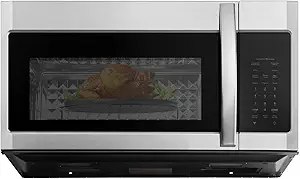 |
| Best Quality Built to a higher standard if you want something more solid | Sharp R1874TY 1.1 Cu. Ft. Microwave |  |
| Best Value The sweet spot between price and what you get | Empava Over-the-Range Microwave EMPV-30OTR01 |  |
| Best Budget The cheapest option that still gets the job done reliably | Midea Over-the-Range Microwave 1.7 Cu.Ft | 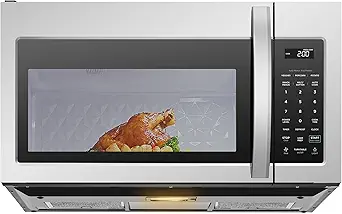 |
| Top Rated A top-rated pick with lots of positive feedback | Frigidaire Over-The-Range Microwave FFMV1846VS |  |
| Most Popular A crowd favorite that many people choose with confidence | BLACK+DECKER Over-the-Range Microwave 1.7 Cu Ft | 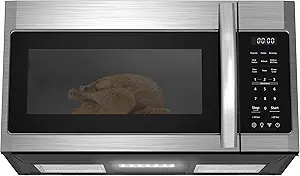 |
| Best Seller A high-volume bestseller chosen again and again | GE 30" Over-the-Range Microwave JVM3160RFSS |  |
BLACK+DECKER Over-the-Range Microwave EC942K6CE-SS

| Capacity | 1.5 cubic feet |
|---|---|
| Wattage | 900 watts |
| Cooking Programs | air fryer, bake, convection, grill, microwave |
| Vent Fan | 300 CFM, 2-speed |
This BLACK+DECKER over-the-range microwave mixes a full-featured cooking set with a strong venting solution for typical kitchen needs. It offers six cooking modes—microwave, air fry, convection, combi grill, bake, and roast—so you can reheat, crisp, or roast foods without using separate appliances. The 1.5 cu.ft. interior and 13.6-inch turntable accommodate mid-size dishes, while sensor reheat simplifies warming leftovers. Controls are touch-based with 10 power levels for fine-tuning. For venting, the built-in 300 CFM two-speed fan clears fumes and odors and includes a light to illuminate the cooktop. Practical benefits include healthier air-fryer results with less oil and the convenience of over-the-range installation that saves counter space. Trade-offs are that it is a 900W unit rather than a high-power microwave for very fast heating, and the stainless interior and multi-mode functions can take a short learning curve to get ideal results across all modes. Installation and vent ducting should be planned for the 300 CFM exhaust to perform optimally.
Best for: Buyers who want a single over-the-range unit that handles venting plus a wide range of cooking modes and value counterspace savings and versatility.
Less Ideal for: If you need the fastest possible microwave heating for heavy daily use or have limited space for professional vent ductwork, a dedicated high-wattage microwave or separate range hood may be a better choice.
- Six cooking modes including air fry and convection expand cooking options beyond standard microwaving
- Built-in 300 CFM two-speed vent fan with light helps remove fumes and lights the cooktop
- Spacious 1.5 cu.ft. interior with 13.6-inch turntable fits mid-size plates and casseroles
- Touch controls and 10 power levels allow precise adjustments and sensor reheat for convenient leftovers
- 900 watts may heat slower than higher-wattage microwaves for large volumes or rapid heating
- Multi-function controls and modes require some experimentation to optimize results
Verdict: Choose this unit when you want an over-the-range microwave that doubles as a capable venting hood and an all-in-one cooking appliance.
Sharp R1874TY 1.1 Cu. Ft. Microwave

| Capacity | 1.1 cubic feet |
|---|---|
| Wattage | 850 watts |
| Heating Method | Convection |
| Number of Programs | 20 |
| Turntable Diameter | 13 inches |
The Sharp R1874TY is an over-the-range convection microwave designed for cooks who want microwave speed plus oven-like browning. It pairs an 850-watt microwave with convection heating and 12 convection programs to brown, roast, crisp, and bake foods that a standard microwave cannot. Typical use cases include reheating, defrosting with sensor presets, quick weeknight roasts, and finishing casseroles where a crisp top matters. The unit includes a 13-inch turntable for even microwaving, a 2-color 7-digit display and touch controls for straightforward operation, and practical extras such as a hood light, 2-speed ventilation fan, and low/high venting racks built into the hood. Installation is standard for over-the-range fit and the stainless steel interior cleans easily. Limitations include a single microwave power level which reduces manual power-step control and the 1.1 cu. ft. capacity can feel tight for larger baking trays, so it is best when you plan meals around modest pan sizes.
Best for: Buyers who prioritize cooking performance and want a microwave that can vent effectively while delivering convection browning and sensor-driven convenience for everyday meals.
Less Ideal for: People who regularly cook large sheet-pan meals or need precise multi-step power level control should consider a larger countertop oven or a range with a built-in convection oven instead.
- Convection plus 850W microwave for browning and roasting as well as reheating
- Built-in exhaust system with 2-speed fan and hood light for venting and task lighting
- Smart sensor programs for automatic reheating and defrosting
- Stainless steel interior and included racks make it easy to finish oven-style dishes
- Compact 1.1 cu. ft. footprint fits standard over-the-range installations
- Only one listed microwave power level limits fine-grain manual power adjustments
- 1.1 cu. ft. capacity may be small for large casserole dishes or sheet pans
Verdict: Choose this unit if you need an over-the-range microwave that also vents well and delivers convection browning for better finished results than a basic microwave.
Empava Over-the-Range Microwave EMPV-30OTR01

| Capacity | 1.7 cubic feet |
|---|---|
| Output Microwave | 1000 watts |
| Vent Fan CFM | 300 |
| Installation Type | Over-the-Range |
| Cooking Program | Sensor Cooking |
This Empava over-the-range microwave combines a mid-size 1.7 cubic-foot cavity with 1000 watts of cooking power and a built-in 300 CFM two-speed venting system intended for typical kitchen exhaust needs. It offers sensor cooking and a range of pre-programmed auto menus for common foods, an easy-clean stainless steel interior, a glass turntable for even heating, LED cooktop lighting, and touch controls with a child lock. The vent ships configured for recirculation and includes a grease-trapping filter, so it can handle smoke and odors in kitchens without external ducting; where ducting is available it should also work as an exhaust. Practical features like 30-second express cook pads, a timer, and an LED display make daily tasks quick. Trade-offs to note are the turntable-style cavity which limits use of very large bakeware and the control panel and door are plastic-trimmed rather than fully metal, which may affect long-term durability for heavy daily use. For someone focused on solid vent performance and straightforward cooking controls, this unit covers the essentials without extra complexity.
Best for: Buyers who want a practical over-the-range unit that prioritizes effective venting and reliable, no-frills cooking controls for everyday meal prep in a standard kitchen.
Less Ideal for: If you need a flush interior for large sheet pans, a built-in convection oven, or fully premium all-metal construction, this model is not the best match.
- 300 CFM two-speed venting handles typical kitchen smoke and odors
- 1000W output with sensor cooking and pre-programmed menus for convenience
- 1.7 cu ft cavity balances cooking capacity with over-the-range fit
- Stainless steel interior and glass turntable make cleanup easier
- LED cooktop lighting provides bright, energy-efficient illumination over the range
- Turntable design restricts clearance for very large or odd-shaped dishes
- Control panel and some door components use plastic rather than fully metal construction
Verdict: Choose this Empava if you want a straightforward over-the-range microwave with solid 300 CFM venting and practical sensor cooking for everyday use.
Midea Over-the-Range Microwave 1.7 Cu.Ft

| Capacity | 1.7 cubic feet |
|---|---|
| Power Consumption | 1000 watts |
| Number of Programs | 19 |
| Number of Power Levels | 10 |
| Turntable Diameter | 12.5 inches |
The Midea 1.7 cu ft over-the-range microwave combines a roomy interior with practical venting for everyday kitchen use. It offers 1000 watts of cooking power, ten selectable power levels and 19 auto menus accessed via a touch panel, which makes reheating, defrosting, and one-touch meals straightforward. The unit also includes a 12.4-inch turntable, a bright cooktop light, and a 300 CFM adjustable exhaust designed to remove fumes and odors while you cook. Installation is the typical over-the-range style, so it replaces a hood and frees counter space. The strengths are its simple controls and strong ventilation for the price, but buyers should note the unit is basic on extras like advanced sensor cooking or multi-stage programs and the listed wattage and fan performance are manufacturer figures that may vary in real kitchens. For apartments or budget-conscious households that need reliable venting plus full-size microwave capacity, this model covers the essentials without frills.
Best for: Buyers seeking an affordable over-the-range microwave that replaces a hood and delivers strong exhaust performance and straightforward, one-touch cooking.
Less Ideal for: Users who want premium smart features, sophisticated sensor cooking, or extensive programming options should consider higher-end models instead.
- 1.7 cu ft cavity fits large dishes and a 12-inch pizza comfortably.
- 1000W cooking power with 10 power levels for flexible heating.
- 300 CFM adjustable exhaust provides strong ventilation for over-the-range installation.
- 19 auto cook menus and one-touch controls simplify common tasks.
- Bright cooktop light improves visibility on the range below.
- Limited advanced cooking features such as sensor reheat or multi-stage programming.
- Basic control set and interface without many customization options.
Verdict: A budget-friendly over-the-range microwave that pairs full-size 1.7 cu ft capacity with a strong 300 CFM exhaust to replace a hood and handle everyday venting needs.
Frigidaire Over-The-Range Microwave FFMV1846VS

| Capacity | 1.8 cubic feet |
|---|---|
| Wattage | 1000 watts |
| Turntable Diameter | 12.35 inches |
| Number of Programs | 6 |
| Installation Type | Over-the-Range |
This Frigidaire over-the-range microwave is built as a straightforward kitchen workhorse that combines a roomy 1.8 cu. ft. interior with 1000 cooking watts and a two-speed vent hood. It is typically installed above a range to provide both cooking and ventilation, with an extra-large 12.5-inch turntable to handle large casserole dishes and a zero-clearance door that opens to 90 degrees for easier access. One-touch controls and six preset programs make everyday tasks like popcorn, potato, and beverage heating simple, while the LED cooktop and interior lighting improve visibility while you cook. The two fan speeds offer basic venting capability to remove steam and light smoke; this is intended for standard residential use rather than heavy-duty commercial venting. The unit has a single power level rather than variable power steps, which keeps operation simple but limits fine control for delicate cooking. Overall it is a reliable, well-lit unit that suits homeowners who want dependable heating and modest ventilation above their range.
Best for: Home cooks who prioritize dependable, no-frills performance and reliable ventilation for everyday stovetop use and reheating.
Less Ideal for: Those who need precise low-power cooking control or commercial-strength ventilation should consider alternative models with multi-level power settings or more powerful exhaust systems.
- Spacious 1.8 cu. ft. interior fits larger cookware and a 13" x 9" baking dish
- 1000 watts of cooking power for quicker heating and reheating
- Integrated two-speed ventilation provides basic hood exhaust above the cooktop
- LED interior and cooktop lighting improve visibility during cooking
- Simple one-touch presets and add-30-seconds button for quick everyday use
- Only a single power level instead of multiple selectable power settings
- Ventilation is two-speed and suited for light to moderate use rather than heavy smoke or high-output cooktops
Verdict: Choose this Frigidaire if you want a dependable over-the-range microwave that pairs roomy cooking capacity with basic but effective two-speed venting.
BLACK+DECKER Over-the-Range Microwave 1.7 Cu Ft

| Capacity | 1.7 cubic feet |
|---|---|
| Wattage | 1000 watts |
| Turntable Diameter | 12.4 inches |
| Number of Power Levels | 10 |
This BLACK+DECKER over-the-range microwave is built for everyday kitchen use and combines a roomy 1.7 cu. ft. cavity with 1000 watts of microwave power. It installs above the stove and is intended to clear cooking fumes with a two-speed 300 CFM vent fan while providing task lighting over the cooktop. The touch control and touchscreen input make one-touch auto cooking and quick 1-3 minute high-power starts convenient, and preset programs cover popcorn, beverage, melt/soften, reheat, and defrost needs. The multi-stage cooking function lets you program power changes in a single cycle, which is helpful for recipes that need different power levels. Practical benefits include the larger turntable and stronger venting compared with compact countertop units, plus stainless steel interiors that are easier to wipe clean. Limitations to consider are the manual defrost rather than automated sensor-based thawing and the basic two-speed fan control which lacks variable or booster settings found on higher-end models.
Best for: Buyers who prioritize a reliable, well-vented over-the-range microwave with roomy capacity and simple touch controls and who prefer products with solid customer feedback and predictable performance.
Less Ideal for: Those who need advanced sensor cooking or highly variable/boosted ventilation settings for heavy-duty stovetop use should consider higher-end models with those features.
- 1.7 cu ft interior with 12.4-inch turntable provides roomy capacity for larger dishes
- 1000W power and 10 power levels enable faster and more flexible cooking
- Integrated 2-speed 300 CFM vent fan removes fumes and includes a built-in cooktop light
- Touchscreen controls and one-touch auto cook presets simplify everyday use
- Stainless steel interior and exterior are durable and easy to clean
- Defrost is manual only and lacks automatic sensor-based defrosting
- Fan has only two speeds and no booster or variable-speed ventilation
Verdict: A practical, roomy over-the-range microwave that pairs 1000W cooking power with a built-in 300 CFM vent to handle everyday venting and reheating needs reliably.
GE 30" Over-the-Range Microwave JVM3160RFSS

| Capacity | 1.6 cubic feet |
|---|---|
| Wattage | 1000 watts |
| Venting | Two-speed 300 CFM |
| Number of Power Levels | 9 |
The GE 30" over-the-range microwave is a straightforward kitchen workhorse that combines everyday cooking features with a built-in hood vent. It offers 1,000 watts and a 1.6 cu ft interior suitable for family-sized plates and casseroles, and simple one-touch controls and preset programs make reheating, popcorn, and defrosting quick. The unit includes a two-speed, 300 CFM venting system to clear steam, smoke and odors from stovetop cooking and an LED surface light with a night-light setting for cooktop visibility. Practical touches like weight/time defrost and a turntable on/off button add flexibility for oddly shaped dishes. Installation is designed for over-the-range mounting and the stainless steel finish matches many kitchens, but the microwave is a basic model without smart connectivity or advanced sensor cooking. For buyers prioritizing reliable, familiar operation and solid vent performance, this GE delivers dependable daily use with few surprises.
Best for: Buyers who want a reliable, no-nonsense over-the-range microwave with strong venting and easy controls for everyday family cooking.
Less Ideal for: Shoppers who want smart home integration, sensor-steam cooking, or premium control panels should consider other models.
- 300 CFM two-speed vent removes smoke, steam and odors from the cooktop
- Simple one-touch controls and preset programs make everyday cooking fast
- 1.6 cu ft capacity and 1000 watts handle family-sized dishes and reheats
- Turntable on/off and weight/time defrost add practical cooking flexibility
- No smart features or advanced sensor cooking for automated results
- Basic control set and feature list compared with higher-end models
Verdict: Choose this GE if you want a dependable over-the-range microwave that pairs solid 300 CFM venting with simple, reliable cooking controls.
Choosing the Right Over-the-Range Microwave for Venting: Key Factors to Consider
Fan Airflow and Power
Airflow, usually measured in cubic feet per minute, directly determines how quickly the microwave clears smoke and cooking odors from the stovetop area. Higher airflow moves more contaminated air out of the kitchen but can increase noise and require larger ducting. Consider typical cooking habits: frequent high-heat searing needs stronger airflow than occasional simmering.
Balance raw CFM numbers with the motor design and how the manufacturer rates sustained versus peak airflow. A microwave that lists multiple fan speeds gives you control, letting you run a quieter low setting for light tasks and a higher setting for heavy cooking.
Ducting Compatibility and Venting Modes
Over-the-range microwaves commonly offer rooftop, rear, or recirculating venting. The duct path available in your kitchen will constrain which microwaves are practical. Rear venting requires a clear wall path, while rooftop venting needs a ceiling or attic duct route. Recirculating mode uses charcoal or carbon filters to clean air before returning it to the kitchen but generally performs worse than true ducted exhaust.
Check the microwave's specified duct diameter and whether adapters are provided. Using undersized ductwork or long, twisting runs reduces effective airflow. If you plan to convert between venting modes later, choose a unit with simple field-convertible venting options.
Noise and Acoustic Performance
Noise matters because the microwave fan runs while you cook. A high-CFM blower that is loud can make the kitchen unpleasant and drown out conversation. Look for decibel ratings at different fan speeds and note whether noise increases dramatically at higher speeds.
In practical terms, a quieter fan with slightly lower airflow can be preferable to a noisy high-CFM unit. Consider where the microwave sits relative to living areas; open-plan homes will benefit more from low-noise operation. Also review whether the fan speed steps are gradual or jumpy, as smoother transitions improve user experience.
Grease Filters and Maintenance
Grease filters capture airborne oil and particulates before they reach the ductwork or recirculating filters. Metal baffle filters or washable aluminum filters are common and easy to maintain, while some units use disposable charcoal filters for recirculating setups.
Ease of cleaning matters. Filters that slide out without tools encourage regular maintenance, preserving airflow and prolonging motor life. Consider filter replacement frequency and whether replacements are readily available. Grease buildup not only reduces performance but also increases fire risk, so accessible filter maintenance is essential.
Installation and Mounting
Installation complexity affects total cost and how straightforward it is to swap an existing unit. Over-the-range microwaves mount to a wall bracket and fasten to the cabinet above; the unit weight, bracket design, and required clearances determine how easy this process is.
Assess whether the microwave offers adjustable mounting hardware, templates, or clear instructions. The need to reroute ducting or modify cabinetry raises installation time. If you have an existing cutout or electrical configuration, choose a microwave that aligns with those constraints to minimize additional work.
Venting Configurations Explained
Understanding the three main venting configurations helps you match a microwave to your kitchen layout. Roof or ceiling venting exhausts air vertically through attic or ceiling ducts. Rear venting pushes air horizontally into a wall duct. Recirculating venting pulls air through charcoal or carbon filters and returns it to the room without external ductwork.
Each configuration has tradeoffs. Ducted venting typically delivers the best odor and moisture removal but requires compatible duct runs. Recirculating units avoid ductwork but usually cannot move humidity or heat outside and rely on filter effectiveness.
- Rooftop/ceiling venting: Best for maximum airflow when a vertical duct run is available.
- Rear venting: Good when wall duct access exists directly behind the microwave.
- Recirculating: Practical when external ducting is impossible, but expect reduced performance.
Measuring and Matching Duct Size
The diameter of your ducting has a big impact on actual airflow. A microwave specified for a 3.25- or 4-inch duct will not perform as well if forced through a narrower or longer run. When planning an installation, measure existing ducts and compare to the microwave's recommended duct size and equivalent duct length limits.
Minimize elbows and long horizontal runs to preserve CFM. If the path requires multiple bends, choose a unit with higher rated airflow to compensate for losses. Proper sealing and smooth duct interiors also help maintain airflow efficiency.
- Aim to use the largest practical duct diameter the microwave supports.
- Keep duct runs as short and straight as possible to reduce airflow loss.
Noise Versus Performance: Finding the Right Balance
CFM numbers are only part of the story. Two units with similar airflow can sound very different. Look for published decibel figures or user reports describing noise at each fan speed. Consider whether occasional high-power operation is acceptable in your home or if consistent low-noise performance is more important.
Some microwaves include boost modes that run the fan at peak power for short bursts. These are useful for immediate smoke clearance but should not be relied on as the only way to ventilate consistently.
- Use higher fan speeds for short, intense cooking sessions and lower speeds for routine simmering.
- If noise is a primary concern, prioritize units with smoother fans and documented lower dB ratings.
Maintenance Tips to Preserve Venting Efficiency
Regular maintenance keeps airflow strong and reduces the risk of grease-related hazards. Clean or replace grease filters according to the manufacturer schedule. For recirculating systems, change carbon filters as recommended and service the blower if you notice reduced suction or unusual noises.
Inspect duct joints and seals periodically. Loose or leaking ductwork diminishes exhaust effectiveness and lets grease accumulate in unexpected areas. Keeping the vent path clean preserves long-term performance and reduces odors.
- Wash metal grease filters monthly if you cook frequently.
- Replace charcoal filters on schedule in recirculating systems.
Electrical and Clearance Requirements
Over-the-range microwaves require adequate clearance above the cooktop and a dedicated electrical supply that meets local code. Check the recommended vertical distance between the stove and the microwave bottom and confirm that your cabinetry allows the specified clearance.
Also verify the unit's electrical requirements, including whether it needs a dedicated circuit. Incorrect clearances or insufficient wiring can create safety issues and may require professional adjustments before installation.
- Measure cooktop-to-cabinet distance and compare to the microwave's clearance specs.
- Confirm the home's electrical capacity and outlet location before purchase.
How We Chose the Best Over-the-Range Microwave for Venting
We focused on features that matter specifically for over-the-range microwaves used primarily for venting. Our selection filters prioritized measurable ventilation performance, flexible ducting and mounting options, and user-friendly controls for regular kitchen use. We also weighed noise levels under real-world cooking loads, the effectiveness of grease filtering, and the range of fan speeds and airflow settings. Units missing user-serviceable filters or with limited ducting compatibility were excluded. We favored microwaves that offered multiple venting configurations, clear airflow ratings, and straightforward installation instructions. Durability and long-term maintenance were considered by looking at accessible filter replacement and how easy it is to reach fan components. Finally, we included only models that balanced adequate airflow with reasonable noise and included practical features that support frequent stovetop cooking.
Our full evaluation process is outlined in our review methodology.
FAQ
Can an over-the-range microwave effectively remove cooking smoke?
Often it can, provided the microwave has sufficient fan airflow and the ducting path is properly sized. High-CFM units with direct ducting remove smoke best; recirculating setups are less effective at clearing heavy smoke.
Is recirculating venting a reasonable option if I cannot run ducts?
Recirculating venting is reasonable when external ducting is impossible, but it typically removes fewer odors and moisture. Regular replacement of carbon filters is necessary to maintain performance.
How noisy are microwave vent fans at high speed?
Noise varies by design and motor quality. Higher fan speeds produce noticeably more decibels. Look at published dB ratings or testers' reports and choose a balance between needed airflow and acceptable noise for your space.
How often should I clean or replace the grease filters?
Washable metal grease filters should be cleaned monthly with frequent cooking and every few months for light use. Carbon filters in recirculating systems typically need replacement according to manufacturer intervals, often every 6 to 12 months depending on usage.
Will switching to larger ducting improve performance?
Yes. Increasing the duct diameter and reducing bends generally improves airflow and reduces backpressure, allowing the microwave to exhaust more effectively. However, the microwave's fan design also sets a practical limit on achievable gains.
Final Verdict
Prioritize ventilation performance, duct compatibility, and manageable noise when choosing an over-the-range microwave for venting. Assess your kitchen's duct path and clearance limits first, then match a microwave with the right CFM rating and ducting options. Keep maintenance and filter access in mind to sustain performance over time. By balancing airflow, noise, and installation complexity, you can select a unit that keeps cooking odors, grease, and heat under control.