
Note: This article contains affiliate links. If you click on these links and make a purchase, we may earn a small commission at no extra cost to you. This helps support our research and content. Read our full affiliate disclosure here.
A panini press is one of the simplest upgrades you can make to your kitchen when you want fast, restaurant-style sandwiches at home without fuss. Choosing the right panini press matters because plates that heat unevenly or are hard to clean can turn a quick lunch into a hassle. This guide covers six shortlisted panini presses for the money, selected to balance consistent heat, sturdy construction, and easy upkeep. We evaluate each option on how well it grills, how easy it is to use and maintain, and how long it will last under regular cooking conditions. Read on for concise, buyer-focused guidance that leads into our top picks.
Top Picks at a Glance
| Best Overall The best all-around choice for most situations | Breville Perfect Press BSG600BSS |  |
| Best Quality Built to a higher standard if you want something more solid | Cuisinart Griddler FIVE |  |
| Best Value The sweet spot between price and what you get | IMUSA Panini Press |  |
| Best Budget The cheapest option that still gets the job done reliably | OSTBA Sandwich Maker ABS07-G |  |
| Most Popular A crowd favorite that many people choose with confidence | Chefman Panini Press Grill RJ02-180 |  |
| Best Seller A high-volume bestseller chosen again and again | George Foreman 4-Serving Grill GRP1060B |  |
Breville Perfect Press BSG600BSS

| Wattage | 1500 watts |
|---|---|
| Voltage | 120 volts |
| Material | Stainless Steel |
| Material Type Free | PFOA Free |
The Breville Perfect Press is a small, well-built panini press designed to deliver crisp, non-squashed sandwiches. It uses an innovative Crush Control hinge and adjustable height clip so the lid applies minimal pressure while accommodating different sandwich thicknesses, which helps preserve airy breads like croissants while still browning and melting fillings. Flat cast-aluminum plates with a PFOA-free nonstick finish heat quickly on its 1500-watt element and clean easily after use, and the compact footprint stores vertically when not in use. Typical uses include paninis, breakfast sandwiches, quesadillas, and open-faced melts; the two-slice capacity and manual controls keep operation straightforward. Limitations are its small capacity and fixed plates compared with larger or dual-zone grills, so it is better for individual or couple servings than feeding a group, and there are no digital controls or temperature readouts for fine tuning.
Best for: Buyers who want a durable, easy-to-use panini press that produces toasted, fluffy sandwiches without crushing fillings and who value compact storage and simple manual controls.
Less Ideal for: Those who need to cook for larger groups, want removable plates for grilling other foods, or require precise digital temperature settings should consider larger or more feature-rich grills.
- Crush Control hinge prevents over-compression while still producing a crisp exterior
- Adjustable height clip fits different sandwich thicknesses from croissants to flatbreads
- Flat cast-aluminum plates with PFOA-free nonstick finish heat evenly and clean easily
- Compact footprint with vertical storage saves countertop space
- Two-slice capacity limits output for feeding multiple people
- No digital temperature control or display for precise settings
Verdict: Choose this compact Breville press if you want a reliable, space-saving panini maker that toasts sandwiches crisply without crushing them.
Cuisinart Griddler FIVE

| Wattage | 1500 watts |
|---|---|
| Voltage | 120 volts |
| Number of settings | 5 |
| Material | Stainless Steel |
The Cuisinart Griddler FIVE is a compact countertop appliance that combines a contact grill, panini press, full grill, full griddle, and half grill/half griddle in one unit. It is typically used for sandwiches, grilled meats, vegetables, and breakfast items; the floating cover and reversible, dishwasher-safe nonstick plates make switching between grill and griddle simple. The LCD display and digital controls let you set temperatures from 175°F to 450°F and use a sear function to develop browning on steaks or panini. Practical features include integrated drip tray for grease management and removable plates that store flat for easy cupboard storage. Because the plates are reversible and dishwasher-safe, cleanup is straightforward after heavier use. The main limitations are that countertop footprint and plate area are modest compared with full-size grills, and precise temperature control depends on placement and thickness of food, so thinner items heat faster than thick cuts. For everyday sandwich making and small-batch grilling, this model delivers reliable, repeatable results.
Best for: Buyers who prioritize a dependable, all-in-one countertop grill that handles daily sandwiches, panini, and small grilling tasks with consistent performance and easy maintenance.
Less Ideal for: Those who need a large-capacity grill for feeding many people or who want restaurant-scale searing and surface area should consider a full-size grill instead.
- Five cooking modes in one unit for flexible meal prep
- Digital LCD with adjustable temperature and timer for repeatable results
- Reversible, removable nonstick plates that are dishwasher-safe for easy cleanup
- Sear function to improve browning and flavor on meats
- Cooking surface area is limited compared with larger standalone grills
- Temperature outcome can vary with food thickness, requiring occasional monitoring
Verdict: Choose the Griddler FIVE when you want a reliable, multi-function countertop grill that consistently delivers easy-to-clean performance for sandwiches and everyday grilling.
IMUSA Panini Press

| Wattage | 1200 watts |
|---|---|
| Voltage | 120 |
| Material | Stainless Steel |
| Number of settings | 2 |
The IMUSA Panini Press is a small, straightforward countertop grill designed for quick sandwiches and simple hot breakfasts. It uses 1200 watts and nonstick top and bottom plates to sear paninis, grilled cheese, French toast, and similar items; the cast aluminum plates support even heating while the stainless steel shell keeps the unit looking tidy. A temperature knob with power and ready indicator lights lets you pick a hotter or lower setting, and the adjustable height plus locking clip accommodates thicker fillings and makes storage easier. Rubber feet add stability during use and cleanup is easier thanks to the nonstick surface, though the compact cooking area limits you to single or small portions at a time. This model is best for daily snack- and meal-prep tasks where convenience and a small footprint matter, but it is not aimed at high-volume cooking or commercial use.
Best for: Buyers who want a space-efficient, reliable panini press for everyday sandwiches and quick meals and who prioritize easy cleanup and simple controls.
Less Ideal for: Those who need to cook large quantities at once, want a commercial-grade grill, or need advanced digital controls and presets.
- Compact footprint fits small counters or apartments
- Nonstick top and bottom plates simplify cleanup and food release
- Adjustable temperature and height settings accommodate different fillings and thicknesses
- 1200W power delivers quick preheat and fast cooking time
- Cooking surface is small, limiting batch size and larger sandwiches
- Controls are basic with only two main settings and a simple knob
Verdict: A compact, no-frills panini press that delivers reliable, easy-to-clean performance for everyday sandwiches and small kitchens.
OSTBA Sandwich Maker ABS07-G

| Wattage | 750 watts |
|---|---|
| Voltage | 120 volts |
| Material | Aluminum |
This OSTBA sandwich maker is a straightforward, space-conscious panini press designed for quick sandwiches, paninis, and small grilled items. Its 750W heating element warms up fast and the raised nonstick plates create sear marks while letting excess fat drain away, which helps produce crisp results without extra oil. Indicator lights make operation simple and the cool-touch handle plus cord-wrap storage suit tight kitchens and quick put-away. The plate area is sized for two slices or a single panini rather than large artisan bread, so it is best for single-serve meals and weekday breakfasts. Cleanup is easier thanks to the nonstick surface, but the plates are not removable so scraping or careful wiping is needed after use. Build is lightweight aluminum that keeps the unit affordable but feels less heavy-duty than thicker cast models. For buyers who want a reliable, no-frills sandwich toaster that saves counter space and heats consistently, this is a practical option; those needing larger capacity or removable plates should consider heavier-duty alternatives.
Best for: Buyers who prioritize a compact, efficient sandwich maker for daily breakfasts and quick meals and want a simple appliance that stores easily and heats reliably.
Less Ideal for: People who need to grill larger sandwiches, cook for several people at once, or prefer removable plates for dishwasher cleaning should look elsewhere.
- Fast, consistent heating from a 750W element for quick toasting
- Raised nonstick grill plates produce sear marks and allow fat to drain
- Cool-touch handle and indicator lights improve safety and ease of use
- Compact footprint with cord-wrap storage saves counter space
- Durable nonstick surface simplifies cleanup
- Plates are not removable, which makes deep cleaning harder
- Lightweight aluminum construction feels less rugged than heavy-duty models
Verdict: A compact, no-frills sandwich press that delivers quick, consistent toasting and saves counter space for practical everyday use.
Chefman Panini Press Grill RJ02-180

| Wattage | 1000 watts |
|---|---|
| Voltage | 120 volts |
| Number of settings | 1 |
| Material | Stainless Steel |
The Chefman Panini Press Grill is a small, versatile contact grill designed for quick sandwiches and simple grilling tasks. It heats via a single manual setting and 1000 watts of power, using nonstick coated plates and a floating hinge so you can press thin grilled cheeses or thicker stuffed paninis. The unit also opens flat to 180 degrees to become a mini griddle for burgers, chicken, fish, or vegetables, and the removable drip tray plus sloped design helps channel grease away for easier cleanup. Its compact footprint makes it practical in small kitchens, dorm rooms, or offices. Limitations include a single fixed temperature/setting, which reduces precise control for delicate foods, and a relatively small cooking surface that fits two sandwiches or one large panini at a time. While sturdily built with stainless steel trim, power users who want variable heat or larger capacity will find it too basic, but for straightforward pressed sandwiches and occasional grilling it delivers consistent, easy results.
Best for: Buyers who want an affordable, no-frills press that reliably makes toasted sandwiches and can double as a small grill in tight kitchens.
Less Ideal for: Those who need precise temperature control, larger cooking capacity, or professional-grade speed and power should consider higher-end models instead.
- Floating hinge accommodates different sandwich thicknesses
- Opens 180 degrees to double as a small griddle
- Nonstick plates and removable drip tray simplify cleaning
- Compact footprint suits small kitchens and dorm rooms
- Single fixed cooking setting with no temperature control
- Cooking surface is limited to about two sandwiches at once
Verdict: A compact, easy-to-clean panini press that reliably makes toasted sandwiches and small grilled meals for buyers focused on value and simplicity.
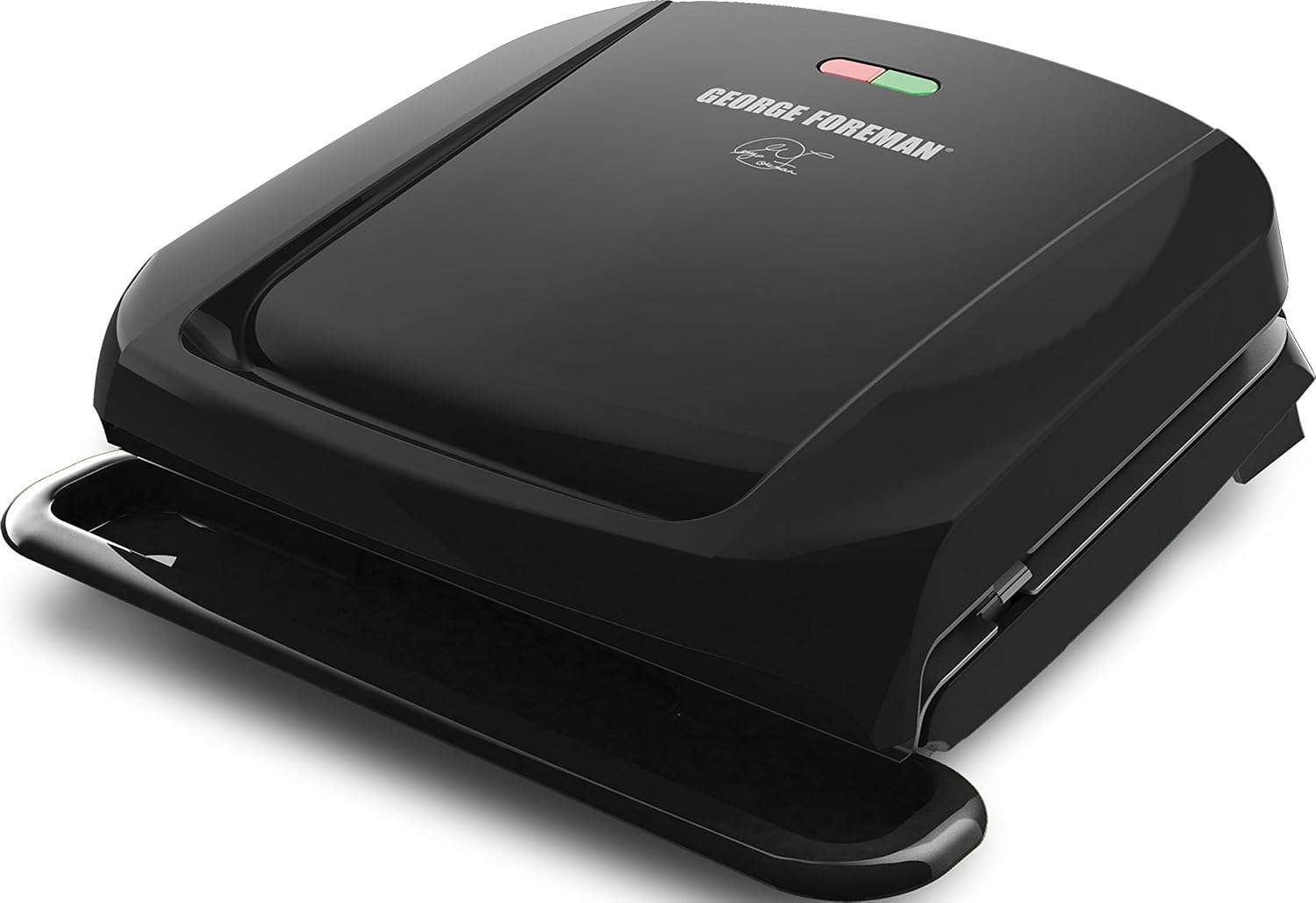
George Foreman 4-Serving Grill GRP1060B
| Wattage | 1800 watts |
|---|---|
| Voltage | 110 |
| Material | Ceramic |
| Number of settings | 1 |
The George Foreman 4-Serving Indoor Grill is a simple contact grill and panini press aimed at everyday kitchen use. It heats quickly with 1800 watts and a claimed 35% faster preheat, so sandwiches, burgers, and vegetables reach serving temperature fast. The removable dishwasher-safe plates and durable George Tough nonstick surface make cleanup straightforward, and the sloped cooking surface channels fat away while grilling. With a single heat setting it is easy to operate for routine toasting and pressing tasks, though it lacks precise temperature controls for delicate items. Its 4-serving footprint fits small families or couples and the ceramic, PTFE-free coating reduces reliance on added oil. The main limitations are the single setting and basic controls, which mean less flexibility for browning levels or specialty cooking, but for reliable, low-effort sandwich toasting and panini pressing this grill delivers consistent, easy results.
Best for: Buyers who want a straightforward, low-fuss sandwich toaster and panini press that works reliably for everyday meals and prioritizes fast heat-up and easy cleanup.
Less Ideal for: Users who need precise temperature control or multiple cooking modes for specialty recipes should consider more advanced grills or countertop ovens instead.
- Removable dishwasher-safe grill plates for easy cleanup
- Durable nonstick George Tough coating that reduces need for added oil
- Heats quickly with 1800W power for fast sandwich toasting
- Sloped surface drains fat for leaner cooking
- Single heat setting limits control over browning and cooking intensity
- No temperature display or adjustable thermostat for precise cooking
Verdict: A dependable, easy-to-use sandwich toaster and panini press that delivers fast heating and dishwasher-safe plates for minimal-maintenance everyday use.
Choosing the Right Panini Press for the Money: Key Factors to Consider
Heat Consistency and Plate Coverage
Even heat across the cooking surface determines how well a sandwich browns and how evenly fillings warm. Irregular hotspot patterns lead to burned crusts on one side and undercooked interiors on the other.
Look for presses with thick, well-seated plates and thermostats that regulate temperature steadily. Larger or double-plate designs should provide uniform contact across the bread surface so you do not need to flip or rotate your sandwiches mid-cycle.
Plate Material and Coating
The plate material affects searing, release, and longevity. Cast plates or heavy-gauge aluminum tend to hold heat better, producing firmer grill marks and more consistent browning. Nonstick coatings make cleanup faster but vary widely in durability.
If you grill often, prioritize robust plate finishes that resist scratching and maintain release properties under repeated use. Removable plates are convenient for deep cleaning and can extend the useful life of the appliance when handled properly.
Temperature Control and Versatility
Some panini presses offer only an on/off indicator while others provide adjustable temperature settings or a dial. Adjustable controls let you tailor heat for delicate breads, thick artisanal loaves, or melts with fragile fillings.
Thermostat responsiveness matters when you switch from thin to thick bread or when reheating cold fillings. A press that holds target temperature reliably will produce repeatable results and reduce the learning curve for consistent sandwiches.
Ease of Cleaning and Drip Management
Grease and cheese can make cleaning a chore if the press lacks a simple way to capture drips. Integrated drip trays, removable plates, or sealed cooking surfaces reduce maintenance time and keep the countertop tidy.
Nonstick surfaces are helpful, but plan for occasional deep cleans. Models with removable plates that are dishwasher-safe simplify long-term care and encourage more frequent use without the dread of lengthy scrubbing sessions.
Size, Storage, and Countertop Footprint
Panini presses vary from compact single-sandwich units to larger machines that handle multiple sandwiches or oversized loaves. The physical footprint will affect whether you leave the unit on the counter or store it.
Consider overall height and whether the lid locks for vertical storage. Cord length and storage features also influence how neatly the press fits into your kitchen when not in use, particularly in smaller kitchens where space is at a premium.
Build Quality and Daily Reliability
Durability matters for a frequently used appliance. Hinges, lid tension, and the quality of knobs or switches are common failure points when construction is lightweight.
Seek presses with sturdy hinges and a stable base that resists sliding during use. A solid feel during operation usually indicates components designed to last through regular household cooking cycles.
Which Press Style Fits Your Routine
Panini presses come in a few practical styles: compact clamshell units for single sandwiches, larger double-sided plates for two or more portions, and adjustable-hinge models that accommodate thicker ingredients. Match the style to how often you cook and how many sandwiches you typically prepare at once.
If you mostly make single lunches or snacks, a compact press saves space and heats quickly. For entertaining or family meals, a larger unit with more plate area reduces batch time and yields more consistent results across multiple sandwiches.
- Compact clamshell: best for small kitchens and solo cooks
- Large double plate: good for families or batch cooking
- Adjustable hinge: ideal for thick breads or panini-style melts
Maintenance Habits That Extend Lifespan
Regular cleaning after each use prevents grease buildup that can degrade nonstick coatings and clog drip channels. Wipe hot plates with a soft cloth and mild detergent when slightly cooled, and remove any trapped crumbs from hinges and edges.
Deep clean removable plates periodically and inspect the housing for trapped food. Avoid abrasive scrubbing on coated surfaces, and follow manufacturer recommendations for dishwasher-safe components to preserve finishes.
- Wipe plates after cooling to avoid hardened residue
- Empty and clean drip trays after each use
- Avoid metal utensils that can scratch nonstick coatings
Maximizing Results With Bread and Fillings
Choose breads and fillings that match the press capabilities. Dense or crusty breads take longer to heat through and benefit from heavier, hotter plates that maintain contact. Thin breads and wraps require less press time to avoid over-browning.
Prepping fillings can improve outcomes. Pat moist ingredients dry when possible to reduce dripping, and pre-slice dense proteins so heat penetrates faster. Use lower heat or shorter cycles for cheeses that brown too quickly.
- Use a light brush of oil for crisping crusty breads
- Press sandwiches in even, short cycles rather than one long press
- Allow the press to preheat fully for consistent results
Safety and Countertop Considerations
Hot surfaces and steam are intrinsic to panini presses. Position the unit on a heat-resistant surface with clearance around the sides and back for ventilation. Keep the cord away from hot areas and avoid placing the press under cabinets while in use.
Look for features such as cool-touch exteriors, secure locking lids, and visible power indicators to reduce the risk of accidental contact or leaving the device on unintentionally.
- Allow sufficient ventilation to avoid heat damage to cabinets
- Use the locking latch for safe vertical storage
- Unplug and cool fully before deep cleaning
Small Upgrades That Improve Daily Use
Minor features often make the biggest difference in day-to-day satisfaction. Removable plates, built-in drip trays, and adjustable feet help the press fit into real-world kitchens. Indicator lights and ready-to-cook signals reduce guesswork.
Consider how the controls feel in use. A simple dial can offer more control than a single lighted on-off switch, while a compact design with a low profile may store more easily in small cabinets.
- Removable plates save cleanup time
- Visible ready indicators improve timing
- Compact designs tend to store more easily in limited spaces
How We Chose the Best Panini Press for the Money
Our selection process focused on practical criteria that reflect real everyday use. We prioritized units that deliver consistent surface temperature across the grill plates because even heating determines browning, melt, and overall sandwich texture. Build durability and materials were weighed heavily, with attention to plate construction, hinge design, and exterior finishes that stand up to frequent use. Ease of cleaning factored into selection, including nonstick performance, removable plate options, and drip management for messy fillings. Temperature control and thermostat responsiveness were included so models could handle different bread types and fillings. Usability features such as footprint, cord management, and indicator lights rounded out the evaluation. We excluded products that lack clear temperature control, have known durability issues, or do not provide basic safety features. Models that are one-off novelty designs or intended for occasional party use were not considered. In short, we filtered for consistent heating, robust construction, manageable maintenance, and straightforward user controls. The scoring metrics we used reflect these priorities to help you compare strengths and tradeoffs quickly.
Our full evaluation process is outlined in our review methodology.
FAQ
Can I use frozen sandwiches in a panini press?
Often you can, but results depend on thickness and fillings. Use a lower temperature and longer cycle to allow the center to defrost without burning the exterior, and check midway to prevent overcooking.
Are removable plates worth the extra cost?
Usually removable plates pay off if you plan to clean frequently or want dishwasher convenience. They simplify deep cleaning and reduce the risk of trapped grease that shortens appliance life.
How do I prevent soggy bread when pressing sandwiches?
Pat wet ingredients dry when possible and toast at a higher temperature for shorter bursts. Thicker breads may need slightly longer presses but start at a moderate heat to ensure fillings warm through before the crust over-browns.
What maintenance keeps a panini press working longer?
Wipe plates after each use, empty drip trays, and avoid abrasive cleaners on coated surfaces. Inspect hinges and fasteners occasionally and perform deep cleans on removable parts to prevent buildup.
Is it safe to leave the press on while I prepare multiple sandwiches?
It is common to keep the unit powered between batches, but watch for overheating and give the press short rest periods if it becomes very hot. Always follow the appliance safety features and never leave it unattended for long stretches.
Final Verdict
When choosing a panini press for the money, prioritize even heat distribution, durable plate construction, and manageable cleaning. Those factors drive the day-to-day experience more than bells and whistles. Decide first whether you need a compact single-sandwich unit or a larger model for batch cooking, then match temperature control and plate style to the breads and fillings you use most. With these tradeoffs in mind, you can confidently select a press that delivers consistent, crispy results and stands up to regular use.