
Note: This article contains affiliate links. If you click on these links and make a purchase, we may earn a small commission at no extra cost to you. This helps support our research and content. Read our full affiliate disclosure here.
If you need a compact machine to protect documents, photos, or small craft projects, a personal laminator can keep paper items looking new and handling daily use. Choosing the right model matters because warm-up time, reliability, and the range of pouch sizes determine how quickly and cleanly you can finish a job. This guide shortlists the top personal laminators for home and small-office tasks and explains the practical tradeoffs that matter. Below are our top picks and the evaluation criteria we used to compare them, followed by detailed buying guidance to help you select the best fit.
Top Picks at a Glance
| Best Overall The best all-around choice for most situations | Scotch PRO TL906 Thermal Laminator |  |
| Best Value The sweet spot between price and what you get | bonsaii 9-Inch Laminator |  |
| Best Budget The cheapest option that still gets the job done reliably | bonsaii 9-Inch Laminator |  |
| Top Rated A top-rated pick with lots of positive feedback | Scotch TL901X Thermal Laminator |  |
| Most Popular A crowd favorite that many people choose with confidence | Amazon Basics 9-Inch Thermal Laminator |  |
| Best Seller A high-volume bestseller chosen again and again | SINOPUREN 9-Inch Laminator |  |
Scotch PRO TL906 Thermal Laminator

| Warm Up Time | 5 Minutes |
|---|---|
| Speed | 1.25 feet_per_minute |
| Number of Rollers | 2 |
| Compatible Pouch Thickness | 3 mil, 5 mil |
The Scotch PRO TL906 is a small, user-friendly thermal laminator aimed at home, school, and light office projects. It accepts pouches up to 9 inches wide and heats two rollers to produce bubble- and wrinkle-free laminates using either 3-mil or 5-mil pouches. Setup is simple: the unit warms up in about five to six minutes and laminates at roughly 15 inches per minute, which is quick enough for occasional batches of flyers, recipe cards, photos, and ID-size items. LED controls and Never Jam Technology make feeding easier and reduce the risk of misfeeds, and the one-hour auto shutoff helps conserve energy between tasks. The machine is compact and portable, so it stores easily when not in use, though its narrower width and single basic speed mean it is best for personal or classroom workloads rather than continuous heavy-duty use. Two laminating pouches are included to get you started, and it works best paired with brand pouches for the clearest finish.
Best for: Buyers who want a reliable, compact laminator for occasional home, school, or small-office projects and value ease of use and clean results.
Less Ideal for: Users who need heavy daily throughput, wide-format laminating, or industrial-strength continuous operation should look at larger, commercial models.
- Accepts up to 9-inch-wide pouches and works with both 3-mil and 5-mil thicknesses
- Two heated rollers and dual temperature settings for smooth, bubble-free laminates
- Never Jam Technology and LED controls simplify feeding and operation
- Fast warm-up (about 5–6 minutes) and reasonable laminating speed (~15 in/min)
- Not designed for high-volume or continuous commercial laminating
- Limited to one basic laminating speed and narrower maximum width
Verdict: A compact, easy-to-use personal laminator that delivers professional-looking 3- and 5-mil laminates for home, school, and small-office needs.
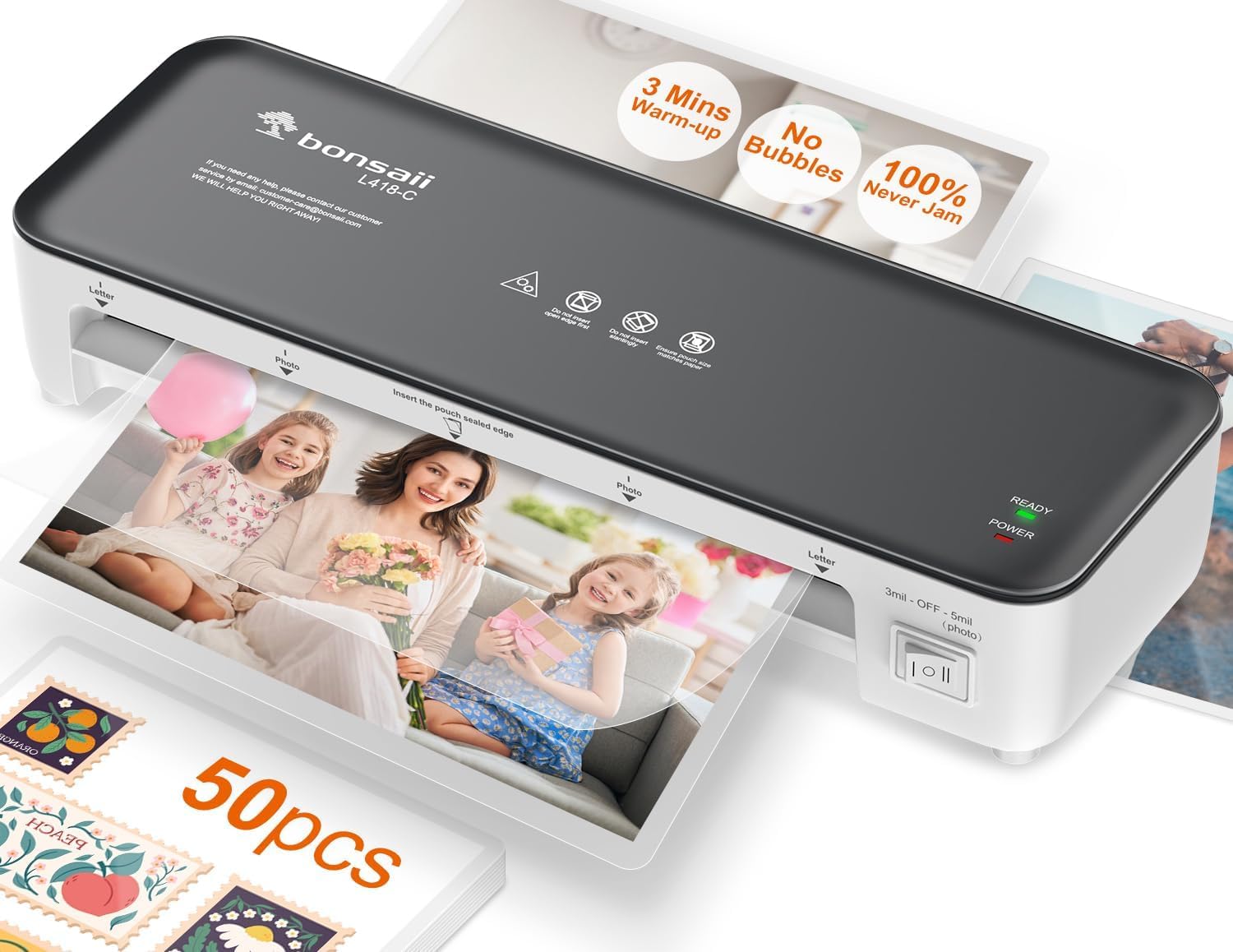
bonsaii 9-Inch Laminator
| Laminating width | 9 inches |
|---|---|
| Pouches included | 50 Count |
| Warm up time | 1-3 Minute |
| Speed | 0.98 feet_per_minute |
| Number of rollers | 2 |
This compact bonsaii laminator is designed for everyday home, classroom, or small office use and handles up to 9-inch (A4) documents with included 50 pouches. It uses thermal lamination with two rollers and a short 1–3 minute warm-up, so you can laminate photos, ID cards, worksheets, and business cards quickly at roughly 0.98 feet per minute. The unit features patented anti-jam technology which reduces interruptions and protects items during feeding, and it supports 3 mil and 5 mil pouches for thin paper or thicker card stock. Its lightweight, narrow footprint makes it easy to store when not in use, and the straightforward single-mode operation keeps it simple for teachers and parents who need reliable results without a learning curve. Limitations are typical for a personal 9-inch machine: it is not intended for high-volume commercial work and its single processing speed and limited pouch thickness options restrict heavy-duty or specialty laminating tasks.
Best for: Buyers who want a simple, reliable personal laminator for occasional classroom, home, or small-office projects and value ease of use and quick readiness.
Less Ideal for: People who need a heavy-duty or high-throughput laminator for large print runs, wide-format documents, or specialty materials should look at larger commercial models.
- Patented anti-jam technology reduces feeding jams and protects documents
- Quick warm-up (1–3 minutes) for fast, on-demand laminating
- Includes 50 laminating pouches so you can start immediately
- Compact, lightweight profile that is easy to store and portable
- Not suited for high-volume or heavy commercial laminating needs
- Only supports basic pouch thicknesses (3 mil and 5 mil) and a single speed
Verdict: A compact, easy-to-use 9-inch laminator with anti-jam protection and included pouches that makes quick, reliable laminating convenient for home and classroom use.
bonsaii 9-Inch Laminator

| Warm up time | less 4 min |
|---|---|
| Number of rollers | 2 |
| Unit count | 5 Count |
| Compatible film thickness | 3 mil (max 0.5mm) |
The bonsaii 9-inch laminator is a small thermal machine intended for petty lamination tasks like ID cards, photos, and classroom projects. It warms up in under four minutes and runs at about 270 mm/min, so you can laminate single sheets quickly without a long wait. The unit is portable and lightweight, making it easy to store or move between a home desk and a classroom. Notable features include a two-roller feed for consistent pressure and an ABS jam-release button that frees stuck pouches without disassembly. It ships with five pouches to start and is quiet in operation, which helps in shared spaces. On the downside it only supports up to 3 mil film (about 0.5 mm) so it is not meant for heavy-duty lamination jobs, and the small working width limits you to A4/9-inch items. For straightforward, occasional lamination where space and budget matter, this model covers the basics reliably.
Best for: Buyers looking for an inexpensive, compact laminator for occasional home, classroom, or small office projects who prioritize portability and ease of use over heavy-duty performance.
Less Ideal for: People who need to laminate large-format items, thick or commercial-grade materials, or who regularly process high volumes.
- Fast warm-up under 4 minutes for quick, occasional use
- ABS jam-release system simplifies clearing stuck pouches
- Compact, lightweight design that is easy to store and move
- Quiet operation suitable for classrooms and shared spaces
- Supports only up to 3 mil (0.5 mm) film, not suitable for heavy-duty lamination
- 9-inch maximum width restricts larger documents or posters
Verdict: A budget-friendly, compact 9-inch laminator that reliably handles basic home and classroom lamination tasks with easy jam release.
Scotch TL901X Thermal Laminator

| Speed | 1 feet_per_minute |
|---|---|
| Warm Up Time | 5 minutes |
| Number of Rollers | 2 |
| Compatible Pouch Thickness | 3 mil or 5 mil |
The Scotch TL901X is a small thermal laminator aimed at everyday home, school, and light office tasks. It uses two heated rollers and offers two temperature settings so you can run either 3-mil or 5-mil pouches, producing bubble- and wrinkle-reduced finishes suitable for photos, ID cards, signs, and frequently handled documents. Setup is simple: the unit warms in about five minutes and laminates at roughly one letter-size page per minute, and a release lever helps free misfed pouches. Its 9-inch width limit keeps the machine compact and easy to store, and the clear, photo-safe finish makes it a good choice for preserving artwork and classroom materials. The main limitations are its modest throughput and single-width capacity, so it is not intended for high-volume or wide-format professional jobs, and warm-up plus run speed mean larger batches take time. For typical personal projects the TL901X delivers consistent, professional-looking results with straightforward operation.
Best for: Buyers who want a reliable, easy-to-use laminator for occasional personal, school, or light office projects and value consistent, professional-looking results over high throughput.
Less Ideal for: People who need to laminate wide-format documents, run high volumes, or require industrial-speed output should choose a larger commercial model.
- Two heated rollers and two temperature settings for smooth, bubble-reduced laminates
- Accepts both 3-mil and 5-mil pouches for versatile thickness choices
- Compact footprint suitable for home, classroom, or small office storage
- Release lever to clear jams and reduce ruined pouches
- Maximum width limited to 9 inches, not suitable for wide-format items
- Slow laminating speed and single-sheet throughput make large batches time consuming
Verdict: A dependable compact laminator that produces consistent, bubble-reduced results for home and school use.
Amazon Basics 9-Inch Thermal Laminator

| Warm up time | 5 minute |
|---|---|
| Number of rollers | 2 |
| Compatible pouch thickness | 3 mil or 5 mil |
This small-format thermal laminator is built for basic home, school, and small office tasks like laminating photos, business cards, certificates, and letter- or legal-size documents. It offers two heat settings for 3-mil and 5-mil pouches, a 3–5 minute warm-up with a ready indicator light, and a simple jam-release lever to clear misfeeds. The unit includes two 3-mil pouches and has two rollers for steady feeding, so results are generally even and glossy for standard paper weights. Its limitations are obvious: it only handles pouches up to 9 inches wide and cannot laminate thick materials like wood, fabric, or foam, and heavier stock may require careful feeding at the proper heat setting to avoid wrinkles. For everyday laminating tasks where speed, simplicity, and predictable results matter, this machine covers the essentials without extra bells.
Best for: Buyers who want a straightforward, low-maintenance laminator for regular household, classroom, or small office tasks and who value predictable, easy operation backed by many user reviews.
Less Ideal for: People who need to laminate oversized items, thick substrates, or non-paper materials should look for a wider-format or heavy-duty pouch laminator instead.
- Quick warm-up with indicator light for fast, repeat use
- Two heat settings for compatibility with 3-mil and 5-mil pouches
- Jam-release lever simplifies clearing misfeeds
- Compact footprint suitable for small desks or craft stations
- Maximum pouch width limited to 9 inches, so not for larger documents
- Cannot laminate non-paper materials such as wood, cloth, or foam
Verdict: A reliable, no-frills personal laminator that delivers fast, consistent results for standard paper and photo laminating tasks.
SINOPUREN 9-Inch Laminator

| Warm Up Time | 3 minute |
|---|---|
| Number of Rollers | 2 |
| Supports Pouch Thickness | 3–5 mil |
The SINOPUREN 9-inch laminator is a multi-function desktop unit designed for everyday laminating tasks at home, in classrooms, or small offices. It warms up in about three minutes and uses a smooth two-roller system to laminate documents with 3 to 5 mil pouches up to 9 inches wide, producing bubble-free results for worksheets, photos, certificates and flashcards. The machine integrates a paper trimmer, 2-hole punch and corner rounder so you can finish sheets immediately without extra tools, and an ABS one-touch jam-release prevents stuck pages from being damaged. Practical safety and convenience features include overheat protection and simple one-button operation, which make it beginner friendly. The unit is lightweight and compact, so it fits on crowded desks but may feel basic for heavy daily commercial use; it also only supports up to 9-inch width and 3–5 mil pouch thickness, so larger or thicker lamination jobs will need a different model.
Best for: Buyers who want a safe, easy-to-use laminator for routine home, classroom or small office projects and prefer a worry-free, beginner-friendly device that includes finishing tools.
Less Ideal for: Users who need to laminate large-format materials, very thick items, or high-volume commercial workloads should consider a wider, heavier-duty laminator instead.
- All-in-one design with built-in trimmer, 2-hole punch and corner rounder for finished outputs without extra tools
- Fast warm-up (about 3 minutes) and smooth two-roller system for consistent, bubble-free lamination
- ABS one-touch jam-release to clear misfeeds quickly and protect documents
- Compact and lightweight footprint that fits on classrooms, home desks and small office workspaces
- Limited to laminating up to 9 inches wide and 3–5 mil pouches, so it cannot handle larger or very thick jobs
Verdict: A compact, beginner-friendly laminator that combines lamination with trimming, punching and corner rounding for reliable everyday personal and classroom use.
Choosing the Right Personal Laminator: Key Factors to Consider
Warm-Up Time and Ready Indicator
How fast a laminator reaches operating temperature matters when you have small batches or intermittent jobs. A short warm-up reduces idle time and makes the device useful for quick tasks, while a clear ready indicator gives confidence that the machine is at the correct temperature. Inconsistent heating can cause poor seals or bubbles, so models with accurate temperature control or explicit temperature settings tend to deliver more consistent results.
For buyers who plan to laminate occasionally, a slightly longer warm-up is acceptable. For regular use or short jobs spaced throughout the day, favor models with sub-minute warm-up times and reliable ready lights.
Pouch Sizes and Maximum Thickness
The range of pouch sizes and the maximum pouch thickness determine what you can laminate. Standard personal laminators usually handle common pouch thicknesses used for ID cards, small photos, and documents. Thicker pouches produce sturdier results but require more heat and pressure, so verify the maximum mil thickness a machine supports if you plan to protect thicker items or make rigid edge-laminated pieces.
Also consider whether the unit accepts different width pouches and whether it can accommodate small items using carrier sheets or corner guards. A versatile pouch compatibility increases the device's usefulness for crafts, signage, and preservation tasks.
Feed Mechanism and Jam Recovery
A smooth, consistent feed mechanism minimizes wrinkles, bubbles, and uneven sealing. Simple friction rollers with good alignment perform well for most home tasks. Equally important is how the unit handles jams: models with reversible feed or an accessible rear panel let you clear stuck pouches without damaging papers or the machine.
Frequent jams or difficult recovery procedures mean more downtime and potential waste of pouches and documents, so prioritize machines with straightforward jam-clear procedures and clear user guidance.
Size, Weight, and Storage
Personal laminators are often used in multipurpose areas, so physical size and storage options matter. A small footprint makes the machine easier to keep on a desk or shelf. Weight affects portability; lighter units are simpler to move between rooms but may sacrifice some build robustness. Consider if the laminator needs to stay out on a work surface or be stored away. Some models offer cord wrap or built-in document guides that improve usability without adding bulk.
Think about where you will use the machine and whether compactness or sturdiness is the priority.
Controls and User Convenience
Straightforward controls reduce errors. Basic on/off and ready lights are sufficient for many users, while models with selectable heat modes, cold-laminate options, and simple feed direction controls offer more flexibility. A one-touch start, clear indicators, and simple instructions matter for occasional users and busy households.
Extra convenience features such as a carrying handle, quick-release buttons, or included trimming tools can improve the overall experience even if they are not strictly necessary for lamination performance.
Cold Vs Hot Lamination: When to Use Each
Cold lamination uses pressure-sensitive pouches and is best for heat-sensitive items such as wax-based photos, certain inks, or delicate craft materials. It also eliminates warm-up time and reduces the risk of heat-related distortion. Cold lamination is useful for quick labels, badges, and items that cannot tolerate elevated temperatures.
Hot lamination produces a firmer, more permanent seal and is generally better for photos and documents that benefit from a complete adhesive bond. Hot pouches and heat-assisted rollers typically create a smoother finish with fewer bubbles when used correctly. Choose a model that supports both modes if you expect varied projects.
- Cold mode for heat-sensitive items and fast jobs
- Hot mode for durable, permanent seals
- Some personal laminators include both options for flexibility
Maintaining Your Laminator for Consistent Results
Regular maintenance extends the life of a personal laminator and prevents common issues like buildup and jamming. Wipe rollers periodically with a lint-free cloth recommended by the manufacturer and avoid abrasive cleaners. If a pouch sticks or residue accumulates, consult the manual for manufacturer-approved cleaning strips or techniques.
Store pouches flat and away from direct sunlight to prevent warping. When laminating multiple items, allow the machine to cool periodically if it feels overly hot to the touch, and avoid forcing oversized pouches through the feed path.
- Clean rollers as recommended to prevent adhesive buildup
- Store pouches flat and in a cool, dry place
- Use reversible feed or jam-release features to clear stuck pouches
Common Mistakes and How to Avoid Them
Feeding a pouch that is too large or too thick for the machine is a common cause of jams and poor seals. Always check pouch specifications before use. Failing to allow sufficient warm-up or inserting items off-center can also result in wrinkles or uneven lamination.
Using low-quality pouches can produce inconsistent results and may leave adhesive residue on rollers. Invest in compatible pouch types and follow the alignment guides or carrier instructions provided with the machine.
- Confirm pouch size and thickness before laminating
- Center items in the pouch and leave proper margins
- Use manufacturer-recommended pouch types for best results
How to Choose Pouch Types and Finish
Pouch thickness is measured in mils and affects rigidity. Thinner pouches are flexible and fine for ID cards and small photos, while thicker pouches create stiffer results suitable for signage or display cards. Consider what you want the finished piece to do before selecting pouch thickness.
Finish is another consideration. Gloss pouches create a shiny, high-contrast look, while matte pouches reduce glare and can look more professional for print materials. Some crafters prefer specialty finishes for textured effects, but these may require specific handling.
- Choose pouch mil thickness based on desired rigidity
- Select gloss for vibrant color, matte to reduce glare
- Verify your laminator supports the pouch finish and thickness
Accessories That Improve Workflow
Simple accessories can make lamination faster and safer. A small trimmer or guillotine ensures neat edges after lamination. Corner rounders remove sharp corners for IDs or handled cards. Carrier sheets protect the rollers when laminating very small items, and alignment guides help keep paperwork centered.
Consider a compact storage bin for pouches to keep them flat and a heat-resistant mat for temporary placement if you need to rest hot items after lamination.
- Trimmers and corner rounders for finished presentation
- Carrier sheets to protect rollers and small items
- Storage solutions to keep pouches flat and accessible
How We Chose the Best Personal Laminator
We focused on features that affect everyday use in home and small-office settings. Primary evaluation criteria included heat-up time and readiness, which determines how much idle time you experience between jobs; pouch compatibility and maximum pouch thickness, which affect the size and durability of items you can laminate; run reliability and jam recovery, since frequent stalling or difficult clears make simple jobs frustrating; and build quality and footprint, because many buyers need a compact, durable unit that stores easily. We also weighed convenience factors such as one-touch controls, reversible feed for jam clearing, and whether the unit supports both cold and hot lamination. For exclusions, we omitted large-format or industrial laminators, machines intended exclusively for heavy professional print shops, and novelty laminators with nonstandard pouch formats. The final shortlist prioritizes machines that combine quick readiness, consistent sealing across pouch types, and straightforward maintenance.
Our full evaluation process is outlined in our review methodology.
FAQ
Can a personal laminator handle photos and printed pages?
Yes. Most personal laminators handle standard photo paper and printed pages, especially when used with compatible hot pouches. Use the correct pouch thickness and allow for sufficient warm-up to ensure a smooth seal.
How long do laminated items last?
Laminated items can remain protected for many years. Longevity depends on pouch quality, exposure to sunlight, and handling. Proper sealing and storage away from heat and moisture extend lifespan.
Is a carrier sheet necessary?
A carrier sheet is helpful when laminating small or thin items because it stabilizes the piece and protects rollers from adhesive transfer. Some laminators include carriers or provide guidance on when to use one.
What causes bubbles or wrinkles in lamination?
Bubbles or wrinkles typically come from insufficient heat, off-center placement, or using a pouch that is too thick or thin for the machine. Ensuring even feed, correct pouch selection, and allowing proper warm-up minimizes these problems.
Can I laminate fabric or bulky craft materials?
Personal laminators are designed for paper and similar flat materials. Very thick or bulky fabric items often exceed the machine's capacity and may cause jams. For craft items, test on scrap material and check maximum pouch thickness before attempting.
How do I clear a jam safely?
Turn the machine off and unplug if possible, then follow the manufacturer's jam-release instructions. Many units offer a reverse feed function to back the pouch out gently. Avoid pulling hard on the pouch to prevent damage to rollers or the item being laminated.
Final Verdict
Personal laminators are practical tools for protecting documents, photos, and small craft projects. Prioritize warm-up time and pouch compatibility if you need quick turnovers and versatility; focus on feed reliability and maintenance features if you value consistent, professional-looking seals. Consider the physical footprint and convenience features if space and intermittent use matter. With those tradeoffs in mind, choose a model that matches the thickness and finish of the items you plan to laminate and that offers straightforward jam recovery and simple controls for dependable results.