
Note: This article contains affiliate links. If you click on these links and make a purchase, we may earn a small commission at no extra cost to you. This helps support our research and content. Read our full affiliate disclosure here.
When you need hot water quickly at a single sink or fixture, a point-of-use water heater can cut wait time and reduce energy lost through long runs of pipe. You want a unit that delivers adequate flow and temperature for the fixture while fitting the installation space and plumbing available. This guide shortlists the top point-of-use water heaters across common home scenarios and evaluates them for recovery speed, installation flexibility, and energy efficiency. Read on to see concise, buyer-focused guidance and the criteria we used to pick these models.
Top Picks at a Glance
| Best Overall The best all-around choice for most situations | Bosch Tronic 3000 T ES 2.5 |  |
| Best Quality Built to a higher standard if you want something more solid | Stiebel Eltron SHC 2.5 Mini-Tank |  |
| Best Value The sweet spot between price and what you get | ThermoMate ES150 Mini Tank Water Heater |  |
| Best Budget The cheapest option that still gets the job done reliably | xwdzswgs 3000W Tankless Water Heater |  |
| Top Rated A top-rated pick with lots of positive feedback | thermomate ES 2.5 Gallon Mini Tank |  |
| Most Popular A crowd favorite that many people choose with confidence | EcoSmart ECO 11 Tankless Water Heater |  |
| Best Seller A high-volume bestseller chosen again and again | Rheem RTEX-06T Point-of-Use |  |
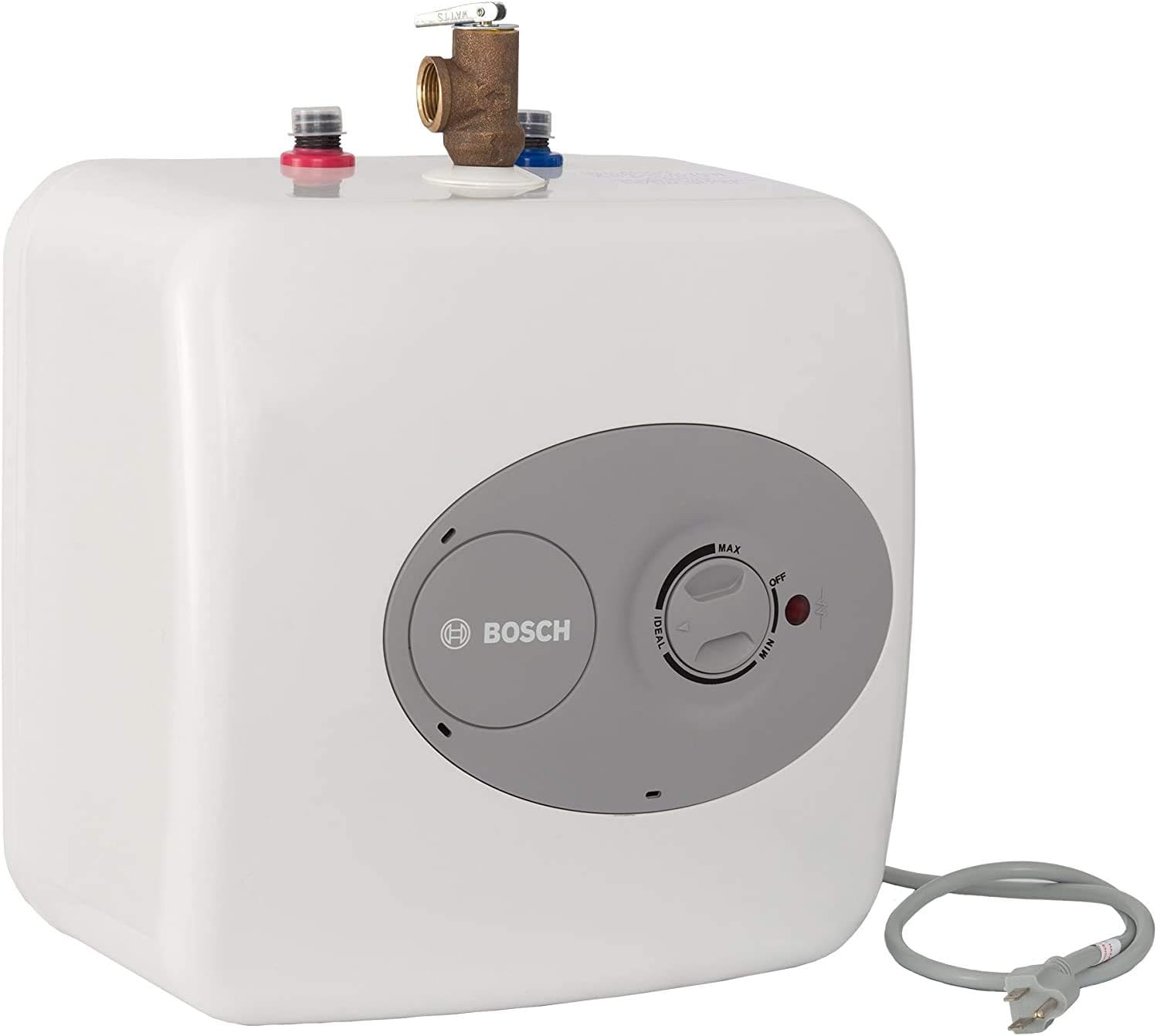
Bosch Tronic 3000 T ES 2.5
| Capacity | 2.5 gallons |
|---|---|
| Wattage | 1440 watts |
| Voltage | 120 volts |
| Maximum Temperature | 140 °F |
| Efficiency | 98% |
The Bosch Tronic 3000 T ES 2.5 is a compact electric mini-tank that delivers near-instant hot water where you need it most. Designed for point-of-use installation, it can be mounted on a shelf, wall, or floor and plugs into a standard 120 V outlet for independent use or piped inline with a larger heater. The glass-lined 2.5-gallon tank and 1440-watt element provide fast recovery and a high thermal efficiency, so short waits for warm water at a sink are minimized and it can supply up to two sinks in many setups. Temperature is easy to adjust with the external dial, and the included temperature-and-pressure relief valve adds a safety layer. Because it is small and lightweight it fits under most vanities and is straightforward for plumbers to install. The unit is optimized for convenience rather than large-volume use, so it is best for occasional to moderate hot-water draws rather than continuous heavy demand.
Best for: Buyers who want a reliable, compact point-of-use heater to shorten hot-water wait times at a sink or for light duty secondary supply and prefer an easy-to-install electric unit.
Less Ideal for: Homes that need continuous hot water for multiple bathrooms, large tubs, or high-flow fixtures should choose a larger or whole-house solution instead.
- Point-of-use design fits under sinks and mounts on wall, shelf, or floor
- Plugs into standard 120 V outlet for independent installation
- Glass-lined tank for durability and improved insulation
- Fast recovery from the 1440 W element with 98% thermal efficiency
- External temperature dial and T&P relief valve for easy control and safety
- 2.5-gallon capacity limits use to one or two fixtures and short draws
- Not suited for whole-house or high-demand applications
Verdict: A compact, efficient 120 V mini-tank that reliably delivers near-instant hot water at a sink with easy installation and durable glass-lined construction.
Stiebel Eltron SHC 2.5 Mini-Tank

| Capacity | 2.5 gallons |
|---|---|
| Wattage | 1300 watts |
| Voltage | 120 volts |
| Flow Rate | 2.5 gpm |
| Maximum Pressure | 150 psi |
The Stiebel Eltron SHC 2.5 is a compact point-of-use electric mini-tank that supplies hot water right where it is needed, typically under or next to a sink. It plugs into a standard 120 V outlet and draws about 11 amps, so no special wiring is required, and the included wall bracket and T and P valve make installation straightforward for plumbers or handy homeowners. With 1300 watts of heating and a 2.5 gallon capacity, it recovers quickly for short runs like hand washing, dish rinsing, or low-flow showers, and the glass-lined steel tank plus good insulation keeps standby losses low. The unit is rated to 150 psi and can reach up to 140°F, so it performs reliably in light commercial and residential point-of-use scenarios. Limitations are inherent to the small tank size: it is not meant for extended showering or supplying multiple fixtures at once, and buyers should size it for short, localized demand.
Best for: Buyers who need reliable, fast point-of-use hot water for sinks or light-duty commercial fixtures and prioritize compact, high-performance units that minimize standby loss.
Less Ideal for: Homes or locations that require continuous hot water for full bathrooms, multiple simultaneous fixtures, or high-flow showering should choose a larger tank or tankless solution.
- Compact design mounts under or next to sink to minimize pipe runs and water waste
- Plugs into standard 120 V outlet with 11.3 A draw so no special wiring is needed
- Fast recovery for short, frequent uses thanks to 1300 W heating element
- Glass-lined steel tank and strong insulation reduce standby heat loss
- Certified to relevant safety and lead-free standards for commercial and residential use
- 2.5 gallon capacity is too small for sustained showers or supplying multiple fixtures
- Not suitable as a whole-house solution or for high-flow demands
Verdict: A high-performance, compact mini-tank that delivers fast, localized hot water for sinks and light commercial point-of-use needs.
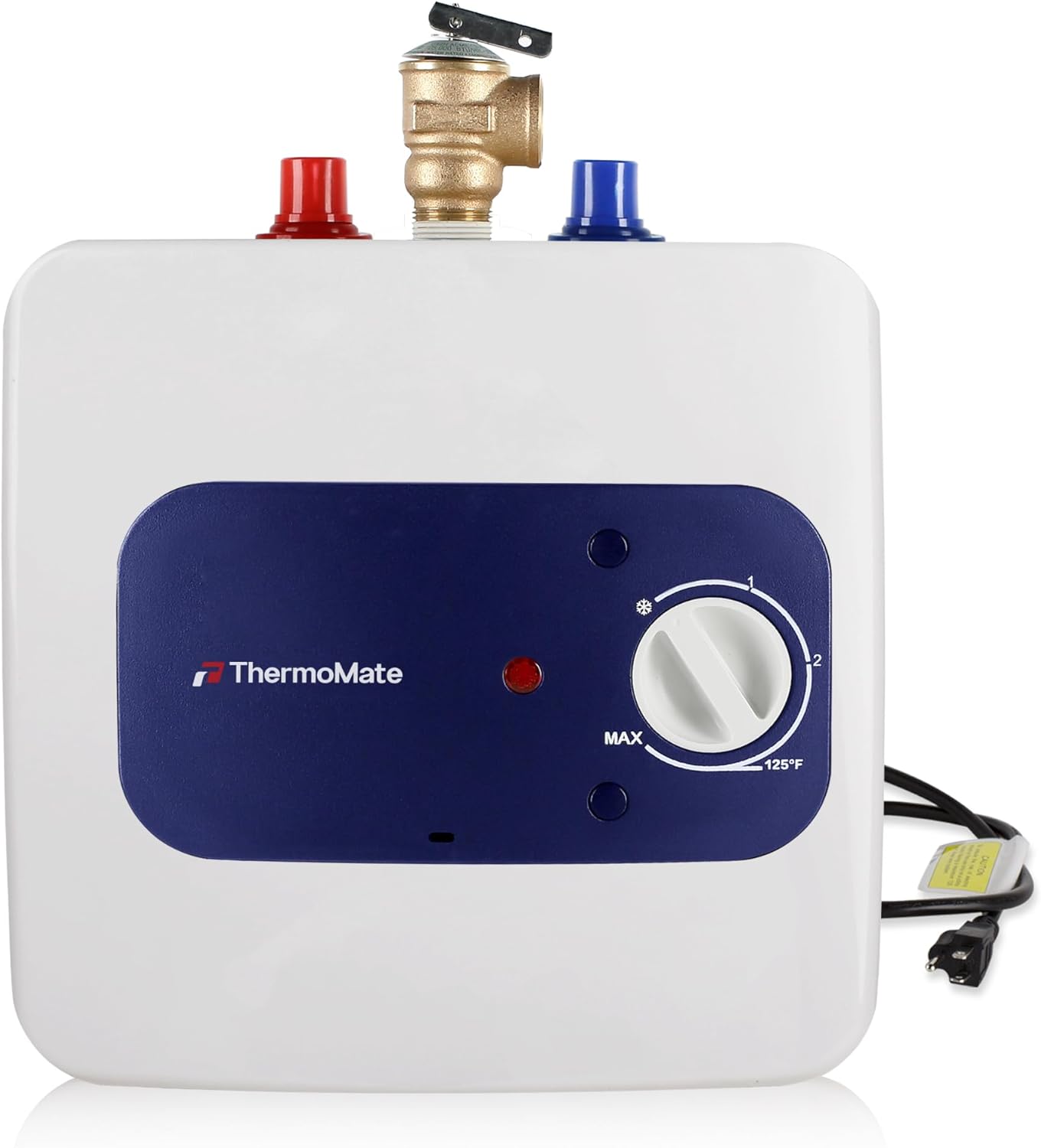
ThermoMate ES150 Mini Tank Water Heater
| Capacity | 1.3 gallons |
|---|---|
| Wattage | 1440 W |
| Voltage | 120 volts |
| Maximum Temperature | 140 °F |
| Maximum Pressure | 150 psi |
The ThermoMate ES150 is a compact 1.3-gallon electric mini tank intended for point-of-use hot water at a sink or small fixture. It plugs into a standard 120V outlet and uses a 1440W Incoloy 800 heating element with a glass-lined tank to store and quickly reheat a small reserve of hot water. Installation can be wall- or floor-mounted under a cabinet and it includes a T&P relief valve and basic mounting kit. The thermostat offers three temperature settings up to about 140°F and a freeze mode for protection in cold spaces. Practical benefits include much shorter wait time for hot water at a single faucet, simple plug-in electrical hookup, and a compact footprint that saves under-sink space. Limits are inherent to its size: the 1.3-gallon capacity and modest flow mean it is only suitable for one fixture at a time and not for showers or multiple simultaneous draws. For buyers wanting a simple, energy-efficient booster at a sink, this is a straightforward solution; buyers needing higher flow or whole-house service should look elsewhere.
Best for: People who want a compact, easy-to-install solution to cut wait time for hot water at a single sink or small workspace and prioritize space and energy efficiency.
Less Ideal for: Homes or applications that need sustained high-flow hot water, multiple simultaneous fixtures, or shower service should choose a larger or whole-house heater instead.
- Compact 1.3-gallon tank fits under most sinks and mounts on wall or floor
- Plug-in 120V design avoids hardwiring for easy installation
- Adjustable thermostat with freeze protection and high-limit safety
- Glass-lined tank and Incoloy 800 heating element for corrosion resistance and durability
- Includes T&P relief valve and mounting kit for a complete point-of-use install
- Small capacity only supports a single faucet or brief uses, not suitable for showers or multi-fixture demands
- Limited to 120V/12A circuit which restricts heat output and recovery speed
Verdict: A compact, plug-in point-of-use mini tank that delivers fast hot water to a single sink with simple installation and durable components.
xwdzswgs 3000W Tankless Water Heater

| Power | 3000W |
|---|---|
| Power Source | ac |
| Maximum Temperature | 122 °F |
| Mount Type | Wall |
| Special Features | Dry Combustion Protection, LED Display, Lightweight |
This compact tankless unit provides point-of-use hot water for sinks and small fixtures by heating water on demand with a 3000W element. It mounts vertically under a sink and uses a simple 1/2 inch NPT connection and a plug-in 110V supply, making it suitable for apartments, small kitchens, RVs, and utility sinks where space and wiring permit. The LED display shows temperature in Celsius or Fahrenheit, and protections such as dry-boil prevention, leakage isolation, IPX4 splash resistance, and automatic shutoff help protect the unit and plumbing. Expect hotter output at lower flow rates and cooler output as flow increases, so it is not designed to supply a full shower. Installation requires a dedicated circuit capacity recommendation and vertical orientation to avoid element damage. The small footprint and fast heat-up time are practical for single-point use, but buyers should follow the wiring and installation guidance to avoid electrical faults and ensure consistent performance.
Best for: Buyers who need an inexpensive, space-saving point-of-use heater to deliver quick hot water to a sink, RV, or small apartment and who prioritize upfront affordability over whole-house capacity.
Less Ideal for: Those seeking a solution for showers, multiple simultaneous hot outlets, or users unwilling to follow electrical installation requirements should look for higher-capacity or professionally installed options.
- Instant on-demand heating for single fixtures
- Compact, space-saving vertical design for under-sink installation
- Digital LED temperature display with C/F option
- Multiple safety features including dry-boil protection and leakage isolation
- Simple 1/2 inch NPT plumbing interface and included mounting screws
- Not suitable for supplying a shower or high-flow fixtures
- Requires adherence to recommended wiring and circuit capacity for safe operation
Verdict: A budget-friendly, compact point-of-use tankless heater that delivers fast hot water to a single sink with built-in safety features.
thermomate ES 2.5 Gallon Mini Tank

| Capacity | 2.5 gallons |
|---|---|
| Wattage | 1440 watts |
| Voltage | 120 volts |
| Maximum Temperature | 149 °F |
| Maximum Pressure | 150 psi |
The Thermomate ES 2.5-gallon mini tank is a compact plug-in electric water heater meant to deliver quick hot water at a single fixture such as a kitchen or bathroom sink. It holds a small reserve of preheated water so you get near-instant hot water without waiting for the main water heater, and its 1440W element and adjustable thermostat (50 to 149°F) allow reasonably fast recovery for low-flow uses. The unit includes a corrosion-resistant, glass-lined tank with anode protection and an Incoloy 800 heating element aimed at longer life and high heating efficiency. Installation is straightforward: wall or floor mount, 1/2" NPT fittings and a standard 120V plug-in connection avoid special wiring. The heater is UL listed and ships with a T&P relief valve and mounting hardware, which helps on safety and reliability. Limitations are inherent to mini tanks: small capacity makes it unsuitable for showers or larger simultaneous draws, and performance depends on inlet temperature and faucet flow rate.
Best for: Buyers who prioritize a dependable, factory-quality point-of-use heater for a single sink or light-duty application and want a compact, easy-to-install unit with corrosion-resistant components.
Less Ideal for: Homes needing hot water for showers, multiple fixtures at once, or higher-flow demands should choose a larger tank or a whole-house solution instead.
- Compact 2.5-gallon tank fits under sinks or in tight spaces and can be wall- or floor-mounted
- Incoloy 800 heating element and glass-lined tank with anode rod for improved corrosion resistance
- Plug-in 120V connection requires no special wiring for most installs
- UL listed with included T&P relief valve and mounting kit for safer, ready-to-install setup
- Small capacity is limited to single-fixture use and cannot reliably supply a shower
- 1440W power and small tank mean recovery is intended only for low-flow applications
Verdict: Choose the Thermomate ES 2.5-gallon mini tank when you need a reliable, compact point-of-use heater with factory-quality corrosion protection and simple plug-in installation.
EcoSmart ECO 11 Tankless Water Heater

| Wattage | 13000 watts |
|---|---|
| Voltage | 220 volts |
| Flow Rate | 3.1 gpm |
| Maximum Temperature | 140 °F |
| Mount Type | Wall |
The EcoSmart ECO 11 is a wall-mounted, 13 kW electric tankless heater made to deliver on-demand hot water for a bathroom, small sink, or office point-of-use. It uses self-modulating technology to adjust power based on flow and incoming temperature and offers digital temperature control with 1 degree increments and an LED display. In typical use it supplies roughly 1.3 to 3.1 gallons per minute depending on inlet temperature, which is enough for a single shower or a sink in warmer climates and best suited to low-flow fixtures. The unit is very compact and frees up floor space compared with a tank heater, and its high thermal efficiency means it only draws electricity when water is needed. Important limits are its modest flow rate and 240V electrical requirement with a substantial amperage draw, so proper electrical capacity and sizing are essential; it is not intended to replace whole-house heaters in colder climates. Installation at point-of-use or for single fixtures gives the most reliable performance.
Best for: Buyers who want a reliable point-of-use solution with strong user feedback and predictable performance for a single bathroom or sink, and who prioritize space savings and energy efficiency.
Less Ideal for: Households that need simultaneous multi-fixture hot water in cold climates or those unable to supply the required 240V high-amperage electrical circuit should look elsewhere.
- Compact wall-mounted design saves floor space and fits near fixtures for faster hot water
- Self-modulating technology adjusts energy use to demand for better efficiency
- Digital temperature control with LED display allows precise setpoint adjustments
- Suitable flow rate for single-shower or sink point-of-use applications
- Limited maximum flow rate makes it unsuitable as a whole-house heater in cooler climates
- Requires a 240V circuit and high amperage breaker, so electrical upgrades may be needed
Verdict: A compact, energy-efficient point-of-use tankless heater that reliably supplies hot water for a single bathroom or sink when sized and wired correctly.
Rheem RTEX-06T Point-of-Use

| Wattage | 6500 watts |
|---|---|
| Voltage | 240 volts |
| Flow Rate | 1.5 gpm |
| Maximum Temperature | 140 °F |
| Mount Type | Wall |
The Rheem RTEX-06T is a wall-mount point-of-use tankless electric heater that provides on-demand hot water for a sink or similar small fixture. It heats water with 6.5 kW at 240 volts and is designed to be installed close to the tap to reduce wait time and water waste. The unit includes thermostatic control and a digital temperature display so outlet temperature is easy to set and monitor, and it advertises consistent output up to about 1.5 gallons per minute with a maximum outlet temperature of 140°F. Its compact, lightweight design saves space under sinks or in small closets and no venting is required for indoor installation. Limitations are its modest flow rate, which restricts it to single-sink or light shower use, and it requires a dedicated 240V supply and proper breaker capacity for safe operation. For buyers who prioritize simple, reliable point-of-use hot water, this model offers straightforward operation and space-saving practicality.
Best for: Buyers who want a simple, compact point-of-use solution to get near-instant hot water at a single sink and who value predictable, easy-to-set temperature control.
Less Ideal for: Homes needing hot water for multiple fixtures, full bathrooms, or larger flow demands should choose a higher-capacity or whole-home unit instead.
- Compact wall-mount design fits under sinks or small closets
- Thermostatic digital control for consistent outlet temperature
- No venting required for indoor installation
- Saves water and energy by heating on demand
- Low maximum flow rate limits use to a single fixture or light shower
- Requires a 240V dedicated electrical circuit and appropriate breaker
Verdict: A compact, easy-to-install point-of-use tankless heater that delivers reliable on-demand hot water for a single sink with simple temperature control.
Choosing the Right Point-Of-Use Water Heater: Key Factors to Consider
Capacity and Intended Fixture Demand
Choose a capacity that matches how the fixture will be used. Small sinks for handwashing typically need less usable hot water than a shower or a utility sink. Picking a unit with too small a capacity will result in rapid temperature drop during use, while oversizing can increase standby losses and take more space.
Look at the expected draw pattern. For intermittent, short draws such as a kitchen prep sink, a compact tank or small electric on-demand unit can be ideal. For continuous draws or if you expect simultaneous use at nearby fixtures, choose a higher-capacity unit or verify the flow rate that maintains desired temperature.
Flow Rate and Temperature Stability
Flow rate capability determines whether the fixture will get enough hot water at a usable temperature. Manufacturers specify maximum flow that achieves a target delta-T. If your faucet mixes hot and cold, ensure the unit can sustain the mixed flow without dropping below comfortable temperature.
Temperature stability under varying draw sizes is important. Look for systems that regulate output well at low flows and that avoid wide temperature swings when demand changes. This affects user comfort and the risk of scalding in fixtures used by children or older adults.
Installation Requirements and Space Constraints
Measure the available space and evaluate mounting options before buying. Under-sink installs often have limited vertical and horizontal clearance and may require models with compact footprints or reversible mounts. Pay attention to required clearances around exhaust vents for gas models, or to electrical supply and breaker capacity for electric units.
Installation complexity affects total cost and feasibility. Units that require specialized venting, gas lines, or higher-amp electrical circuits may need professional installation. Consider how easy it will be to access valves for maintenance and whether piping runs or insulation will be required to minimize heat loss.
Energy Efficiency and Standby Loss
Efficiency influences ongoing operating cost and environmental impact. Tank-style point-of-use heaters can lose heat while idling, so look for insulation levels and standby loss ratings. Tankless or on-demand units avoid tank standby loss but may have higher peak energy draws and different installation needs.
Also consider control features that improve efficiency, such as adjustable thermostats, timers, or vacation modes. For electric models, verify that expected power draw matches your household electrical capacity to avoid nuisance tripping or the need for costly electrical upgrades.
Safety Features and Local Code Compliance
Safety features protect users and prevent damage. For tanked units, temperature and pressure relief valves are essential. For all types, accurate thermostats and automatic shutoffs reduce scald and overheating risks. Gas units need combustion safety controls and proper venting to prevent carbon monoxide hazards.
Ensure any installation complies with local plumbing and electrical codes. Some locations require licensed professionals for gas or high-voltage electric hookups. Checking code requirements early prevents costly rework and ensures long-term safety.
Maintenance, Serviceability, and Longevity
Consider how easy the unit will be to maintain. Accessible anode rods, drain ports, and serviceable heating elements simplify routine care and extend service life. Hard water areas accelerate scale buildup, so look for models that offer descaling access or built-in scale mitigation features.
Warranty length and the availability of replacement parts matter when planning long-term ownership. Units with clearer service documentation and accessible components can reduce downtime and repair cost over their lifetime.
Under-Sink Vs Near-Fixture Placement
Decide whether the unit will mount directly under the sink, in an adjacent cabinet, or on a nearby wall. Each placement has tradeoffs in terms of pipe length, ease of access, and heat loss. Under-sink placement minimizes pipe run length but may require a compact profile and careful attention to moisture and venting.
Wall-mounted units free up cabinet space and can allow larger capacity without crowding, but they may require stronger mounting surfaces and more visible piping. Think through service access and whether the location allows safe venting and electrical connections if needed.
- Under-sink: shortest pipe runs, compact models preferred
- Wall-mounted: more capacity options, requires secure mounting
- Cabinet installs: protect unit from moisture and ensure ventilation
Electric Vs Gas Point-Of-Use Options
Electric point-of-use water heaters are often simplest to install when a suitable circuit is available. They have no combustion byproducts, and compact electric tanks or small tankless electric units are common choices for single fixtures.
Gas options provide strong recovery and are useful where electrical capacity is limited. However, gas units need proper venting and combustion air and are typically more complex to site and install. Match fuel type to existing utility availability and local code constraints.
- Electric: simpler venting, higher peak electrical draw
- Gas: stronger continuous output, requires venting and gas line
Sizing a Unit for Common Fixture Types
For handwashing sinks, a small tank between 2 and 6 gallons or a low-flow tankless unit is usually adequate. For prep sinks that see occasional rinsing, lean toward higher flow capability. For bar or utility sinks used for chores, consider slightly larger capacity to avoid frequent cold-outs.
If a nearby shower or multiple fixtures will occasionally run at the same time, size for the highest expected combined flow. When in doubt, measure typical faucet flow and estimate mixed hot demand to select a unit that maintains comfortable temperatures at that flow.
- Hand sink: 2 to 4 gallons or low-flow tankless
- Kitchen prep: 4 to 6+ gallons or higher-flow tankless
- Utility/bar: consider 6 gallons or higher for repeated use
Pipe Insulation and Minimizing Heat Loss
Short runs reduce lag time and heat loss, but even short horizontal runs can lose temperature. Insulating hot supply lines from the heater to the fixture reduces wait time and improves overall efficiency. Foam or rubber insulation sleeves are inexpensive and easy to install on exposed piping.
Insulation also reduces the chance of cold spots and helps maintain temperature during intermittent draws. For installations in cold spaces or exterior walls, pay special attention to freeze protection and routing to avoid damage.
- Insulate hot lines for best efficiency
- Keep piping runs as short and direct as possible
- Avoid routing through unheated or exterior spaces when feasible
Controls and User Comfort
Units with adjustable thermostats or simple digital controls let you fine-tune water temperature for comfort and safety. For households with children or older adults, look for devices that allow setting a safe maximum output temperature.
Some models offer diagnostic indicators, timers, or energy-saving modes that further tailor operation to your usage pattern. These features can enhance user satisfaction and reduce unnecessary energy use.
- Adjustable thermostat for temperature control
- Diagnostic indicators simplify troubleshooting
- Timers or eco-modes help reduce energy use
How We Chose the Best Point-Of-Use Water Heater
We focused on units that serve a single fixture or a small cluster of nearby fixtures and that are commonly used in under-sink, utility, or remote-bathroom installs. Our selection process prioritized measurable, practical criteria: heat-up and recovery rate, installation and mounting options, flow rate and temperature stability at typical draw sizes, long-term operating efficiency and standby losses, and durability including warranty and corrosion resistance. We also considered safety features such as thermostats, pressure relief, and built-in safeguards for electric and gas options. Units with unclear installation requirements, inadequate flow for their intended fixture, or lacking basic safety controls were excluded. We favored products with clear spec sheets and widely accepted performance characteristics so readers can match a unit to fixture demand and installation constraints.
Our full evaluation process is outlined in our review methodology.
FAQ
Can a point-of-use water heater provide enough hot water for a shower?
Often a small point-of-use unit is intended for a single sink and will not sustain the flow required by a shower. Some higher-capacity models or higher-flow tankless units can serve a shower, but you should check the unit's flow rate and temperature rise specs against the shower's demand.
How difficult is it to install an under-sink point-of-use heater?
Installation difficulty depends on fuel type and site conditions. Electric compact tank models are usually straightforward if a suitable circuit and space exist. Gas units or high-amp electric tankless models often require professional installation for venting, gas hookups, or electrical upgrades.
Do point-of-use heaters save energy compared with a central water heater?
They can reduce distribution heat loss by placing hot water closer to the fixture, which lowers wasted energy from long pipe runs. However, tanks have standby losses and tankless units may draw high peak energy. The net savings depend on usage patterns and whether the central heater would otherwise serve many fixtures.
What maintenance is required for these units?
Maintenance typically includes checking safety valves, draining and flushing tanks to remove sediment if present, and following manufacturer guidance for descaling in hard water areas. Electric heating elements and anode rods should be inspected periodically where accessible.
Are point-of-use heaters safe to use in kitchens and bathrooms?
Yes, when installed and maintained correctly. Ensure that electrical wiring meets code, that gas units are vented properly, and that temperature and pressure relief devices are present for tanked models. Setting an appropriate maximum temperature reduces scald risk.
Final Verdict
Choose a point-of-use water heater by matching capacity and flow capability to the fixture's typical demand while accounting for installation constraints and fuel availability. Prioritize temperature stability and appropriate safety controls if the unit will serve users who need lower scald risk. Balance the tradeoff between tank standby losses and tankless peak power requirements, and ensure the chosen installation meets local code and serviceability needs. With those factors in mind, you can confidently pick a compact heater that delivers fast, reliable hot water where it matters.