
Note: This article contains affiliate links. If you click on these links and make a purchase, we may earn a small commission at no extra cost to you. This helps support our research and content. Read our full affiliate disclosure here.
If you struggle with damp rooms, musty odors, or condensation on windows, picking the right portable dehumidifier can make a big difference in comfort and home protection. The right unit reduces humidity to comfortable levels, protects finishes and fabrics, and can help indoor air feel fresher without constant intervention. This guide shortlists seven top portable dehumidifiers across common home uses and sizes. We evaluated units for real-world priorities like moisture removal capacity, energy use, and ease of upkeep. Read on to find the options that best match your room size, runtime needs, and maintenance preferences before the product list.
Top Picks at a Glance
| Best Overall The best all-around choice for most situations | hOmeLabs 50 Pint Dehumidifier | 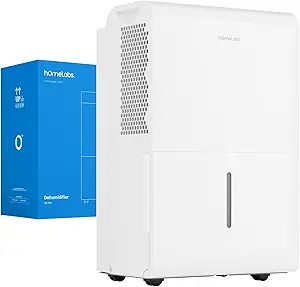 |
| Best Quality Built to a higher standard if you want something more solid | AEOCKY RHEA 80‑Pint Dehumidifier |  |
| Best Value The sweet spot between price and what you get | Pro Breeze Mini Dehumidifier PB-02 |  |
| Best Budget The cheapest option that still gets the job done reliably | Eva-Dry E-333 Mini Dehumidifier |  |
| Top Rated A top-rated pick with lots of positive feedback | KNKA 80-Pint Dehumidifier PD30MA-20 |  |
| Most Popular A crowd favorite that many people choose with confidence | TABYIK 35oz Dehumidifier DH-CS01 |  |
| Best Seller A high-volume bestseller chosen again and again | ToLife Dehumidifier TZ-C2 |  |
hOmeLabs 50 Pint Dehumidifier
| Dehumidification Capacity | 50 pints_per_day |
|---|---|
| Floor Area | 7000 square_feet |
| Wattage | 322 watts |
| Air Flow Capacity | 165 cfm |
| Operation Mode | Continuous |
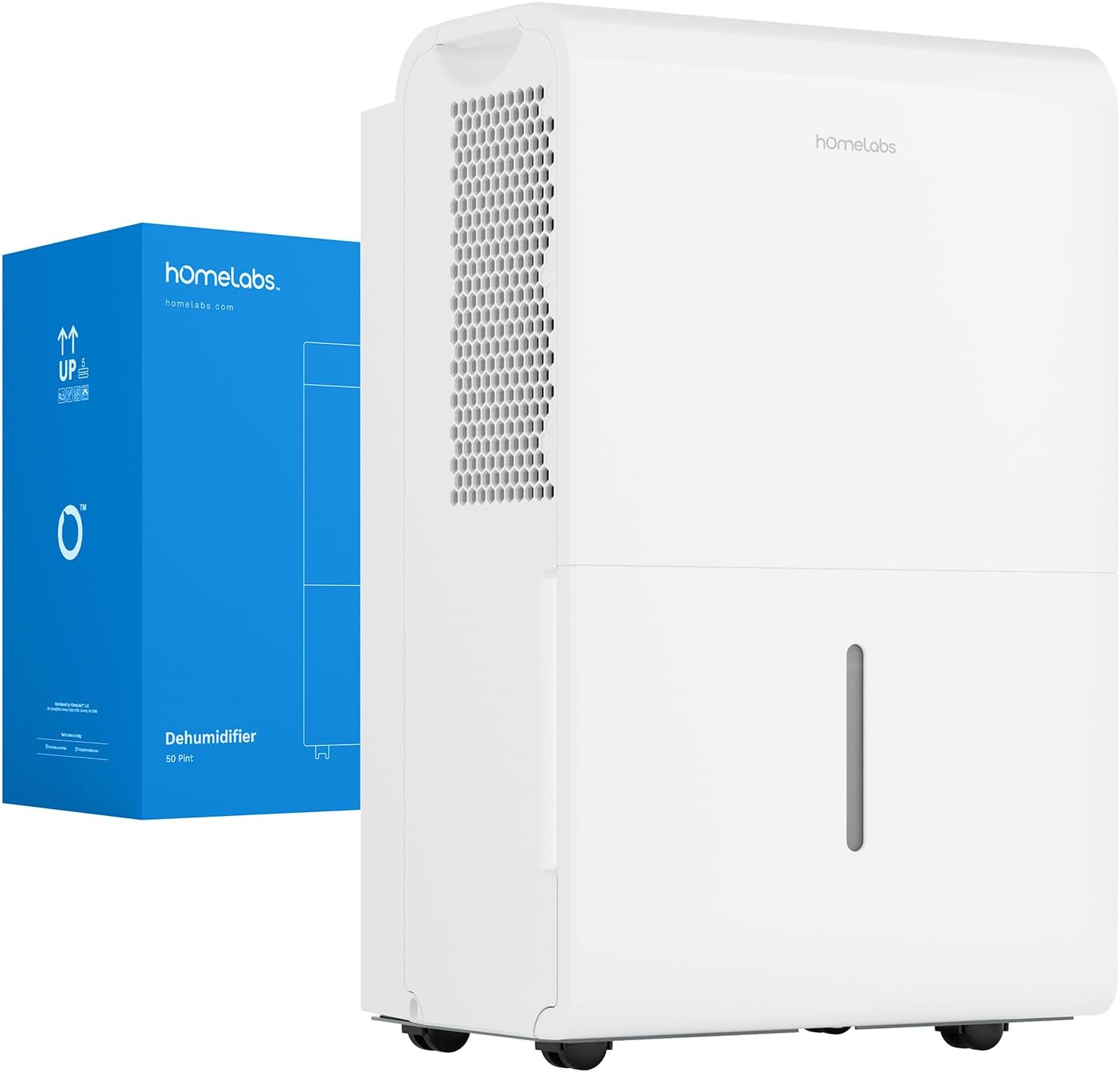
This hOmeLabs dehumidifier is built to pull moisture from large areas, rated to remove up to 50 pints per day under standard conditions and with a maximum capacity claim at higher temperature and humidity. It includes Wi‑Fi control so you can change settings remotely, a touch control panel, and two fan speeds with a Turbo option for faster moisture removal. Practical features include a removable washable filter, continuous drain outlet for extended unattended use, an automatic shutoff when the tank fills, and caster wheels and handles for portability around the home or basement. It runs at 322 watts and reports an airflow around 165 cfm, so it is effective for open rooms and unfinished spaces but is physically substantial and expects a permanent-ish spot during heavy use. The unit is functional and straightforward, though buyers should plan for the tank size and room layout when relying on the internal reservoir versus using continuous drainage.
Best for: Buyers who want a capable, feature-rich dehumidifier for large rooms, basements, or open-plan areas and value remote control and reliable continuous operation.
Less Ideal for: People needing a lightweight, ultra-compact unit for small bedrooms, closets, or travel should look at smaller portable models instead.
- Wi‑Fi connectivity allows remote monitoring and control
- Removable washable filter and touch controls simplify upkeep
- Continuous drain outlet and auto shutoff enable long unattended runs
- Two speeds plus Turbo mode provide flexible moisture removal
- Designed for large coverage up to 7,000 sq ft
- Physically heavy and sizable, so moving frequently is cumbersome
- Tank capacity may require frequent emptying if not set up for continuous drain
Verdict: A powerful, Wi‑Fi–enabled dehumidifier that handles large spaces and long unattended runs for buyers who need steady, high-capacity moisture control.
AEOCKY RHEA 80‑Pint Dehumidifier
| Capacity | 80 pints per day |
|---|---|
| Tank Volume | 1.45 gallons |
| Wattage | 280 watts |
| Operation Mode | Auto, Constant Humidity, Continuous, Smart Drying, Sleep |
| Air Flow Capacity | 9006 cubic feet per hour |
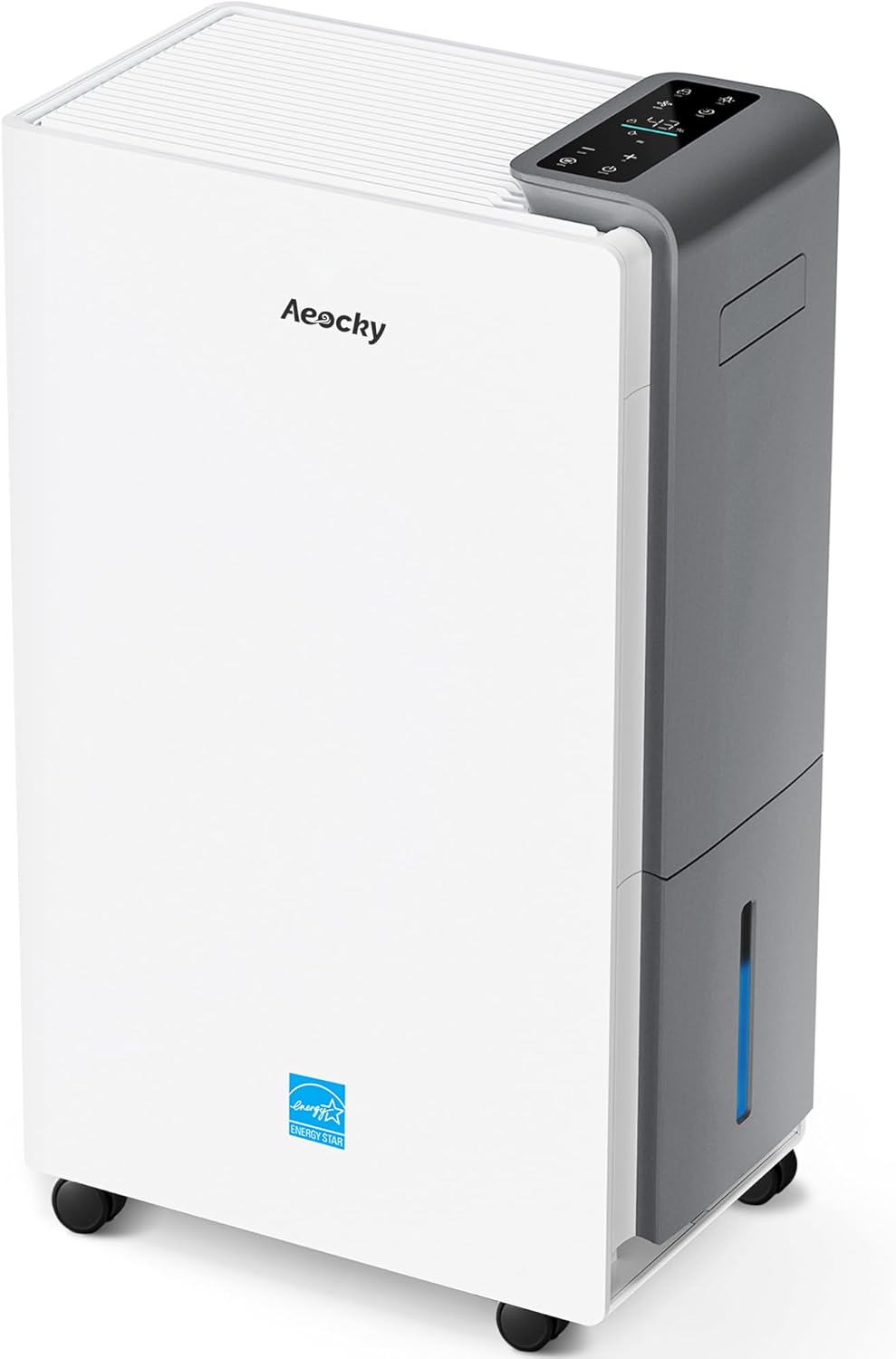
The AEOCKY RHEA is built for heavy-duty household moisture control, claiming an 80‑pint-per-day capacity and ENERGY STAR Most Efficient 2025 certification that emphasize energy savings during continuous operation. It is typically used in basements, large living areas, and other damp spaces where fast water removal and long runtime matter. The unit offers several modes including Auto, Constant Humidity, Continuous, Smart Drying, and Sleep, plus an adjustable humidistat and timer for hands-off control. Practical benefits include a high airflow rating and a relatively large 1.45‑gallon tank with a drain hose and garden-hose adapter for unattended draining. AEOCKY highlights durable compressor and heat-exchanger components and low-noise operation around the mid 40 dB range, which helps in living spaces. Trade-offs are its single fan speed selection listed and a focus on performance over compactness, so it is larger than small bedroom models and requires space for drainage when used continuously. Power draw is listed at 280 watts, so expect meaningful energy use when running at high demand in very humid conditions.
Best for: Buyers who prioritize fast, energy-efficient moisture removal and long-term, heavy-duty performance in basements or large rooms and want a unit that can run unattended.
Less Ideal for: Those who need a lightweight, ultra-compact dehumidifier for small bedrooms, RVs, or occasional spot use should consider smaller portable models instead.
- High dehumidification capacity rated up to 80 pints per day for rapid moisture removal
- ENERGY STAR Most Efficient 2025 certification for strong energy performance
- Multiple operation modes and adjustable humidistat for precise, automated control
- Included drain hose and garden-hose adapter enable continuous unattended drainage
- Relatively quiet operation for a high-capacity compressor unit
- Only one listed fan speed which limits fine-grained airflow control
- Larger footprint compared with compact bedroom dehumidifiers, less portable in tight spaces
Verdict: If you need a high-capacity, energy-efficient dehumidifier for large or persistently damp spaces, the AEOCKY RHEA delivers strong drying power with smart controls and low noise.
Pro Breeze Mini Dehumidifier PB-02

| Floor Area | 215 square_feet |
|---|---|
| Capacity | 16 fluid ounces |
| Tank Volume | 17 fluid ounces |
| Wattage | 21 watts |
| Dehumidification Capacity | 0.25 liters_per_day |
The Pro Breeze Mini Dehumidifier PB-02 is a small, portable unit that uses thermoelectric (Peltier) cooling to quietly remove moisture in confined spaces such as bathrooms, closets, RVs, and small bedrooms. It is intended for continuous use and extracts around 0.25 liters (about 9 ounces) per day into a 16–17 ounce tank with an auto shutoff and LED full indicator. With low power draw (about 21–23 watts) and whisper-quiet operation, it is easy to run overnight or in occupied rooms without noticeable noise or high energy cost. The unit is lightweight and easily moved where needed, and it includes a power adapter and simple controls. Limitations are inherent to its mini size: dehumidification capacity is small so it is best for single small rooms or localized issues like window condensation rather than whole-house humidity control, and performance drops below recommended low temperatures. The auto-off tank means periodic emptying, and there is no large-capacity or continuous drain option listed for heavy-duty use.
Best for: Buyers who want a simple, energy-efficient way to reduce minor humidity problems in one small space and prefer a compact, quiet appliance that is easy to place and move.
Less Ideal for: People needing to dehumidify large rooms, basements, or very damp areas where a higher-capacity or continuous-drain model is required.
- Very low power consumption for continuous use
- Whisper-quiet Peltier operation suitable for bedrooms and offices
- Compact, lightweight and easy to move between rooms
- Auto shutoff with LED full indicator prevents overflow
- Low daily extraction rate makes it unsuitable for large or very damp spaces
- No listed continuous drain option for extended unattended operation
Verdict: A compact, energy-efficient mini dehumidifier that quietly handles minor humidity problems in a single small room.
Eva-Dry E-333 Mini Dehumidifier

| Floor Area | 333 square_feet |
|---|---|
| Capacity | 6 ounces |
| Dehumidification Capacity | 0.38 pints_per_day |
| Operation Mode | Continuous |
| Voltage | 110 volts |
The Eva-Dry E-333 is a portable, rechargeable silica-gel mini dehumidifier meant for small areas like closets, cars, cabinets and gun safes. It passively absorbs moisture with crystallized silica gel beads and shows when it needs recharging via a color-change indicator, making operation simple and maintenance straightforward. Because it is cordless and spill-free, you can hang or place it where space is tight without worry about leaks or power access. The unit is marketed to remove roughly 4 to 6 ounces of moisture and is renewable for years after recharging, which reduces ongoing consumable costs. Important limits are its very low daily extraction (around 0.38 pints per day) and small capacity, so it will not replace an electric dehumidifier in damp rooms or larger spaces. Its usefulness is greatest for preventing mustiness and protecting gear in confined, low-humidity-load areas rather than whole-room drying.
Best for: Buyers who need an inexpensive, low-maintenance way to stop musty smells and protect valuables in small enclosed spaces and who prioritize simple, cordless operation over raw drying power.
Less Ideal for: People who need to remove substantial moisture from whole rooms, basements or very damp spaces should choose an electric dehumidifier with higher extraction rates.
- Cordless, rechargeable design that works without batteries or continuous power
- Color-change moisture indicator for easy recharge timing
- Compact and lightweight so it fits closets, cars, cabinets and safes
- Non-toxic silica gel means no liquid collection or spill risk
- Renewable unit intended for long-term use, reducing replacement frequency
- Very low daily dehumidification capacity unsuitable for damp rooms or basements
- Small 6-ounce capacity requires frequent recharging in higher-humidity environments
Verdict: A low-cost, cordless silica-gel dehumidifier ideal for keeping small enclosed spaces dry and odor-free without ongoing power or messy water collection.
KNKA 80-Pint Dehumidifier PD30MA-20

| Capacity | 80 pints per day |
|---|---|
| Tank Volume | 1.45 gallons |
| Wattage | 360 watts |
| Floor Area | 4500 square_feet |
| Operation Mode | AUTO, DRY, SETTING |
The KNKA PD30MA-20 is a performance-focused dehumidifier built for large, damp spaces such as basements. Its high-efficiency compressor can remove up to 80 pints per day under extreme conditions and about 56 pints in typical basement conditions, while an internal 1.45 gallon tank plus a supplied 6.56 ft drain hose enable continuous drainage to avoid frequent emptying. Controls include AUTO, DRY, and a SETTING mode for 30%–80% RH, and the digital display with a color-changing humidity indicator makes it easy to monitor conditions at a glance. The unit is designed to run quietly (40–45 dB), has a washable filter, casters for moving between rooms, cord storage, a 12-hour timer, and a child lock for steady, unattended operation. Expect good energy efficiency thanks to ENERGY STAR certification and a 360 watt power draw, but note that humidity readings come from the air inlet and may differ slightly from a separate hygrometer; the unit also needs upright siting for 24 hours before first use. For heavy-duty basement dehumidification this model balances strong capacity with thoughtful usability features.
Best for: Buyers who need powerful, reliable moisture removal in large basements or very damp rooms and prioritize steady performance and easy continuous drainage.
Less Ideal for: People seeking a compact or ultra-light unit for small rooms or occasional use should consider lower-capacity, more portable models instead.
- High maximum dehumidification capacity up to 80 pints per day for large, very humid spaces
- Includes 6.56 ft drain hose and built-in tank for continuous drainage to reduce manual emptying
- ENERGY STAR certified and uses a high-efficiency compressor for lower operating costs relative to output
- Quiet operation (40–45 dB) and caster wheels make it suitable for basements and living spaces
- Digital display with real-time humidity readout and color indicator simplifies monitoring and control
- Humidity reading is measured at the air inlet and may not match a separate room hygrometer
- Requires upright placement for 24 hours before first use to avoid operational issues
Verdict: Choose this KNKA if you need a strong, ENERGY STAR certified dehumidifier that can handle large basements with continuous-drain capability and quiet operation.
TABYIK 35oz Dehumidifier DH-CS01

| Tank Volume | 1000 ml |
|---|---|
| Dehumidification Capacity | 0.45 liters_per_day |
| Wattage | 40 watts |
| Operation Mode | Continuous |
| Floor Area | 280 square_feet |
The TABYIK 35oz DH-CS01 is a small Peltier dehumidifier built for bedrooms, bathrooms, closets and RVs where space and noise matter. It pulls up to about 16 oz (450 ml) per day under the manufacturer test conditions and stores collected water in a clear 1,000 ml tank with a convenient groove for removal and cleaning. Operation is simple with a one-button control, an independent 7-color light you can disable, and an automatic shutoff that stops the unit and flashes a light when the tank nears full. The unit runs quietly at roughly 28 dB and draws modest power, making it suitable to run overnight without disturbing sleep. Because it uses Peltier (thermoelectric) technology it has no compressor, which keeps it lightweight and silent but also limits daily extraction compared with compressor models and reduces effectiveness at lower temperatures. For small, humid rooms where portability, low noise, and simple maintenance are priorities, this unit performs well, though buyers needing heavy-duty moisture removal or use in cold basements should look at larger compressor dehumidifiers.
Best for: Buyers who value a lightweight, near-silent dehumidifier for small rooms, bedrooms, RVs or closets and want a simple, low-maintenance unit backed by broad customer adoption.
Less Ideal for: People who need high-capacity moisture removal for basements, large spaces, or very damp conditions should choose a larger compressor dehumidifier instead.
- Quiet operation around 28 dB suitable for bedrooms and offices
- Large transparent 1,000 ml (35 oz) tank with easy-remove groove for cleaning
- Simple one-button control and optional 7-color light that can be turned off
- Auto shutoff when tank is nearly full for safe unattended use
- Peltier dehumidification yields low daily extraction (about 16 oz/day) compared with compressor models
- Performance drops in cooler environments since effectiveness is temperature-dependent
Verdict: If you want a quiet, portable dehumidifier for a small bedroom, bathroom or RV that is easy to use and maintain, this TABYIK 35 oz unit is a practical, low-noise choice.
ToLife Dehumidifier TZ-C2
| Floor Area | 1000 |
|---|---|
| Tank Volume | 95 fluid ounces |
| Number of Speeds | 2 |
| Wattage | 93 watts |
| Voltage | 220 volts |
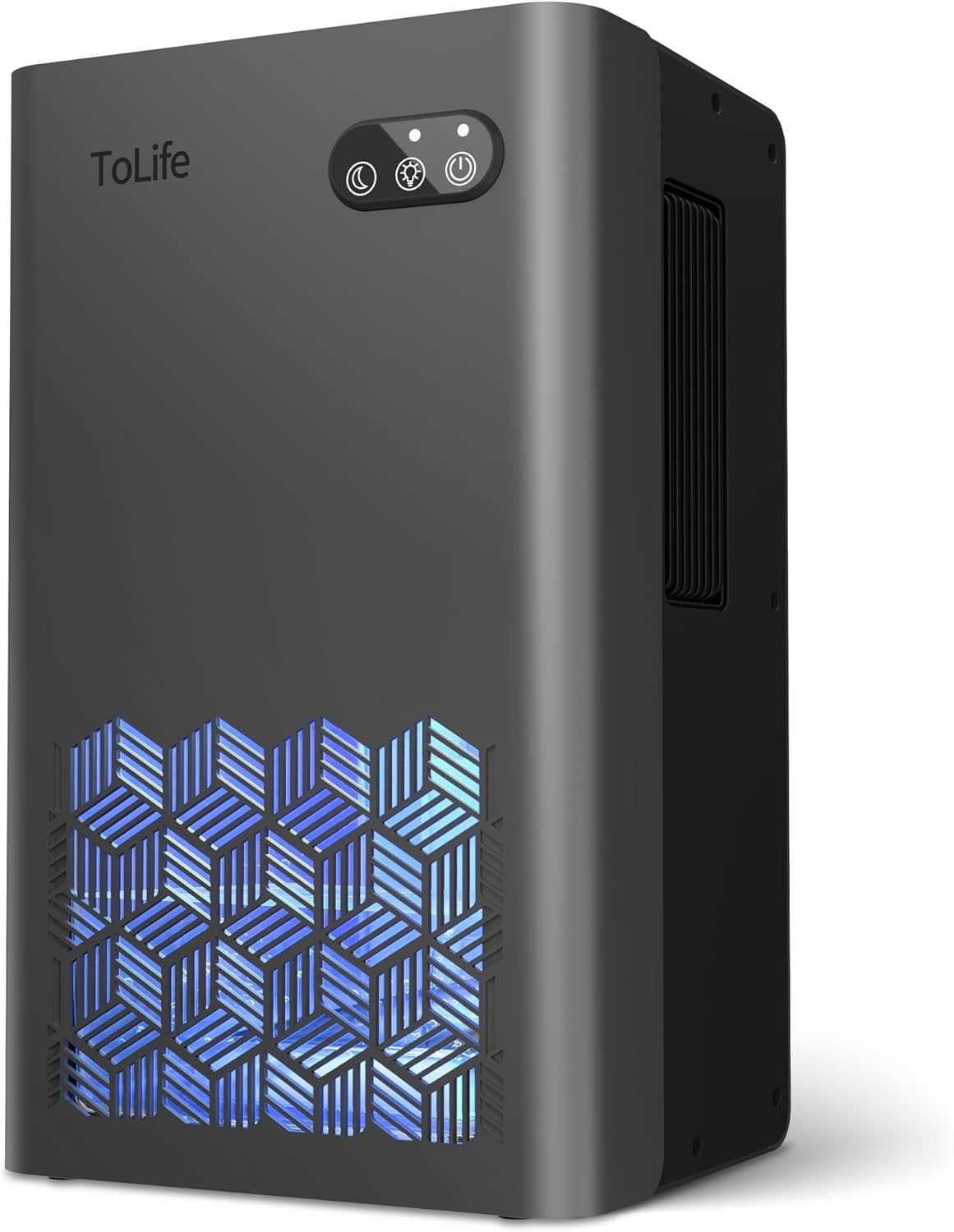
The ToLife TZ-C2 uses semiconductor condensation technology to quietly pull moisture from the air and deposit it into a removable 95 oz tank, making it a straightforward option for damp rooms. It offers two operating modes: a higher-power setting for faster moisture removal and a low-speed sleep mode that runs under 30 dB for overnight use. A seven-color LED can act as a night light and the unit includes automatic shutoff when the tank is full or removed, plus handles for easy moving between rooms. Practical benefits include simple setup, low noise, and a compact footprint that fits in basements, bathrooms, or bedrooms. Limitations are its modest rated dehumidification capacity and stated coverage, which means it will be most effective in smaller basement zones or for spot treatments rather than drying a large, very damp basement quickly. Also this model runs on 220 volts, so electrical compatibility should be confirmed for your location.
Best for: Buyers who need an affordable, portable dehumidifier for spot dehumidifying small basement areas, bathrooms, or bedrooms and who prioritize low noise and easy portability.
Less Ideal for: People looking to dry large, very damp basements or whole-house coverage should consider a higher-capacity compressor dehumidifier instead.
- Large removable 95 oz water tank reduces how often you need to empty it
- Quiet sleep mode under 30 dB suitable for nighttime operation
- Portable design with handles for moving between rooms
- Automatic shutoff prevents overflow when the tank is full
- Dehumidification capacity is modest and may be slow in very damp or large basements
- Requires 220 volt power which may not match all household outlets
Verdict: A compact, budget-friendly portable dehumidifier that is best for quiet, small-area moisture control and occasional basement spot treatments.
Choosing the Right Portable Dehumidifier: Key Factors to Consider
Room Size and Capacity
Matching a dehumidifier's rated extraction capacity to the room size is essential. A unit rated for small rooms will run continuously and may never reach the desired humidity in a basement or large living area, increasing wear and energy costs.
Consider the square footage and ceiling height of the space along with typical humidity levels. Rooms with persistent dampness or water intrusion need higher-capacity units. Also think about placement: a unit centrally located and unobstructed will perform closer to its rated capacity than one tucked into a corner.
Energy Use and Operating Cost
Dehumidifiers can operate many hours per day during humid seasons, so energy efficiency directly affects ongoing cost. Look for models with efficient compressor systems and variable fan speeds that let you reduce power draw when full capacity is not required.
Check energy consumption for typical operating modes and prefer units with automatic humidity control to avoid unnecessary runtime. Some units offer eco or low-power settings to balance extraction with energy use, which is important if the unit will be used daily.
Drainage and Tank Convenience
Tank size and drainage options determine how often you must empty collected water and whether the unit can run unattended. Larger internal tanks reduce trips to empty but increase the unit's footprint and weight. Continuous drain ports let you attach a hose for automatic removal, which is ideal for basements or long-run operation.
Also consider how easy the tank is to remove and replace without spills, whether the unit signals a full tank reliably, and whether integrated pumps are necessary for draining above-floor locations.
Noise Level and Control Options
Noise matters when you place a dehumidifier in a bedroom, home office, or living space. Measured decibel ratings and availability of multiple fan speeds or a quiet mode give you control over performance versus disturbance.
Some models have sleep modes that reduce fan speed and dim lights. If you are noise-sensitive, prioritize models with low-noise operation at typical settings rather than only in their quietest mode.
Maintenance and Filter Care
Regular maintenance keeps a dehumidifier efficient and sanitary. Units with accessible, washable filters and straightforward internal access make routine cleaning easier. Filters that trap dust and allergens can also benefit indoor air quality, but they must be cleaned or replaced on schedule.
Check how easy it is to inspect the evaporator and fan for blockages, whether replacement parts are commonly available, and whether the design minimizes areas where mold or scale can accumulate.
Control Features and Automation
Control options affect convenience and effectiveness. Built-in humidistats with adjustable setpoints let the unit maintain a target relative humidity automatically. Timers, programmable schedules, and auto-restart after power loss add usability benefits.
Some units offer digital displays and clear status indicators that simplify monitoring. If you want minimal interaction, prioritize models with reliable automatic control and clear feedback about current humidity and mode.
Sizing a Portable Dehumidifier for Basements and Crawlspaces
Basements and crawlspaces often require higher extraction capacity and continuous drainage. These areas are prone to higher humidity and occasional water intrusion, so a unit with greater pint-per-day performance and a continuous drain option will be more effective than a small room model.
Position the unit to allow free airflow around the intake and exhaust, and use a hose for gravity or pumped drainage if you expect extended unattended operation.
- Aim for higher-capacity units in unfinished or large spaces.
- Prefer continuous drain or built-in pump arrangements for long runtimes.
- Avoid placing units directly against walls or furniture that block airflow.
Quiet Operation: Choosing Units for Bedrooms
If the dehumidifier will run in a bedroom, look beyond top-line extraction numbers and check noise ratings at low and medium fan speeds. Features like sleep mode, soft LED displays, and vibration isolation can reduce disturbance.
You may accept slightly lower extraction capacity for a model that runs quietly and reliably overnight, especially in rooms that only need moderate humidity control.
- Compare dB ratings for different fan speeds.
- Use lower settings overnight to balance noise and humidity control.
- Place unit on vibration-absorbing feet or a small mat to minimize resonance.
Using Built-In Controls and Smart Features
Modern portable dehumidifiers often include adjustable humidistats, timers, and simple automation. Reliable, accurate humidity sensing prevents over-drying and unnecessary runtime, while timers let you schedule operation for peak humidity periods.
Some units pair with smart plugs or home automation for remote scheduling. If automation matters, prioritize models with stable humidistat control and clear display feedback rather than bells and whistles that complicate everyday use.
- Prefer adjustable humidistats with clear setpoints.
- Use timers to limit runtime during lower-humidity periods.
- Consider smart integration only if you need remote control or scheduling.
Placement, Airflow, and Installation Tips
For best performance, place the dehumidifier where air can circulate freely. Keep it a few inches from walls and off the floor if possible to improve intake flow. In larger rooms, place the unit centrally or rotate placement seasonally to even out humidity removal.
Avoid locations with direct heat sources or where airflow is obstructed by furniture. Regularly clean surrounding areas to reduce dust buildup on intake filters, which degrades efficiency.
- Allow clearance around intake and exhaust.
- Use a drip pan or tray under units with occasional spills.
- Check filters monthly in dusty environments.
Dehumidifiers and Indoor Air Quality
While dehumidifiers are not air purifiers, they can reduce conditions that promote mold and dust mite growth by lowering relative humidity. Units that include washable dust filters provide a modest filtration benefit and help keep internal components cleaner.
Do not rely on a dehumidifier as the sole solution for poor ventilation or pollutant sources. Combine humidity control with appropriate ventilation and source control for the best indoor air quality.
- Lowering humidity to 40 to 50 percent limits mold growth without over-drying.
- Clean filters regularly to maintain both humidity control and modest particulate capture.
- Use dehumidification with ventilation strategies in bathrooms and kitchens.
How We Chose the Best Portable Dehumidifier
We prioritized attributes that matter for daily use and long-term ownership of portable dehumidifiers. Capacity and moisture removal rate were primary filters, since a unit that cannot extract enough pints per day will struggle in larger or very damp spaces. Energy efficiency was next, because dehumidifiers run for many hours and operating cost varies meaningfully with compressor and fan design. Tank capacity and drainage options were evaluated to reduce how often you need to empty or service the unit. Noise level and fan speed control were included to ensure units are practical for living spaces and bedrooms. Build quality, filter access, and ease of cleaning were considered to limit hassle over the product lifetime. We excluded specialty commercial machines and fixed-installation whole-house systems to keep the list focused on portable home units. Units with unclear performance specifications or missing runtime and drainage details were also omitted. The final short list balances moisture removal, energy use, noise, and user-friendly maintenance so buyers can pick by the criteria that matter most to them.
Our full evaluation process is outlined in our review methodology.
FAQ
How do I choose the right capacity dehumidifier for my room?
Match the unit's rated daily extraction to your room size and typical humidity. Larger, damp spaces need higher-capacity units. If you are unsure, choose a slightly larger capacity for persistent dampness to avoid continuous runtime.
Can I run a portable dehumidifier continuously?
Many portable models are designed for extended or continuous use, especially if they have continuous drain capability. Ensure the unit has proper drainage or an automatic pump if you plan to run it unattended for long periods.
Will a dehumidifier reduce mold and mildew?
Lowering indoor relative humidity reduces conditions that favor mold and mildew growth. A dehumidifier helps control humidity but should be paired with cleaning and fixing water intrusion sources for a lasting solution.
How often should I clean the dehumidifier filter and tank?
Clean the dust filter every one to three months depending on dust levels, and rinse the tank regularly to prevent residue and odors. Check the manual for specific cleaning intervals and procedures that keep performance optimal.
Are quieter dehumidifiers less effective?
Not necessarily. Quiet operation usually results from efficient fans and sound-damping design. Some quieter models reduce fan speed for lower noise, which may slow moisture removal but is fine for moderate humidity control.
Final Verdict
Choosing the right portable dehumidifier means balancing extraction capacity, energy use, and how hands-on you want routine maintenance to be. Prioritize capacity and drainage for damp basements and higher energy efficiency and low noise for living areas and bedrooms. Maintain filters and position the unit for good airflow to keep it working effectively. Focus on the tradeoffs that matter most to your situation and select a unit that offers the appropriate capacity, convenient drainage, and manageable noise level to meet your daily comfort and home-protection goals.