
Note: This article contains affiliate links. If you click on these links and make a purchase, we may earn a small commission at no extra cost to you. This helps support our research and content. Read our full affiliate disclosure here.
Picking the right portable freezer matters when you need dependable cold storage on the go, whether for camping, road trips, overlanding, or mobile food service. A good portable freezer keeps perishables frozen for long stretches, survives rough transport, and runs efficiently from vehicle power or battery packs. This guide presents seven shortlisted portable freezers that represent the top options in the category, vetted for temperature control, power use, and real-world durability. Below you will find the selection criteria we used and clear explanations to help you match a freezer to your typical trips and power setup.
Top Picks at a Glance
| Best Overall The best all-around choice for most situations | EUHOMY 53QT Portable Freezer |  |
| Best Quality Built to a higher standard if you want something more solid | ICECO VL75 ProD 75L | 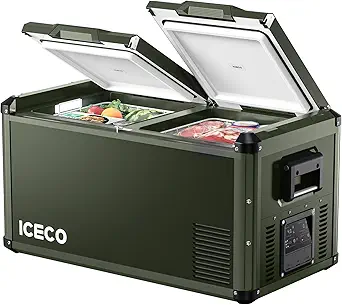 |
| Best Value The sweet spot between price and what you get | Megiu HC-12P1 Portable Fridge |  |
| Best Budget The cheapest option that still gets the job done reliably | Stopsad HA801B 22QT Portable Refrigerator |  |
| Top Rated A top-rated pick with lots of positive feedback | BougeRV CRX3 30-Quart Fridge |  |
| Most Popular A crowd favorite that many people choose with confidence | EUHOMY CF-55 59QT Portable Refrigerator |  |
| Best Seller A high-volume bestseller chosen again and again | BougeRV CR22 23-Quart Portable Refrigerator |  |
EUHOMY 53QT Portable Freezer

| Capacity | 53 quarts |
|---|---|
| Temperature Range | -4°F to 68°F |
| Voltage | 12 volts (supports 12/24V DC and 110–240V AC) |
| Cooling Method | Compressor |
| Additional Features | Battery protection, Wheels, Touch Control |
The EUHOMY 53QT portable freezer is a compressor-powered fridge built for road trips, camping, and household backup storage. It offers a broad temperature range from -4°F to 68°F and selectable ECO and MAX cooling modes so you can prioritize energy use or fast chilling. Two internal baskets and a removable divider create separate zones for frozen and chilled items, while the reversible lid, LCD touch controls, and low-noise design make everyday operation straightforward. Mobility is practical: dual handles and off-road wheels ease transport and the unit claims anti-shake performance on mild slopes. For off-grid use it supports both 12/24V DC and 110–240V AC power and includes three-level battery protection to reduce the risk of draining a vehicle battery. Expect a sturdy, well-insulated cabinet and quiet running around 40 dB, but note its weight and physical size mean it is best moved on wheels rather than carried long distances. The freezer is a versatile choice for campers who want near-full-size refrigeration with vehicle compatibility and sensible battery safeguards.
Best for: Buyers who want a near-full‑size portable fridge for camping or long road trips and prioritize reliable compressor cooling, vehicle compatibility, and easy organization over ultralight portability.
Less Ideal for: People seeking a lightweight backpackable cooler or a minimal single-day beverage cooler should consider smaller, lighter alternatives.
- Large 53‑quart capacity with removable divider and baskets for organized storage
- Compressor cooling with -4°F to 68°F range for both freezing and chilling
- Works on 12/24V DC and 110–240V AC with three-level battery protection for vehicle use
- Wheels, dual handles, and anti-shake design make transporting on rough terrain easier
- Low noise operation and simple LCD touch controls for convenient campsite use
- Relatively heavy for a portable unit, so wheeled movement is preferred over carrying
- No app control on this model, so remote monitoring or adjustments are not available
Verdict: A capacious, compressor-driven portable freezer that delivers campsite-worthy freezing and vehicle-safe power management for multi-day trips.
ICECO VL75 ProD 75L
| Capacity | 75 liters |
|---|---|
| Temperature range | 0°F to 50°F |
| Cooling method | Compressor |
| Power source | AC 110-240V | DC 12/24V |
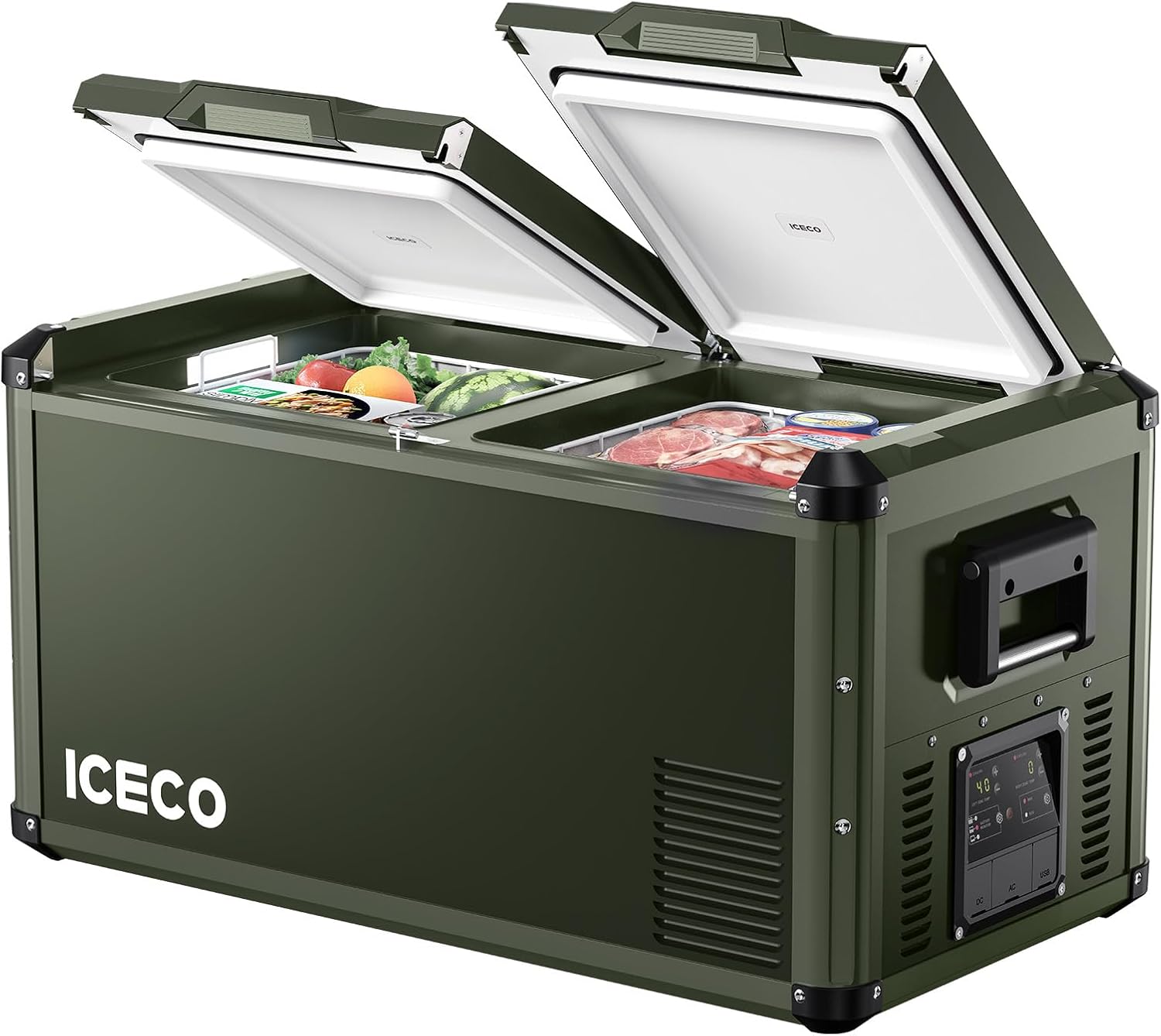
The ICECO VL75 ProD is a 75‑liter dual-zone portable compressor fridge built for serious cooling tasks on the road or at camp. It uses a SECOP compressor to reach down to 0°F and up to about 50°F, and offers MAX and ECO modes so you can prioritize fast pull‑down or lower power draw. The side-by-side, two-door design gives independent temperature control for each zone so you can run fridge and freezer simultaneously or shut one side off to save energy. Practical touches include reversible/multi-opening lids, DC 12/24V inputs plus an internal AC transformer for home pre-cooling, built-in USB ports when on DC power, LED interior lights, drain plug and removable baskets for organization. The metal cabinet, anti-shake design and battery protection make it stable in vehicles, and ICECO backs the compressor with five years of warranty. It is sizable and robust, so it is best where substantial chilled capacity and dependable compressor cooling are needed rather than where a compact lightweight cooler is preferred.
Best for: Buyers who need dependable, high-capacity portable refrigeration for long trips, camping, or overland use and prioritize strong compressor performance and dual-zone flexibility.
Less Ideal for: People who want an ultra-light, highly compact cooler for occasional day trips or who need the easiest possible lift-and-carry option.
- Dual-zone compressor cooling with independent temperature controls for simultaneous fridge and freezer use.
- SECOP compressor with MAX and ECO modes for fast cooling or energy saving and stable operation under tilt.
- Multiple power options including 12/24V DC ports on both sides and built-in AC transformer for home use.
- Rugged metal cabinet with vehicle-friendly features like anti-shake, drain plug, reversible lid and removable baskets.
- Five-year warranty on the compressor gives added confidence for heavy use.
- Relatively heavy and large compared with small portable coolers, making it less convenient to lift or stow.
- Annual energy consumption is notable for a refrigerator of this class, so prolonged off-grid use may require larger battery capacity.
Verdict: Choose the VL75 ProD if you want a robust, high-capacity portable freezer/fridge with reliable compressor performance and true dual-zone control.
Megiu HC-12P1 Portable Fridge

| Capacity | 13.5 quarts |
|---|---|
| Temperature range | -18°C to +15°C |
| Average power | 45W |
| Cooling method | Compressor |
| Included components | DC & AC cables |
The Megiu HC-12P1 is a compact 12V/24V compressor fridge that doubles as a portable freezer, offering a temperature range from -18°C to +15°C and digital touch controls with an LED display. It is typically used in cars, RVs, boats, and at campsites or kept indoors on AC power thanks to its included AC and DC cables. Notable features include a rotary scroll DC inverter compressor that cools quickly, removable wire basket for organization, a HIPS inner tank for easier cleaning, and automatic battery protection to stop the compressor when vehicle voltage is low. At about 45W average power consumption and under 40 dB noise, it is energy conscious and reasonably quiet for overnight use. Trade-offs are its small 13.5‑quart capacity, which limits how much chilled or frozen food you can carry, and its single compartment design with manual defrost, which reduces flexibility compared with dual‑zone units. The unit is easy to move and install in a vehicle but buyers should plan storage around its modest internal space.
Best for: Buyers who prioritize a compact, energy‑efficient compressor fridge for road trips, camping, or occasional home use and want a quick‑cooling unit that protects vehicle batteries.
Less Ideal for: People who need large capacity or separate dual‑zone cooling for simultaneous fridge and freezer storage should consider larger or dual‑compartment models.
- Compressor cooling reaches freezer temperatures (down to -18°C) for frozen storage.
- Dual power options with included 12/24V DC cable and 110–240V AC adapter for home or vehicle use.
- Low average power draw (~45W) and built‑in battery protection to prevent vehicle drain.
- Quiet operation under 40 dB suitable for overnight or cabin use.
- Removable basket and smooth HIPS inner tank make cleaning and organizing simple.
- Relatively small 13.5‑quart capacity limits bulk storage.
- Single compartment with manual defrost reduces flexibility for mixed temperature storage.
Verdict: A compact, energy‑efficient compressor fridge that reaches true freezer temperatures and is built for vehicle and occasional home use.
Stopsad HA801B 22QT Portable Refrigerator

| Capacity | 0.7 cubic feet |
|---|---|
| Cooling method | Compressor |
| Temperature range | -4°F to 68°F |
| Power source | 12/24V DC and 110/240V AC |
| Defrost system type | Frost Free |
This compact compressor fridge is built for on-the-road use in trucks, RVs, and boats while still working at home on AC power. It offers a 22‑quart (0.7 cu ft) compartment with a removable divider to create two zones, and the variable-frequency compressor can run from a freezer-cold -4°F up to 68°F so you can store frozen items or keep drinks chilled. Controls are on a simple LCD panel with ECO and MAX modes for energy-saving or fast cooling, and built-in three-stage battery protection helps avoid draining a vehicle battery. The unit is designed to be quiet (around 40 dB) and shock resistant for use on bumpy roads, and its frost-free compressor eliminates manual defrosting. The trade-offs are its modest internal volume—suitable for a few days of supplies for one or two people—and a roughly 23-inch footprint that requires a stable flat surface in a cab or sleeper. For a semi truck where space, battery safety, and reliable compressor cooling matter, this model covers the basics without frills.
Best for: Drivers who need a reliable, energy-conscious fridge that runs from truck power or household outlets and keeps food cold or frozen on multi-day trips.
Less Ideal for: Those who need large-capacity refrigeration for extended group travel or for carrying bulky frozen goods should look at larger or full-size truck fridges.
- Compressor cooling with wide temperature range from -4°F to 68°F for freezing or chilling
- Dual power support (12/24V DC and 110/240V AC) for use in trucks and at home
- Removable divider creating two storage zones to separate food and beverages
- Quiet operation (~40 dB) and shock-resistant design for vehicle use
- Frost-free operation and ECO/MAX modes for energy management
- Internal capacity is limited to about 22 quarts, so it holds only a few days of food for one or two people
- Relatively heavy and requires a stable flat installation in a cab or sleeper
Verdict: A compact, truck-ready compressor fridge that balances battery protection, quiet operation, and freezer-capable cooling for solo or two-person road trips.
BougeRV CRX3 30-Quart Fridge

| Capacity | 30 quarts |
|---|---|
| Cooling Method | Compressor |
| Power | 12V/24V DC and 100–240V AC |
| Noise Level | 35 dB |
| Defrost Type | Manual Defrost |
The BougeRV CRX3 is a compact 30-quart portable compressor fridge built for road trips, camping, and vehicle use. It uses compressor cooling to reach near-freezer temperatures and can drop from room temperature to around 32°F in roughly 12–14 minutes, which is useful for chilling drinks or freezing small food packs quickly. The unit runs in an ECO mode at about 35W for more efficient operation on 12V/24V systems and includes both a DC power cord and an AC adapter for flexible power options. Practical features include a built-in LED light for night access, a small storage box that accepts an optional detachable battery, and app control for adjusting temperature and monitoring status within about 32 feet. Noise is kept low at roughly 35dB, making it suitable for overnight use in vehicles. Limitations include manual defrosting and a single-door layout that reduces internal organization options, and it is compact so it will not replace a full-size fridge for large groups or long trips without external battery support.
Best for: Buyers who prioritize a reliable, low-power compressor fridge for vehicle-based trips and need quiet, efficient cooling with simple remote monitoring.
Less Ideal for: People who need a large-capacity refrigerator for group camping or who want a no-maintenance auto-defrost unit should consider larger or different-style models.
- Fast compressor cooling that can reach about 32°F from room temperature in around 12–14 minutes.
- Low-energy ECO operation around 35W for extended runtime on vehicle power.
- Works on 12V/24V DC and includes a 100–240V AC adapter for flexible power sources.
- Quiet operation at about 35dB plus built-in LED interior light for night access.
- App control for temperature and mode adjustment within approximately 32 ft and a storage box for an optional detachable battery.
- Requires manual defrost, which adds maintenance compared with auto-defrost models.
- Single-door, compact interior limits organization and total carry capacity for larger trips.
- Optional battery is sold separately to run off-grid for prolonged periods.
Verdict: A compact, energy-efficient compressor portable fridge that reliably cools quickly and quietly for vehicle and outdoor use.
EUHOMY CF-55 59QT Portable Refrigerator

| Capacity | 55 liters |
|---|---|
| Temperature range | -4℉ to 68℉ (-20℃ to 20℃) |
| Power source | AC/DC (110-240V and 12/24V) |
| Cooling method | Compressor |
| Additional features | App control, MAX/ECO modes, 3-level battery protection |
The EUHOMY CF-55 is a compressor-driven portable refrigerator designed for van, truck, and home use that delivers fast cooling and a large 55‑liter capacity. It has dual storage zones with a removable basket so you can separate freezer and fridge items, and a variable-frequency compressor that can drop interior temperature quickly using MAX mode or conserve energy in ECO mode. Power is flexible: AC and DC adapters are included and the unit offers three-level battery protection to avoid draining a vehicle battery. Controls include an LCD panel plus Bluetooth app control for remote adjustments, and an internal LED light helps when accessing contents at night. Practical benefits include reversible door orientation, low noise operation, and a frost-free design that needs no manual defrosting. Important limitations are its bulk and weight for tighter van layouts and the need to monitor power draw on smaller battery setups despite built-in protection. For buyers prioritizing capacity, app convenience, and reliable compressor cooling, this unit is a solid option; those needing ultra-compact or lighter travel fridges should consider smaller alternatives.
Best for: Buyers who want a roomy, reliable compressor fridge in a van or RV and value remote control, fast cooling, and built-in battery protection for worry‑free road use.
Less Ideal for: Those fitting very small vans, minimalist rigs, or pack-light campers who need the lightest, most compact 12V cooler available.
- Large 55 L (59QT) capacity with dual zones for separating freezer and fridge items
- Compressor cooling with MAX and ECO modes for fast cooling or energy savings
- Includes AC and DC power cords plus three-level battery protection for vehicle use
- Bluetooth app control and LCD panel let you monitor and change temperature remotely
- Frost-free operation and internal LED light improve convenience and maintenance
- Relatively heavy and bulky for limited- space van installs
- Consumes notable power under rapid-cool MAX mode which can stress small battery systems
Verdict: If you need a high-capacity, compressor-powered van refrigerator with app control and battery protection, the EUHOMY CF-55 delivers dependable cooling and convenience for road trips.
BougeRV CR22 23-Quart Portable Refrigerator

| Capacity | 23 quarts |
|---|---|
| Temp range | -8℉ to 50℉ (-22℃ to 10℃) |
| Power source | 12/24V DC, 100–240V AC |
| Cooling method | Compressor |
| Noise level | 45 dB |
The BougeRV CR22 is a compact 23‑quart compressor fridge meant for road trips, camping, and grocery runs where you need reliable cold storage without ice. It uses compressor cooling to reach as low as -8°F and can cool from room temperature to about 32°F in roughly 15 minutes, so it will rapidly chill drinks and perishables. You get both 12/24V DC and 100–240V AC adapters in the box and a 3‑level battery protection system that stops the unit before a vehicle battery is drained. The top‑load chest layout and manual defrost keep design simple and durable, and the unit is built to run quietly around 45 dB and tolerate tilts up to 30° for off‑road use. Important compromises are its modest 23‑quart capacity, which limits long trips for larger groups, and the unit is heavier than some alternatives. It also lacks app control and a dual‑zone option, so you cannot set separate fridge/freezer temperatures in the same box.
Best for: Buyers who want a dependable, no-frills portable fridge for regular car camping, road trips, or grocery runs and who prioritize reliable compressor cooling and battery protection over smart features.
Less Ideal for: Those needing larger capacity for long group trips or users who want app control, dual‑zone storage, or a lighter ultra‑portable cooler should look elsewhere.
- Compressor cooling that reaches freezer temperatures for true refrigeration without ice
- Fast initial cool-down (about 15 minutes to 32°F) for quick chilling
- Runs on 12/24V DC and 100–240V AC with included cords for versatile powering
- Built-in 3-level battery protection to avoid draining vehicle batteries
- Relatively quiet operation (~45 dB) and can operate on a 30° tilt for off‑road use
- Only 23 quarts net capacity, limiting how much you can store for groups
- No app control or dual‑zone capability for separate fridge/freezer use
- Requires manual defrosting
Verdict: A rugged, vehicle‑friendly 23‑quart compressor fridge that reliably chills fast and protects your car battery, ideal for cautious buyers who value proven performance.
Choosing the Right Portable Freezer: Key Factors to Consider
Temperature Range and Stability
A portable freezer should be able to hold and maintain temperatures well below freezing for the items you plan to store. Look for units with a rated minimum temperature that meets your needs and features like low-temperature modes or separate compartments for different setpoints.
Consistent temperature prevents freezer burn and food safety issues during extended trips. Also consider how quickly the freezer can recover temperature after the lid is opened or after loading. Units with better insulation and stronger compressors tend to stabilize faster and maintain target temperatures with less power draw.
Power Source Compatibility and Efficiency
Portable freezers commonly run from 12V vehicle outlets, 24V systems, AC mains, or DC battery packs. Confirm the supported input voltages and included cables. Power efficiency affects how long the freezer will operate from a single battery bank or while the vehicle is off.
Check the compressor type and rated wattage or amp draw. Features like automatic low-voltage shutoff, ECO modes, and adjustable temperature hysteresis extend run time and protect vehicle batteries. If you plan to use solar-charged batteries, review standby draw and typical daily consumption to size your power setup properly.
Capacity, Internal Layout, and Storage Flexibility
Advertised liter or quart capacity is a starting point, but usable space depends on interior shape, basket configuration, and the thickness of insulation. Consider what you usually pack: long flat items, boxed meals, or many small packages. Removable dividers, baskets, and flat bottoms make organization easier and improve packing efficiency.
A slightly smaller but better-organized freezer can outperform a larger, awkwardly shaped unit. Also factor in how full the freezer needs to be for efficient operation: very small loads in a large cabinet can waste power unless you use divider systems or insulation packs.
Durability and Transport Features
Portable freezers face bumps, vibration, and exposure to the elements. Solid external construction, impact-resistant plastics, and reinforced corners prolong service life. Look for secure latches, sturdy handles, and tie-down points if you mount the unit in a truck bed or on a trailer.
Consider whether the compressor and internal components are protected from dust and water. Some designs include vibration isolation for the compressor, which improves longevity on rough roads. Corrosion-resistant materials and easily serviceable parts are beneficial for long-term ownership.
Control Interface and Monitoring
Controls should be intuitive and provide accurate temperature readouts. Features to look for include digital thermostats with setpoint precision, external temperature probes, and alarms for high temperature or low input voltage. Wi-Fi or Bluetooth monitoring can be convenient but check power overhead for these features.
A clear display and simple menus reduce the chance of accidental setting changes. Automatic or manual defrost options and easily accessible drain plugs simplify maintenance and cleaning.
Noise, Vibration, and Environmental Use
Compressor noise and vibration matter if you will be sleeping near the freezer or operating it inside an enclosed vehicle. Look for units with quieter compressors or low-vibration mounting. Noise ratings are not always published, so user reports or specifications on decibel output can help.
Also consider the allowable ambient temperature range. Some portable freezers perform poorly in very hot or very cold ambient conditions, so check the operating specifications if you expect extreme environments. Proper ventilation clearance around the unit affects cooling efficiency and should be part of installation planning.
Sizing a Portable Freezer For Your Trips
Choose a size that matches how and how often you pack food. For weekend trips, a compact freezer that holds a few days of frozen meals may be sufficient. For multi-day or group outings, prioritize larger capacity or consider two smaller units to separate foods and improve organization.
When calculating needs, estimate the volume of frozen goods rather than weight. Factor in space for airflow and a small margin so the compressor does not run continuously. If you frequently carry large, flat items, check internal dimensions rather than relying solely on liters.
- Measure typical food containers before buying to ensure fit.
- Smaller freezers are more efficient for light loads; larger units excel when full.
- Consider removable baskets to keep frequently used items accessible.
Power Setup and Sizing a Battery Bank
Match the freezer's average amp draw to your available power source. For operation away from shore power, calculate daily energy needs by multiplying average watts by expected hours of use. Add overhead for compressor startups and occasional warm-air recovery after opening the lid.
Include safety margins and low-voltage cutoffs to avoid fully discharging vehicle batteries. If using solar charging, size panels and controller to replenish daily consumption under realistic insolation conditions.
- Check for built-in low-voltage protection to prevent draining vehicle batteries.
- Account for surge current at compressor start when sizing inverters or fuse ratings.
- If using a gasoline generator occasionally, prefer a model with stable output to protect the freezer electronics.
Installation and Ventilation Best Practices
Portable freezers need clearance for airflow around the compressor and condenser. Install them so vents are not blocked by cargo or vehicle walls. In enclosed spaces, ensure some natural ventilation or periodic airing to dissipate heat.
Secure the unit to prevent tipping and minimize vibration during transit. Use tie-down points and soft padding where necessary to protect both the freezer and surrounding gear.
- Leave the recommended clearance space indicated in the manual.
- Avoid placing the freezer in direct sunlight or near other heat sources.
- Ensure the power cable routing avoids pinch points and moving parts.
Maintenance, Cleaning, and Troubleshooting
Regular maintenance keeps a portable freezer performing reliably. Clean the interior with mild detergent and remove frost buildup according to the manufacturer guidelines. Check seals and gaskets for tears or hardening that can increase power draw.
Monitor power draw and temperature behavior. Rising temperatures under normal ambient conditions can signal a worn compressor, clogged vents, or failing seals. Address issues promptly to avoid food loss.
- Defrost periodically if the model lacks automatic defrost.
- Inspect electrical connections for corrosion and secure tight terminals.
- Store the freezer clean and dry when not in use to prevent mold and odors.
Using a Portable Freezer for Meal Prep and Food Safety
Keep perishable items at safe temperatures by pre-cooling goods before loading and minimizing lid openings during use. Pack items in resealable containers to reduce moisture and cross-contamination. If transporting raw meats, separate them from ready-to-eat foods using baskets or sealed bags.
Plan for contingencies: carry frozen ice packs or a small dry ice supply to slow thawing if power is interrupted for several hours. Regularly monitor internal temperature to ensure food safety, especially on long trips.
- Pre-freeze meats and meals where possible to reduce compressor workload.
- Use thermometers to verify internal temperatures periodically.
- Label and date stored items to rotate stock and avoid spoiled food.
How We Chose the Best Portable Freezer
We focused on features that directly affect real-world portable freezer performance and ownership experience. Key evaluation criteria included temperature stability and range, because maintaining consistent subfreezing temperatures is the primary purpose of a portable freezer. We tested reported run times and measured power consumption to judge efficiency and compatibility with vehicle 12V outlets and common portable battery packs. Build quality and portability were assessed by looking at case durability, handles, and mounting options to ensure the units can survive regular transport and outdoor conditions. Usable capacity and internal layout were considered so the listed options fit common loads like meat packs, ice packs, and meal kits. Usability factors such as control clarity, display accuracy, and defrost or cleaning access also influenced inclusion. We excluded units that function only as coolers without active refrigeration, and we filtered out designs that lack clear power-management data or that have fragile casings unsuitable for mobile use. The final selections balance reliable low-temperature performance, efficient power draw, and durable construction appropriate for multi-day trips and frequent transport.
Our full evaluation process is outlined in our review methodology.
FAQ
How long will a portable freezer run from a vehicle battery?
Run time depends on the freezer's average amp draw and the battery's usable capacity. Typical daily consumption varies widely, so calculate amp-hours needed, include a safety margin, and account for compressor start surges. Many users plan for partial-day operation or supplement with a secondary battery or charging source.
Can I use a portable freezer in very hot weather?
Some models can maintain set temperatures in high ambient conditions, but efficiency drops as ambient temperature rises. Check the specified maximum operating ambient temperature and ensure adequate ventilation and shade to prevent overwork and excessive power draw.
Is it better to choose a compressor or thermoelectric portable freezer?
Compressor-based units are generally much more effective at reaching and maintaining subfreezing temperatures and are more efficient for large or long-duration loads. Thermoelectric units are simpler but rarely achieve strong freezing performance and are best for mild cooling needs only.
How should I clean and defrost a portable freezer?
Turn the unit off and remove contents, then allow frost to melt naturally or use the manual defrost feature if provided. Wipe the interior with mild soap and water, dry thoroughly, and inspect gaskets. Avoid sharp tools that could damage liners or seals.
Do portable freezers need regular maintenance?
Yes. Periodic cleaning, gasket inspection, and ventilation checks help maintain efficiency and lifespan. Also monitor for unusual noise or rising temperatures, which can indicate mechanical issues requiring service.
Final Verdict
When choosing a portable freezer, prioritize temperature stability and power efficiency for the types of trips you take. Balance usable capacity and internal organization with the realities of your power setup and transport method. Durable construction and intuitive controls reduce hassle during frequent use. Consider the tradeoff between larger capacity and longer run times, and size your battery and charging system to match expected consumption. With those priorities in mind, you can confidently pick a portable freezer that meets your travel, camping, or mobile storage needs.