
Note: This article contains affiliate links. If you click on these links and make a purchase, we may earn a small commission at no extra cost to you. This helps support our research and content. Read our full affiliate disclosure here.
When you need fast, effective cooling in a hot room, a powerful fan is the simplest upgrade that still makes a big difference. The right high-output fan moves far more air than a basic model, shortens how long you run air conditioning, and keeps larger spaces comfortable during peak heat. This guide shortlists six top-performing fans selected for strong airflow, controllable speed, and reasonable acoustic levels. We evaluated blower design, airflow delivery, noise performance, and build quality to help you pick a unit that fits your space and use patterns. Read on to see the picks and which features matter most for heavy-duty home cooling.
Top Picks at a Glance
| Best Quality Built to a higher standard if you want something more solid | Vornado 660 Air Circulator |  |
| Best Value The sweet spot between price and what you get | Lasko Pivoting High Velocity Fan U12104 |  |
| Best Budget The cheapest option that still gets the job done reliably | Amazon Basics 20-Inch Box Fan DK1901 |  |
| Top Rated A top-rated pick with lots of positive feedback | DREO TurboPoly DR-HPF013 |  |
| Most Popular A crowd favorite that many people choose with confidence | Honeywell TurboForce HT-900 |  |
| Best Seller A high-volume bestseller chosen again and again | DREO Tower Fan DR-HTF018 |  |
Vornado 660 Air Circulator
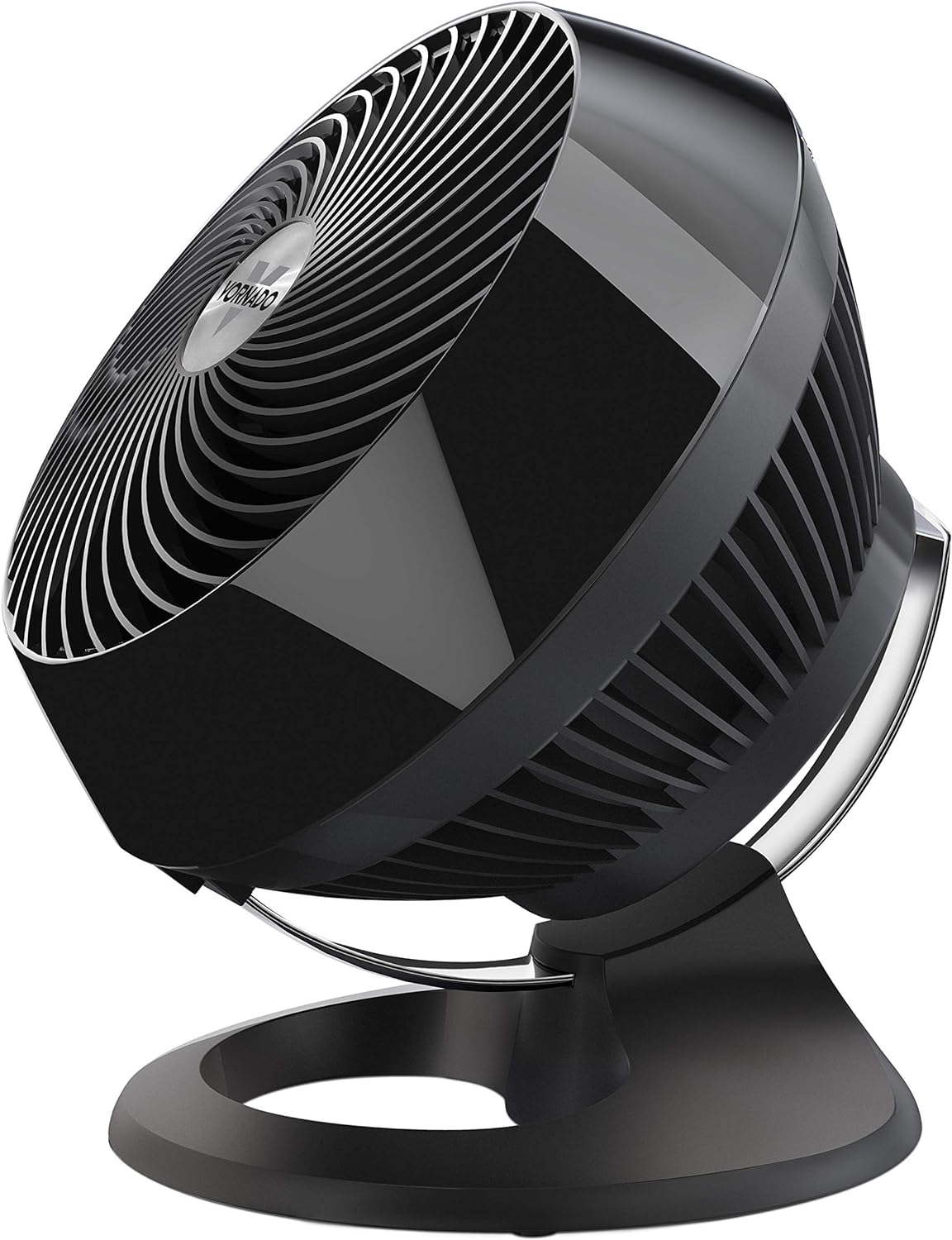
| Number of Speeds | 4 |
|---|---|
| Noise Level | 54 db |
| Wattage | 45 watts |
| Air Flow Capacity | 584 cfm |
| Motor Type | Brushless |
The Vornado 660 is a purpose-built whole-room air circulator designed to create steady, long-reaching airflow rather than just a local breeze. It uses deep-pitched blades, an inlet guide cone and spiral grill to produce Vortex circulation that the company rates at up to 584 cfm and capable of moving air up to 100 feet, and four push-button speed settings let you dial from whisper-quiet to high-output. The chrome glide bar provides a 90-degree tilt so you can aim the stream where it is needed, and the removable front grill makes routine cleaning straightforward. At 45 watts with a brushless motor it delivers strong performance without excessive power draw, and the fan's solid build and five-year support reflect a focus on durability. Trade-offs are typical for a high-performance circulator: it is a dedicated indoor air mover with a directional output rather than a soft, diffuse breeze, and the 54 dB figure at higher speeds may be noticeable in quiet rooms.
Best for: Buyers who prioritize measurable, room-filling airflow and reliable, long-term performance for bedrooms, offices, or larger interior spaces.
Less Ideal for: People who want an extremely quiet fan for all-night sleeping or those seeking a wide, gentle breeze for close personal cooling rather than whole-room circulation.
- Powerful Vortex circulation engineered to move air throughout a room.
- Four distinct speed settings from quiet to high airflow for flexible control.
- Adjustable 90-degree tilt with chrome glide bar for targeted airflow direction.
- Removable front grill for easier cleaning and maintenance.
- Brushless motor with modest wattage for efficient continuous use.
- Directional, concentrated airflow rather than a wide, gentle diffusion across a room.
- Noise can reach mid-50s dB at higher speeds which may bother very quiet spaces.
Verdict: Choose the Vornado 660 when you need proven, high-output whole-room circulation and durable performance from a compact floor/table fan.
Lasko Pivoting High Velocity Fan U12104

| Power Source | Corded Electric |
|---|---|
| Number of Speeds | 3 |
| Air Flow Capacity | 289 cfm |
| Wattage | 100 watts |
| Motor Type | Brushless |
The Lasko Pivoting High Velocity Fan is a small but forceful utility blower built for garages, workshops, basements, and job sites where concentrated air movement is needed. Its 12-inch blower head delivers up to 289 CFM through three rotary-controlled speeds and a 270-degree pivot so you can aim airflow at floors, walls, or a work area for drying or spot cooling. The unit includes a 10-foot cord, a carry handle for moving between rooms, and two grounded pass-through outlets that let you power nearby tools without extra extension cords. Safety features include ETL listing, a three-prong grounded plug, and a built-in circuit breaker with reset. Expect a utilitarian plastic housing and blade construction and audible noise at higher speeds since the unit prioritizes power over quiet operation. The simple rotary controls keep operation straightforward but lack programmable features or a timer. For anyone needing a rugged, no-frills air mover to accelerate drying, boost ventilation, or deliver focused cooling, this fan is practical and effective.
Best for: Buyers who prioritize efficient, targeted airflow and straightforward, practical features for job-site, garage, or utility-room tasks where strong air movement and portability matter most.
Less Ideal for: If you need a whisper-quiet fan, smart controls, or decorative living-room styling, this utilitarian blower is not the best choice.
- Strong airflow for its size with up to 289 CFM output
- Pivoting head lets you aim air where it matters for drying or spot cooling
- Two built-in grounded outlets eliminate the need for nearby extension cords
- Long 10-foot power cord and carry handle improve portability and placement
- ETL listing and circuit breaker add electrical safety
- No timer, remote, or quiet mode so it can be loud at higher speeds
- Basic plastic construction may feel less durable than heavier-duty metal-bodied blowers
Verdict: Choose this Lasko if you need a compact, portable blower that delivers powerful, targeted airflow for drying and ventilating workspaces.
Amazon Basics 20-Inch Box Fan DK1901

| Number of Speeds | 3 |
|---|---|
| Wattage | 67 watts |
| Number of Blades | 5 |
| Power Source | Corded Electric |
| Voltage | 120 volts |
This Amazon Basics 20-inch box fan is a simple, no-frills way to move air through small to medium rooms. It offers three front-facing speed settings controlled by a knob, and its five-blade design and 67-watt motor deliver noticeable airflow on high while lower speeds are quiet enough for bedrooms. The fan is lightweight and includes a top carry handle and recessed cord wrap for easy storage and moving between rooms, and the oversized feet provide stable free-standing use. Construction is all-plastic, which keeps cost and weight down but means it is not as robust as metal fans and can feel less durable over time. There are no smart features or oscillation, so placement and aiming matter for coverage, but for directional cooling, window ventilation, or supplementing HVAC airflow it performs well. If you want straightforward powerful airflow on a tight budget, this model gives predictable results without extra bells and whistles.
Best for: Buyers seeking an affordable, portable fan that delivers straightforward directional airflow for cooling bedrooms, home offices, or living spaces.
Less Ideal for: Those who need whole-room circulation with automatic oscillation, premium build materials, or integrated smart features should consider other models.
- Three discrete speed settings for adjustable airflow
- Lightweight design with carry handle for easy room-to-room portability
- Large feet and free-standing design provide stable placement
- Recessed cord wrap simplifies storage and keeps cord tidy
- All-plastic construction is less durable than metal alternatives
- No oscillation or smart controls limits whole-room coverage options
Verdict: A budget-friendly, portable box fan that delivers strong, no-frills airflow for cooling single rooms effectively.
DREO TurboPoly DR-HPF013

| Power Source | Corded Electric |
|---|---|
| Number of Speeds | 8 |
| Noise Level | 28.2 db |
| Air Flow Capacity | 1000 cfm |
| Control Method | Remote, Touch |
The DREO TurboPoly DR-HPF013 is a tall pedestal air circulator designed to move air across a whole room. It uses a brushless DC motor and a three-blade assembly to deliver up to 1000 CFM and claims airflow reach up to 90 feet, which makes it useful for cooling bedrooms, living rooms, or home offices. Controls include an on-device touch panel plus a full-function remote, eight speed levels, three operating modes, an auto mode that adjusts speed with temperature changes, 90° horizontal oscillation and a 105° manual vertical tilt. The fan is intentionally quiet at reported low decibel levels and offers an 8-hour timer and a detachable grill and blade for easier cleaning. Practical strengths are the long throw and many speed settings for targeted or whole-room circulation; limitations include a mostly plastic construction that may feel less premium and the vertical adjustment being manual rather than motorized. For buyers prioritizing dependable, powerful airflow and simple controls, this fan delivers solid performance for everyday home use.
Best for: Buyers who want a reliable, high-flow floor fan that delivers sustained whole-room airflow with simple, versatile controls and low operating noise.
Less Ideal for: People seeking a heavy-duty metal fan or a fully motorized tilt/oscillation system should consider different models with sturdier construction or more automation.
- High reported airflow (1000 CFM) for fast whole-room circulation
- Brushless DC motor for efficient, quieter operation
- Multiple control options: touch panel plus included remote and auto mode
- Detachable front and rear grill and blades for easier cleaning
- Adjustable height and wide oscillation for targeted airflow placement
- Mostly plastic build may feel less durable than metal alternatives
- Vertical tilt is manual rather than motorized
Verdict: Choose this DREO pedestal fan when you need dependable, long-throw airflow and quiet, efficient operation for whole-room cooling.
Honeywell TurboForce HT-900
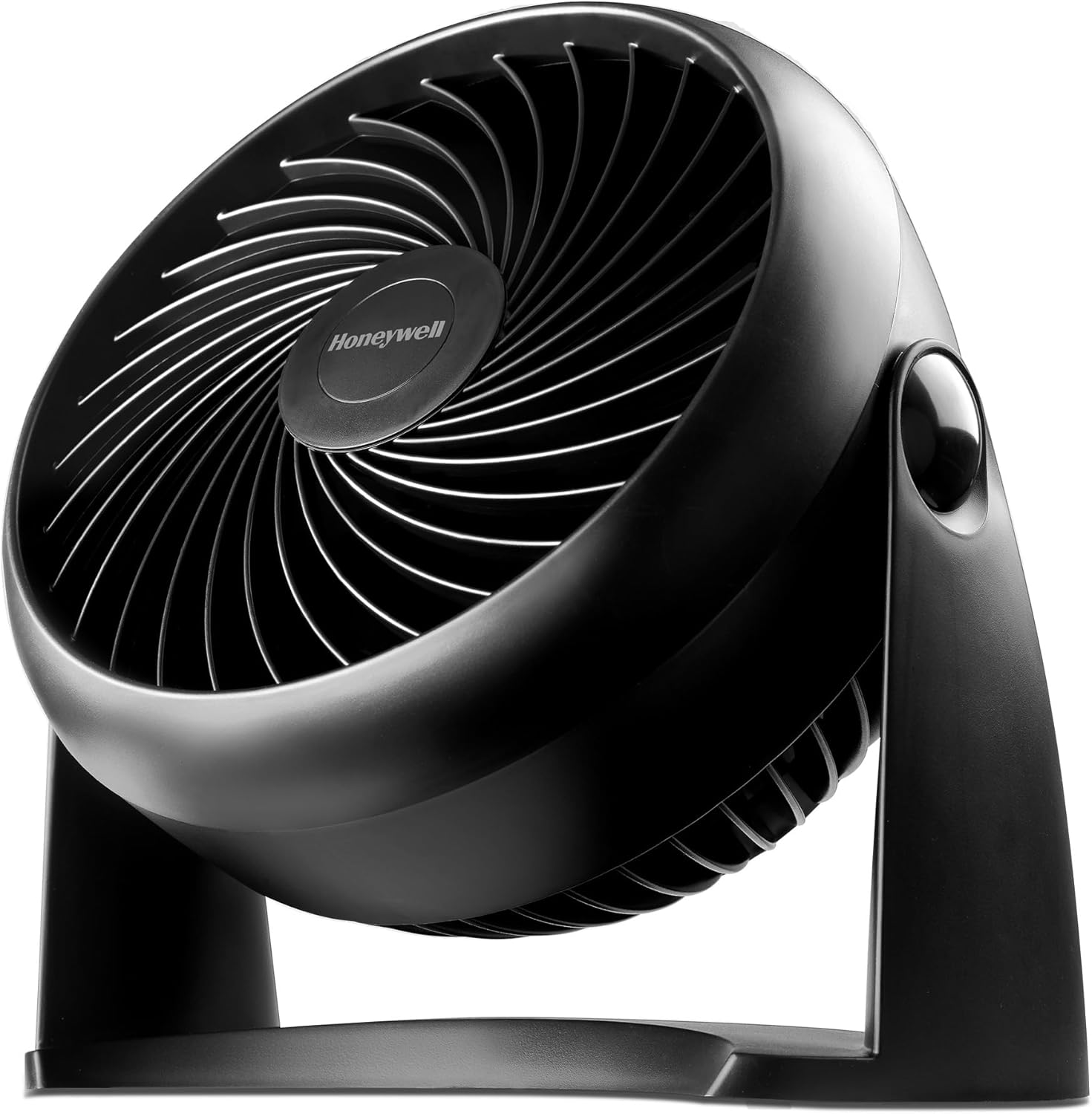
| Power Source | Corded Electric |
|---|---|
| Number of Speeds | 3 |
| Air Flow Capacity | 185 cfm |
| Motor Type | brushless |
| Installation Type | Tabletop or Wall Mount |
The Honeywell TurboForce HT-900 is a small tabletop air circulator built to move more air than its size implies. It uses an aerodynamic turbo design and a brushless motor to deliver up to 185 cfm across three push-button speeds, and the 90-degree pivoting head helps aim airflow where you need it for desk, bedside, or wall-mounted use. Practical benefits include noticeably stronger circulation for cooling or supplementing an AC, a lightweight portable design with a carry handle, and a low-noise operation that the manufacturer measures as substantially quieter than similar units. Controls are simple and durable with push-button switching and a standard NEMA plug so setup is plug-and-play. Downsides are the limited feature set — no timer, remote, oscillation, or smart controls — and plastic construction that favors affordability over premium feel. It performs best as a focused spot cooler or circulation booster rather than a whole-room climate solution.
Best for: Buyers who want a proven, powerful little fan that reliably boosts airflow at a desk, bedside, or small room and who value simple, fuss-free performance backed by wide user adoption.
Less Ideal for: People who need whole-room circulation with oscillation, app control, or premium materials should consider larger or feature-rich models instead.
- Aerodynamic TurboForce design delivers strong airflow for a compact fan
- Three durable push-button speeds and a 90-degree pivoting head for directed cooling
- Brushless motor for efficient operation and lower noise
- Portable tabletop or wall-mount installation with a built-in carry handle
- No oscillation, timer, remote, or smart connectivity
- Plastic construction feels basic compared with higher-end fans
Verdict: A compact, high-airflow tabletop circulator that delivers strong, quiet spot cooling with simple, reliable controls.
DREO Tower Fan DR-HTF018

| Power Source | Corded Electric |
|---|---|
| Number of Speeds | 9 |
| Special Features | 4 Modes, Oscillating, Timer |
| Wattage | 35 watts |
| Air Flow Capacity | 1473 cfm |
The DREO Tower Fan DR-HTF018 is a tall, free-standing tower fan built around a brushless DC motor that delivers strong airflow for indoor cooling. It offers nine speed settings and four modes (Standard, Natural, Sleep, Turbo) so you can dial from a gentle bedroom breeze to a high-output setting for fast cooling, and the 90° oscillation helps spread air across the room. The fan includes a 12-hour timer, remote control, and an electronic touch display that auto-dims for nighttime use. With a claimed 1473 CFM airflow and 28 ft/s max speed, it performs like a high-velocity standing fan while remaining quieter than many AC motor units thanks to the DC design. The rear grille is removable for easy cleaning, and the unit is ETL listed. Expect solid airflow and flexible controls but note the fan is a single-zone indoor unit without built-in humidification or air filtration. For buyers prioritizing tried-and-true cooling performance and straightforward controls, this model balances power and quiet operation effectively.
Best for: Buyers who want reliable, powerful room cooling with straightforward controls and low noise for bedrooms or living spaces and who value quiet, consistent performance over smart-home features.
Less Ideal for: If you need air purification, humidifying cooling, or smart-home integration, choose a specialized purifier, evaporative cooler, or a Wi‑Fi–enabled fan instead.
- Brushless DC motor for strong airflow with lower noise
- Nine speeds and four modes for precise comfort control
- 90° oscillation and high CFM to move air across larger rooms
- 12-hour timer and remote for convenient, low-effort operation
- Removable rear grille for simple cleaning and maintenance
- No built-in air filtration or cooling (evaporative) function
- Controls and display may be basic compared with smart/HomeKit-enabled fans
Verdict: Choose this fan when you want a powerful, quiet tower fan that delivers high airflow and easy controls for dependable room cooling.
Choosing the Right Powerful Fan: Key Factors to Consider
Airflow Capacity
Airflow capacity determines how quickly a fan can move air through a room and is the single most important factor for a powerful fan. Higher airflow ratings mean the fan will circulate more air, improving perceived cooling and speeding up air-exchange in large spaces.
Look for continuous airflow figures or manufacturer CFM estimates and think about the room size you plan to cool. A fan that lists strong peak airflow but drops quickly under load may feel weak in practice, so sustained delivery matters for real-world use.
Noise Performance
Powerful fans must balance output and acoustics because higher speeds usually create more sound. Noise performance affects where you can use the fan—living rooms, home offices, or bedrooms have very different tolerance levels for hum and wind noise.
Compare reported decibel levels where available and note whether the fan produces steady tonal noise or broadband wind noise. Features like variable speed settings and low-speed torque can reduce audible disruption while preserving useful airflow.
Motor Type and Thermal Protection
The motor design drives durability and runtime. Brushless or well-cooled motors generally run cooler and last longer under continuous use than basic shaded-pole designs. Thermal protection or automatic shutoff prevents damage if the fan is blocked or overloaded.
For heavy use, prioritize fans with proven motor cooling strategies and clear thermal safety specs. These details affect long-term reliability and whether the fan can safely handle extended high-speed operation.
Build Quality and Stability
A powerful fan creates more vibration and torque than a low-powered unit, so sturdy construction matters for both safety and long-term performance. Housings, grills, and stands should resist flexing under load and the mounting system should keep the fan stable while oscillating.
Metal components or reinforced polymer parts typically outlast thin plastic shells. Check for secure fasteners and a stable base or wall-mount hardware depending on the installation you plan to use.
Control Options and Placement Flexibility
Control versatility affects how useful a fan is in different rooms and situations. Multiple speeds, precise increments, timed operation, and oscillation let you tailor airflow without running the fan at full blast constantly.
Placement flexibility includes wall-mounting, tilting heads, and height adjustments. A powerful fan used incorrectly can create drafts or miss occupied areas, so controls that let you direct airflow precisely are valuable.
Maintenance and Serviceability
Regular cleaning preserves airflow and reduces motor strain, so look for fans with accessible grills or tool-free blade removal. Filters or screens that are easy to remove make routine upkeep faster and help maintain peak performance.
Serviceability also includes replaceable parts and clear access to motor housings for repairs. A design that simplifies cleaning and minor service keeps a powerful fan operating efficiently for longer.
Sizing Your Fan to The Room
Matching a fan to room volume is more important than matching it to floor area alone. Consider ceiling height and whether the space is open plan; taller rooms need more vertical airflow to move warm air down and mix air across the space.
Use airflow capacity as your guide: higher CFM or stated airflow numbers are needed for rooms with greater volume. For targeted spot cooling—for example near a seating area—you can often get away with a smaller unit if it has directional control and high-velocity output.
- Measure cubic footage, not just floor square footage
- Choose directional or oscillating styles based on use
- Place fans to create cross-breezes when possible
Placement Tips for Maximum Impact
Positioning a fan correctly multiplies its effectiveness. For whole-room circulation place the fan so it pushes air toward the center of the living space or across a doorway to establish a flow path.
Avoid placing high-output fans too close to walls or furniture that will block airflow. If you want to speed cool a single spot, angle the fan to focus the airstream rather than relying on oscillation alone.
- Aim through open space, not directly at obstructing surfaces
- Elevate the fan if you need to move air at head height
- Use multiple smaller fans to create layered circulation in very large rooms
Understanding Noise Tradeoffs
Higher airflow often increases noise, but the type of noise makes a difference. Continuous low-frequency hums tend to be less annoying than sharp tonal whines or rattles that carry across a room. Look for fans that emphasize smooth airflow and have vibration isolation in the base or housing.
If you plan to run a fan in a bedroom or office, prioritize models with quiet low-speed settings and variable control so you can get adequate air movement without running at peak noise levels.
- Check for documented decibel ranges if quiet use is critical
- Consider acoustic damping features like rubber mounts
- Test or listen for rattles and tonal noises before committing to long-term use
Power and Efficiency Considerations
A fan's wattage combined with airflow capacity gives an idea of efficiency. More efficient designs move more air per watt, which matters if you run the fan frequently. Motors with better cooling and thermal protection also tend to be more efficient in long runs.
If you use the fan to reduce air-conditioning runtime, balance the fan's power draw against the cooling achieved. Efficient fans can provide a noticeable reduction in HVAC load when placed strategically.
- Compare airflow-per-watt where possible
- Look for thermal protection to avoid motor stress
- Use timers or thermostatic controls to limit unnecessary runtime
Safety and Child-Pet Considerations
High-velocity fans pose greater hazard from exposed blades and tipping. Choose grills with narrow spacing and secure locks for households with children or pets. A stable, weighted base or wall-mount option reduces the risk of accidental knocks.
Also consider cord management, stable placement away from high-traffic pathways, and easily accessible switches so you can quickly turn the fan off if needed.
- Prefer grills with tight mesh and secure fastening
- Use wall-mounts or enclosed impeller designs in active homes
- Keep cords tidy and out of reach to prevent tripping
How We Chose the Best Powerful Fan
We prioritized measurable performance and user experience when selecting the finalists. Primary filters included continuous airflow capability measured in cubic feet per minute or equivalent manufacturer specs, durable motor and bearing design for long runtimes, and multi-speed control with consistent output at each setting. Noise output under load was another key filter so we favored units that deliver high airflow without excessive decibel levels. Build and stability mattered because high-output fans are often run for extended periods and need sturdy housings and reliable mounting or stands. Energy efficiency and motor thermal protection were used to exclude models with poor runtime or known overheating risk. We also considered ease of use features such as accessible controls, oscillation options, and maintenance access for cleaning. Units that prioritized gimmicks over sustained airflow, or that lacked clear specs for continuous operation, were excluded. The resulting criteria emphasize sustained airflow, acoustic performance, durability, control precision, and safety.
Our full evaluation process is outlined in our review methodology.
FAQ
Can a powerful fan cool a whole room by itself?
A powerful fan improves perceived cooling by increasing air movement, but it does not lower room temperature like an air conditioner. In many cases, a high-output fan alone makes a room feel several degrees cooler and helps distribute conditioned air more evenly.
How loud will a high-output fan be at maximum speed?
Noise varies widely by design. Expect higher decibel levels at top speeds, but well-designed units focus on smooth airflow to keep noise less objectionable. Choosing a fan with multiple speed steps helps balance airflow and acoustic comfort.
Are brushless motors worth it for a powerful fan?
Brushless motors typically run cooler and last longer under continuous use, and they are often more efficient. For frequent high-speed operation, brushless or well-cooled motor designs are usually preferable.
Do powerful fans use a lot of electricity?
Powerful fans use more watts at high speeds, but they are still far more efficient than most cooling systems per unit of airflow. Running a fan strategically or with timers reduces overall energy use while delivering the benefits of increased air movement.
How often should I clean a high-output fan?
Clean the grille and blades every few weeks if used frequently. Dust buildup reduces airflow and stresses the motor. Models with tool-free access speed up maintenance and help keep peak performance.
Final Verdict
Prioritize sustained airflow, noise behavior, and durable motor design when choosing a powerful fan. Think about how you will place and control the unit, because directional options and adjustable speeds have a big effect on real-world usefulness. Balance raw output against acoustic comfort and serviceability to find the best match for your space. With those tradeoffs in mind, you can confidently choose a high-output fan that delivers effective cooling and reliable day-to-day performance.