
Note: This article contains affiliate links. If you click on these links and make a purchase, we may earn a small commission at no extra cost to you. This helps support our research and content. Read our full affiliate disclosure here.
If you have a glass-top stove, choosing the right pressure cooker matters for both cooking performance and appliance care. The wrong base can scratch or concentrate heat, while a well-designed cooker spreads heat evenly and seals reliably for fast, consistent meals. This guide highlights the top shortlisted pressure cookers suited to glass-top surfaces and explains the practical tradeoffs buyers should weigh. Below you will find the seven best options selected for glass-top stoves, with attention to heat distribution, contact protection, safety features, and daily usability. Use the evaluation notes to match a cooker to your cooking habits and stove care priorities.
Top Picks at a Glance
| Best Overall The best all-around choice for most situations | KOBACH 8QT Stainless Steel Pressure Cooker |  |
| Best Quality Built to a higher standard if you want something more solid | T-fal Clipso 6.3 Quart Pressure Cooker |  |
| Best Value The sweet spot between price and what you get | Universal Ultra 4.75 Quart Pressure Cooker |  |
| Best Budget The cheapest option that still gets the job done reliably | SOLUSTRE 2.6 Qt Pressure Cooker |  |
| Top Rated A top-rated pick with lots of positive feedback | IMUSA 7-Quart Aluminum Pressure Cooker |  |
| Most Popular A crowd favorite that many people choose with confidence | Presto 6-Quart Stainless Pressure Cooker |  |
| Best Seller A high-volume bestseller chosen again and again | Presto 16-Quart Pressure Canner |  |
KOBACH 8QT Stainless Steel Pressure Cooker

| Capacity | 8 quarts |
|---|---|
| Material | Stainless steel |
| Max pressure | 17 PSI |
| Special Features | Dishwasher Safe, Induction Compatible Base |
The KOBACH 8QT stainless steel pressure cooker is a family-size stovetop cooker built to speed up braises, stews, soups, and grains by up to about 70 percent versus conventional pots. It locks to create a high-pressure environment (rated to 17 PSI) and uses a composite induction-capable base so it works on glass-top and induction ranges as well as gas. Notable practical touches include one-handed lid operation that locks securely and stands upright on the counter, clear interior water level markers, and dual side handles for safer lifting. Safety is a focus: the cooker has a swing-type steam exhaust, a primary pressure relief valve, an anti-clog cover, and backup safety valves to reduce the risk of overpressure. The stainless 304 body and thickened bottom aim to reduce sticking and spread heat evenly, and the unit is dishwasher-safe for easier cleanup. Limitations are typical for stovetop pressure cookers: you need to follow fill limits to avoid overflow with soups or porridge and allow time for controlled depressurizing, and the mechanical controls mean no digital presets or timers.
Best for: Buyers who want a reliable, fast stovetop pressure cooker that fits glass-top and induction ranges and who value safety features and sturdy stainless construction for family-style meals.
Less Ideal for: People who prefer electric pressure cookers with digital timers and automated programs or those seeking a very compact single-portion unit.
- Works on glass-top, induction, gas and ceramic stovetops thanks to composite bottom
- One-handed lid that locks and can stand upright reduces counter contact and speeds handling
- Multiple redundant safety valves and anti-clog features for controlled pressure release
- Interior water level markers and thickened stainless steel bottom for even heating and easier portioning
- Dishwasher-safe components for simpler cleanup
- No electronic controls or programmable presets since it is a manual stovetop cooker
- Requires attention to fill limits and slow venting to prevent overflow with high-starch foods
Verdict: A sturdy, safety-focused 8‑quart stainless steel stovetop pressure cooker that works cleanly on glass-top and induction ranges and speeds large-batch cooking.
T-fal Clipso 6.3 Quart Pressure Cooker

| Capacity | 6.3 quarts |
|---|---|
| Material | Stainless steel |
| Compatibility | All stovetops including induction |
| Control Method | Touch |
| Operation Mode | Manual |
The T-fal Clipso 6.3 Qt is a stovetop stainless-steel pressure cooker built to shorten cook times for family meals while fitting on glass-top ranges. It works by sealing and raising internal pressure to speed braises, stews, grains, and beans, and the included steam basket lets you do multi-level steaming. Key user-facing features are the one-hand easy-open lid, a secure locking system that prevents opening under pressure, and a variable steam-release valve for controlled depressurizing. The encapsulated base promotes even heat distribution and the pot is compatible with induction and other smooth-top stoves. Cleanup is simplified because the pot is dishwasher safe once valve and gasket are removed. Practical limitations are its manual operation, which requires learning timing and pressure techniques versus electric presets, and the unit is relatively heavy compared with thinner cookware, which may matter when lifting full pots. Overall it is a solid choice for cooks who want fast, reliable stovetop performance and the safety conveniences that make pressure cooking less fiddly.
Best for: Buyers who prioritize stovetop performance and safety for family-size meals and want a durable pressure cooker that works reliably on glass-top or induction ranges.
Less Ideal for: People who want plug-and-play electric pressure cookers with preset programs or lightweight, ultralight cookware for frequent single-person use should consider alternatives.
- One-hand easy-open lid and secure lock for safer handling under pressure
- Encapsulated base for even heat distribution on glass-top and induction cooktops
- Adjustable steam-release valve for controlled depressurizing
- Includes steam basket and recipe booklet for multi-level cooking and recipe guidance
- Dishwasher-safe stainless-steel pot for easier cleanup (with valve and gasket removed)
- Manual controls mean no automatic programs or digital timers
- Heavier construction may be harder to lift when full
Verdict: Choose the T-fal Clipso 6.3 Qt when you want a durable, induction-ready stovetop pressure cooker that speeds family cooking while adding safety and precise steam control.
Universal Ultra 4.75 Quart Pressure Cooker

| Capacity | 4.75 quarts |
|---|---|
| Material | Aluminum |
| Special Features | Electric and gas stovetop compatible, glass-ceramic compatible |
| Operation Mode | Manual |
| Control Method | Touch |
This Universal Ultra 4.75-quart pressure cooker is a lightweight aluminum stovetop pot aimed at fast, energy-efficient cooking for small families. It heats evenly thanks to its aluminum body and works on gas, electric, and glass-ceramic cooktops, making it a practical choice for homes with glass-top stoves. The cooker uses a manual hand-control closure and an outer lid with a 5-layer safety system that includes pressure control valves and a safety vent, which helps reduce risk during high-pressure cooking. You can make beans, stews, rice, and braised meats in much less time than conventional methods, and the dishwasher-safe design eases cleanup. Limits include its incompatibility with induction cooktops and the lighter feel of aluminum versus stainless steel, which may dent if handled roughly. The cooker is best for straightforward stovetop pressure cooking rather than precision electric-style programs.
Best for: Buyers who want a practical, no-frills stovetop pressure cooker that speeds up everyday meals and works reliably on glass-top and other non-induction ranges.
Less Ideal for: Those who need an induction-compatible cooker or prefer heavier stainless-steel construction for long-term rugged use should consider other options.
- Lightweight aluminum for fast, even heating and easy handling
- Compatible with glass-ceramic, gas, and electric stovetops
- 5-layer safety system with pressure control valves and safety vent
- Dishwasher-safe components for easier cleanup
- 4.75-quart capacity suitable for up to five servings
- Not compatible with induction cooktops
- Aluminum construction is more prone to dents compared with heavier stainless steel
Verdict: A lightweight, safety-focused stovetop pressure cooker built for quick everyday meals on glass-top and other non-induction stoves.
SOLUSTRE 2.6 Qt Pressure Cooker

| Capacity | 2.6 quarts |
|---|---|
| Material | Aluminum |
| Special Features | Gas, Electric, Ceramic stovetop compatible |
| Safety Valve | Yes |
This 2.6-quart SOLUSTRE pressure cooker is a small, no-frills stovetop pot aimed at single cooks or couples who need quick meals without a large appliance. It uses an aluminum alloy body and a locking lid with a pressure regulation valve and over-pressure protection, so it handles common tasks like steaming, braising, soups, and boiling with shorter cook times. The cooker is compatible with gas, electric, and ceramic cooktops but not induction, so it fits many kitchens with glass-top ceramic ranges. Controls are mechanical and simple to operate, and the ergonomic handle helps with lifting and pouring. Because it is compact and lightweight it stores easily and is practical for dorms or small apartments. The main compromises are its small capacity and aluminum construction, which can dent and may not brown as evenly as heavier stainless steel or clad cookware, and it is not induction compatible for users on true induction glass-top stoves.
Best for: Buyers on a tight budget who need a small, fast stovetop pressure cooker for one or two people and who use gas, electric, or ceramic glass-top ranges.
Less Ideal for: People who need larger batch capacity, want induction compatibility, or prefer heavier stainless steel cookware for searing and long-term durability.
- Compact 2.6 qt size suits singles and small kitchens
- Simple mechanical control and secure locking lid for straightforward operation
- Safety features including pressure regulation valve and over-pressure protection
- Works on gas, electric, and ceramic glass-top ranges
- Not compatible with induction cooktops
- Aluminum construction is lighter and more dent-prone than stainless steel
Verdict: A budget-friendly, compact stovetop pressure cooker that delivers fast, safe cooking for one or two people on gas, electric, or ceramic glass-top ranges.
IMUSA 7-Quart Aluminum Pressure Cooker
| Capacity | 7 quarts |
|---|---|
| Material | Aluminum |
| Special Features | Locking Lid |
| Control Method | Touch |
| Operation Mode | Automatic |
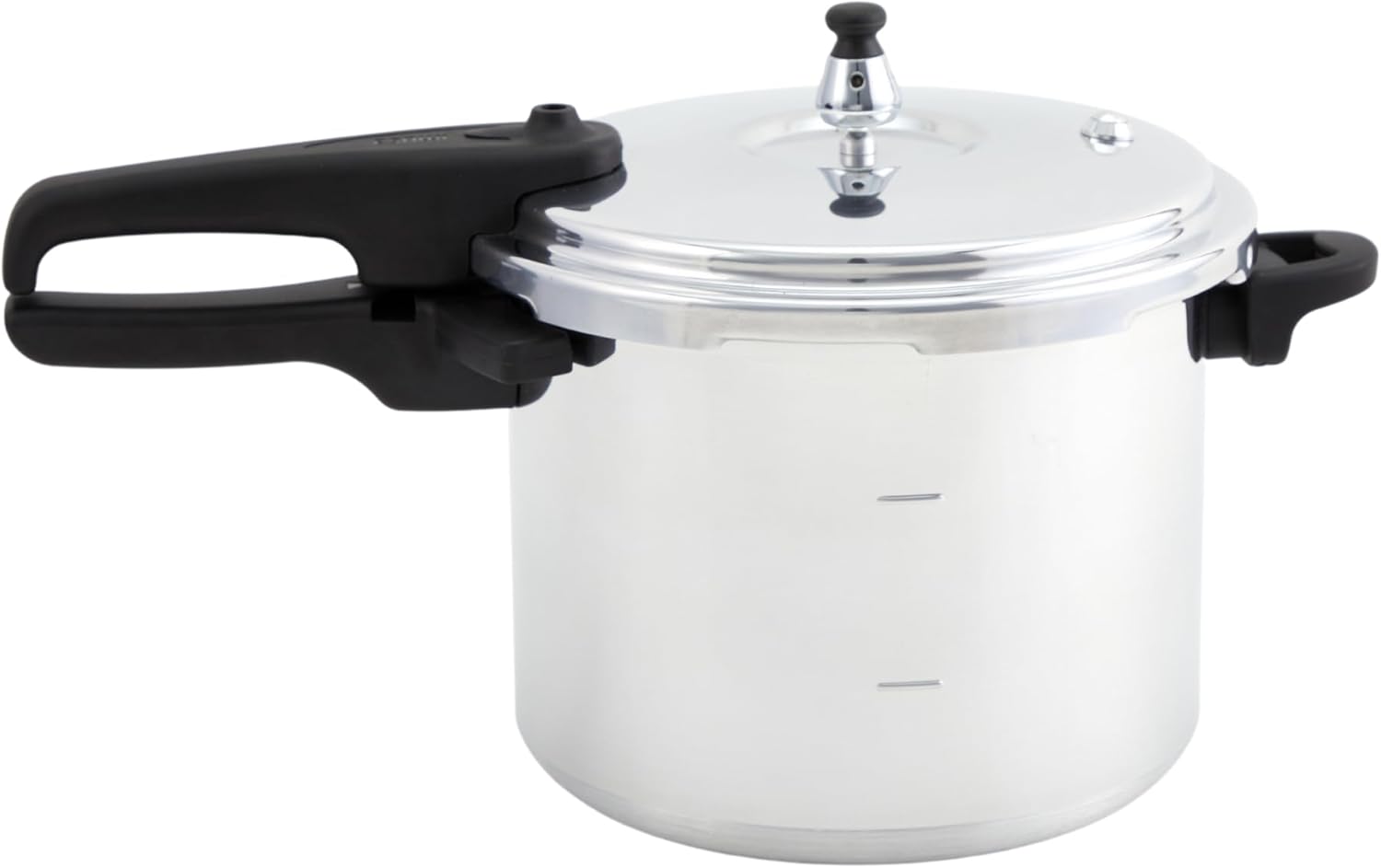
The IMUSA 7-Quart Aluminum Pressure Cooker is a traditional stovetop pressure pot designed to speed up braises, beans, soups, and other large-batch meals by trapping steam and raising cooking pressure. It is built from polished aluminum for quick, even heat distribution and has cool-touch side and helper handles plus a locking outer lid for secure use. A pressure regulator maintains cooking pressure automatically and a safety valve reduces the risk when opening, which makes routine pressure cooking straightforward. In everyday use it excels at reducing long simmer times for tough cuts of meat or dried legumes and the wide 7-quart capacity suits family-sized portions. Limitations include the aluminum body, which can be less suitable for induction and may require careful use on glass-top stoves to avoid scratching or excessive heat spots, and it lacks the multi-valve safety systems and stainless construction found on some premium models. For cooks wanting a simple, fast stovetop pressure cooker this model covers the basics reliably but demands mindful stovetop handling.
Best for: Home cooks who prioritize a straightforward, dependable stovetop pressure cooker for regular family-sized meals and want predictable, fast results rather than advanced features.
Less Ideal for: Those seeking a stainless steel or induction-ready pressure cooker specifically optimized for glass-top stoves or users who want multiple built-in safety redundancies and premium materials.
- Seven quart capacity fits family meals and large batches.
- Aluminum construction promotes fast, even heat distribution for quicker cooking.
- Locking outer lid with automatic pressure regulator simplifies operation.
- Cool-touch side handle and helper handle improve handling and transport.
- Includes a pressure regulator and safety valve for safer pressure release.
- Aluminum body may not be ideal for glass-top stoves without a heat diffuser or careful use.
- Not made of stainless steel, so fewer modern safety valve redundancies and longer-term durability trade-offs.
- No induction compatibility information provided, limiting stovetop flexibility.
Verdict: Choose this IMUSA 7-quart if you need a simple, reliable stovetop pressure cooker that delivers fast, family-sized meals when used carefully on glass-top ranges.
Presto 6-Quart Stainless Pressure Cooker
| Capacity | 6 quarts |
|---|---|
| Material | Stainless Steel |
| Special Features | Induction Compatible Base, Locking Lid, Dishwasher Safe |
| Wattage | 1000 watts |
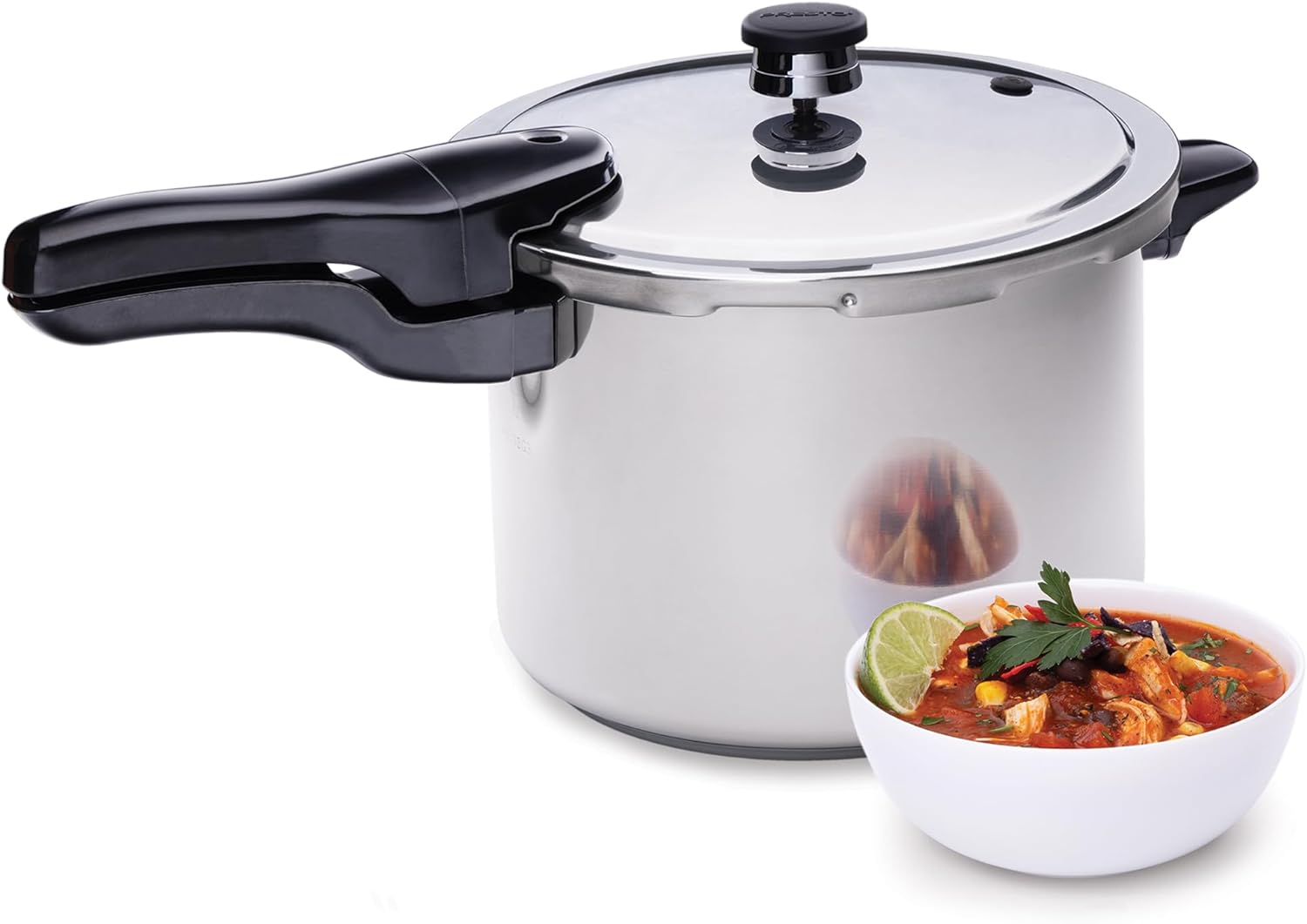
The Presto 6-quart stainless steel pressure cooker is a traditional stovetop unit built for speed and durability. It uses a pressure regulator and inner sealing ring to trap steam and cook meats, vegetables, and grains several times faster than conventional methods, and the included rack lets you cook multiple items without flavor transfer. The tri-clad base—aluminum sandwiched between stainless steel—promotes even heating and makes it compatible with smooth-top and induction ranges. Safety is practical rather than fancy: a cover-lock indicator, steam release, and an overpressure plug provide layered protections, and many removable parts can be cleaned by hand or in the dishwasher after removing the sealing components. The cooker is simple to operate but manual controls mean you need to monitor pressure release and routine maintenance like cleaning the vent pipe. It is a solid, reliable choice for cooks who want a heavy-duty, no-frills pressure cooker that performs well on glass-top stoves but does require basic attention to safe operation and upkeep.
Best for: Buyers who prioritize proven safety, durable construction, and reliable performance on glass-top and induction ranges and who value user reviews and established products.
Less Ideal for: Users who want fully automated electric pressure cooking, app connectivity, or one-button set-and-forget operation should consider an electric multicooker instead.
- Tri-clad base for quick, even heating across stovetops including induction
- Clear safety features including cover-lock indicator, pressure regulator, and overpressure plug
- Dishwasher-safe body with removable parts for easier cleaning
- Includes cooking rack and a detailed 64-page recipe/instruction book
- Manual pressure control requires learning proper release techniques
- Some small parts require hand washing and occasional disassembly for cleaning
Verdict: Choose this Presto if you want a heavy-duty, safety-focused stovetop pressure cooker that reliably works on glass-top and induction ranges.
Presto 16-Quart Pressure Canner

| Capacity | 16 quarts |
|---|---|
| Material | Aluminum |
| Wattage | 1000 watts |
| Control Method | Touch |
The Presto 16-Quart Pressure Canner is a heavy-gauge aluminum canner that doubles as a large pressure cooker for canning low-acid foods and preparing big batches of soups, meats, and stews. It is typically used for home canning with regular mason jars and for one-pot pressure cooking when you need fast, evenly heated results. Notable features include a deluxe pressure dial gauge for accurate pressure control, a visual air vent/cover lock that prevents opening under pressure, an overpressure plug for safety, and an included rack plus a canning/cooking booklet. In practice the thick aluminum body heats and distributes heat quickly, and the safety interlocks and gauge make it a reassuring choice for users who prioritize predictable pressure and clear indicators. Limitations are that the lid is not immersible for cleaning, the dial gauge is delicate and requires careful handling, and aluminum can show wear over time compared with stainless steel alternatives. It works on gas, electric, and smooth-top ranges, but its large footprint and weight mean you should ensure stable, level contact on glass-top stoves before use.
Best for: Buyers who prioritize safe, reliable pressure canning and want clear visual and gauge-based pressure control for low-acid foods and large batch cooking.
Less Ideal for: People who prefer stainless steel cookware for long-term exterior durability or who want a lightweight, compact pressure cooker for everyday small meals.
- Large 16-quart capacity suitable for canning multiple jars or big family meals
- Deluxe pressure dial gauge gives precise pressure readings for safer canning
- Air vent/cover lock and overpressure plug provide redundant safety features
- Heavy-gauge aluminum construction heats quickly and promotes even cooking
- Includes a rack and an instruction/recipe booklet to guide canning beginners
- Aluminum construction can discolor and requires careful cleaning and occasional polishing
- Dial gauge is delicate and needs cautious handling or occasional calibration
- Lid is not immersible, which complicates thorough cleaning
Verdict: Choose this canner if you need a purpose-built, safety-focused 16-quart pressure canner that also doubles as a large pressure cooker for family-sized meals.
Choosing the Right Pressure Cooker for Glass-Top Stoves: Key Factors to Consider
Base Material and Heat Distribution
The base material and construction determine how evenly the pressure cooker transfers heat to the pan surface. A multi-ply or encapsulated base spreads heat more uniformly, reducing hot spots that can crack or discolor glass-top cooktops. Look for bases designed to maximize contact area without concentrating weight on a small ring. Even distribution also improves cooking consistency and prevents the gasket and internal components from being exposed to higher localized temperatures.
When shopping, consider whether the base has a protective coating or a flat, polished finish that minimizes abrasion when moving the pot. A well-engineered base reduces energy loss and shortens cook times while protecting the stovetop surface.
Footprint and Stability
Stability matters on smooth glass surfaces because a narrow or tapered base can rock or transfer uneven pressure under load. Choose models with a wide, flat footprint that sits securely on the cooking surface to avoid accidental tipping and to distribute the weight of liquid and food across a larger area.
Also consider height and center of gravity. Taller, narrow pots are more prone to instability when full. If you frequently cook large quantities, prioritize a design with a low center of gravity and broad base to keep contact steady and safe for glass-top stoves.
Pressure Control and Safety Features
Pressure control systems are critical for safe use on glass-top stoves. Reliable, visible pressure indicators, multiple redundant safety valves, and simple pressure-release mechanisms reduce the chance of sudden pressure events that could shift the cooker or cause a spill onto the glass surface.
A cooker that allows controlled steam release without aggressive rocking prevents sudden force on the stovetop. Clear instructions and tactile controls also matter, because fumbling with complex mechanisms near a fragile cooktop increases the risk of accidental damage.
Gasket and Lid Design
A durable gasket and straightforward lid-locking system affect both performance and maintenance. A well-fitting gasket ensures proper sealing at lower heat settings, which reduces cooking time and stress on the base. It also minimizes steam leaks that can leave residue on the glass surface.
Lid designs that lift away cleanly and lock without forcing lateral movement are preferable. That reduces the need to slide the pot on the stove to align the lid, which can scrape glass tops. Consider how easy the gasket is to inspect and replace, since worn seals increase the risk of leaks over time.
Ease of Cleaning and Surface Care
Glass-top stoves show stains and scratches more readily than other cooktops, so the ability to keep both the cooker and cooktop clean without abrasive action is important. Choose pressure cookers with smooth, polished bases and interiors that resist burnt-on food and are compatible with non-abrasive cleaners.
Removable components and dishwasher-safe parts simplify maintenance, but verify manufacturer guidance for the base. Avoid models that require heavy scrubbing of the underside or have crevices where grit can accumulate, because trapped particles can scratch the glass when the pot is moved.
Handle Design and Mobility
Ergonomic handles that provide a secure grip reduce the likelihood of accidental slips when lifting a hot pressure cooker from a glass-top stove. Heat-resistant, non-slip handles that keep the center of grip close to the pot reduce torque on the cooktop when carrying a weighted pan.
Also consider whether the handles require removal for storage or cleaning and whether they extend the footprint when positioned. Low-profile, sturdy handles help maintain balance and prevent banging against backsplash or counters during use.
Why Glass-Top Stoves Need Special Consideration
Glass-top stoves heat differently than exposed-coil or gas ranges. Because the cooking surface is a continuous ceramic or glass sheet, heat transfer is more dependent on direct contact and base flatness. Any concentrated pressure or small debris under a pot can create a hot spot or scratch the surface.
Selecting a pressure cooker with a flat, smooth base and a protective finish preserves the cooktop and ensures even cooking. It also minimizes the chance of thermal stress that can lead to cracking over time.
- Flat bases improve contact and heat transfer
- Smooth finishes reduce abrasion when sliding or rotating pots
- Wide footprints distribute weight and prevent concentrated pressure
Using a Pressure Cooker Safely on a Glass-Top Stove
Always center the cooker on the burner and use an appropriately sized heating element for the pot diameter. Avoid using a tiny burner with a wide-base cooker because this can cause uneven heating and longer cook times.
When releasing pressure, use slow, controlled methods recommended by the manufacturer. Rapid venting can shift the pot or scatter hot condensate onto the cooktop, increasing the risk of burns and surface stains.
- Match burner size to pot diameter
- Use controlled pressure release when possible
- Lift and move the cooker with both hands using heat-resistant gloves
Routine Maintenance to Protect the Cooktop
Wipe the underside and the cooking surface after each use to remove grit or food particles that might scratch the glass. Check the base for debris before placing it on the cooktop and avoid sliding the pot when aligning the lid.
Inspect gaskets and vent openings regularly. Leaks cause residue that often requires more aggressive cleaning, which may risk the finish of the cooktop. Replace seals when they show wear to maintain efficient sealing and avoid excess steam escape.
- Clean both pot base and cooktop after each use
- Inspect and replace gaskets as needed
- Avoid abrasive pads on the cooktop; use recommended cleaners
Cooking Tips to Maximize Performance
Start with a lower heat setting to bring the cooker up to pressure steadily. Glass-top cookers often need less direct flame intensity to maintain pressure once hot because the contact area is efficient. Adjust heat to maintain a gentle, steady pressure indicator rather than high, aggressive settings.
Use the appropriate amount of liquid to create steam without splattering. Too little liquid can scorch and create stubborn deposits on the bottom. If browning is needed before pressure cooking, consider doing so with moderate heat and a flat-bottomed, compatible pan.
- Bring to pressure on medium heat, then reduce to maintain
- Use manufacturer-recommended liquid amounts
- Brown with care to avoid burnt residue on the base
Common Misconceptions About Cooktop Damage
Many think that all heavy cookware will damage glass-top stoves. Damage is more often caused by trapped grit, uneven bases, or moving pots roughly across the surface. A heavy but flat and clean base that sits evenly usually causes no harm.
Another myth is that you cannot pressure cook on a glass-top stove at all. With the right pot and safe practices, pressure cooking is practical and efficient on these cooktops.
- Damage usually results from debris and abrasion, not weight alone
- Proper base design and care prevent most issues
How We Chose the Best Pressure Cooker for Glass-Top Stoves
We focused on attributes that directly affect performance and safety on glass-top stoves. Key evaluation criteria included: base design and material, which determines heat spread and minimizing hot spots; stability and footprint, to reduce wobble and avoid concentrated pressure on fragile ceramic surfaces; safety and pressure controls, because controlled venting and clear indicators cut the risk of misuse on a delicate cooktop; and ease of cleaning, since residue or abrasive cleaning can damage glass surfaces. We also assessed compatibility with common household induction and radiant glass-top elements where applicable, build quality of sealing components that affect long-term reliability, and ergonomics such as handle design to prevent slips when moving a hot pot. Products that used exposed rough or uncoated metal bottoms, or that lacked clear pressure-safety features, were excluded. The shortlist favors designs that balance even heat transfer with a protected, flat, and stable base suitable for daily use on glass-top stoves.
Our full evaluation process is outlined in our review methodology.
FAQ
Can I use any pressure cooker on a glass-top stove?
Not any cooker is ideal. Choose one with a flat, smooth base and a wide footprint. Avoid pots with rough or warped bottoms and inspect the underside for debris before use.
How do I prevent scratches when moving a pressure cooker?
Lift the pot instead of sliding it. If you must reposition, place a soft cloth under the pot briefly or lift with both hands to avoid dragging grit across the glass.
Is induction compatibility necessary for glass-top stoves?
Induction compatibility matters only if your glass-top stove is an induction model. For radiant glass-top elements, focus on base flatness and even heat transfer rather than magnetic properties.
What is the safest way to release pressure on a glass-top stove?
Use a controlled, gradual release method when possible. Avoid forcing a rapid full vent that can cause the pot to shift or scatter hot liquid onto the cooktop.
How often should I replace the gasket or seals?
Inspect seals regularly and plan to replace them when they show cracking, deformation, or persistent leaks. Frequency depends on use, but annual checks are a practical baseline.
Final Verdict
When choosing a pressure cooker for a glass-top stove, prioritize a flat, well-finished base, a stable wide footprint, and dependable pressure-safety features. Those elements reduce the risk of surface damage and improve cooking consistency. Balance your needs between capacity and stability, and factor in ease of cleaning and gasket longevity. With a cooker that emphasizes even heat distribution and surface protection, you can pressure cook efficiently and safely on a glass-top stove.