
Note: This article contains affiliate links. If you click on these links and make a purchase, we may earn a small commission at no extra cost to you. This helps support our research and content. Read our full affiliate disclosure here.
Choosing the right pressure cooker for home canning makes a big difference in safety, batch size, and overall results. For home preservers, a unit that holds jars securely, maintains steady pressure, and includes clear safety features reduces the risk of spoilage and makes repeated sessions less stressful. This guide shortlists the top pressure cookers suited for home canning and evaluates the features that matter for successful preserving. Below you will find our top picks for different canning needs, plus the evaluation criteria we used to choose them and practical advice on getting the best results from your pressure canner.
Top Picks at a Glance
| Best Overall The best all-around choice for most situations | NESCO NPC-9 Smart Canner |  |
| Best Quality Built to a higher standard if you want something more solid | All American 921 Pressure Canner |  |
| Best Value The sweet spot between price and what you get | Denali Canning The Tanker 23 Quart |  |
| Best Budget The cheapest option that still gets the job done reliably | BreeRainz 5.3 Qt Pressure Canner |  |
| Top Rated A top-rated pick with lots of positive feedback | Presto 23-Quart Pressure Canner 01781 |  |
| Most Popular A crowd favorite that many people choose with confidence | Presto 16-Quart Pressure Canner |  |
| Best Seller A high-volume bestseller chosen again and again | T-fal 22-Quart Pressure Canner |  |
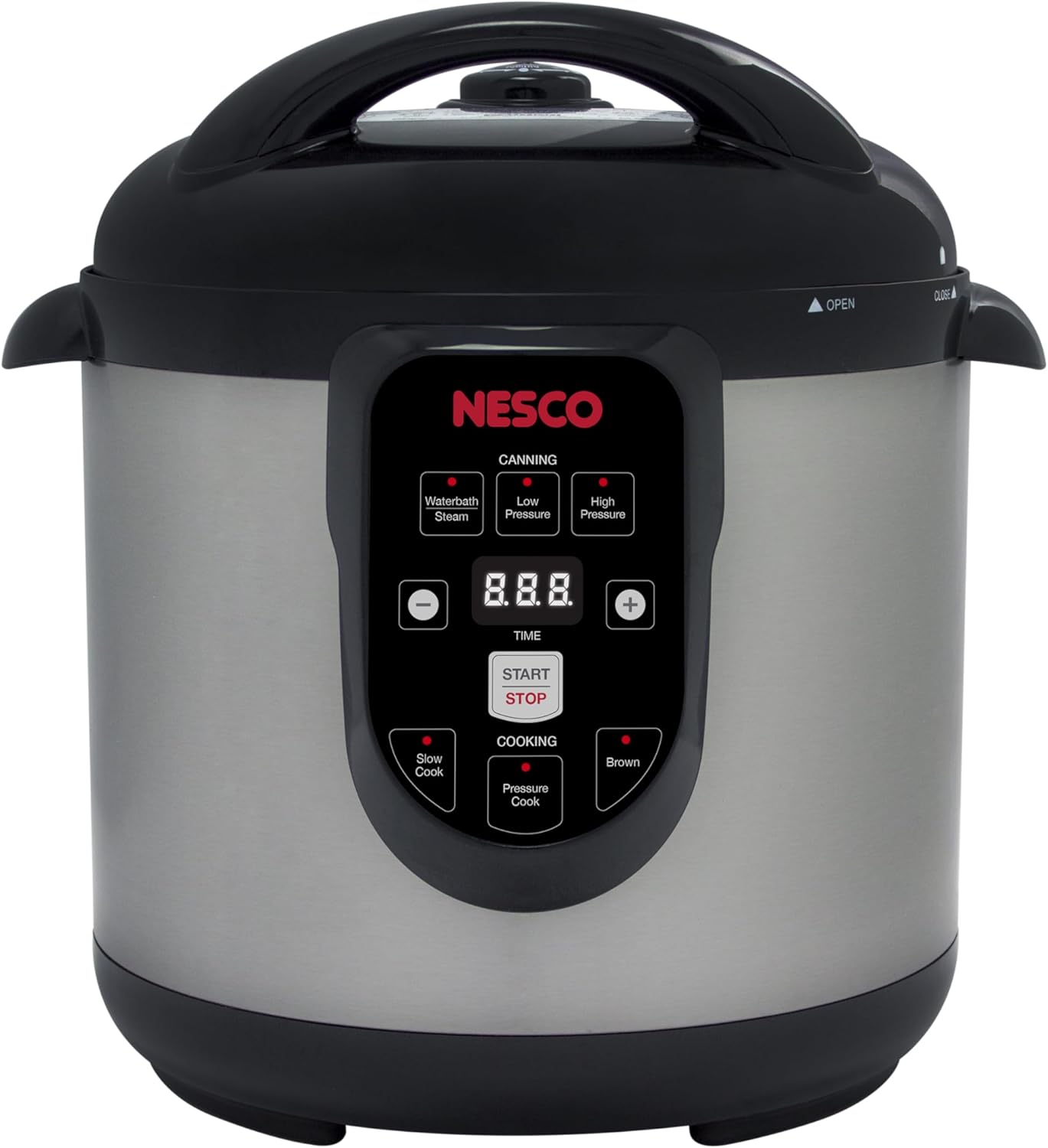
NESCO NPC-9 Smart Canner
| Capacity | 9 quarts |
|---|---|
| Wattage | 1000 watts |
| Control Method | Touch |
| Operation Mode | Automatic |
| Controller Type | Digital |
The NESCO NPC-9 is a countertop electric pressure canner built specifically for home canning while also handling pressure cook, slow cook, and steam jobs. It uses a digital display with preset programs and a built-in timer to automate processing cycles, which makes it easier to run repeatable water bath or pressure canning batches without constant stovetop monitoring. Safety features such as a locking lid, automatic float valve, and continuous pressure regulation reduce the chance of operator error during high-pressure canning. The removable 9.5‑quart nonstick inner pot and included canning and steam racks let you process multiple jars at once and simplify cleanup, and the unit doubles as a conventional cooker for stews, rice, and steaming. Practical limits are that it is designed as a dedicated electric canner rather than a compact multiuse pressure cooker for single-pot meals, so its footprint and wattage suit batch preserving rather than rapid everyday stovetop replacement. Users should plan for countertop space and follow the included high-altitude valve guidance when processing jars at elevation.
Best for: Home preservers who want a purpose-built electric canner that automates safety and repeatable processing for batch canning and occasional big‑pot cooking.
Less Ideal for: Buyers seeking a small, space-saving multiuse pressure cooker for daily quick meals or those who need a lightweight portable unit should consider other compact models.
- Dedicated canning safety features including locking lid and automatic float valve reduce human error during processing.
- Digital presets and timer provide repeatable cycles for water bath and pressure canning.
- Large removable 9.5‑quart nonstick pot with canning and steam racks accommodates multiple jars per batch.
- Multi‑mode cooking (pressure cook, slow cook, steam, water bath) adds everyday kitchen versatility.
- Removable condensation catcher and dishwasher‑safe inner pot simplify cleanup.
- Relatively large countertop footprint and 1000W power draw make it less suited for limited spaces or portable use.
- Not a compact, fast single‑serving pressure cooker alternative for everyday quick meals.
Verdict: Choose the NPC-9 if you want a dedicated electric canner that automates safe, repeatable home canning while also doubling as a versatile large-capacity cooker.
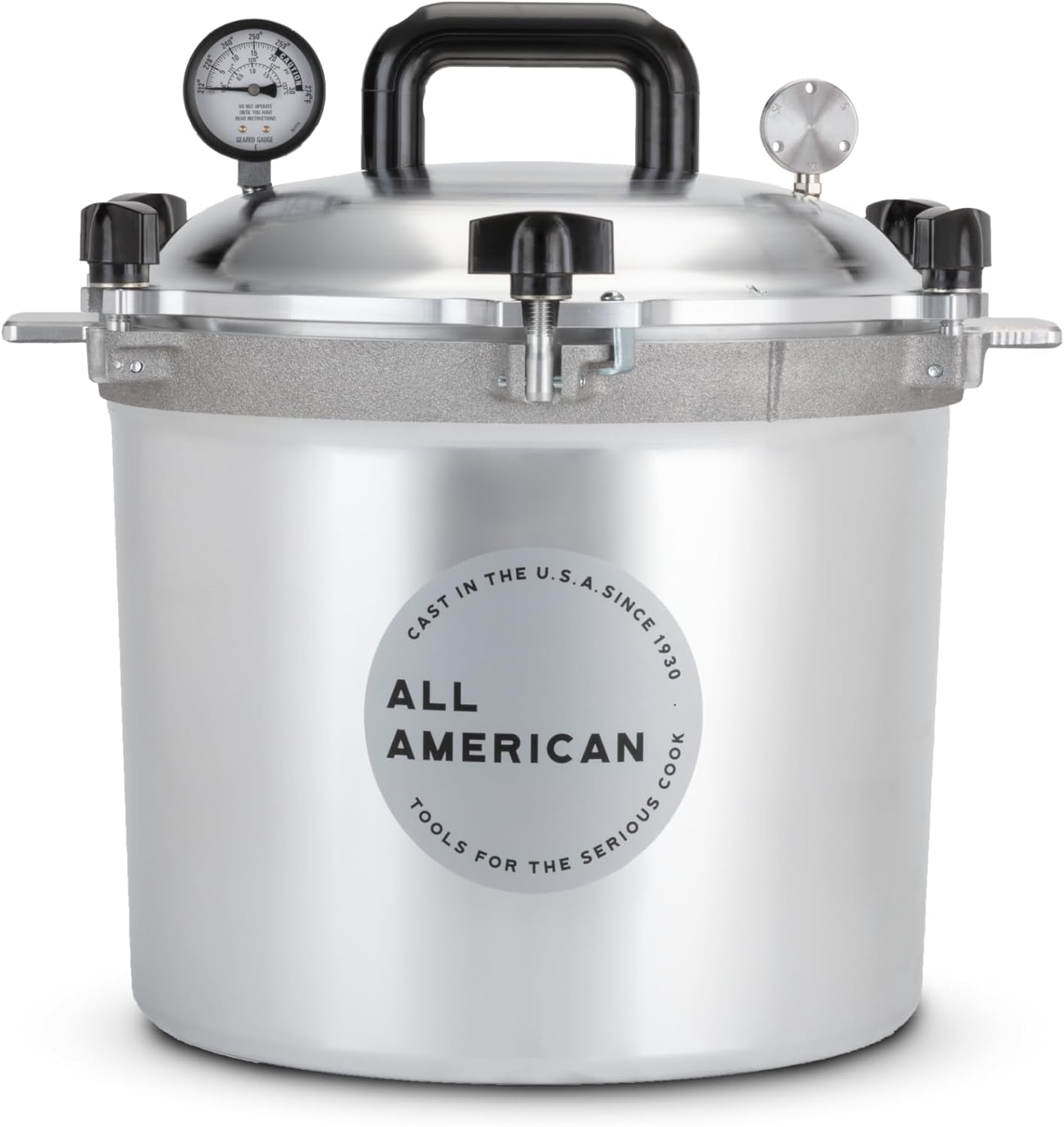
All American 921 Pressure Canner
| Capacity | 21.5 quarts |
|---|---|
| Material | Aluminum |
| Sealing System | Metal-to-metal |
| Suitable For | Gas, Electric, or Flat Top Stoves |
The All American 921 is a purpose-built 21.5-quart pressure canner that uses a precision-machined metal-to-metal sealing system instead of a rubber gasket, which makes it simpler to maintain and more durable for frequent canning. It holds approximately 19 pint jars or seven quart jars, and features a steam gauge, precision regulator weight, and overpressure release for accurate pressure control and safety while processing low-acid foods. Constructed from high-grade cast aluminum with double-thickness edges and a sturdy phenolic top handle, the unit is robust and built to withstand repeated heavy use. Because it is not compatible with induction cooktops, it is best suited to kitchens with gas, electric, or flat-top ranges. The satin aluminum finish wipes clean easily but the unit is sizable and heavy, so plan countertop space accordingly. For canners focused on long-term performance and USDA-approved low-acid processing, the All American 921 delivers reliable, professional-style results in a home kitchen.
Best for: Home canners who prioritize long-term performance and reliable, USDA-approved processing for larger batches and frequent use.
Less Ideal for: Casual canners who only process small quantities or anyone who cooks exclusively on an induction cooktop should consider smaller or induction-compatible alternatives.
- Metal-to-metal seal removes need for replaceable gasket and improves long-term durability
- USDA-approved for low- and high-acid canning with accurate steam gauge and regulator weight
- Large 21.5-quart capacity fits about 19 pint jars for efficient batch processing
- Sturdy cast aluminum construction and reinforced edges for heavy, repeated use
- Not compatible with induction cooktops
- Heavy and bulky, requiring significant countertop or storage space
Verdict: Choose the All American 921 if you want a durable, high-capacity, factory-quality pressure canner built for frequent, performance-focused home canning.
Denali Canning The Tanker 23 Quart

| Capacity | 23 quarts |
|---|---|
| Special Features | Induction Compatible Base |
| Wattage | 1000 watts |
| Control Method | Touch |
| Material | Stainless steel |
The Tanker by Denali Canning is a 23-quart pressure canner built for home canning of low- and high-acid foods like vegetables, meat, poultry, and seafood. It uses a heavy-gauge aluminum body with stainless-steel parts, an induction-compatible base, and a manual touch control arrangement with an outer lid, plus a pressure gauge and both 15 lb and 10 lb weights for accurate pressure control. Typical use is straightforward: load jars on the included rack, seal the lid, bring to pressure on the stovetop or induction cooktop, and monitor the gauge or weights during processing. The large capacity makes it convenient for batch canning and preserving harvests, and the supplied accessories let you start canning right away. Practical benefits include a robust build, induction cooktop compatibility, and clear pressure control hardware. Important limitations are the manual operation that requires active monitoring and the aluminum body which needs careful cleaning and handling compared with fully stainless alternatives.
Best for: Home preservers who want a roomy, ready-to-use canner that works on induction and traditional stovetops and who prioritize capacity and included accessories to jump into regular batch canning.
Less Ideal for: People who prefer fully automated electric canners or who want an all-stainless commercial-grade unit for heavy daily use should consider other options.
- Large 23-quart capacity suitable for batch canning
- Induction compatible base expands cooktop options
- Includes pressure gauge plus 15 lb and 10 lb weights for reliable pressure control
- Stainless-steel parts and heavy-gauge aluminum construction for sturdy feel
- Comes with a canning rack and multiple lids to start canning immediately
- Manual operation requires active monitoring during processing
- Aluminum body may need extra care compared with full stainless-steel canners
Verdict: Choose this canner if you want a large, induction-ready pressure canner that arrives with gauges, weights, and a rack so you can start batch home canning right away.
BreeRainz 5.3 Qt Pressure Canner

| Capacity | 5.3 quarts |
|---|---|
| Pressure Weight | 10 PSI |
| Special Features | Induction Compatible Base |
| Wattage | 1400 watts |
The BreeRainz 5.3 Qt pressure cooker doubles as a pressure canner for small-batch home canning and fast stovetop cooking. It holds a steady 10 PSI for canning and uses a stainless steel clad honeycomb base so it works on induction as well as gas and electric ranges, which helps the pot heat evenly and brings water to pressure faster. The cooker includes a steaming/canning rack that fits multiple jars for small runs and several safety features including a triple-valve system, a self-locking lid, and a safety window that vents the gasket if pressure gets too high. Because it is a manual stovetop unit with no electronics, it is simple to operate and durable for long-term use, though it requires more hands-on pressure monitoring than electric models. At 5.3 quarts it is best for couples or small families doing occasional canning or regular pressure cooking, but its capacity limits the number of jars per batch compared with larger canners.
Best for: Buyers who want an affordable, durable stovetop canner good for occasional home canning and everyday fast pressure cooking in small households.
Less Ideal for: People who regularly process large quantities of jars or need unattended, programmatic canning should choose a larger-capacity canner or an electric model instead.
- Maintains stable 10 PSI suitable for safe home canning
- Induction-compatible stainless steel clad honeycomb base for even, fast heating
- Triple safety valve system plus self-locking lid and safety window
- Includes steaming/canning rack that fits multiple jars for small batches
- 5.3-quart capacity limits how many jars can be processed per canning batch
- Manual stovetop operation requires active pressure monitoring and more hands-on use than electric canners
Verdict: A compact, budget-friendly stovetop canner that reliably reaches 10 PSI and works on induction, making it a practical choice for small-batch home canning and fast everyday pressure cooking.
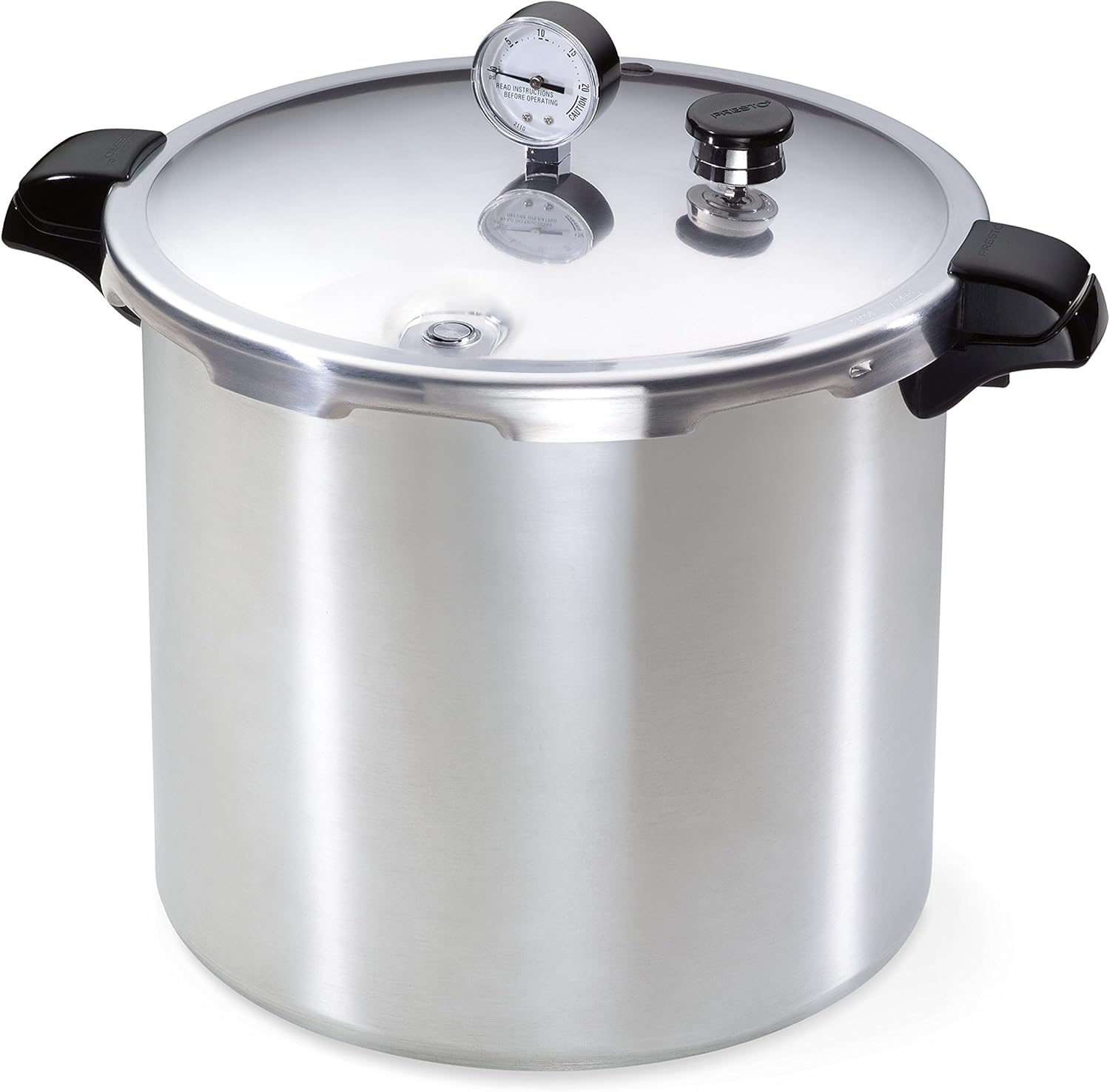
Presto 23-Quart Pressure Canner 01781
| Capacity | 21.8 liters |
|---|---|
| Wattage | 1000 watts |
| Control Method | Touch |
| Operation Mode | Manual |
The Presto 23-Quart Pressure Canner is built for serious home canning and doubles as a large pressure cooker for batch cooking. Made from heavy-gauge, warp-resistant aluminum, it heats quickly and evenly on regular and smooth-top ranges, and the extra-large capacity handles big canning runs of pints, half-pints, or quarts. It includes a canning rack and a pressure dial gauge that shows the full processing range, which helps maintain correct pressure—especially useful at higher altitudes. Safety features include an air vent/cover lock that prevents opening while pressurized and an overpressure plug. Practical care notes: the lid is not immersible and the dial gauge is delicate, so follow the included booklet for cleaning and maintenance. While it is a manual unit without electronic controls, that simplicity is an advantage for long-term reliability and fewer failure points. This model is a dependable choice if you plan frequent canning and want a roomy, well-engineered tool that emphasizes safety and consistent pressure control.
Best for: Buyers who prioritize safe, repeatable home canning and want a durable, no-frills canner that will handle large batches and frequent use.
Less Ideal for: Casual cooks who want an electric, automated cooker or those unwilling to follow manual maintenance and care instructions.
- Large 23-quart capacity suitable for multiple jars per batch
- Heavy-gauge aluminum construction for fast, even heating
- Deluxe pressure dial gauge for precise pressure monitoring
- Safety features including air vent/cover lock and overpressure plug
- Manual controls and delicate dial gauge require careful maintenance
- Lid is not immersible which complicates cleaning
Verdict: Choose this Presto canner if you need a roomy, reliably built pressure canner that delivers precise, safety-minded performance for serious home canning.
Presto 16-Quart Pressure Canner

| Capacity | 16 quarts |
|---|---|
| Material | Aluminum |
| Wattage | 1000 watts |
| Control Method | Touch |
The Presto 16-Quart Pressure Canner is built for serious home canning and doubles as a large pressure cooker for soups, meats, and one-pot meals. It is made from heavy-gauge aluminum for fast, even heating and includes a rack and an 80-page instruction/recipe booklet to guide safe canning. A deluxe pressure dial gauge and a pop-up pressure indicator let you monitor processing pressures, and a safety air vent/cover lock prevents opening until pressure is reduced. The canner works on gas, electric, and smooth-top ranges and handles both pressure canning for low-acid foods and boiling-water canning for high-acid preserves in half-pint and pint jars. Practical downsides are that the aluminum exterior needs gentle cleaners and the dial gauge is delicate and requires occasional care or replacement; the lid is not immersible so cleaning is a bit more fussy. For home preserves, stew-making, and bulk cooking, this canner is a durable, straightforward solution that emphasizes safety and capacity.
Best for: Home canners who prioritize a proven, safety-focused canner with enough capacity for batch processing and who value a product backed by many user reviews and established manufacturer support.
Less Ideal for: Buyers who want dishwasher-safe, stainless steel convenience or those who need a very compact cooker for small kitchens.
- 16-quart capacity suitable for canning multiple jars per batch
- Heavy-gauge aluminum construction for fast, even heating
- Deluxe pressure dial gauge plus pop-up indicator for accurate pressure monitoring
- Safety air vent/cover lock and overpressure plug reduce risk during use
- Includes cooking/canning rack and a detailed instruction/recipe booklet
- Aluminum finish requires gentle, nonabrasive cleaning and occasional polishing
- Dial gauge is delicate and may need careful handling or replacement over time
Verdict: Choose this Presto canner when you need a reliable, safety-minded 16-quart pressure canner that also doubles as a large pressure cooker for home canning and bulk cooking.
T-fal 22-Quart Pressure Canner

| Capacity | 22 quarts |
|---|---|
| Wattage | 1000 watts |
| Control Method | Touch |
| Voltage | 120 volts |
| Material | Aluminum |
The T-fal 22‑Quart Pressure Canner is a large-capacity aluminum canner built for home food preservation, letting you process low-acid foods by pressure canning and high-acid foods via water-bath canning. It holds multiple jars per batch and ships with two canning racks and a step‑by‑step guide, which helps beginners get started. The canner offers adjustable pressure settings, an easy-to-read gauge, a pressure-indicator pin and a steam release valve for safer, USDA‑recommended canning. Its polished aluminum body provides even heat distribution on gas and electric coil stovetops, and sturdy side handles make lifting full loads more manageable. Important limitations are stovetop compatibility—this model is not induction-safe—and the aluminum finish requires careful cleaning to maintain appearance; the canner is also fairly heavy when filled, so countertop space and lifting ability are factors to consider. For risk-averse home canners who want clear indicators and a roomy vessel, this unit covers the essentials for safe, repeatable canning.
Best for: Home canners who prioritize safe, USDA‑aligned pressure canning and want a roomy, straightforward canner with clear pressure indicators and included canning accessories.
Less Ideal for: People who cook primarily on induction cooktops or those who need a lightweight, portable canner for occasional small batches.
- Large 22‑quart capacity that fits many half‑pint, pint, and quart jars for batch canning
- Includes two canning racks and a canning guide to simplify setup and stacking jars
- Adjustable pressure settings and an easy-to-read gauge support USDA‑recommended pressure canning
- Aluminum construction gives even heat distribution for consistent processing
- Not compatible with induction cooktops
- Polished aluminum finish needs careful cleaning to avoid discoloration
Verdict: Choose this canner if you need a large, beginner-friendly, factory-quality pressure canner that supports USDA-approved pressure and water-bath home canning.
Choosing the Right Pressure Cooker for Home Canning: Key Factors to Consider
Safety Features and Certifications
Pressure canning operates at elevated temperatures and pressures, so built-in safety features matter. Look for units with reliable pressure indicators, locking lids that prevent opening under pressure, and automatic pressure relief valves. These mechanisms reduce the risk of accidental depressurization and ensure the unit reaches and maintains the target processing pressure.
Certifications or manufacturer guidance for canning use are important because some pressure cookers are not rated for food preservation. Selecting a canner with explicit safety guidance for home canning reduces uncertainty and helps protect both the jars and the operator.
Usable Internal Capacity and Jar Fit
Nominal capacity alone does not guarantee that jars will fit. Internal diameter and height determine whether common jar sizes and lids sit properly on racks and whether you can stack jars safely. Check how many quart and pint jars the cooker can accommodate in a single batch and consider headspace needed for steam circulation.
A cooker that fits an efficient number of jars per batch reduces overall processing time and increases throughput during peak canning seasons. Consider how many jars you realistically want to process at once to match your kitchen workflow.
Pressure Control and Stability
Accurate and stable pressure is essential for safe low-acid canning. The cooker should hold the set pressure without wide fluctuations, and the control mechanism should be straightforward to monitor and adjust. Mechanical gauges, weighted regulators, or reliable electronic controls each have tradeoffs in terms of precision and user familiarity.
Stable pressure ensures even heat penetration into jars and consistent results across batches. Choose a unit whose control system you understand and can maintain over repeated sessions.
Seal Quality and Lid Design
A dependable gasket and lid closure prevent steam leaks that can compromise pressure and extend processing times. Look for lids that lock firmly and gaskets that are easy to inspect and replace. Lid ergonomics also matter because you will be handling heavy jars and hot surfaces; a lid that seats easily and releases safely reduces strain and risk.
Ease of cleaning the lid and sealing surfaces is also important since food residue or mineral buildup can degrade gasket performance over time.
Construction Materials and Durability
Materials affect heat distribution, longevity, and maintenance. Thick-walled stainless steel or hard-anodized aluminum provide better heat retention and resist warping from repeated heating cycles. Durable construction also helps the cooker maintain a consistent seal and pressure over years of use.
Consider maintenance requirements such as gasket replacements and whether replacement parts are readily available. A rugged canner built for repeated heavy use reduces long-term cost and frustration.
Accessory Compatibility and Ease of Use
Accessories such as canning racks, jar lifters, and steam diffusers improve safety and throughput. A cooker that accepts standard rack sizes or includes stackable trays lets you organize jars for even heating. Controls and indicators should be intuitive so you can focus on timing and jar handling rather than troubleshooting the equipment.
Ease-of-use features like clear pressure markings, simple valve operation, and accessible cleaning points make the canning process smoother, especially for newcomers or when processing larger volumes.
Stovetop Vs. Electric Pressure Cookers for Canning
There are two main approaches to pressure canning: using a stovetop pressure cooker or an electric pressure cooker that is explicitly rated for canning. Stovetop models generally offer straightforward mechanical control and larger internal space for jars, while some electric units provide automated pressure regulation and convenience features. For home canning, the most important factor is whether the unit is rated for canning and can sustain the required pressures for the full processing time.
If you prefer precise manual control and a wide range of jar layouts, a sturdy stovetop unit may be preferable. If you value hands-off operation and the electric model is explicitly designed for canning, it can simplify monitoring. Always follow canning processing times and manufacturer guidance for whichever style you choose.
- Stovetop: often larger capacity and direct heat control
- Electric: automated pressure regulation if rated for canning
- Confirm canning suitability before using any pressure appliance
Preparing Jars and Organizing Batches
Proper jar preparation and organization cut down on mistakes and speed up the canning process. Prewash and sterilize jars, inspect lids and rings for damage, and arrange canning tools nearby so you can move jars into the cooker efficiently.
Plan batches by jar size to maximize space and consistent processing. Mixing jar sizes in a single batch can create uneven heat distribution, so group pints together and quarts together where possible. Use racks or separators to prevent jars from knocking during processing.
- Sterilize jars and lids before filling when required
- Group like-sized jars to ensure even heat penetration
- Use jar lifters and racks to avoid handling hot glass directly
Routine Maintenance and Gasket Care
Maintaining seals and safety components keeps a pressure cooker reliable. Inspect gaskets before each canning session for cracks, flattening, or food buildup. Replace seals according to manufacturer guidance or when they show visible wear.
Clean pressure relief valves and lid channels to prevent obstruction. After canning, allow the unit to cool before washing, and store lids separately from pots if recommended to preserve gasket shape.
- Check gaskets for wear before every use
- Clean valves and steam passages after each session
- Store lids and gaskets in a dry, cool place to prevent deformation
Dealing with Common Canning Issues
Two frequent issues are under-processed jars and steam leaks. Under-processing usually stems from insufficient pressure or processing time. Use a reliable pressure indicator and follow tested canning recipes and timing to avoid underprocessing.
Steam leaks around the lid reduce internal pressure and can extend or invalidate processing. Stop and investigate leaks before proceeding. Replace worn gaskets and ensure lids are secured according to the manufacturer instructions.
- Monitor pressure gauges closely during the critical phase
- Address steam leaks immediately by reseating the lid or swapping the gasket
- Use tested processing times and salt-free recipes only when appropriate
Maximizing Throughput Safely
If you plan to do a lot of canning, think about workflow and accessories that increase throughput without compromising safety. Batch organization, extra racks, and a dedicated jar-washing area speed the process. Also consider how many jars your cooker handles per run to time successive sessions efficiently.
Avoid shortcuts like overfilling jars or crowding the pot. Proper spacing ensures consistent heat circulation and reduces the risk of jar breakage or uneven processing.
- Use multiple sets of racks to prepare the next batch while one cooks
- Keep an organized prep area to minimize time spent handling hot jars
- Do not overcrowd jars; leave recommended headspace and spacing
How We Chose the Best Pressure Cooker for Home Canning
We selected pressure cookers for home canning based on criteria that directly affect safety, jar handling, and predictable processing results. First, we prioritized certified pressure-capable designs with reliable pressure control and redundant safety mechanisms to reduce the chance of operator error. Second, usable capacity and internal dimensions were examined to ensure common jar sizes fit comfortably and allow proper circulation of heat and steam. Third, we focused on construction quality and materials that influence heat retention and long-term durability under repeated high-temperature cycles. Fourth, we evaluated lid sealing and release systems for ease of use and secure closure during full-pressure cycles. Fifth, we considered accessory compatibility and whether the unit supports standard canning racks and trays to keep jars stable. We excluded lightweight stovetop cookers that lack explicit canning support and any units not designed for prolonged pressured processing. The final selection favors models with clear pressure indicators, robust sealing systems, and capacities suitable for typical home batch sizes. These evaluation dimensions align with the scorecard metrics used in our product summaries.
Our full evaluation process is outlined in our review methodology.
FAQ
Can I pressure can all types of foods in a pressure cooker?
Low-acid foods such as vegetables, meats, and seafood require pressure canning to reach temperatures that destroy harmful bacteria. High-acid foods like most fruits and pickles are often safe in a water-bath method, but follow tested, reliable canning recipes to determine the correct process.
How do I know if a pressure cooker is rated for home canning?
Check the manufacturer documentation to see if the unit is explicitly rated for pressure canning. The documentation should indicate safe processing times and pressures for canning. If canning is not mentioned, avoid using that cooker for low-acid canning.
How often should I replace the gasket or sealing ring?
Inspect the gasket before each canning session. Replace it when you notice cracks, flattening, or persistent leaks. Even without visible damage, consider replacing seals periodically based on use frequency and manufacturer recommendations.
Is it safe to stack jars inside the cooker?
Stacking jars is acceptable only if the cooker includes stable, designed stacking trays or racks and manufacturer guidance allows it. Improper stacking can block steam circulation and increase the risk of jar breakage, so follow capacity and layout instructions carefully.
What should I do if a jar fails to seal after processing?
If a jar does not seal, refrigerate and use the contents promptly, or reprocess using a proper canning method and verified recipe. Do not store unsealed jars at room temperature for long periods because of food-safety risks.
Final Verdict
Choosing the right pressure cooker for home canning comes down to safety, consistent pressure control, and adequate usable capacity for your batch sizes. Prioritize units with clear safety features, dependable seals, and construction suited to repeated high-temperature use. Consider how many jars you plan to process and whether you prefer manual stovetop control or an electric unit that is explicitly rated for canning. Balance throughput and ease of use against maintenance needs and the space available in your kitchen. With the right canner and careful technique, you can produce safe, shelf-stable preserves reliably over many seasons.