
Note: This article contains affiliate links. If you click on these links and make a purchase, we may earn a small commission at no extra cost to you. This helps support our research and content. Read our full affiliate disclosure here.
Picking the right pressure cooker for home use makes a real difference in how quickly and reliably you prepare meals. The correct unit turns long braises, beans, and whole grains into weeknight-friendly dishes while saving energy and countertop space. This guide presents seven shortlisted pressure cookers that suit typical household kitchens and cooking routines. We evaluated options across practical criteria like cooking performance, safety features, and ease of cleaning so you can focus on which features matter most to your routine. Read on to find a model that fits your meal plans and kitchen habits.
Top Picks at a Glance
| Best Overall The best all-around choice for most situations | Ninja HyperHeat Pressure Cooker PC201SP |  |
| Best Quality Built to a higher standard if you want something more solid | All American 1930 921 Pressure Canner |  |
| Best Value The sweet spot between price and what you get | Presto 8-Quart Pressure Cooker |  |
| Best Budget The cheapest option that still gets the job done reliably | NEWBULIG 10‑In‑1 Pressure Cooker |  |
| Top Rated A top-rated pick with lots of positive feedback | Cosori 6-Quart Pressure Cooker |  |
| Most Popular A crowd favorite that many people choose with confidence | Instant Pot Duo 6-Quart |  |
| Best Seller A high-volume bestseller chosen again and again | Instant Pot 4QT RIO Mini |  |
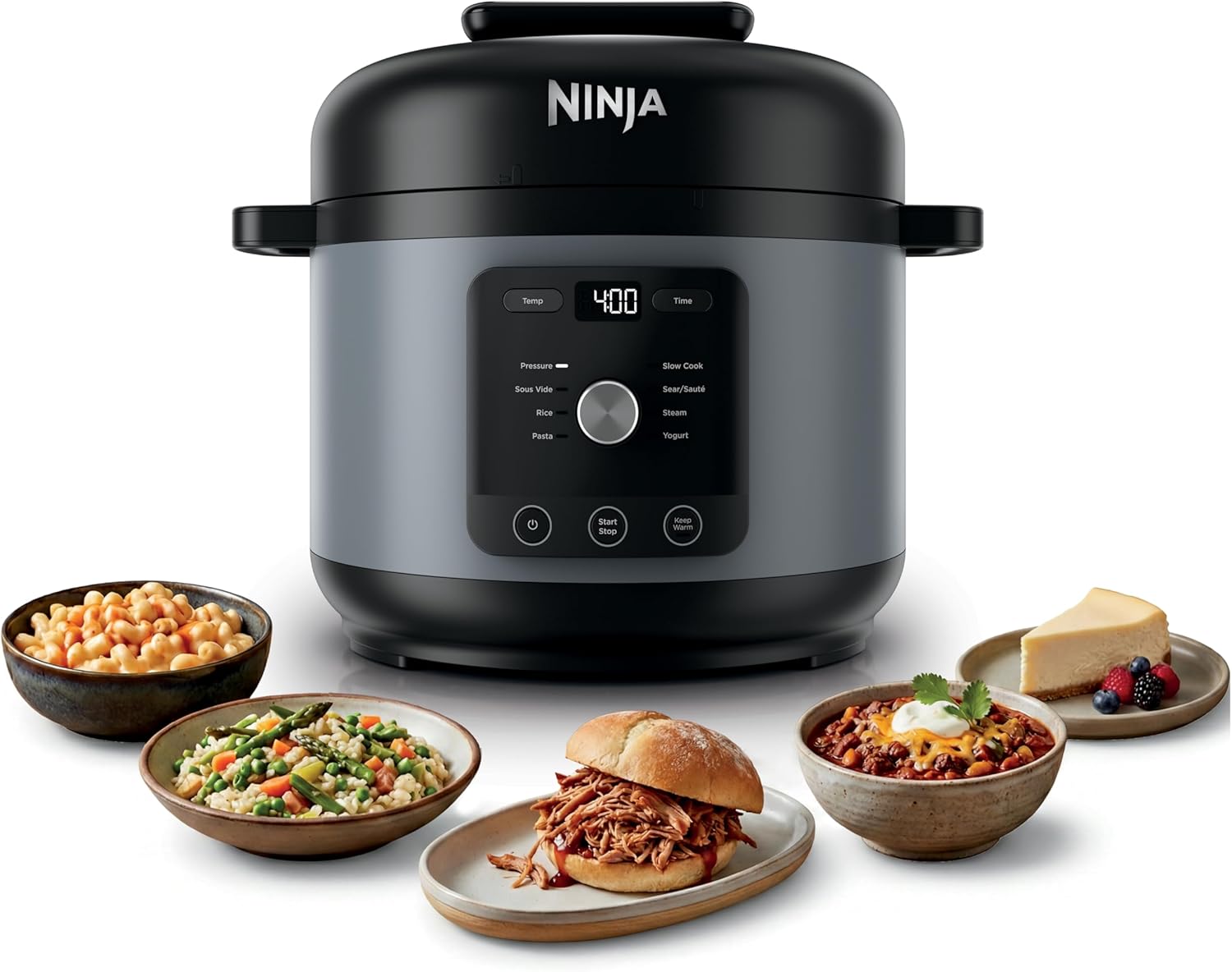
Ninja HyperHeat Pressure Cooker PC201SP
| Capacity | 6 quarts |
|---|---|
| Wattage | 1200 watts |
| Operation Mode | Both Manual and Automatic |
| Special Features | Keep Warm Setting |
The Ninja HyperHeat PC201SP is a versatile 9-in-1 multi cooker that replaces several countertop appliances by pressure cooking, slow cooking, steaming, sous vide, searing, making rice and yogurt, and more. Powered by a 1200-watt HyperHeat base it brings pressure up quickly for faster cook times and offers a wide 9.5-inch cooking surface so you can sear directly in the pot without extra pans. The removable SimpliServe pot doubles as a serving vessel, speeding meal prep and cleanup, and its ceramic nonstick finish is PFAS-free for easy wiping after high-heat use. Controls are simple push-button presets with manual and automatic modes and a Keep Warm setting for finished dishes. Expect family-sized capacity that fits a whole chicken or roast, and a slightly heavier footprint than smaller cookers. If you want quick, flexible weeknight cooking and fewer separate appliances, this model delivers strong performance and convenient serving features, though users who need ultra-compact storage or the lightest possible unit may prefer a smaller cooker.
Best for: Buyers who want a single, family-sized multi cooker that speeds up everyday meals and replaces several countertop appliances while offering easy serving and cleanup.
Less Ideal for: People with very limited counter or cabinet space or those who only need a simple, lightweight pressure cooker for occasional use should consider smaller, more compact models.
- 1200-watt HyperHeat system builds pressure quickly for faster cook times
- Large 9.5" cooking surface lets you sear and sauté in the pot to reduce dishes
- Removable SimpliServe pot that can go from cooker to table for easy serving
- Ceramic PFAS-free nonstick pot designed for easy cleanup
- Relatively heavy and larger footprint compared with compact pressure cookers
- May be more capability than required for users who only need basic pressure cooking
Verdict: A powerful, all-in-one family cooker that speeds up meals and serves straight from the removable pot, ideal for buyers who want to replace multiple appliances with one versatile unit.
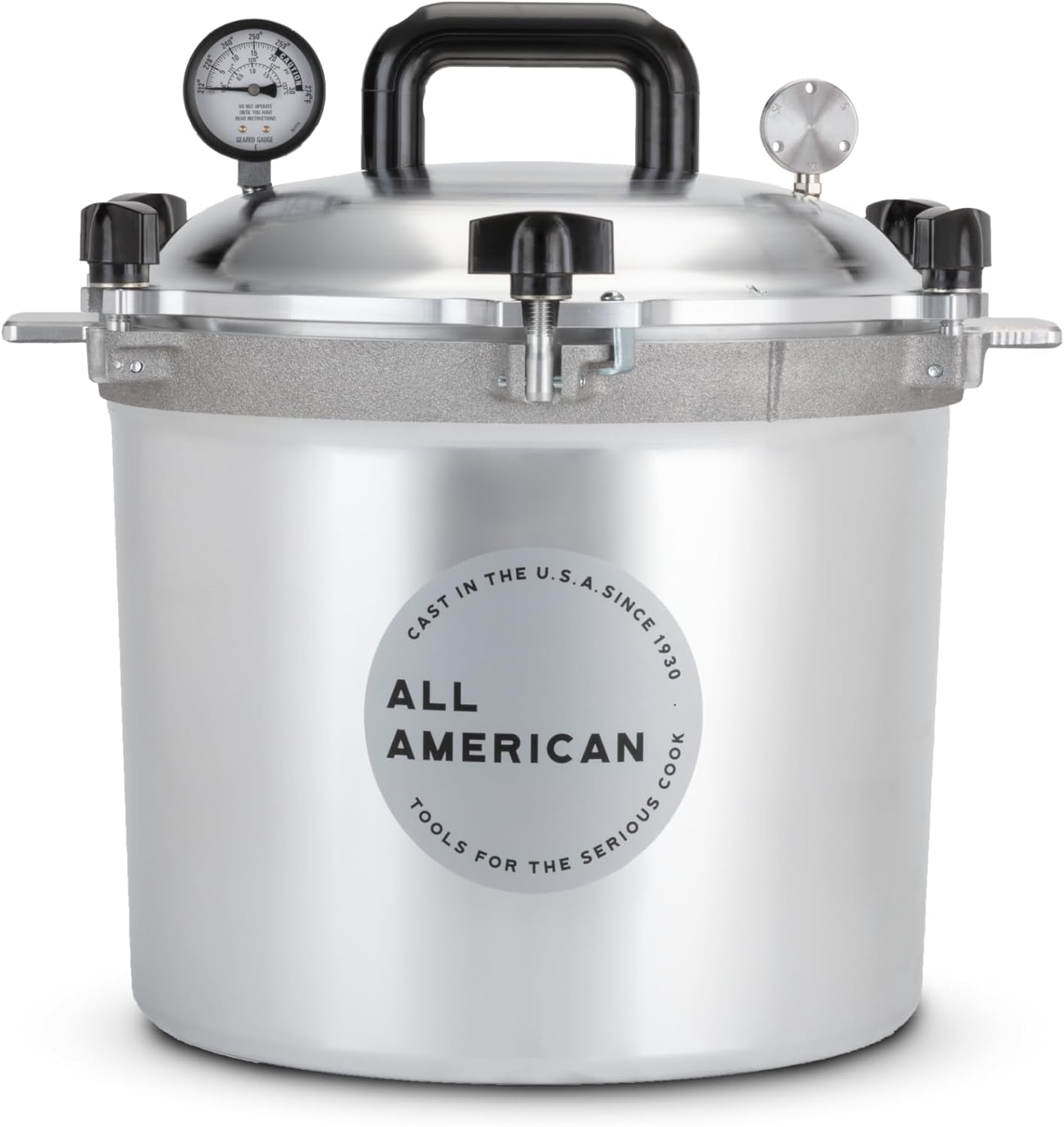
All American 1930 921 Pressure Canner
| Capacity | 21.5 quarts |
|---|---|
| Material | Aluminum |
| Sealing System | Metal-to-metal |
| Suitable For | Gas, Electric, or Flat Top Stoves |
The All American 1930 921 is a purpose-built 21.5-quart pressure cooker and canner that targets home canners and cooks who value durability and precise pressure control. It uses a precision machined metal-to-metal seal instead of a gasket, so the cover opens and closes easily and you avoid routine gasket replacement. The unit includes an easy-to-read steam gauge and a precision regulator weight for steady pressure during processing, and the cast aluminum body with double-thickness edges is made to withstand heavy use. It sits on gas, electric, or flat-top stoves but is not compatible with induction. Because it is large enough to handle multiple pint or quart jars at once, it speeds up batch canning and reduces trips to the stove. The cooker is heavier than small kitchen pressure cookers and requires more storage space, and its aluminum construction means you should avoid prolonged exposure to high-acid foods without proper care. For serious home canners who need reliable, repeatable pressure performance, this model delivers robust construction and user-facing controls that make processing predictable.
Best for: Buyers who prioritize durable, factory-quality equipment and reliable pressure control for frequent home canning and large-batch food processing.
Less Ideal for: Casual cooks who only need quick stovetop pressure cooking or users with induction ranges should consider a smaller or induction-compatible model instead.
- Metal-to-metal seal eliminates gasket replacements and creates a durable steam-tight closure
- Precision-machined regulator weight and steam gauge provide consistent, repeatable pressure control
- Large 21.5-quart capacity handles multiple jars for efficient batch canning
- Rugged cast aluminum construction with reinforced edges for long-term durability
- Suitable for gas, electric, and flat-top stoves
- Not compatible with induction cooktops
- Heavy and bulky compared with small kitchen pressure cookers
- Aluminum construction requires care with high-acid foods and long-term storage
Verdict: Choose this All American canner if you want a heavy-duty, factory-quality pressure canner built for repeatable, professional-style home canning.
Presto 8-Quart Pressure Cooker

| Capacity | 8 quarts |
|---|---|
| Material | Aluminum |
| Closure Type | Locking Lid |
| Control Method | Touch |
| Wattage | 1000 watts |
The Presto 8-Quart Pressure Cooker is a straightforward stovetop cooker that shortens cook times for meats, beans, soups, vegetables and more by maintaining consistent steam pressure with an automatic regulator. It is used like a conventional pot but seals with a locking lid and pop-up cover lock indicator that prevents opening while pressurized, and it includes a rack for cooking multiple items without flavor transfer. The aluminum body heats quickly and works on regular and smooth-top ranges; cleaning is easy since the unit is fully immersible and the sealing ring and pressure parts are removable. Practical touches include a recipe booklet and an overpressure plug for safety. Trade-offs are the heavier metal construction compared with lightweight modern electric multicookers and the need to monitor and manage stovetop heat; it also lacks electronic timers or preset programs, so cooks comfortable with manual stovetop control get the most from it.
Best for: Buyers who want a reliable, no-frills stovetop pressure cooker to cut cooking time and handle batch or family meals while valuing mechanical safety features and durable construction.
Less Ideal for: If you prefer plug-and-play electric multicookers with digital controls, timers, or one-touch programs, this manual stovetop model is not the best choice.
- Speeds cooking significantly for stews, beans, and tougher cuts thanks to pressure cooking
- Automatic pressure regulator keeps cooking pressure consistent for predictable results
- Cover lock indicator and overpressure plug add clear, mechanical safety feedback
- Includes rack and 64-page recipe/instruction booklet for versatile use
- Fully immersible design with removable sealing ring makes cleaning straightforward
- Manual stovetop operation lacks electronic timers or presets found on electric pressure cookers
- Aluminum construction requires nonabrasive cleaners to maintain exterior finish
Verdict: A durable, high-capacity stovetop pressure cooker that reliably speeds home cooking for families who prefer a simple, safety-focused mechanical design.
NEWBULIG 10‑In‑1 Pressure Cooker

| Capacity | 3 quarts |
|---|---|
| Wattage | 700 watts |
| Controller Type | Digital |
| Operation Mode | Automatic |
This NEWBULIG 3‑quart electric pressure cooker is a compact multi‑cook appliance for everyday meals in small kitchens. It offers ten preset programs—rice, meat, stew, yogurt, canning, steam and more—accessed through a digital control panel, plus a 24‑hour delay start and automatic keep‑warm. The stainless steel housing and ceramic nonstick inner pot make cooking and cleanup straightforward, and the unit runs on 700 watts so it heats efficiently for quick pressure cycles. Safety is addressed with integrated pressure release valves and heat sensors for reliable operation. In practice it is best for singles or couples who want faster one‑pot meals, batch soups, or steamed vegetables without fuss; the small capacity limits large roasts but speeds up everyday dishes. The ceramic coating eases sticking and washing, though ceramic can be more delicate than heavy stainless inserts. Overall this cooker packs versatile presets and safety features into a space‑saving footprint that suits budget‑minded buyers who need reliable, fast cooking for small households.
Best for: Buyers on a tight budget who need a reliable, space‑saving multicooker for everyday meals and small batch cooking.
Less Ideal for: Families who regularly cook large quantities or anyone who needs a high‑capacity cooker for whole poultry or big roasts should choose a larger model.
- Compact 3‑quart capacity fits small kitchens and households
- Ten smart presets simplify common recipes with one‑touch controls
- Ceramic nonstick inner pot for easier food release and quicker cleanup
- Digital controller with 24‑hour delay start and automatic keep‑warm
- Triple integrated safety with pressure release valves and heat sensors
- 3‑quart capacity is too small for large families or whole roasts
- Ceramic coating may wear faster than thicker stainless steel inserts
Verdict: A budget‑friendly, compact multi‑cook pressure cooker that delivers versatile, fast cooking for singles or couples.
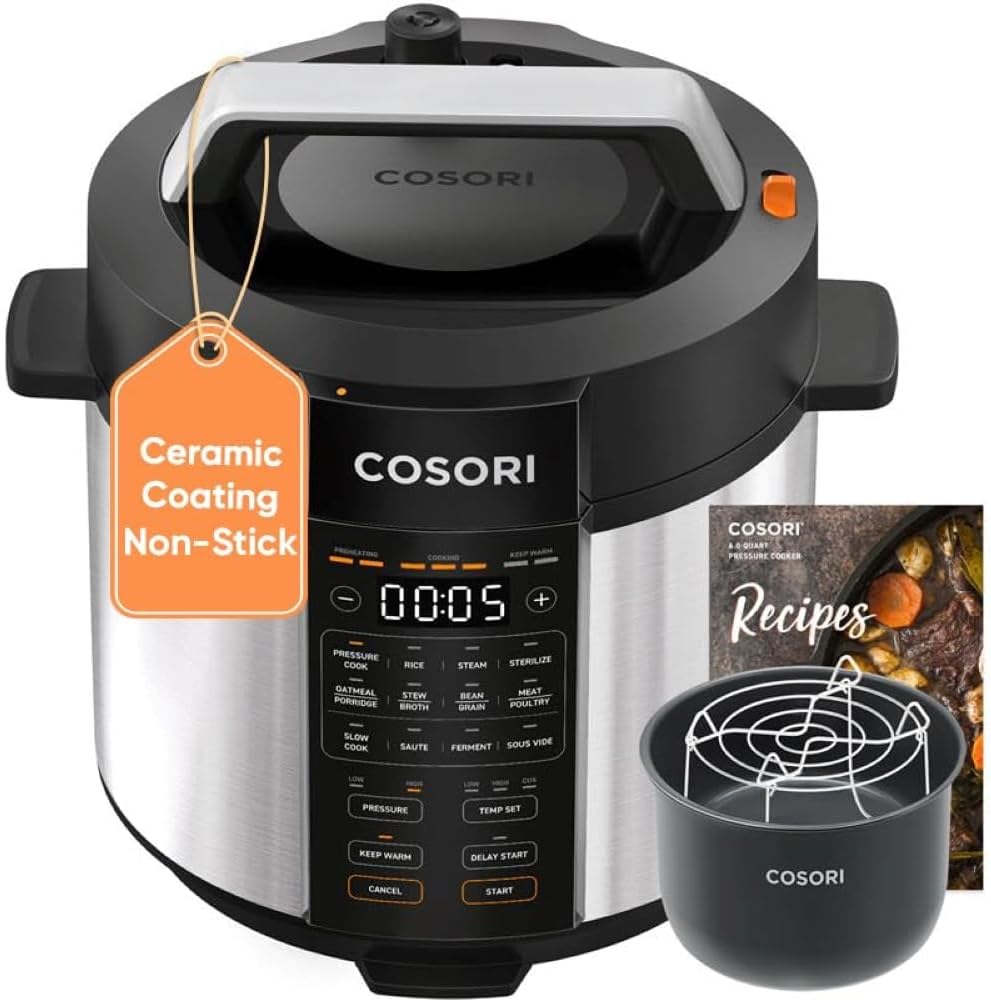
Cosori 6-Quart Pressure Cooker
| Capacity | 6 quarts |
|---|---|
| Wattage | 1100 watts |
| Control Method | Touch |
| Inner Pot | Ceramic nonstick |
| Functions | 9-in-1 cooking functions |
This Cosori 6-quart pressure cooker is a versatile kitchen workhorse that replaces several appliances with one countertop unit. It offers 9-in-1 cooking functions and 13 presets so you can pressure cook, steam, sauté, slow cook, sous vide, and more using the touch controls. The 1100W heater brings food up to pressure quickly, and the ceramic nonstick inner pot is dishwasher-safe so cleanup is straightforward. Cosori emphasizes safety with a backward-angled steam release, a separate seal/vent button, and multiple built-in protections, which makes high-pressure cooking less intimidating. Useful extras include a steam rack, recipe book, and an easy lid-locking alignment marker. The trade-offs are typical of multi-cookers: the learning curve for timing on some modes and the unit footprint that takes counter space. If you want reliably consistent results for staples like rice, beans, stews, and tender meats while reducing the number of single-purpose appliances you own, this cooker handles those tasks well.
Best for: Home cooks who prioritize a dependable, all-in-one cooker that safely speeds up everyday meals and replaces multiple single-use appliances.
Less Ideal for: People with extremely limited counter space or those who only need a single dedicated device such as a standalone rice cooker or slow cooker.
- Multiple built-in functions and 13 presets handle a wide range of meals without extra gadgets
- 1100W power shortens preheat and pressure build times compared with lower-watt models
- Ceramic nonstick inner pot is dishwasher-safe and easier to clean than raw stainless pots
- Safety-focused venting design and several protective features reduce user risk
- Includes useful accessories and a recipe book to get started quickly
- Six-quart capacity and footprint may be large for very small kitchens
- Touch control panel and many presets add a small learning curve for first-time users
Verdict: Buy this Cosori if you want a reliable, safety-minded all-in-one pressure cooker that handles rice, stews, sous vide and more with minimal fuss.
Instant Pot Duo 6-Quart

| Capacity | 5.68 liters |
|---|---|
| Wattage | 1000 watts |
| Control Method | Touch |
| Voltage | 120 |
The Instant Pot Duo is a versatile 7‑in‑1 electric cooker designed to replace several countertop appliances and speed up everyday meals. You use it like a pressure cooker for fast braises and stews, as a slow cooker for hands-off dinners, or the sauté and steam functions to finish components before pressure cooking; the included stainless steel inner pot handles searing and is dishwasher-safe for easy cleanup. It offers 13 one-touch smart programs, an easy-release steam switch for safer venting, and multiple built-in safety mechanisms so nervous buyers can feel more confident during high-pressure cooking. The 1000 W heater and tri-ply bottom help deliver consistent heat for searing and pressure builds, and the 6-quart capacity suits family meals and batch cooking. Limitations include a learning curve for timing and liquid requirements compared with stovetop cooking, and the unit is fairly heavy and takes counter space when not in use. For buyers who value proven performance and wide recipe support, the Duo is a practical all-in-one option.
Best for: Buyers who want a single, proven appliance to speed up family cooking and prefer a safe, well‑supported pressure cooker with lots of recipes and social proof.
Less Ideal for: People who prioritize ultra-compact appliances, single-purpose cookware, or who prefer hands-on stovetop pressure cooking rather than preset programs.
- Multiple cooking modes replace several appliances (pressure, slow, sauté, steam, rice, yogurt, warm)
- Stainless steel inner pot with tri-ply bottom for even heating and stovetop searing
- 13 one-touch programs simplify common recipes
- Easy-release steam switch and extensive safety features reduce user risk
- Dishwasher-safe inner pot and lid make cleanup straightforward
- Requires learning proper liquid amounts and timing for reliable results
- Relatively heavy and occupies significant countertop or storage space
Verdict: Choose the Instant Pot Duo if you want a reliable, safety‑focused multi‑cooker that streamlines family meals and offers broad recipe support.
Instant Pot 4QT RIO Mini

| Capacity | 4 quarts |
|---|---|
| Wattage | 800 watts |
| Control Method | Touch plus mechanical knob |
| Operation Mode | Automatic |
| Voltage | 120 volts |
The Instant Pot 4QT RIO Mini is a small multi-cooker aimed at cooks who want the versatility of a full-size Instant Pot in a compact footprint. It offers seven cooking functions—pressure cook, slow cook, sauté, steam, rice, yogurt, and keep warm—so you can make one-pot meals, grains, steamed vegetables, and yogurt without extra appliances. The unit uses touch controls plus a mechanical knob, an 800-watt heater, and an outer locking lid with an auto-seal for safety. Practical benefits include fast pressure cooking that shortens braises and beans, a stainless steel cooking pot that is dishwasher safe for easy cleanup, and a progress indicator so you can check status at a glance. Because it is 4 quarts it fits smaller households or kitchens with limited counter space, but that same compact size limits large-batch cooking and family-size roasts. The RIO Mini emphasizes safety with multiple built-in protections and is simple to operate, making it a sensible choice for people who want reliable, no-fuss meal prep in a compact package.
Best for: Buyers who want a reliable, easy-to-use all-in-one cooker for small households or limited counter space and who prioritize proven safety and straightforward operation.
Less Ideal for: Families or cooks who regularly prepare large roasts, big batches, or need programmable advanced features should consider a larger or more feature-rich cooker.
- Seven cooking modes cover pressure cooking, slow cook, sauté, steam, rice, yogurt, and keep-warm in one unit.
- Compact 4‑quart capacity fits small kitchens and serves up to about four servings.
- Stainless steel inner pot and dishwasher-safe parts simplify cleaning.
- Progress indicator and auto-sealing lid add convenience and safety.
- 800-watt power delivers faster cook times compared with slow cooking methods.
- 4‑quart capacity restricts large or batch cooking.
- Not suited for users needing advanced programmability or multi-zone controls.
Verdict: If you want a compact, safe, and easy-to-use multi-cooker for everyday small-batch meals, the Instant Pot 4QT RIO Mini is a dependable choice.
Choosing the Right Pressure Cooker for Home Use: Key Factors to Consider
Capacity and Family Size
Capacity determines what you can cook in one batch and how the cooker fits into your routine. Small households often do fine with 3 to 4 quart units that take up less storage space and heat faster. Families or cooks who batch-cook, entertain, or prepare whole chickens will likely prefer 6 to 8 quart capacities to avoid multiple rounds.
Also consider usable capacity versus the labeled size. Many pressure cookers have a maximum fill line well below the nominal volume to allow safe steam space. Think about the typical recipes you prepare and choose a capacity that matches those portions without overfilling, which can affect pressure behavior and safety.
Safety Mechanisms and Controls
Robust safety features mitigate risk when sealing and releasing pressure. Look for reliable lid-locking systems that prevent opening under pressure, clearly visible pressure indicators, and multiple release methods such as quick release and natural release. Mechanical backups like pressure-relief valves and secondary locking mechanisms add protection in case a primary component fails.
Controls matter as well. Simple, intuitive valves and clearly marked settings reduce the chance of user error, especially when you are managing timing and heat on a busy stovetop or with a multi-program electric cooker. Prioritize units with straightforward safety documentation and easily replaceable parts like gaskets.
Cooking Performance and Consistency
A pressure cooker must reach and maintain the expected internal pressure to reliably shorten cook times and produce consistent results. Consistent pressure affects texture for proteins, doneness for beans and legumes, and the gelatinization of grains. Variability in pressure can lead to undercooked or overcooked outcomes.
Assess how quickly a unit comes to pressure, how well it holds that pressure, and whether it offers multiple pressure settings. For home cooks who use the cooker for a wide range of recipes, predictable performance across different loads and liquid levels is essential.
Ease of Cleaning and Maintenance
Pressure cookers are used for richly flavored, often sticky foods, so cleaning convenience strongly affects how often you will use the appliance. Removable, dishwasher-safe components such as inner pots, gaskets, and lids simplify maintenance. Designs that minimize nooks where food can collect reduce rinsing and scrubbing time.
Consider the availability and ease of replacing wearable parts like sealing rings, handles, and valves. A model that disassembles without tools and clearly marks parts for cleaning will hold up better to regular household use, making it more likely to remain in active use.
Control Options and Cooking Flexibility
Different cooks prefer different degrees of manual control. Stovetop pressure cookers offer direct heat control and typically faster pressure changes, while electric models may offer programmable presets and timers. For home use, variety in control options lets you tailor cooking methods to specific recipes, from delicate vegetables to tough cuts of meat.
Programmable or adjustable pressure settings expand the range of recipes you can reliably prepare. Consider whether you need digital timers, multi-stage cooking programs, or simple manual valves based on how you plan to use the cooker in your weekly meal rotation.
Footprint and Storage Considerations
The physical size of a pressure cooker affects where it will live in your kitchen. A compact unit is easier to keep on the counter for frequent use, while larger, heavier units may need dedicated cabinet space. For renters or small kitchens, a model with a smaller footprint that still meets your capacity needs is often preferable.
Also consider weight and handle ergonomics if you plan to wash and move the cooker regularly. Units that nest neatly with accessories or have removable components for flattening will be simpler to store.
Stovetop Vs Electric: Which Fits Your Routine
Choosing between stovetop and electric pressure cookers depends on how you cook and what you value most. Stovetop units generally heat faster and offer steeper pressure control through the burner, which appeals to cooks who like hands-on adjustments. Electric models add convenience with timers and presets that simplify set-and-forget cooking at the cost of slightly slower pressure transitions.
For busy home cooks who want automated programs for soups, beans, and rice, electric units reduce attention during cooking. If you often sear ingredients before pressure cooking or need rapid pressure changes mid-recipe, a stovetop model may be better suited to those tasks.
- Electric: Programmable presets, consistent heating, good for hands-off cooking
- Stovetop: Faster pressure changes, direct heat control, preferred for searing
Common Recipes That Benefit Most
Pressure cookers excel at reducing cook time for braised meats, dried beans, whole grains, and hearty stews. Tough cuts that normally require hours of slow cooking become tender in a fraction of the time when cooked under pressure. Legumes and whole grains cook much faster and often require less soaking.
They are also useful for one-pot meals where you want consolidated flavors without a long simmer. Delicate items like vegetables need shorter pressure times, so familiarity with timing adjustments helps avoid overcooking.
- Braised beef and pork
- Dried beans and lentils
- Whole grains like brown rice and farro
- One-pot soups and stews
Gaskets, Valves, and Replacement Parts
The sealing gasket and steam valves are wear items that determine long-term performance. Gaskets can absorb odors and lose elasticity over time, affecting sealing and pressure maintenance. Valves can clog with food residue if not cleaned regularly.
Check how easily you can access and replace these parts. Models that use common, replaceable gaskets and have removable, tool-free valves make upkeep simpler and extend the useful life of the cooker.
- Inspect gaskets regularly for cracks or hardening
- Clean valves after high-starch or fatty cooks
- Keep a spare gasket on hand if you use the cooker often
Cooking Tips to Avoid Common Missteps
Avoid overfilling the cooker, especially with starchy foods that expand and foam. Use the recommended liquid amounts in recipes to ensure proper pressure development. For recipes that require browning, sear ingredients before pressurizing if your model allows.
When releasing pressure, choose the method your recipe calls for. Rapid release is convenient but can toughen some proteins and splatter liquids. Natural release is gentler but takes longer, which may be preferable for dense cuts or soups.
- Do not fill beyond the maximum fill line
- Deglaze the pot after searing to prevent burn notices
- Follow recommended release methods for the recipe
Storage and Multiuse Kitchen Roles
A pressure cooker can double as a steaming or slow-cooking vessel depending on its design and accessories. Consider whether you want additional inserts like steaming racks or silicone liners that expand functionality. For kitchens with limited storage, pick a model that balances multiuse capability with a compact footprint.
Plan for where you will store heavier units after use. Some cooks keep a well-used cooker on the counter, while others store it in a lower cabinet for easier lifting. If you need portability for camping or seasonal use, factor in weight and handle design.
- Look for included accessories that increase functionality
- Choose a footprint that fits your preferred storage location
- Consider weight and handle ergonomics for frequent handling
How We Chose the Best Pressure Cooker for Home Use
We built this list by prioritizing attributes that matter most to home cooks who expect dependable, safe, and versatile pressure cooking. Key evaluation criteria included sealed cooking performance and consistency, which measures how reliably the unit reaches and maintains pressure across common recipes. We tested the practicality of safety and control features, including pressure-release options, locking lids, and clear indicators that reduce user error. Durability and construction were considered, focusing on materials and build approaches that withstand frequent use. We examined cooking flexibility by looking at programmable settings or manual pressure leveling to handle a range of foods from grains to stews. Usability and maintenance were scored for lid and gasket accessibility, dishwasher-safe parts, and how straightforward routine cleaning is. Finally, we reviewed capacity and footprint to ensure the models fit typical family kitchens without excessive counter or storage demands. Products were excluded if they lacked essential pressure-control safety features or if construction suggested significantly reduced longevity for regular home use. The result is a shortlist of units that meet practical safety, performance, and upkeep expectations for everyday household cooking.
Our full evaluation process is outlined in our review methodology.
FAQ
Can I use a pressure cooker every day?
Yes. Many home cooks use pressure cookers daily for batch cooking and quick meals. Regular use makes maintenance like gasket inspection and valve cleaning more important to ensure consistent performance.
Is it safe to pressure cook bones and fatty cuts?
Pressure cooking bones and fatty cuts is common, but these foods can produce foam and splatter that may clog valves. Use recommended liquid levels and clean valves after cooking to avoid buildup. Natural release often works better for very fatty preparations.
How do I prevent foods from sticking or burning?
Sear fatty or protein-rich ingredients first and deglaze the pot before sealing. Ensure sufficient liquid is present for steam generation and avoid high-sugar sauces that can caramelize and scorch against the pot surface.
Can I convert conventional recipes for pressure cooking?
Many conventional recipes can be adapted by reducing cook time and adjusting liquid amounts. Dense ingredients like dried beans and large cuts of meat benefit most from pressure cooking; lighter vegetables usually need much shorter times, so staggered additions may be necessary.
How often should I replace the sealing ring?
Sealing rings typically last many months to a couple of years depending on frequency of use and cleaning habits. Replace the ring if it shows cracks, hardening, or persistent odors to maintain sealing performance.
Final Verdict
When selecting a pressure cooker for home use, prioritize safety, consistent pressure performance, and ease of maintenance. Capacity and control options should match your household size and preferred cooking style. Expect tradeoffs between hands-on stovetop control and the convenience of electric presets. Choose the model that aligns with how you cook most often: favor robust safety and replaceable parts for frequent use, or programmable features for hands-off meal preparation. With the right priorities, you can confidently pick a pressure cooker that speeds dinner, simplifies batch cooking, and fits into your kitchen routine.