
Note: This article contains affiliate links. If you click on these links and make a purchase, we may earn a small commission at no extra cost to you. This helps support our research and content. Read our full affiliate disclosure here.
If you cook Indian food regularly, the right pressure cooker can save hours on staple dishes like dals, biryanis, and stewed vegetables. A cooker that steams rice evenly, tenderizes lentils, and builds flavor without repeated stirring becomes a central tool in the kitchen. This guide presents seven shortlisted pressure cookers chosen for how well they handle Indian techniques and recipes, from fast weeknight dals to slow-simmered gravies. Below you will find concise evaluations focused on capacity, safety, and cooking consistency so you can match a cooker to your household size and preferred dishes. Read on for the criteria we used and practical buying guidance before the product list.
Top Picks at a Glance
| Best Overall The best all-around choice for most situations | IMUSA 7 Quart Aluminum Pressure Cooker |  |
| Best Quality Built to a higher standard if you want something more solid | T-fal Clipso 6.3 Quart Pressure Cooker |  |
| Best Value The sweet spot between price and what you get | Presto 6-Quart Aluminum Pressure Cooker |  |
| Best Budget The cheapest option that still gets the job done reliably | Hawkins Contura 3 Litre Pressure Cooker |  |
| Top Rated A top-rated pick with lots of positive feedback | Cosori Pressure Cooker 6QT |  |
| Most Popular A crowd favorite that many people choose with confidence | Instant Pot Duo 6-Quart |  |
| Best Seller A high-volume bestseller chosen again and again | Instant Pot RIO Mini 4-Quart |  |
IMUSA 7 Quart Aluminum Pressure Cooker
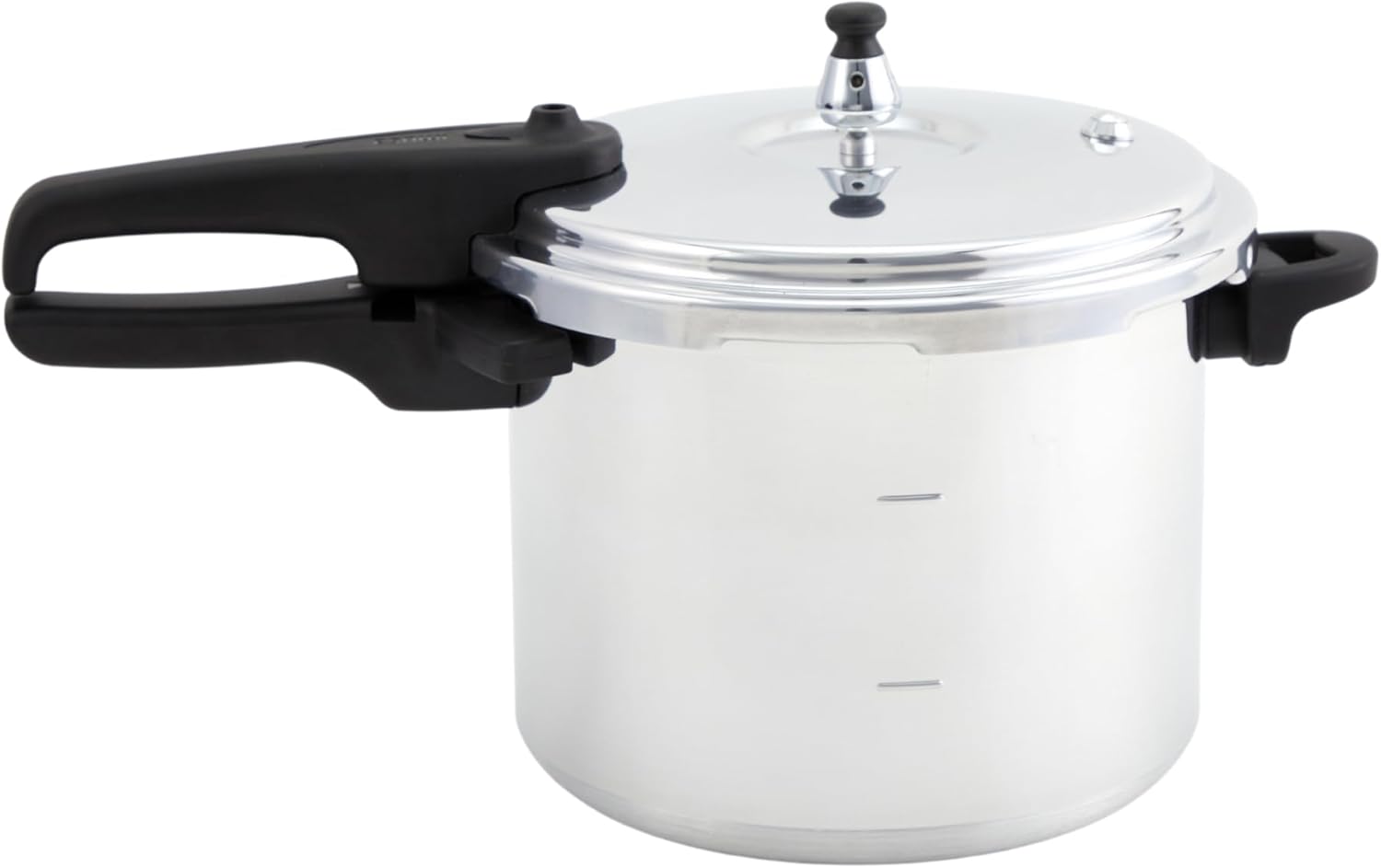
| Capacity | 7 quarts |
|---|---|
| Material | Aluminum |
| Special Features | Locking Lid |
| Operation Mode | Automatic |
The IMUSA 7-quart aluminum pressure cooker is a stovetop pot built for fast, high-heat cooking of large batches. It uses a locking outer lid, automatic pressure regulator, and safety valve to maintain and release pressure safely, and the cool-touch side handle plus helper handle make lifting and pouring easier when full. The polished aluminum body heats and responds quickly on gas and electric ranges, which speeds up traditional Indian dishes such as dals, beans, and tougher cuts of meat while locking in moisture and flavor. Because it is aluminum, it is lightweight and transfers heat evenly but will require gentle care to avoid scratching and may react with very acidic foods unless properly maintained. The included pressure regulator and tight seal simplify usage for cooks who want consistent results without electronic controls, and the 7-quart capacity is convenient for family-sized meals or batch cooking for sauces and stews. It is a practical, no-frills cooker for anyone wanting quicker stovetop pressure cooking with reliable safety features.
Best for: Home cooks who want a simple, roomy stovetop pressure cooker for everyday Indian dishes and batch cooking, prioritizing fast heat-up times and reliable mechanical safety features.
Less Ideal for: Cooks who want electronic programmable settings, induction-specific cookware, or who prefer heavyweight stainless steel cookware for long-term durability should consider other options.
- Large 7-quart capacity suitable for family-sized Indian meals
- Automatic pressure regulator and safety valve for consistent, safe pressure control
- Polished aluminum body heats quickly and distributes heat evenly
- Cool-touch side handle and helper handle for safer handling when full
- Aluminum construction can scratch and may react with very acidic foods if not cared for
- No electronic or multi-program controls for precision cooking modes
Verdict: Choose this 7-quart IMUSA pressure cooker if you want a roomy, fast-heating stovetop pot with straightforward safety features for regular Indian-style batch cooking.
T-fal Clipso 6.3 Quart Pressure Cooker

| Capacity | 6.3 quarts |
|---|---|
| Material | Stainless steel |
| Control Method | Touch |
| Operation Mode | Manual |
| Voltage | 110 volts |
The T-fal Clipso 6.3 Quart is a stainless-steel stovetop pressure cooker built for faster, large-batch cooking. It uses a sealed, encapsulated base that works on all cooktops including induction to shorten cooking times and distribute heat evenly, and the included steam basket lets you do multi-level steaming while pressure cooking. The one-hand opening system, secure lock that prevents opening under pressure, and an adjustable steam-release valve make daily use straightforward and safer than a simple screw-top pot. The pot is dishwasher-safe (with valve and gasket removed) which simplifies cleanup after heavy use, and the package includes a recipe booklet to get started. For high-volume or performance-focused cooks it delivers consistent results, but it is a manual stovetop cooker so you need to manage heat and timing yourself rather than relying on automated programs, and you should follow safety steps when releasing pressure. Overall it is a solid, durable choice for speeding up Indian-style dals, stews, and braises while preserving flavor.
Best for: Serious home cooks who want a durable, fast stovetop pressure cooker to accelerate batch cooking and deliver consistent results for Indian dishes.
Less Ideal for: Buyers who prefer electric, program-driven pressure cookers with set-and-forget timers or those seeking a compact unit for single-person meals.
- Stainless-steel construction with encapsulated base for even heat and induction compatibility
- One-hand opening lid and secure locking system for safer, convenient operation
- Adjustable steam-release valve for controlled pressure and precise cooking
- Includes steam basket and recipe booklet for multi-level cooking and meal ideas
- Manual stovetop operation requires active heat control and monitoring
- Some removable parts must be taken out before dishwasher cleaning
Verdict: Choose this Clipso if you want a heavy-duty, induction-compatible stovetop pressure cooker that speeds up large-batch Indian cooking with reliable safety features.
Presto 6-Quart Aluminum Pressure Cooker

| Capacity | 6 quarts |
|---|---|
| Material | Aluminum |
| Closure Type | Outer Lid |
| Operation Mode | Automatic |
| Included Components | Special Rack, Instruction Booklet, Recipe Booklet |
This Presto 6-quart aluminum pressure cooker is a straightforward stovetop model built for fast, everyday meals. It holds enough food for small families and cooks vegetables, legumes, poultry, and tougher cuts of meat several times faster than conventional pots, which is especially useful for Indian dishes that benefit from tenderized pulses and masalas. The heavy-gauge aluminum body heats quickly and evenly, and the pressure regulator maintains cooking pressure automatically while a cover-lock indicator and overpressure plug add safety. The included rack lets you steam multiple items without flavor transfer, and the removable parts make cleaning and vent maintenance simple. It is suitable for use on gas and smooth-top electric ranges but lacks electric controls or programmable settings, so it relies on stove heat and user timing. Overall this is a durable, no-frills cooker that speeds up traditional recipes but requires attention to fill limits and stove-based monitoring rather than automated cycles.
Best for: Buyers who prioritize speed, simplicity, and reliable stovetop performance for everyday Indian cooking and who prefer a durable, manual pressure cooker over electric models.
Less Ideal for: Those who want an electric, set-and-forget multicooker with presets, or shoppers who prefer stainless steel construction for low-maintenance exteriors.
- Quick, energy-efficient cooking that shortens braising and legume cook times
- Heavy-gauge aluminum for fast, even heat distribution
- Automatic pressure regulator and cover-lock indicator for safer stovetop use
- Includes a rack for steaming multiple items without mixing flavors
- Removable vent components and immersible design simplify cleaning
- No electric or programmable controls so timing and heat must be managed manually
- Aluminum body may require nonabrasive cleansers and occasional polishing to maintain finish
Verdict: A straightforward, fast-heating 6-quart stovetop pressure cooker ideal for cooks who want reliable, manual performance for Indian meals.
Hawkins Contura 3 Litre Pressure Cooker

| Capacity | 3 liters |
|---|---|
| Material | Aluminum body, Stainless Steel lid |
| Closure Type | Inner Lid |
| Wattage | 1000 |
| Special Features | Electric and Gas Stovetop Compatible |
The Hawkins Contura 3 Litre is a compact stovetop pressure cooker built for everyday Indian cooking for small families. Its hard-anodised aluminum body heats quickly and resists wear, while the stainless steel inside-fitting lid and pressure-locked safety mechanism keep cooking hygienic and secure. The rounded Contura shape makes stirring easier and improves visibility when preparing dals, sabzis, and one-pot meals, and the improved pressure regulator helps maintain steady pressure for consistent results. Stay-cool handles and a sturdy pivot reduce stress on the plastic while providing a comfortable grip. Because it is an aluminum body with a stainless lid, it does not react with food and cleans up easily, though it is heavier than some thin-gauge pots. The cooker is designed for gas and electric stovetops and includes an automatic safety valve and a longer-lasting gasket thanks to the inner lid design. For home cooks who want a durable, fuel-efficient, small-capacity pressure cooker tailored to Indian recipes, this model delivers practical performance with traditional stovetop control.
Best for: Home cooks seeking an affordable, durable stovetop pressure cooker for everyday Indian meals for two to four people who value reliable pressure control and easy stirring.
Less Ideal for: Those who regularly cook large batches, entertain frequently, or need induction-specific cookware should consider larger or induction-ready alternatives.
- Hard-anodised body for faster heating and long-term durability
- Inside-fitting stainless steel lid with pressure-locked safety
- Rounded Contura shape eases stirring and improves visibility
- Automatic safety valve and improved pressure regulation for consistent cooking
- Stay-cool, sturdy handles that reduce stress on plastic components
- 3-liter capacity is small for large families or batch cooking
- Designed for stovetop use only; not for induction without an adapter
Verdict: A durable, fuel-efficient 3-liter stovetop cooker that suits small Indian households seeking reliable, no-frills pressure cooking.
Cosori Pressure Cooker 6QT
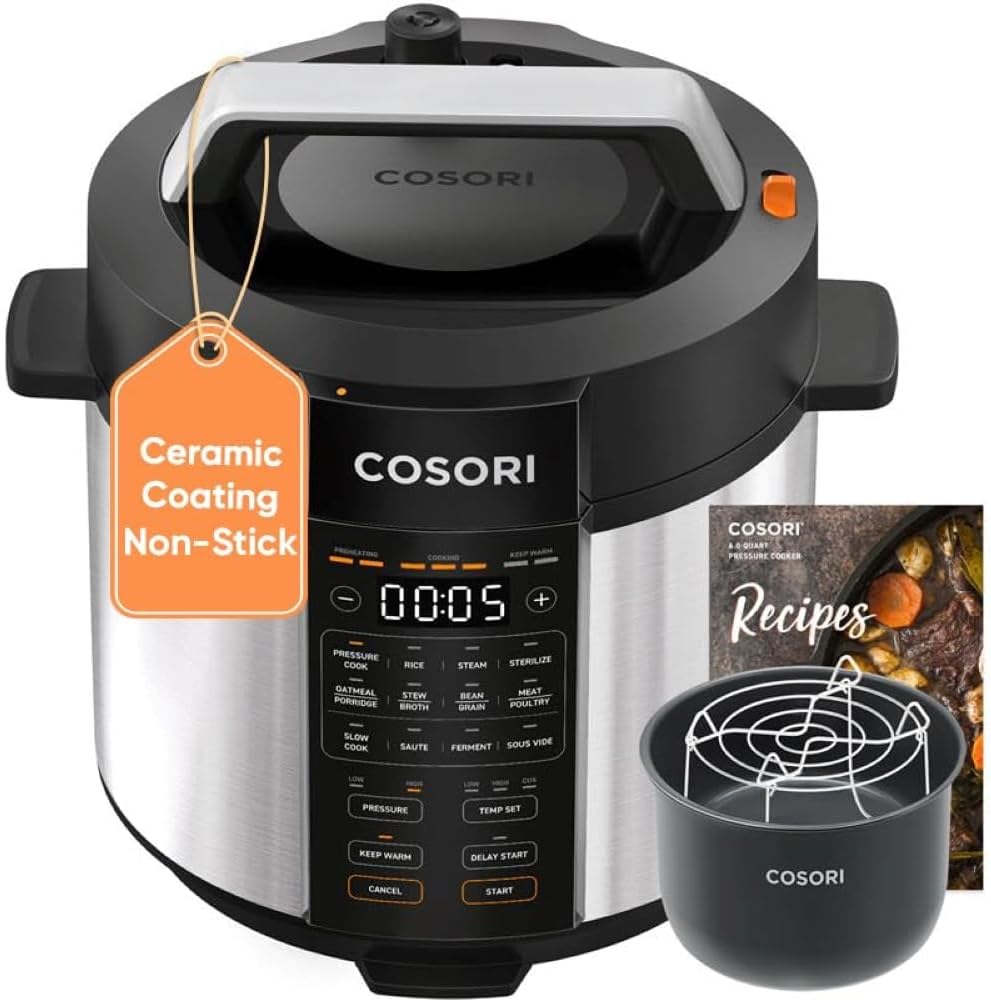
| Capacity | 6 quarts |
|---|---|
| Wattage | 1100 watts |
| Control Method | Touch |
| Material | Stainless steel |
The Cosori 6QT pressure cooker is a versatile electric multi-cooker designed to replace several countertop appliances in one unit. It offers pressure cook, rice, steam, slow cook, saute, sous vide, ferment, and keep-warm modes through 9 cooking functions and 13 presets, which makes straightforward Indian staples like dal, rice, and curry simple to run from a preset or manual program. The 1100W stainless steel housing and touch controls give responsive heat and straightforward operation, and the ceramic nonstick inner pot is dishwasher-safe for easier cleanup after starchy or saucy meals. Safety features such as a rear-angled steam release, sealed vent button placement, double-layer anti-scald lid, and overheat protection help reduce risk during high-pressure use. Practical limitations include the 6-quart capacity, which may be tight for very large batches, and the physical-button plus touch interface may have a learning curve for users who prefer purely mechanical knobs. For everyday Indian cooking where safety, easy cleaning, and preset versatility matter most, this cooker covers the basics reliably.
Best for: Buyers seeking a dependable, safety-minded multi-cooker for everyday Indian meals who value easy cleanup and preset convenience over oversized capacity.
Less Ideal for: Households that regularly cook very large batches for gatherings or need an extra-large pressure cooker for bulk meal prep should consider larger-capacity options.
- Multiple built-in presets and functions simplify cooking rice, dals, stews, and curries
- Ceramic nonstick inner pot is dishwasher-safe and easier to clean after sticky dishes
- Safety-focused venting and lid design reduce burn risk during pressure release
- 1100W power and stainless steel housing deliver consistent heating and durable construction
- 6-quart capacity may be small for very large families or batch cooking
- Combination of touch controls and physical buttons can take time to learn
Verdict: A safety-focused, easy-to-clean 6-quart multi-cooker that reliably handles everyday Indian rice, dal, and curry recipes.
Instant Pot Duo 6-Quart

| Capacity | 5.68 liters |
|---|---|
| Wattage | 1000 watts |
| Control Method | Touch |
| Voltage | 120 |
The Instant Pot Duo 6-Quart is a versatile countertop multicooker that speeds up weekday dinners and handles many traditional Indian recipes with less hands-on time. It offers pressure cook, slow cook, steam, sauté, rice, yogurt and keep-warm modes plus 13 one-touch programs, so you can brown spices, pressure-cook dals and beans, or make rice and yogurt all in the same pot. The 18/8 stainless steel inner pot with a tri-ply bottom supports searing and even heat, and the Easy-Release steam switch and multiple built-in safety mechanisms make pressure cooking less intimidating. Practical benefits include faster cook times—claims of up to 70% faster than slow cooking—dishwasher-safe parts for easier cleanup, and an included steamer rack for layered steaming. Trade-offs are that the control panel is button-based rather than a dial, so fine adjustments are somewhat menu-driven, and the 6-quart size may be larger than needed for single cooks or very small households. For Indian cooking it handles staples like lentils, rice, and curries well but results still depend on adjusting liquid and timing from stovetop recipes.
Best for: Buyers who want a trusted, safety-focused multicooker that shortens traditional Indian cooking tasks and prefers proven reliability backed by broad user adoption.
Less Ideal for: If you need precise manual control over pressure and temperature for advanced stovetop-style techniques or only cook for one person, this larger, preset-driven unit may be more than you need.
- Multi-function 7-in-1 cooker replaces several appliances for one-pot Indian meals
- Stainless steel inner pot with tri-ply bottom lets you sauté and sear before pressure cooking
- 13 preset smart programs simplify common recipes like rice, lentils, and yogurt
- Easy-Release steam switch and multiple safety features reduce pressure-cooking risk
- Dishwasher-safe lid and inner pot make cleanup straightforward
- Control is via push buttons and presets which limits fine-grain temperature or pressure tweaks
Verdict: A reliable, safety-minded multicooker that simplifies and speeds up everyday Indian dishes while replacing multiple appliances.
Instant Pot RIO Mini 4-Quart

| Capacity | 4 quarts |
|---|---|
| Wattage | 800 watts |
| Control Method | Touch with mechanical knob |
| Voltage | 120 volts |
| Material | Stainless steel |
The Instant Pot RIO Mini 4-quart is a small, versatile multi-cooker aimed at everyday home cooking where counter space is limited. It pressure cooks to speed up Indian staples like lentils, dals, and tougher cuts of meat, and also handles slow cooking, sautéing, steaming, rice, and yogurt without switching appliances. Notable features include a 4-quart stainless steel inner pot, touch controls paired with a mechanical knob, an outer locking lid with auto-seal safety, and an 800-watt motor that keeps power draw modest. The compact size is convenient for singles, couples, or small families and heats faster than traditional stovetop methods, reducing cooking time for beans and whole spices. Cleaning is easier because the pot and lid parts are dishwasher-safe, and the unit includes a steam rack and condensation collector. The main limitations are the 4-quart capacity—which may be tight for larger family meals or batch cooking—and the lower wattage compared with larger models, so very large or multi-dish batches will take longer or require multiple cycles.
Best for: Buyers who want a reliable, compact multi-cooker for everyday Indian meals and value safety, easy cleanup, and the ability to speed up staples like dals and rice.
Less Ideal for: Not ideal for households that regularly cook large batches, entertain frequently, or need to pressure-cook very large cuts of meat in a single cycle.
- Seven cooking functions in one unit reduce the need for multiple appliances
- 4-quart stainless steel inner pot suitable for up to about four servings
- Dishwasher-safe pot and lid components simplify cleanup
- Auto-sealing lid and multiple safety protections ease concerns for cautious users
- 4-quart capacity can be limiting for large families or batch meal prep
- 800-watt power is lower than larger Instant Pot models, which may lengthen some cooking cycles
Verdict: A compact, safety-focused 4-quart multi-cooker that speeds up everyday Indian cooking for singles or small families.
Choosing the Right Pressure Cooker for Indian Cooking: Key Factors to Consider
Capacity and Household Size
Capacity determines how many servings you can prepare in one cycle and affects the cooker's versatility. Small families usually prefer 2.5 to 3.5 liter cookers for everyday rice and dals, while households of four or more often need 5 liters or larger for larger batches or for one-pot rice dishes like biryani.
Pot shape also influences results. A wider, flatter base provides more surface area for tempering spices and for evaporative reduction, while a taller, narrow pot can be better for stewing and pressure-building. Think about the dishes you make most often and choose a size and shape that support those techniques without overcrowding.
Sealing, Pressure Regulation, and Consistency
Reliable sealing and predictable pressure behavior are critical for achieving consistent textures in lentils, beans, and tougher meats. A cooker that holds steady pressure avoids overcooking soft dals while still tenderizing tougher ingredients. Some valve systems offer multiple pressure settings or smoother pressure ramp-up which helps when recipes require precise timing.
Inconsistent pressure leads to unevenly cooked rice and split lentils. Look for indicators of a robust sealing system and mechanisms that let you manage or vent pressure in a controlled manner to match the cooking profile of traditional Indian recipes.
Safety Features and Locking Mechanisms
Every pressure cooker should provide redundant safety measures. A secure lock that prevents opening under pressure, visible pressure indicators, and reliable pressure-release valves reduce the risk of accidental lid removal. For daily Indian cooking, where high-starch contents and vigorous boiling can increase foaming, anti-clog or multiple release paths are particularly valuable.
Safety features also simplify user confidence. If a cooker has obvious, tactile controls and a design that resists accidental opening, you can move faster through busy meal prep while minimizing risk during pressure release and cleaning.
Material, Base Thickness, and Heat Distribution
Good heat distribution prevents hotspots that cause sticking and burning of dals or milk-based dishes. A thicker aluminum or multilayered base improves heat retention and evens out temperature across the pot's surface. Stainless steel interiors with a heavy base combine durability with even cooking and are preferable for long-term use.
Consider cookware compatibility with your stovetop. A warp-resistant base and robust construction will stay flat and transfer heat evenly, which is especially important when reducing gravies or preparing rice that needs uniform simmering before pressure is applied.
Cleaning, Maintenance, and Gasket Care
Frequent use for starchy legumes and spice-laden gravies means residues build up quickly. A design that permits easy gasket removal, with fewer crevices where food can lodge, reduces time spent scrubbing. Smooth interior finishes and rounded corners are easier to clean than textured or heavily ribbed surfaces.
Regular gasket inspection and cleaning prolong safe sealing performance. Choose cookers where replacement gaskets are straightforward to access and where the lid and valve assembly can be disassembled for periodic cleaning without special tools.
Versatility and Everyday Features
Think beyond basic pressure cooking. Features like tempered glass lids or steamer inserts increase versatility, allowing you to temper spices, finish dishes without pressure, or steam vegetables while reducing the need for extra pots. Simple, durable handles that allow two-handed lifting and stable rests for the lid during cooking also enhance everyday usability.
While extras are convenient, prioritize core cooking reliability first. Extras should augment common Indian cooking tasks, like sautéing masalas or steaming idlis, rather than replace a solid pressure-sealing performance.
Matching Cooker Size to Common Indian Meals
Estimate portions by considering typical recipes. For example, a daily dal and rice meal for two needs much less capacity than a weekend biryani or a large batch of chana. Buying a cooker that is too small forces multiple batches; a cooker that is too large consumes energy inefficiently and can be harder to handle.
For mixed cooking styles, pair a primary mid-size cooker for everyday meals with a larger unit if you frequently host or prepare large festive dishes.
- 2–3.5 L: Singles or couples, quick rice and dal
- 4–6 L: Families of 3–5, one-pot meals
- 7 L and up: Large batches, festive or bulk cooking
Managing Foaming and Starch During Pressure Cooking
Legumes and some rice varieties foam as they heat, which can block pressure vents and trigger overflows. Use modest heat during the initial pressure build to reduce vigorous boiling, and leave a headspace as recommended by the manufacturer to accommodate expansion.
A quick cold-water release or a controlled venting method often helps prevent overcooking of delicate dals and preserves texture for grains. If your cooking style includes a lot of starchy ingredients, favor cookers with anti-clogging or multi-path vent designs.
- Reduce heat as soon as pressure builds to steady the cooker.
- Allow adequate headspace for foaming ingredients.
- Use controlled venting for delicate items to avoid mushy textures.
Tadka and Tempering Techniques in the Same Pot
A wide, stable base lets you perform tempering directly in the pressure cooker before adding liquids, which concentrates flavors and saves cleanup. If you frequently fry whole spices or prepare large tadkas, ensure the cooker's lid and handles tolerate higher pre-pressure temperatures and oil splatter.
Some cookers allow partial lid positioning for quick tempering steps without sealing, which is useful for finishing dishes. Always follow safe handling guidance when working with hot oil in a sealed-capable vessel.
- Use a wide-base cooker for better frying and even spice toasting.
- Prefer handles and lids rated for higher-temperature sautéing.
Gasket Maintenance and When to Replace It
The gasket is critical for a tight seal. Over time it can compress, crack, or absorb odors that affect sealing performance and the freshness of food. Regular inspection prevents leaks that compromise pressure and cooking times.
Remove the gasket after each few uses, wash it gently, and check for brittleness. Replace the gasket if it shows visible damage, persistent odors, or if pressure performance declines. Choosing a cooker with a straightforward gasket replacement process reduces downtime and maintenance hassle.
- Inspect gasket every 4–6 uses.
- Clean with warm soapy water and air dry.
- Replace if cracked, deformed, or odorous.
Stovetop Compatibility and Heat Source Considerations
Make sure the cooker's base is compatible with your heat source. Most traditional cookers work on gas and electric ranges, but base construction affects performance on induction or glass-top stoves. A flat, thick base improves contact and reduces hot spots on smooth cooktops.
If you plan to use high heat frequently for reductions and tempering, favor cookers with robust, heat-tolerant handles and lids. Poor handle attachments can loosen over time when exposed to repeated high-temperature use.
- Verify base type for induction compatibility if needed.
- Choose warp-resistant bases for even heating.
How We Chose the Best Pressure Cooker for Indian Cooking
We prioritized features that matter specifically when preparing Indian recipes. Capacity and pot shape influence how evenly rice and legumes cook and how much tempering or tadka you can do in the same vessel. Pressure regulation and sealing reliability affect texture for dals and tougher cuts used in curries. Safety features such as secure locking lids, pressure-release valves, and fail-safe locking mechanisms are essential for everyday use in busy kitchens. Construction quality and material—thick bases, warp-resistant bodies, and corrosion-resistant interiors—impact heat distribution and long-term durability under frequent high-heat use. Ease of cleaning and maintenance matters because many Indian dishes leave starchy residues that can stick if the surface is not easy to scrub. We excluded thin, novelty, or single-purpose cookers that lack standard safety systems or are explicitly designed for only one dish type. We also filtered out units that do not offer a range of usable capacities or have poor user feedback on lid sealing or pressure consistency. The final picks balance safe pressure control, practical capacities for Indian portioning, sturdy construction, and features that simplify daily cooking and cleanup.
Our full evaluation process is outlined in our review methodology.
FAQ
What size pressure cooker is best for making dal for a family of four?
A 4 to 6 liter cooker usually provides enough capacity to make a hearty batch of dal plus rice or rotis for four people. That size gives room for expansion and tempering without overcrowding the pot.
How do I prevent the pressure valve from clogging with foamy dal?
Reduce heat as pressure builds to limit vigorous boiling, leave adequate headspace, and consider soaking legumes to reduce surface starch. Cookers with anti-clog vent designs or secondary release paths are easier to manage with foamy ingredients.
Can I do tadka directly in the pressure cooker before sealing?
Yes. Many cooks perform tempering on the cooker's base before adding liquids and sealing, but use a wide, stable base and make sure handles and lids are rated for higher-temperature sautéing to avoid damage.
How often should I replace the gasket on a pressure cooker used daily?
Inspect the gasket every few weeks with daily use and replace it when it shows cracking, deformation, or persistent odors. Replacement intervals vary, but proactive inspection ensures consistent sealing and safety.
Is induction cooking compatible with most pressure cookers used for Indian recipes?
Compatibility depends on the base construction. Many cookers with a flat, magnetic base work on induction. Check for a flat, thick base to ensure good contact and even heating on induction surfaces.
Final Verdict
Focus first on capacity, sealing reliability, and safety when choosing a pressure cooker for Indian cooking. Match the pot size to your regular meal scale, prioritize cookers with dependable pressure regulation and redundant safety features, and choose construction that supports even heating and easy cleaning. Expect tradeoffs between specialized extras and core cooking reliability; favor a cooker that performs consistently for staples like dals, rice, and stews. With those priorities in mind, select a model that fits your household size and cooking style so you can rely on repeatable textures and safe operation. That approach will make your pressure cooker a dependable everyday tool in an Indian kitchen.