
Note: This article contains affiliate links. If you click on these links and make a purchase, we may earn a small commission at no extra cost to you. This helps support our research and content. Read our full affiliate disclosure here.
If you cook on an induction stove, choosing a pressure cooker that mates well with the cooktop changes how quickly and evenly you can make meals. A mismatch can cause slow heat-up, uneven cooking, or poor seals, so picking an induction-ready pot matters for both performance and safety. This guide narrows the field to seven shortlisted pressure cookers built for induction stovetops and explains the features, materials, and safety details that matter. Below you will find our top picks followed by practical buying guidance. We evaluated compatibility, construction, and user-focused safety to help you choose the best option for everyday pressure cooking on induction.
Top Picks at a Glance
| Best Overall The best all-around choice for most situations | T-fal Clipso 6.3 Qt Pressure Cooker |  |
| Best Quality Built to a higher standard if you want something more solid | Fissler Vitavit Premium 4.8 Quart |  |
| Best Value The sweet spot between price and what you get | WantJoin Pressure Cooker 6.5 Qt |  |
| Best Budget The cheapest option that still gets the job done reliably | Hawkins Contura XT 3L Pressure Cooker |  |
| Top Rated A top-rated pick with lots of positive feedback | Presto 23-Quart Pressure Canner 01784 |  |
| Most Popular A crowd favorite that many people choose with confidence | Presto 6-Quart Stainless Pressure Cooker |  |
| Best Seller A high-volume bestseller chosen again and again | Cosori Pressure Cooker 6QT |  |
T-fal Clipso 6.3 Qt Pressure Cooker

| Capacity | 6.3 quarts |
|---|---|
| Material | Stainless steel |
| Control Method | Touch |
| Operation Mode | Manual |
| Voltage | 110 volts |
The T-fal Clipso 6.3 quart pressure cooker is a stovetop stainless-steel unit built for faster, family-size meals and induction cooktops. It speeds up common braises, stews, beans, and whole-grain cooking by using high-pressure steam to cut cook times and help retain nutrients. The cooker includes a one-hand easy-open lid, a secure locking system that prevents opening under pressure, and a variable steam-release valve for controlled depressurization. Practical touches include a steam basket for multi-level cooking, ergonomic side handles, and a dishwasher-safe pot for simpler cleanup. The encapsulated base promotes even heat distribution on all stovetops including induction, so browning and simmering feel consistent. Limits to consider are the manual control style and lack of digital preset programs, so it relies on stove heat and timing rather than automated cycles, and its 6.3-quart capacity may be more than needed for singles but well suited to families. For cooks who want a durable, straightforward pressure cooker that fits induction ranges, this T-fal model covers the basics reliably.
Best for: Cookers who want a reliable, induction-compatible stovetop pressure cooker for family meals and batch cooking and who value solid safety features and straightforward manual control.
Less Ideal for: People who prefer electric pressure cookers with digital programs, timers, and hands-off automation should look at electric multicookers instead.
- Compatible with all stovetops including induction due to encapsulated base
- One-hand easy-open lid and secure locking system for safer handling
- Variable steam-release valve and included steam basket for controlled, multi-level cooking
- Durable stainless-steel construction that is dishwasher-safe for the pot
- 6.3-quart capacity fits family meals and meal prepping
- Manual operation without digital presets requires more active monitoring
- Heavier weight compared with lightweight aluminum models may be less convenient to handle
Verdict: A sturdy, induction-ready stainless steel pressure cooker that delivers fast, family-sized meals with simple, safety-focused manual controls.
Fissler Vitavit Premium 4.8 Quart

| Capacity | 4.5 liters |
|---|---|
| Material | Stainless steel |
| Special Features | Induction Compatible Base, Locking Lid |
| Control Method | Touch |
The Fissler Vitavit Premium is a performance-focused stovetop pressure cooker built from 18/10 stainless steel and engineered for induction and other cooktops. It offers four cooking modes including three pressure levels plus a pressure-free steam setting, and a steamer insert for multi-level cooking so you can cook a main and sides at once. Safety features include an audible locking click, an intuitive color pressure indicator, and controlled steam release for confident operation. The cooker is dishwasher-safe with removable parts, and the induction-compatible base is designed for even browning before pressure cooking. In practice it speeds up long braises and grains significantly, preserves vitamins in vegetables, and handles delicate foods like fish with the pressure-free steam mode. The main compromises are its premium price and relatively heavy construction, which can make it less convenient to lift when full compared with lighter cookware, and the 4.8 quart size may be small for very large families. For cooks who value speed, precise control, and durable construction on induction ranges, this cooker delivers consistent, restaurant-quality results.
Best for: Buyers who prioritize fast, precise performance on induction cooktops and want a durable, safety-focused stovetop pressure cooker for regular use and multi-level cooking.
Less Ideal for: People seeking the cheapest or lightest option, those who need very large capacity cookware for frequent big-batch cooking, or users who prefer electric multicookers with preset programs.
- Induction-compatible base for even heat and good browning before pressure cooking
- Four cooking settings including three pressure levels and pressure-free steaming for versatile results
- Built from durable 18/10 stainless steel and made in Germany for long-term use
- Clear safety features: audible locking click, color pressure indicator, and controlled steam release
- Includes steamer insert for multi-level cooking and easier meal prep
- Premium price point compared with basic pressure cookers
- Heavier stainless steel construction can be cumbersome to handle when full
- 4.8 quart capacity may be small for large gatherings
Verdict: A performance-minded, induction-ready stainless steel pressure cooker that delivers precise, fast results and built-in safety for serious home cooks.
WantJoin Pressure Cooker 6.5 Qt

| Capacity | 6.5 quarts |
|---|---|
| Material | Stainless steel |
| Special Features | Induction compatible base, Gas and electric stovetop compatible |
| Operation Mode | Manual |
This WantJoin 6.5 qt stainless steel pressure cooker is a stovetop model made for everyday family cooking on gas or induction ranges. It uses balanced high-pressure (11.6 PSI claim in listing) to speed stews, braises, and whole proteins while the three‑ply composite bottom aims to distribute heat evenly to reduce hot spots. The lid locks and includes multiple safety elements such as a pressure indicator valve, automatic release and an over‑pressure gasket release window for safer operation, and the handles look substantial for lifting full pots. It is simple to use: add ingredients, seal, build pressure on the cooktop, then release using the built-in valve. The cooker is all‑stainless (food‑grade 304 noted) so it cleans easily and avoids aluminum contact. Expect faster cook times and good heat transfer on induction, but as a manual stovetop unit it lacks electronic timers or preset programs so you will need to watch pressure and timing yourself. Also capacity and flat base make it better for family meals than single‑serve cooking.
Best for: Buyers who want a straightforward, durable stovetop pressure cooker that works reliably on induction and gas and prioritizes fast, practical results over electronic automation.
Less Ideal for: Those who prefer electric pressure cookers with digital controls, preset programs, or hands‑off timed cooking should look elsewhere.
- Induction compatible composite base for even heating on induction and gas
- Food‑grade 304 stainless steel construction for durability and easy cleaning
- Multiple built‑in safety features including pressure indicator and automatic release
- Thickened multi‑ply bottom reduces sticking and improves heat transfer
- Comfortable, sturdy handles for lifting and pouring when full
- Manual operation with no electronic controls or presets
- Users must monitor pressure and release manually rather than relying on automatic programs
Verdict: A solid, induction‑ready stainless steel stovetop pressure cooker that speeds family meals while keeping the design simple and durable.
Hawkins Contura XT 3L Pressure Cooker

| Capacity | 3 liters |
|---|---|
| Material | Aluminum |
| Base thickness | 4.88 mm |
| Voltage | 230 volts |
The Hawkins Contura XT 3L is a compact stovetop pressure cooker built for everyday family use and compatibility with induction cooktops. It pairs a hard-anodized aluminum body with a permanently attached AISI 430 magnetic stainless steel plate on a 4.88 mm thick base, which helps the pot heat quickly, distribute heat evenly, and resist bulging. The cooker includes an inner and outer lid, gasket and vent weight, and is intended for manual operation on gas, electric, halogen, ceramic and induction ranges. In practice it cooks rice, stews, beans and small roasts efficiently for two to four people and the heavy base aids temperature stability and browning. Limitations are typical of compact stovetop cookers: it demands stove supervision, does not have electronic timers or presets, and the 3 L capacity is too small for large crowds. The build is practical rather than feature-rich, focusing on durable construction and reliable pressure cooking performance for everyday meals.
Best for: Buyers who want a durable, stovetop-focused pressure cooker that works reliably on induction ranges and serves small households on a tight budget.
Less Ideal for: Those who need large-capacity or smart/electronic pressure cookers with programmable settings or who prefer hands-off electric units.
- Induction-compatible base with magnetic stainless steel plate for use on induction cooktops
- Extra-thick 4.88 mm base that heats quickly and resists bulging
- Hard-anodized aluminum body for good heat conduction and durability
- Includes necessary accessories (gasket and vent weight) for safe pressure cooking
- Manual operation only with no electronic controls or timers
- 3 liter capacity may be too small for larger families or batch cooking
Verdict: A budget-friendly, induction-compatible stovetop pressure cooker that delivers sturdy, no-frills performance for small households.
Presto 23-Quart Pressure Canner 01784

| Capacity | 23 liters |
|---|---|
| Material | Aluminum with stainless steel-clad base |
| Special Features | Induction compatible base, electric and gas stovetop compatible |
| Included Components | Canning/cooking rack |
| Operation Mode | Manual |
The Presto 23-Quart Pressure Canner is a heavy-gauge aluminum canner with a stainless steel-clad base that makes it suitable for induction, gas, electric, and smooth-top ranges. It is built for safe, USDA-recommended pressure canning of vegetables, meats, poultry, and seafood and also doubles as a boiling-water canner for fruits, jams, and pickles. Notable features include a deluxe pressure gauge for precise monitoring, an air vent/cover lock that prevents opening under pressure and shows when internal pressure is present, and a canning/cooking rack plus an instruction/recipe book to get started. In practice it handles large batches—up to seven quart jars at a time—and its stainless-clad base promotes even heating on induction cooktops. The canner is relatively heavy but that mass contributes to durable, consistent performance; it may be bulky for small kitchens and some portable induction units may not be compatible. For home canners who need reliable, repeatable results and factory-quality safety features, this model is a sensible, long-lasting choice.
Best for: Buyers who prioritize a dependable, factory-quality canner for regular home canning and large-batch pressure cooking and who value clear safety features and repeatable results.
Less Ideal for: Casual or occasional users who lack storage space or need a lightweight, compact pressure cooker for everyday small meals.
- Induction-compatible stainless steel-clad base for even, fast heating on induction and other stovetops
- Deluxe pressure gauge for accurate pressure monitoring, useful at varying altitudes
- Air vent/cover lock that prevents opening until pressure is safely reduced
- Large 23-quart capacity fits multiple quart jars for batch canning
- Includes canning rack and recipe/instruction book to simplify first-time use
- Bulky and heavy which can be awkward to store or lift when full
- May not work on all portable induction ranges despite induction-compatible base
Verdict: Choose this Presto canner when you need a durable, induction-compatible pressure canner that delivers reliable, USDA-approved results for large-batch home canning.
Presto 6-Quart Stainless Pressure Cooker
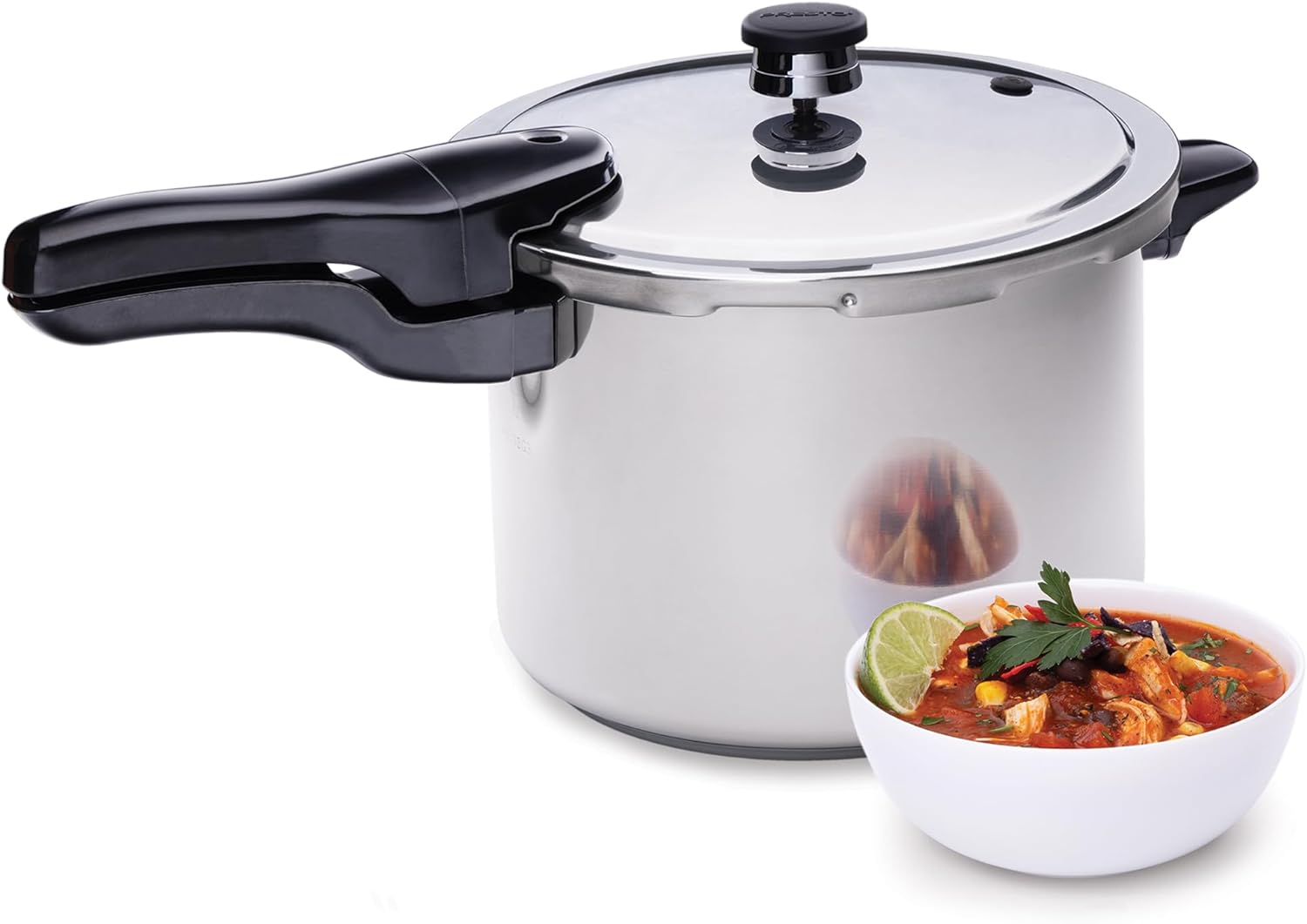
| Capacity | 6 quarts |
|---|---|
| Material | Stainless Steel |
| Special Features | Dishwasher Safe, Induction Compatible Base, Locking Lid |
| Wattage | 1000 watts |
The Presto 6‑quart stainless steel pressure cooker is a classic stovetop model built for fast, reliable cooking on gas, electric, smooth-top, and induction ranges. It uses a pressure regulator to maintain cooking pressure automatically and includes a tri-clad base for even heat distribution, which helps avoid hot spots and speeds up braises, stews, and whole chicken. Safety features include a cover lock indicator, pop-up pressure indicator, steam release, and an overpressure plug. The cooker ships with a helpful rack and a 64‑page recipe booklet, and most parts are dishwasher safe after removing the sealing ring and overpressure plug. Practical limitations are the manual control compared with electric multi-cookers and the need to clean small vent parts by hand, but for someone who wants speedy stove-top results and induction compatibility this model delivers consistent performance and long-term durability.
Best for: Practical cooks who want a durable, stove-top pressure cooker that works on induction and delivers fast, reliable results with familiar manual controls and proven safety features.
Less Ideal for: Users who prefer automated, programmable electric multi-cookers with precise digital controls and one-pot convenience should consider an electric model instead.
- Induction compatible tri-clad base for even, quick heating
- Automatic pressure regulator and cover lock indicator for safe, hands-off pressure control
- Durable stainless steel construction that is dishwasher safe after removing small parts
- Includes cooking rack and a 64-page instruction/recipe book to help new users
- Requires occasional manual cleaning of the vent pipe, sealing ring, and overpressure plug
- No digital controls or programmable cooking profiles like electric pressure cookers
Verdict: Choose the Presto 6‑quart if you want a robust, induction-ready stovetop pressure cooker that reliably speeds up everyday meals with proven safety features.
Cosori Pressure Cooker 6QT
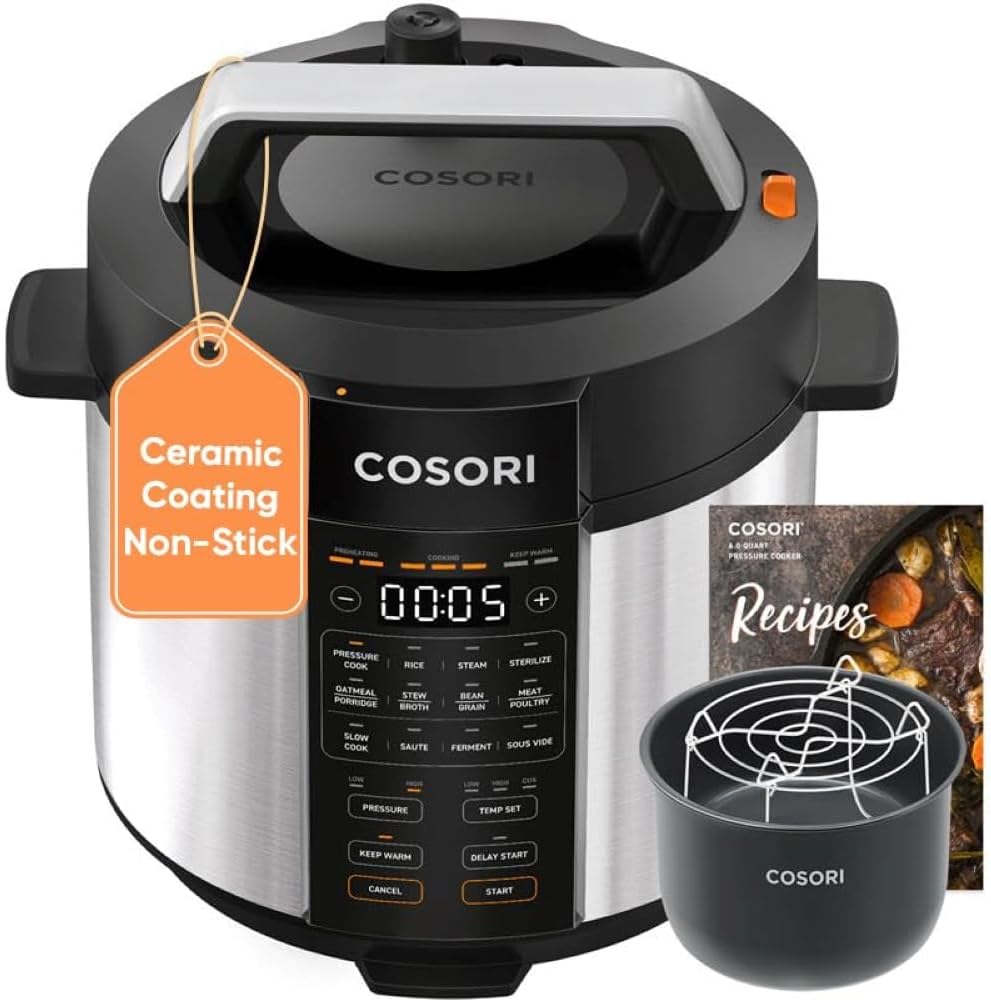
| Capacity | 6 quarts |
|---|---|
| Wattage | 1100 watts |
| Control Method | Touch |
| Special Features | 13-in-1 presets, 9-in-1 functions, ceramic inner pot |
The Cosori 6‑quart pressure cooker is an electric multi-cooker that combines pressure cooking with rice, slow cook, sous vide, sauté, ferment, and keep-warm functions to replace several appliances on the counter. It is typically used for weeknight meals and batch cooking: select one of the presets or use manual touch controls, lock the outer lid, and let the unit build pressure to shorten cook times. Notable features include a BPA-free ceramic nonstick inner pot that is dishwasher-safe, a widened lid gap and safer venting layout to make steam release easier, and a steam rack and recipe book included for basic steaming and meal ideas. At 1100 watts the cooker reaches pressure quickly and the stainless steel housing and 12 safety protections aim to reduce user risk. Limitations are that it is an electric countertop unit so it requires its own power and is sized for typical families rather than very large batches, and the inner pot is ceramic rather than heavy-gauge stainless which some users prefer for searing and durability over many years.
Best for: Buyers who prioritize safe, reliable, all-in-one countertop cooking for family meals and want easy presets and a low-maintenance nonstick inner pot.
Less Ideal for: People seeking a stovetop induction-compatible pressure cooker or a heavy-duty inner pot for professional searing should consider alternative cookware.
- Multiple presets and 9 cooking functions cover pressure, rice, slow cook, sous vide, sauté, ferment, and keep-warm
- Ceramic nonstick inner pot that is dishwasher-safe and labeled BPA-free for food contact
- 1100W power with touch controls brings the unit to pressure quickly
- Designed venting and 12 safety features reduce user risk during pressure release
- Electric countertop design requires its own power source and is not stovetop-compatible
- Ceramic inner pot may be less durable for aggressive searing compared with stainless steel
Verdict: A safe, user-friendly 6‑quart electric multi-cooker that simplifies family meal prep with lots of presets and a dishwasher-safe ceramic inner pot.
Choosing the Right Pressure Cooker for Induction Stove: Key Factors to Consider
Base Construction and Magnetic Compatibility
The base is the most important factor for induction use. Induction stoves require a ferrous contact layer to couple with the cooktop's magnetic field, so look for a thick, bonded or multi-ply base that includes a magnetic stainless steel layer. A robust base promotes fast and even heat-up, reduces hot spots that can scorch food, and resists warping from repeated high-heat cycles.
Thin, single-layer bottoms may work initially but often perform poorly over time on induction. A heavier sandwich base also helps maintain consistent temperature when pressure cooking, which yields more reliable results.
Seal System and Pressure Regulation
A dependable sealing gasket and reliable pressure-regulation mechanism are essential for safe, consistent cooking. The gasket must form a tight, even seal around the lid and be replaceable without special tools. Pressure regulation can be mechanical, spring-based, or a weighted vent; each has different user interactions and maintenance needs.
Evaluate how the cooker indicates full pressure, how it vents steam, and how easy it is to clean the valve area. Good designs minimize clogging risk during normal cooking and allow controlled depressurization when a recipe calls for it.
Materials and Long-Term Durability
Material choices affect durability, corrosion resistance, and how the cooker ages. High-grade stainless steel resists staining and reacts minimally with foods, while thick metal layers reduce the chance of base distortion. Check for secure rivets, sturdy handles, and a lid design that maintains alignment over years of use.
Consider how exposed parts like pressure valves and handles are attached and whether replacement parts such as gaskets are readily available. Durable components reduce the chance of leaks or failures that require repair or early replacement.
Safety Features and User Protections
Pressure cooking inherently concentrates heat and steam, so built-in safety systems are critical. Useful safety elements include an automatic lid lock that engages under pressure, redundant pressure-release mechanisms, and visual or audible indicators that confirm pressure level. Overpressure protection and fail-safes that prevent opening the lid while pressurized are particularly important on induction ranges where rapid heat can increase pressure quickly.
Also consider how intuitive and forgiving the controls are for users who may be new to stovetop pressure cooking.
Size, Capacity, and Home Use Fit
Choose a capacity that matches how you cook. A very large cooker takes longer to heat on induction and uses more energy, while a small cooker may be limiting for batch cooking. Consider the diameter of the base relative to common induction zones to ensure full contact and steady heat.
Think about storage, stackability, and whether the pot will fit under your cabinets when paired with common lid or steam release positions. Matching size to household meal patterns keeps the cooker useful and efficient.
Maintenance and Ease of Cleaning
Everyday usability includes how easy the cooker is to keep clean. Removable gaskets, accessible valves, and smooth interior surfaces reduce time spent on maintenance. Dishwasher-safe parts are convenient but confirm that heat-sensitive components like gaskets or pressure seals tolerate machine washing.
Designs that minimize nooks where food collects will help prevent odors and prolong gasket life. Consider how often parts need replacement and how simple that process is for a typical homeowner.
Why Induction Changes Pressure-Cooker Selection
Induction stoves deliver heat differently than gas or electric coil ranges because they induce current directly in the cookware. That makes base composition and flatness more important than on other cooktops. A pressure cooker that sits flush and has a magnetic layer will heat faster and more evenly.
On induction, you will notice differences in how quickly pressure builds and how stable the temperature stays. Expect faster response but also the need for a base that resists warping and maintains contact over time.
- Faster heat-up shortens overall cook time
- Even base reduces risk of localized scorching
- Flat, magnetic bottoms are required for efficient induction coupling
Common Pressure Release Methods and How to Use Them
Pressure cookers use different venting systems: spring valves, weighted regulators, or manual quick-release levers. Each approach affects how you finish recipes and how much attention the pot needs after cooking.
A controlled slow-release is useful for foods that benefit from gentle pressure drop, while quick-release is ideal when you must stop the cooking process immediately. Learn the exact steps for depressurizing safely on your model before first use.
- Manual quick release: immediate steam venting, handy for vegetables
- Natural release: gradual pressure drop, better for stews and beans
- Built-in safety vents: backup protection if primary valve clogs
Matching Capacity to Household Cooking Habits
Pick a size that aligns with your regular meal volumes. Two to four-person households often find mid-size cookers most efficient, while larger families may want bigger capacity but should plan for longer heat-up times on induction.
Also consider whether you will use the cooker for batch meal prep or family dinners. Frequent, smaller cooks favor a compact pot that heats quickly and fits smaller induction zones.
- Smaller pots heat faster and use less energy
- Larger pots are more versatile for big batches but slower to reach pressure
- Check base diameter against your induction zone for full contact
Care, Gasket Replacement, and Longevity Tips
Routine care extends a pressure cooker's usable life. Wipe the rim and gasket groove after each use, inspect gaskets for cracks or deformation, and clean pressure valves to prevent clogging. Replace the gasket on a schedule recommended by the manufacturer or when elasticity degrades.
Avoid sudden temperature shocks to prevent warping: do not pour cold water into a hot pot. Store the cooker with the lid inverted or slightly ajar to keep the gasket from developing permanent compression set.
- Check valves before each use
- Replace gaskets when they lose elasticity
- Hand-wash sensitive components if recommended
Troubleshooting Heat and Seal Issues on Induction
If the cooker takes a long time to reach pressure, confirm the base is making full contact with the induction zone and that the induction setting is appropriate. Some induction stoves scale power differently across zones, so using the correct zone size helps.
If seals leak, clean rim surfaces and gasket seating areas, then reassemble carefully to ensure the gasket sits evenly. Persistent leaks often point to gasket wear or a warped rim and should be addressed before further use.
- Ensure induction zone and base diameter match
- Clean sealing surfaces and inspect gasket fit
- If problems persist, stop using until the gasket or rim is serviced
How We Chose the Best Pressure Cooker for Induction Stove
We focused on pressure cookers engineered to work reliably on induction cooktops and applied a consistent set of editorial filters. First, compatibility was mandatory: each finalist demonstrates magnetic base performance suitable for common induction heat ranges and stable contact with flat cooktops. Second, construction mattered: we prioritized multi-layer bases or bonded stainless steel that promote rapid, even heat transfer and resist warping. Third, sealing and venting design were evaluated for predictable pressure buildup and safe release options. Fourth, durability and maintenance were considered, including corrosion resistance, gasket access, and ease of cleaning. Fifth, user-focused safety features were checked, such as locking lids and redundant pressure releases. We excluded units that lack proven induction compatibility, use thin single-layer bases prone to hot spots, or omit essential safety mechanisms. We did not include specialty or commercial-only models that exceed typical home use. The resulting list emphasizes real-world induction performance, build quality, predictable pressure control, and user safety.
Our full evaluation process is outlined in our review methodology.
FAQ
Can any stainless-steel pressure cooker work on an induction stove?
Not always. The cooker needs a magnetic base to work efficiently on induction. Many stainless-steel pots include a bonded magnetic layer, but thin single-layer stainless without a ferrous layer may not couple well.
How do I tell if a pressure cooker is truly induction-ready?
Look for a flat, thick base with a magnetic layer or multi-ply construction. In practice, a simple magnet test on the base will show whether the bottom is ferrous and likely to work on induction.
Is cooking time different when using pressure cookers on induction?
Yes. Induction typically shortens heat-up time and reaches pressure faster, which can reduce total cook time. Recipes remain valid, but you may notice quicker response when adjusting heat or releasing pressure.
Are there special safety concerns when pressure cooking on induction?
The main safety concern is rapid pressure increase because induction delivers heat quickly. Use recommended power settings, ensure the gasket and valves are clean, and follow the manufacturer's guidance for pressure release to avoid hazards.
How often should I replace the gasket on an induction pressure cooker?
Gasket life depends on usage and care but often ranges from one to several years. Replace the gasket when it becomes hard, cracked, or no longer forms a uniform seal.
Will induction damage the pressure cooker's base over time?
A well-constructed bonded base resists warping from induction. Damage usually occurs from repeated overheating, thermal shock, or using cookware with an inadequate base. Proper use and care minimize long-term issues.
Final Verdict
When choosing a pressure cooker for an induction stove, prioritize a flat, magnetic, multi-ply base and a reliable sealing and pressure-regulation system. Balance capacity against how quickly you want the pot to heat and how often you will clean and maintain it. Safety features and durable construction will deliver the most consistent, long-lasting results. Focus on induction compatibility, ease of maintenance, and clear pressure controls to choose confidently. Those tradeoffs will guide you to a pressure cooker that performs reliably on your induction cooktop for years.