
Note: This article contains affiliate links. If you click on these links and make a purchase, we may earn a small commission at no extra cost to you. This helps support our research and content. Read our full affiliate disclosure here.
If you work with fungal cultures or prepare sterile substrates, a pressure cooker for mycology is a core tool for safe, predictable results. The right cooker speeds sterilization, minimizes contamination risk, and gives you better control over preparation cycles. This guide highlights seven shortlisted pressure cookers suited to common mycology tasks and lab-style home setups. We evaluated each option for sterilization consistency, capacity, and durability, and we also assessed ease of use and maintenance. Read on to see which features make the most sense for your workflow and scale of production.
Top Picks at a Glance
| Best Overall The best all-around choice for most situations | NESCO NPC-9 Smart Canner |  |
| Best Quality Built to a higher standard if you want something more solid | Fissler Vitaquick Premium 3.7 Qt |  |
| Best Value The sweet spot between price and what you get | COMFEE' 6-Quart Pressure Cooker |  |
| Best Budget The cheapest option that still gets the job done reliably | Hawkins Classic Pressure Cooker 2L |  |
| Top Rated A top-rated pick with lots of positive feedback | Presto 23-Quart Pressure Canner |  |
| Most Popular A crowd favorite that many people choose with confidence | T-fal 22‑Quart Pressure Canner |  |
| Best Seller A high-volume bestseller chosen again and again | Presto 6-Quart Aluminum Pressure Cooker |  |
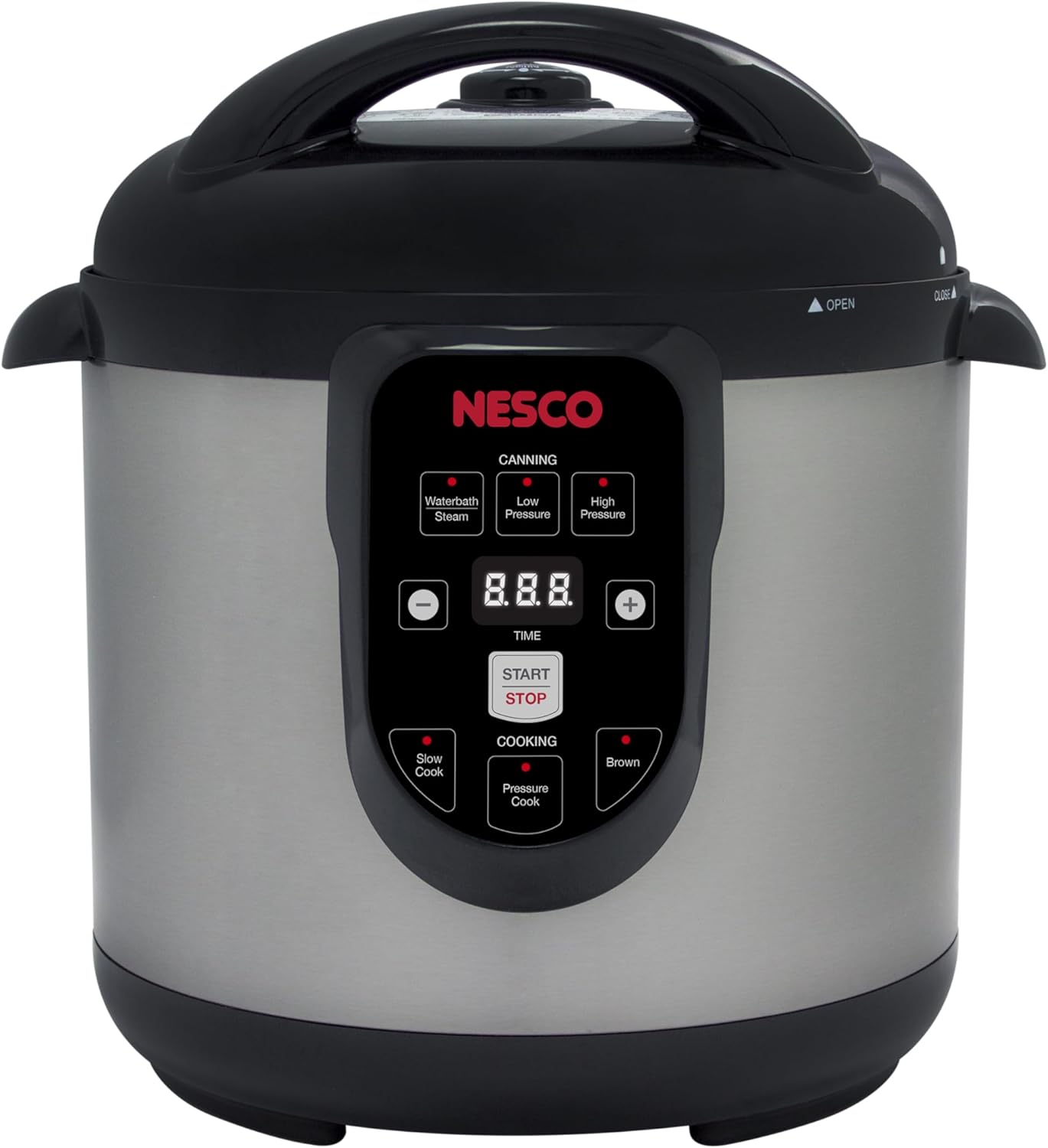
NESCO NPC-9 Smart Canner
| Capacity | 9 quarts |
|---|---|
| Wattage | 1000 watts |
| Control Method | Touch |
| Operation Mode | Automatic |
| Controller Type | Digital |
The NESCO NPC-9 combines a dedicated electric canning function with everyday pressure-cooking features in a single countertop unit. It is used both for preserving garden harvests and for meal prep: select water bath or pressure canning programs to process jars, or switch to pressure cook, slow cook, or steam for soups, stews, and rice. The digital display and preset programs simplify repeatable cycles and reduce the need to babysit pressure and temperature, while safety features — a locking lid, automatic float valve and pressure regulation — minimize user error during canning. The removable nonstick 9.5-quart inner pot and included canning and steam racks let you process multiple jars at once and make cleanup straightforward. At 1000 watts with touch controls it heats predictably but may be slower to reach high pressure than professional stovetop canners, and the nonstick inner pot is not a substitute for heavy-duty metal canning cookware for extremely frequent commercial use. For home preservers who want a safer, automated alternative to stove-top canning, the NPC-9 offers focused capabilities and practical convenience.
Best for: Home preservers who want an automated, safety-focused alternative to stovetop canning and also value a multi-function appliance for batch cooking and meal prep.
Less Ideal for: People needing the fastest possible pressure-up times or commercial-scale throughput should consider professional stovetop or higher-power equipment instead.
- Dedicated water-bath and pressure canning programs for safe, repeatable jar processing.
- Digital presets and timer deliver consistent cycles and reduce monitoring.
- Safety lock lid with automatic float valve and pressure regulation lowers risk of user error.
- Removable 9.5-quart nonstick pot plus canning and steam racks fit multiple jars and simplify cleanup.
- 1000-watt electric heating can be slower to reach pressure compared with stovetop canners.
- Nonstick inner pot may not match durability of heavyweight canning pots for heavy commercial use.
Verdict: Buy this if you want a safe, automated electric canner that also doubles as a versatile pressure cooker for home preservation and batch meals.
Fissler Vitaquick Premium 3.7 Qt

| Capacity | 3.7 quarts |
|---|---|
| Material | Stainless steel |
| Special Features | Electric Stovetop Compatible |
| Included Components | Pressure Cooker, Steamer Insert, Tripod |
The Fissler Vitaquick Premium is a compact, performance-focused stovetop pressure cooker built from 18/10 stainless steel and made to speed up cooking while retaining nutrients. It provides two intuitive pressure settings for gentle or high-pressure cooking, and the included steamer insert and tripod enable multi-level steaming or cooking several items at once. Safety features such as a color pressure indicator, audible locking click, and controlled steam release make it straightforward to use under repetitive cycles. For mycology applications the small capacity and precise, repeatable pressure control suit sterilizing substrates, steaming jars, and running frequent small batches without wasting energy. It is dishwasher-safe with removable parts for easier cleanup, but the 3.7 quart capacity limits batch size so you may need more runs for larger projects. The cooker is stovetop compatible only, so electric-only setups require a separate hotplate. Overall it is a solid, well-built tool for someone who needs reliable, fast pressure performance in a compact footprint.
Best for: Buyers who prioritize precise, repeatable pressure performance in small batches and want a durable, safety-minded stovetop cooker for frequent use.
Less Ideal for: Users who need single-run large-volume sterilization or those who require a plug-in electric autoclave-style unit for automated cycles.
- Two pressure settings for gentle or high-pressure work
- Compact 3.7 quart size good for small, repeatable batches
- Included steamer insert and tripod enable multi-level cooking or steaming
- Clear safety features including pressure indicator and audible locking click
- Durable 18/10 stainless steel construction made in Germany
- Small capacity requires multiple cycles for larger workloads
- Designed for stovetop use only, not a built-in electric unit
Verdict: A compact, German-made pressure cooker built for fast, repeatable stovetop pressure work and precise steaming in small batches.
COMFEE' 6-Quart Pressure Cooker

| Wattage | 1000 |
|---|---|
| Control Method | Touch |
| Operation Mode | Automatic |
| Cooking Program | Cook, Keep Warm, Reheat, Simmer, Steam |
| Capacity | 6 quarts |
This COMFEE' 6‑quart electric pressure cooker is a compact, programmable multi‑cooker that combines pressure, slow, steam, sauté and other preset functions into one countertop appliance. You use it like a standard multi‑cooker: add ingredients to the nonstick inner pot, choose a preset with the touch controls, set a delayed start if needed, and the unit handles temperature and pressure automatically while safety features manage release and lid lock. For mycology hobbyists it can double as a reliable sterilizer for jars and substrates when using the steam or pressure functions, and the 6‑quart capacity fits several half‑pint to pint jars at a time. Notable features include 14 presets, a 24‑hour delay timer, a digital control pad and ten built‑in safety protections. Practical benefits are hands‑off operation, programmable timing for repeatable sterilization cycles, and included accessories like a steam rack and measuring cup. Limitations: the aluminum construction and nonstick pot are fine for cooking but users who need heavy‑duty, laboratory‑style canners may prefer a dedicated stovetop pressure canner or larger autoclave for greater capacity and higher sustained pressures.
Best for: A practical hobbyist who wants an inexpensive, programmable appliance that can handle small‑batch sterilization and substrate preparation while doubling as a kitchen multi‑cooker.
Less Ideal for: Not suited to users who need large‑scale sterilization, commercial throughput, or laboratory‑grade pressure/temperature control for professional mycology work.
- Multi‑function presets (pressure, steam, slow cook, sauté) let you run sterilization or cooking programs without manual adjustments
- 24‑hour delay timer and programmable presets enable consistent, repeatable cycles
- Ten safety features including lid‑safety lock and auto pressure release reduce risk during pressurized runs
- Includes practical accessories (steam rack, measuring cup, ladle) useful for jar placement and handling
- Touch controls and digital display simplify setup and monitoring
- 6‑quart capacity limits the number of jars per run compared with larger pressure units
- Aluminum inner pot and nonstick finish are less durable for repeated heavy sterilization cycles than stainless steel or dedicated autoclaves
Verdict: A budget‑friendly, programmable 6‑quart multi‑cooker that works well for small‑batch mycology sterilization and general kitchen use.
Hawkins Classic Pressure Cooker 2L

| Capacity | 2 liters |
|---|---|
| Material | Aluminum |
| Closure Type | Inner Lid, Outer Lid |
| Wattage | 1000 |
| Voltage | 240 volts |
The Hawkins Classic 2L is a small, stovetop pressure cooker built from virgin aluminum that brings fast cooking and simple, reliable pressure regulation to compact kitchens. It uses an inside-fitting lid that seals from the interior and an improved pressure regulator to keep pressure in a narrow range, which speeds cooking and reduces froth spillage on pulse and legume-based loads. Stay-cool handles and a shielded safety valve under the handle bar help with everyday handling and safety, while the long-lasting gasket design limits steam exposure for greater durability. It is suitable for gas, electric, ceramic, and halogen cooktops and is light enough for campers or small apartments. The cooker is limited by its 2 liter capacity for larger batch work, and aluminum construction can show wear over time compared with stainless steel alternatives, so careful seasoning and cleaning are recommended. For small, frequent sterilization or cooking runs the unit offers dependable, simple performance without complex controls.
Best for: Buyers who need a low-cost, compact pressure cooker for small-batch cooking or routine sterilization tasks and prefer straightforward, proven mechanical safety features over electronic controls.
Less Ideal for: Users who need to process large volumes or want a heavy-duty stainless steel cooker for long-term, high-frequency lab-style or large-scale sterilization.
- Compact 2 L capacity good for small-batch cooking or sterilization runs
- Improved pressure regulator maintains a narrow, efficient pressure range
- Inner-fitting lid with shielded safety valve reduces steam splash and improves safety
- Compatible with gas, electric, ceramic and halogen cooktops
- Small capacity limits larger batch or multi-sample work
- Aluminum construction is less durable and more reactive than stainless steel
Verdict: A compact, budget-friendly stovetop pressure cooker that reliably handles small sterilization or cooking jobs with a simple, safety-focused design.
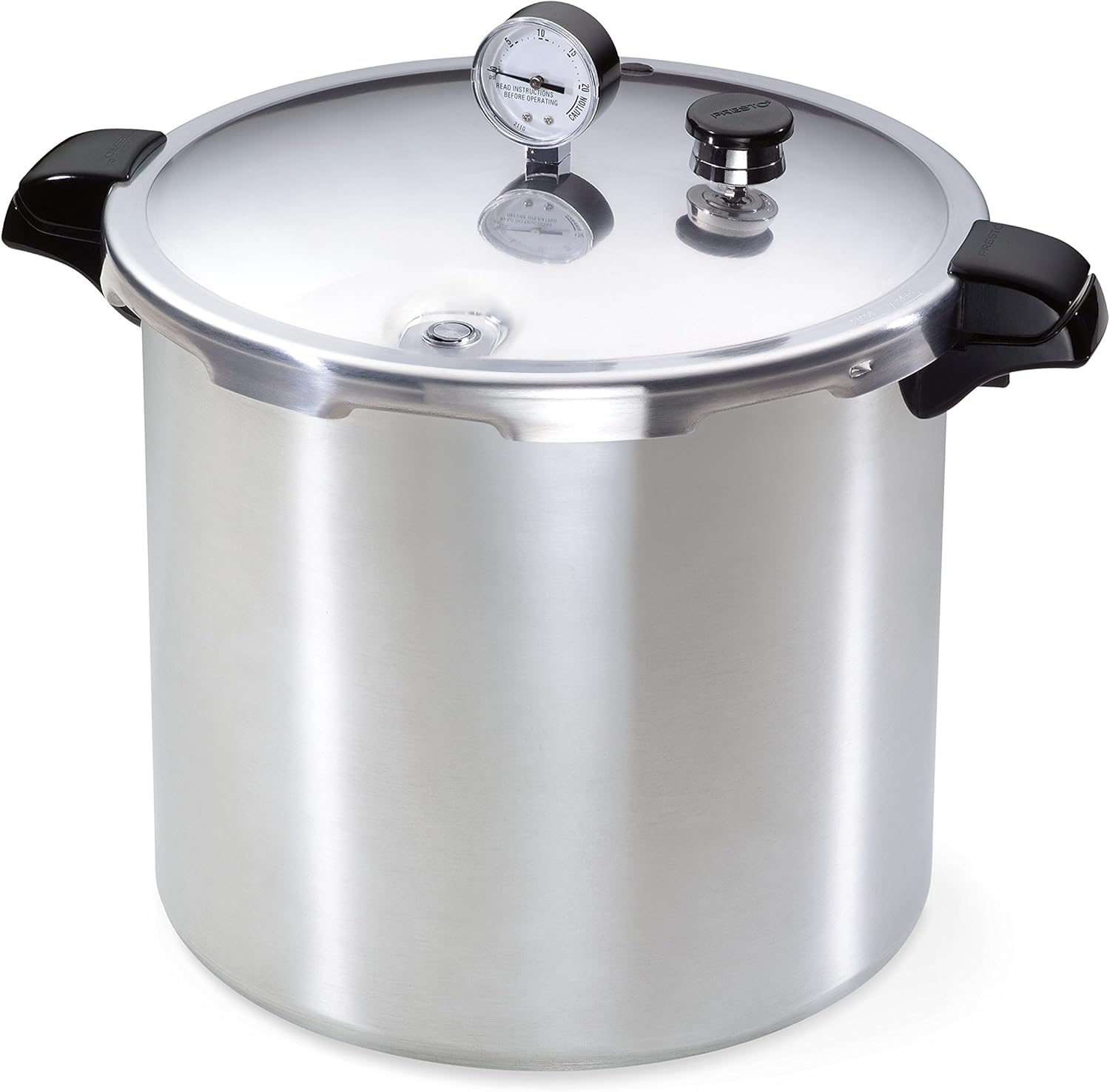
Presto 23-Quart Pressure Canner
| Capacity | 21.8 liters |
|---|---|
| Wattage | 1000 watts |
| Control Method | Touch |
| Operation Mode | Manual |
| Closure Type | Outer Lid |
The Presto 23-Quart Pressure Canner is built for serious canning and heavy-duty stovetop pressure cooking, with a warp-resistant, heavy-gauge aluminum body that heats evenly across the base. It is typically used for USDA-recommended pressure canning of low-acid foods as well as for steam-pressure cooking large batches of stews, stocks, or bulk items. Notable features include a deluxe pressure dial gauge for accurate pressure monitoring, an air vent/cover lock that prevents opening until pressure is safe, an overpressure plug for safety, and an included rack and recipe/instruction booklet. In practice the large 23-quart capacity handles many jars at once, and the simple mechanical controls make it straightforward to maintain steady pressures even at higher altitudes. Trade-offs are that the unit is traditional rather than electric so it requires attentive stove management and the aluminum exterior needs gentle, nonabrasive cleaning to preserve finish and gauge accuracy. For those who prioritize a dependable, long-lived tool for consistent pressure processing, this is a practical, no-frills choice.
Best for: Home preservers and small-scale lab hobbyists who need a robust, factory-quality stovetop pressure canner for reliable, repeatable high-temperature processing and can manage manual stove control.
Less Ideal for: People who want a push-button, hands-off electric sterilizer or those unwilling to follow careful maintenance and gauge care instructions should consider alternatives.
- Heavy-gauge aluminum construction for fast, even heating and warp resistance
- Deluxe pressure dial gauge provides precise pressure readings useful at varied altitudes
- Air vent/cover lock and overpressure plug improve operational safety
- Large 23-quart capacity accepts many jars or big batches for efficient processing
- Includes canning rack and a detailed instruction/recipe booklet
- Requires active stovetop monitoring rather than automated electric controls
- Aluminum finish and delicate dial gauge need careful, nonabrasive maintenance
Verdict: Choose this Presto canner when you need a proven, heavy-duty stovetop pressure canner that delivers accurate, repeatable pressures for reliable sterilization and canning.
T-fal 22‑Quart Pressure Canner

| Capacity | 22 quarts |
|---|---|
| Wattage | 1000 watts |
| Voltage | 120 volts |
| Material | Aluminum |
| Compatibility | Gas and electric coil stovetops only |
The T-fal 22‑Quart Pressure Canner is built for home-scale pressure canning of low-acid foods and also supports water-bath canning for high-acid recipes. It uses polished aluminum for even heat distribution and holds large batches — enough for multiple pints or several quarts per run — which makes it practical when processing produce or bulk projects. The canner includes two rack inserts, a locking lid, a pressure-indicator pin, and a steam-release valve with an easy-to-read gauge that simplify safe operation for beginners. It is compatible with gas and electric coil stovetops and has a manual touch control layout that is straightforward to use. Trade-offs include the aluminum body, which cannot be used on induction cooktops, and the unit is fairly heavy when loaded, so expect to lift with care. For users focused on consistent, USDA‑approved pressure canning the T-fal provides clear controls and the capacity to run large batches efficiently, though it is not suitable for induction stovetops and requires space and care when handling full jars.
Best for: Home preservers who prioritize safe, USDA‑approved pressure canning and need to process large batches efficiently, and who have gas or electric coil stovetops.
Less Ideal for: People who rely on induction cooktops or who need a lightweight, highly portable sterilizer for frequent small runs should look elsewhere.
- Large 22‑quart capacity suitable for processing many jars in one cycle
- Even-heating aluminum construction for consistent temperature distribution
- Includes two canning racks and a step-by-step canning guide for safer beginner use
- Clear pressure-indicator pin and easy-to-read steam gauge for USDA‑recommended pressure canning
- Not compatible with induction cooktops
- Heavy to lift when filled with jars
Verdict: Choose this T-fal 22‑quart canner when you want a reliable, high‑capacity, beginner-friendly pressure canner for serious home canning projects.
Presto 6-Quart Aluminum Pressure Cooker

| Capacity | 6 quarts |
|---|---|
| Material | Aluminum |
| Finish Type | Stainless Steel |
| Included Components | Pressure Cooker, Instruction Booklet, Recipe Booklet, Special Rack |
The Presto 6-Quart Aluminum Pressure Cooker is a straightforward stovetop unit built from heavy-gauge aluminum for quick, even heating and fast meal prep. It is used like a conventional pot but seals to trap steam and raise cooking pressure, which dramatically shortens cooking times for stocks, beans, grains, meats, and sterility-focused tasks. Notable features include an automatic pressure regulator that maintains correct pressure, a cover lock indicator that prevents opening while pressurized, a removable overpressure plug, and a special rack for separating foods. The pot is compatible with regular and smooth-top ranges, has helper handles for handling, and the lid components are removable for cleaning; the manufacturer states the unit is fully immersible when the sealing ring and over-pressure plug are removed. For buyers who prioritize safety and predictable performance, the Presto delivers durable construction, simple mechanical controls, and an included recipe/instruction booklet. Limitations are that it is aluminum rather than stainless steel, which may be a consideration for long-term corrosion resistance and aggressive sterilization chemistries, and it lacks digital controls or multi-stage pressure settings found on some modern devices.
Best for: Buyers who want a reliable, mechanically simple stovetop pressure cooker that emphasizes safety features and predictable performance for fast, repeatable cooking or sterilization tasks.
Less Ideal for: People who need stainless steel construction, programmable pressure profiles, or an electric/automated unit with digital controls should consider other options.
- Heavy-gauge aluminum body provides quick, even heat distribution
- Automatic pressure regulator maintains safe, consistent cooking pressure
- Cover lock indicator and overpressure plug add mechanical safety features
- Includes a special rack and recipe/instruction booklet for practical use
- Compatible with regular and smooth-top ranges and is fully immersible when disassembled
- Aluminum construction is less corrosion-resistant than stainless steel for aggressive sterilization
- No adjustable digital controls or multiple pressure settings
Verdict: A no-nonsense, safety-minded stovetop pressure cooker that delivers fast, consistent results for buyers who prefer simple mechanical controls.
Choosing the Right Pressure Cooker for Mycology: Key Factors to Consider
Sterilization Consistency
Sterilization consistency matters because mycology work requires holding a sterile environment to kill bacterial and fungal contaminants. A cooker that maintains steady pressure and temperature throughout the cycle reduces the chance of surviving spores or vegetative contaminants.
Look for units with reliable pressure indicators or gauges and minimal pressure drift during longer runs. Inconsistent pressure can mean incomplete sterilization on the inside of packed jars or densely filled containers, so this factor directly impacts experimental success.
Internal Capacity and Rack Layout
Capacity affects how many jars, bags, or trays you can process per run, which impacts throughput and overall project timing. Consider the usable interior height and diameter as well as whether the unit accepts stackable racks or separators to safely organize multiple layers.
A cooker with thoughtful rack options reduces the risk of contact between containers, improves steam circulation, and makes unloading safer. For hobbyists expanding to larger batches, a little extra internal volume can save time and energy over multiple smaller runs.
Safety Mechanisms and Pressure Control
Safety features are essential because elevated pressure and temperature are inherent hazards. Effective safety valves, dependable locking lids, and well-marked pressure-release options protect both operator and equipment during and after cycles.
Pressure control also matters for process repeatability. Cookers with clear, easy-to-read gauges, redundant relief valves, and intuitive venting procedures lower the chance of operator error and make it simpler to follow validated sterilization protocols.
Construction Materials and Corrosion Resistance
Durable construction extends the useful life of a pressure cooker under repeated sterilization cycles. Stainless steel interiors and corrosion-resistant fittings resist pitting and degradation from repeated moist heat exposure.
Long-lasting seals and metalwork reduce the likelihood of leaks or sudden failures. Consider how gaskets are secured and whether replacement parts are commonly available when evaluating longevity.
Ease of Cleaning and Maintenance
Residue buildup and biological material can accumulate after multiple cycles, so a design that disassembles easily and tolerates thorough cleaning makes ongoing maintenance simpler. Smooth interior surfaces, removable racks, and gasket accessibility reduce cleaning time and contamination risk.
Also consider how easy it is to inspect and replace wear items like gaskets and relief valves. The less fiddly routine maintenance is, the more consistently you will run safe, hygienic cycles.
User Ergonomics and Handling
Daily usability influences how often you will run sterilization cycles and how safely you will operate the unit. Features like balanced lid weight, secure handles, and readable gauges all reduce fatigue and mistakes.
Practical touches such as easy-to-grip handles, a clear pressure indicator, and simple venting steps make the workflow smoother and reduce the risk of accidental burns or spills while moving heavy loads.
Preparing Substrates and Load Patterns
How you pack jars, bags, or trays inside the cooker affects steam flow and sterilization effectiveness. Arrange containers so steam can circulate freely, avoid overpacking, and allow space between stacks. Use wire racks or separators to prevent direct contact between layers and to promote even heat distribution.
Standard practice is to leave some headspace in jars and avoid tightly sealed containers that can burst under pressure. When using bags or loose substrates, orient openings so condensing steam drains away from the material instead of pooling on top.
- Place heavier items on the bottom layer and lighter ones above.
- Avoid stacking glass jars directly on top of each other without separators.
- Tilt bags slightly if possible so condensate does not pool on the substrate surface.
Cycle Lengths and Pressure Targets
Sterilization cycles for mycology typically require sustained exposure at designated pressure and temperature levels for a set duration. Exact times depend on load density and container type, but consistent pressure is more important than slightly longer or shorter cycles if you can maintain the target conditions.
If your cooker has a manual venting step, follow a repeatable protocol so each cycle matches the previous one. Using a pressure gauge and timing logs helps you validate that your process consistently reaches the same sterilization profile.
- Record pressure and time for a few runs to establish a baseline.
- Increase cycle time modestly for densely packed loads to ensure penetration.
Routine Maintenance and Part Replacement
Keeping gaskets, relief valves, and seals in good condition is crucial to safety and sterilization performance. Inspect wearable parts regularly for cracking, hardening, or residue buildup and replace them promptly to avoid leaks and pressure loss.
Clean the interior after runs and avoid abrasive cleaners that can damage surfaces. If the cooker supports removable racks, take them out for separate cleaning to prevent trapped spores from accumulating in corners.
- Wipe and dry gaskets after each use to extend life.
- Keep a basic maintenance log noting gasket changes and valve inspections.
Setting Up a Small Sterile Workflow
Design a workflow that keeps dirty and clean steps distinct. A clear staging area for prepped but unsterilized items, a separate area for loading and unloading the cooker, and a clean cooling area for processed containers reduce cross-contamination risk.
Plan batch sizes around your capacity so you can run full loads regularly rather than many partial runs. Efficient scheduling reduces wear on the unit and lowers the cumulative risk of procedural lapses.
- Label batches with run date and cycle conditions for traceability.
- Use dedicated tools and trays for sterile handling post-cooling.
Safety Practices During and After Runs
Always follow safe venting procedures and keep hands and face away from the pressure-release area. Allow adequate cooling before opening the lid and relieve pressure only via the designed vent mechanisms.
Wear appropriate heat-resistant gloves and eye protection when handling hot loads. Ensure the cooker sits on a stable, heat-tolerant surface and that children and pets are kept away during operation.
- Never attempt to force a sealed lid open while the unit is still pressurized.
- Let internal pressure return to ambient and wait an agreed cooldown time before inspecting contents.
How We Chose the Best Pressure Cooker for Mycology
We focused on attributes that directly affect successful sterilization and repeatable results in mycology work. Key evaluation criteria included sterilization reliability measured by pressure and temperature stability, usable internal capacity and rack/accessory compatibility for jars and bags, safety features such as secure locking lids and pressure-release reliability, materials and construction for corrosion resistance and longevity, and ease of cleaning and maintenance since contaminants accumulate over repeated runs. We also considered user ergonomics like lid handling, gauge readability, and how intuitive the controls are for timed or pressure-limited cycles. Units without clear pressure control or those primarily designed only for cooking with variable pressure control were excluded. We filtered out cookers lacking basic safety interlocks or those with inadequate internal space for standard mycology containers. The final shortlist balances lab-capable performance with practical home-lab usability.
Our full evaluation process is outlined in our review methodology.
FAQ
How often should I replace the gasket on a pressure cooker used for mycology?
Replace the gasket whenever you notice cracks, hardening, or poor sealing performance. For frequent use, inspect the gasket monthly and plan replacement every 6 to 12 months depending on wear and cleaning practices.
Can I sterilize different substrate types in the same run?
You can sterilize varied substrates together if they fit without obstructing steam flow, but match cycle time to the densest or largest item. Avoid mixing fragile containers with heavy loads that could break during handling.
Is a pressure gauge necessary for safe mycology sterilization?
A pressure gauge is highly recommended because it confirms you reached and maintained target pressure. Visual or simple indicator whistles are less precise and make process repeatability harder.
What should I do if my cooker loses pressure during a cycle?
Stop the run and allow the unit to cool, then inspect seals, gasket seating, and the relief valve for obstructions or damage. Do not attempt to continue a compromised cycle because incomplete sterilization increases contamination risk.
How can I avoid condensation dripping onto substrates after sterilization?
Allow a brief controlled cooldown period with the lid slightly ajar if safe and recommended by your protocol, or angle bags so condensate drains away. Using racks that lift containers off the base also helps prevent pooling.
Final Verdict
Choose a pressure cooker for mycology by prioritizing sterilization reliability, usable capacity, and good safety features. Durable construction and easy maintenance reduce long-term costs and downtime, while clear gauges and repeatable venting procedures make results more consistent. Balance batch size with your available space and the frequency of runs. If you value repeatability and safety, emphasize steady pressure control and robust seals when deciding which unit fits your workflow.