
Note: This article contains affiliate links. If you click on these links and make a purchase, we may earn a small commission at no extra cost to you. This helps support our research and content. Read our full affiliate disclosure here.
Getting the right texture and moisture level is essential when making sushi rice, and a pressure rice cooker designed for sushi rice can take much of the guesswork out of the process. You want a cooker that handles short-grain or sushi rice gently, manages pressure and steam precisely, and produces evenly cooked grains with the right stickiness for rolling. This guide shortlists the top pressure rice cookers specifically suited to sushi rice and explains the features that matter most to home cooks. Below you will find our top picks and a clear explanation of how we evaluated them, plus practical guidance on choosing a model that fits your kitchen and sushi workflow.
Top Picks at a Glance
| Best Overall The best all-around choice for most situations | CUCKOO High Pressure Rice Cooker CRP-P0609S |  |
| Best Quality Built to a higher standard if you want something more solid | Cuchen 6-Cup IH Pressure Rice Cooker |  |
| Best Value The sweet spot between price and what you get | Cuchen 10-Cup IH Pressure Rice Cooker |  |
| Best Budget The cheapest option that still gets the job done reliably | COSORI 10-Cup Pressure Rice Cooker | 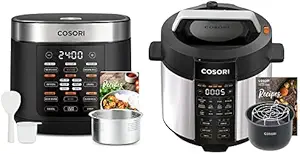 |
| Top Rated A top-rated pick with lots of positive feedback | Zojirushi NP-NWC10XB Pressure IH Rice Cooker |  |
| Most Popular A crowd favorite that many people choose with confidence | CUCKOO CRP-P1009SW Rice Cooker |  |
CUCKOO High Pressure Rice Cooker CRP-P0609S

| Capacity | 12 cups (cooked) |
|---|---|
| Wattage | 890 watts |
| Power Source | Corded Electric |
| Material | Stainless Steel |
The Cuckoo CRP-P0609S is a high-pressure electric rice cooker designed to deliver consistent, restaurant-style rice using pressure cooking and a range of preset menus. It handles white, glutinous, brown, mixed and specialty modes across 12 built-in programs and uses high pressure (advertised at 29 PSI) to shorten cooking time and tighten texture control, which helps when making sushi rice that needs a firm, slightly sticky finish. The stainless steel inner pot, removable cover, and drain dish simplify cleanup and help produce fluffy, evenly cooked grains. Extras like steam sterilization, a clear display and a dual language voice guide make operation straightforward. On the downside the unit is fairly heavy and takes up a chunk of counter space, and its controls and presets are geared toward traditional rice types so dialing-in ultra-specific sushi textures may require a few test batches. For cooks who want reliably cooked rice with pressure-assisted texture control, this model is a practical, feature-rich choice.
Best for: Home cooks who want a reliable pressure rice cooker to produce consistent, restaurant-style rice and are willing to experiment slightly to tune texture for sushi.
Less Ideal for: Minimalist cooks with very limited counter space or those who prefer a simple one-button rice cooker without pressure or advanced presets.
- High-pressure cooking (up to 29 PSI) shortens cook times and improves texture control
- 12 preset programs cover white, glutinous, brown, mixed and specialty rice types
- Stainless steel inner pot with removable cover and drain dish for easier cleaning
- Steam sterilization and clear display with dual language voice guide simplify use
- Large and relatively heavy, requiring significant counter space
- May need trial-and-error to fine-tune exact sushi rice stickiness despite presets
Verdict: Choose this Cuckoo pressure cooker if you want pressure-assisted control to produce consistent, firm-and-sticky rice suitable for sushi with a broad set of preset programs.
Cuchen 6-Cup IH Pressure Rice Cooker

| Capacity | 6 cups |
|---|---|
| Inner pot material | 304Ti stainless steel |
| Heating method | Induction Heating |
| Menu options | 20 menus |
| Power source | Corded Electric |
This Cuchen cooker uses induction heating and dual-pressure settings to give precise control over rice texture, making it a strong choice for anyone focused on high-quality sushi-style rice. It offers a full 304Ti stainless inner pot and a triple-seal lid that helps retain steam, while the high-pressure mode produces stickier, more cohesive grains and the non-pressure mode yields fluffy rice. The unit includes about 20 menu options beyond rice—soups, stews, and grains—plus a detachable stainless cover for easier cleaning and a 10-minute automatic soak to improve consistency. Voice guidance in Korean and English helps during setup and cooking. Limitations are its relatively large footprint and weight for a 6-cup model and the guidance to avoid leaving rice on warm for more than 12 hours to prevent texture degradation, which means you should plan storage accordingly. The cooker is best used by cooks who want repeatable, restaurant-style rice results rather than a simple plug-and-play appliance.
Best for: Buyers who prioritize precise texture control and restaurant-quality sushi rice and who are willing to use pressure and induction settings to tune results.
Less Ideal for: If you need a very lightweight, ultra-compact cooker or want a set-and-forget warmer that holds rice for long periods without attention, this is not the best fit.
- Induction heating for even, efficient heat and better texture control
- Dual pressure modes to tailor stickiness for sushi or fluffy rice
- 304Ti full stainless inner pot for hygienic cooking and durability
- Multiple cooking menus extend use beyond rice to soups and grains
- Detachable stainless cover and auto-clean features simplify maintenance
- Relatively heavy and takes up counter space compared with compact 6-cup models
- Recommended not to keep rice on warm for more than 12 hours to avoid quality loss
Verdict: Choose this Cuchen cooker when you want induction and dual-pressure control to make consistently excellent sushi-style rice.
Cuchen 10-Cup IH Pressure Rice Cooker

| Capacity | 1.8 liters |
|---|---|
| Wattage | 1500 watts |
| Power Source | Corded Electric |
| Other Special Features | 2.1 Bar Ultra High-Pressure, Induction Heating, 316Ti Stainless Steel Inner Pot |
| Voltage | 120 volts |
This Cuchen pressure rice cooker combines induction heating and a 2.1 bar ultra-high-pressure mode to handle everything from delicate sushi rice to tougher whole grains. In practice you pick either the high-pressure setting for brown or multigrain and the IH/no-pressure mode for white and sushi rice, and the unit uses 360-degree heating plus a thermistor control to keep temperatures consistent. The surgical-grade 316Ti stainless inner pot eliminates nonstick coatings and is easy to clean with the one-touch auto steam clean, and the included stainless canning tray and canning function expand use beyond rice to sterilizing jars and making baby food. A voice guide, reservation/timer and power-saving mode make everyday use straightforward, but the cooker is a relatively large countertop appliance and the 1.8 L capacity suits small families rather than large gatherings. Expect a 1500 W power draw when cooking at high pressure and a learning curve tuning water ratios for your preferred sushi texture. Overall it is a durable, feature-rich option for cooks who want precise, factory-quality pressure control and a noncoated inner pot.
Best for: Buyers who want a durable, precise rice cooker that can handle sushi rice and whole grains with factory-quality pressure control and minimal reliance on nonstick coatings.
Less Ideal for: Those who regularly cook for large groups or need a very compact, low-power cooker should consider a different size or a lower-wattage model.
- 2.1 bar ultra-high-pressure mode penetrates tough grains for softer, stickier results
- Induction heating provides even 360° heat distribution for consistent rice texture
- 316Ti surgical-grade stainless steel inner pot avoids coated surfaces and is corrosion resistant
- Canning and multi-cook functions add versatility for sterilizing jars and meal prep
- One-touch auto steam clean and voice guide simplify maintenance and operation
- 1.8 L (10-cup) capacity may be small for large households
- 1500 W power draw during high-pressure cycles can be high for some kitchens
- Requires some experimentation with water ratios to perfect sushi rice texture
Verdict: Choose this cooker if you want precise pressure and induction heating plus a surgical-grade stainless inner pot for consistently excellent sushi and whole-grain rice.
COSORI 10-Cup Pressure Rice Cooker

| Capacity | 10 cups |
|---|---|
| Control Method | Touch |
| Operation Mode | Automatic |
| Special Features | Keep Warm Setting |
This Cosori 10-cup cooker combines pressure cooking and a dedicated rice mode with fuzzy logic to simplify making sushi-style rice and other grains. It offers 18 functions and 13 presets including specific rice types, brown and sushi settings, plus pressure cook, steam, sauté, slow cook, and sous vide, so it can replace several countertop appliances. Touch controls, a real-time progress bar, a keep-warm setting, and a delay timer make it convenient for timed meal prep, and the backward-angled steam release with a Seal/Vent button helps make venting safer. Accessories are dishwasher-safe for easy cleanup. The trade-off is that advanced features and many presets add a learning curve compared with a single-purpose rice cooker, and its 10-cup capacity may be larger than needed for solo cooks or very small households.
Best for: Home cooks who want a budget-friendly, all-in-one pressure cooker that reliably makes sushi and other rice types while also handling multi-step recipes.
Less Ideal for: Buyers who only want a compact, single-function rice cooker or those who prefer minimal controls and a very small capacity.
- Multiple rice presets and fuzzy logic deliver consistent results for white, sushi, and brown rice
- Combines pressure cooking with steaming, sautéing, slow cooking, and sous vide for versatile meal options
- Touch controls and a real-time progress bar make monitoring and timing cooking straightforward
- Keep-warm and delay-timer features support flexible meal scheduling
- Dishwasher-safe accessories simplify cleanup
- Large number of functions increases complexity for users seeking a simple, single-purpose rice cooker
- 10-cup capacity may be excessive for individuals or very small households
Verdict: A cost-conscious choice for cooks who need a versatile pressure rice cooker that reliably produces sushi rice and doubles as a multi-function countertop cooker.
Zojirushi NP-NWC10XB Pressure IH Rice Cooker

| Capacity | 5.5 cups |
|---|---|
| Wattage | 1240 watts |
| Power Source | Corded Electric |
| Voltage | 120 volts |
The Zojirushi NP-NWC10XB is a premium 5.5-cup pressure induction heating rice cooker built to deliver reliably consistent rice, including sushi-style sticky rice. It combines induction heating with AI-driven fuzzy logic and three automatic pressure levels to adjust cooking cycles based on the selected menu, which helps produce even gelatinization and a plump texture. Practical features include a platinum-infused nonstick inner pan, a detachable washable stainless inner lid, an easy-to-clean flat interior, and a long keep-warm function. The unit comes with measuring cup and spatula accessories and is designed for daily use rather than occasional batches. Trade-offs are its relatively large footprint and heavier build compared with basic cookers, and the higher power draw of 1240 watts means it needs a standard kitchen outlet. For cooks prioritizing consistent, sushi-ready rice and low-maintenance cleaning, this model delivers predictable results and durable construction.
Best for: Home cooks who want a reliable, low-hassle cooker that consistently produces sushi-quality rice and who value predictable results and easy cleaning.
Less Ideal for: Buyers who need a compact, lightweight, or ultra-low-power cooker for occasional use or very small kitchens should consider simpler models.
- Induction heating plus AI fuzzy logic adapts cooking for consistent rice texture
- Three automatic pressure levels tailor steam and gelatinization for sticky rice
- Platinum-infused nonstick inner pan and detachable stainless inner lid simplify cleaning
- Extended keep-warm preserves texture after cooking
- Relatively heavy and takes more counter space than basic rice cookers
- Higher wattage requires a standard 120V circuit and uses more power during cook cycles
Verdict: Choose this Zojirushi if you want a durable, made-in-Japan pressure induction cooker that reliably produces sushi-ready rice every time.
CUCKOO CRP-P1009SW Rice Cooker

| Capacity | 10 cups (uncooked) / 20 cups (cooked) |
|---|---|
| Wattage | 1150 watts |
| Power Source | Corded Electric |
| Material | Stainless Steel |
| Programs | 13 built-in menus |
The CUCKOO CRP-P1009SW is a pressure-capable rice cooker aimed at households that need reliable, large-batch rice without babysitting the stove. It uses fuzzy logic and 13 built-in menus to handle white, glutinous, brown, GABA and other rice types, and the steam plate and removable cover make it practical for regular use. Twin pressure and a safe steam-release mechanism help produce consistent, fluffy rice and encourage better texture for sticky or sushi-style rice. The nonstick inner pot and included spatula and measuring cup simplify portioning and cleanup, though the cooker is fairly heavy and hand-wash care is recommended for some parts. At 1150 watts the unit brings rice to pressure quickly, and the 13-hour preset timer is useful for planning meals, but the large footprint will matter in small kitchens and the learning curve for optimal sushi rice settings may require a few tests. For cooks who value consistent results and capacity for family or party servings, this model performs well.
Best for: Buyers who prioritize reliable, repeatable rice results for family meals or entertaining and want a pressure-capable cooker with presets and a programmable timer backed by many user reviews.
Less Ideal for: Small-space cooks who need a compact, lightweight unit or users who want a completely hands-off dishwasher-safe cleanup routine.
- Large 20-cup cooked (10-cup uncooked) capacity suitable for family or batch cooking
- Multiple preset programs including GABA and glutinous rice for varied rice types
- Pressure cooking with controlled steam release for consistent, fluffy texture
- Stainless steel inner pot and removable cover designed for easier cleaning and durability
- Relatively heavy and sizable, which can be cumbersome in small kitchens
- Some parts require hand washing rather than dishwasher cleaning
Verdict: Choose this CUCKOO if you want a pressure rice cooker that reliably produces consistent, family-size batches of sushi-capable rice with a variety of preset modes and programmable timing.
Choosing the Right Pressure Rice Cooker for Sushi Rice: Key Factors to Consider
Pressure Control Precision
Accurate pressure regulation matters because the way steam and pressure interact with short-grain rice determines grain separation and stickiness. Slight overpressurizing can crush delicate grains, while underpressurizing may leave cores undercooked. Look for cookers with multiple pressure settings or rice-specific pressure profiles that adjust hold times and release behavior.
Pressure stability during the cook cycle also affects repeatability. Models that stabilize pressure quickly and avoid large fluctuations will produce more consistent sushi rice across batches.
Sushi Rice Program Accuracy
A dedicated sushi rice program adjusts soak time, cook time, and steam phases to optimize texture for rolling and shaping. These programs often alter heating curves compared with standard white rice settings, favoring a slightly firmer exterior with a cohesive interior. Choosing a cooker whose sushi program matches your preferred firmness reduces the need for manual tweaks.
Consider whether programs allow customization, such as extra soak, firmer/softer settings, or a timed keep-warm that preserves texture without drying the rice.
Inner Pot Material And Heat Distribution
The material and thickness of the inner pot influence how evenly heat transfers into the rice. Even heating reduces hot or cold spots that can create inconsistent grain doneness. Heavy-gauge aluminum with a nonstick layer or multi-layer clad pots typically spread heat well, yielding more uniform results for short-grain rice.
Also evaluate whether the inner pot has measurement marks and a flat, stable base. These small design choices help achieve consistent water-to-rice ratios and steady contact with the cooker's heating element.
Capacity And Batch Flexibility
Sushi preparations range from single rolls to large platters, so choose a capacity that matches how you cook. Smaller pots work well for solo or couple portions and reduce waste, while larger capacities let you prepare rice for gatherings. However, overfilling a pressure cooker can compromise steam circulation and texture.
Look for clear minimum and maximum capacity guidance from the manufacturer and consider whether the cooker performs consistently at low and high fills.
Ease Of Cleaning And Maintenance
Sticky short-grain rice can cling to surfaces and seals, so easy-to-remove lids, nonstick inner pots, and dishwasher-safe components reduce the time needed between uses. Seals and steam vents should be accessible for routine cleaning to prevent residue buildup that can affect pressure safety and flavor.
Durability of coatings matters because aggressive scrubbing can damage nonstick layers. Consider whether replacement parts like gaskets are readily available and simple to swap.
User Controls, Presets, And Feedback
Intuitive controls and clear status feedback help you follow procedures like pre-soak or timed vinegar mixing steps commonly used for sushi rice. A digital display with timer readout, audible signals for cycle stages, and easy-to-understand icons reduce mistakes.
Some cookers include app connectivity or multi-stage presets that automate sequences. Decide whether you prefer simple tactile buttons or more advanced programmable options based on how much manual control you want.
Why Pressure Helps With Sushi Rice
Pressure cooking alters the boiling point of water and increases the steam environment around the rice, which can speed cooking and help achieve uniform gelatinization of starches. For sushi rice, that means grain surfaces become sufficiently soft to stick together without turning to mush.
Pressure-based cycles that include controlled steam releases can also improve moisture distribution through the pot, reducing the risk of dry spots that affect rolling and shaping.
- Faster, more uniform starch gelatinization
- Improved moisture penetration in denser short-grain rice
- Shorter cook times with stable results
How To Use A Pressure Rice Cooker For Sushi Rice
Measure rice and water precisely using either the cooker's inner pot marks or a reliable kitchen scale. Rinse sushi rice until the rinse water runs clear to remove excess surface starch, then allow a short soak if the cooker's program does not include one.
When the cooker finishes, follow the recommended pressure-release method in the manual. Many sushi rice recipes call for a brief rest and then careful mixing with seasoned vinegar while fanning to reach the ideal glossy texture.
- Rinse and drain rice thoroughly before cooking
- Use the sushi rice preset when available
- Mix with seasoned vinegar promptly after cooking and resting
Common Mistakes And How To Avoid Them
Overfilling the inner pot is a frequent error with pressure cookers. Follow the maximum fill guidelines to ensure proper steam circulation and pressure control. Too much rice or water can lead to uneven cooking or foaming into vents.
Another common issue is skipping the rinse step. Surface starch left on the rice causes excessive stickiness and can make the grains clump rather than form the slightly cohesive texture desired for sushi.
- Do not exceed recommended fill levels
- Rinse rice thoroughly to remove excess starch
- Allow short rest time before seasoning to let steam equalize
Maintenance Tips To Keep Results Consistent
Clean seals, lids, and steam vents regularly to prevent trapped starch or residue from altering pressure behavior or producing off aromas. Inspect gaskets periodically for wear and replace them if they harden or crack.
Avoid abrasive cleaners on nonstick inner pots and use the recommended utensils to prevent scratching. Keeping the heating surface and pot base clean ensures steady heat transfer and repeatable results.
- Remove and wash gaskets and lids after sticky batches
- Hand-wash nonstick pots when possible using soft sponges
- Check vents for blockages before each use
Adjusting Recipes For Different Rice Ages And Sources
Rice age and storage conditions affect water absorption. Fresher rice often requires slightly less water than older rice. If you notice consistent under- or overcooking, adjust water by small increments and record changes for future batches.
When substituting rice from different suppliers, test small batches to dial in soak and water adjustments. Use the cooker's ability to fine-tune soak or firmer/softer settings if available to adapt without changing basic technique.
- Test and keep notes when switching rice types
- Adjust water by 5 to 10 percent as needed
- Use soak adjustments rather than large water changes for small corrections
How We Chose the Best Pressure Rice Cooker for Sushi Rice
We selected units that excel at producing consistent, sushi-appropriate rice texture by prioritizing features that directly influence grain integrity and moisture balance. Key evaluation dimensions included pressure control precision, rice-specific cooking programs, and how the cooker manages steam release. We also evaluated user-facing controls and feedback, such as programmable presets and clear indicators for doneness and pressure state. Build quality and inner pot materials were assessed for even heat distribution and durability, since those factors affect how evenly short-grain rice cooks. Ease of cleaning and removable parts were considered because sticky sushi rice can make maintenance a daily concern. Finally, we looked at capacity and batch flexibility to ensure options for single servings and larger rolls. We excluded appliances that lack dedicated rice or pressure-safety features relevant to cooking sticky short-grain rice, and we did not consider instant-pot style multi-cookers without rice-specific pressure programs. The result is a list that focuses on models designed to control moisture and pressure for repeatable sushi results.
Our full evaluation process is outlined in our review methodology.
FAQ
Can a pressure rice cooker make traditional sushi rice texture?
Yes, when a cooker offers a sushi or short-grain rice program and precise pressure control, it can produce the sticky-yet-separated texture desired for sushi. Proper rinsing and following the recommended water ratio remain essential.
Do I need to change rice-to-water ratios for a pressure cooker?
You may need slight adjustments because pressure alters how water is absorbed. Start with the manufacturer's guidance for sushi rice, then tweak in small increments based on results. Keep notes to reproduce successful batches.
Is hand mixing with vinegar still necessary after pressure cooking?
Usually yes. Mixing seasoned vinegar into hot rice while gently fanning helps achieve gloss and the right level of stickiness. The cooker handles starch gelatinization, but seasoning and cooling are still manual steps.
How important is the cooker's inner pot material for sushi rice?
Very important. A pot that distributes heat evenly reduces hot spots and gives uniform cooking. Nonstick layers also make it easier to clean sticky short-grain rice without damaging the surface.
Can I cook half batches reliably in a pressure rice cooker?
Many models perform well at lower fills, but performance varies. Check the minimum recommended rice amount and, if possible, use a model known to be consistent across its capacity range. Smaller pots designed for single servings are often more dependable for half batches.
Final Verdict
When choosing a pressure rice cooker for sushi rice, prioritize precise pressure control, a dedicated sushi program, and an inner pot that ensures even heat distribution. Consider capacity and maintenance needs so the cooker fits your typical batch size and cleaning preferences. Balance programmability against simplicity depending on how much manual involvement you want. Focus on features that directly affect texture and moisture control. With those tradeoffs in mind, you can pick a model that delivers repeatable, sushi-ready rice and streamlines the routine of preparing seasoned rice for rolls and nigiri.