
Note: This article contains affiliate links. If you click on these links and make a purchase, we may earn a small commission at no extra cost to you. This helps support our research and content. Read our full affiliate disclosure here.
If you run a busy cafe or need commercial-grade output at home, choosing the right Professional Espresso Machine with Built-In Grinder matters. A single unit that handles grinding, dosing, and extraction saves counter space, reduces setup complexity, and helps maintain consistent shots across busy service periods. You want reliable temperature stability, precise grind adjustments, and a grinder that matches your desired throughput. This guide shortlists the top options for professional environments and explains the practical tradeoffs you should weigh. We evaluate machines on extraction consistency, grinder performance, build durability, serviceability, and workflow efficiency to help you pick the right unit for your workload and skill level.
Top Picks at a Glance
| Best Overall The best all-around choice for most situations | De'Longhi La Specialista Opera |  |
| Best Quality Built to a higher standard if you want something more solid | Breville Barista Pro BES878BSS |  |
| Best Value The sweet spot between price and what you get | Chefman Crema Deluxe |  |
| Top Rated A top-rated pick with lots of positive feedback | Gevi Espresso Machine ECMI0-SS0A1 |  |
| Most Popular A crowd favorite that many people choose with confidence | Breville Barista Express BES870 |  |
| Best Seller A high-volume bestseller chosen again and again | PHILIPS 5500 Series EP5544/94 | 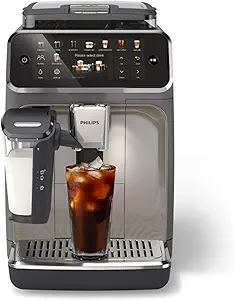 |
De'Longhi La Specialista Opera

| Operation Mode | Semi-Automatic |
|---|---|
| Output Pressure | 19 bar |
| Wattage | 1600 watts |
| Coffee Input Type | whole bean |
| Filter Type | Reusable |
The La Specialista Opera combines a 15‑setting Italian burr grinder, Smart Tamping technology, and a commercial-style steam wand to deliver cafe-style drinks from single machine. It is used like a compact home prosumer setup: load whole beans into the built-in grinder, select one of five presets or a manual mode, let the tamp lever compress the dose to a consistent pressure, and brew with Active Temperature Control and a 19 bar pump for controlled extraction. Notable features include Cold Extraction Technology for quick cold-brew style drinks, three infusion temperature settings to tailor extraction to different beans, and a fast-heating steam wand that produces microfoam suitable for latte art. Practical benefits are consistent dosing and tamping without a separate tamper, fewer countertop components because the grinder is built in, and versatile drink presets for espresso, americano, cold brew, and espresso cool. Trade-offs are the machine s size and weight that require counter space and its semi-automatic workflow which still needs some user involvement compared with fully automatic models.
Best for: Home baristas who want a single, capable machine that handles grinding, tamping, and steaming and who value consistent results and drink customization over fully automated convenience.
Less Ideal for: People seeking a compact travel-friendly unit or a push-button super-automatic that handles every step with no manual involvement.
- Built-in Italian burr grinder with 15 grind settings for precise, single or double dosing
- Smart Tamping system provides consistent tamp pressure and reduces mess
- Active Temperature Control with three infusion settings for tailored extraction
- Commercial-style steam wand that produces smooth microfoam for latte art
- Cold Extraction Technology enables cold-brew and espresso-cool recipes quickly
- Large and heavy for smaller countertops or frequent relocation
- Semi-automatic operation requires manual steps and some user skill
Verdict: Buy this if you want a professional-feeling, all-in-one home espresso machine with a built-in grinder and consistent tamping for craft-level drinks.
Breville Barista Pro BES878BSS

| Wattage | 1680 watts |
|---|---|
| Voltage | 120 |
| Coffee Input Type | whole bean, ground |
| Capacity | 2 liters |
| Filter Type | Reusable |
The Breville Barista Pro is a performance-focused semi-automatic espresso machine that combines a built-in conical burr grinder and a fast ThermoJet heating system to deliver café-style shots at home. It grinds beans on demand with dose control and 30 grind settings, then uses PID temperature control and a 9-bar extraction to produce consistent, full-bodied espresso; a 54mm portafilter and dual/single-wall filters support both single and double dosing. The steam wand produces fine microfoam for lattes and cappuccinos and the intuitive LCD displays grinding and extraction progress to help dial in shots. Practical benefits include quick heat-up, integrated dosing that reduces mess, and integrated tamping aids like the Razor tool in the box. Expect a learning curve for dialing grind and dose to taste and regular cleaning and descaling to keep performance steady; the machine is fairly large and requires counter space. For buyers who want near-professional extraction control and built-in grinding in one compact package, the Barista Pro is a strong choice, but casual users who want simpler push-button convenience may find it more machine than they need.
Best for: Home baristas who prioritize extraction quality and control and want an integrated grinder to grind, dose, and steam for café-style drinks at home.
Less Ideal for: Buyers seeking a fully automatic one-touch machine or minimal hands-on maintenance should consider simpler automatic models instead.
- Integrated conical burr grinder with 30 grind settings and dose control for precise dosing
- ThermoJet heating with PID temperature control for fast, consistent heat-up and extraction
- 54mm portafilter with single and double-wall filters supports robust extraction and flexibility
- Powerful steam wand that creates smooth microfoam suitable for latte art
- Intuitive LCD interface that guides grinding and extraction progress
- Requires regular cleaning, backflushing, and descaling to maintain performance
- Larger footprint and heavier build may be unsuitable for very small counters
- Manual operation requires practice to consistently dial in grind, dose, and tamping
Verdict: If you want near-professional extraction with a built-in grinder and fast heat-up, the Barista Pro delivers café-quality shots and textured milk in a single countertop machine.
Chefman Crema Deluxe

| Output Pressure | 15 bar |
|---|---|
| Wattage | 1500 watts |
| Coffee Input Type | Ground, Whole Bean |
| Capacity | 3 liters |
The Chefman Crema Deluxe combines a 30-setting conical burr grinder, a 15-bar pump, and a dual-boiler layout to let you grind, brew, and steam without swapping tasks. You load whole beans into the built-in grinder, choose one of 30 grind settings, and the grinder dispenses directly into the 58mm portafilter for consistent dosing; the 15-bar pump and adjustable shot temperature/volume help dial in espresso strength. The dual-boiler design is the standout for anyone making milk drinks because you can froth with the steam wand at the same time you pull shots, which speeds up drink prep. A large removable 3 L reservoir reduces refills, and included barista tools and a tamper keep daily setup simple. Expect a learning curve to tune grind, dose, and temperature for best results and a larger footprint than compact single-boiler units, but the Crema Deluxe delivers café-style workflow and capable steam performance for home baristas seeking more control.
Best for: Buyers who want a single machine that handles grinding, brewing, and milk steaming in a café-style workflow and value faster drink prep and control over extraction.
Less Ideal for: Anyone who needs a compact, travelable espresso maker or wants a completely hands-off, capsule-style coffee system.
- Integrated conical burr grinder with 30 grind settings for precise, fresh dosing
- Dual-boiler design lets you brew and steam simultaneously to speed drink prep
- 15-bar pump with adjustable shot temperature and volume for flexible extraction
- Large 3 L removable water reservoir reduces how often you refill
- Comes with portafilter, tamper, milk pitcher, and cleaning tools for out-of-the-box use
- Larger footprint and heavier power draw than compact single-boiler machines
- Requires time and experimentation to dial grind, dose, and temperature for best results
Verdict: If you want a home espresso setup that grinds, brews, and steams like a small café, the Crema Deluxe delivers integrated grinding and dual-boiler speed in one machine.
Gevi Espresso Machine ECMI0-SS0A1

| Output Pressure | 20 bar |
|---|---|
| Capacity | 2.3 liters |
| Wattage | 1450 watts |
| Operation Mode | Semi-Automatic |
| Coffee Input Type | GROUND_COFFEE |
The Gevi ECMI0-SS0A1 is a stainless steel semi-automatic espresso machine that combines a 30‑step built-in conical burr grinder, a 20‑bar pump, and a professional steam wand to make lattes, cappuccinos, and straight espresso. Daily use centers on grinding fresh beans, selecting single or double shot volumes, and steaming milk with the wand or auto frother; controls are handled from a single button panel and a 58mm commercial-style portafilter accepts single or double filters. Notable features include adjustable grind settings, pre-infusion, PID/NTC temperature control for steadier brewing temperatures, and a removable 2.3 L water tank for refill convenience. Practical benefits are consistent extraction potential from the pressure and temperature control, fresh-grind convenience without a separate grinder, and the steam wand that produces microfoam for textured milk drinks. Important limitations are the semi-automatic workflow that requires some dialing-in and barista technique for best results and the learning curve around grind and dose to avoid channeling or weak extractions.
Best for: Buyers who prioritize consistent, café-style results and want an integrated grinder and temperature control in a single reliable machine for daily espresso and milk drinks.
Less Ideal for: Those who want a fully automatic, hands-off brewing experience or who prefer a separate standalone grinder and commercial café workflow.
- Built-in conical burr grinder with 0-30 adjustable settings for fresh, consistent grinds
- 20 bar Italian pump and PID/NTC temperature control for stable extraction temperatures
- 58mm commercial-style portafilter and multiple filter baskets for proper dosing
- Professional steam wand and milk frother for microfoam and hot water on demand
- Removable 2.3 L water tank and single-panel controls for everyday convenience
- Semi-automatic operation requires practice to dial in grind, dose, and tamp for best shots
- Integrated grinder adds complexity for maintenance and cleaning
Verdict: If you want a single reliable machine that delivers fresh-grind espresso with stable temperature and steam control for consistent café-style drinks at home, this Gevi model is a strong choice.
Breville Barista Express BES870

| Operation Mode | Semi-Automatic |
|---|---|
| Wattage | 1600 watts |
| Voltage | 120 volts |
| Coffee Input Type | whole_beans |
| Filter Type | Reusable |
The Breville Barista Express (BES870) is a semi-automatic espresso machine that grinds beans and brews shots in one integrated unit, aimed at home users who want café-style results. It uses an integrated conical burr grinder with 16 grind settings to dose grounds directly into a 54mm portafilter, while a thermocoil heating system with digital temperature control helps maintain stable extraction temperatures. The machine includes single and dual-wall filter baskets, a built-in tamper, and a steam wand capable of producing microfoam for lattes and cappuccinos. Practically, the Barista Express reduces setup clutter compared with separate grinder-plus-machine workflows and speeds the beans-to-shot process to under a minute. Its reusable filter and removable water tank simplify everyday use, though achieving repeatable results still requires some user technique for grinding, dosing, and steaming. The machine is powerful and feature-rich for a home appliance, but buyers should expect a learning curve if they want consistent, barista-level shots and milk texture.
Best for: Buyers who want a near–professional, all-in-one espresso setup with a built-in grinder and are willing to learn basic barista skills to get café-quality shots at home.
Less Ideal for: People who want fully automatic, push-button convenience or those who prefer a plug-and-play super-automatic machine with hands-off milk systems.
- Integrated conical burr grinder with 16 grind settings for on-demand dosing
- Thermocoil PID temperature control for more consistent extraction
- 54mm portafilter and dual/single-wall baskets support standard espresso dosing
- Powerful steam wand produces microfoam suitable for latte art
- Includes useful accessories like tamper, cleaning tools, and stainless steel milk jug
- Requires hands-on technique to produce consistent shots and steamed milk
Verdict: Choose the Barista Express if you want a single, powerful machine that grinds and brews to produce café-quality espresso at home while still allowing hands-on control.
PHILIPS 5500 Series EP5544/94
| Operation Mode | Fully Automatic |
|---|---|
| Output Pressure | 15 bar |
| Coffee Input Type | Ground, Whole Bean |
| Capacity | 1.8 liters |
| Wattage | 1500 watts |
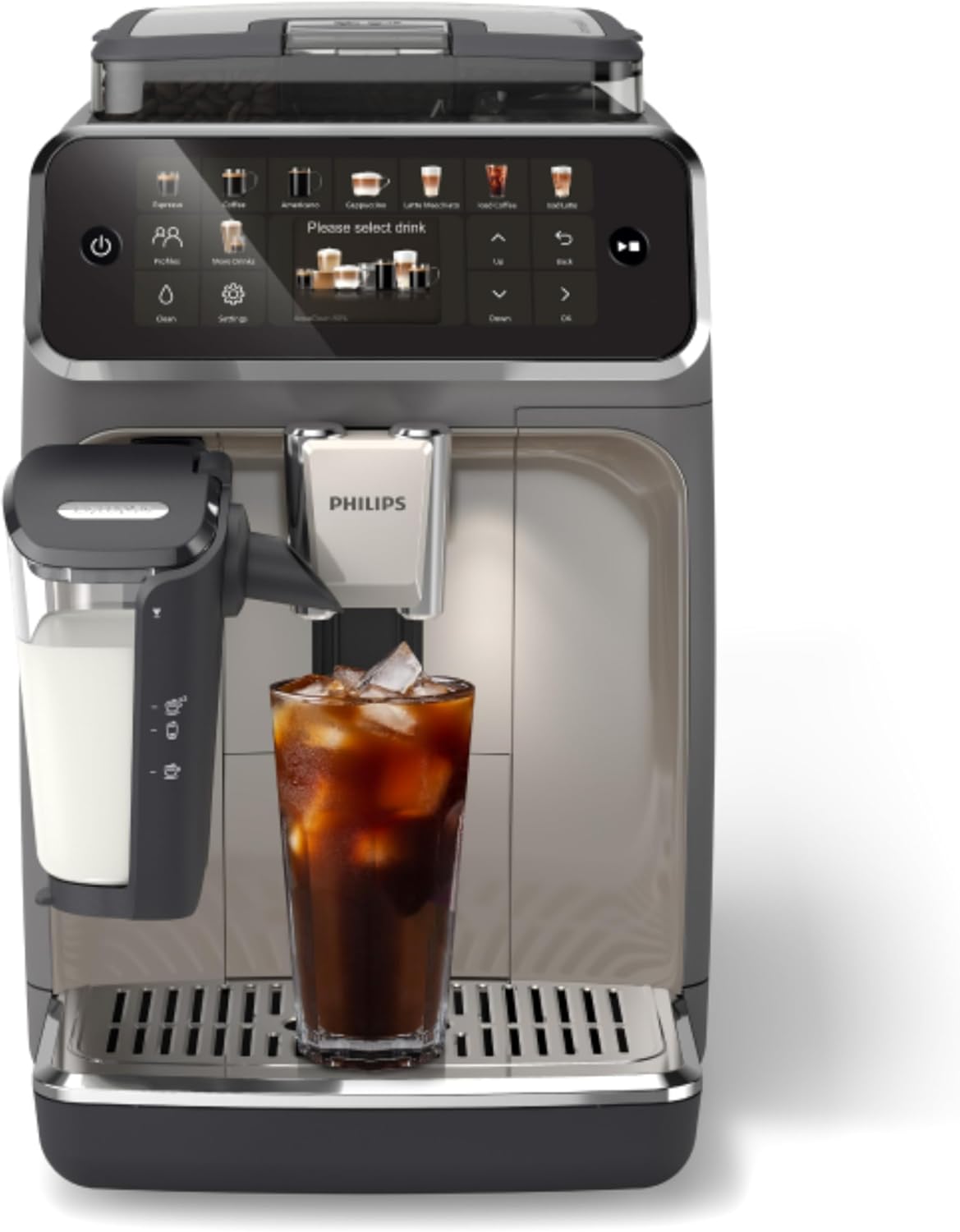
The Philips 5500 Series EP5544/94 is a fully automatic espresso machine that grinds, tamps and brews at the push of a button and includes the LatteGo milk system for automatic milk steaming and frothing. It offers 20 presets covering espresso, coffee, lattes, cappuccinos and iced drinks, plus adjustable strength, volume and milk-froth settings saved to user profiles. The integrated ceramic grinder and 15-bar pump aim to deliver consistent extraction while SilentBrew reduces noise for quieter operation, and QuickStart gets the machine ready in about three seconds. Practical touches include a metal filter, AquaClean compatibility to reduce descaling frequency, and a LatteGo assembly that is simple to rinse or put in the dishwasher. Limitations are typical of compact super‑automatics: cleaning and maintenance still require regular attention, capacity and footprint are modest compared with larger commercial machines, and advanced barista-level control is limited compared with semi‑automatic systems where manual tamping and steaming are preferred.
Best for: Buyers who want café-style drinks at home with minimal fuss and predictable results, prioritizing ease of use, quiet operation, and low-effort milk cleaning.
Less Ideal for: Those seeking full manual control for dialing in shots, commercial-scale capacity, or a machine designed for heavy continuous use should consider alternative semi‑automatic or commercial models.
- Fully automatic workflow with one-touch presets for many drink types
- Built-in ceramic grinder and 15‑bar pump for consistent extraction
- LatteGo milk system that is quick to clean and produces smooth froth
- Quiet operation with faster ready-to-brew time via QuickStart
- AquaClean filter compatibility reduces frequency of descaling
- Not as configurable as semi-automatic machines for manual tamping and steam control
- Compact capacity and footprint may limit high-volume household or light commercial use
- Requires routine cleaning and maintenance like all super-automatic machines
Verdict: If you want reliable, café-quality drinks at home without learning barista technique, the Philips 5500 Series delivers consistent one‑touch espresso and milk drinks with minimal fuss.
Choosing the Right Professional Espresso Machine with Built-In Grinder: Key Factors to Consider
Extraction Consistency
Consistent extraction is the core function of any professional espresso machine. Repeatable water temperature, stable pressure during the shot, and even pre-infusion behavior all affect flavor clarity and crema. In a high-volume environment, small fluctuations compound across dozens of shots, so prioritize machines with proven thermal systems and reliable pressure delivery.
Extraction consistency also reduces wasted coffee and speeds up training for new baristas, because predictable behavior makes it easier to dial in a recipe and keep it stable over a service shift.
Grinder Precision and Dose Repeatability
An integrated grinder must offer precise, incremental adjustments to reach the correct extraction range for different roast profiles. Micrometer-style or stepped adjustments allow fine-tuning without retuning the entire workflow. Dose repeatability—whether achieved through timed grinding, weight-based dosing, or volumetric stops—directly impacts cup-to-cup uniformity.
Consider burr size and type too. Larger burrs tend to stay cooler and provide more consistent particle distribution during sustained use, which helps maintain shot quality during busy periods.
Throughput and Heat Management
Throughput is about how many shots the machine can sustain while keeping temperature and pressure stable. Machines designed for professional use often include multi-boiler systems, heat exchangers with robust recovery, or advanced PID controls to rapidly recover between shots. If you serve back-to-back orders during peak hours, you need a system that recovers quickly without sacrificing temperature stability.
Assess expected daily volume and match that to the machine's rated capacity and recovery features. Underspecifying capacity leads to inconsistent shots and slower service; overspecifying wastes budget and energy.
Build Durability and Materials
Commercial environments create heavy wear on all components. Look for machines with stainless steel frames, high-quality brass or stainless groupheads, and robust steam valves. Components exposed to heat and pressure should be replaceable and constructed from durable materials to minimize downtime.
Durability also affects long-term ownership costs. A well-built unit will require fewer emergency repairs and maintain performance longer under daily stress, making it a better investment for busy operations.
Serviceability and Maintenance Access
Ease of routine maintenance and quick access for repairs are essential in professional settings. Machines with accessible service panels, modular components, and widely available replacement parts reduce downtime and service costs. Consider how easy it is to clean groupheads, backflush circuits, replace gaskets, and access the grinder burrs for cleaning and replacement.
Also check whether the machine supports straightforward calibration or firmware updates if it uses electronic controls. Faster maintenance directly translates to more uptime and predictable performance.
Why Integrated Grinders Matter in Professional Settings
An integrated grinder simplifies workflow by combining grinding and extraction into a single station. That saves counter space, shortens the handoff between dose and tamp, and can reduce the number of adjustments baristas must make during a shift. For many cafes, the consistency gained from an engineered grinder-to-grouphead pairing outweighs the flexibility of standalone grinders.
Integrated systems are also designed to align grinder dosing and grouphead plumbing, which can reduce the variables baristas need to manage. However, integration means evaluating the grinder and extraction system as a single product, so it is important to ensure both elements meet your volume and quality needs.
- Streamlined workflow with fewer touchpoints between dosing and extraction
- Smaller footprint than separate grinder plus espresso machine
- Potential for matched dosing and extraction behavior engineered by the manufacturer
Space, Layout, and Workflow Considerations
Layout matters in a busy cafe. Integrated units reduce the footprint compared with two separate machines, but they still require clearance for steam wands, portafilter movement, and hopper access. Position the machine so grinders do not create clumps of coffee dust in high-traffic areas and so steam wands do not interfere with service.
Also think about where you will perform daily maintenance tasks like burr cleaning and grouphead backflushing. A tight installation that is difficult to service will cause more downtime and longer cleaning cycles.
- Allow clearance for hopper removal and hopper refilling
- Keep steamwand reach comfortable for milk steaming workflows
- Provide access space for routine maintenance without moving the machine
Noise, Vibration, and Customer Experience
Grinders add mechanical noise. In an integrated unit, grinder noise occurs at the service counter where customers are seated or ordering. Consider the acoustic profile and whether noise reduction features or enclosed hoppers are offered. Less intrusive grinder noise improves the customer experience and creates a calmer service environment.
Vibration can also affect placement and countertop materials. Ensure the surface can support the unit without transmitting excessive vibration to nearby equipment or displays.
- Look for sound-dampening features if seating is close to the service counter
- Check hopper material and fit to minimize rattling
- Place unit on a stable, vibration-resistant surface
Energy Use and Daily Operating Costs
Professional machines vary widely in energy consumption depending on boiler size, standby modes, and recovery systems. Multi-boiler and heat-exchanger designs may draw more power but also deliver faster recovery and steady performance. Evaluate energy settings and any eco modes that reduce consumption during slow periods.
Factor in water filtration and descaling routines. Water treatment affects both energy efficiency and component longevity, so include filtration and maintenance costs in your operating budget when choosing a machine.
- Consider standby and sleep modes for off-peak hours
- Match boiler capacity to demand to avoid constant high-power recovery
- Maintain water treatment to protect heating elements and boilers
Training and Barista Ergonomics
Ergonomics influence how quickly new staff can be trained and how consistently they deliver shots. Controls should be intuitive, dose setting and grind adjustments accessible, and steam wands positioned for natural wrist movement. A well-designed layout helps baristas work faster with less fatigue.
Integrated machines can simplify training because dosing and grinding are unified, but only if the interface is straightforward. Prioritize machines with clear controls and consistent feedback for dose and extraction settings.
- Accessible grind adjustments speed training and on-the-fly dialing
- Ergonomic steamwand placement reduces fatigue during long shifts
- Simple, clear controls help standardize recipes across staff
How We Chose the Best Professional Espresso Machine with Built-In Grinder
We focused on attributes that directly affect commercial performance and daily workflow. Primary evaluation criteria included extraction consistency under sustained use, grinder accuracy and dose repeatability, build quality and component durability, serviceability and parts access for routine maintenance, and throughput capacity to match different volumes. We prioritized machines that pair reliable thermal management with stable pressure profiling so shot quality remains consistent across back-to-back pulls. Grinders were judged for micrometer-style adjustment ranges, burr type and size, and whether dosing or timed grinding options support consistent doses. Durability checks emphasized materials, frame construction, and pump and boiler designs suited to frequent use. We also considered ergonomics for barista workflow, such as portafilter access, grouphead layout, and steamwand reach. What we excluded: compact consumer models and small single-boiler hobby machines that cannot sustain commercial duty cycles. We excluded setups that require separate external grinders because this round focuses on integrated grinder solutions only. The final list reflects units that balance shot quality, operational efficiency, and maintainability for professional settings.
Our full evaluation process is outlined in our review methodology.
FAQ
How do built-in grinders affect shot consistency compared with standalone grinders?
Built-in grinders can improve consistency by reducing the time and variables between grinding and extraction. They are engineered to work with the machine's dosing and workflow. However, the quality of the grinder itself determines results, so look for precise adjustment mechanisms and repeatable dosing features.
Can integrated grinders handle commercial volumes?
Many integrated grinders are designed for commercial throughput, but capacity varies. Check burr size, motor duty cycle, and dosing method. For very high-volume operations, verify the unit's rated throughput and recovery before committing.
What maintenance does an integrated grinder need?
Regular cleaning of the hopper and burrs, periodic burr replacement, and clearing the dosing path are typical tasks. Backflushing the grouphead and following the machine's service schedule for seals and water system maintenance are also important to preserve taste and reliability.
Are integrated grinders harder to service than separate grinders?
Serviceability depends on the machine's design. Well-designed integrated units provide access panels and modular components for burr removal and replacement. Poorly designed units can make grinder servicing more difficult, so evaluate access and spare-part availability.
Do integrated grinders limit grind options for different brew styles?
Integrated grinders typically offer a range of grind settings sufficient for espresso and related drinks. Some models provide very fine incremental control, while others are more limited. If you need extensive grind range for alternative brew methods, a separate grinder might be more flexible.
Final Verdict
Choosing a Professional Espresso Machine with Built-In Grinder comes down to balancing extraction consistency, grinder precision, and operational demands. Prioritize machines that demonstrate stable thermal control and repeatable dosing while matching your expected throughput. Consider durability and ease of service so the unit stays reliable during heavy use. Think through workflow, training needs, and installation constraints before buying. When you match the machine capacity and grinder performance to your daily volume and staff skill level, you will get more consistent shots, less downtime, and a smoother service experience.