
Note: This article contains affiliate links. If you click on these links and make a purchase, we may earn a small commission at no extra cost to you. This helps support our research and content. Read our full affiliate disclosure here.
Picking the right programmable thermostat with Wi-Fi can cut energy waste, simplify daily temperature changes, and give you remote control from a phone. For many homes, a thermostat that combines dependable scheduling, clear setup, and stable wireless connectivity becomes the hub of comfort and efficiency. This guide highlights the top seven programmable Wi-Fi thermostats available and explains the practical tradeoffs that matter to homeowners. Below you will find our shortlisted picks and the reasoning behind them, plus the performance and usability criteria we used to evaluate each option. Next up: the product list and detailed buying guidance.
Top Picks at a Glance
| Best Overall The best all-around choice for most situations | Honeywell Home Smart Color Thermostat RTH9585WF |  |
| Best Quality Built to a higher standard if you want something more solid | Sensi Touch ST75 Thermostat |  |
| Best Value The sweet spot between price and what you get | ecobee Smart Thermostat Essential |  |
| Best Budget The cheapest option that still gets the job done reliably | Honeywell Home X2S Smart Thermostat |  |
| Top Rated A top-rated pick with lots of positive feedback | ecobee Smart Thermostat Premium |  |
| Most Popular A crowd favorite that many people choose with confidence | Google Nest Thermostat |  |
| Best Seller A high-volume bestseller chosen again and again | Amazon Smart Thermostat |  |
Honeywell Home Smart Color Thermostat RTH9585WF

| Controller Type | Touch Screen, Voice |
|---|---|
| Connectivity Technology | Wi‑Fi |
| Power Source | AC Power Supply |
| Display Type | LED |
| Specification Met | Energy Star |
The Honeywell Home Smart Color Thermostat is a 7‑day programmable Wi‑Fi thermostat with a bright, customizable color touchscreen and smart scheduling features for remote and local control. It is typically wall‑mounted to replace a low‑voltage furnace or heat/cool control and connects to your home network so you can change schedules or temperature from the touchscreen or the mobile app. Notable features include Smart Response Technology that learns temperature preferences, Energy Star certification with energy reports and utility rebate eligibility, weather and humidity readouts on the display, and voice control compatibility with common smart assistants. Installation is aimed at DIYers but requires a C‑wire and compatibility with low‑voltage systems, and the unit does not support line‑voltage electric baseboard heat. In practice it makes daily temperature management and energy monitoring straightforward, but buyers should confirm wiring and system compatibility before purchasing and expect that advanced system types may need professional help to install.
Best for: Buyers who want a balance of smart home convenience and energy savings with an easy to use color touchscreen and app control for everyday temperature scheduling and remote access.
Less Ideal for: Homes that use line‑voltage electric baseboard heat or owners who lack a C‑wire and do not want to add one or use an adapter.
- Customizable full‑color touchscreen that personalizes the display and improves readability
- Wi‑Fi and app control with voice assistant compatibility for remote scheduling and temperature changes
- Smart Response Technology learns preferences to reach set temperatures more efficiently
- Energy Star certification with energy reports and potential utility rebate eligibility
- Straightforward DIY installation with included mounting hardware and wire labels for common low‑voltage systems
- Requires a C‑wire and is incompatible with line‑voltage electric baseboard heating systems
- Limited to 2.4 GHz Wi‑Fi networks which may restrict some modern router setups
Verdict: Choose this thermostat if you want an easy to use, Wi‑Fi programmable controller with a customizable color touchscreen and smart scheduling that balances comfort and energy savings.
Sensi Touch ST75 Thermostat

| Connectivity Technology | Wi-Fi |
|---|---|
| Control Method | App, Touch, Voice |
| Screen Size | 4.3 inches |
| Power Source | AC/DC |
The Sensi Touch ST75 is a wall‑mounted smart thermostat built to replace a conventional thermostat and give you remote control and scheduling for central HVAC systems. It installs as a DIY swap provided you have a common wire, and the illuminated terminals, built‑in level, and step‑by‑step app instructions make setup straightforward. In daily use the 4.3‑inch color touchscreen and app let you set schedules, make on‑the‑fly adjustments, and view usage reports and alerts to track system performance and filter reminders. Integration with Alexa, Google Assistant, Apple HomeKit, SmartThings, and other platforms makes voice control and home automation easy. Being ENERGY STAR certified and offering geofencing and programmable schedules helps reduce HVAC energy use. Limitations to note are the c‑wire requirement for stable power and that advanced HVAC installers may prefer finer-grain control options available in commercial controllers. The thermostat emphasizes privacy protections and a simple user experience rather than advanced pro features.
Best for: Buyers who want a straightforward, performance‑focused smart thermostat that improves comfort and reduces HVAC energy through reliable scheduling, remote control, and smart‑home integrations.
Less Ideal for: Homes without an available c‑wire or users who need enterprise‑grade HVAC controls and advanced zoning features.
- Large color touchscreen for clear readouts and local control
- Easy DIY installation flow with illuminated easy‑click terminals and built‑in level
- Works with major voice assistants and smart home platforms for automation
- Energy Star certification plus usage reports and geofencing help reduce HVAC energy use
- Requires a common wire (c‑wire) for installation
- Not targeted at commercial or highly specialized HVAC systems that need advanced control
Verdict: Choose the Sensi Touch ST75 if you want a performance‑minded smart thermostat with an easy DIY install, a clear color touchscreen, and solid energy‑saving features for a typical home HVAC system.
ecobee Smart Thermostat Essential

| Connectivity Technology | Wi-Fi |
|---|---|
| Controller Type | Amazon Alexa, Android, Apple HomeKit, Google Assistant, iOS |
| Power Source | Battery Powered |
| Display Type | LCD |
| Screen Size | 3.74 inches |
The ecobee Smart Thermostat Essential is a simple Wi‑Fi programmable thermostat meant to replace a standard wall thermostat and give remote control, scheduling, and basic energy-saving automation. It installs on a wall plate and is controlled via a 3.74 inch color touchscreen or the ecobee mobile app, and it integrates with Apple HomeKit, Google Assistant, and Siri/Alexa ecosystems for voice control. Key features include auto-scheduling, auto-away detection, fan control, and eco+ settings that adjust operation to reduce runtime and identify savings opportunities. The unit runs on batteries and supports most 24 VAC HVAC systems; ecobee provides a compatibility checker and a Power Extender Kit for homes without a C‑wire. Practical benefits are straightforward setup, app-based control from anywhere, and modest energy savings without the complexity of premium models. Limitations include fewer advanced sensors and features than higher-end ecobee models and no built-in room sensor in the base package, so room-by-room balancing requires purchasing SmartSensor accessories separately.
Best for: Buyers who want a reliable, easy-to-use Wi‑Fi thermostat to reduce energy use and manage schedules remotely without paying for premium extras.
Less Ideal for: If you need built-in multiroom sensing, advanced air quality monitoring, or the most feature-rich ecobee model, consider higher-tier thermostats or adding accessory sensors.
- Simple touchscreen plus full app control for remote scheduling and adjustments
- Works with HomeKit, Google Assistant, and Alexa for voice and smart-home integration
- Auto‑away and eco+ features help reduce HVAC runtime and energy use
- Compatibility checker and optional PEK make installation feasible in many homes
- Does not include SmartSensor room sensors by default for multiroom balancing
- Runs on battery power which may require periodic battery replacement
Verdict: A straightforward, smart Wi‑Fi thermostat that delivers app and voice control plus built-in energy features for buyers who prioritize practical savings and simplicity.
Honeywell Home X2S Smart Thermostat

| Compatibility | Up to 2H/2C conventional or Up to 2H/1C heat pump |
|---|---|
| Connectivity | Wi‑Fi (2.4 or 5 GHz) and Matter certified |
| Power | C‑wire required (24 VAC) |
| Scheduling | 7 day, 5‑1‑1, 5‑2, 1 week or non‑programmable option |
| Display | LCD |
The Honeywell Home X2S is a wall‑mounted smart thermostat that connects to Wi‑Fi and lets you control temperature and schedules from the First Alert app or voice assistants. It supports common HVAC setups (up to 2 heat/2 cool conventional or up to 2 heat/1 cool heat pump), offers 7/5‑1‑1/5‑2/1‑week or non‑programmable scheduling, and includes auto‑away and filter reminder features to help cut energy use. The display is a clear LCD and the unit is Matter certified for smoother integration with Alexa, Google Assistant, and Apple HomeKit. Practical touches include indoor humidity monitoring, interchangeable accent plates to match decor, and ENERGY STAR certification for potential rebates. Important limits are the C‑wire power requirement for full operation and the need to verify system compatibility before purchase, and advanced users may miss some high‑end learning features found in premium smart thermostats. Installation is typical for a wired home thermostat and the app control makes remote adjustments straightforward for everyday energy management.
Best for: Buyers wanting an ENERGY STAR smart thermostat with reliable Wi‑Fi control and flexible scheduling who prioritize compatibility with major smart home platforms and straightforward energy savings features.
Less Ideal for: Homes without an available C‑wire or buyers seeking thermostats that automatically learn patterns and optimize settings without manual schedules should consider other options.
- Matter certification for broader smart home compatibility
- ENERGY STAR certified with scheduling and auto‑away to reduce energy use
- Supports both conventional and heat pump systems up to specified stages
- App, voice, and local push‑button control plus humidity display and filter reminders
- Interchangeable accent plates let you match simple decor preferences
- Requires a C‑wire for powered installation which may need an adapter or wiring work
- Lacks advanced learning algorithms found in some higher‑end smart thermostats
Verdict: A practical, ENERGY STAR certified Wi‑Fi thermostat for buyers who want dependable smart home compatibility and flexible programmable scheduling.
ecobee Smart Thermostat Premium

| Connectivity Protocol | Wi‑Fi |
|---|---|
| Power Source | Battery Powered |
| Voltage | 24 volts |
| Display Type | LCD |
| Number of Batteries | 1 Lithium Ion (included) |
The ecobee Smart Thermostat Premium is a full‑featured smart thermostat designed to replace a standard 24VAC thermostat and reduce heating and cooling waste while keeping key rooms comfortable. It pairs with the ecobee app and major voice platforms and includes a SmartSensor to detect and correct hot or cold spots, plus built‑in radar occupancy and an air quality monitor that issues alerts and filter reminders. The unit ships with a power extender kit for homes without a C‑wire and a trim plate and hardware for a tidy install. It also offers live view integration with an ecobee wired doorbell and plays audio through a built‑in speaker using Siri or Alexa. Practical benefits are clear: better zone comfort with the SmartSensor, automated savings via occupancy and schedules, and consolidated home controls. Limitations include the need to check system compatibility for special HVAC setups and dependence on the ecobee ecosystem for advanced features like doorbell live view and some security alerts.
Best for: Buyers who prioritize dependable, energy‑saving home comfort and want a thermostat that actively manages room‑level temperature and air quality without relying on frequent manual adjustments.
Less Ideal for: Owners of nonstandard HVAC systems like line‑voltage or millivolt setups or those who prefer a platform‑agnostic thermostat with minimal cloud‑dependent features should look elsewhere.
- Includes SmartSensor to balance temperatures in important rooms
- Built‑in air quality monitoring with alerts and filter reminders
- Dual‑band Wi‑Fi and wide smart home integration (Siri, Alexa, Google, HomeKit)
- Power Extender Kit and trim plate included for easier DIY installs
- Not compatible with high voltage or millivolt systems and requires a compatibility check for some HVAC types
- Advanced features are tied to the ecobee ecosystem and some functions need an Apple home hub to enable Siri
Verdict: Choose the ecobee Smart Thermostat Premium if you want a reliable, feature‑rich Wi‑Fi thermostat that improves comfort and saves energy using room sensors and built‑in air quality and occupancy detection.
Google Nest Thermostat
| Connectivity Technology | Bluetooth, Wi-Fi |
|---|---|
| Power Source | Battery Powered |
| Display Type | LCD |
| Control Type | Remote Control, Voice Control |
| Number of Batteries | 2 A batteries required. (included) |
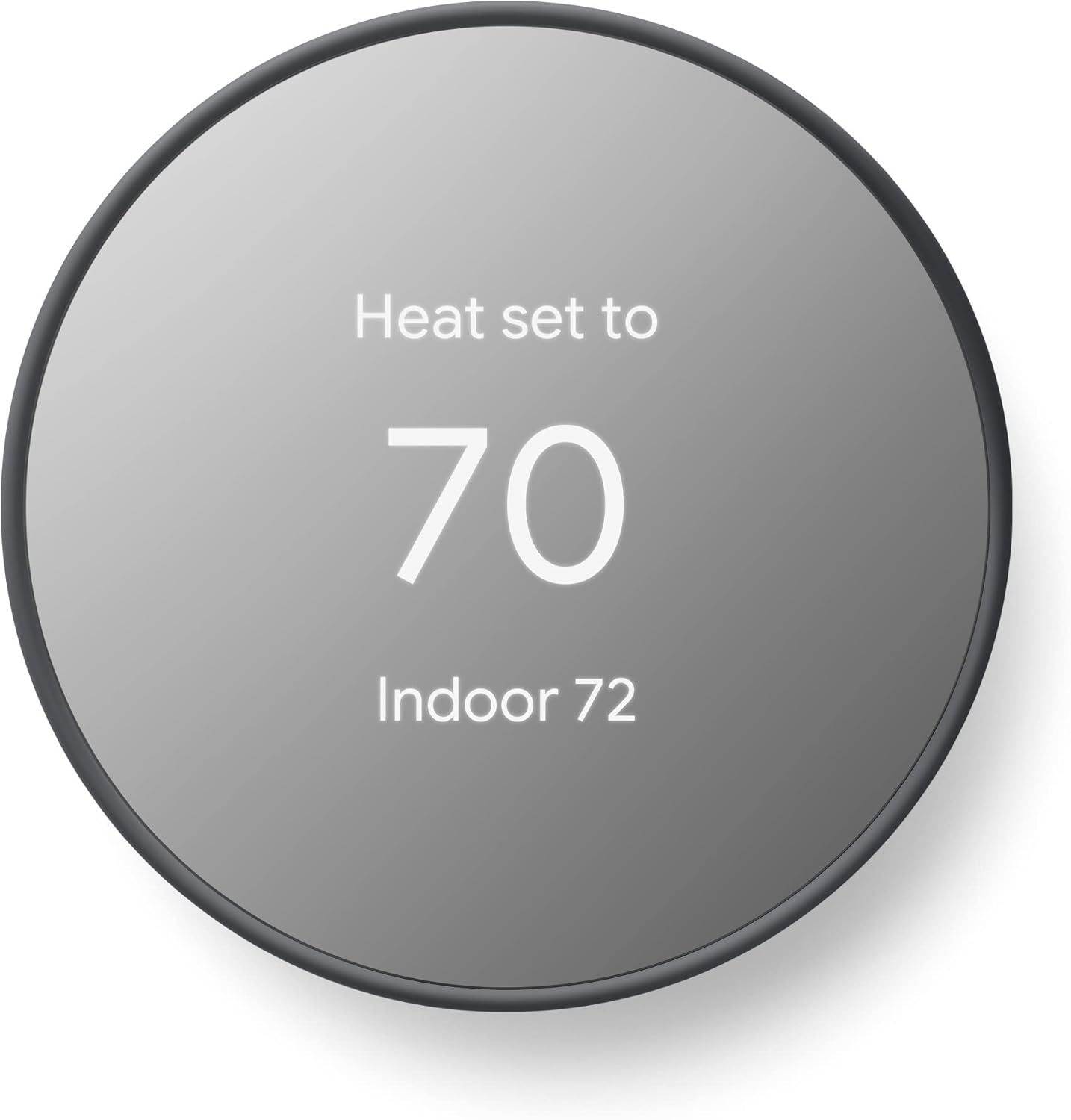
The Google Nest Thermostat is a compact smart thermostat that replaces a standard wall thermostat to give remote control, scheduling, and basic HVAC monitoring through the Google Home app. It pairs over Wi‑Fi and Bluetooth and supports voice control via Google Assistant and other Matter‑certified assistants, while running on two included A batteries so many homes do not need a C wire. Typical use is creating an energy‑efficient schedule in the app, letting Savings Finder suggest tweaks, and receiving alerts if the system detects potential issues. The unit is designed for DIY installation in about 30 minutes with included mounting hardware and a steel plate. Practical benefits include easy remote adjustments, automated Eco temperature when you leave, and simple integration with other Google devices. Limitations are that some HVAC setups—certain heat‑only, zone, or older systems—may require a C wire or power accessory, voice features and alerts require working internet, and advanced energy programs like Nest Renew need newer Nest models or utility support in your area.
Best for: Buyers who prioritize easy-to-use smart home control and want a straightforward, app-driven programmable thermostat with basic energy-saving features and broad voice assistant support.
Less Ideal for: Homes with uncommon or high-voltage HVAC systems, or buyers who need advanced commercial-grade HVAC diagnostics and controls.
- Remote temperature control via Google Home app for adjustments from anywhere
- Easy DIY installation with included mount and screws
- Works without a C wire in most homes thanks to battery power
- Automated Eco Temperature and Savings Finder help reduce energy use
- Voice control compatibility with Google Assistant and Matter‑certified assistants
- May need a C wire or power accessory for some HVAC configurations
- Some smart features require active Wi‑Fi and a compatible voice device
Verdict: Choose the Nest Thermostat if you want a simple, app-first Wi‑Fi thermostat that makes remote control and basic energy savings easy to use.
Amazon Smart Thermostat
| Works with | Alexa and Ring |
|---|---|
| Power requirement | C‑wire required |
| Control | Alexa app remote control |
| Manufacturer tech | Honeywell Home technology |
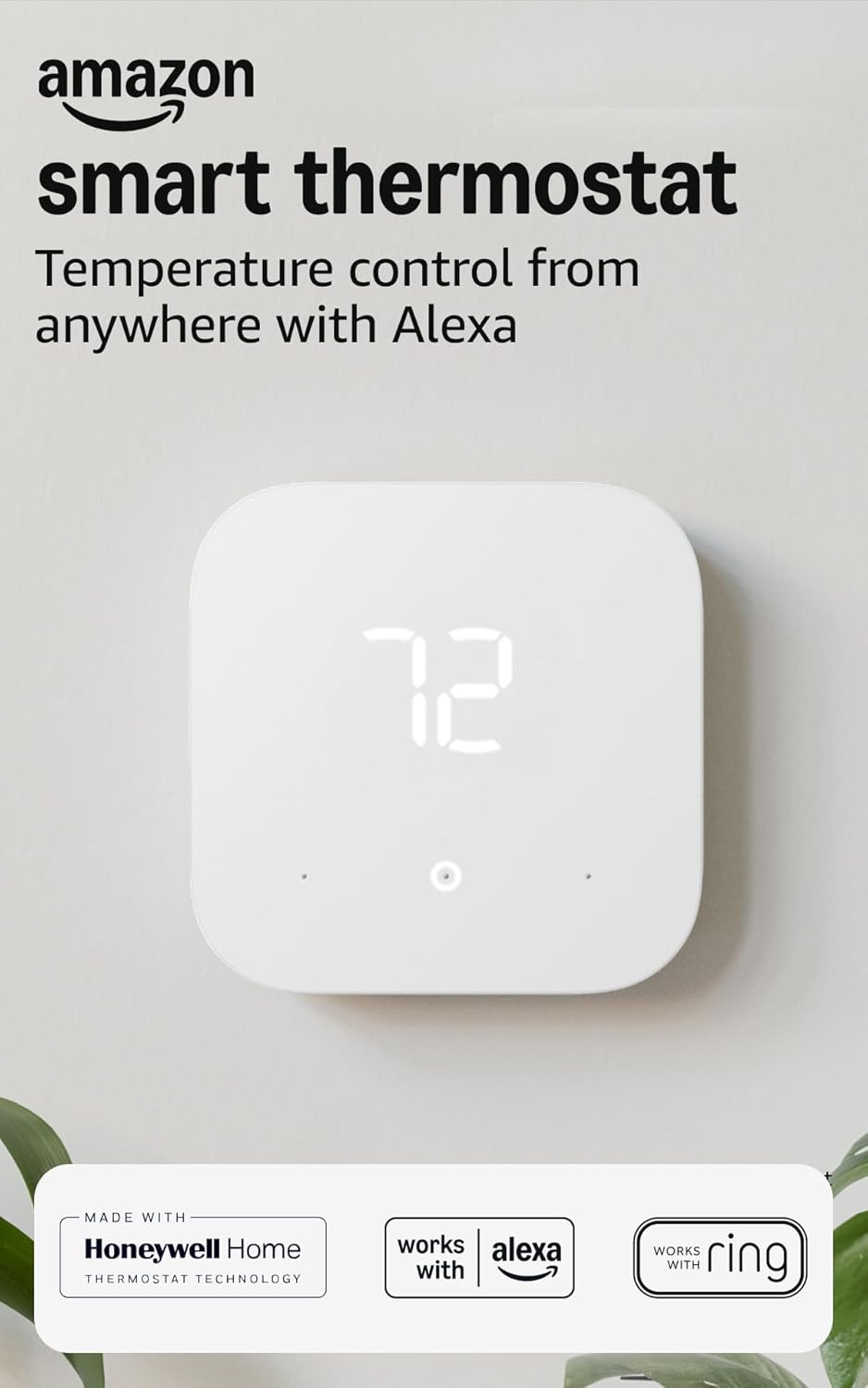
The Amazon Smart Thermostat is a basic Wi‑Fi programmable thermostat intended to replace a traditional wall unit and let you control temperature from the Alexa app or compatible Alexa devices. It supports schedules (home, away, sleep), remote on‑the‑go control, and Alexa automation features that can adjust climate based on presence or linked device temperature readings. The unit is built on Honeywell Home thermostat technology and is designed for DIY installation when a C‑wire is present, and Amazon provides step‑by‑step setup in the app. Practical benefits include easy voice control with Alexa and integration into routines for automated temperature changes, plus potential energy savings through scheduling and presence detection. Limitations are that it is focused on Alexa ecosystem features rather than broad third‑party platform support, and advanced HVAC diagnostics or premium learning features are not part of the feature set. For buyers seeking simple Wi‑Fi scheduling and tight Alexa integration, it delivers a straightforward, reliable option.
Best for: Buyers who want a straightforward, low‑risk upgrade from a mechanical thermostat and prioritize reliable Alexa voice control and simple scheduling.
Less Ideal for: Users who need cross‑platform smart home compatibility, advanced HVAC diagnostics, or adaptive learning thermostats should consider other models.
- Works with Alexa and Ring for voice and presence‑based control
- Remote scheduling and temperature control via the Alexa app
- Simple DIY installation guidance and C‑wire powered reliability
- Built with Honeywell Home thermostat technology for proven basic control
- Requires a C‑wire for installation in most homes
- Limited to Alexa‑centric advanced features rather than broader smart home platforms
Verdict: Choose this thermostat if you want a simple, Alexa‑first programmable Wi‑Fi thermostat that replaces a basic mechanical unit and adds reliable remote control and scheduling.
Choosing the Right Programmable Thermostat with Wi-Fi: Key Factors to Consider
Scheduling Options and Program Types
The available scheduling options determine how precisely you can tailor indoor temperatures to your daily life. Some thermostats offer simple weekday/weekend programs while others provide separate settings for each day and multiple setpoints per day. More granular programs let you create setbacks for nights, workdays, and weekend routines without manual adjustments.
Consider how often your routine changes. If you have irregular hours or multiple occupancy patterns, a thermostat that supports multiple daily setpoints and individual day programming better maintains comfort while minimizing wasted heating or cooling.
Installation and Wiring Requirements
Compatibility with your existing wiring is critical for a smooth installation. Many modern Wi-Fi thermostats require a common power wire for reliable operation. If your furnace or air handler does not provide a C-wire, you may need an adapter or professional wiring to avoid intermittent resets.
Also evaluate the physical mounting, terminal layout, and whether the thermostat supports typical system types such as single-stage heat/cool, heat pump, or multi-stage systems. Clear wiring labels and straightforward instructions reduce installation time and risk of errors.
Wireless Connectivity and Mobile App Experience
Wi-Fi reliability affects whether you can adjust settings remotely and receive notifications. A thermostat with strong, consistent wireless connections reduces the chance of lost access or delayed commands. The mobile app experience matters too; look for intuitive controls, responsive updates, and features like geofencing or quick mode changes.
Check if the app supports multiple users, guest access, or voice assistant integration if those are important. Firmware update frequency is another factor because it indicates ongoing support and security maintenance.
HVAC System Compatibility
Thermostats must match the control requirements of your heating and cooling equipment. Compatibility covers system types such as conventional forced air, heat pumps, boilers, and zoning setups. Misaligned control logic can lead to short cycling or improper compressor staging.
Before buying, identify your system type and whether features like dual fuel control, humidification, or external sensors are necessary. Choosing a thermostat designed to handle your system prevents functionality gaps and protects equipment longevity.
Energy Reporting and Learning Features
Some programmable Wi-Fi thermostats provide usage reports, historical temperature logs, and estimated energy savings. These features help you understand heating and cooling patterns and verify whether schedules reduce consumption. Adaptive learning functions can automate schedule tweaks based on home behavior, but they vary in how aggressively they change setpoints.
If energy tracking is a priority, opt for models with clear, exportable data or straightforward monthly summaries. For users who prefer manual control, learning features that are easily turned off prevent unwanted automatic adjustments.
User Interface and Local Controls
The physical interface affects daily convenience, particularly for household members who do not use a phone app. A readable display, simple button layout, and responsive touchscreen make quick temperature changes painless. Some thermostats offer lockable controls or child locks to prevent accidental changes.
Consider whether local controls provide the same functionality as the app, such as switching modes, setting temporary overrides, or viewing the schedule. Clarity here reduces frustration and keeps everyone comfortable.
Wire Compatibility Checklist
Before buying, confirm which control wires your HVAC system provides. Identify common terminals such as R, C, W, Y, G, and O/B. A missing common wire is the most frequent installation obstacle for smart Wi-Fi thermostats.
If your system lacks a C-wire, you have options: install a dedicated common line from the furnace control board, use a power extender kit when supported, or choose a thermostat that can run reliably without a C-wire. Each choice has tradeoffs in complexity and long-term reliability.
- R: 24V power feed
- C: common 24V reference (preferred for Wi‑Fi models)
- W: heat call
- Y: compressor/cooling call
- G: fan control
- O/B: heat pump reversing valve
Balancing Automation and Manual Control
Automation features such as geofencing, learning schedules, and adaptive recovery can save energy with minimal input. However, overly aggressive automation can adjust temperatures in ways occupants find uncomfortable. Look for models that make automation optional or provide easy override options.
Temporary holds and quick-access presets are useful when your routine changes for a day or two. A thermostat that lets you create and apply presets from the app or device display reduces friction for short-term alterations without overwriting the base schedule.
- Use geofencing for hands-off setback when everyone leaves
- Create temperature presets for common scenarios like 'Away' or 'Night'
- Prefer models that let you suspend learning temporarily
Improving Wi-Fi Reliability at the Thermostat
Placement of your home Wi-Fi router and any interfering devices impacts the thermostat connection. If the thermostat sits at the edge of your wireless coverage, consider a mesh node or Wi-Fi extender placed closer to the HVAC control location. Wired Ethernet is rarely available at thermostat locations, so wireless signal planning is important.
Check that the thermostat supports your home network band and encryption. Some units only operate on a 2.4 GHz network, while others support both major bands. Confirm compatibility with your router and test signal strength before finalizing installation.
- Perform a quick signal strength check at the thermostat location
- Place mesh nodes in intermediate spots to strengthen coverage
- Avoid placing the thermostat near large metal objects or microwaves
Making the Most of Energy Reports
Regularly review weekly or monthly energy summaries to spot trends. Look for days when the system runs unusually long or frequent short cycles that indicate inefficiencies. Use the data to adjust schedules and setpoint ranges rather than chasing minimal temperature tweaks.
If your thermostat provides exportable logs or connects to a home energy dashboard, combining that data with utility bills helps validate savings. Remember that weather, occupancy, and changes in insulation or air leakage can influence reported usage.
- Track runtime rather than just temperature setpoints
- Compare similar weeks month over month to account for weather
- Use reports to inform, not to micromanage, scheduling changes
Accessibility and Multi-User Access
If multiple household members will control the thermostat, check how user accounts are managed. Some systems allow several app users with full control while others restrict access to a single account holder. Family-friendly access reduces conflicts over settings.
Consider whether the thermostat has physical lockouts or user permission levels. For shared spaces or rentals, lockable controls and remote administrative access let one person set the baseline schedule while others use temporary overrides without changing long-term settings.
- Verify multi-user app support
- Look for guest or restricted-access modes if needed
- Choose clear, labeled local controls for non-app users
How We Chose the Best Programmable Thermostat with Wi-Fi
We focused on features that directly affect everyday use and long-term satisfaction with programmable Wi-Fi thermostats. Primary evaluation criteria included scheduling flexibility and programming accuracy to measure how well a thermostat follows daily and weekly routines. We tested reported setup complexity and wiring compatibility considerations to ensure a wide range of homes can install the unit. Wireless reliability and app functionality were assessed because remote control and stable connectivity are core reasons to choose a Wi-Fi model. Finally, energy reporting and adaptive learning features were reviewed to determine potential savings and whether the thermostat helps homeowners understand consumption. We excluded units that lack basic programmable schedules or have no Wi-Fi control, since those miss the article scope. We also filtered out products that require professional-only installation for standard residential HVAC systems. Our picks represent thermostats that balance real-world installability, dependable wireless performance, and meaningful scheduling controls.
Our full evaluation process is outlined in our review methodology.
FAQ
Can a programmable Wi‑Fi thermostat work without a C-wire?
Some models operate without a dedicated C-wire by drawing power intermittently from other terminals or by using a power extender kit. However, running without a proper common wire can cause intermittent reboots or reduced Wi‑Fi reliability. If possible, supply a C-wire for consistent operation.
Will a programmable thermostat save energy on its own?
A programmable thermostat enables energy savings by making setbacks and consistent schedules easy, but savings depend on how you use those features. Properly configured schedules and reasonable setback temperatures typically yield measurable reductions in runtime compared with constant setpoints.
How do I know if my HVAC system is compatible?
Identify your system type and control wiring at the furnace or air handler. Most programmable thermostats support single‑stage heating and cooling and common heat pump setups. Confirm support for multi‑stage systems or auxiliary heat if your system uses those features.
Are mobile apps secure for controlling a thermostat?
Reputable thermostat apps use encrypted connections and require account authentication, making remote control generally secure. To improve security, use strong, unique passwords, enable two‑factor authentication where available, and keep the thermostat firmware and app updated.
Can I keep temporary temperature changes without erasing my schedule?
Yes. Most programmable thermostats support temporary holds or quick overrides that suspend the schedule for a set period before returning to the programmed routine. This feature is useful for guests or single-day changes without rebuilding your weekly program.
Final Verdict
When choosing a programmable thermostat with Wi‑Fi, prioritize the features that match your home and habits. Confirm wiring compatibility and installation requirements first, since a well-matched unit reduces headaches and ensures reliable operation. Then weigh scheduling flexibility, wireless stability, and the app experience to find a thermostat that supports your daily routines and energy goals. Balance automation against manual control so the thermostat adapts without taking away choice. Focus on clear scheduling options and dependable connectivity for the best long-term satisfaction.