
Note: This article contains affiliate links. If you click on these links and make a purchase, we may earn a small commission at no extra cost to you. This helps support our research and content. Read our full affiliate disclosure here.
When you live off the grid, hot water is one of those comforts that makes a cabin feel like home. Choosing a propane water heater for an off grid cabin affects fuel use, how often you refill tanks, and whether the unit will run reliably through cold snaps. You want a heater that balances steady hot-water delivery with simple installation, modest electrical needs, and durable components suited to remote use. This guide shortlists the top propane water heaters for off-grid cabins and explains the practical tradeoffs buyers face. We evaluate efficiency, ignition and power requirements, capacity and recovery, installation considerations, and build quality so you can pick the best option for your cabin setup.
Top Picks at a Glance
| Best Overall The best all-around choice for most situations | GASLAND BE528 Propane Tankless Heater | 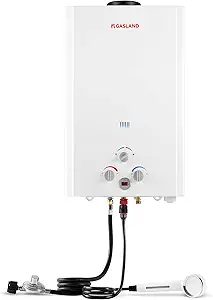 |
| Best Quality Built to a higher standard if you want something more solid | MIZUDO Propane Tankless Water Heater 120k BTU |  |
| Best Value The sweet spot between price and what you get | Flame King 10L Portable Tankless Water Heater |  |
| Best Budget The cheapest option that still gets the job done reliably | Kohree Tankless Propane Water Heater 6L |  |
| Top Rated A top-rated pick with lots of positive feedback | CAMPLUX AY132 Portable Tankless Heater |  |
| Most Popular A crowd favorite that many people choose with confidence | GASLAND BE158R Tankless Water Heater |  |
| Best Seller A high-volume bestseller chosen again and again | Orbek RV Tankless Water Heater HRU-RG060-A1 |  |
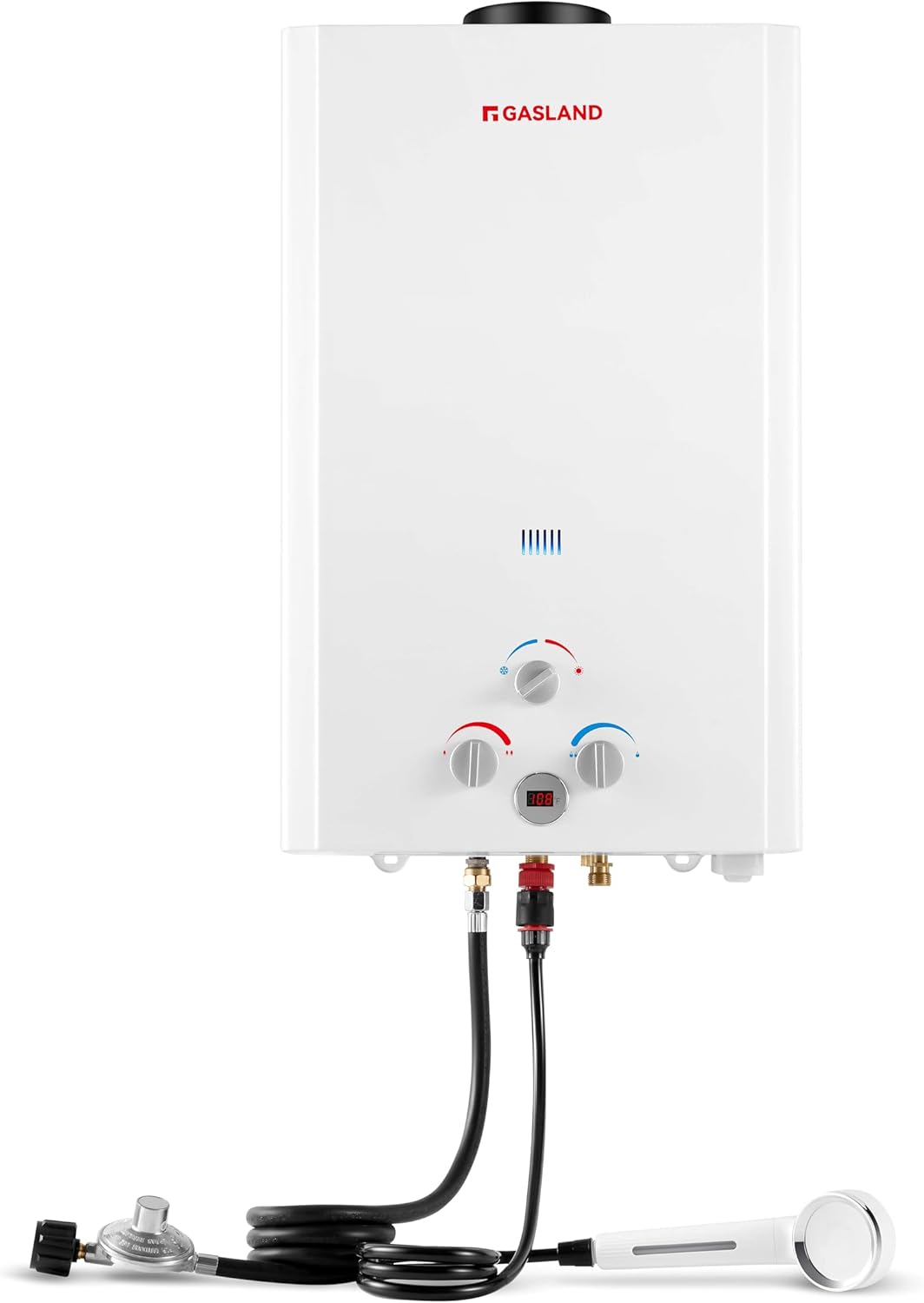
GASLAND BE528 Propane Tankless Heater
| Power Source | Propane (gas) |
|---|---|
| Flow Rate | 5.28 gpm |
| Maximum Temperature | 176 °F |
| Heat Output | 136,000 BTU/hr |
| Maximum Pressure | 110 psi |
The GASLAND BE528 is a high-output outdoor tankless propane water heater intended for mobile and off-grid use. It runs on a standard 20 lb LPG tank and uses two D-cell batteries for electronic ignition and the LED temperature display, producing up to 5.28 gallons per minute and a maximum heat output of 136,000 BTU. Typical uses include outdoor kitchens, cabins, RV-adjacent setups, animal washing, and camping showers where mains electric or natural gas is not available. Key features are the digital temperature readout, multiple safety protections (overheat, low-flow, dry combustion, flame-failure), included shower head and regulator, and wall-mount design for semi-permanent installations. In practice it gives near-instant hot water at moderate flow rates and can start at low inlet pressure (about 4 psi), but it is designed for outdoor/splash-proof use rather than long-term exposure to heavy rain and is not convertible to natural gas. Expect regular propane changes for heavy use and basic battery swaps for the ignition. Installation requires proper gas plumbing and venting; it cannot be mounted horizontally.
Best for: Buyers wanting a robust, propane-powered tankless heater for an off-grid cabin or outdoor installation who prioritize high flow and reliable safety features over indoor electrified hookups.
Less Ideal for: People needing an indoor or fully weatherproof unit, those who require natural gas compatibility, or users who need a very lightweight handheld shower solution.
- High maximum output (136,000 BTU) for strong temperature rise at higher flow rates
- Produces up to 5.28 gallons per minute suitable for showers or multiple light fixtures
- Electronic ignition with LED temperature display simplifies setup and monitoring
- Multiple safety protections including overheat, low-flow, dry combustion, and flame-failure device
- Comes with regulator, 5 ft shower head and mounting hardware for immediate outdoor use
- Designed for outdoor use and only splash-proof so prolonged exposure to rain can damage electronics
- Not compatible with natural gas and requires a 20 lb propane tank and periodic battery replacement for ignition
- Relatively heavy and geared toward fixed wall mount rather than truly handheld or horizontal installation
Verdict: If you need strong, on-demand hot water for an off-grid cabin or outdoor kitchen, this propane tankless unit delivers high flow and safety features in a ready-to-install package.
MIZUDO Propane Tankless Water Heater 120k BTU

| Power Source | gas_powered |
|---|---|
| Flow Rate | 5.1 gpm |
| Maximum Temperature | 149 °F |
| Voltage | 120 volts |
| Wi-Fi Enabled | ✔ |
The MIZUDO 120,000 BTU propane tankless unit is built to deliver strong, on-demand hot water for small homes or off-grid cabins that run on propane and a generator. It produces up to 5.1 gallons per minute and uses gas modulation and flow monitoring to hold water temperature within about 1°F, which helps avoid big swings during concurrent showers or appliance use. The unit is CSA certified and includes freeze protection, dry-burn and flame-failure safeguards, plus an industrial-grade copper heat exchanger and stainless combustion chamber intended for durability. It supports Wi‑Fi and mobile app control for remote temperature adjustments and monitoring, and the unit can be converted between indoor and outdoor mounting with the appropriate venting or conversion kit. Limitations to plan for include the 5.1 GPM cap, which may not sustain large households with multiple high-flow fixtures running at once, and the requirement to purchase specific venting or outdoor conversion accessories separately. Installation requires proper vent sizing and gas plumbing, so professional setup is recommended for safe, reliable off-grid use.
Best for: Buyers who prioritize strong, consistent hot-water performance on propane for a cabin or small household and want remote monitoring and durable components.
Less Ideal for: Large households needing high combined flow for many fixtures at once or installations where complex venting cannot be accommodated.
- High 120,000 BTU output for strong heat-up performance
- Stable temperature control within approximately 1°F during varying flow
- CSA certification and multiple built-in safety protections
- Wi‑Fi and app control for remote monitoring and adjustments
- Durable components including copper heat exchanger and stainless combustion chamber
- Maximum 5.1 GPM limits simultaneous high-flow demand
- Vent conversion kit and some installation accessories sold separately
Verdict: Choose this MIZUDO 120k BTU propane tankless heater when you need reliable, near steady-temperature hot water with remote control and rugged components for an off-grid cabin.
Flame King 10L Portable Tankless Water Heater

| Fuel type | Propane |
|---|---|
| Flow rate | 2.64 gpm |
| Heat output | 68,000 BTU/hr |
| Capacity | 10 liters |
| Ignition power source | 2 D batteries |
The Flame King 10L portable tankless heater is a propane-powered outdoor unit built to provide instant hot water for showers, cleaning, and campsite tasks. It starts at very low water pressure and produces up to 2.64 gallons per minute while the large 68,000 BTU burner and adjustable gas and water knobs let you tune temperature and flow for summer or winter conditions. The unit includes practical accessories—a CSA-certified regulator and hose, garden-hose adapter, shower head with on/off water control, and a kink-resistant stainless hose—so setup with a standard QCC1 propane cylinder is straightforward. Safety features include automatic ignition, flame outage, overheat, overpressure, anti-dry combustion protections, and an LED digital temperature display for easier monitoring. The steel case and brass/stainless internals feel durable for outdoor use, but the heater is intended for sheltered outdoor installation to keep rain out of the top vent and it requires D-cell batteries for ignition. For an off-grid cabin seeking reliable, high-output hot water without a tank, this unit balances portability and power well.
Best for: Buyers who prioritize dependable, high-output hot water for an off-grid cabin or outdoor shower and want a portable, ready-to-run propane solution that is easy to install and tune.
Less Ideal for: People needing a permanently installed indoor water heater or a fully weatherproof unit for exposed outdoor mounting should look at fixed, rated alternatives.
- High 68,000 BTU output for fast heating and stable hot-water temperatures under load
- Adjustable gas and water knobs plus Winter/Summer settings for fine temperature control
- Includes CSA-certified regulator, hoses, garden-hose adapter, and shower head for out-of-the-box use
- Multiple safety protections (flameout, overheat, over-pressure, anti-dry) and LED temperature display
- Steel-cased construction with brass and stainless components for outdoor durability
- Designed for sheltered outdoor installation so it is not weatherproof for exposed placement
- Requires two D batteries for ignition which must be replaced to start the unit
Verdict: A high-output, portable propane tankless heater that gives off-grid cabins reliable, tunable hot water with included regulator and shower accessories.
Kohree Tankless Propane Water Heater 6L

| Power Source | Liquid Propane |
|---|---|
| Flow Rate | 1.58 gpm |
| Maximum Temperature | 120 °F |
| Heat Output | 41000 BTU/HR |
| Capacity | 6 liters |
The Kohree 6L tankless propane water heater provides on-demand hot water for cabins, camping, RVs, and outdoor tasks without a storage tank. It runs off liquid propane and uses a simple water-flow trigger and battery ignition so you get instant hot water up to a 120°F rise with a maximum output of 41,000 BTU/hour and about 1.58 gallons per minute. Built-in safety features include anti-freeze, dry-combustion, flame-failure, overheat, and high-pressure protections, and the unit is designed to be windproof for outdoor use. The package includes a shower head, gas regulator, and hose fittings so it is ready for basic installs, and the brass connectors and wall-mount/handle options make it reasonably durable and portable. Limits to note are modest flow rate for simultaneous high-demand uses and reliance on separate propane and a 2 D-battery ignition, so it is best for single-point showers or washing rather than whole-cabin supply. For buyers on a budget who need a simple, portable heater for an off-grid cabin or campsite, it hits the practical marks without frills.
Best for: Buyers wanting an inexpensive, portable hot water source for an off-grid cabin, campsite, or RV who prioritize simplicity and basic safety over high flow or whole-structure heating.
Less Ideal for: Homes or cabins that need hot water for multiple fixtures at once or users who want a mains-powered, higher-flow whole-house solution.
- On-demand hot water with up to 41,000 BTU output for immediate heating
- Multiple safety protections including overheat, flame-failure, dry-combustion, and anti-freeze
- Compact and portable design with handle and wall-mount option for camp or cabin use
- Includes shower head, gas regulator, and brass hose fittings so basic setup is included
- Maximum flow of 1.58 GPM is limited for multiple simultaneous uses
- Requires liquid propane supply and 2 D batteries for ignition, adding operating dependencies
Verdict: A budget-friendly, portable propane tankless heater that reliably delivers single-point hot water for off-grid cabins and outdoor use.
CAMPLUX AY132 Portable Tankless Heater

| Power Source | Battery Powered |
|---|---|
| Flow Rate | 1.32 gpm |
| Heat Output | 34,000 BTU/hr |
| Water Pressure Range | 3-130 PSI |
| Capacity | 5 liters |
The CAMPLUX AY132 is a compact, propane tankless water heater built for camping, RVs, and remote cabins where electricity is unavailable. It runs on a 20 lb propane cylinder and two D batteries for ignition, producing up to 1.32 gallons per minute and a rated 34,000 BTU output to heat water instantly as it flows. The unit includes a folding handle, a CSA-certified 5-foot gas regulator and shower hose, and six safety protections such as overheat, flame-failure, and low-flow cutoffs, which make it practical for family use and pet baths. It starts at very low water pressure (around 3 PSI), so it works with gravity-fed systems or small 12V pumps common off grid. Trade-offs are the modest flow rate—fine for single-person showers but not for simultaneous fixtures—and reliance on disposable batteries for ignition instead of a mains or rechargeable option. Installation is straightforward for a permanent or hanging mount, and the anti-freeze protection helps winterize occasional cold-weather setups.
Best for: Buyers who need a dependable, no-electricity hot water source for an off-grid cabin, RV, or seasonal remote shelter and prioritize consistent safety features and straightforward setup.
Less Ideal for: Those wanting high-flow performance for multiple simultaneous fixtures or households needing continuous indoor plumbing with high demand should consider larger, higher-GPM systems.
- Instant on-demand hot water without mains electricity
- Works with very low water pressure, suitable for gravity bags or small pumps
- CSA certified with multiple safety protections (overheat, flame failure, dry combustion)
- Includes necessary accessories: 5 ft gas regulator and showerhead hose for quick setup
- Folding handle and lightweight design for easy transport and mounting
- Maximum flow of 1.32 GPM limits it to single-shower or light-duty tasks
- Ignition depends on two D-cell batteries rather than a built-in rechargeable or AC option
Verdict: A compact, safety-focused propane tankless heater that reliably delivers on-demand hot water for off-grid cabins and single-user outdoor showers.
GASLAND BE158R Tankless Water Heater

| Power Source | Liquid Propane |
|---|---|
| Flow Rate | 1.58 gpm |
| Heat Output | 41,000 british thermal units |
| Maximum Temperature | 175 °F |
| Capacity | 6 liters |
The GASLAND BE158R is a portable propane tankless heater built for outdoor and off-grid hot water needs, running from a standard 20 lb propane tank and using battery-powered electronic ignition. It produces up to 1.58 gallons per minute with a peak heat output of 41,000 BTU, and the LED digital display makes it easy to set and monitor temperature. Safety features include CSA certification plus protections for low water flow, dry combustion, flame failure, overheating, high pressure, and anti-freeze, which are useful when the unit is used intermittently at cabins or campsites. The unit includes a regulator, hose, shower head and adapters so it is ready for basic outdoor shower, pet washing, or small sink tasks. Practical limits are the moderate flow rate and single-zone output, so it will run short if you try to feed multiple fixtures simultaneously, and the unit is splash-resistant but not fully weatherproof so it needs dry storage when not in use. For off-grid or seasonal cabin setups the BE158R offers a compact, safety-focused way to get on-demand hot water without grid power.
Best for: Buyers seeking a compact, safety-focused hot water source for an off-grid cabin, campsite, or seasonal outdoor use who prioritize proven safety features and ready-to-use hardware.
Less Ideal for: Homes needing simultaneous hot water to multiple fixtures or a full household hot water solution should choose a higher-capacity or permanently installed system instead.
- Runs on standard 20 lb propane and uses battery ignition so no electrical hookup required
- CSA certified with multiple built-in safety protections for outdoor and intermittent use
- Digital LED temperature display for clear monitoring and adjustment
- Includes regulator, hose, shower head and adapters for immediate basic setup
- Maximum flow of 1.58 GPM limits use to one small shower or sink at a time
- Splash-proof design is not fully weatherproof so it must be stored dry to avoid damage
Verdict: A compact, CSA-certified propane tankless heater that gives off-grid cabins a safe, ready-to-use source of on-demand hot water for a single shower or sink.
Orbek RV Tankless Water Heater HRU-RG060-A1

| Power Source | Liquid Propane |
|---|---|
| Voltage | 12 volts DC |
| Flow Rate | 3.5 gpm |
| Maximum Temperature | 123 °F |
| Mount Type | Door Mount |
This Orbek tankless unit is designed for RV and off-grid use, delivering continuous hot water on demand with a 60,000 BTU propane burner and a 3.5 gpm flow rate. It mounts in a standard RV door opening, runs from a 12V DC supply, and includes a remote that adjusts temperature from 95°F to 123°F and displays error codes for troubleshooting. The heater uses oxygen-free copper heat exchangers and a brushless DC fan with staged combustion to improve high-altitude performance and propane efficiency, and the built-in 150 psi pressure-reducing valve removes the need for an external regulator. Safety features include frost protection, flame-failure shutoff, and dry-combustion protection. Practical limitations are that it requires proper 12V wiring or an AC-to-DC converter, and installation requires matching your RV cutout and standard NPT water connections; while it is aimed at RV replacement applications, expect professional help if you are uncomfortable with gas or electrical hookups. For risk-averse buyers it offers clear safety protections and a manufacturer support channel for setup and troubleshooting.
Best for: Buyers who prioritize reliable, on-demand hot water in remote or off-grid RV and cabin setups and who prefer a unit with built-in safety protections and manufacturer support for installation.
Less Ideal for: Those who lack basic comfort with gas and 12V electrical hookups or who cannot confirm a compatible RV cutout should consider a simpler plug-and-play or tank-style alternative.
- High 60,000 BTU output for continuous hot water suitable for showers and dishwashing
- Designed for high-altitude operation with copper heat exchangers and brushless DC fan
- Included remote control lets you set temperature and view error codes for simple troubleshooting
- Built-in 150 PSI pressure-reducing valve saves the need to buy an external regulator
- Multiple safety protections including frost protection, flame-failure shutdown, and dry-combustion protection
- Requires a 12V DC power source or an AC-to-DC converter which adds installation complexity
- Must match RV door cutout and use standard NPT connections so fitment check is necessary
Verdict: A robust, safety-focused propane tankless heater built for reliable on-demand hot water in remote RV or off-grid cabin use.
Choosing the Right Propane Water Heater for Off Grid Cabin: Key Factors to Consider
Fuel Efficiency and Propane Consumption
Fuel efficiency determines how long a propane tank lasts between refills and directly affects running cost and logistics for an off-grid cabin. A more efficient burner and better insulation reduce the amount of propane burned per gallon of hot water delivered.
When comparing heaters, look at rated thermal efficiency and real-world factors such as standby heat loss. Models with better insulation and tighter controls typically consume less fuel for the same hot-water output. For remote cabins where refilling tanks is time-consuming, a small efficiency improvement can translate to significant convenience over a season.
Ignition System and Electrical Requirements
The ignition method affects whether the heater needs grid power or can run on batteries or low-voltage DC. Some units use a simple pilot light that consumes a small continuous amount of propane, while others use electronic ignition that may need intermittent battery power or a small inverter.
For true off-grid reliability, favor heaters with battery-friendly ignition or manual lighting options. Also consider standby electrical draw for controls and diagnostic displays. Lower electrical needs reduce the burden on solar, battery, or generator systems commonly used in cabins.
Capacity and Recovery Rate
Capacity and recovery describe how much hot water the unit can deliver at once and how quickly it reheats incoming cold water. Tankless or instantaneous units provide limitless hot water flow up to their rated gallons per minute, while tank models store a finite amount but can deliver high flow quickly until depleted.
Pick a capacity that matches typical cabin use. For a one- or two-person cabin, smaller tanks or modest tankless flow may suffice. For larger groups or simultaneous uses like shower plus washing up, prioritize higher recovery rates or larger storage to avoid running out of hot water when demand spikes.
Venting, Placement, and Installation Needs
Venting options affect where you can place the heater and what kind of chimney or through-wall termination you need. Some propane heaters require atmospheric venting through a vertical chimney, others support direct-venting with a horizontal run, and placement constraints vary by unit size and clearance requirements.
Remote cabins often have limited utility space and creative layouts, so choose a heater with venting and installation flexibility that fits your cabin envelope. Consider how easy it will be to connect propane lines, run vents through exterior walls, and service the unit without specialized tools or rare replacement parts.
Durability, Maintenance, and Serviceability
Durable construction and easy maintenance reduce the likelihood of failures in a location where professional service may be far away. Look for simple control layouts, accessible panels, and replaceable wear items like valves and igniters.
Regular maintenance tasks such as flushing, anode replacement, or burner cleaning should be straightforward. Units built with corrosion-resistant materials and service-friendly access points will be easier to keep running reliably in a cabin environment.
Cold-Weather Performance and Freeze Protection
Cabins in cold climates need heaters that handle low ambient temperatures and resist freeze-related damage. Some heaters include built-in freeze protection, such as automatic recirculation or internal electric elements, while others rely on manual winterization.
If the cabin sees subfreezing temperatures, prioritize models with proven freeze-resistance features or plan for enclosure and insulation strategies. Proper placement to avoid exposure to wind and drafts also extends reliability through winter months.
Deciding Between Tank and Tankless
Tank models store a ready supply of hot water and are straightforward to install and service. They provide steady flow for short, high-demand periods but will eventually run out and need time to recover.
Tankless units heat water on demand and eliminate storage losses, which can be an advantage for propane consumption in intermittent-use cabins. However, their flow capacity is limited by the unit rating and incoming water temperature, and they may require a higher minimum flow to activate reliably.
- Tank: Better for simultaneous high-flow needs and simpler controls.
- Tankless: Better for lower standby loss and potentially lower propane use for light, intermittent demand.
Sizing Your Heater to Cabin Usage
Estimate peak simultaneous demand by accounting for showers, dishwashing, and any laundry. For tanks, match stored gallons to the expected first-hour demand. For tankless, target a gallons-per-minute rating that covers the largest expected combined flow.
Also consider the incoming groundwater temperature, which affects recovery and flow in tankless systems. Colder feed water reduces the maximum usable flow at a given burner size, so sizing should account for local winter temperatures.
- Track typical hot-water events and add a safety margin for guests.
- Adjust tank or flow ratings upward in colder climates to maintain comfortable temperatures.
Propane Supply and Tank Sizing
Calculate how much propane your chosen heater will consume based on BTU rating and expected daily hot-water use. This estimate helps determine appropriate propane tank size and refill frequency for a remote cabin.
Also plan piping runs and regulator placement to maintain consistent pressure. Long runs or undersized tubing can lead to poor burner performance and incomplete combustion. Install a regulator sized for combined loads if the heater shares a supply with other propane appliances.
- Keep propane tanks accessible for refilling and protected from extreme cold.
- Use proper regulators and tubing sizes to avoid pressure drop under load.
Electrical Options and Off-Grid Power Integration
Some heaters need small amounts of electricity for ignition, control circuits, or displays. If you run a solar-battery system, verify battery capacity and inverter sizing to handle intermittent ignition draws or continuous control power.
Consider battery-backed ignition modules or heaters designed for low-voltage systems to minimize cycling the generator. For truly off-grid cabins, choose units that either run with minimal electrical input or offer safe manual lighting options.
- Confirm startup current for electronic ignition to avoid tripping inverters.
- Include a simple shutdown and frost-protection plan for extended absences.
Maintenance Tips for Remote Installations
Set up a regular maintenance schedule that includes burner inspection, vent checks, and flushing if a storage tank is used. Remote locations mean delays in getting parts or service, so proactive care prevents small issues from becoming major failures.
Keep a kit of basic spare parts and tools specific to your heater, such as replacement igniters, valves, and common fasteners. Clear documentation and a labeled shutoff plan will simplify in-field repairs.
- Inspect vents and combustion air openings seasonally for obstructions.
- Record maintenance dates and any parts replaced to build a service history.
How We Chose the Best Propane Water Heater for Off Grid Cabin
We focused on features that matter for sustained off-grid use and remote installations. First, fuel efficiency and thermal performance were prioritized because lower propane consumption extends time between refills and reduces running cost. Second, ignition and electrical demands were evaluated to ensure the units function with minimal or no grid power, including battery or DC-friendly ignition systems. Third, capacity and recovery rate were considered so the heater can meet typical cabin household loads like showers, dishes, and occasional laundry. Fourth, installation flexibility and venting options were assessed, since remote cabins often have limited space and unconventional layouts. Fifth, durability and serviceability were key: rugged components, accessible controls, and straightforward maintenance reduce downtime in remote locations. We excluded units that require substantial continuous grid power, complex professional-only venting, or specialized commercial installations that are impractical for a small cabin. Our short list reflects practical tradeoffs between runtime, convenience, and installation simplicity for off-grid living.
Our full evaluation process is outlined in our review methodology.
FAQ
Can a propane water heater run without grid electricity?
Many propane water heaters can operate without grid electricity if they use a standing pilot or battery-powered ignition. Some electronic-ignition units require intermittent power but may run from batteries or a small inverter. Confirm the specific ignition and control power needs before relying on a non-grid system.
How big a propane tank do I need for an off-grid cabin?
Tank size depends on heater BTU rate and how often you want to refill. Estimate daily consumption based on typical hot-water use and multiply by the number of days between refills. Larger tanks reduce refill frequency but require more space and safe mounting or anchoring.
Is tankless better for a seasonal cabin?
Tankless can be efficient for seasonal or intermittent use because it avoids standby losses. However, it must be sized correctly for peak flow and may require a minimum flow to activate. If you expect sporadic short uses, a small tank or tankless unit with low standby needs can both work well.
What freeze protection should I use in a cold climate?
Look for built-in freeze protection features or plan for insulated enclosures and trace heating for pipes. Regularly draining and winterizing the system is another option for cabins that are unoccupied in winter. Choose an approach that matches how often the cabin is used and how long it stays vacant.
How hard is installation for a propane water heater in a remote cabin?
Installation complexity varies with venting type, fuel-line routing, and whether electrical hookups are needed. Direct-vent and simple atmospheric-vent units are often easier to install, but any installation must follow local codes and safe combustion-air practices. If you have basic plumbing and construction skills, some models are within DIY reach, but professional help may still be advisable for safe venting and gas connections.
Final Verdict
Prioritize the features that matter most for your cabin: fuel efficiency to stretch propane supply, low electrical needs for off-grid power systems, and the right capacity to meet your household patterns. Balance installation and venting constraints with durability and ease of maintenance so the heater performs reliably with minimal service. Use the evaluation criteria in this guide to compare options along those tradeoffs. That approach will help you choose a propane water heater that keeps your off-grid cabin comfortable without creating excessive fuel or maintenance burdens.