
Note: This article contains affiliate links. If you click on these links and make a purchase, we may earn a small commission at no extra cost to you. This helps support our research and content. Read our full affiliate disclosure here.
If you rely on propane for household hot water, choosing the right propane water heater changes daily comfort and operating cost. A well-matched unit delivers fast recovery between showers, consistent water temperature during peak use, and efficient fuel consumption that matters for monthly budgets and off-grid setups. This guide presents seven shortlisted propane water heaters selected for dependable performance across typical home needs. We evaluated recovery rates, burner efficiency, tank size options, and installation considerations so you can quickly find the right fit for your house or cabin. Read on to see which features matter most and how they affect real-world use.
Top Picks at a Glance
| Best Overall The best all-around choice for most situations | Ranein RA65LH 65,000 BTU Tankless RV Heater |  |
| Best Quality Built to a higher standard if you want something more solid | Rheem RTG-70DVLP-3 Tankless LP Heater |  |
| Best Value The sweet spot between price and what you get | GASLAND BE158 Propane Water Heater | 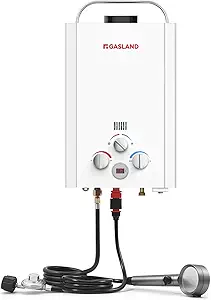 |
| Best Budget The cheapest option that still gets the job done reliably | Kohree Tankless Propane Water Heater KR5506 |  |
| Top Rated A top-rated pick with lots of positive feedback | Rinnai V53DeP Propane Tankless Water Heater |  |
| Most Popular A crowd favorite that many people choose with confidence | CAMPLUX AY132 Portable Tankless Water Heater |  |
| Best Seller A high-volume bestseller chosen again and again | Orbek 60000 BTU RV Tankless Water Heater |  |
Ranein RA65LH 65,000 BTU Tankless RV Heater
| Power Source | Liquid Propane |
|---|---|
| Flow Rate | 3.9 gpm |
| Maximum Temperature | 124 °F |
| Heat Output | 65000 BTU |
| Voltage | 12 volts DC |
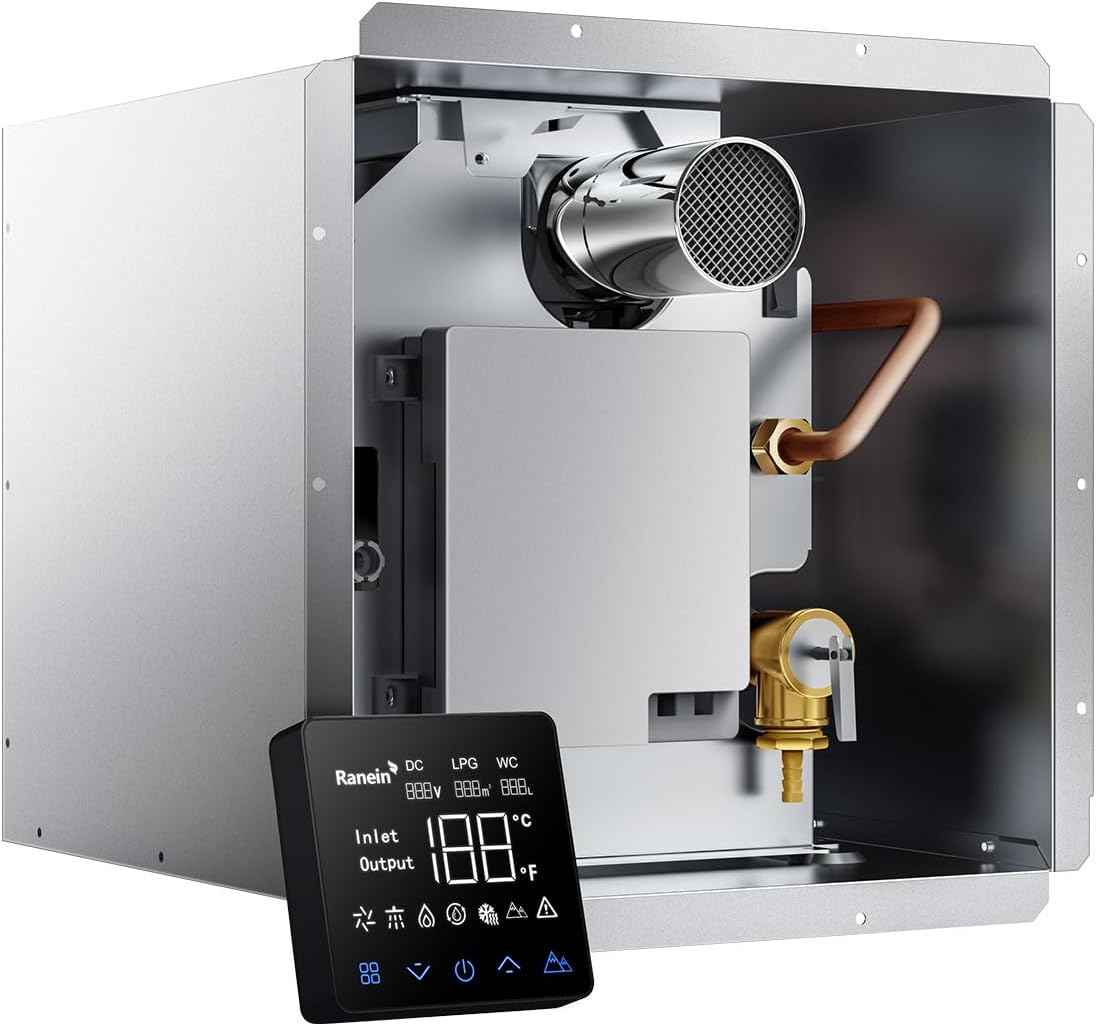
The Ranein RA65LH is a high-output tankless RV water heater built to replace standard 6/10/12-gallon RV tank units and deliver stronger on-demand hot water. Its 65,000 BTU burner and copper heat exchanger can push up to 3.9 gpm, which means it supports simultaneous use—showers and a faucet at once—without large temperature drops. The unit includes a thermostatic mixing chamber for steadier outlet temperatures, staged combustion and a top-mounted exhaust fan for stable burning, and multiple safety features such as flame failure shutoff, overheat protection, pressure relief, and an automatic anti-freeze mode that activates in cold conditions. It runs on 12V DC so it integrates with typical RV electrical systems, and the wired digital remote reports gas consumption, voltage, and flow for easier monitoring. Trade-offs are its need for a propane supply and 12V power, and the exterior door is sold separately, so installation on older rigs may require additional parts. For campers who want near-instant, family-capable hot water, this unit offers a robust, RV-focused solution.
Best for: Buyers who need reliable, family-capable hot water in an RV and prioritize steady temperatures and strong flow for simultaneous use while traveling.
Less Ideal for: People who lack a compatible propane supply or 12V electrical hookup, or who want a simple drop-in electric-only replacement for a campground hookup.
- High 65,000 BTU output for stronger flow and faster heating
- Thermostatic mixing chamber delivers more consistent outlet temperatures during varying demand
- Oxygen-free copper heat exchanger for efficient heat transfer and durability
- Built-in safety features including flame failure shutoff, overheat protection, pressure relief, and anti-freeze function
- 12V wired digital remote shows gas use, voltage, and flow for on-the-go monitoring
- Requires propane and 12V power so not suitable where those supplies are unavailable
- Exterior door kit is not included, which can add parts and install work
Verdict: Choose the Ranein RA65LH if you want a high‑output propane tankless RV heater that reliably delivers near-instant hot water for families and simultaneous fixtures.
Rheem RTG-70DVLP-3 Tankless LP Heater

| Power Source | Liquid Propane |
|---|---|
| Flow Rate | 7 gpm |
| Heat Output | 160000 BTU/hr |
| Efficiency | 0.82 |
| Maximum Temperature | 140 °F |
The Rheem RTG-70DVLP-3 is a wall-mounted, non-condensing liquid propane tankless water heater designed to supply continuous hot water for whole-house use. It delivers up to 7.0 gallons per minute at a 35°F rise and a maximum 160,000 BTU input, which supports two to three simultaneous showers in most homes. The unit uses on-demand heating to reduce standby energy losses and has a 0.82 UEF rating for improved efficiency versus traditional tanks. Practical features include Hot Start Programming to avoid cold-water bursts during back-to-back uses, a digital LED temperature control with ±1°F precision, LeakGuard leak detection, Overheat Film Wrap protection for the heat exchanger, and built-in safety functions such as freeze and flame-failure protection. Its compact wall-mount design frees floor space and simplifies replacing an old tank. Trade-offs are typical for non-condensing units: it does not offer the highest condensing-level efficiency and requires professional gas venting and installation. For buyers prioritizing steady high flow and robust safety features, this model balances performance and durability well.
Best for: Buyers who want a high-performance propane tankless heater that reliably supplies continuous hot water for busy households and prioritize consistent flow and safety features.
Less Ideal for: Homes seeking the absolute highest energy efficiency or lowest operating costs should consider a condensing tankless model instead.
- Delivers continuous hot water at up to 7.0 GPM for multiple simultaneous uses.
- High heat output (160,000 BTU/hr) suitable for 2–3 showers running at once.
- Hot Start Programming and digital temperature control for consistent delivery and fewer cold bursts.
- LeakGuard and Overheat Film Wrap add active leak and overheat protection.
- Compact wall-mount design saves floor space and fits in tighter installation locations.
- Non-condensing design limits maximum efficiency compared with condensing tankless models.
- Requires professional installation and proper venting for indoor propane use.
Verdict: Choose the Rheem RTG-70DVLP-3 if you need a compact, high-output propane tankless heater that delivers steady multi-fixture performance and built-in safety features.
GASLAND BE158 Propane Water Heater

| Power Source | Liquid Propane |
|---|---|
| Flow Rate | 1.58 gpm |
| Heat Output | 41000 BTU |
| Capacity | 6 liters |
| Maximum Pressure | 110 psi |
The GASLAND BE158 is a compact, portable propane tankless water heater designed for outdoor and off-grid use like camping, RVing, or cabin showers. It runs on a standard liquid propane tank and uses battery-powered electronic ignition so you do not need electrical hookups. The unit produces up to 1.58 gallons per minute and a maximum heat output of 41,000 BTU to provide a noticeable temperature rise at low to moderate flow rates, and a bright LED display makes it easy to monitor set temperature. Built-in safety features include overheat protection, flame failure and dry combustion protection, and low and high water pressure safeguards, which are helpful when operating from variable campsite water sources. The package includes a regulator, hose, shower head, and mounting hardware for quick setup, but the 1.58 GPM flow limits simultaneous high-demand uses and the heater is intended for outdoor or protected environments only since prolonged exposure to rain can damage internal components. For buyers wanting a compact, self-contained propane solution for single-shower or light outdoor hot water needs, this unit is a practical choice.
Best for: Buyers who prioritize practical, self-contained hot water for outdoor or off-grid needs and want a ready-to-use propane solution with clear temperature control and safety features.
Less Ideal for: Those needing higher flow for multiple simultaneous fixtures, full indoor plumbing integration, or an always-installed, weatherproof whole-house unit should consider larger or permanently mounted alternatives.
- Portable, self-contained propane design for off-grid use with battery ignition
- Relatively high heat output (41,000 BTU) for fast temperature rise at low flow
- Digital LED temperature readout for clearer temperature control
- Multiple safety protections including overheat, flame failure and low-flow safeguards
- Comes with regulator, hose, shower head and mounting hardware for quick setup
- Maximum flow of 1.58 GPM limits use to single showers or low-demand applications
- Not rated for prolonged exposure to rain so requires sheltered installation
Verdict: A compact, ready-to-use propane tankless heater that gives practical hot water on the go with strong safety features and simple setup.
Kohree Tankless Propane Water Heater KR5506

| Power Source | Liquid Propane |
|---|---|
| Flow Rate | 1.58 gpm |
| Maximum Temperature | 120 °F |
| Rated heat input | 41000 BTU/HR |
| Water Pressure Range | 3-110 PSI |
The Kohree KR5506 is a portable propane tankless water heater designed for camping, RVs, pet washing, and occasional outdoor or cabin use. It runs on liquid propane and ignites with two D batteries, producing up to 41,000 BTU to heat water at a maximum flow of 1.58 gallons per minute. The unit supports low-pressure start-up down to 3 PSI and includes multiple safety protections such as anti-freeze, dry combustion, flame-failure, overheat, and high-pressure protection. It ships with a shower head, gas regulator, brass hose fittings, and Teflon tape for simple setup, and the built-in handle or mounting bracket allows easy carrying or wall mounting. Practical benefits include on-demand hot water without a tank, a windproof design for outdoor use, and a brass connector for durability. Limitations are the modest flow rate, which is best for single-shower or rinse tasks rather than simultaneous multiple fixtures, and the battery ignition requirement and propane supply make it better suited to portable or off-grid scenarios than permanent home installation.
Best for: Buyers who need an inexpensive, portable source of on-demand hot water for camping, RV trips, or occasional outdoor tasks and prioritize low upfront cost and ease of transport.
Less Ideal for: People seeking a permanent household water heater or solutions that must supply multiple fixtures at once should look at higher-capacity, hard‑plumbed models instead.
- Portable, lightweight design with a carrying handle and mounting bracket for easy transport and installation
- On-demand heating up to 41,000 BTU provides hot water quickly without a storage tank
- Low water pressure start-up (3 PSI) and windproof design make it usable in remote or outdoor conditions
- Multiple built-in safety protections including overheat, dry combustion, and flame failure devices
- Maximum flow of 1.58 GPM is limited for full showers or running more than one outlet
- Relies on D batteries for ignition and a separate propane source, which adds ongoing consumables
Verdict: A budget-friendly, portable propane tankless heater that delivers reliable single-outlet hot water for camping, RVs, and light outdoor use.
Rinnai V53DeP Propane Tankless Water Heater

| Power Source | Gas Powered |
|---|---|
| Flow Rate | 5.3 gpm |
| Heat Output | 81 KW |
| Mount Type | Wall |
| Material Type | Stainless Steel |
The Rinnai V53DeP is a propane-powered tankless water heater designed to provide continuous hot water for busy households. It produces up to 5.3 gallons per minute, which is sufficient to run multiple fixtures at once, and its high-efficiency operation heats water only when needed to reduce energy use. The unit is compact and wall-mounted to save space and is built from stainless steel with enhanced scale detection to improve long-term reliability. Wi-Fi monitoring is supported via an optional module for remote status checks and diagnostics, and the manufacturer backs the heater with extended warranties on critical components. Practical limitations include the need for professional installation and the fact that its 5.3 GPM rating may not meet demand for very large homes with simultaneous high-flow use. Expect durable, efficient service for typical family use, especially where steady, reliable hot water is a priority.
Best for: Buyers who prioritize long-term dependability and efficient on-demand hot water for a typical family home and who want a compact, professionally installed propane solution.
Less Ideal for: Large households that regularly run multiple high-flow appliances at once or DIY installers seeking a plug-and-play replacement should consider higher-capacity or simpler options.
- Provides continuous hot water at up to 5.3 GPM suitable for multiple fixtures
- High-efficiency tankless design heats only on demand to lower energy use
- Stainless steel construction with enhanced scale detection for durability
- Compact wall-mounted form saves space compared with tank units
- Wi-Fi capable for remote monitoring and diagnostics (module sold separately)
- 5.3 GPM output may be insufficient for very large homes with many simultaneous high-flow fixtures
- Requires professional installation and proper propane venting
Verdict: Choose the Rinnai V53DeP when you want a durable, energy-efficient propane tankless heater that reliably supplies continuous hot water for typical family use.
CAMPLUX AY132 Portable Tankless Water Heater

| Power Source | Battery Powered |
|---|---|
| Flow Rate | 1.32 gpm |
| Heat Output | 34,000 BTU/hr |
| Capacity | 5 liters |
| Maximum Pressure | 110 psi |
The CAMPLUX AY132 is a portable, propane tankless water heater built for outdoor use where electricity is limited. It runs on a 20 lb propane tank and two D batteries for ignition, producing up to 1.32 gallons per minute and a rated 34,000 BTU output to heat water on demand. Included fittings—a 5 ft shower head and a CSA-certified gas regulator—make it easy to set up for quick showers, dog rinses, or campsite dishwashing; the folding handle and 10 lb weight keep it genuinely portable. Safety features include multiple protections such as anti-freeze, overheat, flame-failure, and low-flow shutdown, and it is CSA certified for outdoor operation. Practical limits are its modest flow rate, which suits single-person showers or light washing but will not support multiple simultaneous uses, and the temperature rise depends on incoming water temperature and low flow operation. The unit needs a propane supply and batteries, so continuous use requires monitoring fuel and battery life. For campers and remote cabins seeking a simple, certified outdoor hot-water solution, the AY132 is straightforward and reliable.
Best for: Buyers who prioritize a certified, easy-to-install hot water source for camping, RVing, or remote cabins and value straightforward, risk-conscious gear with visible safety features.
Less Ideal for: People who need high-flow or whole-camp hot water for multiple users or heavy duty continuous use should choose a higher-capacity model or plumbed system.
- True off-grid operation using 20 lb propane and two D batteries for ignition
- Compact and lightweight with a folding handle for easy transport and mounting
- Includes necessary accessories: CSA-certified gas regulator, shower head and hose, and hardware
- Multiple built-in safety protections and CSA certification for outdoor use
- Relatively low flow rate (1.32 GPM) limits it to single-user showers and light tasks
- Requires monitoring propane and battery supply for extended use
Verdict: A compact, CSA-certified propane tankless heater that reliably delivers on-demand hot water for single-user outdoor and off-grid needs.
Orbek 60000 BTU RV Tankless Water Heater

| Power Source | Liquid Propane |
|---|---|
| Voltage | 12 volts DC |
| Flow Rate | 3.5 gpm |
| Maximum Temperature | 123 °F |
| Maximum Pressure | 150 psi |
The Orbek 60000 BTU RV tankless water heater provides continuous on-demand hot water for showers, dishes, and general RV use while running from a 12V DC supply and liquid propane. It uses an oxygen-free copper heat exchanger, brushless DC fan, and staged combustion to maintain steady temperatures and support high-altitude operation, and a smart remote lets you set temperatures from 95°F to 123°F and read error codes for troubleshooting. Built-in safety features include frost protection, flame failure shutoff, dry combustion protection, and a forced-draft exhaust fan, and Orbek ships the unit with a remote controller and a factory-installed 150 psi pressure-reducing valve. Installation is designed for standard RV door cutouts and common NPT water fittings, so many owners can replace a tank-style or existing tankless heater without heavy modification. Trade-offs to note are that it requires a proper 12V power source (an AC-to-DC converter is needed if you only have 110V) and the unit is a propane appliance so correct venting and gas hookup are essential for safe operation.
Best for: Buyers who prioritize reliable, safe on-demand hot water in an RV and want a factory-equipped unit that handles high-altitude driving and simple remote control.
Less Ideal for: If you lack a stable 12V supply or are unwilling to manage propane venting and hookups, choose a simpler electric or professionally installed alternative instead.
- Continuous on-demand hot water with a 60,000 BTU burner for reliable flow.
- Designed for high-altitude use with oxygen-free copper heat exchanger and brushless DC fan.
- Remote temperature control with adjustable range and error-code display for easy operation.
- Multiple safety protections including frost protection, flame failure shutoff, and dry combustion protection.
- Includes factory-installed pressure-reducing valve to simplify installation.
- Requires a 12V DC power supply or an AC-to-DC converter if only 110V AC is available.
- Installation needs correct propane hookup and venting, which may require professional service for some users.
Verdict: Choose this unit if you want a factory-quality propane tankless heater built for RV use that delivers dependable, continuous hot water with high-altitude support and built-in safety features.
Choosing the Right Propane Water Heater: Key Factors to Consider
Recovery Rate and First-Hour Delivery
Recovery rate measures how many gallons of hot water the heater can produce per hour and directly affects how long a heater can supply back-to-back showers or runs of hot water. A higher recovery rate helps households with multiple occupants or staggered bathroom use avoid cold-water interruptions. First-hour delivery combines tank volume and recovery to estimate usable hot water during the busiest hour, which is often more informative than tank size alone.
When assessing recovery, consider typical simultaneous demands in your home. A small family with a single shower and dishwasher has different needs than a larger household with multiple showers running. If you frequently experience dips in temperature during peak use, prioritize models with stronger recovery numbers and efficient burners.
Fuel Efficiency and Burner Control
Fuel efficiency affects ongoing propane consumption and operating cost. Look for heaters with higher thermal efficiency ratings and burners that modulate rather than only operate at full fire. Modulating burners adjust output to match demand, reducing wasted fuel during low-use periods and smoothing temperature swings.
Efficient combustion design and effective heat exchangers also reduce propane usage. For off-grid or high-fuel-cost situations, modest gains in efficiency compound over time. Also evaluate standby heat loss for tanks, as better insulation reduces cycles and fuel use when the heater is idle.
Tank Size and Capacity Matching
Tank capacity determines stored hot water available immediately when demand starts. Choosing the right tank size requires matching household routines to how often and how long hot water is used. Larger tanks provide more immediate hot water, while smaller tanks with high recovery can deliver comparable usable hot water over time but may struggle with very rapid, heavy demand.
Consider installation space constraints and whether you need a larger first-hour output or simply greater stored volume. Also take into account seasonal demand differences and whether guests or changes in occupancy will increase usage periodically.
Venting, Installation Complexity, and Location
Propane water heaters require proper venting and adequate combustion air. Installation complexity varies depending on whether a unit is direct-vent, power-vent, or standard atmospheric vent. Some venting options allow more flexible placement, while others require routed ducting or electrical hookups for fans.
Location affects safety and service access. Installers must follow local codes for combustion air, vent termination, and clearances. If your mechanical room is tight or lacks a convenient vent path, factor those constraints into the choice and budget for installation work.
Serviceability and Replacement Parts
A heater that is easy to service reduces long-term maintenance cost and downtime. Look for units with accessible burner assemblies, replaceable anode rods, and straightforward controls for diagnostics. Clear access to drain valves and sensors simplifies routine maintenance.
Availability of common replacement parts and clear service documentation also matters. Even a well-built unit benefits from routine flushing and occasional component replacement, so designs that simplify those tasks are more homeowner-friendly over the years.
Sizing Your Propane Water Heater
Determine the household peak-hour hot-water demand first, then choose a combination of tank capacity and recovery rate that meets or slightly exceeds that figure. Estimating peak demand involves adding typical simultaneous uses such as showers, laundry, and dishwashing.
If space limits the tank size, prioritize a higher recovery rate. In many homes a mid-size tank paired with strong recovery outperforms a very large tank with slow recovery because it replenishes hot water faster during prolonged use.
- Estimate simultaneous uses to calculate needed first-hour delivery.
- Match tank size to installation space and service access.
- Consider future changes in occupancy when sizing.
Venting Options and Placement Best Practices
Understand the venting type required for each model before planning location. Power-vent and direct-vent options allow more flexible placement but may need electrical power or sealed combustion air paths.
Keep combustion air sources clear and follow local code clearances. For basements or utility closets, adding a dedicated combustion air intake or an approved venting kit prevents operation issues and safety risks.
- Confirm vent termination clearances outside the building.
- Avoid locating the heater in a tight, poorly ventilated closet unless code-compliant combustion air is installed.
- Plan for service access and panel removal space.
Off-Grid and Backup Considerations
Propane heaters are a common choice for cabins and off-grid homes because propane storage allows reliable fuel supply independent of electric grid outages. When off-grid reliability matters, focus on models with simple ignition systems and minimal electrical reliance.
If the location experiences cold temperatures, ensure the installation prevents freezing of exposed pipes and that the heater's venting and exhaust operate reliably in low temperatures.
- Prefer mechanically simple ignition if power is intermittent.
- Insulate supply lines and install freeze protection where needed.
- Keep a clear plan for propane refilling and safe storage.
Maintenance Checklist for Longevity
Regular maintenance keeps a propane water heater performing efficiently and extends service life. Key tasks include periodic flushing to remove sediment, inspecting and replacing anode rods, checking burner and pilot assemblies, and validating venting integrity.
Create a maintenance schedule based on water hardness and usage. Hard water conditions accelerate sediment buildup and may require more frequent flushing and inspection.
- Flush tank annually or per water quality needs.
- Inspect anode rod every 1 to 3 years and replace when depleted.
- Check vent caps and flues for obstruction before heating season.
Common Installation Pitfalls and How to Avoid Them
Many installation issues stem from improper vent routing, undersized venting, or inadequate combustion air. Work with a qualified installer who verifies local code requirements and evaluates the site conditions.
Another frequent problem is choosing a unit with insufficient recovery for the household pattern. Review recovery and first-hour delivery calculations before purchase and confirm clearances and drain arrangements during installation planning.
- Verify vent diameter and length limits for the chosen vent type.
- Ensure proper water and gas shutoff access near the heater.
- Label and document service points for future technicians.
How We Chose the Best Propane Water Heater
Our selection focused on practical, measurable attributes that affect in-home performance and long-term operating cost for propane water heaters. We prioritized recovery rate and first-hour delivery because these metrics determine how well a heater keeps up during consecutive showers and heavy demand. Fuel efficiency and burner modulation were assessed to estimate propane use under varying loads. Tank capacity and available size options were considered to match different household sizes and installation spaces. Reliability factors such as construction quality, simple service access, and standard replacement-part availability were also included because easy maintenance reduces downtime. Safety and venting options were evaluated to ensure proper fit with common venting arrangements and to minimize carbon monoxide and combustion risks. We excluded experimental or niche prototype units and models that lack documented performance specifications. Final picks are units that balance fast recovery, efficient propane use, sensible capacities, and straightforward installation or serviceability.
Our full evaluation process is outlined in our review methodology.
FAQ
How often should I flush a propane water heater?
Flush frequency depends on water hardness and usage. For most homes, an annual flush is sufficient, but in areas with very hard water you may need to flush every six months to limit sediment buildup.
Can a propane water heater work during a power outage?
Some propane heaters use standing pilots or mechanical ignition and can operate during outages, while models relying on electronic ignition or powered vent fans may need electricity. Choose a model with the appropriate ignition type if outages are a concern.
What venting type is best for a tight utility closet?
Direct-vent or power-vent options offer flexible venting for constrained locations, but power-vent models require electrical power for the fan. Ensure the chosen venting method complies with local codes and allows sufficient combustion air.
How do I size a propane water heater for a family of four?
Estimate the household peak-hour demand by totaling simultaneous uses like two showers and a dishwasher, then choose a tank size and recovery rate that meet that first-hour delivery figure. A mid-size tank with higher recovery often suits families better than a very large tank with slow recovery.
Are there safety checks I should perform regularly?
Yes. Regularly inspect venting for obstructions, check for gas leaks at fittings, verify that combustion air openings are clear, and test temperature-pressure relief devices. If you detect unusual smells or operation issues, shut off fuel and contact a qualified technician.
Final Verdict
When choosing a propane water heater, prioritize the combination of recovery rate and tank capacity that matches your household peak demand, and factor in venting constraints and ease of service. Tradeoffs are inevitable: larger tanks increase immediate hot-water availability while higher recovery reduces interruptions during prolonged use. Focus on models with efficient burners, clear venting options for your installation, and straightforward maintenance access to minimize operating cost and downtime. With those priorities in mind, you can confidently select a propane water heater that delivers reliable hot water for years.