
Note: This article contains affiliate links. If you click on these links and make a purchase, we may earn a small commission at no extra cost to you. This helps support our research and content. Read our full affiliate disclosure here.
If you want dependable extra frozen storage without the constant hum, a quiet freezer makes a big difference for home comfort. Whether you keep one in the garage, basement, or kitchen-adjacent utility room, noise level affects where the unit can live and how intrusive it will be when running 24/7. This guide presents six shortlisted quiet freezers selected for low sound output, steady temperature control, and efficient energy use. We focus on practical features that matter in daily use, such as insulation, compressor type, and interior layout. Read on for an overview of the top quiet models and a breakdown of the evaluation criteria so you can pick the best quiet freezer for your space.
Top Picks at a Glance
| Best Overall The best all-around choice for most situations | BODACIOUS 5.0 Cu Ft Chest Freezer |  |
| Best Value The sweet spot between price and what you get | Kismile Chest Freezer BD-80 |  |
| Best Budget The cheapest option that still gets the job done reliably | Climate Choice 4.0 Cu.Ft Chest Freezer BD-108A |  |
| Top Rated A top-rated pick with lots of positive feedback | Igloo 3.5 Cu Ft Upright Deep Freezer |  |
| Most Popular A crowd favorite that many people choose with confidence | Upstreman BR321 3.2 Cu.Ft Mini Fridge |  |
| Best Seller A high-volume bestseller chosen again and again | Frostorm 1.6 Cu Ft Mini Fridge |  |
BODACIOUS 5.0 Cu Ft Chest Freezer

| Capacity | 5 cubic feet |
|---|---|
| Wattage | 58 watts |
| Voltage | 110 volts |
| Number Of Shelves | 1 |
| Specification Met | ETL |
This BODACIOUS 5.0 cu ft chest freezer is a compact, top-opening unit aimed at small homes, offices, or light commercial use. It runs quietly under 40 dB, so it can sit near living spaces or bedrooms without being intrusive, and the fast-freeze function helps lock in freshness for meats and produce. Practical touches include a removable basket, built-in drain for easier defrosting, and effective insulation that supports steady temperatures. The unit is energy efficient with low daily consumption, making it inexpensive to run long term. Being a chest-style freezer, it offers simple, unobstructed storage but requires bending to access items at the bottom and lacks shelving versatility of an upright model. The exterior is straightforward with a hidden handle and stainless-steel-look lid, and it installs freestanding or on a countertop. Expect standard small-freezer performance rather than commercial-grade heavy-duty cycling, but for quiet, efficient extra frozen storage in tight spaces it covers the essentials well.
Best for: Buyers who want a quiet, energy-conscious secondary freezer for small homes, apartments, or office spaces and value low running costs and simple reliable freezing.
Less Ideal for: People who need frequent, quick access to many separated shelves or who require a heavy-duty commercial freezer for constant high-volume use should consider other options.
- Very quiet operation under 40 dB suitable for apartments or bedrooms
- Low power consumption with energy-efficient daily/annual usage
- Fast-freeze capability for better preservation of fresh food
- Compact footprint that fits small kitchens, garages, or offices
- Built-in drain and removable basket simplify cleaning and organization
- Chest design requires bending to reach lower items and limits vertical organization
- Not intended for heavy commercial use or continuous high-cycle workloads
Verdict: Choose this compact chest freezer if you want an ultra-quiet, energy-efficient extra freezer that fits tight spaces and keeps running costs low.
Kismile Chest Freezer BD-80

| Capacity | 3.2 cubic feet |
|---|---|
| Number Of Shelves | 1 |
| Door Orientation | Top |
| Installation Type | Freestanding |
The Kismile BD-80 is a small chest freezer designed for tight spaces where you still need usable freezer capacity. It uses a 7-level adjustable thermostat so you can dial temperatures from about 6.8°F down to -7.6°F, and two removable wire baskets help keep frequently used items accessible while larger items sit below. The balanced hinge top lid stays open at common angles for easier loading and the built-in drain makes defrosting and cleaning straightforward. The unit is marketed as energy efficient and quiet, with daily energy use reported around 0.68 kWh and noise under 40 dB, which makes it suitable for bedrooms, offices, or kitchens where low noise matters. Limitations are its compact capacity and limited temperature range compared with larger freezers, so it is best for short-term storage, bulk grocery overflow, or items like breast milk rather than large long-term meat storage.
Best for: Buyers who need a quiet, space-efficient secondary freezer for everyday extras, short-term storage, or small households and value low noise and easy access over maximum capacity.
Less Ideal for: Large families, hunters, or anyone who needs long-term storage for big volumes of meat or large frozen goods should choose a larger-capacity deep freezer instead.
- Compact 3.2 cu ft size fits small kitchens, dorms, and offices
- Adjustable 7-level thermostat for flexible cooling between 6.8°F and -7.6°F
- Two removable baskets for organized, easy-access storage
- Low noise operation rated below 40 dB suitable for quiet environments
- Convenient water drain speeds defrosting and cleaning
- Smaller internal capacity limits long-term bulk storage
- Temperature range does not reach the very low levels of larger deep freezers
Verdict: A quiet, energy-efficient compact chest freezer that suits buyers prioritizing low noise and space-saving secondary freezer storage.
Climate Choice 4.0 Cu.Ft Chest Freezer BD-108A
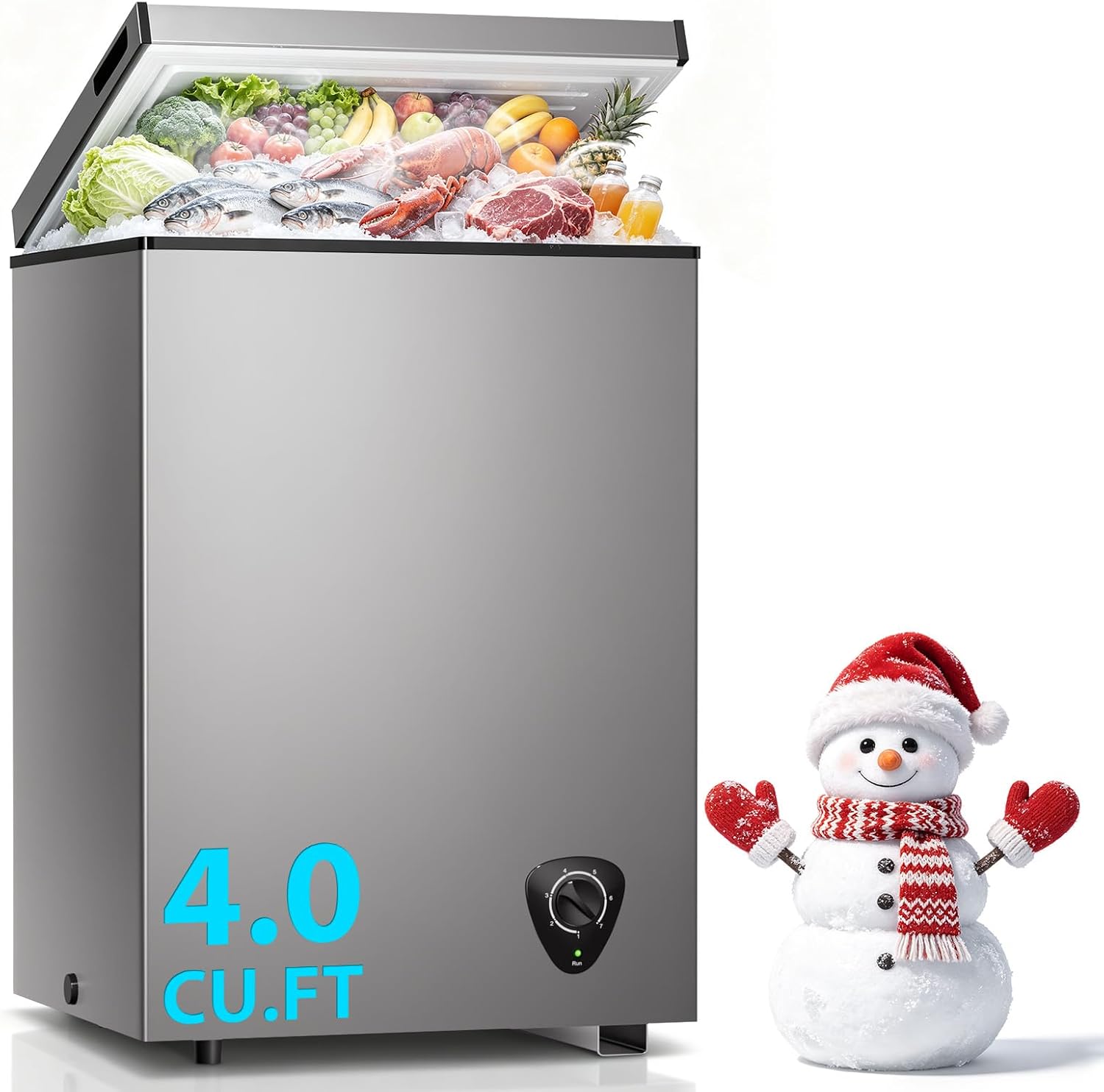
| Capacity | 4 cubic feet |
|---|---|
| Wattage | 85 watts |
| Voltage | 120 volts |
| Installation Type | Freestanding |
This Climate Choice 4.0 cu ft chest freezer offers small-footprint frozen storage with features that matter in everyday use. It provides seven temperature settings (from about -7.6°F to 21.2°F) so you can dial in freezing levels for meat, prepared meals, or pet food, and the removable basket keeps smaller items reachable without digging through the main compartment. A bottom defrost drain makes periodic defrosting and cleanup straightforward, and the unit is designed to run quietly (under 40 dB) while consuming little power, which is useful in apartments, offices, or garages where noise and energy bills matter. Build details such as a tight door seal and top-opening orientation help maintain steady cold and efficient operation, but remember chest freezers require bending to access contents and do not offer upright shelving. For buyers prioritizing an affordable, quiet secondary freezer, this model delivers sensible features and low running cost in a compact package.
Best for: Buyers looking for an affordable, low-noise secondary freezer for apartments, small kitchens, offices, or garages who value low running costs and straightforward storage.
Less Ideal for: People who need upright shelving, frequent quick-access organization, or larger capacity for long-term bulk food storage should consider a different layout or bigger model.
- Quiet operation below 40 dB suitable for shared or small living spaces
- Low energy consumption at approximately 0.469 kWh per 24 hours
- Seven adjustable temperature settings for flexible freezing needs
- Removable storage basket and bottom defrost drain for easier organization and cleaning
- Top-opening chest design makes accessing deep items less convenient than an upright freezer
Verdict: A budget-friendly, energy-efficient chest freezer that stays whisper-quiet, making it a smart choice for quiet living spaces needing modest extra frozen storage.
Igloo 3.5 Cu Ft Upright Deep Freezer

| Capacity | 3.5 cubic feet |
|---|---|
| Wattage | 100 watts |
| Door Orientation | Top |
| Number Of Shelves | 1 |
| Specification Met | ETL |
The Igloo 3.5 cu ft upright deep freezer is a small, quiet freezer intended to add extra frozen storage without using much floor space. It cools quickly thanks to a D-type refrigeration tube and uses foam insulation and a tight aluminum interior seal to hold steady temperatures from about -15°F to 0°F via a simple adjustable thermostat. The upright design and removable hanging wire basket make everyday access easier than a chest freezer because you do not need to bend over to find items, and the balanced hinge holds the lid open for loading. Practical touches include bright interior LED lighting, front rollers for repositioning, and a drain plug for easier defrosting. For buyers prioritizing low-noise operation, the freezer emphasizes whisper-quiet performance and modest 100-watt power draw for energy efficiency. Limitations are its small 3.5 cu ft capacity and single shelf configuration, so it is best for supplemental storage rather than stocking very large quantities or bulky items.
Best for: Buyers who need a reliable, low-noise secondary freezer for everyday frozen foods in small homes, apartments, or garages and value easy access and steady temperature control.
Less Ideal for: Families who regularly freeze large volumes, oversized items, or need multiple internal compartments should consider larger or different-format freezers.
- Quiet, low-noise operation suitable for living spaces or garages
- Fast quick-freezing D-type refrigeration tube for quicker cold-down
- Adjustable thermostat for temperature control from about -15°F to 0°F
- Removable hanging basket and balanced hinge improve access and organization
- LED interior lighting and front rollers make use and maintenance easier
- 3.5 cu ft capacity is limited for large households or bulk long-term storage
- Only one shelf/basket means less compartmentalized organization options
Verdict: Choose this model if you want a compact, whisper-quiet upright freezer that reliably preserves food while fitting into tight spaces.
Upstreman BR321 3.2 Cu.Ft Mini Fridge

| Capacity | 3.2 cubic feet |
|---|---|
| Freezer Capacity | 0.3 cubic feet |
| Defrost System Type | Manual Defrost |
| Voltage | 115 volts |
| Annual Energy Consumption | 206 kwh |
The Upstreman BR321 is a compact compressor mini fridge designed to deliver reliable cooling in tight spaces. Its 3.2 cu.ft interior includes a 0.3 cu.ft freezer and two adjustable glass shelves so you can store bottles, snacks, and small containers while customizing shelf height for taller items. Temperature is controlled with a five-level adjustable thermostat rated from about 32°F to 50°F, and the unit uses a rotary scroll compressor that balances cooling power with reasonable efficiency. Practical touches include a crisper drawer, reversible door, adjustable leveling feet, and a tight door seal to help hold temperature. It runs quietly at about 38 dB and carries ETL certification and Energy Star efficiency notes, which is helpful for long-haul or overnight use in noise-sensitive environments. Expect manual defrosting and a small footprint that limits total food volume; this model is best for drinks, lunch items, and short-term perishables rather than large grocery loads or long-term frozen storage. Installation is freestanding only and there is no lock on the door.
Best for: Buyers who want a dependable, quiet compact refrigerator for a truck cab, dorm, or small office and prioritize straightforward, reliable operation over advanced features.
Less Ideal for: People who need large-capacity refrigeration, extensive frozen storage, or programmable temperature control should look for larger or purpose-built units instead.
- Generous usable interior for a 3.2 cu.ft compact with a 0.3 cu.ft freezer.
- Adjustable glass shelves and crisper drawer allow flexible organization for bottles and food.
- Quiet operation around 38 dB suitable for sleeping or cab environments.
- Reversible door and leveling feet let you fit it into tight or uneven spaces.
- Energy-efficient compressor with ETL listing and modest annual energy consumption.
- Manual defrost means occasional maintenance to remove frost in the freezer.
- Not suited for storing large frozen items or maintaining hard ice cubes due to small freezer size.
- No door lock or advanced temperature controls beyond the basic 5-level dial.
Verdict: A quiet, energy-conscious 3.2 cu.ft compressor mini fridge that reliably chills drinks and perishables in compact spaces, making it a safe choice for risk-averse buyers needing simple dependable cooling.
Frostorm 1.6 Cu Ft Mini Fridge

| Capacity | 1.6 cubic feet |
|---|---|
| Freezer Capacity | 0.3 cubic feet |
| Cooling Method | Compressor |
| Defrost System Type | Automatic |
| Annual Energy Consumption | 100 kilowatt hours per year |
This Frostorm 1.6 Cu Ft mini fridge is a compact, compressor-cooled unit with a dedicated top freezer that works well for bedrooms, dorms, or small offices where quiet operation matters. It runs at about 30 dB, so it stays unobtrusive during sleep or study, and the small freezer can reach temperatures suitable for ice and frozen treats. The interior layout is simple — a metal shelf, a small freezer compartment, and adjustable thermostat with 1–5 mechanical control — which makes it easy to organize basics and to clean. Energy use is low at roughly 0.6 kWh per day, so running costs are modest. The reversible door and adjustable feet help fit it into tight spaces. Trade-offs are its limited total capacity and modest freezer volume, so it is not suited for bulk storage or meal prepping, and the mechanical thermostat offers less precision than digital controls. For buyers prioritizing quiet, budget-friendly cold storage in compact spaces, this unit covers the essentials without extras.
Best for: Buyers looking for an inexpensive, quiet cold storage solution for a single person in a bedroom, dorm room, or small office who prioritize low noise and low running cost over large capacity.
Less Ideal for: People who need to store family-sized groceries, batch-cooked meals, or sizable frozen items should consider larger refrigerators or freezers instead.
- Ultra-quiet operation around 30 dB suitable for bedrooms and study areas
- Dedicated top freezer that reaches freezer temperatures for ice and small items
- Low energy consumption (about 0.6 kWh per day) for economical running costs
- Reversible door and adjustable feet for flexible placement
- Very limited total capacity not suitable for storing large quantities
- Mechanical thermostat less precise than digital temperature controls
Verdict: A budget-friendly, very quiet mini fridge with a usable top freezer ideal for single-person rooms and offices.
Choosing the Right Quiet Freezer: Key Factors to Consider
Sound Output and Measurement
Noise rating is the most direct factor for a quiet freezer. Look for measured decibel ratings or manufacturer-specified quiet-mode numbers to compare units. Keep in mind that decibel ratings are logarithmic, so a small numerical difference can be noticeable in a quiet home environment.
Consider where the freezer will be located relative to living and sleeping areas. Even a low dB rating can be intrusive in a quiet bedroom-adjacent utility room. Also consider the frequency character of the sound; low-frequency vibrations travel farther through building structures and can be more annoying than higher-frequency fan noise.
Compressor Type and Cycle Frequency
The compressor design and how often it cycles influence both noise and temperature stability. Inverter-style compressors or variable-speed motors typically run more smoothly and at lower noise levels because they avoid abrupt on/off cycles. Standard single-speed compressors may produce louder start-up noise and more frequent cycling, which can be disruptive over time.
Assess whether a model offers adaptive cooling or quiet modes that reduce compressor speed during certain hours. Those operational modes can meaningfully lower audible noise during nights or when the household is occupied.
Insulation Quality and Cabinet Construction
Better insulation reduces how often the compressor must run by retaining cold air longer, which lowers cumulative noise. Thick, well-sealed cabinet walls and tight door gaskets help maintain interior temperatures and reduce cycle frequency. Solid interior panels and sound-damping materials in the cabinet also minimize noise transmission.
Check for features such as foam-injected walls, reinforced doors, and vibration-absorbing feet. These elements do not change noise at the source but reduce how much sound escapes into the room.
Energy Consumption and Efficiency
Energy-efficient freezers tend to run more efficiently and with fewer power-intensive start cycles, which reduces both operating cost and noise exposure. Look at the unit's energy consumption figures to estimate how often the compressor will run under typical load.
Higher efficiency can also indicate better overall engineering and insulation, which supports quieter performance over the life of the appliance. For homes where the freezer runs constantly, efficiency is an important secondary quietness factor.
Capacity, Layout, and Interior Organization
How you store food affects how often the door is opened and how evenly items cool, both of which impact compressor activity. A model with sensible shelving, baskets, or drawers makes rotation easier and reduces unnecessary door openings. Chest-style versus upright layouts produce different airflow patterns and can influence how frequently the compressor compensates for temperature changes.
Consider the typical types of items you freeze and how often you access them. A layout that suits your routine will minimize door time and help keep the freezer running quietly.
Installation Location and Vibration Isolation
Placement matters for perceived noise. Freezers placed on uneven floors or against walls and cabinetry can transmit vibration, making them seem louder. Isolation feet, anti-vibration pads, or leaving a small clearance from adjacent surfaces reduces structural noise transfer.
Also factor in ambient room noise. A unit rated as quiet in a garage may be very noticeable in a small, quiet utility room. Proper leveling and small placement adjustments can markedly reduce perceived noise.
Quiet Operation Modes and Timers
Some freezers offer dedicated quiet or eco modes that limit compressor speed and fan activity during specified hours. These modes lower audible output by reducing cycling intensity and are useful for overnight or evening use when low noise is most important.
When evaluating quiet modes, check whether they affect temperature targets or defrost cycles. A well-designed quiet mode preserves safe freezer temperatures while trimming noise. Timers and delay-start features can also prevent noisy start-ups during sensitive times.
- Quiet mode reduces compressor RPM or fan speed
- Check for programmable schedules or night modes
- Confirm temperature maintenance while in quiet mode
Upright Vs Chest Quiet Freezers
Chest freezers typically have fewer moving parts that interact with the cabinet and often benefit from slower temperature loss when opened, which can reduce compressor activity. Upright freezers provide easier organization and access but may cycle more frequently due to vertical door openings and thinner insulation in some designs.
Decide based on how you use the freezer. If you access items frequently and need organized shelving, an upright with strong insulation and vibration damping can be both quiet and convenient. For bulk long-term storage with infrequent access, a chest layout can be inherently quieter.
- Chest: better thermal retention, fewer cycles
- Upright: easier access, may need better insulation
- Match form factor to access frequency to minimize noise
Placement Tips to Reduce Perceived Noise
Even a quiet unit can sound louder if it sits against thin wall surfaces or on an uneven floor. Maintain the manufacturer's recommended clearance to allow airflow and prevent resonance. Use adjustable leveling feet to stabilize the cabinet and reduce rattles.
Add anti-vibration pads under the feet to absorb low-frequency buzz, and avoid sitting the freezer directly on hollow floor joists or thin wall panels. If the unit is in a living area, consider situating it where ambient noise can mask low-level compressor hums.
- Leave recommended clearance for airflow
- Use anti-vibration pads or mats
- Level the unit to eliminate rattles
Defrosting and Maintenance for Quiet Performance
Frost buildup increases compressor workload and can make a freezer cycle more frequently and loudly. Regular defrosting or selecting models with controlled auto-defrost features helps maintain quiet operation. Follow the recommended defrost schedule based on how the freezer is used and the humidity of its location.
Routine maintenance such as cleaning condenser coils, tightening loose panels, and checking door seals keeps the unit running smoothly and minimizes noise sources unrelated to the compressor. Small upkeep tasks have an outsized impact on long-term quietness.
- Defrost when frost exceeds recommended levels
- Clean condenser coils annually or as needed
- Inspect and replace worn door gaskets
Measuring and Comparing Noise
When possible, compare measured decibel levels taken at a standard distance. Look for tests that report both idle noise and peak start-up noise because start cycles can be briefly disruptive. Keep in mind environmental variables such as room acoustics that influence readings.
User reviews and independent lab data can both be informative. If decibel numbers are unavailable, look for descriptions of compressor type, insulation, and sound-dampening features as proxies for quiet performance.
- Check idle and start-up decibel figures
- Consider room acoustics when comparing specs
- Use construction and compressor details when dB is missing
How We Chose the Best Quiet Freezer
We selected these quiet freezers based on measurable, buyer-relevant attributes that predict low-noise real-world performance and long-term usability. Primary evaluation criteria included verified sound output in decibels or manufacturer-rated quiet modes, compressor and motor design, and the effectiveness of insulation and noise-damping construction. We also assessed temperature stability through reported temperature variance and control precision, which affects how often the compressor cycles and thus overall noise frequency. Energy efficiency and annual consumption were considered because more efficient units tend to run less often and produce less continuous noise. Usability factors such as capacity layout, drawer versus chest configuration, and ease of maintenance were included because they influence how the freezer will be used daily. We excluded units whose documentation lacked clear noise or energy data and models intended strictly for commercial or industrial use. We filtered out appliances with known reliability concerns or designs that compromise quiet operation, such as exposed compressors or minimal insulation. The final list balances low measured noise, steady cooling performance, efficient operation, and practical usability for typical home settings.
Our full evaluation process is outlined in our review methodology.
FAQ
How quiet is a typical quiet freezer in decibels?
Quiet freezers often range from the low 30s to the mid 40s dB at typical measurement distances. Exact figures vary by model and measurement method, so compare both idle and start-up numbers when available.
Will placing a freezer in the garage make it louder inside the house?
A garage location usually reduces perceived noise inside living areas, but structural vibration can still transmit through adjacent walls. Proper isolation and placement away from shared walls minimize noise transfer.
Do automatic defrost systems make freezers louder?
Auto-defrost can briefly increase activity during scheduled defrost cycles, but modern systems are designed to minimize audible disruption. Manual defrost eliminates those cycles but requires more maintenance to prevent extra compressor work from frost buildup.
Can anti-vibration pads really reduce freezer noise?
Yes. Pads or mats under the feet dampen low-frequency vibrations and prevent resonance with floors or cabinets, often making the unit noticeably quieter without altering the compressor.
How often should I service the freezer to keep it quiet?
Inspect seals and clean coils at least once a year, and defrost as needed based on frost accumulation. Address loose panels or rattles promptly to maintain low-noise operation.
Final Verdict
Prioritize measured noise levels, compressor type, and insulation when choosing a quiet freezer. Think about how you will use the unit, where it will be located, and how often you access it, because layout and placement materially affect both perceived noise and performance. Balance energy efficiency and temperature stability with the storage format that fits your routine to get the quietest practical solution for your home. With those tradeoffs in mind, choose a model that matches your noise tolerance and daily needs for a dependable, low-disturbance freezer.