
Note: This article contains affiliate links. If you click on these links and make a purchase, we may earn a small commission at no extra cost to you. This helps support our research and content. Read our full affiliate disclosure here.
If you need cold storage that won't dominate the soundscape of a basement, apartment, or garage, a quiet small chest freezer can make a big difference. Choosing the right model matters because noise level, usable capacity, and temperature stability affect how well it protects food and how comfortable your living area remains. This guide shortlists the top seven small chest freezers optimized for low-noise operation and practical home use. We focus on sound performance, energy use, storage layout, and real-world convenience to help you pick the best quiet small chest freezer for your space and needs. Read on for our evaluation criteria and the best options for calm, efficient freezing.
Top Picks at a Glance
| Best Overall The best all-around choice for most situations | Igloo 3.5 Cu Ft Upright Deep Freezer |  |
| Best Quality Built to a higher standard if you want something more solid | DEMULLER Chest Freezer 3.5 cu ft |  |
| Best Value The sweet spot between price and what you get | WANAI Chest Freezer 3.5 Cu.Ft | 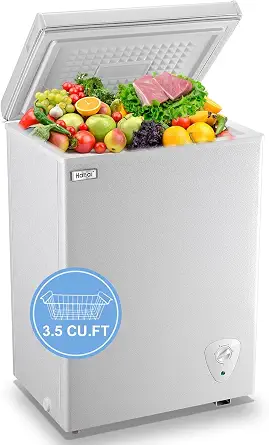 |
| Best Budget The cheapest option that still gets the job done reliably | Climate Choice 3.5 Cu.Ft Chest Freezer |  |
| Top Rated A top-rated pick with lots of positive feedback | Northair 3.5 Cu Ft Chest Freezer |  |
| Most Popular A crowd favorite that many people choose with confidence | Kismile 3.2 Cu Ft Chest Freezer |  |
| Best Seller A high-volume bestseller chosen again and again | BODACIOUS 7.0 Cu Ft Chest Freezer |  |
Igloo 3.5 Cu Ft Upright Deep Freezer

| Capacity | 3.5 cubic feet |
|---|---|
| Wattage | 100 watts |
| Door Orientation | Top |
| Number Of Shelves | 1 |
| Installation Type | Freestanding |
The Igloo 3.5 cu ft upright deep freezer is a space-saving freezer designed for apartments, garages, or kitchens where quiet, reliable frozen storage matters. It uses a D-type refrigeration tube and foam insulation to reach colder temperatures quickly and maintain them, while a simple dial thermostat lets you adjust between roughly -15°F and 0°F to suit different foods. The removable hanging wire basket and LED interior light make organization and access easy without excessive bending, and the balanced hinge keeps the lid propped open for hands-free loading. Practical touches include front rollers for repositioning, a drain plug for defrosting, and relatively low wattage for modest energy use. Because it is a small upright model, the interior footprint and single shelf limit storage layout compared with larger freezers, and it is best for frozen groceries, bulk ice cream, and seasonal overflow rather than long-term large-batch storage. For buyers who need a quiet, compact extra freezer that fits tight spaces, this model delivers sensible features without unnecessary complexity.
Best for: Buyers who want a quiet, compact secondary freezer for everyday frozen goods and limited-space locations and who value simple, practical features over advanced controls.
Less Ideal for: Families or users needing large-capacity or highly configurable long-term storage should choose a larger chest or commercial freezer instead.
- Compact upright design that fits in small kitchens, garages, or apartments
- Adjustable thermostat with quick-freezing D-type refrigeration tube for faster cold-down
- Removable hanging basket and LED light keep items organized and visible
- Balanced hinge, front rollers, and drain plug simplify loading, moving, and defrosting
- Quiet operation suited for living spaces
- 3.5 cu ft capacity and single basket limit large or long-term bulk storage
- Basic mechanical dial thermostat lacks digital precision or alarms
Verdict: A quiet, compact upright freezer that provides convenient, space-saving frozen storage with practical features for everyday use.
DEMULLER Chest Freezer 3.5 cu ft

| Capacity | 3.5 cubic feet |
|---|---|
| Voltage | 115 volts |
| Number Of Shelves | 2 |
| Installation Type | Freestanding |
The DEMULLER 3.5 cu ft chest freezer is a compact top-opening unit designed to add extra frozen storage in small spaces. It uses an electronic control panel that reports temperature to the nearest 1°F and supports a wide range from -15°F to 41°F, letting you push the cabinet into rapid-freeze mode for meats and seafood or set warmer temperatures for drinks and produce. Two removable hanging wire baskets help keep small items accessible while the full door seal and manual defrost with side drain make maintenance straightforward. Practical touches include a door that can hold open between about 45 and 75 degrees for easier loading and a recommendation to let the unit sit upright 24 hours after delivery. The freezer is freestanding and aimed at apartments, garages, or basements where footprint and noise matter; while the listing emphasizes fast-freeze capability and precise control, expect manual defrosting rather than frost-free operation and factor in standard compressor noise for any chest freezer. For someone who needs reliable small-capacity freezing and fine temperature control, this is a solid, space-efficient option.
Best for: Buyers who prioritize precise temperature control and quick freezing in a small, freestanding unit and need extra freezer capacity for meals, bulk meat, or frozen groceries in limited spaces.
Less Ideal for: Those who want a frost-free, maintenance-free freezer or require an ultra-quiet specialty unit for bedroom or noise-sensitive locations should consider other options.
- Digital control panel with 1°F precision and wide temperature range (-15°F to 41°F).
- Compact 3.5 cu ft capacity fits small spaces like apartments, dorms, or garages.
- Two removable stainless steel hanging baskets for organized, accessible storage.
- Full door seal and fast-freeze mode to help retain food flavor and nutrients.
- Manual defrost design requires periodic thawing and draining rather than automatic defrost.
- Compressor-based cooling can produce noticeable operational noise compared with passive or specialty quiet models.
Verdict: A space-efficient chest freezer with precise digital temperature control and fast-freeze capability, ideal for buyers who want reliable small-capacity performance.
WANAI Chest Freezer 3.5 Cu.Ft

| Capacity | 3.5 cubic feet |
|---|---|
| Wattage | 70 watts |
| Voltage | 110 volts |
| Number Of Shelves | 1 |
This small chest freezer is designed for tight spaces where quiet, efficient freezing matters. It delivers 3.5 cubic feet of storage accessed through a top-open lid and includes a removable wire basket to keep frequently used items organized. The R600a compressor and claimed noise below 45 dB make it well suited to apartments, dorms, or kitchens where low sound and lower energy use matter; the manufacturer lists daily consumption around 0.56 kWh. Temperature is adjusted with a 7-level thermostat that covers refrigerator temperatures at the low end and freezer temperatures at higher settings, so you can store everything from drinks to meat and ice cream. Setup requires leaving the unit upright for 24 hours after transport and defrosting is manual with a water outlet for drainage. At this size you trade capacity and advanced features for footprint and affordability, but for a buyer prioritizing quiet operation and compact, practical freezing this unit does the job reliably.
Best for: Buyers who need a quiet, space-efficient standalone freezer for an apartment, dorm, or secondary kitchen and value straightforward, energy-conscious operation.
Less Ideal for: Those who need large-capacity or frost-free long-term storage solutions and users who want advanced features like auto-defrost or digital temperature control.
- Compact 3.5 cu ft footprint fits apartments, dorms, and small kitchens
- R600a compressor with low noise operation under 45 dB
- Seven-level adjustable thermostat for refrigerator and freezer ranges
- Removable basket for easy access to frequently used items
- Low daily energy use around 0.56 kWh as listed
- Manual defrost only, so periodic thawing is required
- Limited overall capacity compared with full-size freezers
Verdict: A quiet, energy-conscious compact chest freezer that maximizes cold storage in small spaces.
Climate Choice 3.5 Cu.Ft Chest Freezer

| Capacity | 3.5 cubic feet |
|---|---|
| Wattage | 58 watts |
| Voltage | 115 volts |
| Installation Type | Freestanding |
This small chest freezer provides usable deep-freeze capacity in a compact footprint, making it a sensible secondary freezer for apartments, garages, or offices. It has seven temperature settings that let you dial internal temps from about -11.4°F to 10.2°F, so you can store everything from long-term frozen goods to short-term chilled items. A removable wire basket keeps frequently used items within easy reach while the top-opening lid with a 70 degree arc and dual side handles makes access straightforward in tight spaces. Practical touches include a drainage port for easier defrosting and two wheels to help reposition the unit when needed. The unit is designed for quiet operation under 40 dB and claims low energy use at 0.37 kWh per 24 hours, which suits budget-focused shoppers who want low running costs. Trade-offs are typical of compact chest freezers: storage is best for boxes and bulk rather than tall or oddly shaped items, and this freestanding unit lacks advanced features like a digital display or fast-freeze mode.
Best for: Buyers looking for an inexpensive, low-noise secondary freezer for apartments, small households, or garages who prioritize low operating cost and compact size.
Less Ideal for: People who need large capacity, upright-style shelving for tall items or who want advanced controls like a digital thermostat or rapid-freeze feature.
- Compact footprint fits small spaces
- Seven adjustable temperature settings for flexible storage
- Whisper-quiet operation (below 40 dB) suitable for living spaces
- Removable storage basket and drain make organizing and defrosting easier
- Energy-efficient consumption (~0.37 kWh/24h) lowers running costs
- Limited internal organization for tall or irregularly shaped items
- No digital temperature display or fast-freeze function
Verdict: A compact, quiet, and energy-efficient chest freezer that gives budget-minded buyers reliable extra frozen storage in small spaces.
Northair 3.5 Cu Ft Chest Freezer

| Capacity | 3.5 cubic feet |
|---|---|
| Voltage | 110 volts |
| Number Of Shelves | 1 |
| Installation Type | Freestanding |
This compact Northair chest freezer is built for simple, reliable freezing at home where quiet operation matters. It offers a 3.5 cu ft interior with two removable baskets and a top-opening lid that holds between 45 and 90 degrees for easy access. Temperature is controlled via an external dial with seven settings that the manufacturer says range from about 14°F down to -40°F in extended marketing, while the basic product details list a typical operating span around -4°F to 6.8°F; in practice the digital control and efficient compressor deliver steady cold and fast recovery after door openings. Energy use is modest at 0.45 kWh per 24 hours, and the metal top and simple interior layout make loading and long-term storage straightforward. The unit emphasizes low noise, using a whisper-quiet compressor that keeps it suitable for basements, garages, and small living spaces. Expect a no-frills user experience focused on dependable cooling rather than advanced features or smart controls.
Best for: Buyers who prioritize a quietly operating, compact chest freezer for steady, long-term food storage in small spaces and who prefer simple, reliable controls over extra features.
Less Ideal for: People who need precise digital temperature monitoring, Wi-Fi connectivity, or large-capacity commercial freezing should look at larger or feature-rich alternatives.
- Quiet compressor operation suitable for living areas and home bars
- Compact 3.5 cu ft capacity with two removable baskets for organized storage
- Simple external thermostat with seven settings for easy temperature adjustment
- Low energy consumption at 0.45 kWh per 24 hours
- Controls and features are basic with no smart or advanced monitoring options
- Manufacturer documentation lists differing temperature ranges, which may confuse buyers
Verdict: Choose this quiet, energy-efficient 3.5 cu ft chest freezer when you want dependable, low-noise freezing in a compact package.
Kismile 3.2 Cu Ft Chest Freezer

| Capacity | 3.2 cubic feet |
|---|---|
| Door Orientation | Top |
| Number Of Shelves | 1 |
| Installation Type | Freestanding |
The Kismile 3.2 cu ft chest freezer is a space-saving deep freezer intended for small kitchens, dorms, or offices that need extra frozen storage. It cools with a 7-grade adjustable thermostat (about 6.8°F to -7.6°F) so you can choose gentler chilling or deeper freezing, and two removable wire baskets help keep smaller items accessible while maximizing the cavity below. The balanced hinge-style lid can stay open at several angles for easier loading and has a built-in drain to speed manual defrosting and cleanup. The unit is designed to be energy efficient, claiming about 0.68 kWh per day, and runs under 40 dB so it is suitable for near-living spaces. Practical limits are its small overall capacity and chest layout, which make organizing tall items or frequent one-handed access less convenient than an upright freezer, and very cold setpoints are limited compared with larger deep freezers. For buyers prioritizing compact, quiet extra freezer space, this model delivers useful features in a small footprint.
Best for: Buyers who want a quiet, space-saving secondary freezer for occasional bulk storage or long-term items and who value user reviews and measured performance before committing.
Less Ideal for: People who need large-volume freezing, frequent quick access to many different items, or the very lowest temperature performance should look at larger upright or commercial freezers instead.
- Compact 3.2 cu ft capacity fits tight spaces like dorms or small kitchens
- 7-level adjustable thermostat for choosing between normal chilling and deeper freezing
- Two removable baskets keep small items organized and visible
- Low-noise operation under 40 dB suitable for nearby living areas
- Chest design reduces one-handed access and makes organizing tall items harder
- Maximum cold temperature is limited compared with larger deep freezers
Verdict: A quiet, compact chest freezer that delivers practical extra frozen storage for small spaces and near‑living areas.
BODACIOUS 7.0 Cu Ft Chest Freezer

| Capacity | 7 cubic feet |
|---|---|
| Voltage | 110 volts |
| Number Of Shelves | 2 |
| Installation Type | Countertop, Freestanding |
| Specification Met | ETL |
This compact chest freezer provides a straightforward way to add extra frozen storage in a home, apartment, or garage. It uses an energy-saving system and a six‑position thermostat so you can dial coldness to the food you store, and the removable wire basket helps keep frequently used items accessible. Practical touches include a top-opening door, an exterior defrost drain for easier maintenance, and ETL safety certification. The unit is marketed as quiet and suitable for spaces where noise matters, and the brand recommends letting the freezer sit 24 hours before first use and avoiding long periods at the coldest setting to protect the compressor. Expect a basic, no-frills chest freezer: it offers solid capacity and useful features for routine freezing needs, but it is a simple mechanical design without advanced controls or smart features and will warm the outer cabinet area during heavy use as the compressor runs.
Best for: Buyers who prioritize a quiet, energy-conscious secondary freezer for everyday frozen storage and prefer a simple, durable appliance with easy maintenance.
Less Ideal for: Not the best choice for users who need precise digital temperature control, frequent quick access, or integrated smart features in their freezer.
- Large 7.0 cu ft capacity provides meaningful extra frozen storage for a small household
- Energy-efficient design lowers daily power draw compared with older models
- Adjustable 6‑setting thermostat allows tailored temperature control
- Removable basket and exterior drain make organization and defrosting easier
- No digital controls or temperature readout, only a manual dial thermostat
- Top‑open chest design requires clearance above the unit and is less convenient for frequent access
Verdict: A quiet, energy-efficient 7.0 cu ft chest freezer that delivers reliable extra frozen storage with simple controls and easy maintenance.
Choosing the Right Quiet Small Chest Freezer: Key Factors to Consider
Noise Level and Measured Decibels
How loud a chest freezer runs matters in shared or finished living spaces. Noise level affects comfort and can make a utility appliance disruptive if it exceeds background room noise.
Look for manufacturers that publish operational decibel ratings or clear descriptions of quiet-mode features. Keep in mind that compressors cycle on and off, so you should evaluate both the steady-state sound and transient spikes during start-up. Lower decibel ratings and features that minimize vibration translate into less perceptible noise over time.
Temperature Stability and Recovery
A freezer that holds a steady temperature protects food better and often cycles the compressor less frequently, which reduces noise. Temperature stability is shaped by insulation quality, compressor performance, and thermostat accuracy.
Consider how quickly a unit recovers to set temperature after the lid is opened and how well it maintains target temperatures under varying loads. Good stability reduces run time and energy use while improving long-term food preservation.
Energy Efficiency and Running Cost
Even quiet freezers still consume electricity, and higher efficiency reduces both operating cost and compressor runtime. Efficiency depends on insulation thickness, compressor design, and how well the cabinet minimizes temperature exchange when opened.
Evaluate rated energy consumption and look for features that lower run hours, such as thicker insulation or adaptive defrost timers. Lower energy draw also usually means less frequent compressor cycles, which helps keep noise down.
Size, Capacity, and Interior Layout
Small chest freezers vary in usable space depending on internal shape and organizer features. Baskets, dividers, and the effective depth of the cabinet determine how usable the listed capacity actually is.
A well-organized interior reduces lid openings and searching, which cuts compressor activity and associated noise. Choose a footprint and capacity that fit your storage needs without overfilling the unit, as overpacked freezers run longer and louder.
Defrost Method and Maintenance Needs
Defrost approach affects how often you need to intervene and whether ice build-up will increase compressor workload and noise. Manual-defrost units often use less complex hardware and can be very quiet but require periodic maintenance.
Automatic or adaptive defrost systems reduce manual work but may run additional components that produce sound. Assess how easy it is to access the interior, remove baskets, and perform routine cleaning, since simple maintenance preserves efficient, quiet operation.
Installation, Placement, and Vibration Control
Where you place a chest freezer has a direct impact on how loud it seems. Uneven floors, close contact with walls, or cabinetry can amplify vibration and resonance.
Choose a unit with adjustable feet and a stable base to reduce rattles. Allow recommended clearances for airflow to avoid excessive compressor stress. Proper installation and anti-vibration measures often make more difference to perceived noise than small differences in rated decibel levels.
Where Quiet Chest Freezers Make the Biggest Difference
Low-noise chest freezers shine in situations where the appliance shares space with daily living areas. In basements, finished garages, studio apartments, and open-plan homes a loud compressor can be a persistent annoyance.
If you use a freezer for overflow storage of meal prep, bulk buys, or seasonal items, quieter operation reduces distraction during conversation, sleep, or media listening. Choosing a model with modest decibel output and solid vibration control keeps the unit functional without drawing attention to itself.
- Finished basements and rec rooms
- Small apartments or studios with adjoining living space
- Home offices or bedrooms located near utility closets
- Garages that double as hobby or lounge areas
Practical Tips for Reducing Noise After Installation
Placement and simple acoustic treatments can cut perceived noise significantly. Set the freezer on a level, solid surface and use rubber pads or vibration-isolating feet to decouple it from the floor. Avoid placing it tight against thin walls that can transmit sound into adjacent rooms.
Keep the condenser and ventilation paths clear so the compressor does not overwork, and check periodically for loose panels, screws, or items on top of the cabinet that can buzz during compressor cycles. Regular defrosting and cleaning reduce strain and help maintain quieter operation.
- Use anti-vibration pads under the feet
- Leave recommended clearance around the cabinet
- Tighten loose panels and check for rattling parts
- Keep condenser area clean for efficient cooling
Understanding Spec Sheets: What to Look For
Compare published decibel ratings when available, but treat them as one part of the picture. Specs for energy use, frost-control method, and net capacity give insight into runtime and convenience. Also check stated recovery time or how quickly a model returns to the set temperature after the lid is opened.
Look for measurements of usable net capacity rather than gross volume, and take note of any included organizational accessories. Simple controls and a clear thermostat are useful for dialing in temperature without guesswork, which helps avoid unnecessary cycles that increase noise.
- Operational decibel rating
- Net usable capacity and organization
- Defrost system and maintenance notes
- Energy consumption or efficiency rating
Maintaining Quiet Performance Over Time
Routine maintenance preserves quiet operation. Clean dust from vents and condenser coils at recommended intervals. Remove ice buildup before it becomes excessive, and keep the interior organized to reduce the time the lid is open.
Monitor for changes in sound profile. A sudden increase in vibration or grinding noises can indicate a failed component. Addressing loose parts and worn seals promptly prevents amplified noise and preserves efficient freezing.
- Regular condenser and coil cleaning
- Prompt defrosting when ice accumulates
- Inspect seals and hinges for wear
- Tighten or replace parts that rattle
Sizing the Freezer to Your Storage Needs
Choose a capacity that matches your typical stock level. Oversized units left nearly empty will cycle more frequently to maintain temperature and may be noisier proportionally. Undersized units packed tightly will run longer and produce more audible compressor activity.
Map out what you plan to store and estimate usable liters or cubic feet required. Favor models with easy-to-use baskets or dividers that let you access frequently used items without opening the lid for long periods.
- Match capacity to expected inventory
- Consider interior organizers to reduce search time
- Avoid extreme overpacking that increases runtime
How We Chose the Best Quiet Small Chest Freezer
We selected small chest freezers that deliver quiet operation without sacrificing core freezing performance. To build the list we evaluated units against concrete, measurable criteria: typical sound level in decibels during normal compressor cycles, temperature stability under steady load, and energy consumption as indicated by rated wattage or efficiency figures. We also considered usable interior capacity and layout since wasted space or awkward access increases run time and noise frequency. Practical usability factors included control precision, defrosting method and maintenance needs, and build quality elements that reduce rattles and vibration. Models with excessive runtime, poor temperature recovery, or noisy components were excluded. We prioritized units that balance low running noise with reliable freezing, sensible storage organization, and manageable upkeep. The result is a focused set of small chest freezers suited for quiet domestic environments.
Our full evaluation process is outlined in our review methodology.
FAQ
How loud is a typical quiet small chest freezer in decibels?
Quiet units often run in a lower decibel band than standard models, commonly reported in spec sheets. Actual noise depends on placement and floor type, so check published operational levels and plan installation to minimize resonance.
Will a manual-defrost freezer be quieter than one with automatic defrost?
Manual-defrost models can be simpler mechanically and sometimes quieter because they lack extra fans or heaters. However, quieter automatic systems exist. Consider maintenance tradeoffs and how often you are willing to defrost when choosing.
Can placement reduce perceived noise from a chest freezer?
Yes. Leveling the unit, using anti-vibration pads, and leaving recommended clearance for airflow all reduce noise transmission. Avoid mounting the freezer against thin walls or on hollow flooring that can amplify sound.
Does energy efficiency affect how loud the freezer is?
Indirectly. More efficient insulation and compressors often result in shorter run cycles, which can reduce the frequency of audible compressor starts. Efficiency alone does not guarantee lower noise but usually helps.
How often should I service a small chest freezer to keep it quiet?
Routine checks twice a year to clean coils, inspect seals, and tighten fittings are usually sufficient. Address any new rattles or changes in sound promptly to prevent larger issues.
Final Verdict
When choosing a quiet small chest freezer, prioritize measured operational noise, temperature stability, and efficient insulation. Balance capacity and interior layout so you do not overfill the unit or force long lid-open times that increase compressor activity. Pay attention to installation and routine maintenance because proper placement and upkeep often reduce perceived noise more than small differences in specifications. Focus on the tradeoff between convenience features and mechanical simplicity. A thoughtfully sized, well-installed, and regularly maintained small chest freezer will deliver quiet, reliable freezing performance for years, making it a practical addition to living spaces that value low noise and dependable cold storage.