
Note: This article contains affiliate links. If you click on these links and make a purchase, we may earn a small commission at no extra cost to you. This helps support our research and content. Read our full affiliate disclosure here.
Choosing the right refrigerator for an office changes how a workplace stores lunches, snacks, and catering supplies. The right unit balances internal capacity, quiet operation, and energy efficiency so employees have reliable cold storage without distracting hums or high running costs. This guide highlights seven shortlisted refrigerators for offices that suit different office sizes, breakroom layouts, and usage patterns. We evaluated each option on storage flexibility, noise, energy use, and installation practicality to help you find a model that fits your space and daily rhythm. Read on for practical buying guidance and the criteria we used to select these top office refrigerators.
Top Picks at a Glance
| Best Overall The best all-around choice for most situations | DUMOS 3.2 Cu.Ft Mini Fridge |  |
| Best Quality Built to a higher standard if you want something more solid | hOmeLabs Beverage Refrigerator HME030065N | 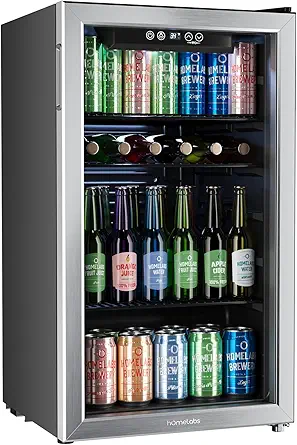 |
| Best Value The sweet spot between price and what you get | Feelfunn Beverage Refrigerator FWC008-11 | 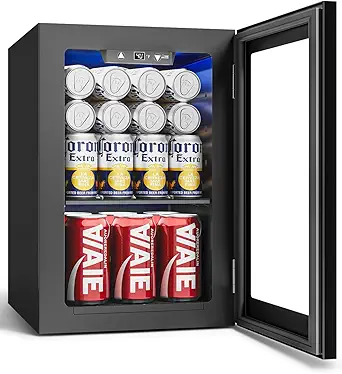 |
| Best Budget The cheapest option that still gets the job done reliably | Frigidaire Retro Mini Fridge EFMIS171 |  |
| Top Rated A top-rated pick with lots of positive feedback | EUHOMY 3.2 Cu Ft Mini Fridge |  |
| Most Popular A crowd favorite that many people choose with confidence | Frigidaire Retro 3.2 Cu Ft Fridge |  |
| Best Seller A high-volume bestseller chosen again and again | Upstreman BR321 3.2 Cu.Ft Mini Fridge |  |
DUMOS 3.2 Cu.Ft Mini Fridge

| Capacity | 91 liters |
|---|---|
| Freezer Capacity | 0.3 cubic feet |
| Refrigerator Net Capacity | 2.9 cubic feet |
| Defrost System Type | Manual |
| Voltage | 115 volts |
The DUMOS 3.2 Cu.Ft Mini Fridge is a small freestanding refrigerator with a top freezer that handles basic cold storage needs in tight spaces. It offers a 2.9 cu ft refrigerator area plus a 0.3 cu ft freezer, two removable glass shelves, a crisper drawer, and a door compartment so you can organize drinks, snacks, and a few meal components. Five adjustable temperature settings and a manual defrost freezer let you fine-tune cooling for beverages or perishables, while claimed energy usage of about 0.41 kWh per day keeps running costs low for office use. At 38 dB it runs quietly enough to sit near desks or in meeting rooms without causing distraction. The trade-offs are the small freezer capacity and manual defrost, which limit long-term frozen storage and require occasional maintenance. Fit and finish are straightforward and the stainless steel door gives a clean look, but this is a basic, no-frills unit built for space efficiency and low operating cost rather than heavy-duty kitchen performance.
Best for: Buyers who need a quiet, energy-efficient refrigerator that saves floor space in an office or small workspace and prioritizes basic cold storage over large freezer capacity.
Less Ideal for: Teams or users who need significant frozen storage, frequent meal prep, or a fully featured fridge with auto-defrost and larger capacity.
- Compact footprint that fits tight office spots and countertops
- Low noise operation (about 38 dB) suitable for quiet workspaces
- Energy-efficient consumption (approximately 0.41 kWh/day) for low running costs
- Adjustable thermostat with five settings for flexible temperature control
- Removable glass shelves and a crisper drawer for simple organization
- Small 0.3 cu ft freezer limits frozen storage and long-term meal prep
- Manual defrost freezer requires periodic maintenance
Verdict: A quiet, energy-efficient compact fridge that fits office corners and delivers basic refrigerated storage without taking up much space.
hOmeLabs Beverage Refrigerator HME030065N

| Capacity | 3.2 cubic feet |
|---|---|
| Storage | 120 cans |
| Temperature range | 34°F–50°F |
| Cooling method | Compressor |
| Defrost system | Automatic |
This hOmeLabs beverage refrigerator is built for steady, everyday beverage cooling in small commercial or office spaces. It uses a compressor-based cooling system with a whisper-quiet compressor and a digital touch control that sets temperatures from 34°F to 50°F, so drinks reach and hold consistent serving temperatures. The reinforced double-glazed glass door and interior white LED make it easy to locate drinks without long door openings, and three removable chrome wire shelves let you arrange cans or bottles for efficient storage. Installation is freestanding and the unit fits under counters or beside desks where space is tight. Expect reliable cooling performance with an automatic defrost cycle, but note the unit consumes notable annual energy and is a dedicated beverage/display refrigerator rather than a full kitchen fridge with freezer capability. For offices that need a visible, quiet, and easy-to-configure drink station, this model balances capacity and performance in a compact footprint.
Best for: Office managers or facilities buyers who prioritize steady, visible beverage cooling and a quiet unit that holds many cans in a compact footprint for shared break rooms or meeting areas.
Less Ideal for: People who need a multiuse refrigerator with a freezer, precise multi-zone temperature control, or an ultra low-energy solution for occasional beverage storage.
- Holds up to 120 slim cans for high-density beverage storage
- Digital touch temperature controls with 34°F–50°F range for consistent cooling
- Quiet compressor operation suitable for office environments
- Reinforced glass door with interior LED for visible display without frequent door openings
- Three removable shelves and adjustable feet for flexible organization and leveling
- Annual energy consumption is relatively high compared with very small coolers
- No freezer compartment or multi-zone cooling for mixed food storage
Verdict: A roomy, quiet compressor beverage fridge that delivers consistent serving temperatures and high can capacity for busy office break rooms.
Feelfunn Beverage Refrigerator FWC008-11
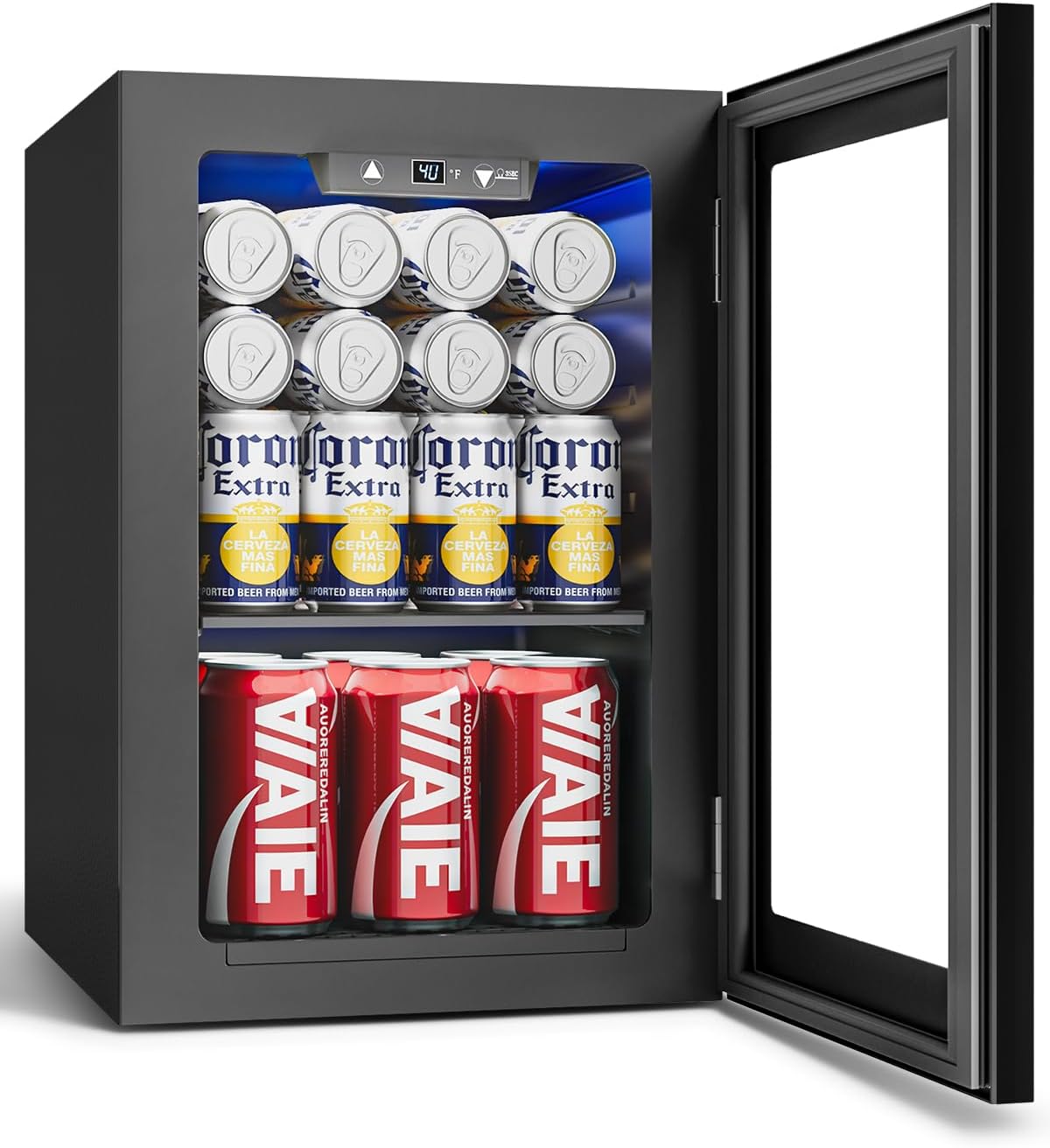
| Capacity | 0.6 cubic feet |
|---|---|
| Temperature range | 40-61°F (4-16°C) |
| Cooling method | Compressor |
| Noise level | ≤38 dB |
| Power | 115 volts |
The Feelfunn 24-can beverage refrigerator is a compact compressor fridge designed for offices, dorms, and small home-bar setups. It cools between 40 and 61°F using a 3D circulating air system and an adjustable thermostat shown on a simple LED readout, and a removable shelf lets you switch between cans and bottles. The unit runs quietly at or below 38 dB, so it can sit in a shared workspace or bedroom without being disruptive. Practical touches include interior LED lighting, a sealing strip on the door to keep temperatures steady, and adjustable feet for leveling on uneven surfaces. Because it is compressor-based and labeled as energy efficient, it cools faster and holds temperature better than thermoelectric mini-fridges, but its very small 0.6 cu.ft capacity limits how much you can store at once and it requires upright sit time before first use. For someone outfitting an office break corner or personal workstation with chilled drinks, this model delivers reliable cooling and a small footprint, though you should confirm the storage capacity meets your daily needs before buying.
Best for: Buyers who want a space-saving, quietly running fridge to keep drinks chilled at a personal office, dorm, or small break area and who prioritize reliable cooling and compact placement.
Less Ideal for: Teams or households that need to stock many drinks at once or store larger bottles regularly should choose a larger-capacity refrigerator instead.
- Compressor cooling with 40–61°F range for consistent, fast cooling
- Very quiet operation at ≤38 dB suitable for offices and bedrooms
- Removable shelf and compact footprint for flexible placement and storage
- Interior LED lighting and clear LED temperature display for easy use
- Very small 0.6 cu.ft capacity limits number of cans or bottles stored at once
- Manual defrost requires occasional user maintenance
Verdict: A tiny, quiet compressor beverage fridge that fits a personal office or dorm space and keeps drinks reliably chilled.
Frigidaire Retro Mini Fridge EFMIS171
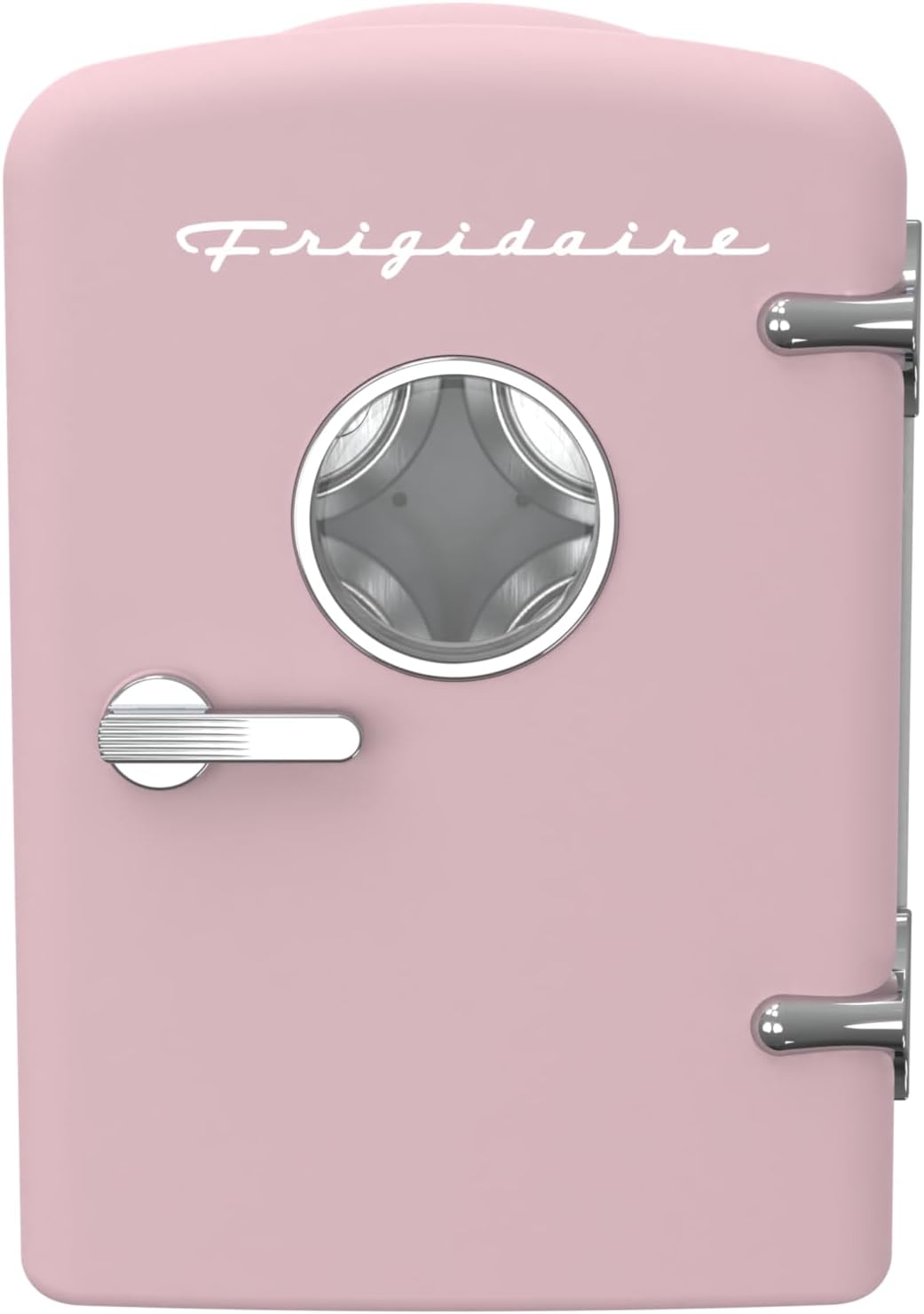
| Cooling Method | Thermoelectric |
|---|---|
| Capacity | 4 liters (6-can) |
| Voltage | 110 volts |
| Form Factor | Countertop |
This Frigidaire Retro Mini is a lightweight, countertop personal fridge aimed at keeping drinks, snacks, and skincare items cool in tight spaces. It uses thermoelectric cooling to get about 32°F below ambient and includes a removable shelf to fit six 12 oz cans or small food containers, plus AC and 12V car cords for indoor or mobile use. The reversible door and compact footprint make placement flexible in an office, dorm, or vehicle, and the freon-free design is quieter and more environmentally friendly than compressor units. Practical benefits include portability at roughly 3 pounds, simple plug-and-play operation, and enough interior room for single-person needs. Limitations are modest cooling capacity compared with full mini-fridges, slower temperature recovery after opening, and no freezer compartment; the thermoelectric system also struggles in very warm ambient conditions. For basic office use where space and budget matter, it delivers convenient on-desk chilling but is not suitable as a shared kitchen fridge or for long-term cold storage of perishable meals.
Best for: Buyers seeking an inexpensive, portable fridge to keep drinks, snacks, or skincare items cool at a single desk, office cubicle, or dorm where space and mobility are priorities.
Less Ideal for: People who need a shared office refrigerator, rapid cooling for large loads, or reliable cold storage for perishable food over extended periods should choose a larger compressor model instead.
- Very compact and lightweight for easy placement or transport
- Cools about 32°F below ambient and also offers a warm setting up to 140°F
- Includes both AC and 12V DC car cords for office, travel, or vehicle use
- Removable shelf and reversible door give flexible interior organization and placement
- Freon-free thermoelectric design is quiet and environmentally friendlier than compressor units
- Thermoelectric cooling provides limited cold performance compared with compressor mini-fridges
- Small 4 liter/6-can capacity cannot handle shared office supplies or large food containers
- Slower temperature recovery after door openings and in warm rooms
Verdict: An affordable, highly portable personal fridge that fits a single desk or office spot when space and budget are the top priorities.
EUHOMY 3.2 Cu Ft Mini Fridge

| Capacity | 3.2 cubic feet |
|---|---|
| Freezer Capacity | 0.96 cubic feet |
| Cooling Method | Compressor |
| Defrost System Type | Manual |
| Door Orientation | Reversible |
This EUHOMY 3.2 cu ft mini fridge pairs a small refrigerator section with a 0.96 cu ft top freezer to give office spaces both chilled storage and a place for frozen items. It uses a compressor cooling system and offers three temperature settings so you can fine-tune cooling for drinks, prepared lunches, or frozen snacks. The interior has adjustable glass shelves, a crisper drawer, and an LED light that helps when accessing items in dim office corners. Practical touches include a reversible door and adjustable feet to fit different layouts, and an electronic lock for securing contents. Noise is kept low by the compressor, making it suitable for quiet work areas, and the unit is freestanding with UL certification. Limitations are its modest overall capacity and manual defrosting in the freezer, so it is not meant to replace a full-size kitchen refrigerator for shared office kitchens with heavy daily use.
Best for: A buyer who needs a dependable, compact refrigerator for an office or private workspace and prioritizes steady cooling, quiet operation, and flexible placement.
Less Ideal for: Not well suited for busy shared kitchens or teams that need large-capacity refrigeration and frequent freezer access.
- Combined fridge and freezer compartments for flexible office storage
- Compressor cooling with three temperature settings for reliable temperature control
- Adjustable glass shelves and crisper drawer for organized storage
- Reversible door and adjustable feet for flexible placement
- LED interior light and low-noise operation suitable for quiet offices
- Small total capacity limits storage for multiple users or large meal prep
- Freezer requires manual defrosting rather than auto-defrost
Verdict: Choose this mini fridge when you want a reliable, quiet two-zone refrigerator with a small freezer that fits tight office spaces.
Frigidaire Retro 3.2 Cu Ft Fridge

| Capacity | 3.2 cubic feet |
|---|---|
| Freezer Capacity | 0.2 cubic feet |
| Cooling Method | Compressor |
| Defrost System Type | Manual |
This Frigidaire retro compact fridge packs 3.2 cubic feet of usable space into a countertop-friendly design aimed at offices, dorms, and small kitchens. It uses a compressor cooling system with an internal 0.2 cu ft freezer and two glass shelves to organize drinks, snacks, and small containers, and the door includes storage for bottles plus a built-in bottle opener for quick entertaining. The reversible door and flush-back form factor make placement against walls easy, while the manual defrost and electronic lock add basic convenience and security. Expect typical compressor-level cooling performance and reasonable energy use for its class, but note that manual defrosting and a small freezer mean it is not suited for large frozen items or no-maintenance operation. For a shared office space it offers attractive styling, practical storage, and reliable basic refrigeration without extra smart features.
Best for: Buyers who want a reliable, stylish small fridge for an office or shared break area and who prioritize proven performance and visible user reviews when choosing appliances.
Less Ideal for: People who need large freezer space, hands-off frost-free operation, or advanced smart features should look at larger or feature-rich models instead.
- Compact 3.2 cu ft capacity fits on counters or in small office break areas
- Compressor cooling with internal freezer keeps drinks and small frozen items cold
- Reversible door and flush-back design allow flexible placement against walls
- Built-in bottle opener and organized door storage simplify office entertaining
- Manual defrost freezer requires occasional maintenance
- Small freezer capacity limits storage of larger frozen items or bulk frozen meals
Verdict: A compact, retro-styled fridge that delivers dependable compressor cooling and practical storage for office break rooms where style and reliable performance matter.
Upstreman BR321 3.2 Cu.Ft Mini Fridge

| Capacity | 3.2 cubic feet |
|---|---|
| Freezer Capacity | 0.3 cubic feet |
| Defrost System Type | Manual Defrost |
| Voltage | 115 volts |
| Annual Energy Consumption | 206 kwh |
The Upstreman BR321 is a straightforward compact refrigerator built for small spaces like offices or dorm rooms. It delivers 3.2 cubic feet of usable storage including a 0.3 cu ft freezer and two adjustable glass shelves to fit bottles and snacks, plus three door shelves and a crisper drawer for produce. Cooling is handled by a rotary scroll compressor with a five-position thermostat that ranges roughly from 32°F to 50°F for basic temperature control. The unit is quiet at about 38 dB, ETL listed, and claims Energy Star efficiency, which keeps running noise and power draw low in shared workspaces. Practical touches include a reversible door, adjustable leveling feet, and a manual defrost system with a supplied defrost tool. Limitations are the small freezer that will not hold large frozen items or maintain ice, and manual defrosting requires occasional maintenance. For an office needing reliable, energy-efficient refrigeration without frills, this mini fridge covers core needs with sensible features and modest noise levels.
Best for: Buyers who prioritize a dependable, low-noise refrigerator for an office or small workspace and want a simple, energy-efficient unit that is easy to place and maintain.
Less Ideal for: Anyone who needs large freezer capacity, long-term frozen storage, or an automatic defrost system should look at larger or feature-rich models.
- Compact footprint fits tight office or dorm spaces
- Adjustable glass shelves and door bins allow flexible storage for bottles and snacks
- Quiet operation (~38 dB) suitable for shared work areas
- Reversible door and leveling feet make placement flexible
- ETL listed and energy efficient for lower running costs
- Freezer is very small and not suitable for ice or large frozen items
- Manual defrost requires periodic maintenance
Verdict: A reliable, quiet, and energy-efficient mini fridge that fits office spaces and handles everyday beverages and snacks without unnecessary complexity.
Choosing the Right Refrigerator for Offices: Key Factors to Consider
Usable Capacity and Interior Layout
Capacity numbers alone do not tell the whole story. For offices, look at shelf adjustability, door bin size, and how much flat shelf space is available for lunch containers and shared platters. A refrigerator with removable shelves and a wide interior can accommodate tall bottles or catering trays, while small fixed shelves may limit usefulness.
Consider how many people will rely on the unit and whether you need dedicated space for personal items versus communal supplies. Choosing a model with flexible layout options reduces the chance you will outgrow the appliance quickly and makes daily organization simpler.
Noise Level and Compressor Design
Offices require quiet appliances to avoid distracting employees. Check measured decibel ratings where available and prefer models with variable-speed compressors or inverter technology, which typically run quieter and cycle more smoothly. Even a few decibels can be noticeable in a small or quiet office.
Also consider where the refrigerator will sit. Units placed near open plan desks or meeting rooms should prioritize the lowest possible runtime noise and vibrations. Vibration-dampening feet and rear-vent designs can help keep noise and rattles to a minimum.
Energy Efficiency and Operating Cost
Because office refrigerators often run during business hours and potentially 24/7, energy consumption becomes a meaningful operating expense. Look for energy ratings, estimated annual kilowatt-hour usage, and features like improved insulation, efficient compressors, and LED lighting that reduce electricity draw.
Lower energy use also produces less heat, which reduces load on HVAC systems in small breakrooms. Consider whether the office has sustainability goals or wants to minimize ongoing utility costs when choosing between models.
Installation, Footprint, and Venting
Measure the intended space carefully, including doorways and elevator dimensions for delivery. Some refrigerators require additional clearance at the back or sides for ventilation, while others are front-venting and can be built into cabinetry. The unit's footprint and door swing direction matter for placement in narrow breakrooms.
Also evaluate whether the unit will be freestanding or semi-built in. Built-in-ready models may need trim or additional installation steps. Choosing a refrigerator that matches your installation constraints avoids costly adjustments later.
Maintenance, Defrosting, and Hygiene
Ease of cleaning and defrost method affects long-term convenience. Automatic defrost units reduce the need for manual maintenance but can introduce periodic warm cycles that might affect sensitive items. Manual-defrost models can be more energy efficient but require scheduled downtime to clean.
Also consider removable door seals, spill-proof shelves, and accessible condensate trays. These features simplify sanitizing shared food spaces and help maintain a hygienic office environment.
Storage Security and Access Controls
In shared offices, controlling access to refrigerated items can prevent food loss and disputes. Look for models with lockable doors or simple accessory locks if you expect to store sensitive or communal goods. Clear internal organization and labeling zones also reduce accidental misuse of shared items.
Additionally, consider how often the door will be opened and whether features like quick-cool zones or dedicated drawers help keep frequently accessed items available without causing large temperature swings for other contents.
Sizing the Right Refrigerator for Your Office
Think about daily usage patterns before choosing capacity. A small team that brings lunches sporadically may be fine with a compact undercounter unit, while a larger staff or frequent catering needs call for a larger freestanding refrigerator. Also account for peak events such as all-hands lunches when storage demand spikes.
Plan layout around shelf configurability and door access. If multiple people will use the unit simultaneously, a model with wide shelves and pull-out drawers makes reach and organization easier.
- Estimate the number of daily users and typical item sizes.
- Allow space for catering trays if your office hosts meetings.
- Prefer adjustable shelving for mixed container sizes.
Placement and Ventilation Best Practices
Placement affects both performance and noise impact. Keep the refrigerator away from quiet zones such as open offices and small meeting rooms when possible. Ensure the unit has the recommended ventilation clearance to avoid overheating and inefficient compressor cycling.
If installing in a built-in cabinet, choose front-venting models or ensure cabinetry includes adequate airflow. Position the unit on a level surface and use vibration-dampening pads in sensitive locations.
- Check manufacturer clearance recommendations before purchase.
- Avoid placing units near heat sources or direct sunlight.
- Use anti-vibration pads if the unit sits on a shared floor.
Organizing Shared Fridge Space
Set up zones to separate personal items, communal condiments, and event supplies. Use clear bins and labeled shelves to reduce clutter and prevent accidental spoilage. Regularly scheduled cleanouts help maintain hygiene and free up space for new items.
Consider simple office policies for labeling and time limits on stored food to reduce disputes. A small shelf or a designated drawer for meeting supplies keeps them accessible without mixing with employee lunches.
- Label shelves and use transparent storage bins.
- Establish a weekly or biweekly cleaning schedule.
- Designate a drawer or shelf for shared event supplies.
Power and Backup Considerations
Offices with frequent power interruptions should plan for how a refrigerator will behave during outages. For critical communal items, consider models with good thermal retention so contents stay cold longer without power. Verify that the breakroom circuit can handle the startup current of the compressor to avoid tripping breakers.
If the office needs assured cold storage for medical or other sensitive items, plan for monitored alarms or external backup solutions rather than relying solely on a standard office refrigerator.
- Confirm electrical circuit capacity and breaker placement.
- Assess how long contents must remain safe in a power loss.
- Consider alarms or monitoring for time-sensitive items.
Energy and Sustainability Best Practices
Choose energy-efficient models and adopt habits that reduce running time, such as minimizing door openings and allowing hot items to cool before placing them inside. LED interior lighting consumes less power and produces minimal heat, reducing compressor workload.
Track actual energy usage after installation if sustainability goals matter to the organization. Small behavioral changes and efficient equipment can meaningfully reduce cumulative energy use across many office locations.
- Prefer LED lighting and efficient compressor tech.
- Train staff to limit frequent door openings.
- Monitor energy use and adjust policies if necessary.
How We Chose the Best Refrigerator for Offices
We focused on features that matter most for refrigerators used in office environments. Key evaluation criteria included usable interior capacity and shelving flexibility to accommodate lunches, larger catering trays, and communal items. Noise level and compressor design were measured against typical office comfort thresholds since low sound is essential in shared workspaces. Energy efficiency and estimated running cost were assessed using standardized energy ratings or typical wattage ranges, because offices often run units for long hours. Installation needs covered footprint, clearance, and simple delivery / placement considerations, plus whether the unit supports built-in or freestanding configurations. Maintenance factors such as defrost method and ease of cleaning were weighed to reduce downtime and upkeep. We excluded specialty residential-heavy cuisine units and very large commercial walk-in solutions that do not fit typical office breakrooms. The final list favors practical balance: units that combine quiet operation, flexible storage, reasonable energy consumption, and straightforward installation.
Our full evaluation process is outlined in our review methodology.
FAQ
How noisy is a typical office refrigerator and what noise level should I aim for?
Typical office refrigerators range from quiet to moderately noticeable depending on compressor type. Aim for models with inverter or variable-speed compressors and published decibel ratings under typical office background noise, since even small reductions in sound help in open-plan spaces.
Do I need a commercial refrigerator for an office?
Most small to medium offices are well-served by residential-style or light-commercial freestanding units. True commercial models are designed for heavy duty use, higher traffic, and stricter health code requirements and are typically unnecessary unless the fridge will see very high throughput or store regulated items.
What maintenance should office managers plan for?
Plan for routine cleaning of shelves and seals, periodic checks of door gaskets, and defrosting if the model uses manual defrost. Also inspect condensate drains and clean spills promptly to avoid odors and bacterial growth. Scheduling regular cleanouts keeps the unit hygienic and reliable.
Can I place a refrigerator inside cabinetry or a kitchen island?
Yes, if the model is designed for built-in installation or front ventilation. Ensure the cabinetry allows recommended clearances for airflow. Using a non-front-venting freestanding unit in a closed cabinet can cause overheating and reduced efficiency.
How should I store shared catering items to avoid temperature fluctuations?
Store frequently accessed items on upper shelves or in dedicated quick-access drawers to limit door-open time. Use insulated trays for large platters and avoid overfilling the unit so cold air can circulate freely, which helps keep internal temperature stable.
Final Verdict
Picking the right refrigerator for an office comes down to balancing usable capacity, quiet operation, and efficient energy use against your physical space and maintenance capabilities. Prioritize models with flexible shelving and low noise if the unit sits near work areas, and confirm installation and ventilation requirements before buying. Focus on the tradeoffs that matter for your workplace: a slightly larger, quieter model may cost more to install but reduce disruptions and long-term energy use. With attention to capacity, noise, and maintenance, you can choose an office refrigerator that supports healthy, convenient communal storage.