
Note: This article contains affiliate links. If you click on these links and make a purchase, we may earn a small commission at no extra cost to you. This helps support our research and content. Read our full affiliate disclosure here.
Picking the right refrigerator for an RV matters more than with a home unit because space, power, and access all affect how well it performs on the road. You need a fridge that keeps food cold consistently, fits the available footprint, and works with the RV electrical and ventilation constraints. This guide covers a shortlist of seven top refrigerators for RVs selected for their energy efficiency, usable interior layout, and reliability for mobile life. Below we summarize why each choice made the list and explain the evaluation criteria used to compare them before the product details.
Top Picks at a Glance
| Best Overall The best all-around choice for most situations | RecPro RP-21656 6.3 Cu Ft RV Refrigerator |  |
| Best Quality Built to a higher standard if you want something more solid | Dometic DM2862RB 8.0 Cu Ft Refrigerator |  |
| Best Value The sweet spot between price and what you get | EUHOMY CF-55 59QT Portable Refrigerator |  |
| Best Budget The cheapest option that still gets the job done reliably | Frestec 1.7 Cu Ft Mini Fridge |  |
| Top Rated A top-rated pick with lots of positive feedback | EUHOMY 53QT Portable Refrigerator |  |
| Most Popular A crowd favorite that many people choose with confidence | BougeRV CR22 23-Quart Refrigerator |  |
| Best Seller A high-volume bestseller chosen again and again | Upstreman BD75 7.7 Cu.Ft. Refrigerator |  |
RecPro RP-21656 6.3 Cu Ft RV Refrigerator
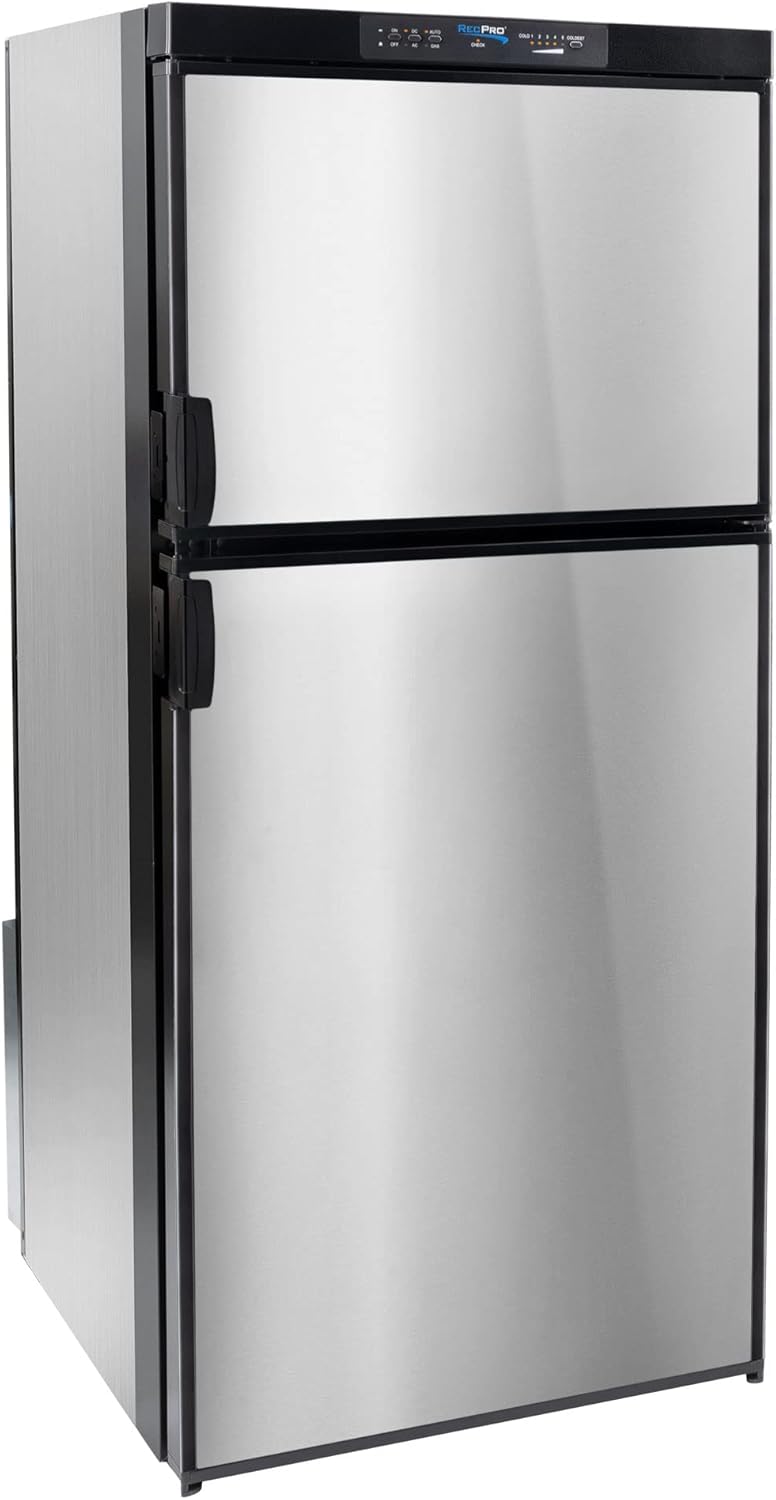
| Capacity | 6.3 cubic feet |
|---|---|
| Cooling Method | Absorption |
| Power Options | 120V / 12V / Propane |
| Defrost Type | Manual |
The RecPro RP-21656 is a 6.3 cu ft RV-style refrigerator designed for travel use where shore power may not always be available. It uses absorption cooling and supports three-way power: 120V shore power, 12V while in transit, and propane for off-grid operation, with a small top freezer and manually defrosted freezer-on-top layout. The unit offers reversible doors, four wire shelves plus door bins, an electronic lock, and five temperature settings for basic temperature control. In practice this fridge is a practical choice for campers who need reliable cooling on propane and occasional 12V use, and the stainless finish blends with RV interiors. Expect quieter operation than compressor fridges and the convenience of multiple power sources, but plan for manual defrosting and slower recovery after door openings or hot loads. Also, 12V operation is intended for transit use rather than long-term cooling, and absorption systems are less cold in very hot ambient conditions compared with compressor models.
Best for: Buyers who want a versatile RV refrigerator that can run on shore power, vehicle power, or propane and prioritize reliable off-grid cooling and quiet operation during travel.
Less Ideal for: Those who need the coldest, fastest-recovering refrigeration in extreme hot climates or who want a compressor fridge for long-term 12V use should consider compressor-based alternatives.
- Three-way power: runs on 120V, 12V, or propane for flexible on-grid and off-grid use
- Absorption cooling runs quietly and works well when propane is available
- Reversible door and multiple shelves provide flexible interior layout
- Stainless finish and electronic lock suit RV interiors and secure contents
- Manual defrost freezer requires occasional user maintenance
- Absorption cooling has slower temperature recovery and reduced performance in very hot conditions
Verdict: Choose this RecPro if you want a quiet, flexible RV refrigerator that reliably runs on propane or shore power for balanced on- and off-grid camping.
Dometic DM2862RB 8.0 Cu Ft Refrigerator

| Capacity | 8 cubic feet |
|---|---|
| Configuration | Refrigerator |
| Defrost System Type | Automatic |
| Cooling Method | Compressor |
| Voltage | 110 volts |
The Dometic DM2862RB is an 8 cu ft two-way RV refrigerator built around a compressor with inverter support, making it suitable for vehicle and shore power use. It offers a roomy interior with four shelves, door bins, two crispers and an illuminated fresh food compartment, and the adjustable/removable shelving and Magic Fingers retainers help keep bottles secure on rough roads. Controls are accessible at eye level with a smart thermostat offering multiple operating modes and an electronic lock for safety while traveling. The unit is designed for freestanding installation and supports reversible doors that open 180 degrees for tighter spaces. Practical strengths include Energy Star compliance and use of propane-compatible refrigerants for efficient off-grid operation. Expect a heavier, permanently installed appliance with basic wire shelving rather than high-end glass or drawer systems, and confirm door panel compatibility if you plan cabinetry matching or inset installation.
Best for: Buyers who prioritize reliable cooling and flexible power options in their RV and need a roomy, durable refrigerator that holds up during travel.
Less Ideal for: Those seeking a very lightweight, ultra-compact fridge or a built-in cabinet-style unit with custom door panels should consider other models.
- Compressor cooling with inverter support for reliable performance on 110V or alternate power sources
- Generous 8 cu ft interior with adjustable and removable shelves and door bins
- Reversible doors and 180-degree opening for flexible installation in tight RV layouts
- Energy Star rated for efficient power use and compatible refrigerants for off-grid propane operation
- Wire shelving is basic compared with glass shelves or specialized drawers
- Heavier, freestanding design may be difficult to retrofit into very small or lightweight RVs
Verdict: Choose the DM2862RB if you want a robust, energy-efficient 8 cu ft RV refrigerator that delivers dependable compressor cooling and flexible power operation.
EUHOMY CF-55 59QT Portable Refrigerator

| Capacity | 55 liters |
|---|---|
| Temperature range | -4℉ to 68℉ (-20℃ to 20℃) |
| Power source | AC/DC (12/24V DC, 100–240V AC) |
| Cooling method | Compressor (rotary scroll) |
The EUHOMY CF-55 is a compressor-driven portable fridge designed for road trips and RV use where reliable cooling and usable capacity matter. It provides a large single-cabinet 55-liter capacity with a removable internal basket and two storage areas so you can separate frozen items from chilled goods. The unit runs on 12/24V DC or 100–240V AC, offers a variable-frequency rotary compressor that reaches down to about -4°F, and includes ECO and MAX modes for balancing energy use against fast cooling. App and Bluetooth control plus an LCD panel make temperature adjustments convenient, and three-level battery protection helps avoid draining an RV battery. Practical touches include a reversible lid, internal LED light, electronic lock, and a carry handle. Trade-offs are typical for a fridge this size: it is relatively heavy and needs a solid mounting or flat space in an RV, and compressor operation produces some noise compared with passive coolers. Expect modest energy draw in ECO but higher consumption in MAX mode when rapidly cooling a warm load.
Best for: Buyers who want a large, dependable portable fridge for RV trips and prioritize usable capacity, flexible power options, and adjustable cooling over ultralight portability.
Less Ideal for: Those who need an ultra-quiet, very lightweight cooler for backpacking or for tiny vehicles with no secure space should consider smaller or different cooling solutions.
- Large 55 L (59QT) usable capacity with removable basket for organized storage
- Runs on both 12/24V DC and 100–240V AC for RV and campsite flexibility
- Compressor cooling to about -4°F with selectable ECO and MAX modes for speed or efficiency
- App/Bluetooth control plus LCD panel and internal LED light for easy monitoring and night access
- Three-level battery protection to prevent vehicle battery drain during DC use
- Heavier and bulkier than smaller portable fridges, so it requires dedicated space and secure mounting in an RV
- Compressor produces audible noise when running compared with passive coolers
Verdict: A spacious, compressor-powered portable refrigerator built for RV owners who value large usable capacity and flexible AC/DC operation with smart controls.
Frestec 1.7 Cu Ft Mini Fridge

| Capacity | 1.7 cubic feet |
|---|---|
| Freezer Capacity | 0.2 cubic feet |
| Defrost System Type | Manual |
| Cooling Method | Compressor |
| Voltage | 115 volts |
This Frestec 1.7 cu ft mini fridge is a compact, compressor-cooled unit with a small top freezer that fits into tight spots such as under desks or in small RV galley areas. It uses a manual defrost system with a one-touch defrost button and a simple thermostat knob offering six temperature settings, which makes temperature control straightforward but basic. The reversible door, removable glass shelf and adjustable feet help it adapt to different layouts and uneven surfaces commonly found in mobile setups. Noise is relatively low at around 37 dB, and the compressor design should cope better than thermoelectric models when ambient temperatures vary. Expect modest energy use reported around 0.55 kWh per day, but keep in mind capacity is limited to drinks, small food containers and ice trays only. Installation is freestanding and the unit is not specifically designed for 12V RV power or built-in mounting, so secure placement and a compatible power source are required for safe operation on the road.
Best for: Buyers prioritizing a low-cost, space-saving refrigerator for occasional use in very small rigs or for supplemental cold storage who need a quiet, simple compressor unit.
Less Ideal for: Owners wanting a permanently installed RV fridge, larger food storage, or a unit that runs directly from 12V systems without an inverter should look elsewhere.
- Very compact footprint fits tight spaces and under counters
- Compressor cooling handles variable ambient temperatures better than thermoelectric units
- Reversible door and removable shelf increase placement and storage flexibility
- Low operating noise around 37 dB suitable for small living areas
- Not built for RV electrical systems or built-in mounting and requires a stable 115V AC supply
- Very limited internal capacity suitable only for small amounts of food and beverages
Verdict: A compact, budget-friendly compressor mini fridge that saves space and runs quietly, ideal as a supplemental or occasional-use fridge in small RVs when you can provide 115V power.
EUHOMY 53QT Portable Refrigerator

| Capacity | 53 quarts |
|---|---|
| Temp Range | -4℉ to 68℉ (-20℃ to 20℃) |
| Power Source | AC & DC (12/24V and 100-240V) |
| Cooling Method | Compressor |
The EUHOMY 53QT portable refrigerator is a compressor-based fridge built for mobile use in vehicles and for freestanding use at campsites or in RVs. It offers a large 53‑quart single unit with two internal baskets and a removable divider to organize food and separate items to reduce odor transfer. The variable-frequency compressor provides fast cooling in MAX mode and energy-saving ECO mode, while the digital LCD control makes setting temperatures between -4°F and 68°F straightforward. Built-in features aimed at travel include wheels and dual handles, anti-shake design, reversible door, and three-level battery protection so you can run it from a vehicle without risking a drained battery. Practical downsides are its weight and footprint relative to smaller RV fridges and the reliance on a compressor which draws more power than passive coolers, so prolonged off-grid use will require a robust power plan. Noise is modest at about 40 dB in typical operation, and the unit includes AC and DC cords for flexible power in an RV or car.
Best for: Buyers who prioritize dependable, mechanically driven cooling for RV trips and road travel and want a roomy, well‑insulated unit that can run from vehicle power without frequent temperature swings.
Less Ideal for: Those needing a lightweight, ultra-low-power solution for long boondocking stretches or very tight RV spaces should consider smaller thermoelectric coolers or built-in RV refrigerator options instead.
- Large 53‑quart capacity with baskets and divider for organized storage
- Compressor cooling with wide temperature range from -4°F to 68°F for freezer and fridge use
- AC and DC power support plus three-level battery protection for safe vehicle operation
- Mobile features like wheels, dual handles, and anti-shake design for easier transport
- Quiet operation around 40 dB and user-friendly digital LCD controls
- Relatively heavy and large compared with compact RV fridges, requiring available space and handling
- Compressor power draw can be high for extended off-grid use without sufficient battery or solar capacity
Verdict: A robust, travel-ready compressor fridge that delivers strong, reliable cooling and vehicle-safe battery protection for RVers who need capacity and dependability.
BougeRV CR22 23-Quart Refrigerator

| Capacity | 23 quarts |
|---|---|
| Temp range | -8℉ to 50℉ (-22℃ to 10℃) |
| Power source | 12/24V DC, 110V AC |
| Cooling method | Compressor |
| Noise level | 45 dB |
The BougeRV CR22 is a compact 23-quart compressor refrigerator aimed at road trips, camping, and RV use. It plugs into 12/24V DC or standard 110V AC and includes both power cords, so you can run it from a vehicle, power station, or wall outlet. The compressor design delivers fast cooling — the maker claims a drop from 77°F to 32°F in about 15 minutes — and a low-noise motor rated around 45 dB for less disturbance in a sleeping area. Practical touches include a top-opening chest layout, an electronic lock, manual defrost, and a three-level battery-protection system that prevents your vehicle battery from draining. The unit is rated for use on modest tilts and has an ECO mode to reduce power draw to under 45W in normal operation. Downsides to note are the single-chamber chest format (no true dual zone) which limits separate fridge/freezer organization, and the lack of an inverter or app control for remote monitoring. For RVers it is a portable, efficient option but you should plan placement and internal organization around the single compartment.
Best for: RV and overland travelers who prioritize a compact, reliable compressor fridge that cools quickly, runs from vehicle power, and protects their vehicle battery while sleeping or parked.
Less Ideal for: Buyers who need separate refrigerated and frozen compartments or remote app control should consider larger or dual-zone models instead.
- Compressor cooling with fast temperature drop for rapid chilling or freezing
- Runs on 12/24V DC and 110V AC with included cords for versatile power options
- Low noise operation (~45 dB) suitable for sleeping areas
- Built-in three-level battery protection to avoid draining vehicle battery
- ECO mode with low power consumption (claims under 45W typical)
- Single chest compartment only, no true dual-zone separation
- No built-in Wi-Fi or app control for remote monitoring
Verdict: A compact, vehicle-ready compressor fridge that delivers fast cooling and battery protection, making it a practical pick for RV and camping use.
Upstreman BD75 7.7 Cu.Ft. Refrigerator

| Capacity | 7.7 cubic feet |
|---|---|
| Freezer Capacity | 1.5 cubic feet |
| Defrost System Type | Manual Defrost |
| Cooling Method | Compressor |
| Door Orientation | Reversible |
The Upstreman BD75 is a compact top-freezer refrigerator intended for small living spaces and light-duty use. It provides 7.7 cubic feet of total capacity with a 1.5 cu.ft. freezer and 6.2 cu.ft. fresh compartment, two tempered glass shelves and a crisper drawer for produce. Temperature is adjusted manually across five settings and the unit uses a rotary scroll compressor intended for quiet operation; the door is reversible to suit tight layouts. Practical benefits include removable shelves for taller items, an automatic interior light, and a relatively low advertised noise level for placement near living areas. Important limitations are that defrosting is manual and cooling control is analogue rather than precise digital regulation, so frequent door openings or heavy loads may require closer monitoring to keep temperatures stable. The unit is freestanding and reasonably energy efficient for its class, but buyers should verify fit and power compatibility for vehicle installations before attempting RV placement.
Best for: Buyers seeking a straightforward, roomy compact refrigerator for small spaces who prioritize low noise and flexible door placement and prefer a simple, proven appliance design.
Less Ideal for: Travelers who need an RV-specific 12V compressor fridge or precise digital temperature control for long off-grid trips should consider purpose-built RV refrigerators instead.
- Relatively large 7.7 cu.ft. capacity for a compact footprint
- Top freezer with 1.5 cu.ft. space useful for frozen storage
- Reversible door makes placement flexible in tight spaces
- Removable tempered glass shelves and crisper drawer for flexible organization
- Quiet operation designed for placement near living areas
- Manual defrost requires periodic maintenance to prevent frost build-up
- Analogue temperature control is less precise than digital systems
Verdict: A roomy, quiet compact top-freezer fridge that suits small-space users who want a simple, reliable freestanding refrigerator.
Choosing the Right Refrigerator for RVs: Key Factors to Consider
Power Source and Draw
Understand what power sources the refrigerator will use in your RV and how much current it draws during normal operation. Many RV owners rely on shore power, generator, or battery/inverter setups, and a fridge with lower continuous draw extends time between charges or reduces generator runtime. Also consider startup surge current if your inverter or generator has a limited surge rating.
Power draw affects daily choices such as whether you can run the fridge overnight on battery, whether a solar/battery system is sufficient, and how the unit interacts with an RV's electrical system. Picking a unit with efficient compressors or solid insulation lowers campsite operating hassle and keeps system stress to a minimum.
Physical Footprint and Ventilation Needs
Measure the installation opening and available clearance before choosing a unit. RV kitchens often have nonstandard cabinet sizes and limited depth. A refrigerator that nominally fits the footprint can still be problematic if it requires extra clearance for hinge swing, venting, or service access.
Ventilation is critical for compressor and absorption systems alike. Ensure the chosen model's vent placement and clearance requirements match your cabinet layout so heat can dissipate effectively. Improper venting reduces efficiency and shortens component life, so factor in the needed airflow channels and access for future maintenance.
Interior Layout and Storage Flexibility
Look beyond total liters or cubic feet and study shelf shapes, removable bins, and door storage options. Tall narrow shelves are great for bottles but poor for bulk items. Adjustable shelving and reversible or removable door bins let you customize storage for the way you pack for trips.
Consider how often you need to freeze items versus keep things chilled. A small freezer compartment may be adequate for ice and pre-frozen meals but not for long-term frozen storage. Drawers, deli pans, and crisper options also affect practical capacity during extended travel.
Temperature Control and Recovery
Evaluate the thermostat range and how quickly the fridge recovers temperature after door openings or after being restarted. RVs experience ambient temperature swings and frequent door use, so rapid recovery and a stable cold zone preserve food safety and reduce energy spikes.
Digital controls and well-calibrated thermostats are desirable because they provide predictable setpoints. Also review whether the unit has adaptive features such as eco modes or fan-assisted cooling that help maintain set temperatures under varying conditions.
Durability and Vibration Resistance
RVs expose appliances to road vibration, bumps, and tilting. Materials, mounting points, and compressor suspension design influence how well a refrigerator tolerates mobile use. Choose models with rugged construction, secure shelving, and door latches that hold during travel.
Durable finishes resist dings and wear in tight galley areas. Consider long-term availability of replacement parts and ease of service when used on the road since repair convenience matters more far from a service center.
Noise and User Comfort
Noise from compressors, fans, or ice-making cycles can be more noticeable in an RV's compact interior. Lower-noise designs improve onboard comfort during sleep and conversation. Check expected operating noise levels and whether the unit has silent or low-noise modes.
Also consider how the fridge operates in different campsite settings. A quieter unit is advantageous when running on generator at low RPM or when boondocking where ambient noise is minimal. Comfort factors include light placement, shelf access, and door swing direction as well.
Sizing for Real-World RV Use
When choosing capacity, prioritize usable layout over headline cubic footage. For many couples or solo travelers a compact unit with smart shelving is better than a larger fridge with awkward dead space. Think about how you pack meals, cold beverages, and bulk items and match the internal arrangement to those patterns.
Also consider seasonal changes. If you take long summer trips with more fresh food, a slightly larger chilled section helps. For long-term boondocking prioritize low-draw models and strict organization to make the most of smaller freezers.
- Measure depth, height, and hinge clearance at the installation site.
- Prefer adjustable shelves and removable door bins for flexibility.
- Account for venting and service access in tight installation spaces.
Installation Tips and Venting
Correct installation and ventilation are essential for both efficiency and reliability. Follow the manufacturer-recommended clearances for airflow and ensure exterior vents are not obstructed by trim or accessories. If your RV has a rear or side vented cavity, confirm the chosen unit's vent orientation matches that cavity.
Secure mounting reduces vibration transfer and rattles. Use the recommended fasteners or mounting brackets and verify doors latch firmly during travel. Check that power and temperature sensors are accessible for future troubleshooting.
- Leave recommended clearance on the top and back for heat dissipation.
- Use foam or rubber isolators where recommended to reduce vibration.
- Confirm vent flaps and externals can open freely without obstruction.
Energy Management While Traveling
Plan how the refrigerator will interact with your RV's energy sources. If you rely heavily on batteries and solar, choose a low-draw compressor or a well-insulated absorption model that minimizes continuous consumption. Track expected amp draw and estimate runtime between charges under typical conditions.
Consider supplemental strategies like precooled food, ice packs, and minimizing door openings. Power management settings and eco modes on some fridges can stretch battery life, but they may slow temperature recovery after heavy use. Balance runtime needs with the temperature stability required for your food items.
- Monitor amp draw with a battery monitor to understand real consumption.
- Pre-chill items before trips to reduce compressor runtime on the road.
- Use timers or smart outlets if you want to cycle power during long stops.
Maintaining Your RV Refrigerator
Regular maintenance prevents many common issues. Keep condenser and vents clear of dust, leaves, or road grime to maintain heat rejection. Clean interior seals and check door gaskets periodically for leaks that reduce efficiency.
During winter storage, follow recommended procedures to avoid mold, odors, and damage from freeze cycles. Secure shelving and empty loose items before travel to avoid damage from movement.
- Clean vents and coils every season or more often in dusty environments.
- Inspect and replace door gaskets that show cracking or compression loss.
- Leave the door ajar with a moisture-absorbing packet during long storage.
Upgrading or Replacing an Existing Unit
When upgrading, match the new refrigerator to existing cutouts and electrical wiring where possible to minimize modification work. If the replacement offers different venting or a larger footprint, evaluate whether cabinet modification or professional installation is required.
Weigh the benefits of better insulation and lower draw against installation complexity. In many cases a slightly different layout that improves usable shelf space justifies modest cabinet changes.
- Verify power compatibility and required breaker or fuse ratings before swapping units.
- Consider professional installation if structural changes or vent relocation are needed.
- Retain original mounting hardware where possible to simplify reinstall.
How We Chose the Best Refrigerator for RVs
We focused on features that directly affect everyday use inside an RV. First, power efficiency was a priority because RV refrigerators often run on limited electrical resources or battery systems; we favored models with proven low-draw performance and good insulation. Second, usable interior capacity and shelving flexibility mattered because awkward storage can negate nominal volume in small spaces. Third, footprint and installation flexibility were weighed to ensure units fit common RV cabinet openings and allow straightforward venting and clearances. Fourth, temperature control and recovery speed were considered to keep perishables safe through drives and stopovers. Fifth, build quality and materials that withstand vibration and movement were included to minimize failures on the road. We excluded units designed only for household built-in kitchens or those requiring specialized installation not compatible with standard RV cutouts. Our selections emphasize units that balance compact sizing with real usable storage and low operating load.
Our full evaluation process is outlined in our review methodology.
FAQ
What is the best power option for an RV refrigerator?
The best option depends on your travel style. If you boondock frequently, a low-draw compressor fridge paired with batteries and solar is often ideal. If you have regular shore power, a wide-range model that runs efficiently on AC is acceptable.
How much clearance does an RV refrigerator need for venting?
Clearance varies by model, but you should always follow the specified top and rear clearances to allow proper airflow. Failing to provide the recommended space reduces efficiency and shortens component life.
Can I install a household refrigerator in an RV?
Household refrigerators are usually too large and may not be designed for vibration, tilt, or RV venting requirements. It is better to choose a unit intended for mobile or compact installations to avoid performance and durability issues.
How do I prevent odors and mold during storage?
Before storage, clean the interior thoroughly, remove perishables, and allow the fridge to dry. Leaving the door slightly open with a moisture absorber prevents stale air buildup and mold growth during long periods of inactivity.
What should I check if the fridge won't maintain cold while driving?
Check ventilation to ensure heat is not trapped, verify the door seals for proper closure, and confirm the unit is mounted securely to limit vibration. If those are fine, inspect power supply and temperature settings to ensure proper operation.
Final Verdict
Choose an RV refrigerator by balancing usable interior space, energy draw, and installation compatibility with your RV's layout and power system. Prioritize models that offer adjustable shelving and reliable temperature control if you pack varied foods. Expect tradeoffs between capacity and power usage: larger chilled volumes often mean higher draw or larger footprints. Focus on the factors that matter most for your travel habits—long boondocks, family road trips, or frequent hookups—and pick the option that minimizes hassle while meeting your storage needs.