
Note: This article contains affiliate links. If you click on these links and make a purchase, we may earn a small commission at no extra cost to you. This helps support our research and content. Read our full affiliate disclosure here.
Finding the right refrigerator for a small home matters more than picking the flashiest model. With limited kitchen footprints and tighter storage needs, you need an appliance that balances usable capacity, cooling consistency, and efficient energy use. This guide highlights the top shortlists in the category so you can quickly identify options that fit compact layouts, narrow doorways, and modest food-storage needs. We evaluated models for usable interior space, footprint and installation flexibility, temperature control, and operating efficiency. Read on for the top picks and a breakdown of what to prioritize when choosing a refrigerator for a small home.
Top Picks at a Glance
| Best Overall The best all-around choice for most situations | Midea Compact Refrigerator WHS-65LB1 |  |
| Best Quality Built to a higher standard if you want something more solid | Frigidaire Retro 7.5 cu ft Refrigerator |  |
| Best Value The sweet spot between price and what you get | Feelfunn Beverage Refrigerator FWC008-11 | 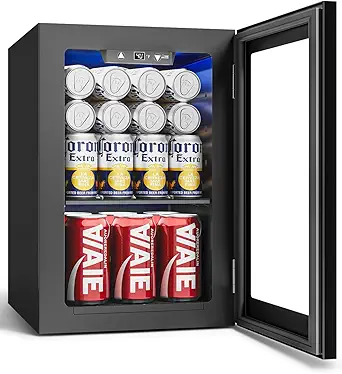 |
| Best Budget The cheapest option that still gets the job done reliably | KRIB BLING FLS-80G 3.5 cu.ft Refrigerator |  |
| Top Rated A top-rated pick with lots of positive feedback | EUHOMY 3.2 Cu Ft Mini Fridge |  |
| Most Popular A crowd favorite that many people choose with confidence | Upstreman BR321 3.2 Cu Ft Mini Fridge |  |
| Best Seller A high-volume bestseller chosen again and again | Frostorm BC-90 Mini Fridge 3.2 Cu Ft |  |
Midea Compact Refrigerator WHS-65LB1

| Capacity | 1.6 cubic feet |
|---|---|
| Annual Energy Consumption | 207 kilowatt hours per year |
| Cooling Method | Compressor |
| Defrost System Type | Automatic |
| Door Orientation | Reversible |
The Midea 1.6 cu.ft. compact refrigerator is a straightforward, energy-efficient mini fridge for dorms, offices, or small apartments. It uses a compressor with R600A refrigerant and an adjustable thermostat that lets you dial temperatures down to the mid-30s Fahrenheit, plus a small internal chiller compartment for quick cooling. The single reversible door and removable shelf make it flexible for tight spaces or oddly shaped items, and the door includes shelves sized to hold bottles and a 2L rack. Noise is kept low under typical conditions, and the unit is ENERGY STAR certified with modest annual energy use. Important limitations are its small capacity and the chiller is not a full freezer, so it is best for drinks, snacks, and short-term cooling rather than long-term frozen storage. For buyers wanting a compact, efficient refrigerator without extra bells, this model delivers reliable basic cooling and flexible placement options.
Best for: Buyers who need a compact, energy-efficient refrigerator for a bedroom, dorm, or small apartment and prioritize low running costs and flexible placement over storage volume.
Less Ideal for: Anyone who needs significant freezer space or wants to store large amounts of groceries for a household should choose a larger refrigerator instead.
- ENERGY STAR certified with low annual energy consumption (207 kWh/year)
- Reversible door and removable shelf for flexible placement and storage
- Adjustable thermostat with a chiller compartment for faster cooling
- Quiet compressor operation suitable for bedrooms and offices
- Very limited 1.6 cu.ft. capacity not suitable for family-sized food storage
- Chiller compartment is not a true freezer and cannot reliably freeze foods
Verdict: A compact, energy-efficient mini fridge that fits tight spaces and keeps running costs low, ideal for single-person living areas.
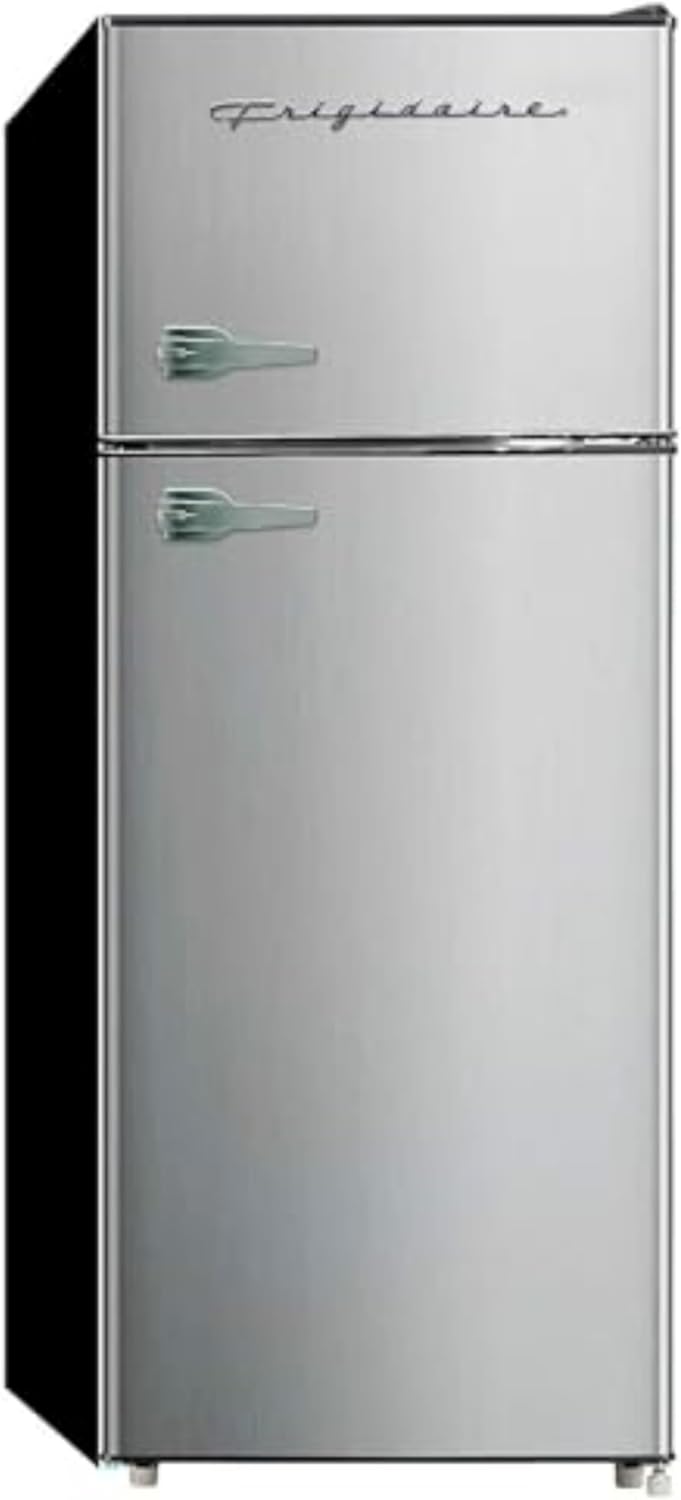
Frigidaire Retro 7.5 cu ft Refrigerator
| Capacity | 7.5 cubic feet |
|---|---|
| Freezer Capacity | 2 cubic feet |
| Defrost System Type | Manual |
| Power Source | Corded Electric |
| Cooling Method | Compressor |
This Frigidaire Retro-style apartment refrigerator delivers practical cooling for small homes by combining a 7.5 cubic foot fresh food section with a separate 2 cu ft top freezer in a slim freestanding cabinet. It is typically used where space is limited — kitchens, dorms, garages, or studios — and offers adjustable slide-out glass shelves, a transparent crisper, and clear door bins to keep items organized. Mechanical controls and a rotary-scroll compressor keep operation simple and reliable, and the reversible hinge plus rear castors and front leveling legs make placement and installation straightforward. The manual defrost freezer and basic mechanical thermostat mean fewer electronics to fail but require occasional defrosting and hands-on temperature adjustments. Energy consumption is moderate for the size, and the stainless steel finish with chrome trim gives a more upscale look than many compact models. If you want a straightforward, space-efficient refrigerator that focuses on usable storage and dependable cooling rather than smart features, this unit fits that need well.
Best for: Buyers who need a reliable, no-frills compact refrigerator that prioritizes usable storage layout and straightforward cooling for small homes or secondary spaces.
Less Ideal for: If you need the highest energy efficiency, automated defrost, or smart temperature control features, look at models with those specific capabilities instead.
- Separate top freezer provides dedicated frozen storage without sacrificing fridge space
- Adjustable slide-out glass shelves and removable door bins make interior organization flexible
- Reversible door hinge and rear castors with front leveling legs simplify placement in tight spaces
- Simple mechanical controls and rotary-scroll compressor offer reliable, low-complexity operation
- Manual defrost freezer requires periodic thawing and maintenance
- No smart features or digital temperature controls for remote monitoring or fine adjustment
- Annual energy consumption is moderate and not the most efficient among compact models
Verdict: A practical, space-saving refrigerator that emphasizes usable storage and reliable mechanical cooling for small homes and secondary living spaces.
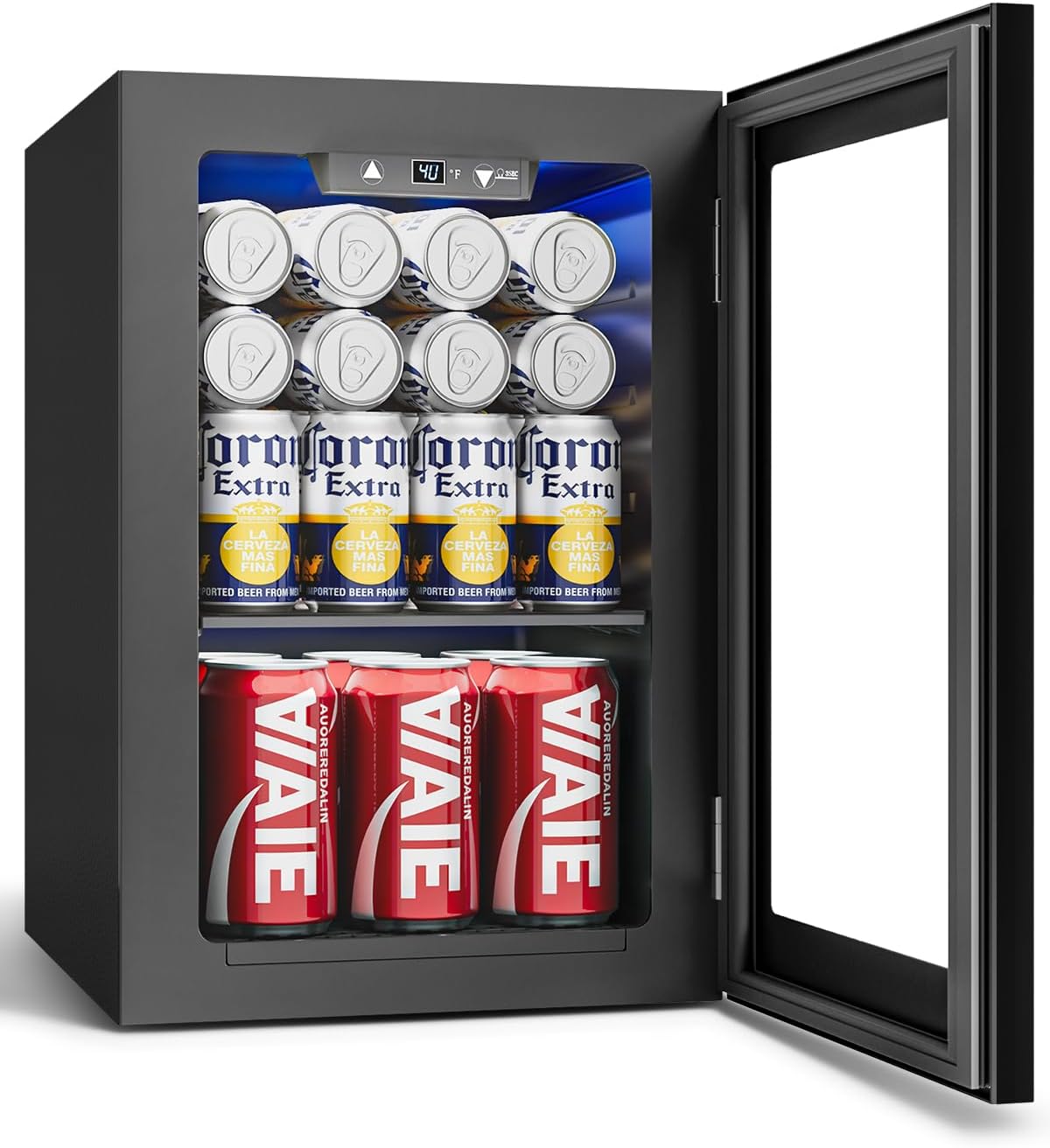
Feelfunn Beverage Refrigerator FWC008-11
| Capacity | 0.6 cubic feet |
|---|---|
| Temperature Range | 40-61°F (4-16°C) |
| Cooling Method | Compressor |
| Noise Level | ≤38 dB |
| Included Components | 1 Removable Shelves |
The Feelfunn 24-can beverage refrigerator is a compact freestanding cooler designed to keep drinks chilled in tight spaces like dorms, offices, or small kitchens. It uses a compressor and a 3D circulating air system to provide even cooling across a 40 to 61°F range, controlled via touch buttons and an LED display. The interior LED light and removable shelf let you switch between cans and bottles, while adjustable feet and a sealed door help with stability and insulation. Noise is low at under 38 dB, so it can sit near a desk or in a bedroom without being intrusive. Practical users will appreciate the small footprint that still holds up to 24 cans and the quick cooling from a compressor-based system. Limitations include the very small 0.6 cu ft capacity, manual defrost, and modest energy usage that reflects continual compressor operation, so it is not suited for bulk storage or long-term food refrigeration.
Best for: Buyers who need a reliable, space-saving beverage fridge to keep drinks chilled at a consistent temperature in small homes, apartments, or workspaces and prioritize quiet, adjustable cooling over large capacity.
Less Ideal for: Not a good choice for households that need to store large quantities of beverages or use the unit as a primary refrigerator for food and long-term storage.
- Very compact footprint fits under desks or in small rooms
- Adjustable temperature control with digital display for precise chilling
- Removable shelf and interior LED for flexible storage and visibility
- Compressor cooling and 3D air circulation for faster, more even cooling
- Quiet operation at or below 38 dB suitable for bedrooms or offices
- Only 0.6 cubic foot capacity limits storage to about 24 cans or a few bottles
- Requires manual defrost rather than automatic defrosting
- Annual energy consumption is relatively high for its size
Verdict: A very small, quiet compressor beverage fridge that delivers precise cooling and flexible shelving for buyers who need a compact drink cooler for limited spaces.
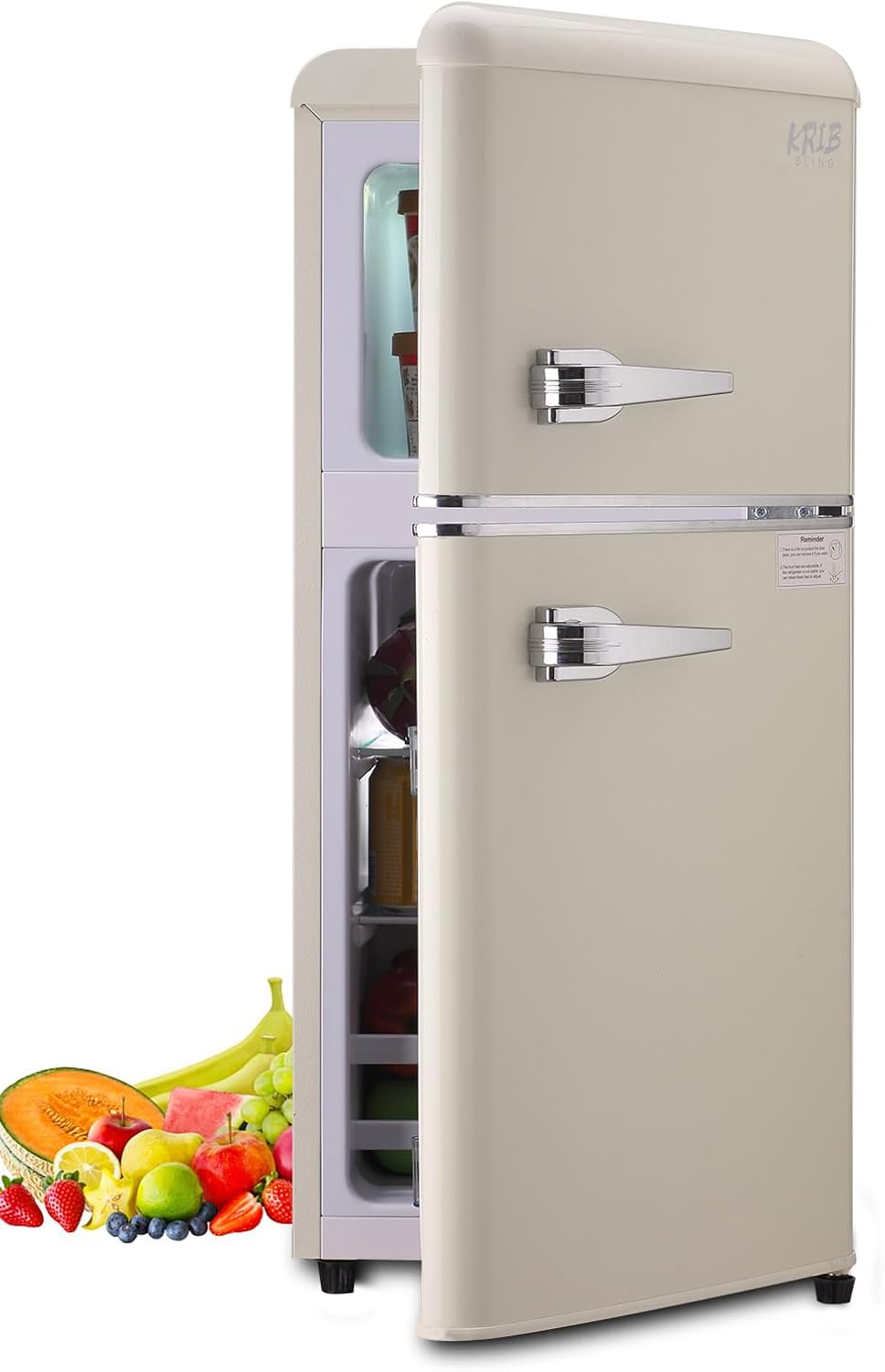
KRIB BLING FLS-80G 3.5 cu.ft Refrigerator
| Capacity | 3.5 cubic feet |
|---|---|
| Freezer Capacity | 1.2 cubic feet |
| Defrost System Type | Manual Defrost |
| Voltage | 120 volts |
| Cooling Method | Compressor |
This KRIB BLING 3.5 cu.ft compact refrigerator pairs a small freezer-on-top compartment with a refrigerated section and adjustable shelving to serve dorms, offices, or tiny kitchens. It uses a compressor with rotary scroll technology and an electronic lock-type control that offers seven thermostat settings so you can fine-tune cooling for drinks, leftovers, or frozen snacks. The removable glass shelves and right-hand door make loading and cleaning straightforward, and the unit ships freestanding with a matte finish and Energy Star designation for lower energy use compared with older compact models. Expect manual defrosting in the freezer and some exterior heat transfer because the cabinet acts as a heat sink for the compressor. The manufacturer recommends letting the fridge sit upright 24 hours after delivery before powering it on. For buyers prioritizing a low-cost, space-saving fridge that still holds a modest amount of groceries, this model covers the basics, but it lacks inverter operation and requires occasional defrosting in the freezer compartment.
Best for: Buyers on a tight budget who need a small, no-frills refrigerator for a studio, dorm room, or office and value a compact footprint and adjustable temperature control.
Less Ideal for: Those who need large capacity, long-term food storage, ultra-quiet inverter operation, or a frost-free freezer should consider larger or higher-end models instead.
- Compact two-door layout with a dedicated top freezer for frozen items.
- Seven-level adjustable thermostat for more precise temperature control.
- Removable glass shelves allow flexible storage and easy cleaning.
- Energy Star rated for relatively efficient operation among compact fridges.
- Freezer is manual defrost, which will require periodic defrosting.
- No inverter technology, so compressor may run louder or cycle more frequently than inverter models.
Verdict: A budget-friendly, Energy Star compact fridge that delivers essential cooling and flexible shelving for small homes and tight spaces.
EUHOMY 3.2 Cu Ft Mini Fridge
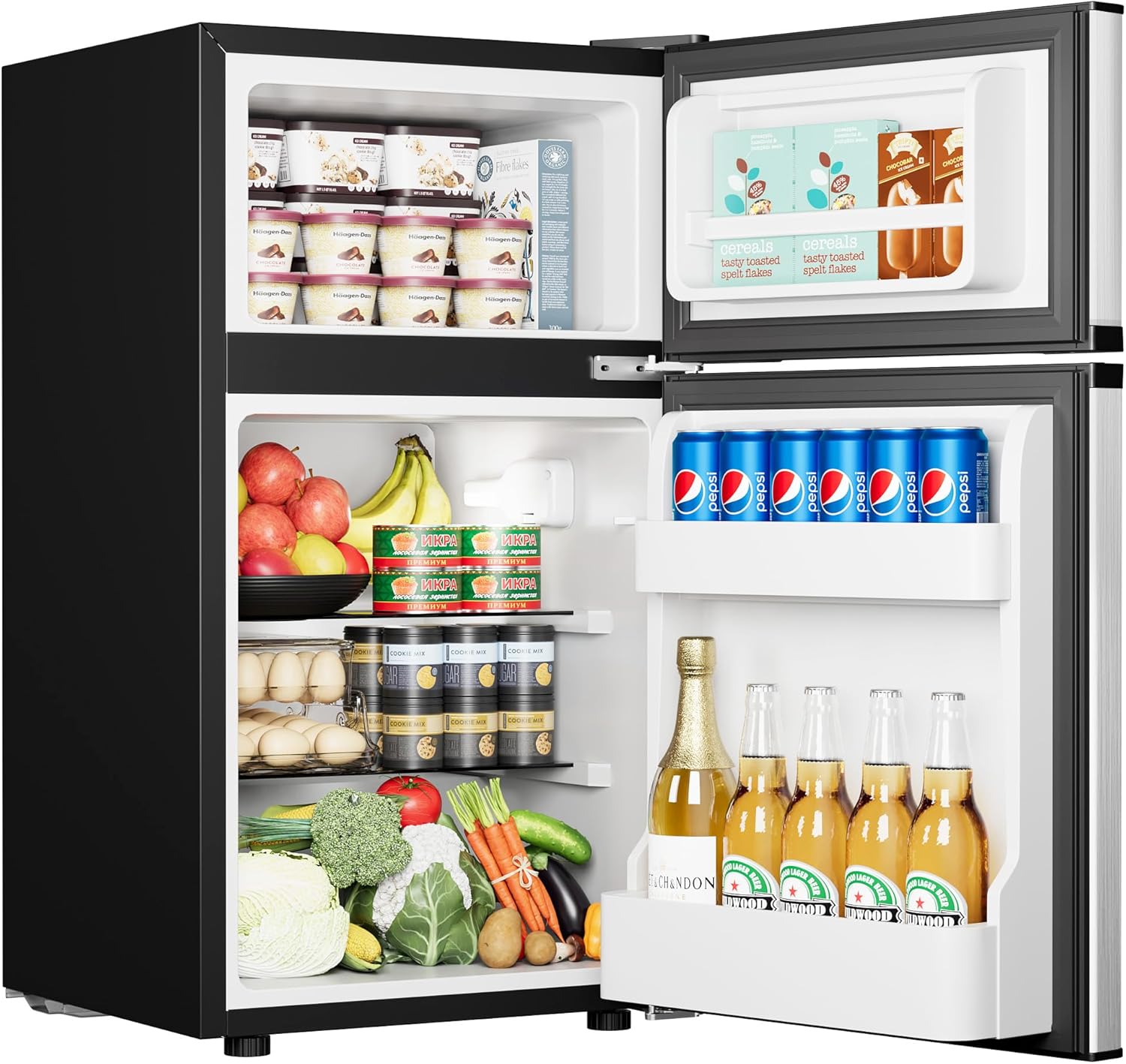
| Capacity | 3.2 cubic feet |
|---|---|
| Freezer Capacity | 0.96 cubic feet |
| Cooling Method | Compressor |
| Defrost System Type | Automatic |
| Voltage | 115 volts |
This EUHOMY mini fridge pairs a small refrigerator compartment with a 0.96 cu ft top freezer to give compact but usable two-zone storage for small homes. It uses a rotary scroll compressor with inverter capability for consistent cooling and three temperature settings, and the interior LED, adjustable glass shelves and crisper drawer make organizing snacks, produce and drinks straightforward. The reversible door and adjustable feet let you place it in tight spots or flip the hinge to suit room layout, and the unit is designed for freestanding installation so setup is simple. Noise is kept low for bedroom or studio use, and the automatic defrost system reduces maintenance. Expect modest energy use for its class, though annual consumption is listed and will matter if you run the fridge continuously. The freezer is small and not suitable for bulk freezing, and size limits overall storage compared with full-size refrigerators. For its intended small-space role this model balances sensible features and quiet compressor cooling, but buyers needing large frozen storage or the highest energy efficiency should compare larger or higher-rated alternatives.
Best for: Buyers who need a reliable, quiet two-zone refrigerator for a small home, studio or dorm and prioritize consistent cooling and easy placement over large freezer space.
Less Ideal for: Not a good fit for households that need substantial freezer capacity or those seeking the most energy-frugal compact fridge available.
- Two-zone layout with separate top freezer and fridge for versatile small-space storage
- Compressor cooling with inverter for steady temperatures and relatively quiet operation
- Adjustable glass shelves and crisper drawer simplify organization and fit different items
- Reversible door and adjustable feet increase placement flexibility in tight rooms
- Automatic defrost and interior LED reduce maintenance and improve night usability
- Freezer capacity is under 1 cu ft, limiting frozen meal or bulk storage
- Annual energy consumption is higher than some ultra-efficient compact models
Verdict: A dependable, two-zone mini fridge that delivers steady compressor cooling and placement flexibility ideal for small homes needing reliable refrigeration.
Upstreman BR321 3.2 Cu Ft Mini Fridge

| Capacity | 3.2 cubic feet |
|---|---|
| Freezer Capacity | 0.3 cubic feet |
| Cooling Method | Compressor |
| Defrost System Type | Manual Defrost |
| Voltage | 115 volts |
The Upstreman BR321 is a compact freestanding fridge designed for small homes, dorms, or offices that need reliable everyday cooling without a large footprint. It uses a rotary scroll compressor and manual defrost to deliver steady temperatures across a 3.2 cu ft interior including a 0.3 cu ft freezer; five adjustable temperature settings let you dial coldness from around 32 to 50°F for drinks, dairy, and produce. Interior conveniences include two adjustable glass shelves, a crisper drawer, and three door bins for bottles and condiments while the reversible door and adjustable feet make placement flexible in tight layouts. The unit is ETL listed, claims a quiet 38 dB operating level, and reports modest annual energy use, which helps keep running costs low. Expect the usual compact-fridge compromises: manual defrosting rather than auto-defrost, limited freezer space not suitable for long-term ice or large frozen items, and a basic mechanical thermostat instead of precise digital controls. For buyers seeking a straightforward, space-saving refrigerator that performs core cooling well, the BR321 hits the mark.
Best for: Buyers who prioritize proven performance and social proof—people who want a compact, energy-conscious refrigerator with straightforward features and many user recommendations for small homes or shared living spaces.
Less Ideal for: Households that need large freezer capacity, precise digital controls, or a fully automatic defrost system should consider larger or higher-end models instead.
- Compact 3.2 cu ft capacity that fits small rooms while still holding bottles and snacks
- Adjustable thermostat with five settings for flexible cooling needs
- Reversible door and leveling feet for flexible placement in tight spaces
- Adjustable glass shelves and crisper drawer for practical interior organization
- Energy-efficient compressor operation and ETL listing for reliable performance
- Manual defrost requires occasional maintenance
- Freezer is small (0.3 cu ft) and not suitable for large frozen items or ice storage
- No digital temperature display or advanced temperature controls
Verdict: A compact, energy-efficient mini fridge that delivers dependable everyday cooling and flexible placement for small homes and dorms.
Frostorm BC-90 Mini Fridge 3.2 Cu Ft

| Capacity | 3.2 cubic feet |
|---|---|
| Freezer Capacity | 0.3 cubic feet |
| Defrost System Type | Automatic |
| Voltage | 115 |
The Frostorm BC-90 is a straightforward compact refrigerator that pairs a 0.35 cu ft upright freezer with a 3.2 cu ft fresh food compartment, making it useful for a single person or small household needing extra cold storage. It runs on standard 115V power, uses a simple mechanical 1–5 thermostat for temperature control, and offers adjustable glass shelves and door bins to organize drinks, snacks, and meal prep. The reversible door and freestanding design give placement flexibility in tight layouts, and the unit is ETL certified with automatic defrost for lower maintenance. Energy use is modest at about 0.6 kWh per day, which helps keep running costs low. The upright freezer reaches sufficiently low temperatures for ice and short-term frozen goods but is small, so it is not suited to bulk freezing. Noise and long-term reliability are typical for this class and may not match higher-end full-size refrigerators, but for compact living spaces this model provides reliable, cost-conscious cooling with sensible features.
Best for: Buyers who want a reliable, no-frills compact refrigerator for a bedroom, office, or small home and prioritize predictable operation and low running costs.
Less Ideal for: Households needing large or long-term freezer capacity, precise temperature control for sensitive items, or a near-silent premium appliance.
- 3.2 cu ft total capacity with a dedicated upright freezer for ice and small frozen items
- Reversible door and freestanding design allow flexible placement in small rooms
- Adjustable glass shelves and door bins for organized storage
- Automatic defrost and ETL certification simplify maintenance and safety
- Low estimated daily energy use (about 0.6 kWh/day)
- Freezer compartment is small and only suitable for short-term or limited frozen storage
- Mechanical thermostat offers less precise temperature control than digital models
Verdict: A practical, energy-conscious mini fridge with a small upright freezer that delivers dependable cooling and flexible placement for small homes and rooms.
Choosing the Right Refrigerator for Small Homes: Key Factors to Consider
External Dimensions and Door Clearance
Measure the width, depth, and height of your available space and compare those numbers to a refrigerator's external dimensions. In small homes, a few inches can determine whether a unit will fit through hallways or around corners during delivery and installation.
Door swing and clearance matter as much as overall size. Check whether the model offers reversible doors, counter-depth options, or narrower widths. Also account for required clearance for ventilation and an easy-to-open door when placed next to counters or tight corridors.
Usable Storage Versus Rated Capacity
Rated cubic feet can be misleading because interior layout, shelf thickness, and door bin design affect how much you can realistically store. Look for flexible shelving, removable bins, and flat-door storage to maximize usable space.
Consider how you store food: tall bottles, meal-prep containers, or bulk items. Adjustable shelves and convertible compartments let you tailor interior space for the small-home lifestyle where every inch counts.
Energy Use and Estimated Operating Cost
In a small home, the refrigerator may represent a noticeable portion of monthly electricity use. Energy-efficient models reduce ongoing costs and help minimize heat output into a compact living area.
Compare energy consumption metrics or ratings to estimate annual operating cost. Look for features like variable-speed compressors, improved insulation, and LED lighting that lower power draw without sacrificing performance.
Cooling Performance and Food Safety
Consistent internal temperatures are essential to keep perishables fresh, especially when you do not have room for a second freezer or cold storage. Even small refrigerators must maintain steady temperatures across shelves and door bins.
Assess whether the unit offers reliable temperature controls, quick-chill options, and good airflow. Models with isolated compartments or dedicated cooling for the freezer help preserve frozen items while avoiding temperature swings in the main compartment.
Installation Flexibility and Service Access
Small homes often have nonstandard access routes or limited service space. Choose refrigerators that are easy to maneuver, have removable doors for tight turns, and include installation accessories like leveling feet or sliding rails.
Also check serviceability: in a small home, ability to access condensers, filters, and common service points without removing cabinetry can save time and hassle should maintenance be needed.
Noise Level and Vibration
In compact living arrangements, the refrigerator's sound profile is more noticeable. Compressors and fans can produce hums or clicking that become intrusive in open-plan rooms or adjacent living spaces.
Look for consumer-facing noise ratings or descriptions of quiet operation. Reduced vibration also helps prevent items on top of the unit from rattling and improves perceived build quality in a tight environment.
Choosing Between Top- and Bottom-Freezer Layouts
Layout affects daily convenience in a small home. Top-freezer models concentrate fresh-food space at eye level while bottom-freezer designs place chilled items within easier reach. Consider which compartment you use most and prioritize access accordingly.
Top-freezer units can be shallower and narrower, which helps in tight kitchens. Bottom-freezer and drawer-style freezers may offer better organization for frozen goods but can increase depth.
- Top-freezer: lighter footprint, often lower cost, good for occasional freezer use
- Bottom-freezer: easier access to fresh foods, better freezer organization
- Drawer-style freezer: quick access to frozen meals, may require more depth
Maximizing Small-Fridge Storage with Organizers
Smart organizers turn limited space into practical storage. Use clear bins to stack items safely, slim racks for cans, and specialty trays for eggs or condiments. These small additions make it easier to see what you have and reduce food waste.
Magnetic or stick-on accessories can add door storage without permanent changes. Remove bulky packaging and repackage items in stackable containers to utilize vertical space efficiently.
- Use shallow baskets for deli meats and snacks
- Store bottles on door racks to free shelf space
- Keep like items together to minimize time spent searching
Counter-Depth and Built-In Options for Tight Kitchens
Counter-depth refrigerators align with cabinetry and reduce visual bulk, making a small kitchen feel larger. They usually sacrifice a bit of interior depth in exchange for a sleeker fit against counters.
If you plan a built-in look, confirm clearance and ventilation needs. Proper airflow around the unit is essential for efficient operation and to avoid overheating in a confined cabinet space.
- Counter-depth reduces protrusion into walkways
- Built-in installations may need professional measurements
- Allow for ventilation gaps per manufacturer guidance
When a Compact Freezer Is Important
Some small-home households rely heavily on frozen meals, bulk buys, or ice storage. If freezer capacity matters, prioritize models with efficient organizer drawers and clear separation between fridge and freezer compartments.
Consider a model with adjustable freezer shelving or a convertible zone that can switch between chilled and frozen temperatures for seasonal flexibility.
- Drawer freezers improve visibility and access
- Convertible compartments add seasonal flexibility
- Evaluate freezer temperature stability for long-term storage
Delivery and Installation Checklist
Before purchase, measure doorways, stairwells, and elevators. Note the path from delivery point to final location and any tight turns. Confirm whether door removal is possible for transport and whether the unit requires professional installation.
Plan for a short blackout after installation while refrigerant pressures equalize. Make sure there is a clear electrical outlet and that the model matches your kitchen setup for a smooth setup.
- Measure transport path and final space precisely
- Confirm door swing direction and reversibility
- Check electrical requirements and ventilation clearances
How We Chose the Best Refrigerator for Small Homes
We applied a practical, home-focused filter to narrow the field to refrigerators that work well in constrained spaces. First, we screened for compact external dimensions and installation flexibility so units can fit common small-home kitchens, hallways, and entryways. Next, usable interior capacity and shelf configurability were weighted heavily because nominal volume often overstates real storage. Cooling performance and temperature stability were required to ensure safe food storage and sensible freezer-to-fridge balance. Energy efficiency and estimated operating cost were assessed to reflect the long-term impact on utility bills in smaller households. Noise and vibration were also considered so the appliance does not overwhelm a compact living area. We excluded large-capacity units, commercial-style refrigerators, and models with limited or no local service support. The final selection favors practical features over novelty and prioritizes items that reliably solve space and storage constraints for small homes.
Our full evaluation process is outlined in our review methodology.
FAQ
What size refrigerator is best for a small home?
It depends on household habits, but models in the compact to small mid-size range often provide the best balance. Focus on usable interior layout rather than just cubic feet and measure the installation space before deciding.
Can a counter-depth refrigerator save space in a small kitchen?
Yes, counter-depth units reduce how far the fridge protrudes past cabinets and counters, improving traffic flow. They may offer slightly less interior depth, so weigh visual benefits against usable storage needs.
How much clearance do I need around a refrigerator?
Clearance needs vary by model but typically include a small gap for side and rear ventilation and extra space for door swing. Check the installation recommendations for the specific model you choose and allow a few inches beyond the minimum for airflow.
Are compact refrigerators less energy efficient?
Not necessarily. Some compact models are optimized for lower energy use and can be efficient for small households. Compare energy consumption ratings and features like improved insulation or variable compressors to estimate operating cost.
Can I install a regular refrigerator in a tight pantry or closet?
You can, but ensure the space allows adequate ventilation and door clearance. Refrigerators need airflow to dissipate heat, so enclosed installations often require additional ventilation or professional guidance to avoid performance issues.
How do I minimize noise from a refrigerator in a small home?
Look for units described as quiet or with low vibration. Place the fridge on a level surface and use anti-vibration pads if needed. Regular maintenance, like cleaning coils and ensuring doors seal properly, also reduces noise over time.
Final Verdict
Prioritize usable interior capacity, footprint, and consistent cooling when selecting a refrigerator for a small home. Tradeoffs are inevitable: you may sacrifice some freezer depth or advanced features to gain easier installation and a better fit for your space. Focus on the dimensions, interior layout, and energy profile that match how you store food. With those priorities in mind, choose the model that fits your kitchen footprint, provides the storage flexibility you need, and operates efficiently. That approach will deliver reliable cooling without overwhelming a small living area.