
Note: This article contains affiliate links. If you click on these links and make a purchase, we may earn a small commission at no extra cost to you. This helps support our research and content. Read our full affiliate disclosure here.
If you have limited counter and floor space, the right refrigerator can make a small kitchen feel orderly and functional rather than cramped. A refrigerator for small kitchens must balance internal capacity, shelving flexibility, and footprint so you do not sacrifice usable storage or everyday convenience. This guide presents seven carefully shortlisted refrigerators that work well in compact layouts. We evaluated each option on capacity planning, cooling consistency, energy efficiency, installation fit, and everyday usability to help you find the best space-saving solution for your kitchen. Read on for the criteria we used and practical tips for fitting a fridge into a small space.
Top Picks at a Glance
| Best Overall The best all-around choice for most situations | Frigidaire Retro 7.5 cu ft Refrigerator |  |
| Best Quality Built to a higher standard if you want something more solid | Sharp SJB1255GS 11.5 cu ft Refrigerator |  |
| Best Value The sweet spot between price and what you get | Midea Compact Refrigerator WHS-65LB1 |  |
| Best Budget The cheapest option that still gets the job done reliably | Upstreman FR17 Mini Fridge |  |
| Top Rated A top-rated pick with lots of positive feedback | hOmeLabs Beverage Refrigerator HME030065N | 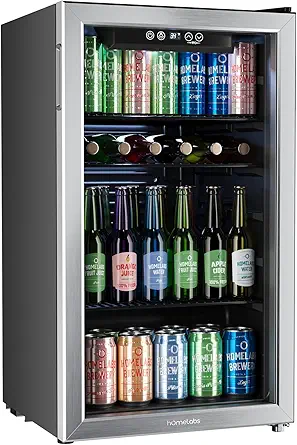 |
| Most Popular A crowd favorite that many people choose with confidence | Frigidaire Retro 3.2 Cu Ft Fridge |  |
| Best Seller A high-volume bestseller chosen again and again | Upstreman BR321 3.2 Cu.Ft Mini Fridge |  |
Frigidaire Retro 7.5 cu ft Refrigerator
| Capacity | 7.5 cubic feet |
|---|---|
| Freezer Capacity | 2 cubic feet |
| Configuration | Freezer-on-Top |
| Defrost System Type | Manual |
| Cooling Method | Compressor |
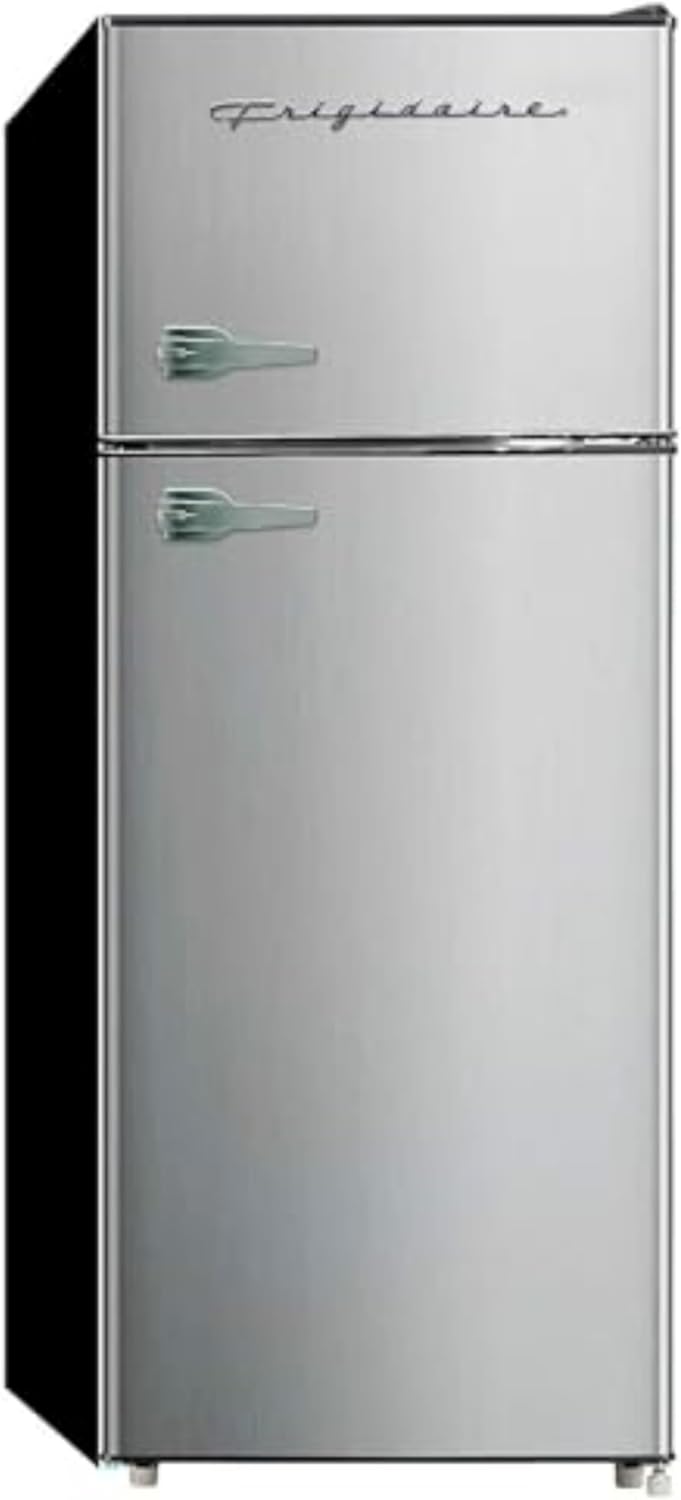
This Frigidaire apartment-size refrigerator pairs a classic retro look with practical storage for small kitchens. It provides 7.5 cu ft of total capacity with a separate 2 cu ft top freezer, three adjustable glass shelves and a transparent crisper that make everyday organization straightforward. The unit uses a compressor cooling system with manual defrost and mechanical controls, and its reversible door plus front leveling legs and rear castors make placement flexible in tight spaces. Notable conveniences include removable shelves, a full-width door bin for tall bottles, and quiet operation suitable for open-plan or compact living areas. Expect basic, reliable cooling rather than high-end energy efficiency since it lists annual energy use and a simple cycle defrost system. Installation is freestanding only and there are no advanced features like automatic defrost, smart controls, or multi-zone temperature settings. For buyers seeking a clean retro aesthetic with usable storage and easy placement, this model hits the balance between style and everyday function.
Best for: Buyers who want a compact, attractive refrigerator that balances usable storage and straightforward controls for a small kitchen, dorm, or studio without needing smart or premium features.
Less Ideal for: People who prioritize the highest energy efficiency, automatic defrost, or connected smart functions should consider other models with those capabilities.
- Retro stainless steel look with chrome trim that upgrades small-kitchen style
- Separate top freezer plus 7.5 cu ft total capacity for organized storage
- Adjustable, removable glass shelves and clear crisper for flexible interior layout
- Reversible door and built-in castors make placement and installation easier
- Manual cycle defrost requires occasional maintenance
- No advanced energy-saving or smart features
Verdict: A practical, stylish compact refrigerator that delivers flexible storage and easy placement for small kitchens without complicated features.
Sharp SJB1255GS 11.5 cu ft Refrigerator

| Capacity | 11.5 cubic feet |
|---|---|
| Freezer Capacity | 4.2 cubic feet |
| Configuration | Freezer-on-Bottom |
| Cooling Method | Compressor |
| Refrigerant | R-600A |
The Sharp SJB1255GS is a narrow counter-depth refrigerator with a bottom freezer designed for small kitchens where space matters but performance is still expected. It uses a rotary scroll compressor and Multi Air Flow vents to circulate cold air quickly through two refrigerator shelves and a 4.2 cu. ft. freezer with three drawers, while Freeze Boost helps when you need faster chilling. The Fresh Converter Drawer switches between chiller and crisper modes to preserve deli items or produce, and a removable wine rack adds simple organization. Controls are handled through an LED electronic display with Eco and Vacation modes to reduce energy use when needed. Practical benefits include reversible doors for layout flexibility and a frost-free freezer for low maintenance. Trade-offs are the limited fresh-food shelf area compared with full-size models and a modest number of interior shelves, so heavy meal prep or large-volume storage will feel constrained, but it delivers targeted cooling performance and useful features for compact spaces.
Best for: Buyers who need a space-efficient primary or secondary fridge for a small kitchen and prioritize reliable cooling performance and smart storage over maximum capacity.
Less Ideal for: Households that regularly store large quantities of groceries, host frequent dinner parties, or need wide shelving for platters should consider a larger model instead.
- Counter-depth 24-inch footprint fits tight kitchen layouts
- Bottom-freezer layout with three freezer drawers for organized frozen storage
- Fresh Converter Drawer that switches between chiller and crisper modes
- Multi Air Flow distribution and Freeze Boost for faster, even cooling
- Energy-saving Eco and Vacation modes and ENERGY STAR certification
- Limited fresh-food shelf space with only two main shelves
- Smaller overall capacity compared with full-size refrigerators
Verdict: A performance-focused, counter-depth bottom-freezer refrigerator that delivers efficient, even cooling and versatile storage for space-constrained kitchens.
Midea Compact Refrigerator WHS-65LB1

| Capacity | 1.6 cubic feet |
|---|---|
| Annual Energy Consumption | 207 kilowatt hours per year |
| Cooling Method | Compressor |
| Defrost System Type | Automatic |
| Installation Type | Freestanding |
The Midea WHS-65LB1 is a compact 1.6 cubic foot refrigerator aimed at adding extra chilled storage in dorms, offices, or tight kitchen nooks. It uses an R600A compressor and is ENERGY STAR certified, so it keeps running costs low compared with non-certified mini fridges. The unit includes a small internal chiller compartment for quick cooling, a removable shelf to accommodate taller items, and a reversible door for flexible placement. Temperature is adjusted with a simple mechanical thermostat offering multiple settings and the fridge operates quietly at about 42 dB, making it suitable for bedrooms or shared spaces. Practical buyers will appreciate the 2L bottle rack and door storage for frequently used items, but the chiller is not a full freezer and cannot handle long-term freezing of large items. Capacity is limited to basics rather than full grocery loads, so it works best as supplemental refrigeration. Installation is freestanding and the straightforward controls make daily use easy without advanced setup.
Best for: Buyers who want an efficient, space-saving secondary fridge for small kitchens, dorms, or offices and prioritize low operating costs and simple, reliable daily use.
Less Ideal for: Households that need full-size refrigeration, significant frozen storage, or a primary fridge replacement should consider larger-capacity models instead.
- ENERGY STAR certified compressor for lower annual energy use
- Compact footprint with reversible door for flexible placement
- Removable shelf and door rack let you fit taller bottles or odd-shaped items
- Quiet operation under typical room noise levels suitable for bedrooms or offices
- Very small overall capacity not suitable as a primary household refrigerator
- Chiller compartment is for short-term cooling and does not operate as a true freezer
Verdict: A compact, energy-efficient secondary fridge that saves space and operating costs while providing straightforward daily use in small kitchens.
Upstreman FR17 Mini Fridge
| Capacity | 1.7 cubic feet |
|---|---|
| Freezer Capacity | 0.2 cubic feet |
| Cooling Method | Compressor |
| Defrost System Type | Manual Defrost |
| Voltage | 115 volts |
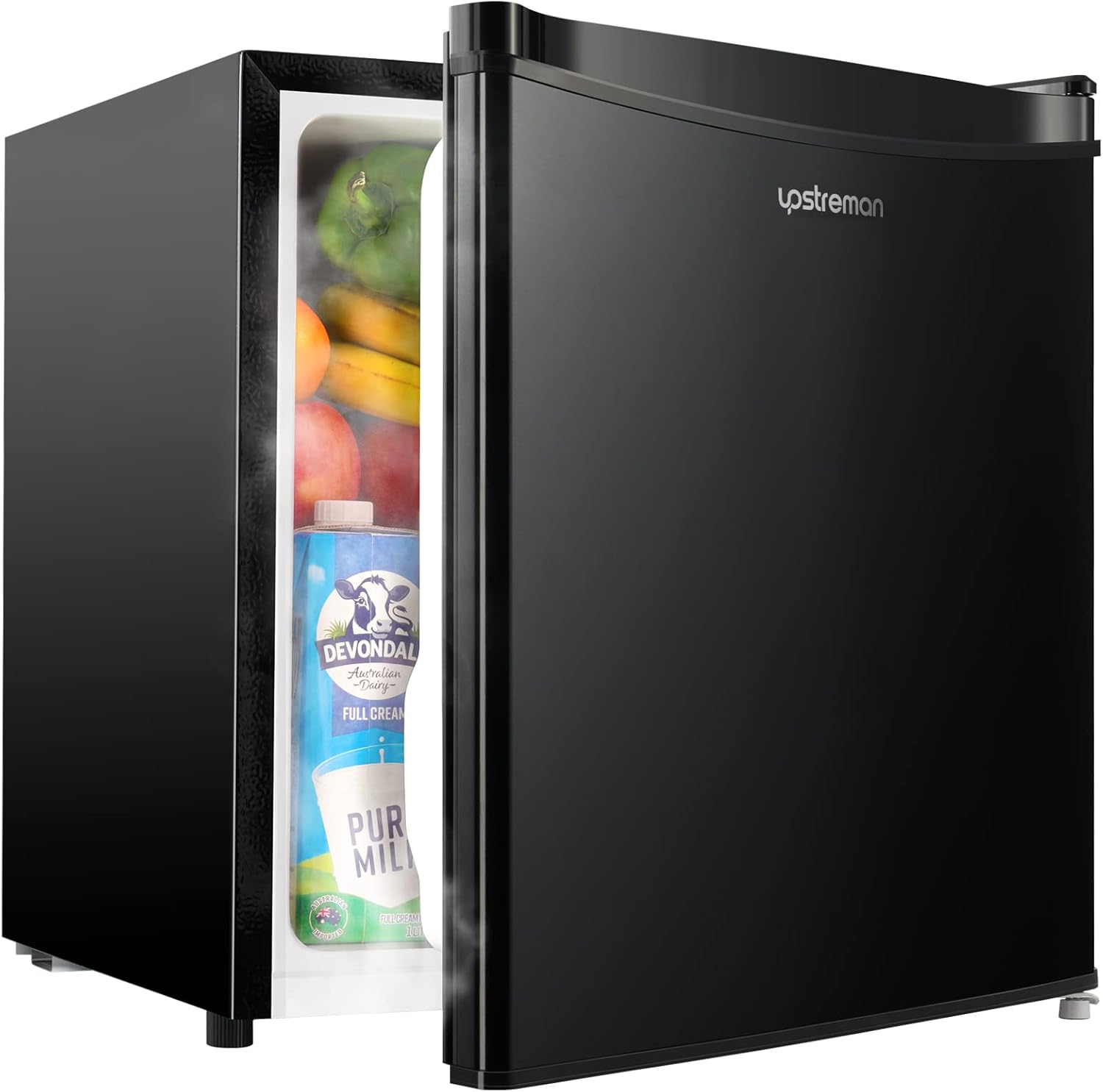
The Upstreman FR17 is a compact 1.7 cubic foot refrigerator designed for tight spaces like small kitchens, dorm rooms, or offices. It uses a compressor cooling system with a 0.2 cu ft freezer on top and a single wire/plastic shelf plus two door shelves, and temperature is adjusted via a five-setting thermostat that ranges from about 33.8°F to 46.4°F. Practical benefits include a reversible door for flexible placement, a quiet operating level around 38 dB, and Energy Star rated efficiency that keeps daily energy use low. The small freezer will handle ice trays and a few frozen items but is not suitable for long-term bulk freezing or ice cream storage. Installation is freestanding and the fridge ships with an ice tray and defrost tool, while service is backed by a one-year warranty. If you need a simple, space-saving fridge to keep drinks, snacks, and meal components chilled in a small kitchen, this model delivers sensible performance without extra bells and whistles.
Best for: Buyers who need an inexpensive, space-saving fridge for a small kitchen, dorm, or office and prioritize low running costs and quiet operation.
Less Ideal for: Those who need substantial freezer capacity, multi-shelf organization, or a feature-rich refrigerator should consider larger models instead.
- Very compact footprint that fits on counters or under desks
- Quiet operation (~38 dB) suitable for bedrooms and offices
- Energy Star rated with low daily energy consumption
- Reversible door for flexible placement
- Freezer space is very small and not suitable for long-term frozen storage
- Manual defrost requires occasional maintenance
- Only one main shelf limits organized storage for larger items
Verdict: A budget-friendly, energy-efficient mini fridge that delivers quiet, space-saving cooling for very small kitchens and dorms.
hOmeLabs Beverage Refrigerator HME030065N

| Capacity | 3.2 cubic feet |
|---|---|
| Can Capacity | 120 cans |
| Temperature Range | 34°F–50°F |
| Cooling Method | Compressor |
| Defrost System Type | Automatic |
This hOmeLabs beverage refrigerator is a freestanding, compressor-cooled mini fridge built for storing cans and bottled drinks in small kitchens or home bars. It uses a whisper-quiet compressor and an internal fan to circulate cold air while a touch-button digital panel adjusts temperature from 34°F to 50°F, so you can set and maintain consistent beverage chill without fuss. The reinforced double-glazed glass door and interior LED light make it easy to see and access drinks, and three removable chrome wire shelves give flexible layouts for cans or taller bottles. Practical benefits include reversible door hinges for placement flexibility and automatic defrost to reduce maintenance. Trade-offs are typical for compact display fridges: it is optimized for drinks rather than general food storage, and the glossy stainless-style finish and glass door mean it shows fingerprints and requires occasional cleaning. Energy consumption is moderate for its class, so account for that in tight utility budgets.
Best for: Buyers who prioritize a dependable, small-footprint fridge for chilled beverages in tight kitchen spaces and value quiet, consistent cooling and flexible placement.
Less Ideal for: People who need a primary refrigerator for varied food storage, large frozen storage, or those who want a fully concealed cabinet-style fridge.
- Holds up to 120 slim cans in a compact 3.2 cu ft footprint
- Digital touch temperature control with range down to 34°F for consistent chilling
- Whisper-quiet compressor and internal fan keep noise low for small kitchens
- Reversible glass door and adjustable removable shelves for placement and storage flexibility
- Bright interior LED and clear glass door make inventory visible without opening the unit
- Designed primarily for beverages so limited cold food storage versatility
- Glossy stainless-style surfaces and glass door need regular cleaning to stay smudge-free
Verdict: A reliable, quiet beverage-focused mini fridge that delivers steady cooling and flexible placement for small kitchens and home bars.
Frigidaire Retro 3.2 Cu Ft Fridge

| Capacity | 3.2 cubic feet |
|---|---|
| Freezer Capacity | 0.2 cubic feet |
| Cooling Method | Compressor |
| Defrost System Type | auto_cycle_defrost |
| Annual Energy Consumption | 200 kilowatt hours per year |
This Frigidaire retro compact fridge is a small, style-forward refrigerator designed for tight spaces such as small kitchens, dorms, or offices. It cools with a rotary scroll compressor and offers 3.2 cubic feet of total capacity with a 0.2 cu ft chiller compartment and glass shelving that slides out for easier loading. Practical touches include a built-in side bottle opener, a two-liter door basket for tall bottles, a can dispenser, reversible door, and an electronic lock. The unit is countertop/cabinet-ready thanks to its flush back design and matte finish, and the auto-cycle defrost minimizes maintenance. Expect straightforward daily use: store drinks, snacks, and fresh food for one to two people, refill the can dispenser, and access the small chiller for ice. Limitations are its compact capacity if you need to store large groceries and modest annual energy usage at about 200 kWh per year, so it is not the most efficient full-size replacement. Noise and exact temperature range are typical for compressor mini-fridges but are not detailed in the listing.
Best for: Buyers wanting a compact, stylish fridge that fits tight kitchen footprints and prioritizes reliable cooling and visible social proof from other owners.
Less Ideal for: Households that need to store large volumes of groceries, bulk items, or full frozen sections should choose a larger or full-size refrigerator instead.
- Compact 3.2 cu ft capacity suits small kitchens, dorms, and offices
- Rotary scroll compressor provides consistent cooling
- Built-in bottle opener, can dispenser, and slide-out glass shelves for organized storage
- Reversible door and flush back design allow flexible placement
- Limited overall storage compared with full-size refrigerators
- Annual energy consumption listed around 200 kWh, which is moderate for this class
Verdict: A compact, retro-styled refrigerator that offers reliable compressor cooling and organized storage for small kitchens and tight spaces.
Upstreman BR321 3.2 Cu.Ft Mini Fridge

| Capacity | 3.2 cubic feet |
|---|---|
| Freezer Capacity | 0.3 cubic feet |
| Defrost System Type | Manual Defrost |
| Voltage | 115 volts |
| Annual Energy Consumption | 206 kwh |
The Upstreman BR321 is a compact freestanding mini fridge aimed at small kitchens, dorms, offices, and bedrooms where space is limited. It provides 3.2 cubic feet of total capacity with a small 0.3 cu.ft freezer, two adjustable glass shelves, a crisper drawer, and three door bins for bottles and condiments. Temperature is controlled with a five-step adjustable thermostat that ranges roughly between 32°F and 50°F, and the compressor-based cooling runs quietly at about 38 dB while using energy-efficient components and an ETL listing. Practical touches include a reversible door, adjustable leveling feet, and a defrost tool for maintenance. Limitations are its manual defrost system and modest freezer space, so it will not replace a full-size refrigerator for large families or long-term frozen storage; the thermostat is adjustable but not digitally precise. For a buyer prioritizing a reliable, efficient small fridge that fits tight layouts, this model delivers sensible storage and low-noise operation without complex controls.
Best for: Buyers who want a conservative, easy-to-use small refrigerator for a studio kitchen, dorm room, or office where quiet, efficient cooling and simple controls matter more than large freezer capacity.
Less Ideal for: Households that need substantial frozen storage, precise digital temperature control, or a full-size kitchen refrigerator should look at larger models instead.
- Compact footprint that maximizes usable interior space for small kitchens and dorms
- Quiet compressor operation (~38 dB) suitable for bedrooms or offices
- Adjustable glass shelves and door bins allow flexible organization
- Reversible door and leveling feet make placement in tight layouts easy
- Energy-efficient design with ETL certification and low annual consumption
- Freezer is very small and not suitable for long-term frozen storage or making ice
- Manual defrost requires occasional maintenance
- Thermostat is manual rather than digital, so exact temperature control is limited
Verdict: A compact, quiet, and energy-efficient mini fridge that fits small kitchens and dorms while prioritizing simple reliable cooling.
Choosing the Right Refrigerator for Small Kitchens: Key Factors to Consider
Usable Capacity Versus External Footprint
In a small kitchen the raw liter or cubic-foot number is only half the story. You need to know how much of that space is actually usable once drawers, door bins, and fixed shelves are considered.
A refrigerator with clever vertical storage and slim, deep drawers can deliver more usable storage than a wider unit with poorly arranged shelves. Consider how you store typical items: tall bottles, meal-prep containers, and produce drawers. Models that convert freezer or fridge space or that offer split-shelf options often let you adapt internal volume to changing needs, which matters more in a constrained footprint.
External Dimensions and Door Clearance
Measure the width, depth, and especially the door swing clearance where the refrigerator will sit. A difference of just a few centimeters can determine whether a door can open fully next to a counter or into a narrow hallway.
Depth matters for both visual balance and walkway space. A reduced-depth or counter-depth refrigerator maintains a slimmer profile but may trade internal volume. Also check whether the door is reversible, how wide the hinge side needs to be, and any required clearance for venting or compressor access during installation.
Shelving Flexibility and Organization Features
Shelving that can be repositioned or removed lets you adapt the interior to larger platters or tall bottles without wasting vertical space. Sliding shelves, crispers with adjustable humidity settings, and door bins that accept gallon containers are particularly useful in small kitchens where every inch counts.
Good organization reduces the need to buy a larger fridge just to fit odd-shaped items. Look for models with clear drawers, shallow deli drawers, and multi-level door racks that let you organize by frequency of use. Interior lighting and easy-to-clean surfaces also improve day-to-day convenience.
Cooling Performance and Temperature Stability
Consistent temperatures prevent food waste and reduce the need to overcool, which can increase energy use. In small refrigerators, cold spots or warm pockets are more likely if airflow is poorly routed or if the condenser runs hot due to cramped ventilation.
Evaluate how the unit maintains temperature under normal use, including frequent door openings. Systems with multiple vents, dedicated evaporators for freezer and fridge compartments, or adaptive defrost controls typically keep contents fresher longer. Quiet fans and efficient compressors help maintain comfort in small open-plan spaces.
Energy Use and Long-Term Operating Cost
Energy efficiency matters more in a small kitchen where a refrigerator often represents a large fraction of household appliance energy consumption. Look for clear energy consumption ratings and consider models designed to minimize standby losses and compressor runtime.
Lower energy use reduces monthly operating costs and can be a deciding factor when two refrigerators offer similar capacity. Also consider insulation quality and whether the unit has modes that reduce energy draw during light-use periods or vacation hold settings to cut power when you are away.
Installation, Venting, and Service Access
Installation constraints can sink an otherwise perfect choice. Confirm where vents and service panels are located and whether the unit needs space above or behind for airflow. Some compact models vent from the front, which is ideal for under-counter or tight clearance installations.
Also think about how the refrigerator will be positioned for long-term maintenance. Removable toe-kick panels, easily accessible condensers, and reversible doors simplify installation and future service without demanding cabinet alterations.
Measuring Twice: How To Fit a Fridge Into a Tight Footprint
Start by mapping the installation area in three dimensions. Measure width, depth, and height, and include door swing, adjacent cabinet handles, and any baseboard or molding. Measure doorway and stair clearances as well to ensure the unit can be delivered into the room without disassembly.
If you have only inches to spare, consider reduced-depth units or refrigerators with front-venting compressors that do not require rear clearance. Also account for the clearance needed to remove drawers and for door opening with full bins inserted.
- Measure full door swing and include handles
- Check delivery path through doorways and halls
- Account for venting clearance and toe-kick service access
Layout Strategies to Maximize Usability
Placement affects how usable a small refrigerator feels. Position the fridge so frequently accessed items are at eye level and near prep zones. If space allows, leave a small counter section for staging groceries after you unload them.
Consider adding shallow shelving or magnetic organizers on adjacent walls for spices, condiments, or frequently used small items. These approaches reduce fridge clutter and let you choose a smaller refrigerator without losing function.
- Store frequently used items in easy-to-reach door bins
- Use adjacent wall space for overflow storage
- Keep a short countertop staging area near the fridge
Maintenance and Cleaning Tips for Small Units
Regular cleaning keeps a compact refrigerator efficient and hygienic. Wipe spills promptly, defrost manual-freezer sections when ice builds, and vacuum or brush condenser coils on models with rear access to maintain airflow.
Check door seals periodically for gaps that let cold air escape. In small kitchens, a poorly sealed fridge loses more relative cooling because the room tends to warm the external surfaces faster than in larger kitchens.
- Wipe spills immediately to protect finishes and airflow
- Clean condenser coils twice a year if accessible
- Inspect door gaskets for damage and proper seating
When to Choose Counter-Depth or Compact Models
Counter-depth refrigerators reduce the visual bulk and can make a small kitchen appear more open while keeping a near-counterline look. They are typically shallower than standard-depth models and may require a compromise on internal volume.
Compact or apartment-size refrigerators are best when floor space is severely limited or when the fridge needs to sit in a nook or under a countertop. Decide whether visual fit or interior liters are the priority and choose accordingly.
- Counter-depth for flush visual fit
- Compact units for tight floor space
- Balance visual fit against usable internal volume
How We Chose the Best Refrigerator for Small Kitchens
We screened refrigerators by focusing on the constraints that matter most in compact kitchens. Our selection process prioritized units with documented interior capacity optimized for narrow footprints, adjustable shelving and door storage, and verified energy performance ratings to keep long-term operating costs low. We also looked for models with reliable temperature control that maintain even cooling across both fresh-food and freezer compartments, plus features that simplify installation in tight corners such as reversible doors and reduced-depth cabinets. Exclusions included full-depth, professional-style units and any model that requires major cabinet modification for basic installation. We excluded units with minimal or no user-accessible storage flexibility, and those lacking clear energy or cooling specifications. The final shortlist balances usable liters per external width, access and organization features, installation flexibility, quiet operation for open-plan small homes, and energy consumption. These evaluation dimensions directly informed the scoring metrics and are the reason each featured refrigerator was considered appropriate for a small kitchen environment.
Our full evaluation process is outlined in our review methodology.
FAQ
What is the ideal refrigerator width for a small kitchen?
Ideal width depends on your layout, but many small kitchens fit refrigerators between 18 and 24 inches wide. Measure doorway and clearance first, and prioritize internal organization if you must choose a narrower unit.
Can a refrigerator for a small kitchen still hold large platters?
Often yes, if you choose a model with adjustable or removable shelves and a flexible interior layout. Look for split or sliding shelves that let you create a tall vertical space when needed.
How much clearance does a refrigerator need behind it?
Clearance needs vary by model. Some compact refrigerators vent from the front and need little or no rear clearance, while others require a couple inches behind for airflow. Check vent location and plan for service access.
Are front-venting refrigerators better for tight installations?
Front-venting units are advantageous when you cannot provide rear clearance. They allow the compressor and condenser to expel heat from the front, which is useful for built-in or close-fit placements.
How often should I defrost a small refrigerator?
If the unit has a manual-defrost freezer, defrost when ice buildup exceeds a few millimeters or when the freezer capacity noticeably shrinks. Many modern compact models include automatic defrosting, which reduces this maintenance.
Final Verdict
For small kitchens the best refrigerator balances usable interior layout with a slim external footprint and energy-efficient cooling. Prioritize units that maximize adjustable shelving and door storage, maintain stable temperatures with efficient airflow, and fit your space without complex cabinet modifications. Tradeoffs are inevitable: a shallower fridge can look better in a tight space but may require more organization, while a slightly larger footprint can save time by reducing the need to rotate items. Use the evaluation criteria above to match the refrigerator to your daily habits and installation constraints so you can choose confidently.