
Note: This article contains affiliate links. If you click on these links and make a purchase, we may earn a small commission at no extra cost to you. This helps support our research and content. Read our full affiliate disclosure here.
If you need extra cold storage in a garage that gets freezing or near-freezing temperatures, a refrigerator built for an unheated space prevents spoilage and avoids compressor damage. Choosing the right refrigerator for an unheated garage matters because ordinary indoor models can fail, cycle erratically, or allow food to freeze at low ambient temperatures. This guide shortlists top options suited to unheated garages and explains the technical reasons to choose one over another. We evaluated insulation, compressor and thermostat design, temperature control range, and build features that prevent condensation or freezing. Read on for the top picks and practical buying guidance to keep food safe year-round.
Top Picks at a Glance
| Best Overall The best all-around choice for most situations | BLACK+DECKER 17 Cu. Ft. Convertible Freezer Refrigerator |  |
| Best Quality Built to a higher standard if you want something more solid | Conserv FR1700 Convertible Refrigerator |  |
| Best Value The sweet spot between price and what you get | BANGSON 7.7 Cu Ft Top-Freezer Refrigerator |  |
| Best Budget The cheapest option that still gets the job done reliably | Frigidaire EFR451 4.5 Cu Ft Refrigerator |  |
| Top Rated A top-rated pick with lots of positive feedback | BLACK+DECKER 2.5 Cu. Ft. Compact Refrigerator |  |
| Most Popular A crowd favorite that many people choose with confidence | Frigidaire EFR751 7.5 cu ft Refrigerator |  |
| Best Seller A high-volume bestseller chosen again and again | Upstreman BD75 7.7 Cu.Ft. Refrigerator |  |
BLACK+DECKER 17 Cu. Ft. Convertible Freezer Refrigerator

| Capacity | 17 cubic feet |
|---|---|
| Voltage | 120 volts |
| Number Of Shelves | 4 |
| Specification Met | CSA, Energy Star |
This BLACK+DECKER upright offers 17 cu ft of storage and a convertible design that switches between freezer and refrigerator modes by adjusting the temperature settings. It is meant for freestanding placement and is garage-ready when used as a freezer, with frost-free operation and electronic temperature controls shown on an LED display. Interior LED lighting, four removable glass shelves, a lower wire basket and four door bins help keep large and small items organized, while recessed handles, leveling legs and roller wheels make installation and positioning straightforward. The unit uses R600a refrigerant and carries Energy Star and CSA certifications for efficiency and safety. Practical limitations include its garage-ready rating applying to freezer mode only, so refrigeration performance in an unheated garage may be less reliable when set to fridge temperatures, and the tall footprint requires planning for clearance and placement. For buyers who need sizable additional cold storage and simple mode switching, this model balances capacity and convenience without advanced smart features.
Best for: Buyers who want a large, straightforward extra cold storage unit for seasonal or bulk food storage and who prioritize energy efficiency and simple controls over smart features.
Less Ideal for: People who need reliable refrigerator performance in an unheated garage or those who want connected features and advanced temperature zoning.
- Convertible freezer-to-refrigerator mode for flexible storage needs
- Frost-free operation removes need for manual defrosting
- Large 17 cu ft capacity with removable glass shelves and door bins for organization
- Garage-ready certification in freezer mode and Energy Star efficiency
- Garage-ready rating applies only in freezer mode, not refrigerator mode
- Tall footprint needs sufficient clearance and a plan for placement
Verdict: Choose this model if you need a roomy, energy-efficient convertible freezer that is garage-ready in freezer mode and keeps large quantities of food organized.
Conserv FR1700 Convertible Refrigerator
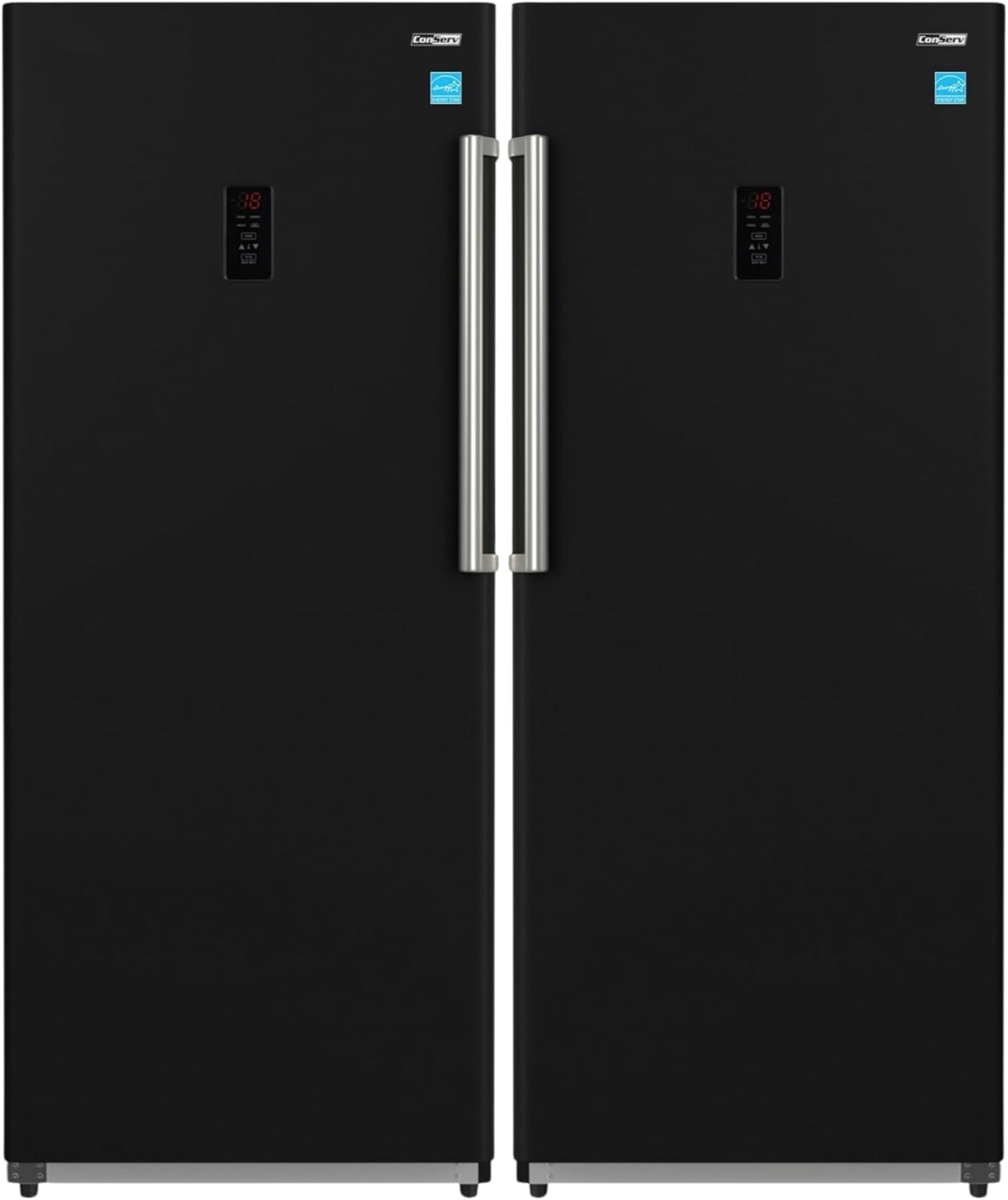
| Capacity | 17 cubic feet |
|---|---|
| Configuration | Full-Sized Side-by-Side French Door |
| Defrost System Type | Automatic |
| Cooling Method | Compressor |
| Specification Met | Energy Star |
The Conserv FR1700 is a modular 17 cubic foot convertible refrigerator/freezer intended for flexible storage in garages, basements, or utility spaces. You can switch it between fridge and freezer modes to match seasonal needs or to hold overflow groceries, and the unit is designed to pair side-by-side with a second unit to create a French-door style setup with independent temp control. It uses a compressor cooling system with automatic defrost and multiple shelves and door bins for organization, and its garage-ready rating means it is built to run reliably in hotter or colder unheated environments. Energy Star certification helps keep operating costs lower than conventional models. Expect a full-sized, freestanding installation and a stainless steel door finish that resists wear, but note the unit is heavy and intended as a standalone appliance rather than a built-in. The single-year parts and labor warranty is modest compared with longer factory coverage from some mainstream brands.
Best for: Buyers who need reliable, performance-focused cold storage in an unheated garage or utility area and value the ability to switch between fridge and freezer modes as needs change.
Less Ideal for: People looking for a built-in appliance, lightweight portable solution, or extended factory warranty should consider other options.
- Convertible fridge/freezer mode for seasonal flexibility
- Garage-ready design rated to operate in hot and cold unheated spaces
- ENERGY STAR certified for better energy efficiency
- Modular side-by-side capability to create a French-door style with independent controls
- Multiple shelves and reversible doors for flexible storage and placement
- Only a one-year parts and labor warranty
- Heavy freestanding unit may be difficult to move or install without help
Verdict: Choose this unit if you need a performance-oriented, garage-ready convertible refrigerator/freezer that can flex between cold and frozen storage and be expanded into a French-door setup.
BANGSON 7.7 Cu Ft Top-Freezer Refrigerator

| Capacity | 7.7 cubic feet |
|---|---|
| Refrigerator Net Capacity | 6.21 cubic feet |
| Defrost System Type | Manual Defrost |
| Cooling Method | Compressor |
| Number of Doors | 2 |
This 7.7 cu ft top-freezer fridge is a space-saving unit intended for apartments, offices, or other tight areas and combines a 1.49 cu ft freezer with a 6.21 cu ft fresh-food section. It uses a compressor cooling system and a five-level thermostat so you can tune temperatures for different contents; recommended setting is midrange for everyday use. Interior features include removable glass shelves, a crisper drawer, door racks for bottles, an interior light, reversible doors and leveling legs that make it easy to position. The freezer is manual-defrost and the product ships with a defrost tool and ice tray. Noise is rated at about 39 dB, so it runs quietly for kitchen or office use. Important limits are the manual defrosting requirement and the manufacturer guidance that the unit is for indoor use only and needs clearance for ventilation; that makes it a cautious choice for unheated garages unless you can maintain an appropriate ambient temperature and protect the compressor from extreme cold. Follow the hold-upright and settling guidance after delivery to avoid operation issues.
Best for: Buyers who prioritize space efficiency and straightforward, adjustable cooling for small apartments, offices, or secondary kitchens and who want a simple, quiet refrigerator without advanced features.
Less Ideal for: People needing a fully automatic, low-maintenance freezer or those who expect reliable performance in unheated, freezing garages without climate control should look for a model rated for colder environments.
- Compact footprint fits narrow spaces and small kitchens
- Adjustable glass shelves and crisper drawer for flexible storage
- Five-level thermostat for simple temperature control
- Reversible doors and leveling legs allow flexible placement
- Quiet compressor operation around 39 dB
- Manual defrost freezer requires periodic maintenance
- Manufacturer recommends indoor use and clearance for ventilation which limits cold garage placement
Verdict: Choose this compact top-freezer fridge if you need a quiet, space-saving indoor refrigerator with simple, adjustable cooling for small spaces.
Frigidaire EFR451 4.5 Cu Ft Refrigerator

| Capacity | 4.5 cubic feet |
|---|---|
| Freezer Capacity | 0.8 cubic feet |
| Defrost System Type | Manual |
| Cooling Method | Compressor |
| Voltage | 110 volts |
The Frigidaire EFR451 is a small two-door refrigerator with a top freezer that fits tight spaces while providing basic cold storage. It is typically used in garages, dorm rooms, or apartments where footprint and budget matter; the 0.8 cu ft freezer handles ice trays and a few frozen meals while the 4.3 cu ft fresh food area holds bottles, produce in a transparent crisper, and small containers on adjustable glass shelves. The unit uses a compressor cooling method with a manual defrost freezer and an adjustable thermostat for temperature control. Practical benefits include straightforward organization with door racks and removable shelves for easy cleaning, plus a stainless steel finish that resists visible wear. Limitations to consider are its compact capacity and manual defrost requirement, which means more hands-on maintenance than frost-free models, and it may not be ideal for large families or heavy freezer users. Energy consumption is moderate and the design prioritizes simplicity over advanced features.
Best for: Buyers prioritizing a low-cost, space-saving refrigerator for an unheated garage or secondary space who want straightforward, reliable cold storage without extra features.
Less Ideal for: Those needing large freezer capacity, frost-free convenience, or primary-kitchen performance should look at larger or auto-defrost models instead.
- Compact footprint fits small spaces like garages or apartments
- Adjustable glass shelves and removable components simplify organization and cleaning
- Separate transparent crisper keeps produce visible and contained
- Compressor cooling provides reliable temperature control compared with thermoelectric units
- Manual defrost freezer requires periodic thawing and maintenance
- Limited freezer capacity not suited for bulk freezing or long-term storage
Verdict: A budget-minded, compact compressor refrigerator that delivers reliable basic cooling for garages or secondary spaces where footprint and cost are the top priorities.
BLACK+DECKER 2.5 Cu. Ft. Compact Refrigerator

| Capacity | 2.5 cubic feet |
|---|---|
| Freezer Capacity | 0.2 cubic feet |
| Defrost System Type | Automatic |
| Refrigerant | R-600A |
| Specification Met | Energy Star |
This BLACK+DECKER compact refrigerator is a straightforward small-footprint fridge that uses a compressor cooling system and offers a 0.2 cu. ft. chiller compartment rather than a full freezer. It is meant for freestanding placement under counters, in dorms, offices, or tight spots and includes two slide-out glass shelves, door bins sized for cans and a 2-liter bottle, and a mechanical dial with seven temperature settings. The compressor and scroll design give it predictable cooling performance and Energy Star certification points to efficient operation. Practical benefits include reversible door swing and adjustable leveling legs for flexible placement, and the removable shelves make it simple to fit taller items. Limitations are the tiny chiller that is not recommended for frozen storage and the modest overall capacity, so it works best as a secondary fridge or for limited households. For unheated garages, the compressor-based cooling is better than thermoelectric options, but performance can be affected by extreme ambient cold or heat because the thermostat is manual and the unit is designed for typical indoor environments.
Best for: Buyers who prioritize a reliable, energy-efficient secondary refrigerator for small spaces and want straightforward mechanical controls and flexible placement options.
Less Ideal for: People needing full freezer capacity, large-family meal storage, or a primary kitchen refrigerator should consider larger models instead.
- Compressor cooling with scroll compressor for consistent temperature control
- ENERGY STAR certified for efficient operation
- Reversible door and adjustable leveling legs for flexible placement
- Removable glass shelves and door bins that accommodate cans and a 2-liter bottle
- Chiller compartment is not a true freezer and should not be used for frozen storage
- 2.5 cu. ft. capacity is limited for full-kitchen replacement
Verdict: A compact, Energy Star certified compressor fridge that delivers dependable cooling and flexible placement for small spaces or as a secondary unit.
Frigidaire EFR751 7.5 cu ft Refrigerator
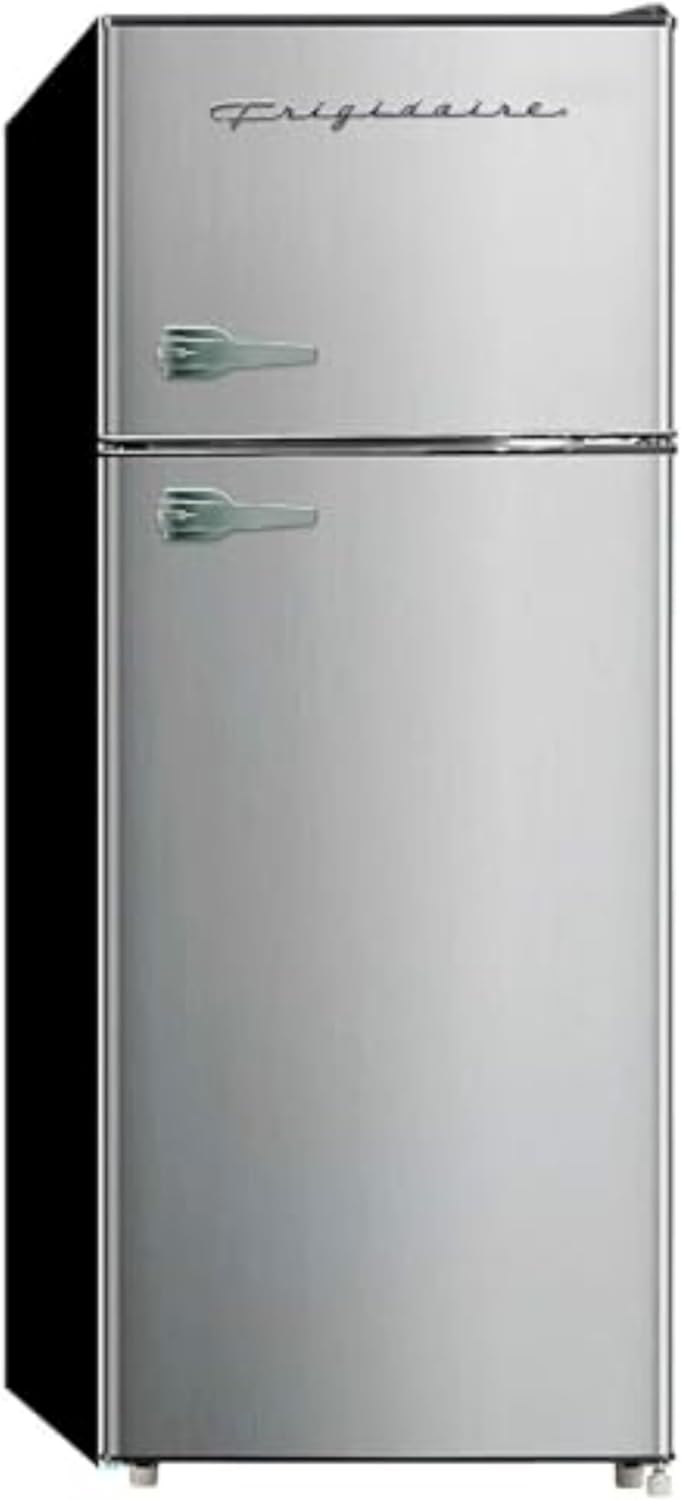
| Capacity | 7.5 cubic feet |
|---|---|
| Freezer Capacity | 2 cubic feet |
| Defrost System Type | Manual |
| Power Source | Corded Electric |
| Cooling Method | Compressor |
This Frigidaire EFR751 is a compact, freezer-on-top refrigerator designed for apartments, dorms, and other tight spaces where basic, reliable cooling is the priority. It provides 7.5 cu ft of total capacity with a 2 cu ft freezer and three adjustable glass shelves in the fridge plus door storage and a crisper for produce. Controls are mechanical, which makes operation simple and less prone to electronics failures, and the reversible door and rear castors help with placement in narrow or awkward spots. Its compressor-based cooling uses common refrigerants and the unit is freestanding so it can be set against a wall or moved short distances. Trade-offs to consider: defrosting is manual rather than frost-free, and annual energy consumption is relatively high compared with modern high-efficiency models, so it may run more in cold or variable-temperature settings like an unheated garage. The design favors straightforward organization and dependable, low-tech performance rather than advanced temperature controls or the highest energy savings.
Best for: Buyers who prioritize straightforward, dependable cooling and easy placement in small spaces and who want a roomy compact fridge without complex controls.
Less Ideal for: Anyone needing frost-free convenience, the lowest possible energy use, or precision temperature control for sensitive items should consider a different model.
- Compact 7.5 cu ft capacity with separate top freezer for basic frozen storage
- Adjustable glass shelves and clear crisper allow flexible, organized storage
- Reversible door and rear castors make placement easier in tight spaces
- Simple mechanical controls and compressor cooling offer reliable, low-tech operation
- Manual defrost requires periodic maintenance to remove frost buildup
- Annual energy consumption is higher than newer ENERGY STAR models
Verdict: Choose this unit if you want a roomy, no-frills compact refrigerator that is easy to move and reliably cools small spaces.
Upstreman BD75 7.7 Cu.Ft. Refrigerator

| Capacity | 7.7 cubic feet |
|---|---|
| Freezer Capacity | 1.5 cubic feet |
| Defrost System Type | Manual Defrost |
| Cooling Method | Compressor |
| Door Orientation | Reversible |
This Upstreman BD75 is a compact freestanding refrigerator with a 7.7 cubic foot capacity and a 1.5 cu.ft. top freezer designed for small spaces such as garages, apartments, or dorm rooms. It uses a compressor cooling method with a rotary scroll compressor and offers five adjustable thermostat settings for both fresh and freezer compartments, letting you dial temperatures between the stated ranges. The interior includes two tempered glass removable shelves, a crisper drawer for produce, five door bins and an automatic light for convenience. The unit is described as quiet and has a reversible door to suit different garage layouts. Practical benefits include flexible shelf arrangement for larger items, a deeper freezer than many mini-fridges, and straightforward manual defrost that keeps electronics simple and repairable. Important limitations are the manual defrost requirement and the lack of advanced insulation or garage-specific rating, so performance in very cold unheated garages could be inconsistent compared with models rated for low ambient temperatures.
Best for: Practical buyers who prioritize a straightforward, quiet refrigerator with flexible shelving for small unheated garages, workshops, or secondary food storage where ease of use and simple controls matter most.
Less Ideal for: Those who need proven low-ambient performance for garages that routinely drop to freezing temperatures or who want automatic defrost and advanced insulation specifically rated for cold spaces.
- Compact footprint with relatively large 7.7 cu.ft. capacity suitable for tight spaces
- Five adjustable thermostat settings for tailored fresh and freezer temperatures
- Removable tempered glass shelves and crisper drawer allow flexible storage
- Quiet operation designed to run at low noise levels
- Reversible door swing to fit different garage layouts
- Manual defrost freezer requires periodic maintenance to remove ice buildup
- Not specified or certified for low-ambient or garage-ready operation
Verdict: Choose this unit if you want a quiet, easy-to-use compact refrigerator with a deeper freezer and flexible shelving for secondary storage in an unheated garage or small workspace.
Choosing the Right Refrigerator for Unheated Garage: Key Factors to Consider
Low-ambient Operation Range
Not all refrigerators are rated to run properly at low room temperatures. A unit with an explicit low-ambient operating range will keep compressor cycling and thermostat control accurate when the garage gets cold.
If a refrigerator is only designed for standard indoor climates, the compressor may short-cycle or not run long enough to maintain steady internal temperatures, causing food to thaw and refreeze or refrigerators to run inefficiently. Look for manufacturer guidance or design features that indicate reliable cold-weather operation.
Compressor and Thermostat Engineering
Some refrigerators include compressor features such as crankcase heaters, inverter or linear compressors, and thermostats calibrated for lower ambient temps. These components reduce stress on start-up in cold conditions and prevent oil from congealing in the compressor.
A thermostat that senses cabinet temperature accurately and allows the compressor to run appropriately at low ambient temperatures is as important as the compressor itself. Systems designed for garage use are more likely to maintain stable internal conditions across a wider range of external temperatures.
Insulation Quality and Door Sealing
Thicker cabinet insulation and tight door gaskets slow heat transfer and reduce the workload on the compressor in fluctuating garage temperatures. Good sealing also helps prevent warm, humid garage air from condensing inside the cabinet when temperatures rise.
Pay attention to how the door closes, the presence of magnetic gaskets, and whether the insulation is specified or visibly thicker; these factors influence energy use and the refrigerator's ability to keep internal temperatures steady despite an unheated space.
Moisture and Corrosion Resistance
Unheated garages often experience higher humidity and condensation cycles. Surfaces, electronic controls, and fasteners with corrosion-resistant finishes or protective coatings will last longer in those conditions.
Drain systems and defrost designs that manage water effectively reduce ice buildup and puddling. Plastic and stainless interiors are generally easier to maintain in damp conditions than exposed metal components that can rust.
Thermal Management and Defrost Strategy
How a refrigerator manages frost and defrost cycles affects performance in cold garages. Adaptive or controlled defrost systems reduce unnecessary heating cycles while preventing ice accumulation on coils, which can hamper cooling.
Units that rely on intermittent manual defrost require more attention in damp, fluctuating climates. Automated defrost systems tuned for variable ambient temperatures help maintain efficiency and reduce maintenance in a garage setting.
Interior Layout and Ventilation
Shelving configuration, airflow paths, and compartment placement determine how evenly the cabinet maintains temperature and how much usable storage you actually get. Adjustable shelves and door bins let you adapt the interior for bulky items commonly stored in garages.
Vents and fans that promote even circulation reduce cold or warm spots inside the cabinet, which is helpful when the unit must work harder to maintain setpoints in variable ambient conditions.
How Unheated Garages Affect Refrigerator Operation
Cold ambient temperatures change how compressors and thermostats behave. At low room temperatures, oil inside the compressor can thicken and valves may not operate as intended, which can prevent a normal cooling cycle. This may lead to short cycling, where the compressor starts and stops too quickly, or to conditions where the compressor does not run long enough to regulate internal temperatures properly.
Temperature swings between cold nights and milder days also increase the risk of condensation and frost inside and around the unit. Understanding these mechanical and environmental dynamics helps you pick a refrigerator that is engineered to handle them.
- Short cycling reduces life expectancy and can allow food temperature to drift
- Thicker insulation lowers the compressor workload in variable ambient temps
- Moisture cycles increase corrosion risk and require better drainage or defrost
Installation Tips for Garage Placement
Placement and ventilation are critical. Sit the refrigerator on a level, raised platform if the garage floor is prone to dampness. Leave manufacturer-recommended clearance around the back and sides to allow airflow to the condenser. Poor airflow increases compressor run time and strain.
Avoid locations directly exposed to outdoor drafts or direct sunlight through windows. If your garage sees extreme lows, consider insulating nearby walls or placing a thermal barrier behind the appliance to reduce rapid ambient swings.
- Keep clearances for condenser airflow
- Elevate the unit in areas prone to water
- Avoid placing near exterior doors or uninsulated windows
Maintenance and Seasonal Checks
Regular maintenance extends service life in an unheated environment. Clean condenser coils annually to preserve heat exchange efficiency. Inspect door gaskets periodically for cracks or loss of magnetic sealing, and replace them if they no longer close tightly.
In cold months, monitor internal temperatures and listen for unusual cycling behavior. During warm, humid periods, check drainage and the defrost system to prevent ice buildup. Keeping a simple fridge thermometer inside the cabinet helps you spot problems early.
- Schedule coil cleaning once a year
- Check gasket integrity and reseal if needed
- Use a thermometer to verify stable internal temps
Energy Considerations in Cold Climates
Running a refrigerator in a cold garage can be more efficient if the unit is engineered for low-ambient operation because the compressor does not need to work as hard to reject heat. However, if the refrigerator is not designed for such conditions, erratic cycling can actually increase energy use and wear.
Look for units rated for low-ambient performance or with inverter-style compressors that modulate rather than cycle on and off. These designs tend to maintain efficiency across a wider ambient temperature range.
- Low-ambient rated units often use less energy in cold settings
- Inverter compressors provide smoother operation and potential energy savings
- Poorly matched units may run inefficiently in fluctuating temperatures
Practical Features That Matter for Garage Use
Some features are especially useful in garages: robust door gaskets, sealed control compartments, corrosion-resistant exteriors, and simple mechanical controls that tolerate temperature extremes. Interior finishes that resist staining and are easy to clean are also helpful in a workspace environment.
Look for shelving that is adjustable and removable for cleaning or storing odd-shaped items. Reversible doors can be valuable when garage layout constrains swing direction, and built-in thermostats with wide adjustment ranges let you set appropriate cabinet temperatures through seasonal changes.
- Reversible doors increase installation flexibility
- Sealed control panels reduce moisture intrusion
- Adjustable shelving improves practical storage capacity
How We Chose the Best Refrigerator for Unheated Garage
We focused on attributes that directly affect long-term performance in garages that experience cold, temperature swings, or dampness. Key evaluation criteria included low-ambient operation, compressor and thermostat design, insulation and cabinet sealing, energy efficiency at low temperatures, and durability against moisture and corrosion. We also considered usable interior layout and shelving because those affect practical storage capacity and airflow. Excluded from consideration were standard indoor-only refrigerators with no manufacturer guidance for low-ambient use, specialty commercial equipment outside home-garage expectations, and units with reported reliability problems in cold conditions. We prioritized products that explicitly support colder ambient ranges or implement engineering features—such as crankcase heaters, adaptive defrost, thick cabinet insulation, or linear compressors—that help maintain correct internal temperatures in unheated environments. The selection process weighted real-world reliability and component design rather than superficial features.
Our full evaluation process is outlined in our review methodology.
FAQ
Can any refrigerator run in an unheated garage?
Not every refrigerator is designed for cold ambient conditions. Many standard indoor models lose proper thermostat control or short-cycle when room temperatures fall below the recommended range. Choose a unit rated for low-ambient operation or with engineering features to handle cold.
What temperature range should I expect inside a garage-rated refrigerator?
A properly configured garage-rated refrigerator should maintain safe food temperatures across a broader ambient range, typically keeping internal temps near normal fridge setpoints even when the garage drops below standard indoor levels. Exact ranges depend on the unit design and ambient extremes.
Do I need to do anything special when winterizing a garage refrigerator?
Check gasket condition, ensure vents and coils are clean, and verify the thermostat is functioning before the cold season. In very cold climates, follow the manufacturer guidance—some appliances require simple winterization steps or an accessory heater to maintain performance.
Is a freezer inside a garage subject to the same issues as a refrigerator?
Freezers can face similar challenges, particularly if their thermostats and compressors are not designed for low ambient operation. Upright freezers with proper low-ambient ratings or robust compressor designs are better suited to unheated garages.
Will condensation damage a refrigerator stored in an unheated garage?
Condensation cycles can accelerate corrosion and cause water to pool if drainage or defrost systems are inadequate. Choosing units with good sealing, proper defrost strategies, and corrosion-resistant finishes reduces the risk of moisture-related damage.
Final Verdict
When selecting a refrigerator for an unheated garage, prioritize low-ambient operation, compressor and thermostat engineering, and robust insulation and sealing. Those qualities determine whether the unit will keep stable internal temperatures and resist moisture-related issues in a garage environment. Balance features like adaptive defrost and corrosion-resistant finishes against your storage needs and installation constraints. If you focus on these technical factors and follow simple placement and maintenance recommendations, you can choose a dependable garage refrigerator that meets your seasonal needs.