
Note: This article contains affiliate links. If you click on these links and make a purchase, we may earn a small commission at no extra cost to you. This helps support our research and content. Read our full affiliate disclosure here.
Buying a refrigerator on a budget means balancing low upfront cost with long-term reliability and energy use. You want a unit that keeps food safe, fits your kitchen, and does not spike utility bills. This guide narrows the field to the best budget refrigerators, shortlisting seven models that deliver sensible compromises between capacity, efficiency, and features. Below we explain the selection criteria and score each option on the factors that matter most for thrifty shoppers, including energy consumption, usable storage, and build quality. Read on to see which budget-oriented refrigerators match your priorities.
Top Picks at a Glance
| Best Overall The best all-around choice for most situations | Frigidaire EFR786 Retro Refrigerator |  |
| Best Quality Built to a higher standard if you want something more solid | Frigidaire Retro Refrigerator EFR751 |  |
| Best Value The sweet spot between price and what you get | Igloo 3.2 Cu. Ft. Mini Fridge |  |
| Best Budget The cheapest option that still gets the job done reliably | Frestec 1.7 Cu Ft Mini Fridge FTC16RE |  |
| Top Rated A top-rated pick with lots of positive feedback | BLACK+DECKER Compact Refrigerator BCRK25V |  |
| Most Popular A crowd favorite that many people choose with confidence | Upstreman BR321 3.2 Cu.Ft Mini Fridge |  |
| Best Seller A high-volume bestseller chosen again and again | Upstreman 7.7 Cu Ft Refrigerator |  |
Frigidaire EFR786 Retro Refrigerator

| Capacity | 7.5 cubic feet |
|---|---|
| Freezer Capacity | 1.5 cubic feet |
| Defrost System Type | Manual |
| Cooling Method | Compressor |
| Voltage | 120 volts |
The Frigidaire EFR786 is a compact, retro-styled refrigerator aimed at apartments, dorms, or secondary kitchens that need straightforward cooling without frills. It provides 7.5 cubic feet of total capacity with a 1.5 cu ft top freezer, three adjustable glass shelves in the fridge and an adjustable wire shelf in the freezer so you can rearrange storage for taller bottles or larger containers. Controls are mechanical and easy to use, and the reversible door plus rear castors and leveling legs make placement flexible. Practical touches include a transparent crisper, full-width door bin for tall bottles, and a manual defrost system that is simple to maintain. Expect quiet, compressor-based cooling and basic electronic lock capability. Trade-offs are the manual defrost freezer and modest energy rating compared with high-efficiency models, and the unit is best where compact capacity and style matter more than advanced features like automatic defrost, smart controls, or high-efficiency certification.
Best for: Buyers who want a stylish, space-saving refrigerator that balances practical storage and easy maintenance for everyday use in apartments, dorms, or secondary kitchens.
Less Ideal for: Those who prioritize the lowest possible energy consumption, automatic defrosting, smart features, or large-family capacity should look at other models.
- Compact 7.5 cu ft capacity fits small kitchens, dorms, or offices
- Adjustable glass shelves and removable freezer shelf offer flexible storage layouts
- Reversible door and rear castors allow flexible placement and installation
- Simple mechanical controls and straightforward manual defrost make maintenance easy
- Manual defrost freezer requires occasional manual maintenance
- Not ENERGY STAR rated, so long-term energy use is higher than high-efficiency models
Verdict: A compact, stylish refrigerator that delivers flexible, easy-to-use storage for budget-conscious buyers who want a dependable secondary or apartment fridge.
Frigidaire Retro Refrigerator EFR751
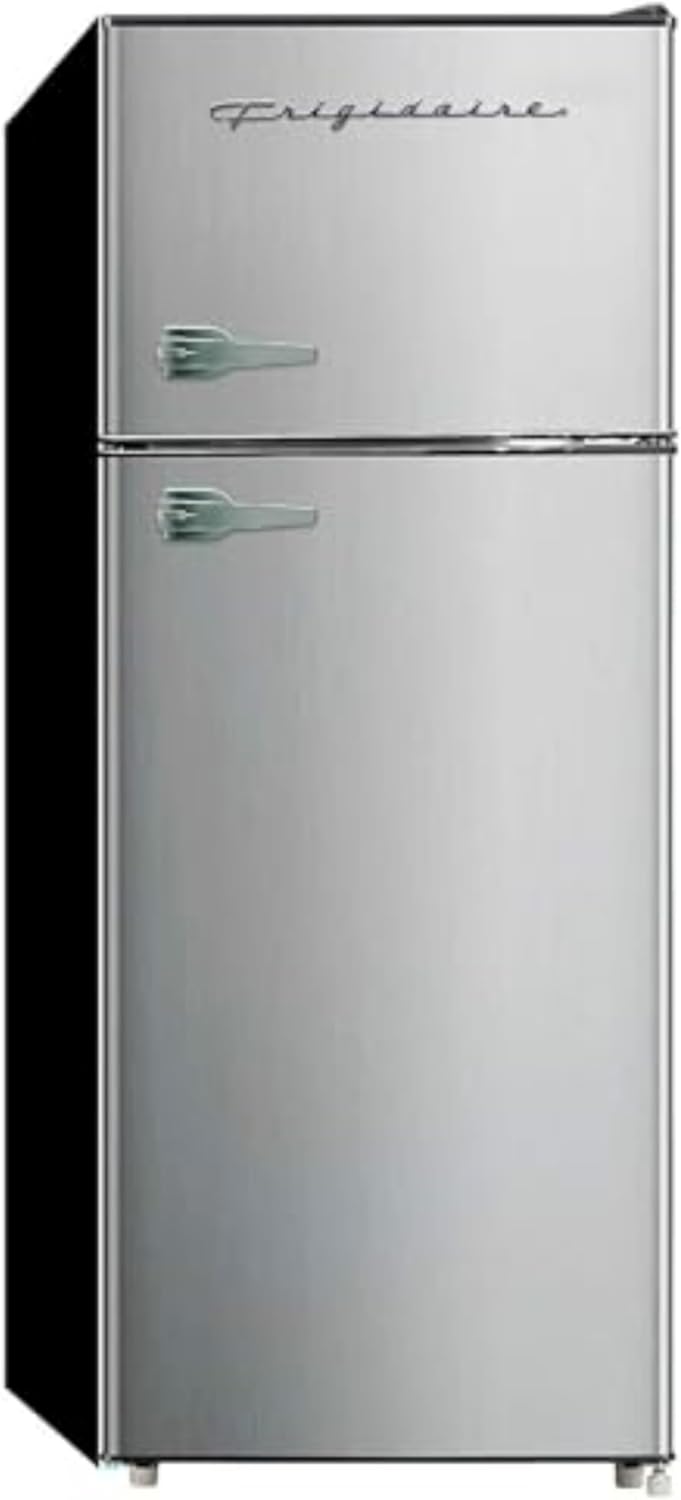
| Capacity | 7.5 cubic feet |
|---|---|
| Freezer Capacity | 2 cubic feet |
| Defrost System Type | Manual |
| Cooling Method | Compressor |
| Voltage | 120 volts |
The Frigidaire Retro Refrigerator EFR751 is a compact freestanding fridge with a separate top freezer designed for small kitchens, dorms, garages, or offices. It provides 7.5 cubic feet of total capacity with three adjustable glass shelves, a clear crisper, and full-width door storage that make everyday organization straightforward. The unit uses a compressor cooling method with mechanical controls and a manual defrost freezer, so it cools reliably but requires occasional defrost maintenance. Practical touches include reversible door hinges, front leveling legs plus rear castors for easier placement, and adjustable interior shelving to fit taller bottles or bulkier items. Energy use is moderate for its class, and the stainless steel finish with chrome trim gives it a more upscale look than basic mini-fridges. Expect typical compact-refrigerator limitations: a smaller freezer with a single wire shelf and manual defrost, and louder compressor cycles than high-end full-size models. For buyers prioritizing straightforward performance and usable organization in a budget compact fridge, this model delivers useful capacity and flexible placement options.
Best for: Buyers who want the most usable refrigerated space and straightforward, reliable cooling in a compact, budget-friendly unit that still looks polished.
Less Ideal for: People who need a frost-free freezer, the quietest possible operation, or the lowest possible energy draw should consider other options.
- Generous 7.5 cu ft total capacity with separate top freezer for a compact footprint
- Adjustable glass shelves and clear crisper enable flexible organization
- Reversible door and castors plus leveling legs for easy placement and installation
- Compressor cooling with mechanical controls provides reliable basic performance
- Stainless steel finish and chrome trim give a more refined appearance than typical compact units
- Freezer is small (single wire shelf) and uses manual defrost so it needs occasional maintenance
- Annual energy consumption is relatively high compared with the most efficient compact models
Verdict: If you want maximum usable storage and dependable compressor cooling in a compact, budget refrigerator with a refined look, this Frigidaire delivers.
Igloo 3.2 Cu. Ft. Mini Fridge

| Capacity | 3.2 cubic feet |
|---|---|
| Freezer Capacity | 0.2 cubic feet |
| Cooling Method | Compressor |
| Defrost System Type | Automatic |
| Voltage | 120 volts |
The Igloo 3.2 Cu. Ft. mini fridge is a straightforward small refrigerator built for tight spaces that need both chilled and frozen storage. It uses a compressor cooling system with an adjustable mechanical thermostat (32–50°F) and a separate top freezer, so you can keep ice, frozen meals, or snacks while storing drinks and condiments below. Two removable frameless glass shelves, vertical can storage and bottle racks make organizing cans and tall bottles simple, and spill-prevention guards help keep the interior tidy. The unit is freestanding, left-hinged, and designed for quiet operation, which fits bedrooms, dorms, and offices where noise matters. Energy consumption is listed, so buyers conscious of running cost can estimate use. Trade-offs are typical for this size: limited freezer space and modest overall capacity mean it will not replace a full-size refrigerator, and the compressor-style cooling produces more consistent temperatures than thermoelectric models but can be slightly louder and use more power than the smallest ultra-efficient units. For a budget compact fridge with basic features and practical storage, it covers the essentials without extras.
Best for: Buyers who want a practical, no-frills compact refrigerator that balances chilled storage and a small freezer for dorms, offices, or small apartments and prioritize usable interior organization and straightforward controls.
Less Ideal for: Households needing significant frozen storage, larger families, or anyone seeking the lowest possible energy draw should consider larger units or more efficient models instead.
- Separate top freezer for frozen items and ice
- Adjustable mechanical thermostat for simple temperature control
- Two removable glass shelves with spill guards for easy cleaning and flexible storage
- Vertical can and tall bottle storage to maximize cubic space
- Freezer holds only about 0.2 cu. ft., so it is limited to small frozen items and ice
- Annual energy consumption is relatively high for a mini fridge compared with some energy-focused models
Verdict: A practical, budget-friendly compact fridge that delivers usable chilled storage plus a small freezer and simple temperature control for small spaces.
Frestec 1.7 Cu Ft Mini Fridge FTC16RE

| Capacity | 1.7 cubic feet |
|---|---|
| Freezer Capacity | 0.2 cubic feet |
| Cooling Method | Compressor |
| Defrost System Type | Manual |
| Voltage | 115 volts |
The Frestec 1.7 Cu Ft mini fridge is a basic, space-saving refrigerator built for tight rooms and occasional use. It uses a compressor cooling method with an internal 0.2 cu ft freezer and a single removable glass shelf, and offers six thermostat settings for simple temperature control plus a one-touch defrost function. The unit is freestanding, has a reversible door and adjustable feet to fit different layouts, and runs quietly at about 37 dB so it is suitable for bedrooms or offices. Energy consumption is modest at roughly 0.55 kWh per day, and the R-600A refrigerant is current with small-fridge norms. Expect straightforward operation and limited capacity — it holds drinks, snacks, and a few perishables but will not replace a full-size kitchen refrigerator. Installation is plug-and-play, but the manual defrost and single shelf mean you will need to plan how to fit taller items and perform occasional thawing. For buyers prioritizing low price, small footprint, and quiet daily use, this covers the essentials without extras.
Best for: Buyers looking for the cheapest practical fridge to add cold storage in a dorm, office, or small apartment who prioritize footprint and low noise over storage capacity.
Less Ideal for: Anyone needing regular family-sized food storage, heavy meal prep support, or long-term bulk refrigeration should choose a larger, multi-shelf model instead.
- Compact footprint fits under desks or in dorm rooms
- Quiet operation around 37 dB for bedroom or office use
- Reversible door and adjustable feet increase placement flexibility
- Simple thermostat with six settings plus one-touch defrost for easy control
- Removable glass shelf allows storage of taller items when needed
- Small total and freezer capacity limits what you can store
- Manual defrost requires occasional user maintenance
- Single shelf and limited compartments reduce organization options
Verdict: A very affordable, quiet mini fridge that delivers basic cold storage in tiny spaces for buyers on a tight budget.
BLACK+DECKER Compact Refrigerator BCRK25V

| Capacity | 2.5 cubic feet |
|---|---|
| Freezer Capacity | 0.2 cubic feet |
| Defrost System Type | Manual |
| Cooling Method | Compressor |
| Refrigerant | R-600A |
This BLACK+DECKER compact refrigerator is a straightforward, no-frills small fridge designed for dorms, offices, and tight spaces. It uses a compressor cooling system with an R600a refrigerant and offers a 2.5 cubic foot capacity with two slide-out glass shelves and a small chiller compartment for ice and chilled items. Temperature is controlled manually via a 7-setting dial, and the reversible door plus adjustable leveling legs make placement flexible. The unit is ENERGY STAR certified and lists modest annual energy consumption, which helps keep running costs down. Practical benefits include usable door storage that fits a 2-liter bottle and a dispenser for canned drinks, plus removable shelves for taller items. Important limitations are the tiny chiller that is not a true freezer and the manual defrost system, so long-term frozen storage or heavy freezer use are not suitable. For buyers prioritizing reliable, efficient basic cold storage in a compact footprint, this model covers the essentials without complexity.
Best for: Buyers who want a dependable, energy-efficient compact fridge for everyday chilled storage in small spaces and value simple, proven mechanical controls over smart features.
Less Ideal for: People who need significant freezer space, long-term food freezing, or a frost-free, low-maintenance freezer solution should consider larger models or dedicated freezers instead.
- ENERGY STAR certified for lower energy use
- Compressor cooling with R600a refrigerant for consistent temperatures
- Two removable glass shelves and door bins for flexible storage
- Reversible door and leveling legs allow versatile placement
- Chiller compartment is not a full freezer and will not keep items frozen
- Manual defrost requires occasional maintenance
Verdict: A reliable, energy-efficient compact fridge that delivers basic cold storage with simple controls, ideal for budget-conscious small-space buyers.
Upstreman BR321 3.2 Cu.Ft Mini Fridge

| Capacity | 3.2 cubic feet |
|---|---|
| Freezer Capacity | 0.3 cubic feet |
| Power | 115 volts |
| Defrost System Type | Manual Defrost |
| Annual Energy Consumption | 206 kwh |
The Upstreman BR321 is a small compressor-driven fridge that delivers straightforward cooling in a compact footprint. It offers 3.2 cu ft total capacity with a 0.3 cu ft freezer, two adjustable glass shelves, a crisper drawer, and five thermostat settings to adapt to beverages, produce, and dairy. The reversible door and adjustable leveling feet make placement flexible in tight spaces, while the rotary scroll compressor and manual defrost keep operation simple. Energy performance is reasonable for the class at about 206 kWh/year, and the brand lists a quiet 38 dB operating level that suits bedrooms and offices. Expect basic, practical controls rather than advanced features like automatic defrost or smart connectivity, and the small freezer is not intended for long-term ice storage. For buyers focused on value and reliable day-to-day cooling in small spaces, this model covers essentials without extras; buyers needing larger capacity, faster cooling, or advanced convenience features should consider bigger refrigerators.
Best for: Buyers who prioritize a reliable, no-frills compact fridge for a dorm, office, or small apartment and who want positive social proof that the model performs for everyday chilling needs.
Less Ideal for: Households that need larger capacity, a full-size freezer, fast chill performance, or advanced features like automatic defrost or smart controls should look elsewhere.
- Compact footprint that fits dorms, bedrooms, and small offices
- Includes a small freezer compartment for frozen items
- Adjustable glass shelves and crisper drawer allow flexible organization
- Reversible door and leveling feet for flexible placement
- Energy-efficient compressor with relatively low annual consumption
- Manual defrost requires occasional maintenance
- Freezer space is very limited and not suitable for long-term ice storage
Verdict: A compact, energy-conscious mini fridge that delivers reliable everyday cooling for budget-minded buyers needing a simple dorm- or office-ready refrigerator.
Upstreman 7.7 Cu Ft Refrigerator
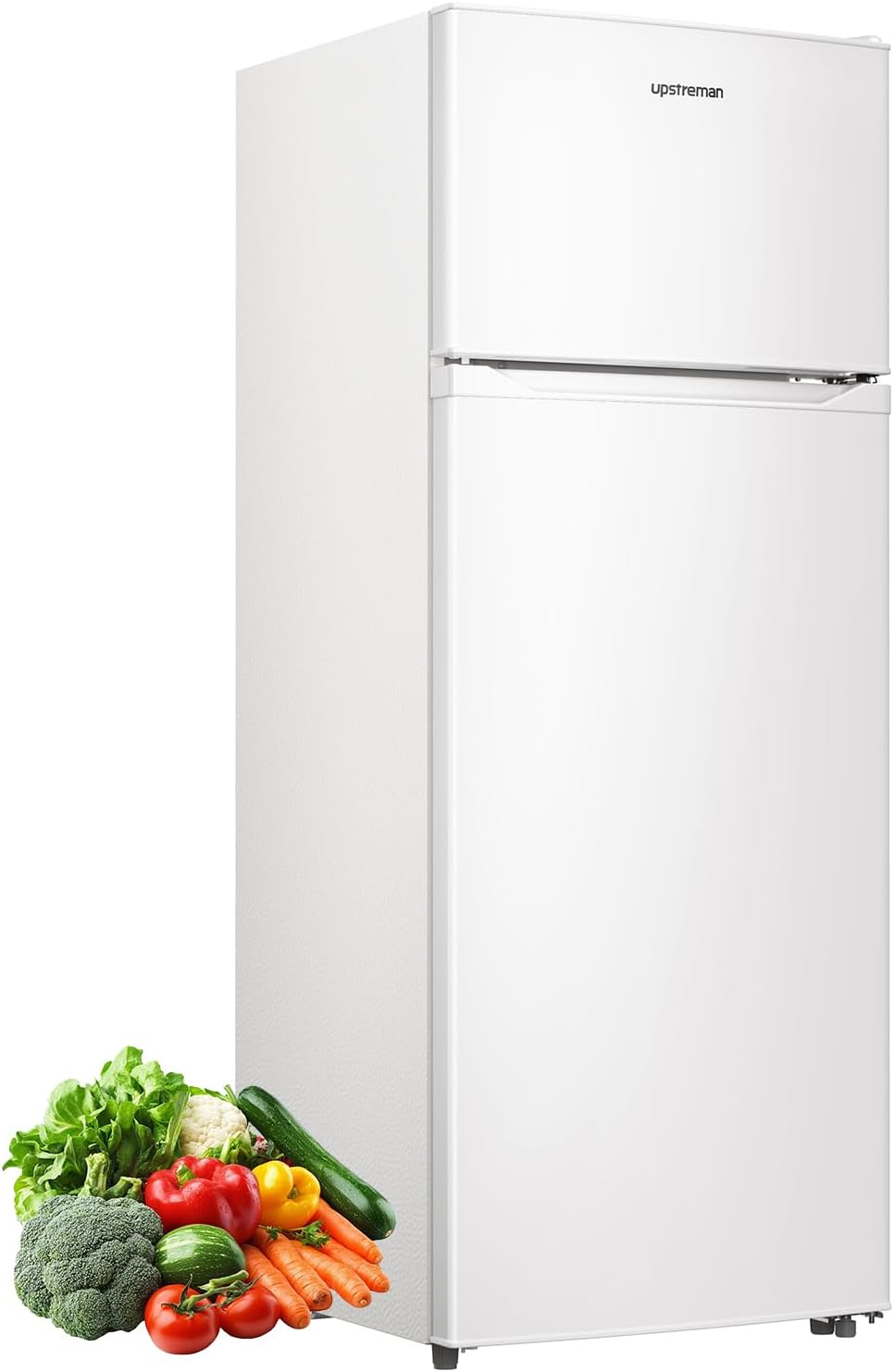
| Capacity | 7.7 cubic feet |
|---|---|
| Freezer Capacity | 1.5 cubic feet |
| Cooling Method | Compressor |
| Defrost System Type | Manual Defrost |
| Door Orientation | Reversible |
The Upstreman 7.7 cu ft refrigerator is a compact full-size unit designed for apartments, dorms, or small kitchens where footprint and cost matter. It pairs a 1.5 cu ft top freezer with a 6.2 cu ft fresh-food compartment and uses a compressor cooling method for reliable temperature control. Key user-facing features include two removable tempered glass shelves, a crisper drawer to preserve produce, an automatic interior light, and a reversible door for flexible placement. Manual temperature control offers five settings that cover typical refrigeration and freezing needs, and the unit is rated for quiet operation at about 39 dB and modest annual energy use. Practical benefits are its relatively large usable capacity for its footprint, simple adjustable storage for taller items, and straightforward mechanical controls that are easy to repair or service. Important limitations are the manual defrost freezer, which requires occasional maintenance, and the basic controls and features that lack smart or advanced frost-management conveniences found on higher-end models.
Best for: Buyers seeking a straightforward, reliable refrigerator that maximizes storage in a small footprint and prioritizes low running costs and simple operation.
Less Ideal for: Shoppers who want hands-off frost management, digital controls, or smart features should consider more feature-rich models instead.
- Relatively large 7.7 cu ft capacity in a narrow 21" footprint
- Removable tempered glass shelves and crisper drawer for flexible organization
- Reversible door allows installation in tight layouts
- Quiet operation (~39 dB) suitable for apartments or offices
- Energy efficient for lower running costs
- Manual defrost freezer requires periodic thawing
- Basic manual thermostat lacks digital precision controls
Verdict: A practical, budget-minded fridge that delivers unusually large usable storage and low operating noise for small homes or rentals.
Choosing the Right Refrigerator on a Budget: Key Factors to Consider
Energy Efficiency
How much electricity a refrigerator uses has a direct effect on your monthly bills. For budget buyers, a slightly higher initial efficiency rating can save more over the appliance lifetime than a marginally cheaper purchase price. Look at standardized efficiency labels or estimated annual energy consumption figures when available, and favor compressors and insulation designs that reduce runtime.
Energy efficiency also matters for cooling performance in warm kitchens. Units that run more efficiently tend to maintain steady temperatures with less cycling, which helps preserve fresh food and reduce wear on components.
Usable Capacity and Shelf Layout
Stated capacity in cubic feet is a starting point, but actual usable space depends on shelf arrangement, door bin depth, and the shape of the interior. Adjustable shelves, split shelves, and convertible bins make it easier to fit tall bottles and bulky containers without wasting space. For small kitchens, pay attention to footprint and door-swing clearance so the usable volume is actually accessible.
Drawers that glide smoothly and crisper drawers sized for common produce help keep items organized and reduce wasted space. Consider whether the freezer layout meets your needs for frozen goods versus ice maker requirements.
Temperature Control and Consistency
Consistent temperature across shelves prevents hotspots that speed food spoilage. Look for refrigerators with multiple temperature zones, reliable thermostat control, and well-placed vents that promote even airflow. Some budget models use mechanical dials while others offer electronic controls; electronic controls often allow finer adjustments and may maintain setpoints more accurately.
Temperature consistency also affects freezer performance. If the freezer cycles widely, frozen foods can develop freezer burn sooner. Evaluate the unit's ability to hold set temperatures during door openings and power interruptions.
Build Quality and Door Seals
A robust cabinet, rigid door hinges, and tight door gaskets reduce long-term repair risk and improve cold retention. Thin panels and flimsy hardware may lower purchase cost but often lead to alignment issues or seal failures that let cold air escape. Inspect or research the quality of materials used for shelves, drawers, and handles.
Good build quality also contributes to quieter operation. Vibrations and rattles are more common with weak mounting and lower-quality compressors, which affects perceived value in a kitchen setting.
Ease of Maintenance and Repairability
Budget refrigerators should still be straightforward to clean and service. Removable shelves and drawers speed routine cleaning, while accessible condenser coils and a user-serviceable filter or drain reduce service calls. Consider how easy it is to replace common wear items such as door gaskets, bulbs, and ice maker components.
Repairability and parts availability matter for long-term ownership. A model that is easy to diagnose and repair can be more cost-effective over several years than a sealed, non-serviceable unit.
Installation Fit and Clearance
Measure your space carefully. Door swing, ventilation clearance, and proximity to walls affect installation success. Some refrigerators require extra clearance at the back for cords and air circulation while others are designed for tighter fits. Delivery and maneuvering constraints in hallways or stairwells can also limit what will actually fit.
Consider whether the model allows reversible doors, and how the finish and dimensions will work in your kitchen layout to avoid costly returns or modifications.
Choosing Between Top-Freezer, Bottom-Freezer, and Top-Mount Layouts
The internal layout affects usability more than overall capacity numbers. Top-freezer designs typically offer the simplest construction with wide shelves and a freezer above, while bottom-freezer configurations place fresh food at eye level and push freezer storage below. Compact top-mount or apartment-style refrigerators may prioritize freezer space differently.
If you do a lot of fresh cooking and access the fridge frequently, a bottom-freezer or refrigerator-centric layout reduces bending. For households that store many frozen items, a larger freezer compartment or pull-out drawer style may be the better match.
- Bottom-freezer: Easier access to fresh foods, freezer storage below
- Top-freezer: Often more affordable, simple shelf arrangements
- Drawer-style freezer: Good for organization, may reduce usable fresh space
Noise and Compressor Type
Budget refrigerators can use different compressor technologies that affect noise and efficiency. Modern inverter compressors vary speed to match cooling demand and can run quieter and more efficiently than older single-speed compressors. However, inverter technology is not universal on budget models.
If noise is a priority because your kitchen is adjacent to living space, seek models with documented quieter operation or thicker cabinet construction that dampens sound. Product specifications sometimes list decibel ratings which can be helpful when comparing options.
- Inverter compressors: Typically quieter, more efficient
- Single-speed compressors: Simpler, sometimes louder
- Cabinet insulation and mounting: Influence perceived noise
Practical Tips for Measuring and Installing Your New Fridge
Take precise width, depth, and height measurements, and account for door swing and ventilation gaps. Leave the recommended clearance behind and above the unit to allow airflow and simplify maintenance. If the refrigerator will pass through tight hallways or around corners, measure those paths as well.
Consider whether you need a model with reversible hinges for left- or right-handed openings. Verify that flooring is level to prevent door alignment and seal problems. If the space is on an outside wall or near heat sources, factor that into your placement choice because ambient temperatures impact refrigeration efficiency.
- Measure doorways and path for delivery
- Allow manufacturer-recommended clearances
- Check for level flooring and reversible door needs
Maintaining Performance Over Time
Regular maintenance keeps a budget refrigerator performing well. Clean condenser coils periodically to maintain efficient heat exchange. Replace worn gaskets and verify door alignment to prevent cold air loss. Defrost manual-freezer models as recommended to preserve usable freezer volume.
Monitor temperature settings seasonally. Kitchens that heat up during summer may require a slightly colder setpoint or different placement. Simple maintenance tasks can extend useful life and keep operating costs predictable.
- Clean condenser coils every 6 to 12 months
- Check and replace door gaskets as needed
- Adjust temperatures based on ambient conditions
Space-Saving Accessories and Organization Hacks
Enhance usable storage with inexpensive organization aids. Clear bins, adjustable shelf risers, and stackable containers help prevent wasted space and make it easier to see items in the back of shelves. Labeling and grouping similar foods improves rotation and reduces spoilage.
Use slim beverage organizers in door bins and consider thin tray dividers for deli items. Thoughtful organization can make a smaller, budget refrigerator feel more capable and reduce the need for a larger model.
- Use clear stackable containers for leftovers
- Install shelf risers for stacked items
- Group similar items and label for rotation
How We Chose the Best Refrigerator on a Budget
We evaluated budget refrigerators using concrete, buyer-focused criteria that reflect real-world kitchen use. Primary filters included energy consumption ratings and estimated annual operating cost, because lower running cost is often the largest long-term expense for economical buyers. Usable internal storage and shelving flexibility were measured to ensure the units can handle everyday grocery loads and common container sizes. Build quality and reliability indicators were considered to avoid cheap-feeling finishes, fragile door seals, or weak hinges that lead to repairs. Temperature consistency and cooling control options were included to assess how well each refrigerator preserves perishable foods. Finally, installation and footprint constraints were part of the selection to make sure recommended units fit typical kitchen spaces and clearances. We excluded specialty or commercial refrigerators, oversized units meant for large households, and models that depend on add-on accessories to meet basic needs. The final shortlist favors balanced designs that prove practical in budget-conscious households.
Our full evaluation process is outlined in our review methodology.
FAQ
How much should I expect a budget refrigerator to last?
Budget refrigerators often last around 8 to 12 years with proper care. Lifespan depends on maintenance, usage patterns, and how well the unit was installed and ventilated.
Are energy-efficient models worth it on a tight budget?
Often yes. Higher efficiency can lower operating costs over time and offset a slightly higher initial expense. Evaluate estimated annual energy use to compare long-term cost rather than purchase price alone.
Can I install a budget refrigerator on my own?
Many compact and standard refrigerators are straightforward to install if you can safely move the unit and have a grounded outlet. For built-in or counter-depth models, professional installation may be advisable to ensure proper ventilation and alignment.
What maintenance keeps a fridge running efficiently?
Routine tasks include cleaning condenser coils, checking door gaskets for leaks, defrosting manual-freeze models, and keeping vents unobstructed. These steps reduce compressor strain and help maintain temperature consistency.
How do I choose the right size for my household?
Match capacity to meal habits and household size. Singles or couples often do well with smaller, more efficient units, while families benefit from larger usable storage. Focus on usable shelf layout as much as cubic-foot ratings.
Final Verdict
On a tight budget, prioritize energy efficiency, usable interior layout, and solid door seals. These elements determine long-term operating cost, daily convenience, and the risk of early repairs. Trade off a few extra features if it means better insulation, a dependable compressor, and a layout that fits your groceries. Decide first how much usable fresh and frozen storage you need, then use energy and build-quality measures to narrow choices. With those priorities, you can confidently pick a budget refrigerator that keeps food safe, runs quietly, and minimizes surprises over its lifespan.