
Note: This article contains affiliate links. If you click on these links and make a purchase, we may earn a small commission at no extra cost to you. This helps support our research and content. Read our full affiliate disclosure here.
If you need extra cold storage without sacrificing floor space, an undercounter refrigerator can be a practical solution. These compact refrigerators tuck beneath counters, in wet bars, or alongside appliances to add chilled storage where a full-size fridge will not fit. Choosing the right undercounter refrigerator matters because capacity, cooling performance, and noise all affect how useful the unit will be in daily kitchen life. This guide presents our shortlist of the top undercounter refrigerators across common installation needs and room layouts. We evaluated each pick for capacity, temperature control, energy efficiency, and installation flexibility to help you decide which compact unit will work best in your space. Read on for the evaluation criteria and practical buying guidance before the product list.
Top Picks at a Glance
| Best Overall The best all-around choice for most situations | Ca'Lefort 24" Beverage Refrigerator |  |
| Best Quality Built to a higher standard if you want something more solid | Kalamera 24-inch Beverage Refrigerator |  |
| Best Value The sweet spot between price and what you get | Feelfunn 3.2 Cu.Ft Beverage Refrigerator |  |
| Most Popular A crowd favorite that many people choose with confidence | Velieta 24 Inch Beverage Refrigerator | 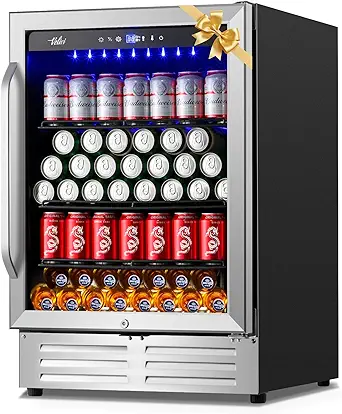 |
| Best Seller A high-volume bestseller chosen again and again | hOmeLabs Beverage Refrigerator HME030065N | 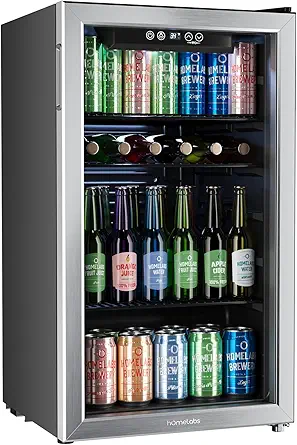 |
Ca'Lefort 24" Beverage Refrigerator

| Capacity | 5.65 cubic feet |
|---|---|
| Temperature range | 34–54°F |
| Cooling method | Compressor |
| Shelves | 3 adjustable wire shelves |
| Installation type | Built-in & Freestanding |
The Ca'Lefort 24" Beverage Refrigerator is a freestanding or built-in undercounter cooler designed to store cans and bottled drinks at precise temperatures. It uses a compressor with 360° air circulation to deliver steady cooling across the cabinet and a digital control panel that sets temperature in 1°F increments across a 34–54°F range. The unit has three adjustable wire shelves and removable shelving to make room for taller bottles, and a double-glazed glass door with a stainless steel frame to improve insulation while showing inventory. Three selectable LED colors let you light the interior for a kitchen or home bar look, and the power-outage memory restores previous settings after interruptions. Practical benefits include flexible shelf layout, accurate temperature control for mixed beverages, and a size that fits under most counters. Limitations to consider are the right-hinged door that is not reversible and the wire shelves rather than wood or solid shelving, which may shift small bottles if not arranged carefully.
Best for: Buyers who want a reliable undercounter beverage fridge that balances capacity, accurate temperature control, and visual presentation for a kitchen or home bar.
Less Ideal for: People needing a left-hinged or reversible-door installation or those who prefer dedicated wine-cellar shelving and humidity control for long-term wine storage.
- Undercounter-compatible 24-inch form factor for built-in or freestanding use
- Compressor cooling with 360° circulation for even, reliable temperatures
- Digital control with 1°F precision across a 34–54°F range
- Double-glazed glass door and stainless steel frame for better insulation and display
- Adjustable removable shelves for flexible storage of cans and bottles
- Door is right-hinged and not reversible, limiting placement options
- Wire shelves may allow small bottles to tip if not secured
Verdict: A solid undercounter beverage fridge that combines accurate compressor cooling and flexible shelving in a 24-inch footprint, ideal for kitchens and home bars seeking dependable, display-ready cold storage.
Kalamera 24-inch Beverage Refrigerator

| Capacity | 5.1 cubic feet |
|---|---|
| Size | 24 Inch – 154 Cans (Indoor) |
| Cooling Method | Compressor |
| Additional Features | Touch Control |
| Refrigerant | R-600A |
The Kalamera 24-inch beverage refrigerator is a compact undercounter-capable cooler that uses a rotary scroll compressor and five adjustable wire shelves to store cans and bottles at controlled temperatures. It is typically used as an undercounter install in a kitchen or bar or as a freestanding drink fridge for entertaining, with a touch-control LED panel that sets the single-zone temperature between about 38 and 66 degrees Fahrenheit and a temperature memory function that restores settings after power loss. Notable features include a stainless steel door frame with double tempered glass, a reversible door, automatic defrost cycles, and a lock option for security. In practice it delivers large internal capacity for its footprint and straightforward temperature control, and the removable shelves make cleaning and reconfiguring for bottles versus cans simple. Important limitations are that it is single-zone only, so it cannot maintain separate temps for wine and beer, and the compressor unit means it will produce some operating noise compared with thermoelectric models.
Best for: Buyers who need a performance-focused undercounter beverage fridge that delivers reliable compressor cooling and maximum internal capacity for cans and bottles in a 24-inch footprint.
Less Ideal for: People who need separate temperature zones for wine and beer or who require an ultra-quiet, vibration-free wine cellar should consider dual-zone or specialized wine coolers instead.
- Large 5.1 cu ft capacity that fits up to roughly 154 cans in a 24-inch footprint
- Compressor cooling with temperature memory for consistent chill and recovery after power loss
- Touch-control LED panel offers simple, accurate temperature setting between 38 and 66°F
- Stainless steel door frame and tempered double glass provide stable internal temps and a durable look
- Removable wire shelves and adjustable leveling legs simplify reconfiguration and installation
- Single-zone cooling prevents setting different temperatures for wine and other beverages
- Compressor-based system produces audible noise during operation compared with silent thermoelectric units
Verdict: Choose this unit when you want a high-capacity, compressor-cooled undercounter beverage fridge that reliably chills large quantities of cans and bottles.
Feelfunn 3.2 Cu.Ft Beverage Refrigerator

| Capacity | 3.2 cubic feet |
|---|---|
| Temperature Range | 34–64°F |
| Cooling Method | Compressor (rotary scroll) |
| Number of Shelves | 4 |
| Installation Type | Under‑Counter/Freestanding |
The Feelfunn 3.2 cu ft beverage refrigerator is built to store a large number of drinks in a compact under‑counter footprint. It uses a rotary scroll compressor and 3D air circulation to maintain consistent cooling across four adjustable shelves, and the digital display lets you set temperatures between roughly 34 and 64°F. The reversible double‑layer low‑E glass door keeps contents visible while helping with insulation, and interior LED lighting aids visibility. Practical features include adjustable feet for level installation, frost‑free operation, and a quiet design rated around 36 dB that works in living spaces and offices. Expect solid beverage capacity — the listing notes room for up to 126 cans — but remember this is a fridge-only unit with no freezer compartment and it requires upright settling before first use. Annual energy use is listed, so plan placement with ventilation in mind for best efficiency. For those who need an under‑counter beverage center with flexible shelving and reliable compressor cooling, this model covers the essentials without extra frills.
Best for: Buyers who want a practical under‑counter beverage center that maximizes drink capacity and offers flexible installation and straightforward temperature control.
Less Ideal for: People seeking a combined fridge/freezer or ultra‑low energy mini fridge for continuous off-grid use should consider other options.
- Large internal capacity for a compact under‑counter footprint
- Adjustable shelves and reversible door for flexible installation
- Compressor-based 3D air circulation for even cooling
- Quiet operation and interior LED lighting for living spaces
- No freezer compartment for frozen storage
- Listed annual energy consumption is relatively high compared with some small refrigerators
Verdict: A capacity‑focused under‑counter beverage fridge that delivers even compressor cooling and flexible installation for users who prioritize practical drink storage.
Velieta 24 Inch Beverage Refrigerator
| Capacity | 5.3 cubic feet |
|---|---|
| Can capacity | 210 Count |
| Cooling method | Compressor |
| Temperature range | 37-64°F |
| Installation type | Built-in / under counter / Freestanding |
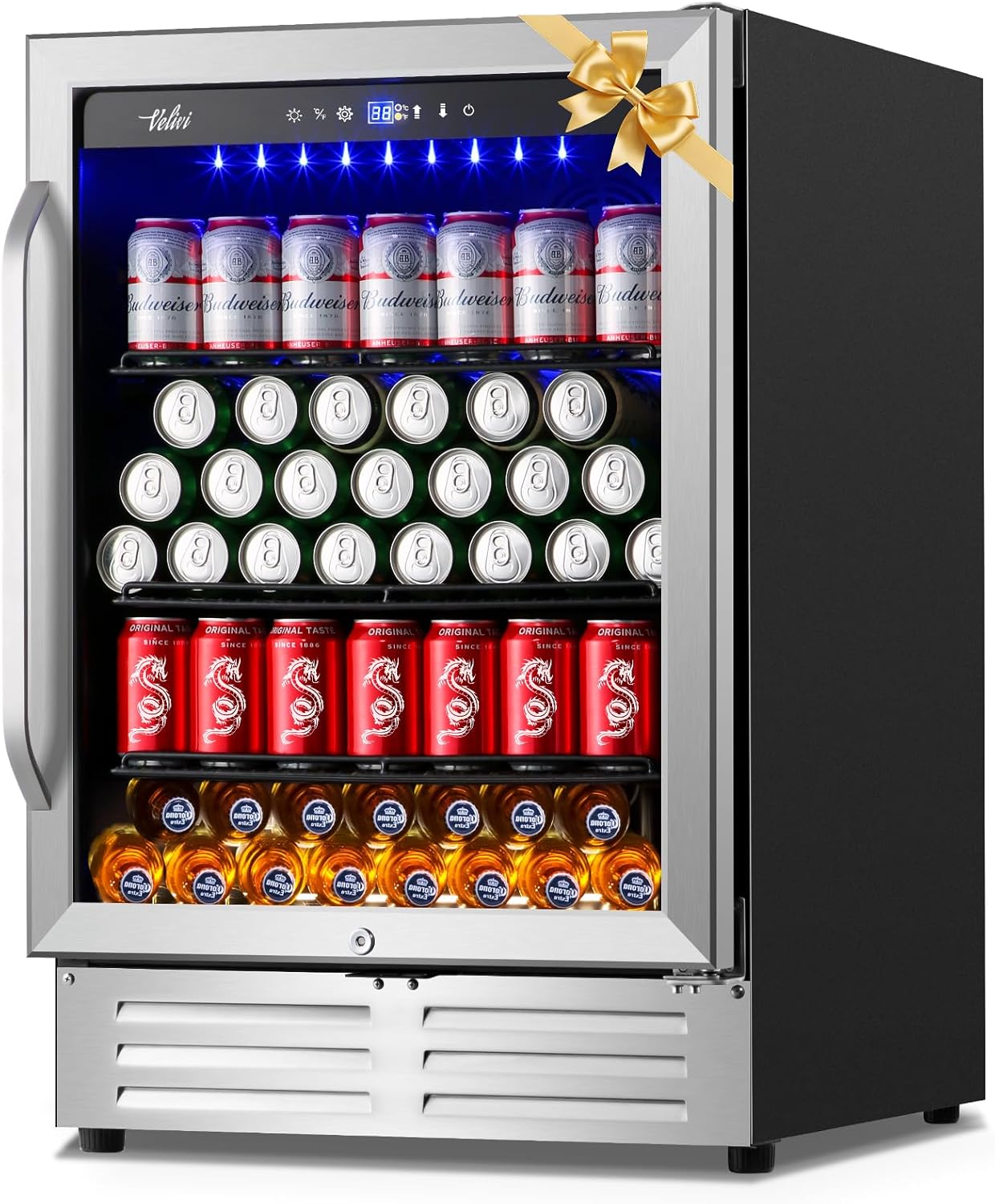
This Velieta 24-inch beverage refrigerator is built to sit under a counter or operate freestanding and is meant for storing large quantities of drinks cold and visible behind a glass door. It holds up to 210 cans across three adjustable wire shelves and uses a compressor cooling system with an internal exhaust fan to circulate air and reduce odors. The unit offers a digital display, interior blue LED lighting for visibility, a keyed door lock, and a front-venting design so it can be installed under cabinetry without restricting airflow. In practice it chills quickly to a selectable range (advertised down to about 37°F) and runs with relatively low vibration and noise for a compressor model. Important limits are that it is a single-zone fridge so you cannot keep separate temperature zones for different beverages, and the aesthetic stainless steel frame and double-pane glass trade some insulating performance for display and style. For buyers focused on reliable cooling and large capacity undercounter installation, this is a practical option; those needing multi-zone temperature control or ultra-low energy performance may want other specialty units.
Best for: Buyers who want a high-capacity undercounter beverage fridge that reliably chills a lot of cans and prioritizes visibility, secure storage, and straightforward installation.
Less Ideal for: People who need dual-zone temperature control for wines and beer or who prioritize the very lowest possible energy use and maximum thermal insulation.
- Large 210-can capacity across three adjustable wire shelves
- Front-venting design allows true undercounter or freestanding installation
- Compressor cooling with internal fan cools quickly and keeps air circulating
- Digital display and interior LED lighting make temperature and contents easy to see
- Keyed lock adds security for homes with children or public spaces
- Single temperature zone only, so you cannot set separate temps for different drinks
- Stainless steel and glass front prioritize display over maximum insulation efficiency
Verdict: Choose this Velieta 24-inch beverage fridge when you need a large-capacity, undercounter-ready cooler that chills quickly and keeps drinks organized and visible.
hOmeLabs Beverage Refrigerator HME030065N

| Capacity | 3.2 cubic feet |
|---|---|
| Temperature range | 34°F-50°F |
| Number of shelves | 3 |
| Cooling method | Compressor |
| Defrost system | Automatic |
This hOmeLabs beverage refrigerator is a freestanding undercounter-capable cooler designed to store cans and bottles while keeping them visible through a double-glazed glass door. It holds about 120 slim cans across three removable chrome wire shelves and cools to as low as 34°F using an electronic touch control with a digital display. The interior LED makes finds easy in low light, and the reversible stainless-steel framed door lets you set the swing to suit a kitchen or bar layout. The unit uses a whisper-quiet compressor and automatic defrost, so it runs steadily without frequent maintenance. Practical limits are its compact 3.2 cubic foot capacity and non-inverter compressor, so it is best for beverage storage rather than heavy food use or large gatherings, and the annual energy consumption figure is relatively high compared with highly efficient models. Fit and placement are straightforward since it is freestanding and the shelves and feet are adjustable for uneven floors or odd-shaped bottles.
Best for: Someone who wants a reliable, easy-to-use undercounter beverage fridge that keeps drinks visible and chilled for everyday home, office, or bar use and values simple controls and quiet operation.
Less Ideal for: Buyers who need high-capacity refrigeration for entertaining, full-size food storage, or the highest possible energy efficiency should consider larger or inverter-equipped models.
- Clear glass door and interior LED make it easy to see and access drinks without opening the door frequently
- Touch-button digital temperature control down to 34°F for consistent beverage cooling
- Three removable chrome wire shelves allow flexible organization for cans and bottles
- Whisper-quiet compressor and automatic defrost reduce noise and maintenance
- 3.2 cubic foot capacity limits how many drinks it can hold for larger households or parties
- Uses a non-inverter compressor which may be less efficient under variable loads
Verdict: A compact, quiet undercounter-ready beverage fridge that makes chilled drinks visible and easy to access for everyday home or office use.
Choosing the Right Undercounter Refrigerator: Key Factors to Consider
Interior Capacity and Shelf Layout
Capacity numbers tell part of the story, but usable volume depends on shelf configuration and door storage. Adjustable shelves and removable bins let you adapt the space for taller bottles, platters, or multiple smaller containers. Consider how you plan to use the unit day to day: meal prep, beverage storage, or overflow grocery items. A unit with flexible shelf heights and clear front-to-back depth will typically be more useful than one with slightly higher nominal capacity but fixed shelves.
Also think about how frequently you load and unload the fridge. Wide shelving and full-width drawers make it easier to organize and retrieve items, reducing the time the door is open and helping maintain stable temperatures.
Cooling Performance and Temperature Control
Reliable cooling and accurate temperature control determine how well the fridge preserves food and beverages. Look for units with clear temperature ranges and simple adjustments. Steady temperature maintenance is more important than how cold the unit can go briefly; frequent fluctuation stresses food quality.
Consider whether the unit needs a fast cooldown or will mainly store pre-chilled items. Features like fan-assisted cooling or multiple cooling zones improve uniformity. For mixed use—produce and drinks—choose a model with precise control and predictable recovery after door openings.
Energy Use and Operational Cost
Undercounter refrigerators run continuously, so energy efficiency affects long-term operating cost. Check efficiency-focused specs such as energy consumption per year when available. Better insulation, efficient compressors, and smart defrost cycles reduce electricity use.
If the unit sits in a warm cabinet or near heat sources, efficiency matters more because the compressor will run more often. Energy-efficient models may cost less to operate and generate less waste heat, which helps maintain nearby cabinet materials and reduces the load on adjacent appliances.
Noise Level and Vibration
Because these fridges live in kitchens, bars, or open-plan living areas, noise and vibration are important comfort factors. Compressor hum, fan noise, and any rattling can be disruptive if the unit is next to seating or sleeping areas. Look for models with low decibel ratings or user reports of quiet operation.
Vibration can also affect glassware stability and can create additional noise. Solid build quality, anti-vibration mounts, and rubber gaskets help reduce vibration transmission to surrounding cabinetry.
Dimensions and Installation Compatibility
Undercounter refrigerators must fit standard cabinet openings and leave clearance for ventilation. Measure the available opening width, height, and depth before shopping. Also confirm whether the unit is designed for built-in, flush-mount installation or for freestanding use under a counter. Some built-in models require a front-venting grille; others need rear or side clearances.
Door swing and hinge reversibility matter for placement next to walls or cabinets. Prioritize models that match common undercounter cutouts and include clear installation instructions to avoid costly refitting.
Maintenance and Serviceability
Ease of cleaning and access for maintenance influences long-term satisfaction. Removable shelves, a reversible door gasket, and an accessible condenser or filter simplify upkeep. Consider how often you will need to defrost or clean and whether components like filters are easy to reach.
If the unit will be installed in a built-in opening, confirm access to service points without uninstalling the fridge. Models with straightforward user-replaceable parts reduce hassles and can extend useful life.
Choosing Between Built-In and Freestanding Undercounter Units
Built-in undercounter refrigerators are designed to be integrated flush with surrounding cabinetry and often have front-venting grilles for proper airflow. Freestanding units offer more flexibility because they only need enough clearance for ventilation and can be moved more easily if your layout changes. Your choice should depend on whether you plan a permanent fit or want the option to relocate the unit later.
For a built-in install, confirm the ventilation method and required clearances in the product documentation. Freestanding models are more forgiving of nonstandard openings, but they may protrude slightly from the cabinet front unless the design includes a trim kit.
- Built-in: Flush look, usually requires front ventilation.
- Freestanding: Easier to relocate, may need side or rear clearance.
- Measure the cutout and door swing before ordering.
Noise Expectations in Different Use Scenarios
Noise is less of a concern if the undercounter refrigerator lives in a dedicated wet bar or pantry. In an open-plan kitchen or near living spaces, choose models with low reported noise and minimal vibration to avoid interference with conversation or TV.
If you are sensitive to noise, compare reported decibel levels and look for features like variable-speed fans or insulated compressor mounts. Install location also affects perceived noise; placing the unit on a stable base and ensuring good cabinet fit reduces rattles.
- Wet bar: Moderate noise acceptable.
- Open-plan kitchen: Prioritize low-decibel models.
- Office or studio: Choose quiet units with vibration damping.
Optimizing Interior Organization for Mixed Use
Think about the mix of items you will store and arrange the interior to match. Adjustable shelving, removable bins, and multi-level door storage allow you to switch between beverage-centric layouts and food storage. For beverage-heavy use, deep shelves and bottle-friendly door pockets are valuable.
If you frequently store platters or tall bottles, confirm minimum shelf clearance with shelves removed. Transparent shelving and interior lighting improve visibility, which reduces the time the door stays open and helps maintain stable temperatures.
- Adjustable shelves increase flexibility.
- Door pockets save interior shelf space.
- Interior lighting aids quick access.
Ventilation and Cabinet Materials
Undercounter refrigerators need adequate ventilation to dissipate heat. Many built-in designs vent through the front grille, which keeps heat from being trapped inside cabinetry. If your chosen model vents from the back or sides, ensure the surrounding cabinet allows airflow to prevent overheating and shortened compressor life.
Consider cabinet materials and finishes when installing. Heat and occasional moisture from fridge operation can affect cabinetry over time, so allow for ventilation gaps and use heat-tolerant materials near the unit.
- Confirm vent location before installing.
- Allow recommended clearance around the unit.
- Use durable cabinet finishes near heat sources.
When to Prioritize Energy Efficiency Over Capacity
If the undercounter refrigerator will run constantly in a frequently used area, energy efficiency can be more important than maximum capacity. Lower energy draw reduces electricity bills and produces less waste heat in the cabinet. For light, occasional use, a slightly less efficient model with more capacity might be acceptable.
Check published annual energy consumption figures when available and consider high-efficiency compressors or better insulation if the unit will be in a warm location or used heavily.
- High-use locations benefit from energy-efficient units.
- Low-use situations can prioritize capacity instead.
- Consider long-term operating costs alongside upfront fit.
How We Chose the Best Undercounter Refrigerator
We applied practical, kitchen-focused filters to find undercounter refrigerators that suit real-world installation and use. Primary evaluation criteria included usable interior capacity and shelving flexibility, because tight spaces demand efficient storage layouts. We measured cooling performance and temperature stability as a second criterion, since consistent refrigeration preserves food quality. Energy efficiency and power draw were important for ongoing operating cost and for installations in smaller circuits. Noise and vibration levels were considered to ensure the unit is suitable for open-plan kitchens, home bars, and office areas where quiet operation matters. We also assessed installation flexibility, including reversible doors and standard undercounter dimensions, to ensure the units fit common cabinetry openings. We excluded full-height refrigerators, built-in wine coolers, and units that require custom cabinetry beyond standard undercounter cutouts. We did not include units lacking clear performance or efficiency specifications. The result is a curated list of compact refrigerators that balance capacity, temperature control, operating cost, and installability for typical kitchen and wet-bar applications.
Our full evaluation process is outlined in our review methodology.
FAQ
Can an undercounter refrigerator be installed under any standard cabinet?
Often yes, but you must measure the opening first. Confirm the unit's height, width, and depth requirements and the ventilation method. Built-in models may need front ventilation or specific clearance, so check installation specs before buying.
How noisy are undercounter refrigerators in practice?
Noise varies by model and compressor type. Many modern units are reasonably quiet for kitchen use, but some produce noticeable hum or vibration. Check decibel ratings or user reports and consider placement if silence is important.
Do undercounter refrigerators require special electrical circuits?
Most undercounter refrigerators run on standard household circuits, but verify the amperage and plug type. If the unit has a higher startup current or will share a circuit with other appliances, consult an electrician to avoid tripping breakers.
How do I maximize storage in a small undercounter fridge?
Use adjustable shelving and door bins to tailor the interior to your items. Store tall bottles on door shelves if designed for that use, and remove shelves when you need to fit platters or taller containers. Group similar items together to make access quicker and reduce door-open time.
Are there maintenance tasks unique to undercounter refrigerators?
Maintain door gaskets, clean condenser coils if accessible, and defrost manually if the unit is not frost-free. In built-in installations, periodically check ventilation openings for dust and ensure seals remain tight to preserve efficiency.
Final Verdict
Choosing the right undercounter refrigerator comes down to balancing usable interior capacity, cooling performance, and installation compatibility with your cabinetry. Prioritize accurate temperature control and efficient airflow for units that will see frequent use, and emphasize low noise when the fridge sits near living or sleeping spaces. Tradeoffs are inevitable: higher capacity often means deeper units, while the quietest compressors may come with less raw volume. Make your final decision by matching the fridge dimensions and venting style to your cutout, and by weighing whether energy efficiency or extra storage matters more for your routine. With those priorities set, you can confidently select an undercounter refrigerator that fits your space and daily needs.