
Note: This article contains affiliate links. If you click on these links and make a purchase, we may earn a small commission at no extra cost to you. This helps support our research and content. Read our full affiliate disclosure here.
Finding a refrigerator under $500 means balancing space, efficiency, and durability without sacrificing core performance. If you need a budget-friendly unit for a small kitchen, office, garage, or secondary living space, choosing wisely affects how fresh your food stays, how much energy you use, and how often you have to reset temperature settings. This guide shortlists the top, budget-conscious refrigerators and walks through the practical criteria that separate dependable models from cheaper, short-lived units. We evaluated options on usable storage, temperature stability, energy consumption, and build quality. Read on for clear buying guidance and the shortlist of the best refrigerators under $500.
Top Picks at a Glance
| Best Overall The best all-around choice for most situations | BLACK+DECKER 2.5 Cu. Ft. Compact Refrigerator |  |
| Best Quality Built to a higher standard if you want something more solid | Frigidaire 7.0 Cu Ft Convertible Freezer |  |
| Best Value The sweet spot between price and what you get | hOmeLabs Beverage Refrigerator HME030065N | 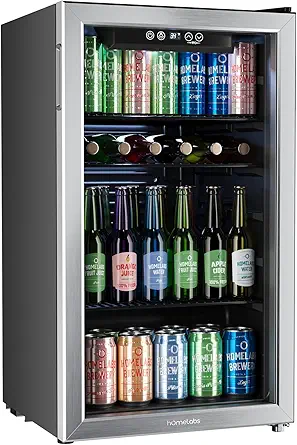 |
| Best Budget The cheapest option that still gets the job done reliably | Frestec 1.7 Cu Ft Mini Fridge FTC16RE |  |
| Top Rated A top-rated pick with lots of positive feedback | BougeRV CR22 23-Quart Refrigerator |  |
| Most Popular A crowd favorite that many people choose with confidence | Frigidaire Retro 3.2 cu ft Fridge |  |
| Best Seller A high-volume bestseller chosen again and again | Upstreman 7.7 Cu.Ft. Refrigerator BD75 |  |
BLACK+DECKER 2.5 Cu. Ft. Compact Refrigerator

| Capacity | 2.5 cubic feet |
|---|---|
| Freezer Capacity | 0.2 cubic feet |
| Refrigerant | R-600A |
| Defrost System Type | Automatic |
| Specification Met | Energy Star |
This BLACK+DECKER compact refrigerator is a practical small-fridge option for dorms, offices, and tight kitchens. It provides 2.5 cubic feet of refrigerated space with a 0.2 cu. ft. chiller compartment intended for short-term chilling and an ice tray rather than long-term freezing. The unit uses a scroll compressor with R600a refrigerant and offers seven manual temperature settings via a mechanical dial, two removable glass shelves and door bins sized for cans and a 2-liter bottle, and a reversible door and leveling legs for flexible placement. Energy Star certification and low annual energy consumption make it inexpensive to run. Expect straightforward operation and simple maintenance, but note the chiller is not designed to fully freeze items and internal space is limited compared with full-size refrigerators. For buyers who need compact, reliable cold storage and adjustable shelving in small spaces, this model delivers useful features without complexity.
Best for: Buyers who want an efficient, no-frills compact refrigerator for dorms, offices, or small apartments and prioritize reliable cooling and flexible placement over freezer capacity.
Less Ideal for: Not a good fit for households that need a full-size freezer or plan to store large frozen items long-term.
- Compact 2.5 cu. ft. capacity fits under counters and in small rooms
- Energy Star certified with low annual energy consumption
- Adjustable temperature dial with up to seven settings for simple control
- Removable glass shelves and door bins accommodate bottles, cans, and larger items
- Reversible door and leveling legs for flexible placement
- Chiller compartment is not a true freezer and will not reliably freeze food
- Limited internal volume compared with standard refrigerators
Verdict: A practical, energy-efficient compact refrigerator that delivers flexible shelving and reliable cooling for small spaces under $500.
Frigidaire 7.0 Cu Ft Convertible Freezer

| Capacity | 7 cubic feet |
|---|---|
| Defrost System Type | Manual |
| Cooling Method | Compressor |
| Voltage | 110 volts |
This Frigidaire 7.0 cu ft convertible unit functions as either a freezer or refrigerator, letting you flip modes with a single control for flexible storage in a garage, dorm, or kitchen. In everyday use it offers four spill-proof shelves, a crisper drawer and four door bins to keep items organized, and electronic temperature controls to dial in and hold a consistent setpoint. The compressor cooling and removable glass shelves make stocking and cleaning straightforward, and the reversible stainless steel door helps fit tight layouts. Expect manual defrosting rather than frost-free convenience, and the unit is a compact single-door form so it is best for supplemental cold storage rather than as a primary full-size fridge. Energy consumption is moderate at the listed annual kWh, and the 1 year parts and labor warranty provides basic coverage. For buyers who need adaptable, no-frills cold storage with good internal organization, this unit delivers reliable performance at a modest size.
Best for: Buyers who need a compact but capable secondary cold-storage unit that can switch between freezer and fridge modes and prioritize consistent temperature control and organized shelving.
Less Ideal for: Households seeking a primary, full-size refrigerator with frost-free convenience or very large storage capacity should look elsewhere.
- Convertible freezer/refrigerator mode for flexible storage needs
- Electronic temperature controls for precise setpoint adjustment
- Four spill-proof removable shelves and multiple door bins for organized storage
- Reversible stainless steel door simplifies placement in tight spaces
- Manual defrost requires periodic thawing to remove ice buildup
- Not intended as a full-size primary refrigerator due to compact capacity
Verdict: Choose this unit if you want a flexible, performance-oriented compact freezer/fridge that delivers reliable temperature control and organized storage under $500.
hOmeLabs Beverage Refrigerator HME030065N

| Capacity | 3.2 cubic feet |
|---|---|
| Storage | 120 cans |
| Temperature range | 34°F–50°F |
| Cooling method | Compressor |
| Voltage | 120 volts |
This hOmeLabs beverage refrigerator is a compact, freezerless cooler made for chilled drinks in small spaces. It uses a whisper-quiet compressor and a convection fan to maintain temperatures from 34°F to 50°F, adjustable via a touch control panel and shown on a digital display. The reinforced glass door and interior LED let you see contents without opening the unit, while three removable chrome wire shelves can be repositioned to fit cans or bottles. It is freestanding and can sit under a countertop or stand alone in an office, dorm, or home bar. Practical benefits include clear visibility, flexible shelf layouts, and quiet operation that will not overwhelm living spaces. Important limitations are its modest 3.2 cu ft capacity, which suits drinks but not full kitchen use, and it is not inverter-equipped so it relies on standard 120V power and steady indoor placement. Energy consumption is listed, so budget-conscious buyers should factor annual kilowatt hours into long-term cost planning.
Best for: Buyers who want a reliable, compact drink fridge to organize sodas, beer, and bottles for an office, dorm, or home bar and who prioritize visible storage and quiet daily operation.
Less Ideal for: People seeking a full-size or multi-purpose refrigerator for meal storage or anyone needing an appliance for off-grid, RV, or vehicle use.
- Holds up to 120 slim cans with three adjustable removable shelves for flexible organization
- Digital touch temperature control with range down to 34°F for consistent beverage cooling
- Reinforced glass door and bright interior LED for quick visibility without opening the door
- Whisper-quiet compressor and convection fan for low-noise operation suitable for offices and dorms
- Capacity is limited to beverage storage and not suitable as a primary household refrigerator
- No inverter support, so it requires standard AC power and is not optimized for off-grid or vehicle use
Verdict: A quiet, see-through 3.2 cu ft beverage cooler that maximizes drink storage and visibility in small spaces, making it a practical choice for under-$500 bar, dorm, or office setups.
Frestec 1.7 Cu Ft Mini Fridge FTC16RE

| Capacity | 1.7 cubic feet |
|---|---|
| Freezer Capacity | 0.2 cubic feet |
| Defrost System Type | Manual |
| Cooling Method | Compressor |
| Voltage | 115 volts |
This Frestec 1.7 cu ft mini fridge is a straightforward, space-saving refrigerator suited to dorms, bedrooms, or small offices. It uses a compressor cooling system and includes a 0.2 cu ft internal freezer for ice and frozen snacks, plus one removable glass shelf to fit taller items. Temperature is set with a 0–6 thermostat knob and defrosting is simplified by a one-touch defrost button and a detachable door seal for easier cleaning. The unit is designed to run quietly at around 37 dB and claims low daily energy use, which helps keep running costs down. Practical touches include a reversible door and adjustable feet for uneven floors. Expect modest cooling power compared with full-size fridges and manual defrost means occasional maintenance, and storage space is very limited if you need larger items or many beverages. For buyers prioritizing a low-cost, compact fridge that fits small spaces, this model delivers the essentials without extra frills.
Best for: Buyers on a tight budget who need a low-cost, compact refrigerator for occasional snacks, drinks, or light meal storage in small living or work spaces.
Less Ideal for: People who need substantial chilled or frozen storage, full-size refrigerator features, or a no-maintenance frost-free model should look elsewhere.
- Very compact footprint fits under desks or in tight spaces
- Quiet operation (~37 dB) suitable for bedrooms or offices
- Includes small internal freezer and removable glass shelf for flexible storage
- Reversible door and adjustable feet increase placement options
- Simple thermostat knob and one-touch defrost for easy use
- Limited total and freezer capacity restricts large items
- Manual defrost requires periodic user maintenance
- Not designed for high-demand or long-term food storage
Verdict: A budget-friendly, ultra-compact mini fridge that covers basic cooling needs in very small spaces.
BougeRV CR22 23-Quart Refrigerator

| Capacity | 23 quarts |
|---|---|
| Temp Range | -8°F to 50°F (-22°C to 10°C) |
| Power Source | 12/24V DC and 100–240V AC |
| Cooling Method | Compressor |
| Noise Level | 45 dB |
The BougeRV CR22 is a compact 23‑quart portable compressor refrigerator intended for camping, road trips, and vehicle use. It runs on 12/24V DC or 110–240V AC and uses a compressor to reach cold setpoints quickly — the brand claims a 15‑minute drop from 77°F to 32°F and deeper cooling to subzero in under an hour. The CR22 includes an electronic lock, manual defrost, a three‑level battery protection system so it will shut off before draining a vehicle battery, and an ECO mode that keeps running power low. It is built as a chest‑style unit with a top lid, low‑noise operation around 45dB, and a shock‑proof design for up to 30° tilt, which makes it practical for off‑road travel. Limitations: the single chest compartment is not dual‑zone, it has manual defrost, and the stated energy figures and fast‑cool times depend on ambient conditions and power source; the unit is also relatively heavy for a small fridge. For buyers prioritizing a durable, vehicle‑ready compressor fridge the CR22 offers useful protections and low power draw, but those needing true dual‑zone cooling or a lighter carryable cooler should look elsewhere.
Best for: Someone who needs a rugged, vehicle‑ready portable compressor fridge that can deliver fast cooling and protect a car battery during multi‑day trips.
Less Ideal for: Buyers who want a lightweight, carry‑style cooler, true dual‑zone temperature control, or an automatic defrost system should consider other options.
- Compressor cooling for faster and colder temperatures than thermoelectric coolers
- Runs on 12/24V DC and 100–240V AC for versatile vehicle or home use
- Built‑in 3‑level battery protection to prevent vehicle battery drain
- Low noise operation (~45dB) and shock‑proof design suitable for travel
- ECO mode and low power draw (listed under 60W max) for efficient running
- Single chest compartment with no true dual‑zone cooling
- Manual defrost rather than automatic defrost
- Relatively heavy for its capacity compared with soft coolers or smaller portable units
Verdict: Choose the CR22 if you want a compact, compressor‑cooled portable refrigerator built for vehicle use with battery protection and low power draw.
Frigidaire Retro 3.2 cu ft Fridge

| Capacity | 3.2 cubic feet |
|---|---|
| Defrost System Type | Automatic |
| Cooling Method | Compressor |
| Installation Type | Freestanding |
| Annual Energy Consumption | 219 kwh |
This Frigidaire retro compact fridge is a styled small refrigerator aimed at bedrooms, offices, dorms, or cabins where space is limited but a bit of personality is desired. It provides 3.2 cubic feet of refrigerated space with a small internal freezer/chiller for ice and frozen treats, two glass shelves that slide out for easier access, and a 2L door basket for tall bottles. The compressor cooling and automatic defrost system deliver reliable temperature control and low maintenance, and the flush-back design helps it sit close to a wall. Practical touches include a reversible door for flexible placement, an attached side bottle opener for entertaining, and an electronic lock option. Trade-offs are typical for compact fridges: usable capacity is modest compared with full-size units and tall items may need rearranging to fit, and annual energy use is notable for continuous operation. For buyers focused on style and convenience in a small footprint, this unit pairs retro design with straightforward functionality.
Best for: Buyers who want a stylish, compact refrigerator that fits tight spaces and prioritizes design and basic cooling performance for everyday drinks and snacks.
Less Ideal for: Households that need large-capacity refrigeration for family meal prep, frequent entertaining with big platters, or long-term bulk food storage should consider larger models instead.
- Distinct retro styling that adds visual character to small rooms
- 3.2 cu ft capacity with two glass shelves and a 2L door basket for organized storage
- Built-in chiller/freezer compartment with ice tray for frozen items
- Compressor cooling with automatic defrost reduces manual maintenance
- Reversible door and flush-back design allow flexible placement
- Limited interior space compared with larger refrigerators, requiring careful organization
- Continuous compressor operation results in measurable annual energy consumption
- Not suitable for storing large platters or high-volume grocery runs
Verdict: Choose this fridge if you want a compact, retro-styled refrigerator that balances small-space convenience with basic freezer capability.
Upstreman 7.7 Cu.Ft. Refrigerator BD75

| Capacity | 7.7 cubic feet |
|---|---|
| Freezer Capacity | 1.5 cubic feet |
| Defrost System Type | Manual Defrost |
| Cooling Method | Compressor |
| Door Orientation | Reversible |
This Upstreman 7.7 cu.ft. refrigerator is a compact top-freezer unit aimed at apartments, dorms, and small kitchens. It offers a 1.5 cu.ft. freezer and a 6.2 cu.ft. fresh-food compartment with two tempered glass removable shelves and a crisper drawer for produce. Temperature is set manually via five adjustable settings that cover typical fridge and freezer ranges, and the interior light comes on automatically when the door opens. The compressor-based cooling and rotary scroll compressor are designed for quiet operation, and the door is reversible to suit different kitchen layouts. Practical benefits include decent storage for its footprint and flexible shelf arrangement for taller items. Important limitations are the manual defrost freezer, which requires occasional maintenance, and the basic manual thermostat without precise digital control. For buyers focused on reliability and simple operation rather than advanced features, this model delivers a sensible balance of capacity, quiet running, and space-saving dimensions.
Best for: Buyers who want a simple, reliable refrigerator with above-average capacity for small spaces and value low noise and straightforward controls.
Less Ideal for: People who need a frost-free freezer, precise digital temperature management, or large-capacity family refrigeration.
- Relatively large 7.7 cu.ft. capacity while keeping a small footprint
- Two removable tempered glass shelves and a crisper drawer for flexible storage
- Reversible door swing to fit different room layouts
- Quiet compressor operation suitable for living spaces
- Freezer uses manual defrost so occasional thawing is required
- Thermostat is manual without precise digital temperature control
Verdict: A quiet, no-frills compact refrigerator that gives roomy storage for small spaces while prioritizing simple, reliable operation.
Choosing the Right Refrigerator: Key Factors to Consider
Usable Interior Capacity and Layout
A refrigerator's stated cubic footage is only the starting point. What matters more is how that space is arranged. Look for adjustable shelves, clear door bins sized for bottles, and compartments that accommodate common items like deli trays and gallon containers.
Practical layout reduces wasted space and the need for awkward stacking. For budget units, removable or repositionable shelves let you adapt the interior for taller items or better airflow, which helps maintain even temperatures and preserves food longer.
Temperature Control and Consistency
Consistent internal temperatures are critical for food safety and quality. A dial or digital thermostat should allow precise adjustments, and the unit should cool evenly from top to bottom and front to back. Frost buildup in freezer sections or large swings that require frequent manual adjustment are warning signs.
Inexpensive refrigerators sometimes trade precise control for cost. Check for the presence of features like separate fridge and freezer controls, a clear temperature range, or user reports of stable performance under typical room conditions.
Energy Use and Operating Cost
Initial purchase price is only part of the cost of ownership. Energy efficiency affects your ongoing electric bill and can vary widely between models even within the same price bracket. Look for energy consumption figures, estimated annual kWh use, or energy rating labels when available.
A more efficient refrigerator may cost slightly more upfront but save money over time. Consider the expected duty cycle where the unit will live: a refrigerator in a heated garage may run more often than one in a cool kitchen, increasing operating costs and influencing the best choice.
Build Quality, Materials, and Seals
Durable door seals and sturdy shelving determine how long a budget refrigerator remains reliable. High-quality seals prevent moisture and air leaks that force the compressor to run longer. Look for solid door hinges, coated wire or glass shelves, and interior finishes that resist stains and are easy to clean.
Material choices also influence noise and maintenance. Thin steel cases may dent more easily, while reinforced shelving and well-mounted doors reduce the chance of alignment problems that interfere with cooling efficiency.
Size, Footprint, and Installation Flexibility
Measure the installation space carefully before buying. Door swing, depth including handles, and clearance for ventilation are common points of failure for buyers. A unit that technically fits in floor space can still be a poor match if the door cannot open fully or if there is inadequate airflow behind the compressor.
Reversible doors, adjustable leveling feet, and mounting points for power cords improve installation flexibility. Consider where the unit will sit—under-counter, in a garage, or in a small apartment—and choose a model with the appropriate footprint and ventilation requirements.
Noise and Compressor Performance
Noise level and compressor behavior affect livability, especially in small homes or studios. A budget refrigerator with a loud compressor or frequent short cycling can be disruptive and may indicate inefficiencies.
Look for documented noise ratings or user reports of quiet operation. Consistent compressor cycles that maintain temperature without excessive on/off switching suggest better internal insulation and thermostat calibration, which usually correlate with longer service life.
Where Budget Refrigerators Work Best
Affordable refrigerators are excellent for secondary spaces where a full-size kitchen unit is unnecessary. They serve well in offices, dorm rooms, garages, rental units, and as supplemental storage in households that need extra freezer capacity or a beverage center.
Understand the tradeoffs: compact and low-cost units typically have smaller compressors and thinner insulation, which affects both cooling speed and energy use. Match the unit to the intended duty cycle and storage needs rather than expecting it to perform identical to a higher-end kitchen refrigerator.
- Ideal for short-term or light-duty use
- Good option when space or budget limits a full-size unit
- Best when paired with mindful loading and regular maintenance
Installation Tips to Avoid Common Fit Problems
Measure height, width, depth, and door clearance carefully before purchase. Remember to account for hinge height, ventilation gaps at the rear, and space needed to fully open the door. If the unit will be installed under a counter, check the height with leveling feet and any countertop overhang.
Plan for electrical access and avoid using extension cords. Ensure the chosen location offers adequate ventilation around the condenser area, and do not place the unit next to heat sources or in direct sunlight. For garage placements, verify the refrigerator is rated for the ambient temperature range it will see there.
- Leave manufacturer-recommended clearance around the back and sides
- Confirm door swing in the installation space
- Avoid tight enclosures that trap heat
Maintaining Efficiency Over Time
Simple maintenance extends the life and efficiency of a budget refrigerator. Clean condenser coils periodically if accessible, check door gaskets for cracks or gaps, and defrost manual-freeze models before ice buildup exceeds the recommended thickness.
Organize contents to allow airflow and avoid blocking vents. Keeping the unit reasonably full helps thermal stability, but avoid overpacking which impedes circulation. Regularly test temperatures with an inexpensive thermometer to ensure the unit maintains safe holding ranges for chilled and frozen foods.
- Clean coils once or twice a year
- Replace worn gaskets promptly
- Keep vents clear for even cooling
Features Worth Prioritizing on a Budget
On inexpensive refrigerators, prioritize features that directly affect usability and longevity. Adjustable shelving, a reversible door, and a decent interior light improve daily convenience. Separate temperature controls for fridge and freezer are particularly valuable for fine-tuning performance.
Other useful but optional features include a dedicated crisper drawer, spill-proof shelves, and clear bins for better organization. Avoid paying for decorative extras that do not influence cooling performance or durability when operating under a tight budget.
- Adjustable shelves and reversible door
- Separate fridge/freezer controls
- Crisper drawer and spill-resistant shelving
Energy Considerations for Long-Term Value
Energy efficiency matters more in the long run than small upfront savings. When available, compare estimated annual energy use expressed in kWh. Over several years, a model that uses less energy can offset a slightly higher initial cost or justify choosing a more efficient option in the same price bracket.
Consider how often and where the fridge will be opened. Frequent door openings and placement in warmer environments increase energy draw. Choosing a well-sealed, properly sized unit for your routine reduces unnecessary runtime and lowers operating costs.
- Compare estimated annual kWh consumption
- Factor in local electricity costs and expected duty cycle
- Prefer tighter door seals to reduce run time
How We Chose the Best Refrigerator
We prioritized criteria that matter most for budget refrigerators and excluded items that do not affect day-to-day performance. First, usable interior capacity and shelf layout were weighted heavily because a claimed cubic-foot number is less useful than practical, configurable storage. Second, temperature control and cooling consistency were assessed since even inexpensive units must keep perishables safe. Third, energy efficiency and running cost estimates were considered to reflect ongoing expenses for a unit intended for daily or long-term use. Fourth, build quality and materials, including door seals and shelving, were reviewed to predict longevity and maintenance needs. Fifth, ease of installation and footprint flexibility were factored in to ensure compatibility with tight kitchens, dorms, and garages. We excluded specialist appliances such as built-in or commercial-grade refrigeration that do not fit the budget and scope. We also filtered out units with unclear specifications or lacking basic safety and energy compliance information. The shortlist focuses on practical specs, real-world storage layout, measured or reported temperature stability, energy use, and user-focused features like reversible doors and adjustable shelving.
Our full evaluation process is outlined in our review methodology.
FAQ
Can a refrigerator under $500 keep food safe long term?
Yes, many budget refrigerators can maintain safe temperatures for everyday use when properly installed and not overloaded. Long-term performance depends on stable room temperatures, proper ventilation, and regular maintenance such as gasket inspection and coil cleaning.
Are compact refrigerators energy efficient?
Efficiency varies by model. Some compact units are quite efficient, especially those designed with better insulation and modern compressors. Check estimated annual kWh usage to compare likely operating costs rather than assuming all compact units are inefficient.
What are common failure points in inexpensive refrigerators?
Common issues include weak door seals, noisy or short-cycling compressors, and plastic parts that wear or crack. Many of these problems are preventable with proper installation, avoiding overloading, and periodic maintenance.
Is a reversible door important on budget units?
A reversible door increases installation flexibility and can be important in tight spaces. If the purchase location constrains door swing, prioritize a model with a reversible hinge to avoid fit problems after delivery.
Can I use a budget refrigerator in a garage or unheated space?
Some units are rated for garage or ambient use, but many are designed for standard indoor temperatures. Verify the operating ambient range for the model you choose, because refrigerators placed in very cold or hot environments may not cool properly or may cycle excessively.
Final Verdict
For buyers seeking a refrigerator under $500, prioritize usable interior layout, reliable temperature control, and energy efficiency. Expect tradeoffs in insulation thickness and compressor size, and compensate by choosing flexible shelving, good seals, and a model that fits the intended location and duty cycle. With careful selection and routine maintenance, a budget refrigerator can provide dependable service for secondary spaces and light daily use.